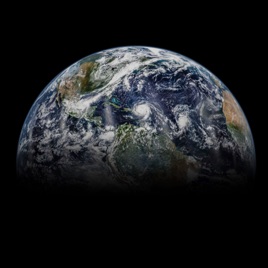
Advertise on podcast: For the Love of Science
Rating
5from
This podcast has
12 episodes
Language
EnglishExplicit
No
Date created
2020/11/10
Latest episode
2023/08/02
Average duration
22 min.
Release period
91 days
Description
Welcome to For the Love of Science, a podcast from The Bay Area Environmental Research Institute. In this show, we hear directly from the institute's scientists, engineers, and mission specialists about the groundbreaking research they’re doing right now in earth, environmental, and space sciences, and learn about what their work can teach us about our Earth and our universe.
Unlock For the Love of Science podcast Email contact info,
Listeners & Audience details
Email contact information
Direct podcast contact details

Listeners
Audience numbers & engagement insights

Audience details
Podcast Insights

Podcast episodes
Check latest episodes from For the Love of Science podcast
How to Build a Research Institute, in 30 Short Years
2023/08/02
In this special episode, hear the story of BAERI’s founding from the founders themselves: husband and wife team Robert Bergstrom and Sharon Sittloh.
Planet Twins and Martian Winds
2023/04/20
In this episode we hear from planetary scientist Victoria Hartwick who works with the Mars Climate Modeling Center at NASA Ames. The conversation includes a discussion about Dr. Hartwick’s paper that explores whether wind turbines on Mars could be a viable source of energy for future humans on that planet, then ranges to how clouds form in the highest reaches of the atmosphere, how climate models work, and how planetary climates, including our own here on Earth, are affected by the space environment around them.
Quick Glossary Exoplanet - Any planet outside of our solar system (i.e., a planet revolving around a star that is not our Sun)
Climate model - Computer programs that simulate weather patterns over time
Kelvin - The temperature scale used in exoplanetary science
Ablation - The breaking up of a meteor when it travels through Earth’s atmosphere
Noctilucent clouds - Pearlescent extremely high-altitude clouds visible at dawn and dusk. They are formed on meteoric smoke.
Kristina Pistone on what it's like to work as a climate scientist
2022/10/03
What’s it like to work as a climate scientist today? In this episode I speak with climate scientist Kristina Pistone about her research, her role on the sustainability commission for the city of Sunnyvale in California, and how our current system of science funding impacts her ability to do her work.
More about Kristina: https://baeri.org/people/kristina-pistone
How to save a planet podcast: https://gimletmedia.com/shows/howtosaveaplanet/llh8gxg/is-your-carbon-footprint-bs
The researchers ready for the James Webb Space Telescope - Part II: Jesse Bregman
2022/07/05
In this two-part series we meet two researchers who will soon be working with data from the recently launched James Webb Space Telescope. In Part II, I speak with Jesse Bregman, an astrophysicist who has spent his 50 year career at NASA Ames, and been part of some pretty amazing leaps in infrared astronomy. The conversation ranges from the backyard telescope he and his brother built, to how astrochemistry research could lead us to an understanding of the origins of life on Earth.
You can learn more about Jesse's work by going to researchgate.net/profile/bregman-jesse.
The researchers ready for the James Webb Space Telescope - Part I: Taylor Bell
2022/07/05
In this two-part series we meet two researchers who will soon be working with data from the recently launched James Webb Space Telescope. In this episode, Part I, I speak with early career astronomer Taylor Bell about his work categorizing exoplanets and the path that led him to where he is today.
You can learn more about Taylor and his work by visiting taylorbell.ca
What does science mean to you?
2022/02/02
Fourteen current and alumni researchers at the Bay Area Environmental Research Institute answer the question: What does science mean to you?
We hear from:
Geert Barentsen
Ann Marie Cody
Christina Hedges
Susan Hoban
Darlene Lim
Amber McCullum
Zara Mirmalek
Sommer Nicholas
Juan Torres Perez
Emily Schaller
Cindy Schmidt
Alex Sehlke
Katie Stern
Nikki Tulley
This episode was edited and scored by Danny Clay.
Exoplanets! — Part 2
2021/10/12
This two-part series is all about exoplanets, planets outside of our solar system, and how they and the stars they orbit are a key part of the search for extraterrestrial life.
In this episode, Part 2, we talk with two more BAERI folks, astronomer Geert Barentsen and science communicator Kassie Perlongo, about their citizen science accelerator, Planet Hunters Coffee Chat, where they teach you how to dig into space telescope data to look for planets, and other potentially weird things, yourself.
Exoplanets! — Part 1
2021/10/12
This two-part series is all about exoplanets, planets outside of our solar system, and how they and the stars they orbit are a key part of the search for extraterrestrial life.
In this episode, Part 1, we talk with two BAERI researchers, Christina Hedges and Ann Marie Cody, also a PI at the SETI Institute. We’ll hear about their work on exoplanets, weirdly behaving stars, and how it connects to the search for alien superstructures.
The people helping make Earth Science research possible
2021/07/13
In this episode we speak with two team members of NASA’s Earth Science Project Office (ESPO), and learn about the essential, behind the scenes work they’re doing to help scientists get out into the field and collect the data they need to better understand our planet.
Guests:
Sommer Nicholas, Deputy Project Manager, ESPO Katie Stern, Deputy Project Manager, ESPO Learn more at espo.nasa.gov
For the Love of Science is produced by the Bay Area Environmental Research Institute. Learn more at: baeri.org
Music by Danny Clay.
NASA's student airborne research program: A unique NASA internship
2021/05/14
Dr. Emily Schaller talks about running SARP, a unique NASA internship that gives undergraduate students hands-on experience in atmospheric science research.
Learn more at baeri.org/sarp
Listen to SARP alumna Katie Dong's interview with Oregon State University.
Connecting Tribal Lands with NASA Remote Sensing Tools
2021/02/26
Remote sensing is a powerful tool - it can be used to map the topography of the ocean floor, track the ash plume of an erupting volcano, or understand drought patterns on tribal lands. As the technology becomes easier for tribal land managers to use, the biggest challenge isn’t navigating the data - it’s navigating the human relationships and conversations about how to make that data more useful.
For the Love of Science is produced by the Bay Area Environmental Research Institute. Learn more at: baeri.org
Music by Danny Clay.
Guests
James Rattling Leaf
Carlee McClellan
Amber McCullum
Cindy Schmidt
Nikki Tulley
Learn more
Nasa Earth Observations
Training Course: An introduction to remote sensing for tribal lands
GEO Indigenous Summit 2020
DSET Fact sheet
More about the DSET project
Blending science and tradition
How to discover a new planet
2020/11/10
In this episode we hear from two researchers who helped make the data from NASA’s Kepler mission accessible to the public, so that anyone in the world, including you, could sit down at your computer and discover a new planet.
Guests:
Geert Barensten, Senior Research Scientist at the Bay Area Environmental Research Institute at NASA Ames Christina Hedges, Support Scientist at the Bay Area Environmental Research Institute at NASA Ames Learn more, and discover your own planet at:
https://keplerscience.arc.nasa.gov/ https://docs.lightkurve.org/ For the Love of Science is produced by the Bay Area Environmental Research Institute. Learn more at: baeri.org
Music by Danny Clay.
Podcast sponsorship advertising
Start advertising on For the Love of Science relevant audience podcasts
You may also like to advertise on these Podcasts

4.732148
The Dark Money Files
Graham Barrow and Ray Blake

5309471
Ja'miezing
Chris Lilley

4.6101642
Cooper and Anthony Show
Cooper Lawrence, Anthony Michaels

4.8513
Rock 'N' Roll Football with Matt Forde and Matt Dyson
Absolute Radio

52098
Wisdom with Charlie Perkins
Charlie Perkins

557189
Tea With Jainé
Tea with Jainé ™

5530
Winning at Life with Gregory Ricks: The Weekly Wrap
Winning at Life with Gregory Ricks
54211
ImJustChillen
koy blake

4.8160347
The Brooklyn Blast Furnace
Relatively Unscathed

5649
Morning Commute with Vont, Chap and Justis
Morning Commute