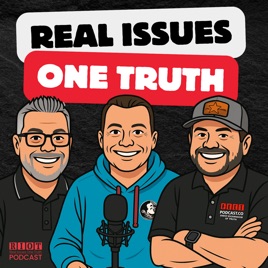
Advertise on podcast: Riot Podcast
Rating
5from
This podcast has
298 episodes
Language
EnglishPublisher
Riot PodcastExplicit
No
Date created
2020/11/11
Latest episode
2026/10/01
Average duration
65 min.
Release period
7 days
Description
Riot Podcast
Unlock Riot Podcast podcast Email contact info,
Listeners & Audience details
Email contact information
Direct podcast contact details

Listeners
Audience numbers & engagement insights

Audience details
Podcast Insights

Podcast episodes
Check latest episodes from Riot Podcast podcast
What Does God Really Want From You? Micah 6 | RIOT Podcast
2026/10/01
What Does God Really Want From You? Micah 6 is the topic that will be discussed today on RIOT Podcast, a Christian Discipleship Podcast.
Can You Do Everything “For God” and Still Not Walk With Him?
What does God really want from you?
More prayer? More church? More giving? More sacrifice? More Bible study? More religious activity?
In Micah 6, Israel essentially asks God the same question.
“What do You want from us?”
Their solution is to offer God more.
More sacrifices.
Thousands of rams.
Rivers of oil.
Something increasingly impressive that might finally earn His approval.
But God’s answer is surprisingly simple: “He has shown you, O man, what is good; and what does the LORD require of you but to do justly, to love mercy, and to walk humbly with your God?” — Micah 6:8
In RIOT Podcast Episode 308, Pastor Pete Robertson, Pastor Bill Schoneman, and Bob Schoneman with special guest Pastor Jeremy unpack Micah 6 and one of the most important questions we can ask:
What Does God Really Want From You?
The chapter begins like a courtroom.
God calls the mountains and ancient foundations of the earth as witnesses and challenges Israel:
“O My people, what have I done to you? And how have I wearied you?”
Then He reminds them of His faithfulness.
He rescued them from Egypt.
He gave them leadership.
He protected them from Balak and Balaam.
He brought them through the wilderness and into the Promised Land.
In other words:
Remember what I have done. Show Me where I failed you.
But Israel still misses the point.
They respond to God’s relational complaint with religious performance.
“What do we need to do?”
And that raises an uncomfortable question for us:
Can we become so busy doing things for God that we stop actually walking with God?
In this episode, we discuss:
• What God really wants from us
• The meaning of Micah 6:8
• What it means to do justice, love mercy, and walk humbly with God
• Why remembering God’s faithfulness matters when our hearts begin to drift
• Balak, Balaam, Shittim, and Gilgal
• Relationship with God vs. religious performance
• Why more religious activity cannot replace intimacy with God
• Why God cares about how we conduct business and handle money
• The danger of separating Sunday worship from Monday life
• Why having more can still leave us unsatisfied
• How money, success, possessions, entertainment, and influence can promise what they cannot deliver
• How old cultural and religious systems continue shaping us
• Why Omri and Ahab still mattered generations after their deaths
• How Jesus changes not only what we believe but how we actually live
Micah refuses to let faith remain inside a religious gathering.
God cares about how we conduct business.
How we handle money.
How we treat employees.
How we speak to our families.
Whether we keep our promises.
How we treat people when nobody is watching.
A real relationship with Jesus eventually changes Monday morning, not just Sunday morning.
Micah also exposes another problem that feels incredibly modern:
“You shall eat, but not be satisfied.”
More money.
More success.
More followers.
More experiences.
More possessions.
More entertainment.
And somehow, the finish line keeps moving.
Why?
Because created things were never designed to satisfy a hunger meant for the Creator.
So perhaps the question isn’t:
“How much am I doing for God?”
Maybe the better question is:
“Am I actually walking with Him?”
Micah 6:8 isn’t a formula for earning God’s favor.
It’s a picture of a life increasingly shaped by relationship with Him.
Do justice.
Love mercy.
Walk humbly with your God.
Join the conversation:
Is it possible to do a lot for God while slowly losing your relationship with God?
Tell us what you think in the comments.
How Do You Know If You’re with the Right Person? | RIOT Podcast
2026/09/24
How Do You Know If You’re with the Right Person? is the topic that will be discussed today on RIOT Podcast, a Christian Discipleship Podcast.
Are You Looking for Love, or Just Trying Not to Be Alone?
How do you know if you’re with the right person?
Is it chemistry? Attraction? Shared interests? Compatibility? Feeling understood? Or simply finding someone who says they’re a Christian?
Whether you’re single, dating, divorced, considering remarriage, or already married, choosing who you build your life with is one of the biggest relationship decisions you’ll ever make.
But maybe we’ve been asking the wrong question.
In RIOT Podcast Episode 307, Pete Robertson, Bill Schoneman, and Bob Schoneman explore what the Bible teaches about relationships, dating, marriage, character, conflict, loneliness, and spiritual compatibility.
Because sometimes the qualities that initially attract us to someone aren’t the qualities that can sustain a healthy relationship.
Physical attraction can cause us to overlook character.
Loneliness can make attention feel like love.
Chemistry can make us ignore warning signs.
And sometimes we fall in love not with who someone actually is, but with who we hope they’ll eventually become.
So how do we discern wisely?
Scripture gives us a much deeper framework than simply “follow your heart.”
Proverbs 4:23 tells us: “Keep your heart with all vigilance, for from it flow the springs of life.”
Before asking whether someone is the right person, maybe we should ask: What has been shaping my heart and teaching me what to desire?
In this episode, we discuss:
• How to know if you’re with the right person
• What Christians should look for in a relationship
• Attraction vs. character
• Why chemistry alone cannot sustain a relationship
• How loneliness can affect relationship decisions
• What it really means to be equally yoked
• Why simply calling yourself a Christian isn’t the same as walking with Jesus
• Red flags revealed through conflict
• Why you shouldn’t date someone’s potential
• The danger of believing you can change another person
• Dating and relationships after divorce
• Why waiting can sometimes be wiser than forcing a relationship
• What to do when marriage becomes difficult
• How pride, control, bitterness, and unforgiveness affect relationships
• Why your spouse cannot become your source of identity or security
• How abiding in Jesus changes the way we choose, love, forgive, and handle conflict
One of the biggest relationship mistakes we can make is expecting another human being to give us what only Jesus can provide.
“Make me happy.”
“Make me feel secure.”
“Make me feel valuable.”
“Never disappoint me.”
“Always understand me.”
No person can carry that weight.
When our identity and security come from Jesus, we can begin loving another person without requiring them to become our savior.
So maybe the question isn’t only: “Am I with the right person?”
Maybe we also need to ask: “Am I becoming the right kind of person?”
And even deeper: “Who or what is discipling the way I think about relationships?”
If you’re considering a relationship, look beyond chemistry. Look at the character. Look at fruit. Look at the direction of their life.
And turn the mirror around. What is the direction?
If you’re already married, ordinary conflict doesn’t automatically mean you married the wrong person. Instead of spending all your energy trying to change your spouse, perhaps another question is worth asking: “Jesus, who are You calling me to become in this marriage?”
The goal isn’t finding a flawless person.
There isn’t one.
The goal is learning to walk closely with Jesus and allowing Him to transform the way we choose, love, forgive, handle conflict, and see the person in front of us.
What Happens When God Removes What You Trust? Micah 5 | RIOT Podcast
2026/09/17
What Happens When God Removes What You Trust?
Could the thing making you feel secure actually be pulling you away from God?
Micah 5 asks an uncomfortable question. God tells His own people He will cut off their horses, destroy their chariots, and throw down their strongholds. Why would God remove the very things Israel believed were keeping them safe? Because those things had begun taking a place in their lives that belonged to God alone.
We may not trust in horses and chariots today. But we have our own versions — money, careers, relationships, political leaders, influence, health, intelligence, technology, even ministry. None of these are automatically bad. Any good thing becomes dangerous when we ask it for the identity, security, power, or hope that should come from God.
Sometimes the thing we are begging God to preserve is the very thing He knows we have begun trusting instead of Him.
That is the conversation on this week’s RIOT Podcast — Real Issues. One Truth. — Episode 306: What Happens When God Removes What You Trust? Micah 5. Listen on YouTube or Rumble. Do not settle for a summary when the conversation is waiting for you.
Bethlehem’s Shepherd-King
This week we return to Micah with one of the most important Messianic chapters in the Old Testament. Micah 5 takes us to Bethlehem — where centuries before Jesus was born, Scripture points toward the coming Shepherd-King. The King who would become His people’s peace. The King no empire could control. The King who would confront false sources of security. And the King who is coming again.
Pastor Pete, Pastor Bill, and Bob walk that line: false security then and now, why God dismantles idols dressed as safety, and what it means to trust the name of the Lord when the props fall away.
What are you actually depending on?
Maybe the question is not simply: “Do I believe in Jesus?”
Maybe we need to ask: “What am I actually depending on to feel secure?”
“Some trust in chariots and some in horses, but we trust in the name of the LORD our God” (Psalm 20:7).
Trust is not a slogan. It is where your heart runs when the horses are gone.
How to listen this week
Open the live episode page: https://riotpodcast.co/what-happens-when-god-removes-what-you-trust-micah-5-riot-podcast/
Press play on YouTube or Rumble
Share the episode with someone leaning on a false security
Ask out loud: What am I actually depending on to feel secure?
RIOT Podcast is hosted by Pastor Pete, Pastor Bill, and Bob. New episodes drop on Thursdays. Know Jesus. Love His people. Live it out.
Are We Living in the End Times? | RIOT Podcast
2026/09/10
Are We Living in the End Times? is the topic that will be discussed today on RIOT Podcast, a Christian Discipleship Podcast.
What If the Biggest Sign of the End Times Isn’t the One Everyone Is Watching?
Wars are raging. Israel remains at the center of global tension. Natural disasters dominate headlines. Artificial intelligence is advancing at extraordinary speed. Digital technology is transforming how the world communicates, governs, and conducts commerce.
Then we open the Bible and read Jesus’ warning about wars and rumors of wars, earthquakes, deception, persecution, lawlessness, and the beginning of “birth pains.”
So are we watching biblical prophecy unfold before our eyes?
In RIOT Podcast Episode 305, Pete Robertson, Pastor Bill Schoneman, and Bob Schoneman tackle one of the biggest questions Christians are asking today: Are We Living in the End Times?
Jesus told His followers to pay attention to what was happening around them, but He also gave an important warning: “See that you are not alarmed.” — Matthew 24:6
That changes the conversation.
Biblical prophecy was never intended to make Christians panic over every headline, identify every new technology as the mark of the beast, or predict the exact date of Christ’s return.
Jesus calls us to be watchful without becoming sensational, discerning without becoming fearful, and ready without becoming obsessed with speculation.
In this episode, we explore:
• What Jesus meant by the “birth pains” of Matthew 24
• Wars, global instability, and “rumors of wars”
• Why Israel and Jerusalem continue to matter in biblical prophecy
• How Christians should respond to earthquakes and natural disasters
• AI, global connectivity, and the biblical pattern of Babel
• Digital economies and Revelation 13
• Why technological possibility does NOT automatically equal prophetic fulfillment
• The danger of false teachers and spiritual deception
• Why Jesus warned that lawlessness would increase and love would grow cold
• Why Christians should respond to uncertain times with faith instead of fear
• What it actually means to be ready for the return of Jesus
One of the greatest dangers of the end times may not be something happening in the Middle East, in technology, or in the global economy.
It may be a deception.
Jesus’ first warning in Matthew 24 was:“See that no one leads you astray.”
We can attend church, know theology, study prophecy, and argue about the end times while still allowing money, politics, entertainment, fear, success, social media, or religion itself to disciple our hearts.
That’s why the most important end-times question may not be: “Can I figure out when Jesus is returning?”
It may be: “If Jesus returned today, would I be ready to meet Him?”
Jesus didn’t give us prophecy so we would live terrified of tomorrow.
He gave it so we would faithfully follow Him today.
Know Him.
Listen to Him.
Walk with Him.
Love people.
Make disciples.
Share the Gospel.
Stay awake.
Be ready.
Because Christians aren’t ultimately waiting for the next war, earthquake, technological breakthrough, or world leader.
We are waiting for Jesus.
And while we wait, we don’t live afraid.
We live ready.
Join the conversation:
Do you believe we are living in the end times? More importantly, what does being “ready” for Jesus look like in your life today?
How Do You Trust God When Nothing Makes Sense? | RIOT Podcast
2026/09/03
How Do You Trust God When Nothing Makes Sense? is the topic that will be discussed today on RIOT Podcast, a Christian Discipleship Podcast.
What If You’re Judging God’s Plan Too Soon?
In Micah 4:6–13, God gives His people an incredible promise of restoration but then tells them that suffering, exile, and Babylon are still ahead.
The promise was real.
The pain was real too.
So what do you do when what God has promised seems completely different from what you’re experiencing?
In Episode 304, we finish Micah chapter 4 and discover a powerful truth about trusting God in seasons we cannot understand.
Micah tells us that God will gather the broken and the outcast. He will restore what appears beyond repair. He even names Babylon more than a century before Jerusalem would eventually fall and then makes an extraordinary promise: “There the LORD will redeem you.”
The place Israel would have chosen to avoid became part of the story through which God would eventually bring redemption.
Then Micah gives us another crucial reminder: “They do not know the thoughts of the LORD, nor do they understand His counsel.” Micah 4:12
Sometimes we look at what is happening around us and assume we understand the whole story.
A prayer goes unanswered.
A door unexpectedly closes.
Something we believed God was leading us toward falls apart.
The road becomes harder instead of easier.
And we wonder: Where is God in this?
Micah reminds us that we should never judge the entire story by the chapter we’re currently living in.
Faith doesn’t mean we always understand what God is doing. It means we have come to know the One we’re trusting.
The deeper question may not always be: “God, why is this happening?”
It may be: “Jesus, will I continue walking with You even when I cannot see where You’re taking me?”
Why Is It So Hard to Find Real Peace? | RIOT Podcast
2026/08/27
Why Is It So Hard to Find Real Peace?
Why can’t humanity ever seem to find lasting peace?
Governments, treaties, military strength, and political systems keep promising calm. Wars continue anyway. Fear remains. Division feels impossible to escape.
That is the question on RIOT Podcast — Real Issues. One Truth. — Episode 303: Why Is It So Hard to Find Real Peace? Pastor Pete, Pastor Bill, and Bob open Micah 4:1–5. Watch the conversation on YouTube or on Rumble.
After judgment, Micah opens a window of hope
Micah 3 ends with judgment and destruction. Then Micah 4 suddenly opens with hope.
Nations come to the Lord to learn His ways. Swords are beaten into plowshares. Spears become pruning hooks. People live without fear. War itself is no longer taught.
“Now it shall come to pass in the latter days that the mountain of the Lord’s house shall be established on the top of the mountains… and peoples shall flow to it” (Micah 4:1). Isaiah paints the same picture: “They shall beat their swords into plowshares… Nation shall not lift up sword against nation, neither shall they learn war anymore” (Isaiah 2:4).
Micah’s prophecy is not only about what God will do someday. It confronts how we are living today.
Why human peace keeps failing
James names the root with painful honesty: “Where do wars and fights come from among you? Do they not come from your desires for pleasure that war in your members?” (James 4:1). Lasting peace is not first a policy problem. It is a heart problem.
Jesus told His disciples, “These things I have spoken to you, that in Me you may have peace. In the world you will have tribulation; but be of good cheer, I have overcome the world” (John 16:33). The world can stay unsettled. Fear does not have to rule your heart.
Vine and fig tree — security that points to Jesus
Micah gives a beautiful picture: everyone sitting safely under their own vine and fig tree (Micah 4:4; see also 1 Kings 4:25). Security. Fruitfulness. Rest.
Jesus said, “I am the vine, you are the branches. He who abides in Me, and I in him, bears much fruit; for without Me you can do nothing” (John 15:5). The peace Micah foreshadows is not a vacation from conflict. It is life rooted in the Lord.
“My sheep hear My voice, and I know them, and they follow Me” (John 10:27). Peace grows where we belong to Him.
The question Ep 303 presses
If God’s future belongs to Him, does your present belong to Him too?
Joshua’s charge still stands: “Choose for yourselves this day whom you will serve… But as for me and my house, we will serve the Lord” (Joshua 24:15). Walking in the name of the Lord is not a slogan. It is a daily decision while the headlines stay loud.
Jesus also sent His people outward: “Go therefore and make disciples of all the nations” (Matthew 28:19). Real peace is not isolation. It is knowing Him, loving people, and living it out.
How to listen this week
Watch Ep 303 on YouTube: https://www.youtube.com/watch?v=EBmrYfvuD6A
Or listen on Rumble: https://rumble.com/user/RiotPodcast
Read Micah 4:1–5 slowly before or after the show
Ask out loud: Does my present belong to the Lord who owns the future?
RIOT Podcast is hosted by Pastor Pete, Pastor Bill, and Bob. New episodes drop on Thursdays. Know Jesus. Love His people. Live it out.
How Do You Know If Your Pastor Is Speaking for God? | RIOT Podcast
2026/08/20
How do you know if your pastor is speaking for God?
A title, a platform, a large following, or even the ability to quote Scripture does not automatically mean someone is faithfully representing God.
That is the question on RIOT Podcast — Real Issues. One Truth. — Episode 302. Pastor Pete, Pastor Bill, and Bob continue through the Book of Micah with one of its strongest warnings about spiritual leadership. Watch the conversation on YouTube or on Rumble.
Micah 3 confronts leaders who stopped listening
Micah Chapter 3 confronts rulers, judges, priests, and prophets who had been entrusted with influence but gradually turned leadership into something that benefited themselves. Justice became distorted. People became resources to use. Money influenced the message. And some leaders continued claiming to speak for God even though they had stopped listening to Him.
That raises a question every Christian needs to consider: How do we know when a pastor, teacher, prophet, or Christian leader is actually speaking according to God’s Word?
Why God holds leaders to a higher standard
Leadership is not simply position or authority. It is stewardship. Whether you are a pastor, parent, business owner, ministry leader, or someone others look up to, greater influence brings greater responsibility.
James writes, “My brethren, let not many of you become teachers, knowing that we shall receive a stricter judgment” (James 3:1). Jesus said, “For everyone to whom much is given, from him much will be required” (Luke 12:48). Influence is never a free pass. It is a trust.
When leadership becomes exploitation
Micah describes leaders who stopped asking, “How can I serve these people?” and began asking, “What can I get from these people?”
Jesus gives the opposite model: “For even the Son of Man did not come to be served, but to serve, and to give His life a ransom for many” (Mark 10:45). Real spiritual leadership looks like service, not extraction.
Can money, popularity, or politics change the message?
Micah exposes prophets who proclaimed peace when people supported them but changed their message when there was nothing to gain.
A faithful messenger cannot allow money, applause, politics, popularity, or fear of people to determine what God’s Word says. Paul warned Timothy that people would gather teachers to suit their own desires and turn from the truth (2 Timothy 4:3–4). The pressure is real. The standard does not change.
Intimacy with God must come before ministry for God
Micah gives a sobering warning about leaders who continued claiming spiritual authority while becoming increasingly insensitive to God’s voice.
Intimacy with God must always come before ministry for God. Jesus said, “Not everyone who says to Me, ‘Lord, Lord,’ shall enter the kingdom of heaven, but he who does the will of My Father in heaven” (Matthew 7:21). Religious activity can keep moving after the heart has drifted.
Where does genuine spiritual power come from?
Micah gives the contrast in Micah 3:8: “But truly I am full of power by the Spirit of the Lord, and of justice and might, to declare to Jacob his transgression and to Israel his sin.”
Micah was not powerful because of personality, education, platform, or position. He was surrendered to the Spirit of God. Zechariah says it plainly: “‘Not by might nor by power, but by My Spirit,’ says the Lord of hosts” (Zechariah 4:6). Jesus told His disciples, “But you shall receive power when the Holy Spirit has come upon you” (Acts 1:8).
Real spiritual influence does not come from becoming more impressive. It comes from becoming more surrendered.
False security: proximity is not intimacy
The people believed that because the temple was in Jerusalem, God must still be with them. Micah exposes the danger of confusing proximity to God with intimacy with God.
Jeremiah warned the same false confidence: “Do not trust in these lying words, saying, ‘The temple of the Lord, the temple of the Lord, the temple of the Lord are these’” (Jeremiah 7:4). We can attend church, know Scripture, serve in ministry, and speak Christian language while still allowing our hearts to drift from Him.
The question Micah 3 leaves with us
What is leading me?
Money? Power? Recognition? Popularity? Personal benefit? Or the Spirit of God?
Micah 3 is not only a warning for pastors and church leaders. It is a challenge for anyone who has influence over another person’s life. Before we speak for God, lead for God, or attempt to accomplish something for God, we must first learn to listen to Him.
Jesus asked, “For what will it profit a man if he gains the whole world, and loses his own soul?” (Mark 8:36). That question still lands.
How to listen this week
Watch Ep 302 on YouTube: https://www.youtube.com/watch?v=GEK3hghST14
Or listen on Rumble: https://rumble.com/user/RiotPodcast
Read Micah 3:1–12 slowly before or after the show
Ask out loud: What is leading me — and am I listening to God before I speak for Him?
RIOT Podcast is hosted by Pastor Pete, Pastor Bill, and Bob. New episodes drop on Thursdays. Know Jesus. Love His people. Live it out.
How Do Good People Slowly Lose Their Way? | RIOT Podcast
2026/08/13
How Do Good People Slowly Lose Their Way? is the topic that will be discussed today on RIOT Podcast, a Christian Discipleship Podcast.
𝗛𝗼𝘄 𝗗𝗼 𝗚𝗼𝗼𝗱 𝗣𝗲𝗼𝗽𝗹𝗲 𝗦𝗹𝗼𝘄𝗹𝘆 𝗕𝗲𝗰𝗼𝗺𝗲 𝗦𝗼𝗺𝗲𝗼𝗻𝗲 𝗧𝗵𝗲𝘆 𝗡𝗲𝘃𝗲𝗿 𝗜𝗻𝘁𝗲𝗻𝗱𝗲𝗱 𝘁𝗼 𝗕𝗲?
Usually, it doesn’t begin with one huge decision.
It begins quietly.
A thought we entertain.
A compromise we justify.
A truth we don’t want to hear.
A little more comfort.
A little more self-interest.
Until eventually, something that began in the heart starts changing the way we live.
After celebrating our 300th episode from Honduras, we’re back in the Book of Micah for RIOT Podcast Episode 301 and Micah Chapter 2 gets uncomfortable fast.
God exposes greed, injustice, abuse of influence, resistance to truth, and false teachers who were willing to tell people exactly what they wanted to hear.
And it raises a question we probably all need to wrestle with:
When God’s Word confronts something in me, do I allow the Word to change me or do I look for a version of Christianity that allows me to remain unchanged?
That’s where spiritual drift becomes dangerous.
Because sin may be personal, but its consequences are rarely private. Eventually, what happens in our hearts begins affecting our marriages, families, churches, communities, and the people coming behind us.
But Micah 2 doesn’t end there.
After all the warnings, God gives His people hope.
He promises to gather them like a Shepherd and speaks of “The One Who Breaks Open the Way” who will go before His people.
Judgment isn’t God’s final word.
Restoration is still His desire.
Ask yourself:
What is shaping my heart today and am I still listening to the voice of the Shepherd?
300th Celebration | RIOT Podcast
2026/08/06
300th Celebration is the topic that will be discussed today on RIOT Podcast, a Christian Discipleship Podcast.
300 Episodes. One Mission. One Faithful God.
It’s hard to believe…
What started as a simple conversation around God’s Word has now become 300 episodes of asking honest questions, opening the Bible, and growing together in our relationship with Jesus.
This milestone is even more special because Episode 300 was recorded LIVE in Honduras!
Throughout this episode, Bill, Bob, and Pete look back on the journey, share stories that have never been told, reflect on the lessons God has taught them, read incredible listener testimonies, answer rapid-fire questions, and look ahead to what God may have in store for the future.
But the greatest celebration isn’t reaching 300 episodes.
It’s seeing what God has done through His Word.
We’ve heard from listeners who rediscovered the joy of studying Scripture, pastors who became more intentional disciple-makers, families who began meaningful conversations around the dinner table, and people who moved from simply following religious traditions to walking in a genuine relationship with Christ.
To everyone who has listened, watched, prayed, shared an episode, or encouraged someone else to join the conversation…
Thank you.
You are part of this ministry, and we’re grateful to have you on this journey with us.
As we celebrate Episode 300, our prayer remains the same as it was on Episode 1:
Know Jesus. Love His Word. Live It.
Standing Firm Together 1 Peter 3:8-17 | RIOT Podcast
2026/07/30
Standing Firm Together 1 Peter 3:8-17 is the topic that will be discussed today on RIOT Podcast, a Christian Discipleship Podcast.
What If the World’s Greatest Evidence for Christianity Isn’t an Argument… but a Christian?
Most people think defending the Christian faith begins with having the right answers.
But the Apostle Peter begins somewhere else.
He begins with our relationships.
In this special Riot Podcast Live episode (recorded during last week’s livestream), we continue our study through 1 Peter and discover why a church that lives in unity, humility, compassion, and love becomes one of the most powerful witnesses to a watching world. Before Peter tells believers to “always be ready to give an answer,” he first calls them to live the Gospel together.
In this episode, we explore three life-changing truths from 1 Peter 3:8–17:
Live the Gospel (vv. 8–12)
Why unity is different from uniformity
The power of compassion and genuine Christian community
Why humility strengthens relationships
How blessing instead of retaliation reflects the heart of Christ
Trust the Gospel (vv. 13–14)
Why following Jesus sometimes comes with opposition
How to overcome the fear of people
Why faithfulness matters more than popularity
Share the Gospel (vv. 15–17)
What Peter really means by “Always be ready to give an answer”
Why apologetics begins with a transformed life
How to defend your faith with gentleness, respect, and hope
The one question every Christian should be prepared to answer:
“How has Jesus changed your life?”
This conversation reminds us that people often watch our lives long before they listen to our words. Our greatest testimony isn’t winning arguments, it’s becoming more like Jesus.
“By this everyone will know that you are My disciples, if you love one another.” — John 13:35
Scriptures Discussed
1 Peter 3:8–17
John 13:35
Philippians 2:2–8
Romans 12:15
Galatians 6:2
James 5:16
Psalm 34
John 14:6
John 15:20
1 Corinthians 15
Question for you:
If someone asked you today, “Why do you have hope?”, what would you say?
How Does Spiritual Drift Begin? | RIOT Podcast
2026/07/23
How Does Spiritual Drift Begin? is the topic that will be discussed today on RIOT Podcast, a Christian Discipleship Podcast.
What If You’re Drifting Away from God Without Even Realizing It?
Spiritual drift rarely happens overnight.
It begins with small compromises. Misplaced priorities. Quiet distractions. Before long, what once felt like a vibrant relationship with God becomes routine, and we don’t even notice how far we’ve wandered.
In this episode, we continue our journey through the book of Micah by exploring the first chapter of this powerful prophetic book. While Micah’s message was originally spoken to Israel and Judah nearly 2,700 years ago, it speaks directly to our lives today.
Together, we’ll explore:
How spiritual drift quietly begins
Why God always warns before He disciplines
Why sin is ultimately a heart issue not just a behavior problem
What idolatry looks like in the 21st century
Why Micah wept instead of celebrating God’s judgment
How small compromises eventually shape entire lives
What God’s discipline reveals about His love
The question every believer should ask: “Where has my heart slowly drifted from God?”
Micah reminds us that God’s warnings are never meant to push us away, they are loving invitations to come home.
Every correction is rooted in His mercy.
Every confrontation is motivated by His desire to restore His relationship with His people.
Because God’s greatest concern has never simply been our behavior.
His greatest desire has always been our hearts.
“My sheep hear My voice, and I know them, and they follow Me.” — John 10:27
Question for you:
Where do you think spiritual drift usually begins in our actions, or in our hearts?
Why Did God Send the Prophet Micah? | RIOT Podcast
2026/07/16
Why Did God Send the Prophet Micah? is the topic that will be discussed today on RIOT Podcast, a Christian Discipleship Podcast.
What If You’re Being Discipled by Something You Don’t Even Realize?
The Book of Micah isn’t just an ancient prophecy about Israel. It’s a mirror that confronts every generation.
In this episode, we begin a brand-new study through the book of Micah by stepping back into the world he lived in, a nation that looked successful on the outside but was quietly collapsing on the inside. Wealth was increasing. Religion was thriving. Yet hearts had drifted far from God.
Could the same thing be happening today?
Together, we’ll explore:
Why God raised up the prophet Micah at this specific moment in Israel’s history
How prosperity can quietly lead to spiritual complacency
The difference between religious performance and a genuine relationship with God
Why God often chooses unlikely people to accomplish extraordinary purposes
What Micah teaches about the World System, the Religious System, and the Kingdom of God
Why God’s warnings are always invitations to restoration not condemnation
The one question every believer should ask:
“Who or what is disciplining my heart?”
Micah’s message reaches far beyond ancient Israel. It challenges us to examine what is shaping our priorities, identity, and relationship with Jesus.
Because the greatest threat isn’t always obvious rebellion.
Sometimes it’s simply becoming busy with religion while slowly losing intimacy with God.
“He has told you, O man, what is good… to do justice, to love mercy, and to walk humbly with your God.” — Micah 6:8
Question for you:
What do you think is discipling people’s hearts the most today, the world, religion, or a relationship with Jesus?
Why Does Grief Hurt So Much? | RIOT Podcast
2026/07/09
Why Does Grief Hurt So Much? is the topic that will be discussed today on RIOT Podcast, a Christian Discipleship Podcast.
Why does losing someone we love feel like losing a part of ourselves?
Grief is one of life’s deepest and most universal experiences. Whether you’ve lost a spouse, parent, child, sibling, friend, or someone who shaped your life, the pain can linger far longer than anyone expects.
In this episode, we explore what the Bible says about grief, why it hurts so deeply, and how God meets us in our sorrow. Rather than offering clichés or quick fixes, we open Scripture to discover the hope, comfort, and presence of Christ for those walking through loss.
Together, we’ll answer questions like:
Why does grief feel like part of us died too?
Why do painful memories return months or even years later?
Why can grief feel so lonely, even when people surround us?
Where is God when our hearts are shattered?
Is it normal to still be grieving years later?
How do we keep living after losing someone we love?
Does the Bible offer real hope beyond death?
Throughout this conversation, we look at the lives of David, Jesus, and other biblical examples that remind us we are never alone in our suffering. Jesus Himself wept, carried our sorrows, and ultimately conquered death so that grief would never have the final word.
Whether your loss is recent or happened years ago, our prayer is that this episode reminds you that God sees every tear, walks beside you in every valley, and offers a hope that reaches beyond the grave.
“The Lord is near to the brokenhearted and saves those who are crushed in spirit.” — Psalm 34:18
What has helped you most as you’ve walked through grief?
Share your story in the comments, you never know who may find hope through your words.
250 Years of Freedom. Americas Story | RIOT Podcast
2026/07/02
250 Years of Freedom. America’s Story is the topic that will be discussed today on RIOT Podcast, a Christian Discipleship Podcast.
As the United States of America celebrates 250 years of independence, this special episode of the Riot Podcast looks back at the people, principles, sacrifices, and ideas that have shaped America’s remarkable story.
From the courage of the Founding Fathers and the signing of the Declaration of Independence to the Constitution, faith, innovation, immigration, military service, and humanitarian leadership, we explore the events that helped define a nation built on the belief that liberty is a gift worth preserving.
This isn’t a discussion about political parties, it’s a conversation about history, character, gratitude, and the responsibility that comes with freedom.
In This Episode
Why George Washington became the “Father of Our Country”
The enduring significance of the Declaration of Independence
How the Constitution was designed to protect liberty
The influence of biblical principles and faith on America’s founding
The powerful role of legal immigration in building the nation
American innovation that changed the world—from flight to artificial intelligence
America’s legacy of humanitarian aid and global generosity
Presidents whose leadership shaped history
Honoring the sacrifices of those who defended freedom
Why freedom always comes with responsibility and what kind of nation we should leave for the next generation.
Whether you’re an American, someone who admires America’s history, or simply interested in how faith, leadership, and liberty intersect, this episode offers a thoughtful reflection on one of history’s most influential nations.
“Freedom is never more than one generation away from extinction.” — Ronald Reagan
As we commemorate this historic milestone, may we remember those who came before us, appreciate the freedoms we enjoy today, and commit ourselves to preserving truth, character, and hope for future generations.
Featured Topics
George Washington
Declaration of Independence
United States Constitution
Bill of Rights
America’s Christian Heritage
Immigration
American Innovation
Humanitarian Leadership
Military Service
Freedom & Responsibility
Join the conversation:
What do you believe has been America’s greatest contribution to the world over the past 250 years?
How Gambling Quietly Steals More Than Money | RIOT Podcast
2026/06/25
How Gambling Quietly Steals More Than Money is the topic that will be discussed today on RIOT Podcast, a Christian Discipleship Podcast.
Can a Christian gamble without it quietly changing their heart?
Online gambling, sports betting, fantasy leagues, casino apps, and digital slot machines have made gambling more accessible than ever before. What once required a trip to a casino now lives inside our smartphones available 24/7, waiting for moments of boredom, stress, loneliness, or financial pressure.
In this episode of the RIOT Podcast, we move beyond the question, “Is gambling a sin?” and explore the deeper biblical issues behind gambling:
1. Why gambling has become one of the fastest-growing addictions in modern culture
2. Why people are drawn to the promise of quick wealth and financial freedom
3. What Scripture teaches about stewardship, contentment, greed, and trusting God
4. The difference between wise investing and gambling
5. How gambling affects marriages, families, and relationships
6. Why people continue chasing losses despite repeated failure
7. How gambling can quietly become a form of spiritual bondage
8. Practical, biblical steps toward lasting freedom in Christ
Rather than focusing only on behavior, we examine what gambling reveals about our desires, our fears, and ultimately where we place our trust. The Bible consistently points us away from shortcuts and toward faithful stewardship, patience, diligence, and complete dependence on God.
Whether you’ve struggled with gambling personally, know someone who has, or simply want to understand what the Bible teaches about money and contentment, this conversation will challenge you to look beyond the bets and ask a much bigger question:
What are you trusting to provide the hope, security, peace, and freedom that only Christ can truly give?
Scriptures Discussed
Proverbs 13:11
Proverbs 21:5
Proverbs 27:20
Ecclesiastes 5:10
Matthew 6:24
Luke 12:15
Luke 8:17
Philippians 4:11
Hebrews 13:5
1 Timothy 6:10
1 Corinthians 6:12
James 5:16
Podcast reviews
Read Riot Podcast podcast reviews
GiselleAguiar 2022/02/26
Excellent Teaching!
There are too many people who are Halfway Christians. I was raised Catholic, later, not knowing any better, went to a Progressive church. Now, born ag...
Podcast sponsorship advertising
Start advertising on Riot Podcast relevant audience podcasts
You may also like to advertise on these Podcasts
4.9247601438
Unashamed with the Robertson Family
Tread Lively

4.762542000
The Lawfare Podcast
The Lawfare Institute

4.8224701787
The Andrew Klavan Show
The Daily Wire
4.922321824
The Ten Minute Bible Hour Podcast
Matt Whitman

4.913551957
Wholesaling Inc with Brent Daniels
Find distressed properties for pennies on the dollar and turn them for huge profits!
4.6137771974
The Rubin Report
Dave Rubin

4.732631937
The President's Daily Brief
The First TV

4.819462000
Football Ramble
Stak

4.735971300
The Bonfire with Big Jay Oakerson and Robert Kelly
SiriusXM

4.827591699
Earn Your Happy
Lori Harder | YAP Media