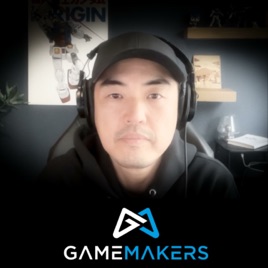
Advertise on podcast: GameMakers
Rating
4.4from
This podcast has
187 episodes
Language
EnglishPublisher
Joseph KimExplicit
No
Date created
2020/11/24
Latest episode
2026/03/31
Average duration
61 min.
Release period
15 days
Description
The GameMakers podcast publishes current, entertaining, and in-depth discussions on F2P game development. Topics that we cover include the business of games, F2P monetization, liveops, game design, game development processes, team structure, and more.
Unlock GameMakers podcast Email contact info,
Listeners & Audience details
Email contact information
Direct podcast contact details

Listeners
Audience numbers & engagement insights

Audience details
Podcast Insights

Podcast episodes
Check latest episodes from GameMakers podcast
The Last 20% Is Worth $100 Million
2026/03/31
AI is making it cheaper to build games. It's doing nothing for the cost of building the right game. That distinction is about to crush more studios than any technology shift in the past decade.
Ran Mo is the CEO of Proxima and creator of Suck Up — arguably the first commercially successful game to use AI at runtime. The game generated over 100 million YouTube views with zero marketing spend. Before founding Proxima, Ran led product teams at EA on The Sims franchise and spent time at YouTube and BCG.
In this episode, Ran live demos AI-assisted coding in Unity, breaks down his "trunk and leaves" framework for where AI helps (and where it destroys your codebase), and makes the contrarian case that AI in actual gameplay is overhyped — even though he built the first game to prove it works.
We go deep on: why vibe-coded games are architecturally unusable at scale, the power law that's about to eliminate mid-tier studios, why Ran hired a marketer with 1M TikTok followers, and the Taoist philosophy that keeps him sane while Silicon Valley burns out around him
Whether you're a game dev, studio head, or just trying to understand where AI actually moves the needle in creative industries, this conversation will sharpen your thinking.
🔗 Ran Mo's newsletter: newsletter.ranmo.me 🔗 Proxima: proxima.gg
Outline:
0:00 Intro
1:15 Ran Mo's background and founding Proxima
4:38 How Suck Up actually uses AI
8:49 Why Proxima won't use AI for art or design
12:32 Live demo: AI coding in Unity
22:33 Vibe coding gone wrong — the Stardew Valley test
25:14 The trunk and leaves framework
29:24 Real productivity numbers (not Twitter hype)
34:57 The technically capable designer
38:58 Power law distribution is coming for games
43:48 Suck Up's $0 marketing playbook
46:04 The Courage to Do Nothing
52:35 The velocity trap
58:13 Hot take: AI in gameplay is overhyped
61:01 Ran's personal story
66:15 Go your own way
69:15 Final advice: slow down to speed up
ThiGaming Trends for 2026 — And the One Nobody Wants to Talk AboutRT
2026/02/10
Last month, I sat on a panel about where the gaming industry is headed. The conversation was good — but there was one thing I didn't say out loud.
In this episode, I break down the key trends I think will define gaming in 2026:
The noise problem is about to get much, much worse — and it's hitting from both sidesSmall teams aren't an anomaly. They're the new default."Nobody codes anymore" — what AI-or-die actually means for studios right nowWhy the industry is losing its moat and most people don't see it yet Plus: the progression compression paradox that nobody's solving — why the attention economy is forcing games to speed up in ways that might break long-term engagement.
Whether you're running a studio, building a game, or trying to figure out where this industry is going — this one's for you.
📩 Subscribe to the Gamemakers newsletter: gamemakers.com
AppLovin Bull vs. Bear Case: What Operators Know That Investors Don't
2025/12/30
AppLovin just crossed $250 billion in market cap. Stock up 127% YTD. EBITDA margins at 82%. Is this the beginning—or the top?
We assembled the most qualified panel possible to break it down: an operator running millions through AppLovin's platform, a gaming-focused financial analyst, and an institutional investor who's seen these cycles before.
What emerged isn't your typical bull-bear debate. It's a breakdown of how dominance actually works in ad tech—and what could break it.
IN THIS EPISODE
→ Why AppLovin doesn't need to be better than competitors—just 95% as good
→ The MAX/Axon lock-in that keeps publishers captive
→ E-commerce expansion: AppLovin is beating Google on Android
→ The SEC investigation and deplatforming risk (how worried should you be?)
→ What one operator's portfolio data reveals about where the cracks are forming
→ Each panelist's prediction for AppLovin in 2026
SPEAKERS
Josh Chandley — President & CEO, WildCard Games
Matthew Kanterman, CFA — Director of Research, Blue River Financial Group
Brian Peganoff — Former TMT Investor, Founder Timber Advisors
Joseph Kim — CEO, Lila Games
TIMESTAMPS
[00:00] Introduction & Panel Overview
[01:22] AppLovin Financial Recap: 127% YTD, 82% Margins
[04:52] Valuation Analysis: Is Growth Priced In?
[07:15] The Bull Case: Infrastructure Lock-In
[10:30] How MAX & Axon Create Publisher Dependency
[15:45] E-Commerce Expansion: Beating Google on Android
[22:10] Why Meta & Google Can't Compete on iOS
[28:40] The Bear Case: Five Risks
[35:20] SEC Investigation & Deplatforming Risk
[42:15] The Infrastructure Risk Nobody Discusses
[48:30] Competitive Landscape: Unity, Moloco, Meta
[58:20] Connected TV: Wild Card or Dead End?
[1:05:40] Panel Predictions for 2026
[1:15:30] Key Takeaways
LINKS
Newsletter: https://www.gamemakers.com
Full article: https://www.gamemakers.com/p/applovin-bull-bear-case
Pixels & Profits is a GameMakers series covering the business and investing side of the gaming industry.
Your validation passed. Your players hated it. Here’s why. | MAG #10
2025/11/17
Most game studios either skip validation entirely or waste hundreds of thousands on academic testing that doesn't move the needle. Both approaches kill products.
In this episode, we discuss why product validation is the difference between success and years of wasted development—and introduces two frameworks to fix your process.
You'll discover:
The Pyramid Decision Model: When to trust tastemaker vision vs. player dataWhy the "wrong tastemaker problem" is your biggest invisible risk5 critical validation failures (and how to avoid each one)The signal vs. noise problem: When player feedback actually hurts your gameStage-specific validation: Pre-production → Production → Soft Launch → Hard LaunchWhy expensive user motivation studies and persona research rarely work
This matters if:
Your team debates "vision" vs. "data-driven" design endlesslyYou've hired consultants who delivered fancy reports but no resultsYour validation tests keep pointing in different directionsYou're burning runway without knowing if your core concept worksYou need a framework to match methodology to development stage
The uncomfortable truth: It's nearly impossible to evaluate a "right tastemaker" without historical success—and even then, they might fail in a new genre. Meanwhile, over-intellectualized academic approaches sound impressive but rarely translate to product gains.
Bottom line: Product velocity = speed × direction. Validation should steer your direction, not justify executive forecasts or create someone to blame. This episode gives you the frameworks to validate what matters, when it matters.
Read the full breakdown with detailed frameworks:https://www.gamemakers.com/p/your-validation-passed-your-players
Timestamps:
(00:00:00) Why This Might Be the Most Important Topic Yet(00:01:07) The Two Extremes: No Testing vs. Testing Theater(00:05:28) The Pyramid Decision Model: Top vs. Bottom(00:09:52) Problem #1: The Wrong Tastemaker Problem(00:12:08) Problem #2: Validation Tests Are Often Flawed(00:14:08) Problem #3: Over-Intellectualization (Why Academic Models Fail)(00:17:14) Problem #4: Misinterpreting Validation Results(00:20:02) Problem #5: The Signal vs. Noise Problem(00:22:17) The What, When, and How Framework by Development Stage(00:25:33) Final Thoughts: Why This Is Really, Really Hard#gamedev #productvalidation #gamedevelopment #productmanagement #gamedevelopmenttips
Your Analytics Stack Is Killing Your Studio (The New Meta: PostHog FTW)
2025/10/29
Most game studios waste weeks of runway on the wrong analytics decision—here's how to avoid that mistake.
Traditional analytics SDK vendors like Amplitude, Mixpanel, and Braze promise plug-and-play simplicity but deliver silent failures, contract negotiations, and escalating costs that can destroy startup velocity. In this episode, we discuss why the old analytics playbook is obsolete in 2025—and reveals the new meta that's eating market share.
You'll discover:
Why SDK analytics vendors fail silently (and cost you weeks of bad data)The contract negotiation trap that delays launches by 6+ weeks5 analytics infrastructure options compared (real costs, hidden tradeoffs)Why PostHog is the new standard for studios under 500K MAUHow the right stack can improve dev velocity by 30%+ and cut costs 40-50%
This matters if:
You're choosing analytics infrastructure for a new gameYour current solution is slowing down iteration speedYou're tired of waiting hours for batched event dataYou want warehouse-native architecture without enterprise costs
Bottom line: Your analytics decision could mean the difference between product-market fit and running out of runway. For small to mid-sized game studios, PostHog combines enterprise-grade power with pay-as-you-go pricing—no contracts, no traffic forecasting, no silent failures.
Read the full breakdown with technical details, pricing tables, and implementation guides:
https://www.gamemakers.com/p/the-new-meta-for-game-analytics-save
Timestamps (Episode Chapters):
(00:00:00) The Studio-Killing Problem You're Ignoring(00:01:26) The "Silent Failure" Trap (How SDKs Hide Bugs)(00:02:41) How 15-Minute Data Delays Destroy QA Velocity(00:06:02) The Obsolete 3-Tier Analytics Model (and Why It's Broken)(00:10:38) The 6-Week Contract Negotiation Trap(00:14:16) The "Nostradamus" Forecasting Problem: Why You Always Overpay(00:16:19) Option 1: Traditional SDKs (Amplitude, Mixpanel)(00:25:32) Option 2: Firebase + BigQuery(00:28:34) Option 3: Unity Analytics(00:30:21) Option 4: The New Meta (PostHog)(00:36:14) Option 5: The Enterprise Trap (Snowflake)(00:39:01) Integrated (Braze) vs. Best-of-Breed (PostHog + CRM)(00:42:56) The Final Verdict: What to Choose By Studio Size
Why Game Studio Failures Are Structure Problems, Not Talent Problems | Chris Casanova (Microsoft, Mojang, Relic, Hypixel)
2025/10/24
Most game studios think they have a talent problem. They don't. They have a structure problem.
Chris Casanova spent 15+ years as a producer across Microsoft Xbox, Mojang (Minecraft), Relic Entertainment, Offworld Industries, and Hypixel Studios. He's watched talented teams fail repeatedly—not from lack of skill, but from organizational friction.
Traditional studios organize around craft silos: design departments, engineering departments, art departments. Every feature requires handoffs. Every handoff loses fidelity. The result? Friction, misalignment, wasted iteration, and missed deadlines.
Chris reveals the alternative: cross-functional outcome teams of 5-9 people who own their results from concept to ship.
━━━━━━━━━━━━━━━━━━━━
TIMESTAMPS
━━━━━━━━━━━━━━━━━━━━
00:00 - Chris's background: Xbox, Mojang, Relic
02:59 - Why he wrote "Structure Teams to Win"
06:54 - The problem with craft-based teams
08:17 - Outcome teams: The procedural worlds example
18:32 - Why 5-9 people is optimal team size
24:10 - Three organizational layers explained
31:48 - When leaders resist change
42:20 - The political reality of reorganization
47:15 - Case study: 70-person AA co-op shooter
58:07 - Advice for small teams (10 people)
01:01:06 - How to connect with Chris
━━━━━━━━━━━━━━━━━━━━
KEY INSIGHTS
━━━━━━━━━━━━━━━━━━━━
THE PROBLEMS:
- Design creates specs without context → over-engineered solutions
- Art produces assets without validation → endless iteration
- QA receives unclear requirements → irrelevant bug reports
- Every handoff loses the original intent
THE SOLUTION:
Cross-functional teams of 5-9 people with:
→ Mixed disciplines (designers, engineers, artists, QA embedded)
→ Clear mission and measurable KPIs
→ Everything needed to own their outcome
→ Minimal handoffs, maximum collaboration
REAL EXAMPLE:
Procedural worlds team mission: "Every world seed feels fresh, readable, performant"
KPI: Biome novelty per minute
Team: Generation engineers, world designers, environment artists, technical artists, QA
━━━━━━━━━━━━━━━━━━━━
70-PERSON STUDIO STRUCTURE
━━━━━━━━━━━━━━━━━━━━
Chris provides detailed org structure for AA co-op shooter:
- Combat & Gameplay (15 people, 2 teams)
- Progression & Economy (10 people, 2 teams)
- Social & Co-Op (12 people, 2 teams)
- Content & Live Ops (15 people, 2 teams)
- World & Narrative (10 people, 1 team)
- Technical Foundation (8 people, 1 team)
Each team has 5-9 people with mixed disciplines focused on specific outcomes.
━━━━━━━━━━━━━━━━━━━━
THE HARD TRUTHS
━━━━━━━━━━━━━━━━━━━━
Some leaders won't make the transition from managing 30 people to being on a team of 8. They'll resist or self-select out. And that's okay—holding onto territorial structures to preserve egos is how studios fail.
"If you have a C-suite that's divided, you're not going to be able to make this change. You need unified leadership."
━━━━━━━━━━━━━━━━━━━━
RESOURCES MENTIONED
━━━━━━━━━━━━━━━━━━━━
- "Team of Teams" by Gen. Stanley McChrystal
- "Extreme Ownership" by Jocko Willink
- "Structure Teams to Win" (Chris's Medium article)
━━━━━━━━━━━━━━━━━━━━
CONNECT WITH CHRIS
━━━━━━━━━━━━━━━━━━━━
Chris is seeking his next production leadership role.
LinkedIn: https://www.linkedin.com/in/chris-casanova/
Email: [email protected]
Article: https://medium.com/@chris.casanova/structure-teams-to-win-15d98e65c5d7
━━━━━━━━━━━━━━━━━━━━
READ THE FULL BREAKDOWN
━━━━━━━━━━━━━━━━━━━━
Detailed newsletter post with implementation templates and additional examples:
https://www.gamemakers.com/p/why-your-game-studios-organizational
━━━━━━━━━━━━━━━━━━━━
Gamemakers podcast: Gaming business insights for developers, executives, and investors. Hosted by Joseph Kim. New episodes weekly.
#gamedev #productmanagement #teamstructure #leadership
The Battlefield 6 Redemption, What UCLA Football Teaches About Leadership, & Structuring Teams to Win | MAG #7
2025/10/20
Western AAA development is not dead. Battlefield 6's 7 million unit launch proves it. This episode deconstructs how EA and Vince Zampella reversed the "disaster" of Battlefield 2042 by focusing on leadership, community feedback , and a smarter studio structure.
Then, we explore why leadership is the ultimate "alpha". Joseph Kim breaks down the stunning turnaround of the UCLA football team—who went from a 0-4 disaster to a 3-0 winning streak (including beating #7 Penn State ) with the exact same players. The only thing that changed? Leadership and strategy. Learn how to apply these lessons on accountability , clear roles , and scheme-to-personnel fit to your game studio.
Finally, we feature an excerpt from an interview with veteran producer Chris Casanova on why your studio is likely structured for failure. He explains the critical shift from "craft-based" (siloed) teams to cross-disciplinary "outcome-based" teams and how to implement it.
Timestamps:
[00:00:20] Today's Topics: Battlefield 6, UCLA Leadership, & Team Structures [00:01:51] Corrections: Revisiting the EA/PIF Deal & The "Copy, Improve, Innovate" Framework
[00:04:33] Top 3 News: Battlefield 6 (7M copies) , Switch 2 Production , Arc Raiders CCU
[00:06:42] MACRO: The Battlefield 6 Redemption Story
[00:07:41] By the Numbers: BF6 (7M units) vs 2042 (4.2M)
[00:09:19] A Quick History of the Battlefield Franchise
[00:11:12] What Changed? The "Save the Franchise" Game
[00:13:01] Fix #1: A Better Studio Coalition Structure
[00:15:05] Fix #2: Going Back to Basics & Listening to the Community
[00:16:14] Fix #3: Polish and Giving the Game Time
[00:17:53] Fix #4: The Vince Zampella Factor
[00:20:40] Deep Dive: Who is Vince Zampella? (Infinity Ward, Respawn)
[00:28:22] ALPHA: Leadership is Your Biggest Competitive Advantage
[00:31:18] Case Study: The UCLA Football Turnaround
[00:32:15] The 0-4 Disaster (The Problem)
[00:37:31] The Mid-Season Fix: Firing the Coach
[00:39:10] The 3-0 Turnaround (The Result)
[00:41:03] The Lessons: 1) Play to Strengths, 2) Accountability, 3) Clear Roles, 4) Belief
[00:44:47] Applying the Lessons to Your Game Studio
[00:48:55] GAME DEV: Interview with Chris Casanova
[00:49:41] The Thesis: Shifting from "Craft-Based" to "Outcome-Based" Teams
[00:52:43] A Practical Example: A "Procedural Worlds" Team
[00:57:51] Key Takeaway: Why Outcome-Based Teams Win
Inside the $55B EA-Saudi Deal: Why It's Not a Typical LBO (with Chris Petrovic & Matthew Kanterman)
2025/10/13
Saudi Arabia's Public Investment Fund just closed the largest gaming acquisition in history—$55 billion for Electronic Arts. But this isn't the typical private equity playbook.
In this episode, host Joseph Kim sits down with two M&A experts who break down what's really happening:- Chris Petrovic - Board Chairman & CBO at FunPlus, former President of Publishing at Zynga where he orchestrated their transformative acquisition strategy- Matthew Kanterman, CFA - Gaming industry analyst specializing in M&A and financial analysis
We uncover the hidden truths behind the deal:→ Why EA's "operational bloat" narrative is based on an accounting myth→ The real reason EA chose to sell now (hostile takeovers? portfolio pressure?)→ Why Silver Lake's involvement is primarily "for optics"→ What "patient capital" means for EA's studios and the broader gaming industry→ The mobile strategy question: Will EA and Scopely actually integrate?→ Growth opportunities in sports, Asia, and transmedia→ Who really controls gaming's attention economy now
This isn't about short-term cost-cutting. It's about sovereign wealth rewriting the rules of gaming M&A—and what that means for developers, studios, and the industry's future.
Key Takeaways:- At 17-18x forward EBITDA, EA sold at a discount to Activision's 20x—why?- With Take-Two now the only major independent US publisher, what happens to exit opportunities?- EA's conservative accounting makes them look less efficient than they actually are- This deal is measured in decades, not the typical 5-7 year PE timeline
📬 Subscribe to Gamemakers Newsletter:https://www.gamemakers.com/🔗 Connect with our guests:Matthew Kanterman: linkedin.com/in/matthew-kanterman-cfa-b6345133Chris Petrovic: linkedin.com/in/chrispetrovic
🎧 More episodes: https://open.spotify.com/show/4FdVLkx3msRFsqsEVA1vp0?si=b5192182dc6b4e52
#gaming #mergers #acquisitions #ea #saudiarabia #gamedev #podcast
The Ad Monetization Playbook: Fixing Leaky Revenue, Boosting CPMs, and Scaling Your Team with Kelly Kang
2025/10/09
Why is your ad revenue flat even when your game's traffic is growing? Margins are getting squeezed by hidden fees, and old strategies of yelling at partners no longer move the needle. In this episode, we sit down with veteran ad monetization consultant Kelly Kang to get her modern playbook for building a resilient and profitable ad strategy from the ground up.
Kelly Kang has optimized ad strategies for some of the biggest names in mobile gaming, including Big Fish Games, Aristocrat, and Glu Mobile. She provides a masterclass on auditing your current setup, choosing the right tech stack, and understanding the metrics that truly matter for long-term growth.
In this episode, you will learn:
The #1 reason your revenue margins are shrinking (and it's not what you think).
A 4-point framework to audit your ad stack, from mediation to placements.
Why you should track Ad Engagement and Impression Depth over ARPDAU and CPM.
The most common (and costly) mistakes studios make when launching and operating ads.
Actionable "quick wins" that can immediately boost performance.
How to structure and scale your ad monetization team based on revenue, not workload.
Episode Chapters (Timestamps):(00:00:26) The Biggest Pain Point: Squeezed Margins & Hidden Fees(00:04:21) The Day-One Audit: A 4-Point Framework(00:07:37) Strategy: Header Bidding vs. Waterfall(00:14:25) The Metrics That Actually Matter (Beyond ARPDAU)(00:17:54) Ad Placement and Format Strategy(00:27:35) Launching a New Game: A Step-by-Step Plan(00:38:29) How to Structure and Scale Your Admon Team(00:49:03) Common Mistakes That Kill Revenue and LTV(00:55:49) Quick Wins to Boost Ad Revenue(01:04:08) The Future of Ad Monetization & AI
Follow Us:For more expert insights, subscribe to the Gamemakers newsletter: https://www.gamemakers.com/
Connect with our Guest:To learn more about Kelly Kang and her work, visit Game Plan Advisor: https://www.gameplanadvisor.com
MAG: Inside EA’s $55B LBO, Lessons from Grow A Garden, and the Intent→Action Gap ("Alien's Eye View")
2025/10/06
This week, we're breaking down the end of an era: the historic
$55 billion acquisition of Electronic Arts. Go inside the deal to hear the likely banker's pitch that sold EA's board and what this massive leveraged buyout means for the future of the games industry.
Then, we shift from titans to upstarts to uncover the secrets behind
Grow a Garden, the Roblox game from a 16-year-old developer that quietly became the biggest in the world with over 22 million concurrent players. Learn how reviving and adapting a classic formula can lead to massive success on new platforms.
Finally, we share a powerful mental model called the
"Alien's Eye View"—a simple framework to expose the gap between your team's intentions and its actions, helping you align your goals and maximize development velocity. Tune in for critical insights into the business and craft of making games.
Unlock 82% of the Global Gaming Market: The Ultimate Localization Guide
2025/10/02
Is your game only available in English? You could be ignoring over 80% of your potential players. In this deep dive, I sit down with Alexander Murauski, CEO of localization agency Alkonost, to unpack the entire game localization playbook from start to finish.
We cover the critical strategies, ROI analysis, and common mistakes that can make or break your global launch. Learn why you should start localizing on Day 1, how professional agencies use AI like ChatGPT to cut costs by 30% without sacrificing quality, and what to look for when choosing the right partner.
Connect with our guest, Alexander Murauski:LinkedIn: https://www.linkedin.com/in/amurauski/Email: [email protected]
Subscribe to GameMakers for more deep dives with industry leaders!
Link: https://www.gamemakers.com/
00:00:00 - The Mr. Beast Growth Hack00:01:02 - The Economic Impact: Unlocking 82% of the World's Players00:05:10 - How to Decide Which Languages to Localize00:06:10 - The #1 Rule: Your Marketing Plan Comes FIRST00:12:03 - Using Data vs. The "Base 10" Languages (FIGS & CJK)00:17:46 - The Golden Rule: Why You MUST Start Localization on Day 100:26:24 - The Most Common Localization Mistakes (Technical vs. Translation)00:30:45 - The Importance of a Glossary & Style Guide00:34:31 - Why Spreadsheets Fail & What Tools to Use Instead00:40:13 - What is a Localization Platform? (e.g., Crowdin)00:42:22 - How to Choose a Localization Agency00:59:24 - The Role of AI: Can't I Just Use ChatGPT?01:05:30 - How Agencies Use AI to Cut Costs by 30%01:12:19 - Case Study: A 15-Year Localization Partnership01:24:16 - The Founder's Story: From Side Hustle to 1,500 Translators01:35:14 - The Future of Localization01:39:32 - Where to Find Alex
Can Delta Force Beat PUBG? Is the Take-Two Mafia a Myth & How to Fix Recruiting? | MAG #5
2025/09/29
On this episode of Game Makers, we explore three critical topics: how Delta Force's mobile revenue soared past PUBG's by 75% , why the "Take-Two Mafia" thesis is a myth centered on the wrong company , and a powerful framework for fixing your recruiting process by treating candidates like customers.
In this episode, you will learn:
MACRO: How Delta Force's monetization and LiveOps strategy led to a 6x revenue spike, and what its 97% revenue concentration in China means for Western studios.
ALPHA: Why the popular "Take-Two Mafia" thesis is flawed and how the timeline points to Peak Games, not its publisher, as the true source of a mobile gaming "mafia effect".
GAME DEV: How to apply the "Customer Journey and Touchpoints" concept from Tony Fadell's book Build to your candidates to create a recruiting process that attracts and wins 10x talent.
Episode Timestamps:
(02:20) Macro: Delta Force vs. PUBG Mobile Analysis
(11:40) Alpha: Debunking the Take-Two "Mafia Effect"
(22:30) Game Dev: Optimizing the Candidate Journey
For charts and a full transcript, subscribe to our newsletter at:
https://www.gamemakers.com/
Follow Game Makers and subscribe for more insights into the business and craft of making games.
Arena Breakout: Infinite Breaks Out to PC!, Destiny: End of Western IP + China Dev, Secrets and Stupid Ideas | MAG #4
2025/09/23
In this episode, we explore the major headwinds facing the games industry, from publisher-developer tensions to the viability of long-standing business models. We start with a raw look at industry layoffs before pivoting to a deep-dive analysis of Arena Breakout Infinite's turbulent PC launch, which reveals a massive culture clash in monetization strategy.
This discussion offers critical insights for anyone building or investing in games today, including:
Arena Breakout Deep-Dive: We unpack the game's pay-to-win backlash, the shocking Tarkov plagiarism allegations, and what its performance signals for the future of extraction shooters.The End of an Alpha: A detailed breakdown of why the once-unbeatable model of pairing Western IPs with Chinese developers, like with Destiny Rising, is now likely dead due to economic and cultural friction.A Call for Contrarianism: An argument for why success in today's market requires embracing "secrets" and "stupid ideas" that conventional thinking would immediately reject, as outlined in Peter Thiel's Zero to One.
MAG Monday #3: India's RMG Ban, Failure of GenAI, Amazon x Netflix Gaming+Streaming Bundle
2025/09/16
Alpha: Clash Royale 5x Revenue, Understanding the Illegible Margin
GameDev: The Problem with Product Validation
Happy MAG-nificent Monday!
3-Macro: 3 stories impacting the competitive environment in which we operate
Hike shuts down after India RMG ban
Why GenAI is failing
Amazon and Netflix announce Gaming+Streaming bundle
2-Alpha: 2 potential sources of Finding Alpha
Clash Royale hits 3 year all-time highs… how?
The Illegible Margin (by Taylor Pearson)
1-Game Dev: 1 lesson learned from getting my ass kicked in game dev
The Problem with Product Validation
3-2-1 MAG #2: Dreamhaven Layoffs, Silksong Success, GamePass Worth Jack**** | Magic Tiles 3 - Piano Game, Rise of AA | On Decision Making
2025/09/09
3. Macro
Top 3 Most Significant Gaming News From Last Week:
Dreamhaven Games Hit by Layoffs (GamesIndustry.biz): Dreamhaven, the studio founded by former Blizzard Entertainment co-founder Mike Morhaime, confirmed it has undergone an unspecified number of layoffs. Despite the cuts, the CEO expressed optimism about the studio's future and the projects currently in development.Hollow Knight: Silksong Sees Massive Launch Success (IGN): Following its highly anticipated release, Hollow Knight: Silksong immediately surged on Steam, achieving over 453,000 concurrent players within hours of launch. The immense demand, which briefly caused issues on various digital storefronts, placed the game as the third most-played title on Steam and positioned it as potentially one of the biggest indie game launches ever.Pete Hines slams Xbox Game Pass as "worth jack s***" without proper compensation (Kotaku): Former Bethesda VP Pete Hines delivered a scathing critique of subscription services, arguing Game Pass creates an unsustainable ecosystem that doesn't properly value developers, Kotaku +2 reigniting heated industry debates about subscription models. His comments highlight growing tensions between platform holders and content creators as the industry grapples with profitability challenges.
2. Alpha
Magic Tiles 3 - Piano GameThe Great Divergence: Western AAA vs. AA/Indies
1. Game Dev
On Decision Making
Podcast reviews
Read GameMakers podcast reviews
joecool79 2024/01/13
Great games business content
Another great podcast with JK. Good collaborations. Keep sharing data!
Audio is a bit low compared to the other podcasts I listened to. Room for impro...
BigBetter 2025/10/21
Comically bad
Did you ever want to hear the worst takes from an out of touch suit? You’ve come to the right place!
From his admission to writing his newsletter by ...
Podcast sponsorship advertising
Start advertising on GameMakers relevant audience podcasts
You may also like to advertise on these Podcasts

53120
CosplayBytes
BlulLightningCos
4.3622255
They Will Kill
Cloud10

3.7146244
You Probably Think This Story’s About You
Brittani Ard

51116
FoodTravelUSA with Elizabeth Dougherty
Elizabeth Dougherty

4.8113468
Scarred For Life
Scarred For Life

4.725021
Mina and Lucy's Guide to Slaying Dracula
GZM Shows

4.2272257
Lori Vallow and Chad Daybell-The Real Story
Kristi Brower

4.553859
Fear Thy Neighbor
ID
4.9205126
She Pivots
iHeartPodcasts

4.924367
The Fortitude Podcast
Micah and Sarah