1543503289
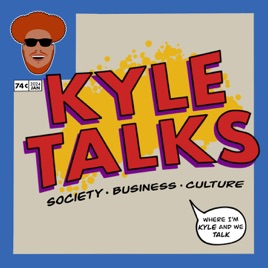
Kyle Talks

Advertise on podcast: Kyle Talks

Rating
★★★★★
5
from
26 reviews
This podcast has
221 episodes
Language
English
Publisher
Kyle Horton
Explicit
No
Date created
2020/12/05
Latest episode
2026/10/10
Average duration
32 min.
Release period
7 days

Description

Welcome to Kyle Talks, where I’m Kyle and we talk! In this podcast we focus on society, culture, & business! We interview amateurs, professionals, winners and those who are struggling along the way. What can we learn from society and how can we participate in culture? What does creating culture look like for rap artists, producers, youtubers, and even streamers? What’s this health professionals' ideology behind modern science? How can I be better? More important;y, is a hotdog a sandwich? On this podcast our goal is to talk to anyone and everyone. To learn, laugh, cry, and even create with others. We create a culture of communication, learning, and laughs. We sit down with people from all different walks of life, chat with them, and laugh with them. At Kyle Talk’s the name of the game is connection. So, go ahead, download a couple of episodes and get plugged into community and culture! Let’s talk! 

Unlock Kyle Talks podcast Email contact info,
Listeners & Audience details

Email contact information

Direct podcast contact details

Listeners

Audience numbers & engagement insights

Audience details

Podcast Insights

Podcast episodes

Check latest episodes from Kyle Talks podcast


(#221) Tariffs, Inflation & $5,000 Checks?
2026/10/10
Send us Fan Mail Tariffs, Inflation & $5,000 Checks? | FIconomy What do a growing trade deficit, rising consumer costs, and a promise of $5,000 checks have in common? They could all affect your wallet. This week on FIconomy, we’re breaking down three major economic headlines in plain English and looking beyond the politics to understand what they could mean for your everyday finances.  In this episode, we cover: America’s growing trade deficit: Why is the U.S. buying more from other countries than it sells, and what does that tell us about the economy?Tariffs and inflation: Who actually pays for tariffs, how can they affect the prices we see at the store, and what can you do to prepare?The proposed $5,000 checks: What’s behind the promise, what would need to happen for payments to become reality, and why you shouldn’t build your budget around money you may never receive. What can you actually do about it? You can’t control trade policy, inflation, or political promises. But you can pay attention to your spending, build a financial cushion, and make decisions based on the money you actually have—not what might come next. The goal of FIconomy is simple: make money and the economy easier to understand, so planning for your future feels more normal, practical, and doable. Join the conversation: If you received an unexpected $5,000 tomorrow, what would you do with it—and would it make a lasting difference to your financial future? Links: Trade Deficit Inflation $5,000 Checks Subscribe, share this episode with someone who wants to understand the economy better, and let’s make talking about money normal. Support the show
(#220) Passion Without Logic Is Dangerous
2026/10/03
Send us Fan Mail Passion Without Logic: Are We Forgetting How to Disagree? We live in a time when people are incredibly passionate about the issues they believe in. Whether it's politics, social issues, religion, or culture, caring about something and wanting to make a difference is important. But somewhere along the way, passion seems to have become an excuse for hostility. We're seeing more name-calling, personal attacks, threats, and emotional reactions that leave little room for actual conversation. And the problem isn't that people care too much. It's that sometimes their emotions become so consuming that they lose sight of logic, self-control, and the ability to communicate why they believe what they believe. In this episode, Kyle talks about the difference between being passionate and being hostile, why attacking people who disagree with you can actually hurt the causes you care about, and why being able to defend your beliefs matters. Because you can have strong convictions without belittling someone else. You can be emotional without being irrational. And you can disagree with someone without treating them like an enemy. In this episode, we discuss: Why passion and strong convictions are importantWhen passion starts getting in the way of logicHow social media can reward outrage over meaningful conversationWhy name-calling and personal attacks weaken productive dialogueHow your behavior can impact how others perceive the causes you supportWhy believing something should mean being willing to defend itThe importance of emotional maturity, self-control, and respectful disagreementWhy we need to learn how to disagree better, not simply care lessThe bigger question: If you truly believe in something, shouldn't you be able to explain why without resorting to insults, threats, or personal attacks? You don't have to agree with someone to have a meaningful conversation with them. And you don't have to sacrifice your convictions to show someone respect. Understanding does not equal agreement. Question of the episode: Have you ever agreed with someone's position but disagreed with the way they communicated it? Did it change how you viewed their argument? Let's talk about it. Intro: Head In The Clouds by Matthew Morelock Outro: Surfaces Type Beat - Jellyfish Beats Support the show
(#219) AI, Debt & Drones
2026/09/26
Send us Fan Mail The economy can feel complicated. Interest rates. Government debt. Trade wars. AI. Automation. Bond yields. It can be difficult to figure out what any of it actually means for your life. That’s what FIconomy is about. In this episode, Kyle breaks down three economic stories making headlines and translates them into simple, practical takeaways you can actually use. First, the U.S. and China are talking about AI as part of their broader economic relationship. Why has artificial intelligence become an economic and geopolitical issue—and what could that mean for the future? Then, we look at global debt, which has climbed to an enormous number, while borrowing costs remain elevated. What does all that debt actually mean for you, your mortgage, your credit, and your financial decisions? Finally, we look at Lowe’s experimenting with drone delivery. It sounds like a cool technology story, but there’s a bigger economic question underneath it: what happens when companies can use AI, automation, robotics, and drones to fundamentally change how they operate? Three stories. Three very different headlines. One bigger question: What does all of this mean for you? In this episode, Kyle breaks down: • Why AI is becoming an economic and geopolitical issue • What rising global debt actually means • Why the cost of borrowing matters to your finances • How automation and drones could change the way businesses operate • Why the future of work isn't simply about whether technology will “take your job” • What you can do today to prepare for an economy that continues to change • Why understanding economic news doesn't require becoming an economist The goal isn't to predict the future. It's to understand what's happening well enough to make better decisions about your money, your career, and your future. Links: China and AI Trillions of Debt Drone Delivery Support the show
(#218) AI Is Good. That's What Scares Me.
2026/09/19
Send us Fan Mail AI is everywhere right now—and depending on who you listen to, it's either going to change the world for the better or completely destroy it. I don't think either answer is that simple. I'm generally optimistic about AI. The possibilities are enormous, and I think we're going to see this technology do things that are difficult for us to even imagine today. But that doesn't mean I'm blind to the risks. In this episode, I take a step back from the hype, fear, and controversy surrounding AI and ask a more important question: How do we embrace something incredibly powerful without becoming careless with it? We talk about why I believe AI is ultimately a good thing, why the same power that makes it exciting also makes it scary, and why I believe some form of guardrails and safety measures are necessary. But there's an important distinction: I'm not arguing that we should stop AI. We're not going back to a world where AI doesn't exist. The question now is what we do with it—and how we make sure our excitement about what's possible doesn't prevent us from asking difficult questions about what could go wrong. We also get into the problem with trying to make this conversation binary. You don't have to be: Pro-AI or anti-AI. You can be excited about what AI can accomplish while being concerned about its risks. You can believe AI will improve our lives while believing companies and governments need to think seriously about safety. You can embrace innovation without blindly trusting it. And you can be cautious without being afraid of the future. In this episode, we explore: Why I'm generally optimistic about AIThe incredible possibilities AI could unlockWhy powerful technology deserves serious cautionWhat Oppenheimer and the nuclear age can teach us about transformative technologyWhy I believe AI needs reasonable guardrailsThe potential problems with too much regulationWhy the AI conversation doesn't need to be "good vs. bad"Why we should be willing to hold two seemingly conflicting ideas at the same timeHow we can use AI without blindly trusting itWhat I think each of us can do as AI continues to evolveUltimately, this isn't an episode about convincing you to love AI. It's about having a better conversation about it. Because I don't think blind optimism is the answer. And I don't think blind fear is either. LINKS: Six AI Incidents AI Security Breach AI Safety Intro: Head In The Clouds by Matthew Morelock Outro: Surfaces Type Beat - Jellyfish Beats Support the show
(#217) I'm Not Asking You to Agree
2026/09/12
Send us Fan Mail What if the problem isn't that we disagree? What if the problem is how we've learned to disagree? There's a growing assumption that wanting better conversations means wanting everyone to get along, accept every perspective as equally valid, or put truth and facts aside in the name of being "civil." That's not what I'm saying. In this episode, Kyle explains why productive conversation doesn't require agreement—and why truth, facts, and reality still matter. In fact, I believe we need to disagree. We need to challenge ideas. We need to question assumptions. We need to ask for evidence. We need to be willing to say, "I think you're wrong." But we also need to be capable of having that disagreement without immediately turning the other person into an enemy. In this episode, we explore:  Why understanding someone's position doesn't mean accepting it as true  The difference between facts, opinions, interpretations, and beliefs How we've started confusing our understanding of reality with reality itself  Why disagreement so quickly becomes a judgment of someone's character  Why calling someone stupid or evil is often easier than actually proving them wrong  How you can have strong convictions without abandoning conversation Why better conversation doesn't mean softer disagreement  When it's perfectly reasonable to walk away from a conversation  What it actually looks like to disagree with someone betterThe goal isn't to create a world where everyone agrees. That's impossible—and honestly, I don't think we'd want it. The goal is to create a culture where two people can fundamentally disagree, challenge each other, and still have enough discipline to actually listen. Because if we can't even talk to one another, how are we ever going to figure out what's actually true? The question I want to leave you with: Can you strongly disagree with someone without believing they are beneath you? And if you can—what would better disagreement look like? Intro: Head In The Clouds by Matthew Morelock Outro: Surfaces Type Beat - Jellyfish Beats Support the show
(#216) Trump Wants Lower Rates. The Fed Has a Problem.
2026/09/05
Send us Fan Mail The economy just threw us a curveball. The latest jobs report showed significantly more strength than expected—but at the same time, inflation is still running above the Federal Reserve's target. And while the Fed is trying to figure out what to do next, President Trump is pushing hard for lower interest rates. So...what does all of this actually mean? That's what we're breaking down on this week's Ficonomy. In this episode, Kyle takes three major economic stories and breaks them down without the Wall Street jargon: The Jobs Report The U.S. labor market came in much stronger than expected. What does that tell us about the economy—and why could strong employment actually make it harder for the Fed to cut rates? Inflation & Kevin Warsh Inflation is still above the Fed's 2% target. Kyle explains what that actually means for your everyday life and why falling inflation doesn't necessarily mean prices are falling. Trump, the Fed & Interest Rates President Trump is pushing for lower rates while the Federal Reserve has to balance employment against inflation. Why does the Fed care so much about keeping control of interest rates, and what could happen if political pressure continues? Then we bring it back to your money:  What should you do if you're carrying high-interest debt?  What does a higher-rate environment mean for your savings?  Should you change your investment strategy based on what the Fed might do?  And why trying to predict the next Fed decision probably isn't the best financial strategy. The goal of Ficonomy is simple: You shouldn't need an economics degree to understand what's happening with your money. By the end of this episode, you'll understand jobs, inflation, interest rates, the Fed, and the political fight surrounding them—and, more importantly, what you can actually do about it. Question for you: If you had to choose right now, would you rather see lower interest rates or lower inflation? And why? Support the show
(#215) If They're Wrong, Prove It.
2026/08/29
Send us Fan Mail You don't have to talk to everyone. You don't have to be friends with everyone. And you certainly don't have to agree with everyone. So why does saying “we should be willing to have conversations with people we disagree with” so often get interpreted as “you should talk to everyone, no matter what they believe”? In this episode of Kyle Talks, I want to clear up that distinction—and explore what I actually mean when I talk about the importance of conversation. You have the right to decide who gets your time, attention, and energy. Walking away from a conversation can be completely reasonable. But when we choose to engage, I think we have a responsibility to do better. If someone holds a belief you think is harmful, don't just call it harmful. Explain why. Don't just call someone stupid. Make the argument. Don't immediately reach for the strongest label you can think of. Listen to what they actually believe, understand their reasoning, and then explain where you think they're wrong. This episode explores:  Why choosing not to engage is different from being incapable of engaging  Why boundaries and open conversation can coexist  Why understanding someone's position doesn't mean agreeing with it  The problem with reducing complicated disagreements to labels and insults  When certain beliefs genuinely cross a line  Why calling something “dangerous” isn't enough—you should be able to explain why  Whether our current approach to political and cultural disagreement is actually working  What productive disagreement could look like instead I'm not arguing that everyone needs to talk to everyone. I'm arguing that if we want a healthier culture, we need to become better at the conversations we choose to have. You can have strong convictions. You can walk away. You can tell someone they're wrong. And you can still treat them like a human being while making your case. Understanding doesn't equal agreement. And sometimes, the hardest thing we can do is actually have the conversation. Intro: Head In The Clouds by Matthew Morelock Outro: Surfaces Type Beat - Jellyfish Beats Support the show
(#214) The Easiest Way to Avoid Thinking
2026/08/22
Send us Fan Mail The Easiest Way to Avoid Thinking When did disagreeing with someone become enough to decide that they're stupid, evil, or simply not worth listening to? That's something I've been thinking about a lot lately. In this episode of Kyle Talks, I talk about my frustration with the way we increasingly handle disagreement. Too often, it seems like the moment someone holds an opinion we strongly disagree with, we stop engaging with what they actually believe and start attacking the person who believes it. And honestly? That's the easy way out. It takes very little effort to say, "They're stupid." It takes much more effort to ask: Why do they believe that? What experiences brought them there? What information are they looking at? Where do I think their reasoning falls short? And can I actually explain why I believe they're wrong? That's the kind of disagreement I want to encourage on Kyle Talks. This isn't an argument that every idea is harmless or that every opinion deserves endless consideration. Some beliefs and actions are genuinely dangerous, and there are moments when society needs to stand together and clearly reject them. But even then, simply insulting people isn't enough. If we want to change minds, improve our communities, and create a healthier culture, we have to be willing to do the harder work. In this episode, we explore: Why we've become so quick to equate disagreement with stupidity or bad characterThe difference between challenging an idea and attacking a personWhy calling someone "stupid" often allows us to avoid actually engaging with their argumentWhy understanding someone's position doesn't mean agreeing with itWhen disagreement crosses into genuinely dangerous territoryWhy some ideas need to be challenged firmly rather than simply dismissedWhat productive disagreement actually requires from usWhy intellectual humility is not the same thing as weaknessHow doing the harder work of conversation can create real changeYou don't have to agree with someone. You don't have to pretend every idea is equally valid. And you don't have to abandon your convictions. But if we're going to disagree, let's actually disagree. Let's ask questions. Let's understand the argument. Let's challenge the reasoning. Let's explain why we think someone is wrong. And let's stop pretending that calling someone stupid is the same thing as proving them wrong. Understanding does not equal agreement. That's the conversation. Intro: Head In The Clouds by Matthew Morelock Outro: Surfaces Type Beat - Jellyfish Beats Support the show
(#213) Are We Giving Up on Each Other? | Chatting With...
2026/08/15
Send us Fan Mail One of my favorite parts of Kyle Talks is hearing from you. This episode is part of Chatting With..., a recurring series where I sit down with questions sent in by listeners and think through them together. These aren't definitive answers or life advice—they're conversations. Think of it like sitting down with a friend over coffee (or a couple of beers) and exploring ideas together. This week, we're tackling three thoughtful questions that all point to a bigger issue: How do we stay connected when disagreement feels easier than understanding? In this episode, we discuss: How do you know when a disagreement is worth having—and when it's time to walk away?Can friendships survive major political differences, or is it okay to accept that people grow apart?Is it possible to genuinely respect someone whose beliefs you believe are harmful? Where do you draw the line?These are questions without easy answers, but they're worth wrestling with. Throughout the conversation, I share my own thoughts, experiences, and reflections—not because I have everything figured out, but because I believe thinking out loud together is how we all grow. If there's one thing I hope you take away from this episode, it's that meaningful conversations don't always end in agreement—but they can leave us with greater understanding, stronger convictions, and a little more humility. Support the show
(#212) Ficonomy: The Economy Is Slowing but GLP-1 isn't.
2026/08/08
Send us Fan Mail The Economy Is Slowing. So Why Does Everything Still Feel Expensive? Welcome back to Ficonomy, where we take complicated financial and economic news and break it down into simple terms—and, most importantly, figure out what it actually means for your everyday life. This week, we're looking at three very different stories that tell us something important about where the economy stands right now. The economy is slowing. The job market is showing signs of weakness. Inflation is still elevated. And meanwhile, a major employer is spending hundreds of millions of dollars on GLP-1 medications for its employees. So what does all of this mean for you? That's what we're breaking down. In this episode, we discuss:  The Job Market Private companies added far fewer workers than expected in July. What does that tell us about hiring, job security, and the current labor market Economic Growth & Inflation The U.S. economy slowed in the second quarter while inflation remained elevated. Why can the economy slow down while prices continue to rise?  The Economics of GLP-1 Drugs Why is Bank of America reportedly spending roughly $250 million or more annually on GLP-1 medications for employees? And what could the growing popularity of these drugs mean for healthcare, businesses, consumers, and the broader economy? More importantly: what do you do with this information? We talk about practical steps you can take today, including:  How to prepare for a potentially softer job market  Why an emergency fund matters when hiring slows  What to consider before taking on new debt  Why you shouldn't build your financial plans around predictions about interest rates  How to think about economic trends beyond the initial headline  Why understanding second-order effects can make you a smarter consumer and investor The goal isn't to scare you about the economy. It's to help you understand it. Because the economy isn't some abstract thing that only matters to economists, politicians, or Wall Street. It affects your paycheck, job, healthcare, spending, debt, investments, and everyday decisions. That's Ficonomy. Three stories. Simple explanations. Practical takeaways. And hopefully, you leave this episode understanding the economy a little better than you did when you pressed play. Links: Link 1 Link 2 Link 3 Support the show
(#211) Your Brain Is Lying to You About Other People
2026/08/01
Send us Fan Mail We’re All More Complicated Than Our Labels What happens when we decide who someone is before we actually know them? In this episode of Kyle Talks, I share a story from my time working as a cashier at Target during the 2020 election. A customer began talking to me about politics and made some pretty strong assumptions about the kind of people who supported Donald Trump. There was just one problem: she had no idea she was talking to one. The experience stuck with me—not because of the politics, but because of what it revealed about how easily we can create stories about entire groups of people based on assumptions, stereotypes, and our own beliefs. We break the conversation down into four parts: 1. The Story — What happened at that Target checkout line. 2. The Issue — Why we so often make assumptions about people we don't actually know. 3. The Thoughts — What this says about political disagreement, human judgment, and the danger of putting people into simple boxes. 4. The Solution — How we can challenge our own assumptions, stay intellectually honest, and become better at understanding people—even when we strongly disagree with them. You don't have to agree with someone. You don't have to like their decisions. But maybe we should be a little more careful about deciding who they are. Because people are almost always more complicated than the label we've given them. Connect Insta/X: kyleTHEhorton Youtube: Kyletalkss Tiktok: KyleTalkss If you enjoyed this episode, I'd love to hear your thoughts. Leave a rating, share the episode with someone who sees the world differently than you do, and join us as we continue building a culture of better conversations. Intro: Head In The Clouds by Matthew Morelock Outro: Surfaces Type Beat - Jellyfish Beats Support the show
(#210) Ficonomy: The Economy Is Sending Three Big Signals (Are You Paying Attention?)
2026/07/25
Send us Fan Mail Welcome back to Ficonomy—the series on Kyle Talks where we take the week's biggest financial headlines and explain them in plain English. No jargon.  No complicated charts.  Just what happened, why it matters, and what you can actually do about it. This week, we're looking at three stories that could have a real impact on your finances in the months ahead. We discuss:  Why proposed tariffs on imported generic medications could eventually affect prescription drug prices.  Why import prices are rising again—and what that could mean for everything from electronics to everyday household goods.  Why more Americans are giving up looking for work, and what that says about today's labor market.  How these stories connect to the broader economy.  Practical steps you can take today to stay financially prepared instead of financially surprised. Ficonomy isn't about predicting the future—it's about helping you better understand the present so you can make smarter financial decisions. Whether you're trying to build wealth, manage your household budget, or simply understand the headlines, this episode is designed to leave you more informed and more confident. In this episode:  The future of prescription drug prices  Why imported goods are getting more expensive   What the latest jobs data really tells us  Practical ways to prepare your finances  Financial habits that matter no matter what the economy does Thank you for listening to Kyle Talks. If you enjoy Ficonomy, consider following the show, leaving a review, and sharing this episode with someone who wants to better understand money without needing an economics degree. Because understanding your finances shouldn't require speaking a different language. Links: Link 1 Link 2 Link 3 Support the show
(#209) I'm Sick Of This Narrative
2026/07/18
Send us Fan Mail When Did Disagreement Become Hatred? | Kyle Talks Somewhere along the way, we've started treating disagreement as proof that someone is against us. But is that actually true? In this episode of Kyle Talks, I share a recent personal experience that reminded me how quickly people assume bad intentions simply because someone sees the world differently. We explore why disagreement has become so emotionally charged, why assuming hatred is often the easier path, and what it costs us when we stop giving people the benefit of the doubt. Disagreement doesn't automatically equal disrespect. Different opinions don't automatically equal malice. And if we continue believing they do, we lose something much bigger than an argument—we lose our ability to understand one another. In this episode we discuss:  Why disagreement isn't evidence of hatred  The danger of assuming motives instead of asking questions  Why emotionally mature people separate ideas from identity  How social media has trained us to expect conflict instead of conversation  Why giving people the benefit of the doubt creates healthier relationships  The difference between genuine malice and honest disagreement  Practical ways to navigate difficult conversations without sacrificing your convictions Whether you agree with me or not, my hope is that this episode encourages you to approach your next disagreement with a little more curiosity and a little less certainty. Because better conversations build better communities. Connect Insta/X: kyleTHEhorton Youtube: Kyletalkss Tiktok: KyleTalkss If you enjoyed this episode, I'd love to hear your thoughts. Leave a rating, share the episode with someone who sees the world differently than you do, and join us as we continue building a culture of better conversations. Intro: Head In The Clouds by Matthew Morelock Outro: Surfaces Type Beat - Jellyfish Beats Support the show
(#208) Ficonomy: Why Everything Still Feels So Expensive
2026/07/11
Send us Fan Mail Welcome back to Ficonomy—the segment where we break down the biggest financial headlines in simple, practical terms so you can better understand what's happening in the economy and how it impacts your everyday life. This week, we're looking at three major stories that could affect everything from your paycheck to your grocery bill and your next trip to the gas station. We'll break down: 📈 The latest jobs report — What slowing job growth tells us about the economy and why a healthy job market still deserves your attention. 💵 Inflation (PCE) — Inflation continues to cool in some areas, but prices are still higher than many families would like. We'll explain what the latest report really means and why the Federal Reserve is paying close attention. ⛽ Oil prices are rising again — Growing tensions in the Middle East have pushed oil prices higher. We'll discuss how that can affect gas prices, shipping costs, and eventually the prices you pay for everyday goods. What You'll Learn  What the latest jobs report is really telling us  Why inflation is still affecting household budgets  How global events can impact your wallet  Why oil prices matter even if you don't drive much  Practical ways to prepare without overreacting  How to stay financially disciplined in an uncertain economy Practical Takeaways This week's economic news reminds us that while the economy continues to move forward, uncertainty remains. Instead of reacting emotionally to headlines, focus on what you can control:  Continue investing consistently if you're investing for the long term.  Build or maintain an emergency fund.  Pay down high-interest debt when possible.  Leave room in your budget for unexpected increases in everyday expenses.  Stay informed—but don't let fear drive your financial decisions. Final Thought The goal of Ficonomy isn't to predict the future. It's to help you understand today's financial news so you can make better decisions tomorrow. Because the economy affects all of us—but understanding it shouldn't require an economics degree. Support the show
(#207) Passion Doesn't Make You Right
2026/07/04
Send us Fan Mail Passion is powerful. It fuels movements, inspires change, and pushes us to stand up for what we believe in. But there's one thing passion can't do: It can't prove we're right. In this solo episode of Kyle Talks, I explore why strong emotions and deep conviction are not the same as truth—and why confusing the two can make meaningful conversations almost impossible. We live in a culture that often rewards certainty over curiosity. The louder someone speaks, the more confident they appear, or the more passionate they become, the easier it is to assume they must be right. But history—and our own lives—tell a different story. In this episode, I reflect on why intellectual humility matters, how our identities become tied to our opinions, and why some of the healthiest conversations begin with a simple question: "What if I'm missing something?" This isn't an argument against passion. It's an invitation to pair passion with humility, curiosity, and a willingness to keep learning. Because understanding someone else's perspective doesn't weaken your convictions—it helps ensure they're built on something stronger than emotion alone. In This Episode  Why passion and truth are not the same thing  The difference between confidence and evidence  How identity shapes the way we defend our beliefs  Why certainty can become a barrier to learning  The role of intellectual humility in better conversations  Why asking good questions is more powerful than winning arguments  Practical ways to stay curious without compromising your values Questions to Consider  Have you ever been completely convinced you were right… only to change your mind later?  What evidence would actually cause you to rethink one of your beliefs?  Are you defending the truth—or defending your identity?  Can you disagree passionately while remaining open to learning? Final Thought The goal isn't to become less passionate. The goal is to become more thoughtful. Because the strongest convictions aren't the ones that refuse to be questioned—they're the ones that have been tested, challenged, and refined through honest conversation. Understanding doesn't equal agreement. But it often leads to wisdom. Social Media: Insta/X: kyleTHEhorton Youtube: Kyletalkss Tiktok: KyleTalkss Intro: Head In The Clouds by Matthew Morelock Outro: Surfaces Type Beat - Jellyfish Beats Support the show

Podcast reviews

Read Kyle Talks podcast reviews


5 out of 5
26 reviews
★★★★★
Dat-guy12245 2024/12/26
Great Podcast
Really great guy!
★★★★★
Enjoyer12389 2024/12/21
10/10
Enjoying the talks. Learning and enjoying
★★★★★
Travel guide 2023/06/05
Ficonomy!
Ficonomy happens to be the highlight and twilight of my week.
★★★★★
RandoMambo 2022/12/23
Great Person
Actually enjoy the podcast! Keep it up!
★★★★★
Em Simpson 2022/07/20
Kyle Talks is a Genuine Talker
Kyle is a good conversationalist. I actively feel apart of the conversation even though it’s one way. Kudos to him for making every podcast sound like...
★★★★★
Austin_~ 2021/02/05
NOICE!
Thanks for the entertainment!
★★★★★
B___JAX 2020/12/16
Great NEW Podcast
Have thoroughly enjoyed the first few talks. Give “Kyle Talks” a try!
★★★★★
cringe grandma 2020/12/15
Review
This KyleTalks guy is kinda cool! Naturally and casually funny! Can’t wait to see the 3 year look back at this episode. Lol
check all reviews on apple podcasts

Podcast sponsorship advertising

Start advertising on Kyle Talks relevant audience podcasts


What do you want to promote?