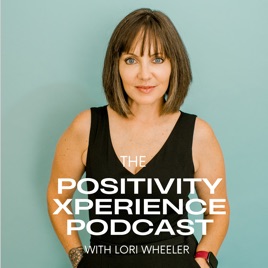
Advertise on podcast: The Positivity Xperience
Rating
4.9from
This podcast has
281 episodes
Language
EnglishPublisher
Lori WheelerExplicit
Yes
Date created
2020/12/08
Latest episode
2026/04/19
Average duration
45 min.
Release period
7 days
Description
Weekly podcast to help bring some relief of living with anxiety, depression, Overthiinkng and soooo many other things so many of us deal with daily. I am an alternative therapist and life coach who has struggled and still do with anxiety and overthinking. I will also teach you to love yourself
Unlock The Positivity Xperience podcast Email contact info,
Listeners & Audience details
Email contact information
Direct podcast contact details

Listeners
Audience numbers & engagement insights

Audience details
Podcast Insights

Podcast episodes
Check latest episodes from The Positivity Xperience podcast
Growing Past People Who Don't Want You to Grow
2026/04/19
Growth doesn't just change you—it changes your relationships. In this episode, we break down the psychology behind why people resist your growth and why becoming more self-aware, boundaries, and autonomous can create tension in your relationships.
We explore how attachment patterns, nervous system responses, and identity dynamics all play a role in why others may push back when you start changing. When you stop over-explaining, over-giving, or managing other people's emotions, it disrupts familiar patterns—and not everyone is willing to adjust.
This episode also dives into your role in these dynamics, including how you may unintentionally soften your growth to maintain connection, and why learning to tolerate discomfort is essential for real change.
In this episode, we cover:
*Why personal growth disrupts relationship dynamics
*The psychology behind why people resist your change
*How attachment and familiarity influence behavior
*The nervous system's role in keeping you in old patterns
*Where you may be holding yourself back to maintain connection
*What it actually takes to grow without reverting
Growth is not about leaving people behind—it's about no longer abandoning yourself to keep them.
Become A Patreon: www.patreon.com/thepositivityxperience
Let's Work Together: www.thepositivityxperience.com
Autonomy: Why It's So Hard to Have (And Why People Resist It)
2026/04/12
Autonomy isn't just independence—it's the ability to think, choose, and act without being driven by guilt, fear, or the need for approval. In this episode, we break down the psychology of autonomy and why it's so difficult for many people to fully develop. We explore how attachment patterns, nervous system responses, and identity formation shape your ability to make self-directed decisions—and why choosing yourself can feel threatening, even when it's necessary.
We also dive into the uncomfortable reality that other people may resist your autonomy. When you stop over-explaining, over-giving, or managing others' emotions, it disrupts patterns that people have come to rely on. This episode connects deeply to themes of boundaries, responsibility, and emotional regulation, and explains why autonomy is often the missing piece in breaking cycles of over-functioning, people-pleasing, and manipulation.
In this episode, we cover:
*What autonomy actually means from a psychological perspective
*Why attachment and early conditioning make autonomy difficult
*How the nervous system reacts when you choose yourself
*Why people may resist or push back against your autonomy
*The connection between autonomy and boundaries
*What it actually takes to develop internal authority
Autonomy isn't about cutting people off—it's about no longer abandoning yourself to keep others comfortable.
Become A Patreon: www.patreon.com/thepositivityxperience
Let's Work Together: www.thepositivityxperience.com
Your Thoughts Are Not You: Why Your Brain Creates Them and Why You Believe Them
2026/04/05
If your feelings aren't facts… then what about your thoughts? In this episode, we take the next step and break down the psychology and neuroscience of thoughts — where they come from, why they feel so real, and why trying to "get rid of them" often makes them stronger.
Your brain is constantly generating thoughts as part of its prediction and survival system. Most of these thoughts are not objective truths — they are mental events shaped by past experiences, conditioning, bias, and pattern recognition. Yet they feel personal, convincing, and often unquestionable. We explore how the brain produces thoughts through neural networks and predictive processing, why familiar thoughts feel true even when they're not accurate, and how something called cognitive fusion causes you to identify with your thoughts instead of observing them. We also connect this to last week's episode on feelings — because thoughts and emotions are constantly reinforcing each other. Thoughts create emotional reactions, and emotions strengthen the thoughts, creating loops that can feel impossible to break.
You'll learn why thought suppression doesn't work (and can actually increase intrusive thinking), how your brain prioritizes efficiency over accuracy, and why stepping back from your thoughts is one of the most powerful shifts you can make for emotional clarity.
In this episode, we cover:
*What thoughts actually are from a neuroscience perspective
*How the brain generates thoughts using memory, prediction, and pattern recognition
*Why familiar thoughts feel true even when they're not accurate
*The concept of cognitive fusion and how it keeps you stuck in mental loops
*Why trying to suppress thoughts makes them stronger
*How thoughts and feelings reinforce each other
*How to create distance between you and your thoughts Your thoughts are real. But they are not facts. And they are not who you are.
Become A Patreon: www.patreon.com/thepositivityxperience
Let's Work Together: www.thepositivityxperience.com
Your Feelings Aren't Facts: What Your Brain Is Actually Doing
2026/03/29
Have you ever felt something so strongly that it seemed like absolute truth?
Feeling ignored.
Feeling rejected.
Feeling disrespected.
Feeling anxious about something that hasn't even happened yet.
Here's the reality: your feelings are real, but they are not always factual.
In this episode, we explore the neuroscience behind emotions and why the brain can make feelings seem like undeniable truth—even when they're based on interpretation rather than objective reality.
Your emotional brain reacts faster than your thinking brain. The limbic system—particularly the amygdala—is designed to detect potential threats quickly and trigger emotional responses before your rational mind fully processes what's happening. This is incredibly useful for survival, but it also means your brain can create powerful emotional reactions based on past experiences, learned patterns, and assumptions.
That's why emotions can feel convincing even when they're not telling the full story.
In this episode, we break down how the brain generates emotions, why emotional reactions often happen before logical thinking, and how confirmation bias can reinforce emotional narratives once they begin.
We also talk about the difference between validating a feeling and believing the interpretation attached to it, and why learning to pause between emotion and conclusion is one of the most important parts of emotional maturity.
In this episode you'll learn: The neuroscience behind emotions and how the brain processes feelings
Why the amygdala reacts before your rational brain can analyze the situation
How confirmation bias reinforces emotional stories in your mind
Why past experiences shape emotional triggers in the present
The difference between acknowledging emotions and treating them as facts
How emotional regulation creates space for clearer thinking and healthier relationships
Emotions are powerful signals. They tell you something about what's happening inside you. But emotional clarity comes from learning to question the meaning your brain attaches to those feelings instead of automatically treating them as reality.
When you learn to separate emotion from interpretation, you gain something incredibly valuable: perspective.
Become A Patreon: www.patreon.com/thepositivityxperience
Get More Resources: www.thepositivityxperience.com
DARVO: The Manipulation Tactic That Makes You Defend Yourself
2026/03/22
Have you ever brought up an issue with someone and somehow ended up defending yourself instead? In this episode we break down the psychological tactic known as DARVO — Deny, Attack, Reverse Victim and Offender.
This manipulation pattern is often used to escape accountability, distort conflict, and regain narrative control. We explore the science behind DARVO, why it works so effectively on empathetic people, and how it shows up in relationships, workplaces, and family dynamics. We also discuss how to recognize this pattern in others — and how to catch it in yourself before it damages trust.
🎧 In this episode we cover:
*What DARVO actually is
*The psychology behind denial and blame reversal
*Why your nervous system gets hijacked during conflict
*Real-life examples of DARVO in relationships and families
*How to stay grounded when someone tries to flip the narrative
*How to recognize when you might be using DARVO yourself
Become A Patreon: www.patreon.com/thepositivityxperience
Let's Work Together & Resources: www.thepositivityxperience.com
The Manipulation Control Trap That Keeps You Defending
2026/03/15
Have you ever left a conversation feeling confused, guilty, or unsure of what actually happened?
In this episode, we break down the psychology behind narrative control and how manipulators subtly rewrite events to avoid accountability and maintain power. We explore minimization, reversal, selective memory, emotional hijacking, and how confusion becomes a compliance tactic.
🎧 In this episode, we cover:
*Why manipulators distort reality
*How narrative control creates leverage
*The covert tactics you don't see in real time
*Why you end up defending instead of addressing
*How to stop debating memory and anchor to truth
If you've ever felt foggy or destabilized after conflict, this episode will help you understand why.
Become A Patreon: www.patreon.com/thepositivityxperience
Let's Work Together: www.thepositivityxperience.com
Why You Feel Responsible for Other People's Crises
2026/03/08
Do you feel responsible for other people's emergencies — their emotional spirals, financial messes, relationship chaos, or even their mental health crises?
In this episode, we break down the psychology behind over-responsibility, nervous system conditioning, and why "being the strong one" becomes a role you can't turn off. We explore how crisis-responsibility develops through conditioning and attachment patterns, why urgency hits your body like a mandate, and what it actually looks like to care without carrying.
🎧 In this episode, we cover:
Why some people feel responsible for everyone else's crises
How over-functioning creates codependent crisis loops
Why mental health is NOT your responsibility to manage
How guilt becomes a control mechanism (even unintentionally)
The difference between support, rescue, and emotional hostage situations
How to set containment boundaries without becoming cold
If you've been living like a crisis manager — this episode will help you reclaim your life without losing your compassion.
Become A Patreon: www.patreon.com/thepositivityxperience
Let's Work Together: www.thepositivityxperience.com
Why You Can't Relax Even When Nothing Is Wrong
2026/03/01
If you struggle to relax even when life feels calm, this episode will help you understand why. In this episode, we explore the psychology and nervous system conditioning behind chronic tension, hypervigilance, and the inability to rest. We break down why relaxation can feel unsafe, how early environments shape the stress response, and why thinking your way into calm rarely works.
🎧 In this episode, we cover:
Why relaxation is a nervous system state — not a mindset
How hypervigilance develops without obvious trauma
Why calm can feel uncomfortable or unsafe
The role of ego and identity in staying activated
What actually helps the nervous system learn safety
This is a grounded conversation about responsibility, healing, and learning how to feel safe in stillness again.
Become A Patreon: www.patreon.com/thepositivityxperience
Let's Work Together: www.thepositivityxperience.com
You Need to Know Who Gets Access to You
2026/02/22
Victim mindset isn't just about how you think — it's about who you allow access to you. In this episode, we explore how victim mentality is reinforced through relationships, environments, and emotional access. Drawing from psychology, attachment theory, and nervous system science, this conversation breaks down why mindset work often fails when access doesn't change — and how growth requires more than just insight.
🎧 In this episode, we cover:
*How victim mindset is reinforced socially
*What "access" actually means psychologically
*Why attachment and belonging keep people stuck
*How ego protects familiar identities
*Why environment matters more than intention
*What actually shifts when access changes
This episode is a direct, grounded conversation about responsibility, healing, and choosing relationships that support who you're becoming — not who you've been.
Become A Patreon: www.patreon.com/thepositivityxperience
Let's Work Together www.thepositivityxperience.com
You Need to Know Why You Become the Emotional Dumping Ground
2026/02/15
You Need to Know Why You Become the Emotional Dumping Ground If people constantly unload their emotions, problems, and frustrations onto you, this episode will help you understand why — and what to do about it.
In this episode, we explore the psychology behind becoming the emotional dumping ground, including how early conditioning, emotional over-functioning, and ego identity quietly reinforce this pattern. We break down the difference between healthy vulnerability and emotional dumping, why boundaries alone don't always stop it, and what you may be unconsciously signaling that keeps this dynamic in place.
🎧 In this episode, you'll learn:
Why people emotionally dump on certain individuals
The difference between empathy and emotional absorption
How ego identity reinforces being "the safe one"
Why boundaries fail without energetic change
How to stop over-functioning emotionally without shutting down
This is a direct, psychology-based conversation about reclaiming emotional space, responsibility, and self-respect — without losing compassion.
Become A Patreon: www.patreon.com/thepositivityxperience
Let's Work Together: www.thepositivityxperience.com
The 4 Agreements (and Why You Keep Resisting Them)
2026/02/08
The Four Agreements are simple — but they're not easy. And the reason most people don't practice them isn't because they don't understand them. It's because practicing them requires giving up ego-driven habits like blame, vagueness, mind-reading, people-pleasing, and self-bullying.
In this episode, we break down what The Four Agreements actually are, where they originated, where people get them wrong, and why so many people cherry-pick the parts that feel comforting while avoiding the parts that would actually change their relationships and self-respect.
🎧 In this episode, you'll learn:
*What the four agreements are and what they were meant to teach
*The most common ways people misuse "don't take it personally" and "always do your best" *Why ego resists these agreements (and how that shows up in your daily life)
*How to apply them without using them as spiritual bypassing This is a direct, psychology-informed conversation about responsibility, communication, and emotional maturity — so you can stop quoting the principles and start living them.
Become A Patreon: www.patreon.com/thepositivityxperience
Let's Work Together: www.thepositivityxperience.com
Stop Taking Responsibility for Other People's Feelings
2026/02/01
If you feel compelled to soothe, explain, reassure, or fix whenever someone is upset, this episode is for you.
In this episode, we unpack why so many people take responsibility for other people's emotions — and why this pattern is often mistaken for empathy. We explore the psychology behind emotional fixing, how early conditioning teaches us that discomfort is dangerous, and why the ego reinforces the need to manage others' feelings.
You'll learn the difference between presence and control, why letting people feel their emotions can feel terrifying, and how fixing others actually prevents growth — for them and for you. This episode is about releasing emotional responsibility without guilt and reclaiming your energy, boundaries, and nervous system regulation.
🎧 In this episode, you'll learn:
Why fixing feelings is not empathy
How emotional responsibility gets conditioned early
The role ego plays in fixing and rescuing
Why letting others feel feels unsafe
How to support without over-functioning
This is a direct, psychology-based conversation about boundaries, emotional ownership, and learning to care without carrying what isn't yours.
Become A Patreon: www.patreon.com/thepositivityxperience
Get The Workbook And Other Resources: www.thepositivityxperience.com
Why Intensity Isn't Connection
2026/01/25
Intensity often feels like depth — but it isn't the same thing as connection.
In this episode, we explore why so many people confuse emotional intensity with closeness, chemistry, or intimacy, and how nervous system dysregulation and ego reinforcement keep this pattern alive. If calm feels boring, unsettling, or emotionally empty to you, there's a psychological reason — and it has nothing to do with your capacity for love or connection.
We break down how attachment patterns, early emotional conditioning, and ego identity can make urgency, emotional highs, and volatility feel meaningful, while steady, grounded connection feels unfamiliar or wrong. This episode challenges the belief that depth requires chaos and explains what real connection actually feels like when safety replaces stimulation.
🎧 In this episode, you'll learn:
Why emotional intensity feels like connection
How attachment and nervous system conditioning shape attraction
The role ego plays in chasing emotional highs
Why calm can feel unsafe or "boring"
How to recognize real connection versus emotional activation
This is a psychology-based conversation about retraining your nervous system, releasing ego-driven patterns, and learning to experience connection without overwhelm.
Become A Patreon: www.patreon.com/thepositivityxperience
Let's Work Together: www.thepositivityxperience.com
The Truth About Fake Concern: When Kindness Is Used as Leverage
2026/01/18
Some people don't control through aggression — they control through concern.
In this episode, we break down the psychology of fake concern and how kindness can quietly become a tool for emotional leverage. If someone frames control as care, uses "worry" to influence your decisions, or subtly plays on your insecurities while appearing helpful, this conversation will help you see it clearly.
We explore why weaponized kindness is so effective, how guilt and obligation are created without direct confrontation, and why people who use fake concern often appear reasonable, supportive, and well-intentioned on the surface. This episode explains the psychological mechanisms behind emotional control, moral superiority, and subtle manipulation — without labeling or diagnosing.
If you've ever felt confused, pressured, or smaller after a "supportive" conversation, this episode will help you understand what's actually happening and how to reclaim your autonomy without guilt.
🎧 In this episode, you'll learn:
The difference between genuine care and fake concern
Why kindness becomes leverage in certain relationships
How insecurities are subtly targeted and reinforced
The psychology of emotional obligation and moral framing
How to recognize control disguised as support
This is a direct, psychology-based conversation about discernment, boundaries, and self-trust — not becoming cynical, but becoming clear.
Become A Patreon: www.patreon.com/thepositivityxperience
Get MORE Resources: www.thepositivityxperience.com
You Need To Know What Happens When You Heal-- And Others Don't.
2026/01/12
Healing doesn't just change how you feel — it changes how you show up in relationships. And that shift can be deeply uncomfortable for the people who benefited from the old version of you.
In this episode, we explore what actually happens when you begin healing, setting boundaries, regulating your nervous system, and stepping out of familiar emotional roles — while others stay stuck in the same patterns.
If you've noticed tension, guilt-tripping, distance, or backlash since doing the inner work, this episode will help you understand why.
We'll break down the psychology behind it, including:
• Why your healing disrupts emotional roles and power dynamics
• How ego reacts when it can no longer control or rely on you
• Why unhealed people experience boundaries as rejection
• How projection, shame, and insecurity drive resistance
• Why calm and regulation feel threatening to dysregulated nervous systems
• Why people try to pull you back into who you used to be
• How to stop explaining, shrinking, or self-betraying to keep the peace
• How to hold compassion without abandoning yourself You'll learn why healing doesn't make you selfish or cold — it makes you less available for dysfunction.
This episode is for anyone who is growing, changing, and wondering why relationships suddenly feel harder. Because healing doesn't destroy relationships — it reveals which ones depended on your unhealed self.
Get The Worksheet On Patreon: www.patreon.com/thepositivityxperience
Get The Journals & Resources: www.thepositivityxperience.com
Podcast reviews
Read The Positivity Xperience podcast reviews
UWSdonna 2025/09/30
Bingo on the guilt and shame
Lori describes exactly what happens in my brain as a result of regret, guilt and shame...perpetual people pleasing and self-flagellation.
jeg03 2024/12/05
Excellent Content
Excellent content, well worth the investment of time.
pinkd100 2024/09/16
Like therapy as a podcast
This is such a great podcast. I liked the ones on projection and manipulation so far. Excited to make my way through the 200 others!
Vincentboy27 2024/04/29
Lovin Lori
Since finding Lori a few months ago here on the podcast app; I really have learned an awful lot....finding out about myself more and more and feeling ...
T Redd 2023/09/27
Thank you Lori 💐
Lori is like my personal therapist 🥹 She’s doing God’s work by giving us tools to work through 🫶🏽
bbbbbmom 2023/08/23
Thank you
I truly learn so much from your podcasts, and about myself.
Thank you for all you do!!
Melissa607! 2023/01/07
You’re amazing
Lori this pod cast is truly helping so much to stay in alignment you’re straight forward approach is someone I understand.❤️ keep up
The good work cha...
littledebbie111 2023/01/04
My inspiration!!
Lori is my inspiration. She truly wants to help people and her advice is filled with experience and wisdom. She is helping me understand myself and ot...
Tinkgizmo 2022/11/08
Real. Good.
Found this and her via TikTok. So glad she mentioned she has multiple venues, including a podcast, which takes those great “seconds” TikToks and pulls...
Alexa Lebrija 2022/07/13
This woman is phenomenal
100/10 recommend Lori’s podcast and all social media accounts as well. Everything she teaches is relatable and amazing information. The way she presen...
Podcast sponsorship advertising
Start advertising on The Positivity Xperience relevant audience podcasts
You may also like to advertise on these Podcasts

4.5113124
Sleep Time: Sleep Meditations with Nicky Sutton
Nicky Sutton

4.72566247
Scary Story Podcast
Scary Stories

4.78882000
Inspire Nation Show with Michael Sandler
Michael Sandler, Jessica Lee

4.6368500
Your College Bound Kid | Admission Tips, Admission Trends & Admission Interviews
Mark Stucker

4.8579530
Mighty Blue On The Appalachian Trail: The Ultimate Mid-Life Crisis
Steve Adams

4.4358464
Science Weekly
The Guardian

4.2577392
Psych Legal Pop Podcast
Tess & Brooke Brigham
4.9234413
The Spark Creativity Teacher Podcast | ELA
Betsy Potash: ELA

4.62044756
Rebel FM
Eat-Sleep-Game.com Staff

4.91834791
ProjectME with Tiffany Carter – Entrepreneurship & Millionaire Mindset
Tiffany Carter