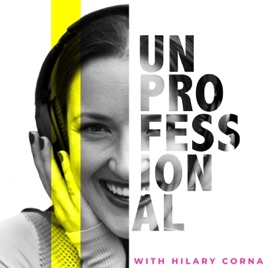
Advertise on podcast: Unprofessional
Rating
5from
This podcast has
160 episodes
Language
EnglishPublisher
Hilary CornaExplicit
No
Date created
2021/01/08
Latest episode
2026/10/08
Average duration
19 min.
Release period
15 days
Description
Hilary Corna, former Toyota executive and process expert, empowers service-based businesses to streamline operations and scale with clarity using the PDCA methodology. Unprofessional is a community-driven podcast for bold leaders seeking actionable strategies, fresh perspectives, and the tools to build streamlined, impactful businesses with purpose.
Unlock Unprofessional podcast Email contact info,
Listeners & Audience details
Email contact information
Direct podcast contact details

Listeners
Audience numbers & engagement insights

Audience details
Podcast Insights


Podcast episodes
Check latest episodes from Unprofessional podcast
Mahesh Mahato, Founder & MD of Cosmic Electrical Limited
2026/10/08
In this episode, Hilary Corna sits down with Mahesh, Founder and Managing Director of Cosmic Electrical Limited, a Nepal-based energy company focused on transmission lines, distribution lines, and rural electrification projects. Mahesh shares how growing up in a village without electricity shaped his purpose, why bringing power to rural communities became deeply personal, and how Cosmic has impacted millions of lives through clean energy initiatives.
Hilary and Mahesh also discuss the operational challenges that come with scaling a purpose-driven business, including getting processes out of the founder’s head, simplifying complex systems, building accountability, and helping teams adopt a new way of working. From EMP learnings to the “Cosmic Way,” this conversation explores how leaders can create clearer systems, stronger culture, and businesses that can eventually run without depending on the founder.
TIMESTAMPS
[00:50] Meet Mahesh and Cosmic Electrical Limited
[01:50] How Cosmic started and why rural electrification became the mission
[04:37] The village story that shaped Mahesh’s purpose
[08:44] Why Mahesh joined EMP and what he wanted to bring back to the business
[11:50] The biggest changes after EMP: purpose, vision, and process clarity
[13:38] Simplifying project management and making processes easier to follow
[16:14] The challenge of changing people’s mindset
[17:37] Why simplification is harder than complication
[19:06] Clarity, accountability, and “who does what, when, and how”
[21:00] The myth of being CEO: “the company won’t run without me”
[22:00] Why systems and culture must come before hiring senior leaders
[23:41] Building a business that can live beyond the founder’s brain
[26:15] Where to connect with Mahesh
Jim Jacobs, CEO of Focus Insite
2026/09/21
In this episode, Hilary Corna sits down with Jim Jacobs, CEO of Focus Insight and Human Layer AI, to talk about how AI is changing the way companies think about process, scale, and operational efficiency. Jim shares how the EMP program transformed his perspective on growth, helping him rethink his business model, rebuild processes, and identify where AI could create real leverage.
Together, Hilary and Jim explore why AI should not be treated as a replacement for people, but as a tool that can augment teams, reduce repetitive work, improve quality, and lower costs when implemented correctly. They also discuss the importance of human judgment, building the right guardrails, using AI to solve real business problems, and why companies can no longer afford to keep operating the way they always have.
TIMESTAMPS
[00:50] Meet Jim Jacobs, CEO of Focus Insight
[01:30] What Focus Insight and Human Layer AI do
[02:30] How EMP changed Jim’s perspective on scaling
[04:00] Rebuilding the business around AI and process improvement
[06:00] Using AI to rethink roles, structure, and workflows
[09:40] The risk of using AI without judgment or guardrails
[12:20] Solving real process problems with AI
[14:30] Focus Insight’s core customers and market research work
[15:30] Lessons from process improvement and simplifying the customer experience
[18:00] Why organizations are being forced to change faster than ever
[21:00] AI as the next major shift in business operations
[23:30] The biggest myth about being a CEO
[25:00] Where to connect with Jim
[SOLO] If I’m Not Watching, It Doesn’t Get Done
2026/09/11
In this solo episode, Hilary Corna talks about a common frustration she hears from CEOs: “If I’m not watching, it doesn’t get done.” She explains why this happens when the CEO becomes the invisible operating system of the business, and why relying on memory, check-ins, and personal follow-up creates hidden operational dependency.
Hilary breaks down how leaders can move from supervision to true systems by clarifying ownership, defining what “done” means, making status visible, and building escalation into the process. She also shares a practical “vacation test” to help leaders identify where the business still depends on them—and why stronger systems should create freedom, not control.
TIMESTAMPS
[00:50] “If I’m not watching, it doesn’t get done”
[02:00] When the CEO becomes the invisible operating system
[04:30] Why memory is not a management system
[06:01] A simple exercise to find operational dependencies
[07:14] Building follow-up into the process
[11:17] The leadership shift from safety net to system builder
[13:32] The vacation test: where does the business still depend on you?
[15:04] Why dependency becomes a risk as the business matures
[16:30] Letting go and building systems that create freedom
[SOLO] The Risk of Waiting to Change
2026/09/01
In this episode, Hilary Corna explores the risk of waiting too long to define, improve, and train around how work actually gets done. Through a live operational conversation, she discusses how inefficiencies become normalized, why process and culture are deeply connected, and how unclear systems make accountability harder than it needs to be.
Hilary also explains why scaling is not solved by simply adding more people, why leaders must hold a clearer operational vision before the team fully understands it, and how documenting workflows can reveal the low-hanging fruit most companies ignore for years. This episode is a practical look at what happens when organizations stop accepting “the way things are” and start building the foundation needed to grow.
TIMESTAMPS
[00:50] Why waiting to change creates operational frustration
[01:51] Building a more autonomous and scalable sales process
[02:47] The connection between process, culture, and accountability
[05:57] How clarity makes accountability easier
[08:05] Reviewing the workflow and identifying what needs to change
[19:00] Prioritizing the biggest process gaps
[20:13] Refining the RFP and partner/channel flows
[45:39] Next steps: sign-off, prioritization, and implementation support
[51:35] Why doing this work early prevents bigger problems later
[SOLO] 5 Operational Trends I’m Watching as We Head Into Q4
2026/08/18
In this solo episode, Hilary Corna shares five operational trends she is seeing as organizations return from summer and prepare for Q4. She explains why teams often come back to too many competing priorities, how unresolved process issues begin to look like people problems, and why growing companies can outpace the systems they rely on.
Hilary also discusses the risks of automating inefficient processes with AI, why companies should begin reflecting on the year before January, and the practical steps leaders can take now to finish the year with greater focus and a stronger operating system.
TIMESTAMPS
[00:50] Returning from vacation and preparing for Q4
[02:09] Trend #1: Everyone is coming back to too much
[02:45] Why prioritization matters more than moving faster
[04:08] Trend #2: Process problems are starting to look like people problems
[05:00] Questions to uncover the real source of operational friction
[05:39] Trend #3: Growth has outpaced the company’s operating system
[06:36] Identifying processes that haven’t kept up with growth
[06:56] Trend #4: AI is exposing bad processes
[07:52] Simplify before you automate
[08:44] Trend #5: Learn from the year before January
[09:29] Using PDCA to reflect, refine, and improve
[10:27] Five actions leaders should take right now
[10:59] Why doing a few things well beats trying to do everything
[11:32] Closing + upcoming programs and resources
Mashup of Best Episodes of 2026 So Far!
2026/07/20
In this special mashup episode, Hilary Corna brings together some of the strongest moments from the podcast so far in 2026. The episode highlights key themes around proactive leadership, continuous improvement, operational maturity, and the hidden ways companies normalize inefficiency.
From avoiding a “wait and see” culture to stopping the habit of rewarding firefighting, Hilary shares practical reminders for leaders who want to build healthier systems, reduce chaos, and create teams that improve before things break.
To join The Ops Edge Academy waitlist, visit www.HilaryCorna.com or email [email protected]
TIMESTAMPS
[00:50] Avoiding a “wait and see” culture
[02:20] The hidden cost of waiting too long to improve
[02:49] Three ways to build a more proactive culture
[04:23] Why companies wait until something breaks
[05:38] Stop rewarding firefighting
[07:07] Why you can’t scale chaos
[07:40] Improving while things are still working
[08:27] When continuous improvement becomes corporate theater
[09:33] The difference between looking like you’re improving and actually improving
[11:30] Why employees lose trust in new initiatives
[12:35] Real continuous improvement is consistent, not flashy
[13:17] Most businesses don’t have a talent problem — they have a system problem
[14:28] The three stages of organizational maturity
[16:26] Why variability creates chaos
[17:11] Three starting points for creating more clarity
[18:06] How small process issues become company culture
[19:23] Challenging “the way we’ve always done things”
Meghan Freed, CEO of FreedMarcroft
2026/06/27
In this episode, Hilary sits down with Meghan Freed, CEO of FreedMarcroft, a Connecticut-based family and divorce law firm. They discuss the myth that entrepreneurship creates instant freedom, why employees should not be expected to “think like owners,” and how small operational issues can quietly become part of a company’s culture. From Toyota’s “Stop the Line” principle to the importance of surfacing problems early, this conversation is full of practical insights for leaders building teams, systems, and healthier workplaces.
To join The Ops Edge Academy waitlist, visit www.HilaryCorna.com or email [email protected]
TIMESTAMPS
[01:34] From practicing law to starting a firm
[06:00] Learning how to run a business—not just practice law
[11:53] Scaling the firm and building a pipeline for new lawyers
[15:20] The myth that entrepreneurship creates immediate freedom
[17:49] Why employees should not be asked to “think like owners”
[20:23] Toyota’s “Stop the Line” principle and valuing employee time
[24:09] How inefficiency becomes normal in company culture
[26:31] Psychological safety, problem-solving, and “golden eggs”
[29:40] Workarounds, process debt, and imperfect technology
[35:31] “Happiness Matters”: Meghan’s leadership philosophy
[38:39] Where to connect with Meghan
[SOLO] From Japan to Toyota The Childhood Story That Led Me to Kaizen
2026/06/16
In this solo episode, Hilary Corna shares the personal story behind her passion for Japanese culture, process improvement, and Toyota. She reflects on how childhood curiosity, studying Japanese, taking a leap to work abroad, and eventually joining Toyota in Singapore shaped the work she still does today. Hilary also shares why she left Toyota, how her first book came to life, and why she still feels called to help organizations improve after nearly two decades.
To join The Ops Edge Academy waitlist, visit www.HilaryCorna.com or email [email protected]
TIMESTAMPS
[00:50] Hilary's origin story
[04:30] Studying abroad in Japan and making meaningful connections
[08:40] Moving to Singapore with no job and betting on herself
[10:40] Landing multiple offers — and finally Toyota
[14:20] Bringing Kaizen and PDCA from manufacturing to dealerships
[18:10] How childhood curiosity turned into a lifelong calling
[19:20] Why Hilary eventually left Toyota
[21:50] Why the work still feels meaningful today
[SOLO] Reflections from EMP Why Growth Starts Feeling Heavier Than It Should
2026/06/05
In this solo episode, Hilary Corna shares reflections after speaking at EMP (a highly competitive, MIT-based program connected to the origins of EO). After dozens of conversations with founders and leadership teams, one theme kept coming up: most companies aren’t struggling because growth stopped—they’re struggling because growth started to feel heavier than it should. Hilary explains the concept of “invisible drag,”why revenue growth can mask operational problems for a long time, and how complexity creates variability → friction → leadership dependency.
To join The Ops Edge Academy waitlist, visit www.HilaryCorna.com or email [email protected]
TIMESTAMPS
[00:50] Back from speaking at EMP (what it is + why it matters)
[01:20] Why growth starts feeling heavier than it should
[02:25] “Invisible drag” explained (the hidden accumulation)
[03:35] Misdiagnosis: “people problem” vs operational maturity gap
[04:35] The loop: complexity → variability → friction → dependency
[05:05] Why real improvement is lots of small fixes (not one big leap)
[07:00] What CEOs really want: leverage + less rescuing
[07:30] Operational maturity isn’t control—it’s leadership freedom
[08:05] If it feels heavy, you may have outgrown your old way of operating
[10:00] A key check: are your processes evolving as fast as complexity/revenue?
[11:00] 3 takeaways + questions to reflect on
[SOLO] Continuous Improvement Has Become Corporate Theater
2026/05/20
In this solo episode, Hilary Corna calls out an uncomfortable truth: in many organizations, “continuous improvement” has quietly turned into corporate theater—a lot of activity that looks like progress, but doesn’t actually change anything. Hilary breaks down what real continuous improvement looks like day-to-day (stability, daily problem solving, psychological safety, and leadership maturity), plus how her team can help companies rebuild the system behind the work.
To join The Ops Edge Academy waitlist, visit www.HilaryCorna.com or email [email protected]
TIMESTAMPS
[00:50] The uncomfortable truth: continuous improvement has become corporate theater
[01:39] “Rehearsing” improvement vs actually improving
[02:36] The real standard: if behavior doesn’t change, improvement didn’t happen
[03:30] Vulnerability + transparency: why leaders avoid showing the “mess”
[04:30] Initiative fatigue: when employees stop believing it’ll stick
[06:08] What real CI looks like (better questions + smaller daily problem solving)
[07:37] Kaizen without sustained adoption = expensive performance
[SOLO] Inside The Ops Edge Academy Right Now
2026/05/06
In this solo episode, Hilary Corna shares a real-time update from inside her Ops Edge Academy cohort—and a pattern she sees in almost every company trying to improve operations: the moment when “a few small fixes” suddenly turn into a web of dependencies. She explains why that discomfort is actually progress (not overcomplication), how scoping exposes the work that was already there, and what it looks like to shift from being busy to being coordinated. She closes with a simple question to help you spot whether you’re making isolated improvements—or coordinating a systemized shift.
To join The Ops Edge Academy waitlist, visit www.HilaryCorna.com or email [email protected]
TIMESTAMPS
[01:30] The moment every company hits: when “a few fixes” suddenly explode
[02:20] Scoping exposes reality
[03:10] The reframe: clarity doesn’t reduce work—clarity reveals work
[03:30] From chaos to coordination: why one coordinated plan changes everything
[04:00] “Busy” vs “coordinated”
[05:00] Incremental change vs rushing the rollout
[06:40] The execution truth: you won’t over-communicate—most teams under-communicate
[07:00] The Toyota rule of thumb: tell people (at least) 10 times
[08:00] The stall point: trying to implement everything in isolation
[09:20] The closing question: isolated improvements or a systemized shift?
[SOLO] Why Your Company Only Improves When Things Break
2026/04/21
In this solo episode, Hilary Corna explains why most companies don’t improve until something actually breaks—and how that creates a “firefighting” culture that feels productive, but quietly makes the business fragile. She reframes the problem as a behavior issue (what gets rewarded), not just a process issue, and shares how healthy organizations build momentum by improving while things are still working. Hilary introduces PDCA as a simple habit (not a giant initiative), shows how small improvements compound over time, and closes with a practical challenge you can run this week to build operational “health” instead of constantly managing emergencies.
TIMESTAMPS
[00:50] The “sting” statement: most companies only improve when something breaks
[01:22] The hidden cost: by the time you react, you’ve already paid the price
[01:27] What “70% working” looks like (messy handoffs, inconsistency, rework)
[02:03] Real consequences: lost clients, lawsuits, damaged social proof
[02:32] You’re not alone—and why proactive improvement is the harder (better) path
[02:57] The uncomfortable truth: it’s not a process problem, it’s a behavior problem
[03:03] How organizations reward firefighting (and ignore prevention)
[03:48] When your best people become expert “reactors” instead of system designers
[04:13] The ceiling: you can’t scale chaos (more people/meetings won’t fix it)
[04:40] What scalable companies do differently: improve when things are working
[05:16] PDCA as a simple habit (Plan–Do–Check–Act), not a massive initiative
[SOLO] The Dangerous Phase No One Talks About When Your Business Looks Like Its Working
2026/04/10
In this solo episode, Hilary Corna explains what she calls the most dangerous (and most ignored) phase of business growth: the moment when everything looks fine on the outside—clients are coming in, the team is busy, the reputation is growing—but internally, execution feels heavier than it should. She breaks down the subtle signs you’re relying on effort instead of design, why issues become “normal” and stop getting questioned, and the three hidden costs that quietly stall growth: decision drag, leadership bottlenecks, and repeated problems that never truly get solved. Hilary closes with the mindset shift that changes everything—and a simple way to identify where to start improving flow and repeatability.
TIMESTAMPS
[00:50] The question: “Things look good… so why does something feel off?”
[01:50] Defining the “It Looks Like It’s Working” phase
[02:08] What it looks like underneath: heroics, slow approvals, and normalized friction
[04:30] The three hidden costs this phase creates
[04:34] Hidden cost #1: Decision drag
[05:07] Hidden cost #2: Leadership bottlenecks (unblocking vs leading)
[05:38] Hidden cost #3: Repeated problems that never get solved—just handled
[06:23] The shift: from “How do we get this done?” to “Why is this so hard?”
[07:54] If you’re dependent on “lynchpin” people, it’s a repeatability problem
[SOLO] Why Your Business Feels Chaotic (Even Though You Have Smart People)
2026/04/01
In this solo episode, Hilary Corna unpacks a common leadership frustration: “We have really smart people… so why does everything still feel chaotic?” She explains why this usually isn’t a talent problem—it’s a systems and clarity problem. Hilary breaks down how unclear structures create inconsistent decisions and misalignment, walks through the three stages of organizational maturity, and shares three practical starting points to reduce chaos by building consistency first.
TIMESTAMPS
[02:02] Most businesses don’t have a talent problem — they have a system problem
[03:25] Stage 1: Early / reactive (it works… until it doesn’t)
[03:59] Stage 2: Growing with friction (more people, more complexity, no shared systems)
[04:28] Stage 3: Mature & structured (calmer, more predictable execution)
[05:42] 3 starting points to reduce chaos and build clarity
[05:45] Start point #1: Look for patterns, not people
[05:53] Start point #2: Standardize how you solve problems
[06:05] Start point #3: Create consistency before optimization
[SOLO] 3 Processes Every Company Should AI-Enable First
2026/03/23
In this solo episode, Hilary Corna breaks down where to start with AI at work—without trying to “AI everything” and overwhelming your team. She shares a simple lens for choosing the right starting point (repeatable, already happening, and slightly painful), then walks through three high-ROI processes to AI-enable first: decision support, communication & documentation, and continuous improvement. Hilary also explains how to start small, test, refine, and build capability over time so AI strengthens your systems instead of becoming another unfinished initiative.
Visit www.HilaryCorna.com/learning-center for free tools and resources
Follow @HilaryCorna on social
TIMESTAMPS
[00:50] Why AI is overwhelming teams right now
[01:44] Episode focus: the 3 processes to AI-enable first (fast ROI, low resistance)
[02:28] Process #1: Decision support (speed up information + thinking)
[03:23] Process #2: Communication & documentation (the hidden time drain)
[05:08] Process #3: Continuous improvement (finding patterns + bottlenecks faster)
[06:03] Strengthening PDCA: how AI helps in “Check” and “Act”
[06:41] Don’t implement everything at once—pick one, start small, refine
[07:46] Avoid distractions: don’t jump to advanced AI before fundamentals
[08:11] The marathon analogy: build AI capability iteratively
Podcast reviews
Read Unprofessional podcast reviews
Ale_Mendoza__ 2026/04/03
Not Just a Podcast. I Left With a Roadmap
I came to this podcast as an Operations Director in freight shipping, looking for more than just inspiration. What I found was a practical framework I...
josezamago 2026/04/01
Big fan of process here
Awesome tools to get your business in the right track!! Finally found the solution I was looking for. Don’t miss an episode
Samantha2294 2026/03/24
So insightful!
Hilary is a wealth of knowledge!!! I have gotten the pleasure of working with her recently and I have learned so much in a short amount of time. She i...
tino22 2026/03/23
Digestible and Useful Information
What I love about the Unprofessional podcast is how digestible the information is. Everything is so actionable and easy to follow. It really helped me...
Frigleblah 2026/03/20
Expertise & Methodology
Hillary shares her expertise in a thorough and digestible manner. The methodology is truly remarkable once you internalize it.
Jessie Braud Callahan 2025/09/15
Process Change Done Right
So thankful for Hilary and her team. I recently joined her Ops Edge Academy Cohort and was able to put her process into action!
Before joining the C...
Golfman0608 2025/09/12
Totally Professional
Thoroughly enjoy this podcast the insight/knowledge it provides for me when it comes to evaluating and elevating my processes within my company.
gtrousselle 2025/09/06
Inspiring and insightful
Listening to Hilary is essential for establishing a continuous improvement process where people know what to do, when to do it, and how to do it in al...
Gamer-boom222222222 2025/07/03
Our team is growing because of her
Hilary knows her stuff. It’s not often you get to learn from someone’s straight from Toyota and I’ve never heard anyone explain process the way she do...
Rose_Marie_87 2025/05/19
Must-listen show for ops pros and founders
Hilary is an absolute wealth of knowledge when it comes to operations, process, and scaling a service-based business. If you’re an operations pro or f...
Podcast sponsorship advertising
Start advertising on Unprofessional relevant audience podcasts
You may also like to advertise on these Podcasts

4.6221662000
Mark Levin Podcast
Cumulus Podcast Network

4.6432771245
Verdict with Ted Cruz
Premiere Networks

4.619772871
All Ears English Podcast
Lindsay McMahon and Michelle Kaplan

4.814621637
The Big Honker Podcast
Andy Shaver & Jeff Stanfield
4.813262012
The Jeff Cameron Show ~ Warchant.com
Jeff Cameron Show
4.834901999
Conservative Review with Daniel Horowitz
Blaze Podcast Network

4.662832000
The Dr. Laura Podcast
Dr. Laura Schlessinger & SiriusXM
4.98401800
The Adam Mockler Show
MeidasTouch Network

4.723662000
Everything Everywhere Daily
Gary Arndt
4.824771870
Deck The Hallmark
Bramble Jam Podcast Network