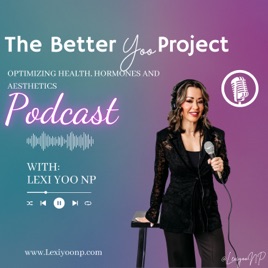
Advertise on podcast: The Better Yoo Project: Optimizing Health, Hormones and Aesthetics.
Rating
4.8from
This podcast has
115 episodes
Language
EnglishPublisher
Lexi Yoo NPExplicit
No
Date created
2021/02/28
Latest episode
2026/10/12
Average duration
42 min.
Release period
13 days
Description
The Better Yoo Project Podcast is a weekly series covering the topics of functional medicine, case studies from her practice, nutrition of all varieties (Keto, Paleo, Vegan, Pegan, Macros, Low Fod Map, Cardiometabolic) etc, the role of the nurse practitioner, entrepreneur, hormones optimization, injectables and aesthetics, fitness and recovery, nutragenomics and supplement use! The host is Lexi Yoo NP, wife -mom-small business owner- nurse practitioner, hormone balancer, gut guru, thyroid investigator, fitness fanatic, and health hacker out of the Hoosier State.
Unlock The Better Yoo Project: Optimizing Health, Hormones and Aesthetics. podcast Email contact info,
Listeners & Audience details
Email contact information
Direct podcast contact details

Listeners
Audience numbers & engagement insights

Audience details
Podcast Insights

Podcast episodes
Check latest episodes from The Better Yoo Project: Optimizing Health, Hormones and Aesthetics. podcast
118. Mast Cell Activation, Hormone-related Immune Dysfunction
2026/10/12
Dr. Jill Carnahan is Your Functional Medicine Expert®. She is dually board certified and is the
founder and Medical Director of Flatiron Functional Medicine. As a survivor of breast cancer, Crohn’s disease, and toxic mold illness she brings a unique perspective to treating patients. She specializes in searching for the underlying causes of illness through cutting-edge lab testing and personalized medicine protocols.
In this episode, Dr. Jill explains what mast cell activation actually is, and why so many women hit perimenopause and find their immune system reacting to foods, supplements, and products that never bothered them before. Estrogen and histamine turn out to amplify each other in both directions, which means the symptoms women blame on the back half of their cycle are usually not driven by the hormone they suspect. Dr. Jill is also direct about the risk of handing estrogen to a woman whose body cannot clear it, and why what a patient does with that estrogen matters more than what the dose is.
Topics discussed in this episode include:
The shocking discovery that happened in the basement of Dr. Jill's own clinic in 2014.
Which everyday products carry the endocrine disruptors driving estrogen dominance.
Why a mast cell diagnosis requires symptoms across more than two systems.
Why a normal tryptase result does not rule out mast cell activation.
The free online vision test that screens for mold exposure at home.
What feeling better on vacation can reveal about a person's own home.
Why heartburn and sudden food sensitivities point toward histamine rather than diet.
Which probiotic strains to avoid when mast cells are already activated.
How estrogen shuts down the enzyme responsible for breaking down histamine.
The six life stages that can trigger histamine reactions in women.
Why roughly 80 percent of perimenopausal patients respond to progesterone alone.
Why a compounded cream beats a patch for histamine-intolerant patients.
Why Dr. Jill stays on hormone replacement as a breast cancer survivor.
Why adding more supplements is the wrong instinct with histamine symptoms.
Who should avoid ozone and hyperbaric therapy despite the mast cell benefits.
Dr. Jill’s website: https://www.jillcarnahan.com/
Follow our Instagram https://www.instagram.com/lexiyoonp or visit us at https://www.yoodirecthealth.com
117. Is Bone Loss Reversible? Bone, Muscle and Hormones in Midlife with Dr. Doug Lucas
2026/09/28
Dr. Doug Lucas is a double board–certified orthopedic surgeon and longevity physician dedicated to changing how we understand aging, hormones, and bone health. After years in traditional orthopedic practice, he stepped away from a system that waited for bones to break before taking action and shifted his focus toward prevention, optimization, and healthspan. His work centers on a simple but disruptive idea: bone health is not a geriatric diagnosis. It is a powerful biomarker of longevity, resilience, and overall health.
In this episode, Dr. Doug explains why he walked away from a decade of orthopedic training after deciding his operating room was where metabolic problems arrived 20 years too late. He argues that bone loss is not a normal part of aging, and that when bone is disappearing, something specific is causing it and can usually be found. We get into why the screening guideline at 65 fails nearly every individual woman, and why the calcium advice most patients leave with is usually misunderstood. Dr. Doug also names the one thing his underweight osteoporosis patients and his wife's overweight weight-loss patients turn out to have in common, and he shares what six months on a low-dose GLP-1 did to his own body composition.
Topics discussed in this episode include:
What a malpractice letter told Dr. Doug about discussing nutrition inside his practice.
Why the screening age of 65 works as a public health policy but fails patients.
How screening in women's late 20s would establish a useful baseline nobody currently has.
Why losing bone signals a cause that can usually be identified.
What separates osteopenia from a true osteoporosis diagnosis.
Why the medical system is not broken, but rather working exactly as designed.
Why calcium alone carries weak research behind decades of standard advice.
How the 1200 milligram recommended calcium target is a daily total, not a supplement dose.
What happened when free nutrition coaching was offered to Dr. Doug’s GLP-1 patients.
What six months of low-dose GLP-1 therapy did to Dr. Doug's body composition.
Why losing 40 pounds can leave a body lighter, but measurably fatter.
What overweight patients and osteoporosis patients share regarding nervous system dysfunction.
Why estrogen declines years before the first hot flash ever arrives.
How at-home urine testing captures perimenopause patterns that blood work misses.
Why doctors and patients define osteoporosis reversal in incompatible ways.
The Dr. Doug Show: https://drdouglucas.com/podcast
The Dr. Doug Show on YouTube: https://www.youtube.com/@Dr_DougLucas
Dr. Doug on Instagram: https://www.instagram.com/dr_douglucas
Follow our Instagram https://www.instagram.com/lexiyoonp or visit us at https://www.yoodirecthealth.com
116. Aging Strong: What Women Should Be Doing Now for Better Health Later with Zora Benhamou
2026/09/14
Zora Benhamou is a gerontologist, menopause educator, biohacker, and host of the Hack My Age podcast. She holds a Master’s degree in Gerontology from USC and has dedicated her work to helping women better understand the changes that come with perimenopause, menopause, and aging. Through her podcast and educational platform, Zora explores the science behind hormones, longevity, metabolic health, exercise, nutrition, and emerging health technologies—turning complex research into practical strategies women can use to improve their healthspan and quality of life. Today, we’re excited to dive into her perspective on navigating midlife, optimizing health, and aging well.
In this episode, Zora makes the case that the decisions we make in our 40s are already writing the story of who we get to be at 80. She has spent years stopping women on the street around the world to ask them five questions about menopause, and the answers keep landing the same way no matter the country. We also get into something that most of us are never warned about: that bone loss moves fastest during the transition into menopause, and that the DEXA scan women finally get at 65 is much too late. Zora pushes back on the age cutoff women hear when they ask about hormone therapy, and she has a warning about what most bone supplements are actually delivering.
Topics discussed in this episode include:
What women around the world reveal when asked about menopause.
Why social media portrayals leave younger women terrified of the transition.
How decisions made at 40 shape what an 80-year-old body can do.
Why muscle acts as a glucose sponge and a signal for bone building.
What vaginal estrogen addresses that never improves on its own with age.
Why age alone is not a valid reason to deny hormone therapy.
How transdermal delivery changes the risk picture compared with oral estrogen.
What separates micronized progesterone from synthetic progestins in the research.
Why rapid bone loss makes a first DEXA scan at 65 too late.
Why fracture risk matters more than the number on a scan report.
How many fragility fractures happen without any osteoporosis diagnosis at all.
How REMS scanning captures bone quality that density scores miss entirely.
A nursing home dairy study that lowered falls without adding exercise.
The MK-4 versus MK-7 debate hiding inside most bone supplements.
How blood flow restriction training is useful adults who cannot lift heavy.
What seven decades of Harvard research identified as the strongest longevity predictor.
Hack My Age website: https://hackmyage.com
Hack My Age : Menopause Upgrade podcast: https://hackmyage.com/podcast
Zora on Instagram: https://www.instagram.com/HackMyAge
Follow our Instagram https://www.instagram.com/lexiyoonp or visit us at https://www.yoodirecthealth.com
115. Everything You Were Told About Perimenopause Is Incomplete with Dr. Carrie Jones
2026/08/31
Carrie Jones, ND, FABNE, MPH, MSCP is an internationally recognized speaker, consultant, author and educator on women's health and hormones with over 20 years in the industry. Dubbed the “Queen of Hormones,” Dr. Jones is a Naturopathic Physician who completed a two-year residency focused on women's health and endocrinology. She earned her Master of Public Health (MPH), became one of the first to be board certified through the American Board of Naturopathic Endocrinology (FABNE), and is a Menopause Society Certified Practitioner (MSCP). She was the first Medical Director for Precision Analytical (the DUTCH Test), the first Head of Medical Education at Rupa Health (a Fullscript Company) and served on Under Armour’s Human Performance Council.
In this episode we go straight into the hormone chaos so many of us feel, but rarely understand. Dr Jones walks us through why progesterone drops before estrogen, how that shift shows up in real life, and what we can actually do about it. From chaste tree and evening primrose oil, to knowing when it’s time to stop trying to “out‑herbal” our age and consider hormone therapy, Dr. Jones reveals it all. We get into the myths that keep us stuck, like waiting a full year without a period before starting estrogen, or assuming “normal” labs mean everything is fine. She explains why FSH trends matter, how cortisol isn’t the villain it’s made out to be, and why testosterone affects more than libido (including brain function and muscle).
Topics discussed in this episode include:
The education gap leaving women unaware of basic hormone function.
How so many women are white-knuckling their perimenopause symptoms.
Why progesterone declines before estrogen during early perimenopause.
How weak ovulation leads to low progesterone despite regular cycles.
What lifestyle factors like thyroid and prolactin do to progesterone.
How chaste tree supports ovarian communication in early transition.
Why herbal support fails in late perimenopause follicle depletion.
The myth requiring 365 days before starting estrogen therapy.
How early estrogen loss affects your brain and body systems.
Why standard lab panels miss cardiometabolic risk changes.
What optimal insulin and inflammatory markers reveal beyond ranges.
How follicle stimulating hormone rises years before menopause.
Why FSH above 30 correlates with metabolic and bone shifts.
What testosterone influences beyond libido including cognition and muscle.
Why cortisol rhythm matters more than single elevated readings.
The overwhelm created by extreme perimenopause lifestyle expectations.
Dr. Jones’ website: https://www.drcarriejones.com
Dr. Jones on Instagram: https://www.instagram.com/dr.carriejones
Dr. Jones on TikTok: https://www.tiktok.com/@drcarriejones
Dr. Jones on YouTube: https://www.youtube.com/@drcarriejones
Hello Hormones on Spotify: https://open.spotify.com/show/0QMOu9ma6Xljf5omizAhNz?si=4dbaaf83a8cf4508
Hello Hormones on Apple: https://podcasts.apple.com/us/podcast/hello-hormones-with-dr-carrie-jones/id1813934931
Follow our Instagram https://www.instagram.com/lexiyoonp or visit us at https://www.yoodirecthealth.com
114. ADHD, PMOS, Hormones & Women's Health: The Missing Connections Across a Woman's Lifespan with Dr. Jolene Brighten
2026/08/17
Dr. Jolene Brighten is an internationally recognized hormone expert, nutrition scientist, and founder of Dr. Brighten Essentials, a supplement company creating science-backed solutions for women’s health. Board-certified in naturopathic endocrinology, a certified menopause specialist, and sex counselor, she’s the bestselling author of Beyond the Pill, Is This Normal, and the forthcoming ADHD and Women—empowering women to optimize their hormones and enhance sexual wellness.
In this episode, Dr. Brighten takes us into the intersections of hormones, brain health, and the diagnoses many of us receive without the full story. We explore how birth control can mask conditions like endometriosis and PMDD for years, and what happens when those symptoms resurface later as infertility or mood changes. We also unpack the recent shift from PCOS to PMOS and what that name change reveals about metabolic and systemic health. From dopamine and cortisol patterns to supplement strategies like saffron and NAC, we cover ground that connects reproductive health with executive function in ways many of us have never been taught.
Topics discussed in this episode include:
How painful periods and gut symptoms can signal undiagnosed endometriosis.
Why birth control frequently masks PMDD, PMOS, and endometriosis symptoms.
What secondary infertility can reveal about years of untreated hormonal conditions.
The pattern of PMDD mood shifts intensifying during the luteal phase.
How progesterone sensitivity links to neuroplasticity and GABA receptor changes.
The emerging theory that neuroinflammation drives persistent PMDD symptoms.
Why ADHD in women presents differently than stereotypical male patterns.
How excess androgens in PMOS influence impulsivity and earlier ADHD recognition.
What emotional dysregulation and time blindness reveal about executive dysfunction.
Why stimulant medications shift in effectiveness across menstrual cycle phases.
The relationship between estrogen, dopamine, and luteal phase symptom escalation.
How chronic cortisol elevation contributes to burnout in high achieving women.
Why saffron, bacopa, and NAC show promise in ADHD support research.
How the redefinition of PCOS to PMOS highlights systemic metabolic dysfunction.
How insulin resistance and inflammation shape ovarian hormone imbalance.
The connection between maternal metabolic health and offspring neurodevelopment risk.
ADHD and Women: A Guide to Optimizing Your Hormones and Thriving with ADHD (releasing on October 6, 2026): https://drbrighten.com/adhd-in-women
Dr. Brighten on Instagram: https://www.instagram.com/drjolenebrighten
The Dr. Brighten Show on Spotify: https://open.spotify.com/show/5VWcYWJFzi3OnwidT25IXi
The Dr. Brighten Show on Apple: https://podcasts.apple.com/us/podcast/the-dr-brighten-show/id1786362161
Follow our Instagram https://www.instagram.com/lexiyoonp or visit us at https://www.yoodirecthealth.com
113. Tryptophan: The Missing Link Between Gut, Mood, and Post-COVID Recovery with Dr. Cynthia Keller
2026/08/03
Dr Cynthia Keller is a triple-boarded physician (Pediatrics, Integrative Medicine, and Anti-Aging and Regenerative Medicine), who owns and runs Centered in Wellness, a multidisciplinary wellness center in the Seattle region. She believes that the origins of disease and disability can be traced back to long before adulthood, and that her understanding of children’s health and normal development gives her a unique view for promoting health as we age.
In this episode, we’re going deep into the biochemical tug of war happening inside all of us. We explore how tryptophan gets “stolen” during inflammation, especially for those who have suffered through COVID, and why that shift can leave us anxious, flat, or exhausted. Dr. Keller explains how the kynurenine pathway diverts resources away from serotonin and dopamine, how cofactors like B6 and folate quietly influence neurotransmitters, and why some patients feel worse before they feel better when undergoing treatment. Later, Dr. Keller shares clinical stories that connect cellular biochemistry to real-life struggles, offering a decision-making framework that challenges us to rethink depression, burnout, and recovery through a metabolic lens.
Topics discussed in this episode include:
How inflammation harmfully redirects tryptophan away from serotonin production.
What the kynurenine pathway does during infection and stress states.
Why the liver’s demand for NAD increases tryptophan diversion.
How immune activation upregulates IDO1 and alters brain chemistry.
What quinolinic acid does to neurons and neuroinflammation levels.
The limited transport of tryptophan across the blood brain barrier.
How microglia amplify neurotransmitter depletion during chronic inflammation.
Why tryptophan differs from 5-HTP in clinical applications.
The importance of cofactors like P5P and folate in neurotransmitter synthesis.
How repeated COVID exposures may create cumulative nutrient depletion.
What subtle mood shifts can reveal about serotonin and dopamine balance.
The connection between catecholamine depletion and unexplained weight gain.
How leptin resistance can follow prolonged neurotransmitter imbalance.
The role of antidiuretic hormone and zinc in urinary symptoms.
How mast cell stability relates to catecholamine availability.
Why some patients worsen immediately when tryptophan fuels inflammation.
How restoring nutrients can reignite joy, motivation, and resilience.
Centered in Wellness: https://www.centeredinwellness.com
Dr. Keller on Instagram: https://www.instagram.com/cynthiakellermd
Follow our Instagram https://www.instagram.com/lexiyoonp or visit us at https://www.yoodirecthealth.com
112. The Future of Peptide Medicine: What the PCAC Vote Really Means with Dr. Greg Jones
2026/07/24
Dr. Greg Jones is a licensed Naturopathic Medical Doctor and earned his degree in Naturopathic Medicine with honors from the Southwest College of Naturopathic Medicine (SCNM) in Tempe Arizona. Dr. Jones has received extensive training in regenerative injection therapy, IV nutritional therapy, bio-identical hormone replacement therapy, and peptide therapy.
Dr. Jones is here to unpack all the major movement around peptide regulation and what it could mean for your practice. We walk through the recent committee vote that recommends several well-known peptides be reconsidered for compounding, and Dr. Jones explains why this moment matters far beyond just a headline. He breaks down what happened when peptides were moved to a restricted category, how that shift fueled growth of the grey market, and why physician oversight and pharmacy quality control are central to patient safety. We also hear his take on BPC-157, KPV, TB-500, and MOTS-c, including where he has seen them used in practice and why certain delivery methods could return if approvals move forward. We also examine what this vote does not do, why the FDA still holds final authority, and how this step could open doors for more formal research in the future.
Topics discussed in this episode include:
Breaking news from the recent Pharmacy Compounding Advisory Committee (PCAC) meeting.
A background on the 2023 FDA decision to move 19 peptides to Category 2.
How that restriction abruptly limited compounding pharmacy access nationwide.
The grey market expansion as patients seek alternative peptide sources.
Why lack of published safety data fueled regulatory concern.
Why the vote recommends reconsideration for pharmacy compounding pathways.
What the recommendation means for 503A bulk substance consideration.
The importance of physician oversight in peptide prescribing decisions.
How quality control testing differs between compounding pharmacies and online suppliers.
Why harm reduction will become central to the regulatory conversation.
The potential return of multiple peptide delivery methods, including topical and oral forms.
Why BPC-157 is such a versatile clinical tool, and the role of MOTS-c in mitochondrial and metabolic support strategies.
Why over-the-counter injectable peptide access remains unrealistic under current law.
Plans for future peptide reviews scheduled in upcoming regulatory sessions.
We are running a flash special for the YDH Training Academy. Buy peptide module, get the Scaling Your Practice with Peptide Therapy for Free! Use code YAYFDA
Dr. Jones on Instagram: https://www.instagram.com/doctorjones_doctorjones
Dr. Jones on YouTube: https://www.youtube.com/@drgregjonesnmd
Follow our Instagram https://www.instagram.com/lexiyoonp or visit us at https://www.yoodirecthealth.com
111. Autoimmunity, Perimenopause & Tools to Take Back your Health with Dr. Amy Myers
2026/07/20
Dr. Amy Myers is a medical doctor, a two-time New York Times bestselling author, and an internationally acclaimed functional medicine physician who specializes in empowering those with autoimmune, thyroid, SIBO, Candida, and gut issues to reverse their conditions and take back their health. Dr. Myers spent more than two decades working as a physician, including founding her own clinic, before she launched Amy Myers MD®, an e-commerce wellness brand that reaches millions of people in more than 140 countries around the world with over 75 products she personally formulated and a variety of programs.
In this conversation, we follow Dr. Amy Myers through the health crisis that changed how she thinks about autoimmune disease, thyroid care, and the work needed before symptoms become diagnoses. She brings us into the gap between being told something is “solved” and realizing the body may still be sending warnings. We hear why she looks beyond labels like Graves’ or Hashimoto’s and instead asks what pushed the immune system there in the first place. She explains why food, gut permeability, toxins, infections, stress, and trauma matter, and why removing gluten and dairy is not just a trend in her approach. We also get into the role of hormone shifts during perimenopause, the labs she considers, and tools that may support the gut, thyroid, and immune system.
Topics discussed in this episode include:
How Graves’ disease leads into a search for autoimmunity root causes.Why thyroid ablation becomes part of the guest’s health story.What the autoimmune spectrum means before diagnosis ever appears.The connection between antibodies, symptoms, and future autoimmune risk.How food, leaky gut, toxins, infections, stress, and trauma interact.Why gluten may trigger immune confusion around thyroid tissue.What molecular mimicry reveals about gluten, casein, oats, and corn.The reason grains, legumes, eggs, and nightshades leave protocol plans.How body feedback can outweigh food sensitivity testing results.The role hormone shifts play during childbirth, perimenopause, and menopause.How autoimmune symptoms can overlap with fatigue, brain fog, and hot flashes.What thyroid labs help separate Hashimoto’s patterns from Graves’ patterns.How children often notice symptom changes after abstinence of certain foods.What low dose naltrexone and thymosin alpha one add to the conversation.Why zonulin blockers raise questions about removing leaky gut triggers.
Get 15% off AMMD supplements and protocols using code THEBETTERYOO: https://www.amymyersmd.com/THEBETTERYOO
Dr. Myers on Instagram: https://www.instagram.com/dramymyers/
The Autoimmune Solution (book) on Amazon: https://www.amazon.com/Autoimmune-Solution-Spectrum-Inflammatory-Symptoms/dp/0062347489
Dr. Myers’ podcast, Take Back Your Health: https://www.amymyersmd.com/pages/podcast
Lexi on Dr. Isabella Wentz’ podcast “Reversing Hashimoto’s? The Unconventional Tools You Haven’t Tried Yet”: https://thyroidpharmacist.com/articles/podcast/ep-60/
Follow our Instagram https://www.instagram.com/lexiyoonp or visit us at https://www.yoodirecthealth.com
110. The NeuroReset: Restoring Autonomic Balance at the Biological Root with Dr. Jonathann Kuo
2026/07/06
Dr. Jonathann Kuo, MD is a double board-certified physician in anesthesiology and pain management, and one of New York's most respected interventional specialists. While Dr. Kuo built his reputation as an elite pain management specialist, his research into the sympathetic nervous system opened an entirely new frontier. His work on the sympathetic nervous system helped pave the way for interventional mental health to gain widespread recognition as a highly effective approach for treatment-resistant conditions.
In this episode, we sit down with Dr. Jonathann Kuo to explore how resetting the autonomic nervous system can change the way we experience stress, sleep, mood, and even chronic illness. He walks us through his journey from anesthesiology and interventional pain management into what he calls interventional longevity, where procedures are used to shift physiology at the root level. We dive into his NeuroReset protocol, including dual sympathetic nerve blocks, vagus nerve hydrodissection, and ketamine infusions, and he explains the mechanisms behind each step. He shares data on PTSD, anxiety, long COVID, POTS, and vasomotor symptoms, along with what he has seen in thousands of patients. We also hear about investigational approaches like liposomal anesthetics, pulsed radiofrequency, and even Botox to the sympathetic chain.
Topics discussed in this episode include:
What NeuroReset aims to change inside fight-or-flight physiology.How stress patterns can still appear despite normal labs and testing.Why PTSD patterns often involve sympathetic overdrive and emotional reactivity.How NeuroReset combines sympathetic calming with vagus nerve support.What ketamine may add for mood, plasticity, and deeper resetting.Why chronic stress can strengthen fear signaling inside the brain.How a stellate ganglion block may lower fear-center dominance.What vagus nerve hydrodissection can do for compression and function.Why dextrose, peptides, and exosomes have entered the nerve-repair conversation.How investigational add-ons raise questions about response, safety, and duration.Why Botox and pulsed radiofrequency are explored for lasting results.What patients may notice during treatment, including calm and grounding.How the best responses often show changes in sleep, HRV, and reactivity.How repeated sessions may support symptoms that return over time.Why nervous system care still requires sleep, movement, and recovery habits.What chronic stress may do to metabolism, immunity, aging, and mood.
Dr. Kuo on Instagram: https://www.instagram.com/dr.kuo
Extension Health: https://extension.health
Extension Health on Instagram: https://www.instagram.com/extension.health
Follow our Instagram https://www.instagram.com/lexiyoonp or visit us at https://www.yoodirecthealth.com
109. Metabolism, Fasting, Perimenopause, and The Menopause Gut with Cynthia Thurlow
2026/06/22
Cynthia Thurlow is a nurse practitioner, host of the Everyday Wellness podcast, author and international speaker, with over 15 million views for her second TEDx talk (Intermittent Fasting: Transformational Technique). With over 25 years of experience in health and wellness, Cynthia is a globally recognized expert in perimenopause/menopause and intermittent fasting, and her mission is to help empower women to live their most optimal lives in perimenopause and beyond. In her new book, The Menopause Gut: Balance Your Microbiome to Reclaim Your Health in Midlife and Beyond (Avery, on sale April 28, 2026), Thurlow offers a roadmap to reclaim balance and immune resilience after menopause.
We’re welcoming Cynthia in this episode to explore how women’s health shifts in midlife and why the gut may be the missing piece to massively better health. We hear why she emphasizes “digestive rest” over aggressive fasting, especially for women who struggle to build muscle or meet protein needs. She explains how perimenopause alters the microbiome, how the “microgenderome” evolves across puberty, pregnancy, and menopause, and why hormone replacement therapy can reshape the gut in meaningful ways. We also dig into hidden gut disruptors like alcohol, ultra-processed foods, antibiotics, and unresolved stress, along with the gut-brain connection, brain fog, and mitochondrial health. Cynthia challenges us to rethink restriction, prioritize muscle and sleep, and finally factor the gut into every hormone discussion.
Topics discussed in this episode include:
Who Cynthia’s upcoming book is meant to help.Why digestive rest is replacing aggressive fasting strategies.The risk of sarcopenia during extended fasting windows.How inadequate protein intake limits muscle preservation.Why muscle mass plays a huge role in determining long term metabolic independence.The influence of insulin resistance on fasting recommendations.What follicular and luteal phases signal about stress tolerance.Why perimenopause represents hormonal volatility before menopause stability.The importance of aligning fasting with stress and sleep status.Why estradiol modulates immune resilience and inflammation.The role of antibiotics, alcohol, and other irritants of microbiome health.The connection between unresolved trauma and gut dysfunction.How vagus nerve signaling links gut and brain health.Why hydration and electrolyte balance support performance.The necessity of sleep rituals for nervous system regulation.A very common yet overlooked source of fatigue that can be fixed today.
Cynthia’s website (get The Menopause Gut here): https://www.cynthiathurlow.com
Follow our Instagram https://www.instagram.com/lexiyoonp or visit us at https://www.yoodirecthealth.com
108. Beyond MTHFR: When More Isn’t Better in Genetic Health with Rachel Deffendall
2026/06/08
Rachel Deffendall, MSN, APRN, FNP-BC is a board certified family nurse practitioner. In 2023 she founded and opened The Beaumont Med Spa, a specialty clinic with services focusing on bioidentical hormone replacement (BHRT), weight loss and management, IV hydration and vitamin replacement, peptide therapies, genetic testing, hair restoration, facial dermal fillers, botox and customized skin care. The Beaumont Med Spa was recently named Best Med Spa in Wilson County in 2025, Best Med Spa in Middle Tennessee in 2024 by Main Street Awards, and most recently received honorable mention in the Med Spa category for the Guide to Tennessee Best of Tennessee 2025.
Today, we unpack what methylation really means for our day-to-day health and long-term outcomes. We go beyond the buzz around MTHFR and get into how specific gene variants can shape everything from energy and anxiety to hormone metabolism, miscarriage risk, and cardiovascular disease. Rachel walks us through what happens when we can’t properly convert folate or B12, why homocysteine matters more than most of us realize, and how common interventions (like NAD or GLP-1s with synthetic B12) may backfire if we ignore methylation status. We also explore how genetic testing can guide decisions around estrogen detox, testosterone conversion, and even advanced therapies like ozone and EBOO.
Topics discussed in this episode include:
What methylation means at a biochemical level inside cells.How MTHFR variants C677T and A1298C alter folate metabolism efficiency.Why heterozygous and homozygous mutations create different symptom severity patterns.The connection between folic acid fortification and miscarriage risk.How synthetic folic acid differs from active methylated folate forms.What homocysteine reveals about inflammation and cardiovascular risk.How elevated homocysteine links to early hypertension in younger patients.The role of COMT and CYP genes in estrogen metabolism pathways.Why poor estrogen clearance raises concern for carcinogenic metabolites.How SRD5A influences testosterone conversion into dihydrotestosterone.What genetic data reveals before DHT-related symptoms appear clinically.The risk of using NAD without correcting methylation pathways first.Why cyanocobalamin in GLP-1 formulations may worsen inflammation.The importance of methylated B12 forms for certain genetic profiles.How overmethylation presents with anxiety and mood-related symptoms.The role of EBOO therapy in detoxification and autoimmune support.
The Beaumont Med Spa: https://www.thebeaumontmedspa.com
Rachel on Instagram: https://www.instagram.com/np_deffendall
The Beaumont Med Spa on Instagram: https://www.instagram.com/thebeaumontmedspa
Follow our Instagram https://www.instagram.com/lexiyoonp or visit us at https://www.yoodirecthealth.com
107. The Glutathione Revolution: Rewriting the Rules of Detox, Aging & Methylation
2026/06/01
Dr. Nayan Patel is a sought after pharmacist, wellness expert, and thought leader in his industry. He has been working with physicians since 1997 to custom develop medication for their clients and design a patient specific drug and nutrition regimen. He has been the pharmacist of choice to celebrities, CEO’s and physicians themselves. He is globally regarded as the foremost go-to expert on absorbable forms of glutathione, and holds the only patent on transdermal glutathione.
In this episode, we sit down with Dr. Patel to unpacks the science and real-world impact of glutathione and why he believes it sits at the center of so many health challenges. He walks us through his shift from traditional pharmacy into compounding and research, and how that path led him to focus on the body’s own antioxidant systems rather than symptom management. We explore what glutathione actually does inside the cell, why production declines around age 30, and how that decline connects to toxin buildup, hormone imbalance, fatigue, and even perimenopausal symptoms. From detox pathways and methylation support to weight loss, we examine how restoring glutathione levels may change far more than we expect.
Topics discussed in this episode include:
Why symptom management fails to address root biochemical dysfunction.The discovery of glutathione as the body’s primary antioxidant molecule.What glutathione does to neutralize free radicals every second.The role of glutathione in liver conjugation pathways and toxin elimination.How aging reduces natural glutathione production after age thirty.What nutrients and cofactors are required for internal glutathione synthesis.The connection between mitochondrial ATP decline and antioxidant depletion.Why NAD functions as an electron transfer molecule.How toxin accumulation contributes to hormone imbalance and estrogen metabolism issues.The relationship between glutathione and methylation pathway support.The limitations of oral and intravenous glutathione delivery methods.What challenges prevent peptides from entering the cell membrane.The development of a transdermal dextrin-based glutathione delivery system.What dosage levels support daily detoxification without overload.The possibility of temporary detox reactions during toxin release.How glutathione supports patients undergoing rapid fat loss.The secondary skin brightening effects from lowering systemic stress.
Auro Wellness: https://aurowellness.com
Get Dr. Patel’s new book: https://aurowellness.com/products/glutathione-revolution
Follow our Instagram https://www.instagram.com/lexiyoonp or visit us at https://www.yoodirecthealth.com
106. Occlusion, Optimization, and Overload: BFR & Beyond with Joel Novak, PT
2026/05/11
Joel Novak is an orthopedic and sports medicine physical therapist with nearly 20 years of clinical experience. Joel holds a doctorate in physical therapy and is certified in strength and conditioning through the National Strength & Conditioning Association. Joel is a certified instructor in Blood Flow Restriction training. He also has advanced education in the diagnosis and treatment of movement and muscle imbalances with the Functional Movement Systems.
Alongside Joel, we’re checking out blood flow restriction (BFR) training and how it fits into rehab and performance work. He explains how he first encountered the method, why he doubted it, and how research and clinical experience shifted his view. We look at how restricting blood flow changes oxygen availability, how that affects fatigue, and how this can support muscle activation during rehab, including cases like ACL recovery or early post-operative strength loss. Joel takes us through how pressure is measured, how limb size and cuff design affect decisions, and why some BFR devices need careful use. We also step into discussions about growth signals, nitric oxide, myostatin, and how these responses shape strength and recovery.
Topics discussed in this episode include:
What early athletic experiences reveal about exposure to injury and recovery demands.How comparisons between athlete groups highlight differences in tolerance and training behavior.How home routines influence the outcomes of strength and rehabilitation programs.Why Joel’s initial skepticism toward BFR shifted after reviewing extensive research literature.What blood flow restriction aims to achieve through controlled modulation of circulation.How reduced oxygen availability accelerates fatigue during simple resistance activities.What factors determine safe pressure settings based on limb size and cuff design.Why specific patient groups require caution due to circulation or tissue vulnerabilities.What hormonal and cellular responses appear after restriction-based training sessions.How BFR influences early quadriceps activation during postoperative knee rehabilitation.Why lighter training loads can still create significant fatigue and size adaptations.What common BFR errors produce adverse outcomes such as dizziness or local bruising.How consumer devices vary widely in function, safety systems, and pressure control.
My performance rehab: https://myperformancerehab.com
Joel on Instagram: https://www.instagram.com/joelnovakpt
Follow our Instagram https://www.instagram.com/lexiyoonp or visit us at https://www.yoodirecthealth.com
105. The Future Face: Regenerative Aesthetics and the New Era of Beauty
2026/04/27
Dr. Kay Durairaj is an internationally renowned facial plastic surgeon and bioregenerative aesthetics expert, known for helping patients—especially midlife women—age gracefully with confidence. Based in Los Angeles, she serves as Vice Chair of Huntington Hospital’s Department of Head & Neck Surgery and holds global leadership roles, including Scientific Coordinator for AMWC Monaco, Co-Director of Vegas Cosmetic Surgery, and advisory positions with the Anti-Aging World Congress in Monaco, Japan, and Miami.
We explore regenerative aesthetics with Dr. Kay’s guidance today, looking at how we can move from surface-level treatments to methods that work with what the body already does. We talk through how we use growth factors, peptides, and hormone support, and why these tools shape so much of what we see on the face. Dr. Kay explains how GLP-1 use affects facial changes, how gut health shows up on the skin, and why iron and thyroid levels influence hair. We later move into how we think about sequencing biostimulators, testing, and peptide cycles, and why patient goals should always determine our next steps.
Topics discussed in this episode include:
What regenerative aesthetics means in relation to cellular repair and internal signalling pathways.How growth factors and peptides open new options for treatment planning.Why collagen biostimulators remain useful for structural support in multiple facial zones.What PRP and PRF provide when applied through microneedling or direct injection.How PDGF supports wound healing after microneedling, lasers, and surgical procedures.Why PDRN works best on calm skin needing short-term nucleotide replenishment.How facial anatomy guides the choice between biostimulators and hyaluronic gel fillers.Why hormone decline in midlife drives significant facial aging changes.How topical estriol blends influence epigenetic patterns in ongoing office trials.Why GLP-1 medication use accelerates visible changes in facial structure and tone.How gut microbiome shifts affect inflammation, metabolism, and visible skin behavior.Why yogurt has proven to effectively provide microbiome support.Why iron and thyroid evaluation is essential for understanding female hair loss patterns.How topical peptides, exosomes, and biologics contribute to evolving hair restoration strategies.How peptide cycling improves compliance compared to daily long-term injectable routines.
Beauty by Dr. Kay: https://beautybydrkay.com
Dr. Kay on Instagram: https://www.instagram.com/beautybydrkay
Dr. Kay on LinkedIn: https://www.linkedin.com/in/kaydurairaj
Follow our Instagram https://www.instagram.com/lexiyoonp or visit us at https://www.yoodirecthealth.com
104. Methylene Blue: The Mitochondrial Molecule Changing Medicine
2026/04/13
Dr. Scott Sherr is a Board-Certified Internal Medicine Physician Certified to Practice Health Optimization Medicine (HOMe), a specialist in Hyperbaric Oxygen Therapy (HBOT), and COO of Troscriptions (a Smarter Not Harder company). His clinical telepractice includes HOMe as its foundation alongside an integrative approach to HBOT that includes cutting edge and dynamic HBOT protocols, comprehensive testing (using the HOMe framework), targeted supplementation, personal practices, synergistic technologies (new, ancient, psychedelic), and more.
Dr. Sherr walks us through how methylene blue has massively evolved from a textile dye into a tool with wide clinical use. He explains its role in supporting mitochondrial processes, its influence on redox cycling, and why he believes low doses can help us manage energy production without strain. We hear how it interacts with neurotransmitters, how it may influence mood, and how it pairs with approaches that shift us out of sympathetic drive. He leads us through dosage considerations, what happens when doses are too high, and when methylene blue becomes useful for infections, travel, or sudden physiological stress. We also explore how Dr. Sherr approaches biomarkers and how he uses methylene blue while assessing deeper issues like inflammation, gut challenges, and chronic immune activation.
Topics discussed in this episode include:
How mitochondrial dysfunction links to metabolic stress, toxins, and chronic sympathetic activation.How methylene blue concentrates in mitochondria and assists redox cycling during energy production.Why reactive oxygen influences inflammation patterns and cellular performance changes.How neurotransmitter levels shift through MAOI effects at specific controlled methylene blue doses.Cognitive challenges that are linked to mitochondrial strain, gut inflammation, and stress physiology.How sympathetic dominance limits healing progress and influences patient response.The pairing of methylene blue with neurotherapy approaches to support downregulation processes.How dosing considerations change when chronic infections are identified.Why higher doses become relevant during acute infections.How topical forms or combined peptide formulations expand methylene blue usage across tissues.Ways that nitric oxide behavior differs between inducible and endogenous pathways under methylene blue.How patient-specific cycling, tolerance, and half-life factors determine dosing patterns.How symptom changes at low doses can reveal hidden infections or biofilm disruption events.Myths about mitochondrial “over-optimization” or permanent tissue discoloration.
Troscriptions: https://troscriptions.com
Troscriptions on YouTube: https://www.youtube.com/@troscriptions
Dr. Sherr on Instagram: https://www.instagram.com/drscottsherr
Follow our Instagram https://www.instagram.com/lexiyoonp or visit us at https://www.yoodirecthealth.com
Podcast reviews
Read The Better Yoo Project: Optimizing Health, Hormones and Aesthetics. podcast reviews
Zora Benhamou 2026/08/28
Great guests
I am so glad I discovered Lexi’s podcast. She has very insightful guests and asks great questions. I learn something new every time. Tune in! You won’...
Mindy Jackson 2025/08/04
Lexi Yoo is Brilliant!
Lexie Yu is a Gift to the Integrative/Aesthetic Medicine Community.
I’ve been listening to Lexie Yu’s podcast since I was in NP school, over a year an...
Tx99_nf 2024/06/03
Incredible!!
Amazing podcast! Loved the episode with Dr. Ferree! She’s an amazing resource and so knowledgeable on HRT and peptides. Must listen!!
thefifthfaze 2023/03/01
Love Lexi
I am a Nurse Practitioner and absolutely love Lexi’s vision, mission and what she has created. It gives me hope and she inspires me to also do amazing...
kstanley75 2021/08/28
Listen to Lexi!
Lexi’s recommendations and knowledge about Hashimotos has been life changing for me. I finally have a diagnosis. I spent so many years searching for ...
KayFulk 2021/08/26
Amazing
Lexi is a great NP and person with an awesome podcast!! I started following and listening to her after seeing her on Instagram then using her to bette...
Podcast sponsorship advertising
Start advertising on The Better Yoo Project: Optimizing Health, Hormones and Aesthetics. relevant audience podcasts
You may also like to advertise on these Podcasts
4.52255892000
The Joe Rogan Experience
Joe Rogan

4.498907909
Morbid
Ash Kelley & Alaina Urquhart

4.6908522
You Can Heal Your Life ™
Hay House

4.41164993
Extratime
Major League Soccer

4.8815227
ArtCurious Podcast
Jennifer Dasal/ArtCurious

4.9328091390
REAL AF with Andy Frisella
Andy Frisella

48979552
20/20
ABC News

4.91363709
The Learning Leader Show With Ryan Hawk
Ryan Hawk

4.92108499
the bossbabe podcast
Natalie Ellis

4.3385361976
The Megyn Kelly Show
SiriusXM