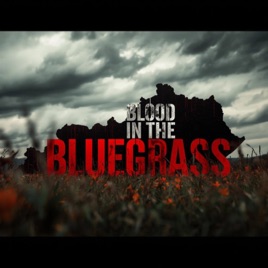
Advertise on podcast: Blood in the Bluegrass
Rating
5from
This podcast has
3 episodes
Language
EnglishPublisher
JessExplicit
Yes
Date created
2021/03/30
Latest episode
2026/04/16
Average duration
10 min.
Release period
84 days
Description
🎙 Kentucky true crime with heart. 🕯 Honoring victims. Seeking truth. 🔎 Blood in the Bluegrass | New season coming soon.
Unlock Blood in the Bluegrass podcast Email contact info,
Listeners & Audience details
Email contact information
Direct podcast contact details

Listeners
Audience numbers & engagement insights

Audience details
Podcast Insights

Podcast episodes
Check latest episodes from Blood in the Bluegrass podcast
Porchlight File 003 Barbara Ann Hackmann Taylor
2026/04/16
Porchlight File 003: Barbara Ann Hackmann Taylor
The Woman Once Known as Tent Girl
In 1968, along a quiet roadside near Georgetown, Kentucky, a young woman was found wrapped in canvas and left without a name.
For nearly thirty years, she was known only as “Tent Girl.”
No one came forward.No missing persons report seemed to match.And slowly, her story faded into the background, becoming one of Kentucky’s most haunting unsolved mysteries.
But she was never meant to remain unknown.
In 1998, through determination, early internet sleuthing, and a refusal to let her be forgotten, her identity was finally restored.
Her name was Barbara Ann Hackmann Taylor.
In this episode of Blood in the Bluegrass: Porchlight Files, we tell her story — from the moment she was found, to the decades she went unnamed, to the truth that finally brought her home.
She was never meant to be just a nickname.
Porchlight File 002 Vanished in Floyd County: The Disappearance of Mitchell Manns
2025/11/28
Porchlight Files 002: Vanished in Floyd County: The Disappearance of Mitchell Manns
Originally aired: 11/28/25
On March 16th, 1990, thirty-eight-year-old Mitchell Manns was last seen at the Triangle Market in Martin, Kentucky. He was reportedly heading toward McDowell ARH Hospital, nearly ten miles away — but he never arrived.
No sightings, no belongings, no answers.
In this episode, we revisit that March afternoon in Floyd County and look at the conflicting early reports, his last confirmed moments, and the coordinated search efforts described in the Floyd County Times. We also explore the landscape of eastern Kentucky — the hills, the hollers, and the roads that shaped the search for Mitchell.
More than thirty-four years later, Mitchell remains missing. This episode remembers who he was and honors the community that tried to bring him home.
If you have information:
Kentucky State Police — Post 9 (Pikeville)
Phone: 606-433-7711
Sources:
Floyd County Times, March 21, 1990
Floyd County Times, March 23, 1990
NamUs (MP4930)
Public missing-person databases
Local geographic references and historical context
Music by: Zack MessickPodcast by: Jessica ThackerSeries: Porchlight Files, a companion to Blood in the Bluegrass
Porchlight File 001
2025/10/31
Porchlight File:001
The Witch Tree of Old Louisville
On March 27, 1890, a tornado ripped through Louisville, leveling homes, churches, and street cars. More than a hundred lives were lost, and thousands were left homeless. Most people blamed the weather. But in Old Louisville, some whispered about another cause, a curse, cast a year earlier, when a group of men cut down a tree said to belong to the city’s witches.
wind and rain
I’m Jess, and this is Blood in the Bluegrass. You’re listening to the Porchlight Files where Kentucky’s small town secrets, legends, and crime meet under the same flickering light.
According to Louisville’s Tourism website Old Louisville has the largest collection of restored Victorian homes in the country. It is also the third largest Historic Preservation District in the U.S. It was built as a suburb in the 1870s, the neighborhood consists of over 40 city blocks of Victorian era homes, considered some of the oldest, largest, and most beautifully preserved homes in the city. In the late 1800s it was home to the city’s elite and the outcasts. The perfect setting for superstitions to take root.
In 1889 there was a large maple tree at Sixth Street and Park Avenue. The locals believed witches gathered round it every spring to hang ribbons, talismans, and charms. A group of city men came to cut it down, they said, for the upcoming May Day celebrations. May Day is a spring festival that goes back centuries, it was a time for dancing around the maypole, wearing flowers, and welcoming new life after a long winter. But to the women who gathered beneath the tree, the ones people called witches, it wasn’t just decoration. The tree was sacred to these women, and cutting it down produced fury, a fury that the city had never seen.According to the legend, they placed a curse, that within a year, a storm would tear through the city and destroy what stood in the tree’s place.
low wind or distant thunder sounds
Less than a year later on March 27, 1890, the Great Louisville Tornado struck. It killed more than a hundred people and destroyed much of downtown. Many people swore it was the witches’ revenge, the curse coming to fruition.
After the tornado, a strange tree began to grow from the same spot where the old maple had been cut down. Locals say that it grew overnight, twisted and gnarled, unlike any other trees in the city. Today, it’s a knotted, dark-limbed sycamore adorned with offerings: beads, trinkets, and charms left by visitors and modern day witches alike. The legend says that as long as the tree stands, the city will be safe from another catastrophic storm.
Maybe this storm was just doing what nature does best, reminding us how small we really are. Or maybe, somewhere deep in Old Louisville, the witches got their revenge. Either way, the tree still stands. Twisted. Watching. Waiting.
wind or thunder
If you ever find yourself at the corner of Sixth and Park, look for the tree covered in charms. But whatever you do, DO NOT TOUCH IT!
Outro:
This has been the Porchlight Files, part of Blood in the Bluegrass. I’m Jess, thanks for stopping by. Keep your porchlight on, you never know what might find it’s way home.
Sources & Further ReadingThe story of the Witch’s Tree has been told and retold through generations of Louisville folklore. These are the main historical and cultural sources used in researching this episode:
Old Louisville Guide — “The Witch’s Tree of Old Louisville.”
https://www.oldlouisville.com/witchstree/
One of the earliest written accounts of the tree’s legend and its connection to the 1890 tornado.
David Dominé, True Ghost Stories and Eerie Legends from America’s Most Haunted Neighborhood (McClanahan Publishing House, 2005).
Local author and historian who has chronicled the lore of Old Louisville for decades.
The Courier-Journal (Louisville) – “Terrible Cyclone Strikes Louisville” (May 28, 1890).
Contemporary newspaper coverage of the 1890 tornado that destroyed the original tree.
Louisville Historical Quarterly, “Folklore and the Tornado of 1890,” Vol. 23, No. 2 (1989).
Historical context connecting the real-life storm to later oral traditions of curses and witchcraft.
Kentucky Folklife Program – “May Day and Vernal Rites in the Bluegrass Region.”
Explores the seasonal customs that shaped local May Day celebrations and their role in community folklore.
Old Louisville Neighborhood Council – Oral Histories Project (1990–1999).
First-hand recollections from residents about offerings left at the tree and the efforts to preserve it as a symbol of the neighborhood’s heritage.
Music by: Zack MessickPodcast by: Jessica ThackerSeries: Porchlight Files, a companion to Blood in the Bluegrass
Podcast sponsorship advertising
Start advertising on Blood in the Bluegrass relevant audience podcasts
You may also like to advertise on these Podcasts

4.115946455
The Tucker Carlson Show
Tucker Carlson Network

4.828023450
Huberman Lab
Scicomm Media
4.240683
To Be The Man
Podcast Heat | Cumulus Podcast Network

4.41511292000
The Ben Shapiro Show
The Daily Wire

4.2155648
TENNIS.com Podcast
TENNIS.com Podcast/Tennis Channel Podcast Network

4.510846771
The Joe Budden Podcast
The Joe Budden Network

4.611626506
The Bulwark Podcast
The Bulwark

4.711480389
Matt and Shane's Secret Podcast
Matt McCusker & Shane Gillis

4.82510178
Smosh Reads Reddit Stories
Smosh

4.975169748
Small Town Murder
James Pietragallo, Jimmie Whisman