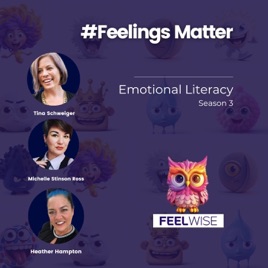
Advertise on podcast: Feelings Matter
This podcast has
72 episodes
Language
EnglishPublisher
Michelle Stinson RossExplicit
No
Date created
2021/05/07
Latest episode
2026/01/28
Average duration
15 min.
Release period
11 days
Description
#FeelingsMatter - Our mission is to demystify everything about emotions. Helping us all get more comfortable talking about them. Join Tina Schweiger, Heather Hampton, and Michelle Stinson Ross as they unpack a new angle on emotions, draw on the science of the human brain, and delve into the psychology of human nature.
Unlock Feelings Matter podcast Email contact info,
Listeners & Audience details
Email contact information
Direct podcast contact details

Listeners
Audience numbers & engagement insights

Audience details
Podcast Insights

Podcast episodes
Check latest episodes from Feelings Matter podcast
Pleased #FeelingsMatter
2026/01/28
In this episode of #FeelingsMatter, hosts Michelle Stinson Ross, Tina Schweiger, and Heather Hampton explore the emotion of feeling pleased - that crossover feeling that includes both happiness and contentment. The conversation examines how pleased differs from other positive emotions, why it often quietly exists in the background of our lives, and how this self-satisfied feeling connects to pride and outcomes we've influenced. The hosts discuss the importance of recognizing and banking these quiet positive moments to draw on during difficult times.
Episode Highlights:Michelle describes pleased as a "blended emotion" combining happiness and contentment that often exists as a "low key, quiet emotional experience" we might not give enough attention to, though recognizing these moments helps build resilience for challenging timesTina associates pleased with "self-satisfaction," particularly when she's accomplished something she didn't think she could do or created something that turned out well, describing it as being "just gonna be self-satisfied for a little bit"Heather observes that pleased seems to require personal influence over the outcome - feeling pleased when someone loves a gift you gave them rather than simply being delighted by receiving a gift yourself, noting "pleased has a reflection of I influenced a good outcome"The hosts brainstorm creating a "resilience piggy bank" feature where users could save stories of positive emotions like pleased to pull out during tough moments, providing strength during trying timesMichelle connects pleased as "the antidote for shame," noting that the self-satisfaction of being pleased would make it difficult for shame's critical voice to take hold, suggesting that banking pleased moments could serve as powerful counter-narratives when experiencing shame
Podcast theme music by Dubush Miaw from Pixabay
This episode of the #FeelingsMatter Podcast was recorded and produced at MSR Studios in Saint Paul, MN. No reproduction, excerpting, or other use without written permission.
This episode is sponsored by
FeelWise - bridging the gap between reflection and resilience, offering practical tools to help people overcome obstacles, embrace change, and grow stronger emotionally. https://www.feel-wise.com/
Don’t miss a moment of the conversation, subscribe to the show on your favorite podcasting platform
Shame #FeelingsMatter
2026/01/21
In this episode of #FeelingsMatter, hosts Michelle Stinson Ross, Tina Schweiger, and Heather Hampton tackle one of the most powerful and challenging emotions: shame - that feeling of being self-conscious because you feel bad about yourself as a person, not just about something you did. The conversation explores how shame differs from guilt, the role of culture and religion in shaping shame responses, and why this "slippery eel" of an emotion can be so difficult to recognize and address. The hosts share deeply personal experiences with shame and offer strategies for building resilience against its spiral.
Episode Highlights:Heather explains the crucial distinction between guilt ("I did something bad") and shame ("I'm a bad person because I did something bad"), noting she rarely experiences shame due to growing up in an atheist household without religious or cultural shaming mechanismsTina vulnerably shares how shame manifests as post-social anxiety, where she lies in bed ruminating and "looking for places where I should feel like a bad person," tracing this pattern to growing up in an authoritative household where shame was used for coercion and control, particularly around her female body during pubertyMichelle credits her encouraging upbringing in a religious household (but with supportive parents) for giving her resilience against shame, noting how behavioral mistakes were framed as learning opportunities rather than identity-defining failuresThe hosts explore practical strategies for combating shame, including identifying adjacent emotions that are "safer to see" (like frustration instead of shame), reintroducing safety and curiosity to counteract shame's inward contraction, and practicing self-compassionMichelle emphasizes building resilience to shame by creating habits of self-encouragement during good moments, telling yourself "you are smoking hot today" to have reserves when the inner critic attacks, and giving friends explicit permission to call out shame patterns and offer counter-narratives of truth and support
Podcast theme music by Dubush Miaw from Pixabay
This episode of the #FeelingsMatter Podcast was recorded and produced at MSR Studios in Saint Paul, MN. No reproduction, excerpting, or other use without written permission.
This episode is sponsored by
FeelWise - bridging the gap between reflection and resilience, offering practical tools to help people overcome obstacles, embrace change, and grow stronger emotionally. https://www.feel-wise.com/
Don’t miss a moment of the conversation, subscribe to the show on your favorite podcasting platform
Supported #FeelingsMatter
2026/01/14
In this episode of #FeelingsMatter, hosts Michelle Stinson Ross, Tina Schweiger, and Heather Hampton explore the emotion of feeling supported - that state of feeling understood and upheld by others, knowing you're not alone in facing challenges. The conversation examines how support intersects with safety, trust, and belonging, why savoring positive emotions like feeling supported is crucial for building resilience, and how lack of support contributes to societal loneliness. The hosts share how their connection provides mutual support and discuss why this emotion belongs in the love category.
Episode Highlights:Tina describes feeling supported as experiencing belonging, safety, and trust simultaneously, noting physical manifestations like warmth in her heart, relaxed tension, better sleep, and increased gratitude and trust in othersMichelle shares how meeting with her co-hosts twice weekly provides an "infusion of energy" that she carries forward, describing how she's keenly aware when they miss time together and misses the support when it's not thereHeather reveals that feeling supported makes her "more daring, more bold" and willing to take risks, emphasizing the special magic of external validation even for self-confident peopleThe hosts connect the emotion of support to practical realities like government shutdowns that prevent people from "supporting their family," noting how losing the ability to provide support is heartbreaking and creates cascading effects on those who feel less supportedTina explains her decision to place "supported" in the love category rather than neutral affect, arguing that feeling supported "blends right into the place of love" as an act and feeling of love, not something neutral or merely pleasant
Podcast theme music by Dubush Miaw from Pixabay
This episode of the #FeelingsMatter Podcast was recorded and produced at MSR Studios in Saint Paul, MN. No reproduction, excerpting, or other use without written permission.
This episode is sponsored by
FeelWise - bridging the gap between reflection and resilience, offering practical tools to help people overcome obstacles, embrace change, and grow stronger emotionally. https://www.feel-wise.com/
Don’t miss a moment of the conversation, subscribe to the show on your favorite podcasting platform
Carefree #FeelingsMatter
2025/12/24
In this episode of #FeelingsMatter, hosts Michelle Stinson Ross, Tina Schweiger, and Heather Hampton explore the emotion of feeling carefree - that state of having no cares or worries where things feel easy. The conversation examines how responsibilities and life stages affect our ability to experience carefreeness, whether this feeling can be intentionally cultivated, and how creative flow states might provide unexpected moments of being carefree. The hosts discuss practical ways to reverse-engineer carefree moments in adult life despite accumulated responsibilities.
Episode Highlights:Tina reflects on not feeling truly carefree since her late teens/early twenties during a brief period after finishing college before starting work, describing carefree as "having no responsibilities, nothing to worry about, nowhere to be, nothing to do" and wondering if it's possible to craft such experiences nowMichelle suggests that the stage of parenting significantly impacts carefreeness, noting how she couldn't feel carefree when vacationing with young children but now experiences it when traveling alone as an adult with grown childrenThe hosts explore "reverse engineering" carefree moments through mindfulness techniques like 20-minute meditation, mind-mapping to dive into problems without worry, or giving yourself permission to let your mind wander freelyMichelle observes that Tina likely experiences carefree moments during creative flow states when deeply engrossed in art or singing, even if she doesn't consciously recognize them as carefree in the moment because she's so absorbed in the creative processThe conversation concludes with the insight that cultivating carefree might be more accessible than chasing joy directly, offering a pathway to joy's "slightly different flavor" that feels more achievable given adult responsibilities - noting that "you have to work harder to find your happy feelings when you're older, but you can still find them"
Podcast theme music by Dubush Miaw from Pixabay
This episode of the #FeelingsMatter Podcast was recorded and produced at MSR Studios in Saint Paul, MN. No reproduction, excerpting, or other use without written permission.
This episode is sponsored by
FeelWise - bridging the gap between reflection and resilience, offering practical tools to help people overcome obstacles, embrace change, and grow stronger emotionally. https://www.feel-wise.com/
Don’t miss a moment of the conversation, subscribe to the show on your favorite podcasting platform
Mortified #FeelingsMatter
2025/12/17
In this episode of #FeelingsMatter, hosts Michelle Stinson Ross, Tina Schweiger, and Heather Hampton explore the emotion of feeling mortified - that sense of being so incredibly humiliated that you may have lost your dignity. The conversation examines the Latin roots of "mortified" (meaning death), how this emotion differs from simple embarrassment, and why it's more common during teenage years when identity is still forming. The hosts share personal stories of mortification and discuss the importance of self-soothing and curiosity when processing this painful emotion.
Episode Highlights:Michelle explains the etymology of "mortified" comes from the Latin word for death, describing it as "I did something so bad, so disgusting, that I just died a little," and notes the mortifying feeling makes you want to curl up small to avoid others' judgmentThe hosts reflect on how life experience reduces mortification, with Michelle noting she hasn't felt truly mortified since her teenage years when identity is still forming and stakes seem higher, raising her empathy for young people navigating this intense emotionHeather distinguishes mortification from embarrassment by noting intentionality - getting caught cheating on a test in high school created mortification because she knew she "was better than that" and had acted against her own integrityTina shares being mortified in her early twenties when a manager's "joke" led her to ask restaurant customers to leave, resulting in complaints and feeling she'd "ruined their night," describing the classic response of going into the walk-in cooler to cryThe conversation emphasizes curiosity as a resilience mindset for mortification and highlights self-soothing techniques like comfortable blankets, favorite tea, pleasant scents, or showers - small sensory experiences that bring you into the present with pleasant sensations when you don't have "your mommy to come and snuggle you"
Podcast theme music by Dubush Miaw from Pixabay
This episode of the #FeelingsMatter Podcast was recorded and produced at MSR Studios in Saint Paul, MN. No reproduction, excerpting, or other use without written permission.
This episode is sponsored by
FeelWise - bridging the gap between reflection and resilience, offering practical tools to help people overcome obstacles, embrace change, and grow stronger emotionally. https://www.feel-wise.com/
Don’t miss a moment of the conversation, subscribe to the show on your favorite podcasting platform
Revulsion #FeelingsMatter
2025/12/10
In this episode of #FeelingsMatter, hosts Michelle Stinson Ross, Tina Schweiger, and Heather Hampton explore the intense emotion of revulsion - that sense of loathing or repulsion toward someone or something. The conversation distinguishes revulsion from simply finding something revolting, examines how this emotion often connects to moral beliefs, and explores how life experience affects both the frequency and processing of this powerful feeling. The hosts share personal triggers for revulsion and discuss when mindfulness techniques are helpful versus when walking away is the better choice.
Episode Highlights:Heather distinguishes revulsion from merely finding something "revolting," describing revulsion as including layers of loathing, disgust, and abhorrence - using the example of feeling revulsion toward attacks on hospitals during wartime versus simply finding roadkill revoltingMichelle shares how she experiences revulsion when encountering certain personality types, particularly narcissists, based on past negative experiences, questioning whether her knee-jerk avoidance reaction still serves her or blocks potentially meaningful connectionsThe hosts observe that revulsion often appears in response to large-scale issues that make them feel disempowered, with Heather noting she lets the emotion go quickly because "there's nothing I can do about it"Tina reveals her experience of revulsion remains "childlike" and tied to physical disgust (like gross porta-potties) rather than evolving to encompass larger moral or societal issues, describing this as where the emotion is "stuck" for herThe conversation emphasizes that mindfulness techniques for processing revulsion work better for interpersonal situations (like difficult coworkers) than for moral offenses, and sometimes the healthiest response is simply to "turn the TV off" and walk away from the trigger
Podcast theme music by Dubush Miaw from Pixabay
This episode of the #FeelingsMatter Podcast was recorded and produced at MSR Studios in Saint Paul, MN. No reproduction, excerpting, or other use without written permission.
This episode is sponsored by
FeelWise - bridging the gap between reflection and resilience, offering practical tools to help people overcome obstacles, embrace change, and grow stronger emotionally. https://www.feel-wise.com/
Don’t miss a moment of the conversation, subscribe to the show on your favorite podcasting platform
Present #FeelingsMatter
2025/12/04
In this episode of #FeelingsMatter, hosts Michelle Stinson Ross, Tina Schweiger, and Heather Hampton explore the state of being present - a grounded emotional state where your attention, awareness, and energy are fully in the here and now. The conversation examines how presence can be both uncomfortable and powerful, how introverts and extroverts may experience presence differently, and the relationship between presence and flow states. The hosts discuss practical ways to practice presence and why it's often easier to be present for others than for ourselves.
Episode Highlights:Heather describes being present as "bringing a light bulb into your life" that shines a spotlight on things that may not be working, noting that this awareness can feel uncomfortable if you're not ready to make changesMichelle observes that as an extrovert, she tends to be most present in social situations and conversations with others, while at home alone she switches off environmental awareness and becomes more "internally present"Tina distinguishes between presence as a practice versus presence as a feeling, describing the emotional experience as "quiet and still" - like turning off a ceiling fan so you can sense energy moving through your body and interpret your senses clearlyHeather connects presence to flow states, wondering if practicing presence as a discipline can help people more easily access that powerful state where time seems to disappearThe hosts suggest that activities requiring focus but not being too hard - art, music, creative pursuits, sports, puzzles, or spending time with animals or children - can help cultivate presence and potentially lead to "hyper presence" or flow states
Podcast theme music by Dubush Miaw from Pixabay
This episode of the #FeelingsMatter Podcast was recorded and produced at MSR Studios in Saint Paul, MN. No reproduction, excerpting, or other use without written permission.
This episode is sponsored by
FeelWise - bridging the gap between reflection and resilience, offering practical tools to help people overcome obstacles, embrace change, and grow stronger emotionally. https://www.feel-wise.com/
Don’t miss a moment of the conversation, subscribe to the show on your favorite podcasting platform
Humorous #FeelingsMatter
2025/12/02
In this episode of #FeelingsMatter, hosts Michelle Stinson Ross, Tina Schweiger, and Heather Hampton explore the emotion of feeling humorous - that sense of being amused, finding something comical, or feeling like acting silly. The conversation examines humor's relationship to life's absurdity, its healing power in difficult times, and how laughter serves as emotional release similar to crying. The hosts discuss how humor connects us communally and how multiple emotions can coexist, including humor during periods of depression.
Episode Highlights:Michelle describes her belief that "life is absurd" and her tendency to find humor even when it's not appropriate, noting how she uses humor in public speaking to make connections by getting people to "sit in the space of humor" with herTina shares how humor can emerge at the bottom of "emptying that sadness cup," describing humor as both healing and a coping mechanism she uses to break the hold of negativity when situations get dark or uncomfortableHeather offers important insight for understanding depression, explaining that people can experience multiple emotions simultaneously - laughing and having fun with friends doesn't mean depression has disappeared or been "cured"Michelle draws a powerful parallel between crying and laughter as forms of emotional release, noting both are "cathartic, therapeutic, and healing" and give us what we need to continue moving through difficult experiencesThe hosts explore the communal nature of humor, noting how we literally buy tickets to comedy shows to "feel humorous with other people" and how sharing emotions - whether positive or challenging - is essential for emotional intelligence growth beyond just naming our feelings
Podcast theme music by Dubush Miaw from Pixabay
This episode of the #FeelingsMatter Podcast was recorded and produced at MSR Studios in Saint Paul, MN. No reproduction, excerpting, or other use without written permission.
This episode is sponsored by
FeelWise - bridging the gap between reflection and resilience, offering practical tools to help people overcome obstacles, embrace change, and grow stronger emotionally. https://www.feel-wise.com/
Don’t miss a moment of the conversation, subscribe to the show on your favorite podcasting platform
Sad #FeelingsMatter
2025/11/29
In this episode of #FeelingsMatter, hosts Michelle Stinson Ross, Tina Schweiger, and Heather Hampton explore sadness - one of the most universally recognized yet complex emotions humans experience. The conversation examines how sadness differs from depression, the cumulative nature of unexpressed sadness, and the importance of self-compassion when experiencing this heavy emotion. The hosts share vulnerable personal experiences and discuss how to support others who are grieving or experiencing deep sadness.
Episode Highlights:Tina describes sadness as having a "physical feeling, like a tightness and heaviness in the chest" and shares her current experience of feeling sad and helpless watching someone she loves suffer, noting how sadness can become "compounded" and engulfingHeather introduces the powerful metaphor of sadness as a cup that fills with "little sadnesses" until one more tips it over, causing all the accumulated grief to spill out - often revealing sadness about things we didn't even know we were carryingThe hosts discuss distinguishing sadness from depression, with Michelle noting that sadness triggers tears and emotional pain while depression feels more like shutting down, though both share that heavy "lead muscles" qualityTina emphasizes that self-compassion is the "guiding North Star" when sad, encouraging listeners to give themselves permission to feel sadness without judgment, noting that "sitting with those emotions is the more courageous thing to do" rather than pushing them downThe conversation explores how to support others experiencing sadness, acknowledging that people often avoid grieving friends because sadness is "contagious" and uncomfortable, but emphasizing that simple presence, witnessing, and validating someone's sadness ("I see how sad you are") is what's truly needed
Podcast theme music by Dubush Miaw from Pixabay
This episode of the #FeelingsMatter Podcast was recorded and produced at MSR Studios in Saint Paul, MN. No reproduction, excerpting, or other use without written permission.
This episode is sponsored by
FeelWise - bridging the gap between reflection and resilience, offering practical tools to help people overcome obstacles, embrace change, and grow stronger emotionally. https://www.feel-wise.com/
Don’t miss a moment of the conversation, subscribe to the show on your favorite podcasting platform
Sullen #FeelingsMatter
2025/10/08
In this episode of #FeelingsMatter, hosts Heather Hampton, Michelle Stinson Ross, and Tina Schweiger explore the emotion of feeling sullen - that experience of being unhappy to the point where it becomes an ongoing mood. The conversation examines sullen as a protective response when we've run out of emotional capacity, the need for processing space when triggered, and how to support both ourselves and others (especially teenagers) when this withdrawn state emerges. The hosts share personal strategies for navigating and respecting the sullen experience. Episode
Highlights:Heather describes sullen as appearing when something has "peeved you off" to a low simmering level of anger, requiring alone time to process what's bothering you before you might "erupt more" if forced to interact with othersMichelle uses the metaphor of a "Dairy Queen chocolate-dipped cone" to describe sullen - creating a "hard crunchy shell" around herself when she's run out of emotional capacity to deal with people, noting that the coating will eventually "melt and ooze off"Tina connects sullen to being physically stuck or unable to accomplish things due to fatigue or illness, describing it as feeling "mopey" when prevented from getting the dopamine rush of completing tasksThe hosts discuss sullen as common during teenage years due to hormonal changes affecting brain chemistry, offering advice for parents to give space and acknowledgment rather than chasing teenagers for conversation during these moodsThe conversation emphasizes the importance of self-compassion and allowing processing time when experiencing sullen, with Heather noting that being forced to engage while in "fight or flight mode" can lead to hurtful reactions that don't reflect what's really going on internally
Podcast theme music by Dubush Miaw from Pixabay
This episode of the #FeelingsMatter Podcast was recorded and produced at MSR Studios in Saint Paul, MN. No reproduction, excerpting, or other use without written permission.
This episode is sponsored by
FeelWise - bridging the gap between reflection and resilience, offering practical tools to help people overcome obstacles, embrace change, and grow stronger emotionally. https://www.feel-wise.com/
Don’t miss a moment of the conversation, subscribe to the show on your favorite podcasting platform
Guilt #FeelingsMatter
2025/10/01
In this episode of #FeelingsMatter, hosts Tina Schweiger, Heather Hampton, and Michelle Stinson Ross explore the emotion of guilt - that feeling of responsibility for wrongdoing, whether or not harm has actually been inflicted. The conversation distinguishes guilt from shame, examines how guilt particularly affects women in society, and shares strategies for reframing guilty thoughts. Tina vulnerably shares a recent experience of standing up for herself with a healthcare provider and the conflicted feelings that followed.
Episode Highlights:Tina clarifies the distinction between guilt and shame: "guilt is I did something bad and shame is I'm a bad person because I did something bad," noting that guilt relates to behavior while shame attacks identityThe hosts share Tina's experience with an unprofessional healthcare provider who made inappropriate comments about her appearance, exploring her conflicted feelings about standing up for herself and requesting a refundMichelle identifies guilt as particularly common in the female experience, noting how women are socialized to "don't make a fuss, don't make noise" and be accommodating, leading to guilt when they advocate for themselvesThe conversation explores "overly responsible syndrome" as a generational issue for Gen X women who hold themselves to impossibly high internal standards that others don't expect from themTina shares her strategy for managing guilt through reframing, choosing to focus on how she "probably provided that office a service" rather than dwelling on guilty feelings, and training herself to redirect from guilt to gratitude when her mind returns to self-criticism
Podcast theme music by Dubush Miaw from Pixabay
This episode of the #FeelingsMatter Podcast was recorded and produced at MSR Studios in Saint Paul, MN. No reproduction, excerpting, or other use without written permission.
This episode is sponsored by
FeelWise - bridging the gap between reflection and resilience, offering practical tools to help people overcome obstacles, embrace change, and grow stronger emotionally. https://www.feel-wise.com/
Don’t miss a moment of the conversation, subscribe to the show on your favorite podcasting platform
Indifference #FeelingsMatter
2025/09/24
In this episode of #FeelingsMatter, hosts Michelle Stinson Ross, Tina Schweiger, and Heather Hampton explore the emotion of indifference - that feeling of having no preference when faced with choices or not caring about something that's happening. The conversation challenges the typical view of indifference as negative, examining how it can sometimes serve as healthy professional detachment or signal relationship problems. The hosts discuss the nuanced role indifference plays in boundaries, relationships, and professional settings.
Episode Highlights:Michelle reframes indifference as potentially beneficial in professional settings, sharing how she wished she could be more indifferent when a stressed client tried to transfer their panic to her, noting that "professional indifference" can help maintain healthy boundariesThe hosts connect indifference to Buddhist concepts of detachment, with Tina suggesting that the desire for indifference often stems from wanting to detach from drama that's been imposed on youHeather raises the important question of whether indifference in personal relationships signals a problem that needs addressing, particularly when one partner reacts strongly to something while the other feels indifferentMichelle shares how complete indifference was a clear indicator that her previous marriage was ending, describing it as "purely, I'm indifferent" - neither good nor bad, but simply absent of careThe hosts explore how indifference might lead to contempt if the same situations repeatedly arise, while also questioning whether partners need to give everything the same priority level, suggesting that sometimes indifference reveals that one person's anxiety or stress "resides in you and not in me"
Podcast theme music by Dubush Miaw from Pixabay
This episode of the #FeelingsMatter Podcast was recorded and produced at MSR Studios in Saint Paul, MN. No reproduction, excerpting, or other use without written permission.
This episode is sponsored by
FeelWise - bridging the gap between reflection and resilience, offering practical tools to help people overcome obstacles, embrace change, and grow stronger emotionally. https://www.feel-wise.com/
Don’t miss a moment of the conversation, subscribe to the show on your favorite podcasting platform
Colorful #FeelingsMatter
2025/09/17
In this episode of #FeelingsMatter, hosts Tina Schweiger, Michelle Stinson Ross, and Heather Hampton explore the emotion of feeling colorful - that sense of being interesting, multifaceted, energetic, and distinctive. The conversation delves into how colorful manifests as both an emotional experience and a personality trait, the connection between color theory and emotions, and why this vibrant feeling lands in the humor category. The hosts share personal stories about how they express their colorful nature through fashion, hair, and creative choices.
Episode Highlights:Tina describes feeling colorful while writing a thank-you note with gold paint pen on blue glitter cardboard, explaining how creative expression with vibrant colors brings her self-satisfaction and joy, especially when "sparkles" are involvedHeather reveals that dyeing her hair pink and purple serves as both self-expression and a reminder that there's "something beautiful and effervescent inside" her, even during periods of depression when she may not feel itMichelle connects her colorful wardrobe choices to her personality, noting how she gravitates toward vibrant clothing and uses even black as a base for contrast and impact rather than to hideThe hosts explore Tina's background in color theory and graphic design, learning how colors like McDonald's red and yellow combination are deliberately chosen to create discomfort that encourages quick turnoverTina explains why colorful belongs in the humor category rather than joy or energy, noting that colorful people often have a "silly" quality and don't take themselves too seriously - embodying a "I don't give a crap about what you think because this makes me happy" attitude that celebrates uniqueness without needing approval
Podcast theme music by Dubush Miaw from Pixabay
This episode of the #FeelingsMatter Podcast was recorded and produced at MSR Studios in Saint Paul, MN. No reproduction, excerpting, or other use without written permission.
This episode is sponsored by
FeelWise - bridging the gap between reflection and resilience, offering practical tools to help people overcome obstacles, embrace change, and grow stronger emotionally. https://www.feel-wise.com/
Don’t miss a moment of the conversation, subscribe to the show on your favorite podcasting platform
Affectionate #FeelingsMatter
2025/09/10
In this episode of #FeelingsMatter, hosts Michelle Stinson Ross, Tina Schweiger, and Heather Hampton explore the emotion of feeling affectionate - that warm regard for another person or animal, characterized by loving and fond feelings. The conversation delves into the relationship between affection and physical touch, the biochemical aspects of affectionate feelings, and how past trauma can complicate our ability to express and receive affection. The hosts share vulnerable personal experiences about navigating affection with consent and emotional intelligence. Episode
Highlights:Michelle describes the visual representation of affection as looking "a little stoned," connecting this to the dopamine and "love chemicals" that create a natural high when we experience affectionate feelings toward othersHeather shares how physical touch is central to her experience of affection, noting that while you can feel affectionate toward someone from a distance, expressing that affection is difficult without being physically presentTina vulnerably discusses her anxiety around physical touch due to childhood emotional neglect and past abuse, explaining how this creates a challenging conflict between craving human connection and experiencing physical discomfort when touchedThe hosts explore the distinction between feeling affection and expressing it, with Michelle emphasizing the importance of consent when offering physical comfort, always asking "Would you like a hug?" before touching othersTina shares a powerful story about comforting a delivery worker who was grieving, illustrating how emotional intelligence allows us to step outside our comfort zones to meet others' needs, and reflects on how she's grown from losing a friendship years ago due to not understanding how to show affection during difficult times
Podcast theme music by Dubush Miaw from Pixabay
This episode of the #FeelingsMatter Podcast was recorded and produced at MSR Studios in Saint Paul, MN. No reproduction, excerpting, or other use without written permission.
This episode is sponsored by
FeelWise - bridging the gap between reflection and resilience, offering practical tools to help people overcome obstacles, embrace change, and grow stronger emotionally. https://www.feel-wise.com/
Don’t miss a moment of the conversation, subscribe to the show on your favorite podcasting platform
Moral #FeelingsMatter
2025/09/03
In this episode of #FeelingsMatter, hosts Heather Hampton, Michelle Stinson Ross, and Tina Schweiger explore the emotion of feeling moral - that sense of being connected to principles of right and wrong, especially regarding teaching right behavior. The conversation examines how moral feelings differ from other emotions because they're deeply rooted in our conditioning and values, making them particularly challenging to examine objectively. The hosts discuss how moral convictions can both guide positive action and fuel destructive conflicts.
Episode Highlights:
Heather describes moral feelings as deeply tied to personal values and sense of self, making them more difficult to examine from different perspectives compared to other emotions, using current deportation policies as an example of how moral differences create unbridgeable gaps between peopleMichelle distinguishes moral emotions from other feelings by noting they're based more on conditioning, upbringing, and cultural training rather than biochemistry or neurological wiring, requiring us to acknowledge how our responses are shaped by what we've been taughtTina raises the provocative question of whether moral feelings might be "our deadliest emotion," pointing out that religious persecution and wars often involve both sides believing they're morally rightThe hosts discuss how moral feelings can interfere with kindness and empathy, with phrases like "get off your high horse" revealing how moral positioning can become judgmental rather than genuinely principledThe conversation concludes with practical approaches to examining moral feelings, including using the "why ladder" technique to get to the root of beliefs and practicing self-acceptance to distinguish between core identity and potentially outdated belief systems
Podcast theme music by Dubush Miaw from Pixabay
This episode of the #FeelingsMatter Podcast was recorded and produced at MSR Studios in Saint Paul, MN. No reproduction, excerpting, or other use without written permission.
This episode is sponsored by
FeelWise - bridging the gap between reflection and resilience, offering practical tools to help people overcome obstacles, embrace change, and grow stronger emotionally. https://www.feel-wise.com/
Don’t miss a moment of the conversation, subscribe to the show on your favorite podcasting platform
Podcast reviews
Read Feelings Matter podcast reviews
Podcast sponsorship advertising
Start advertising on Feelings Matter relevant audience podcasts
You may also like to advertise on these Podcasts

4.8916265
Malicious Life
Malicious Life
4.6360136
Consenting Adults
Leyna Nguyen

4.4503509
Warfare
History Hit

4.79026375
Life is Short with Justin Long
Audible

4.5167685
Rotoworld Baseball Show – Fantasy Baseball
D.J. Short, NBC Sports, Rotoworld Baseball

4.3180983
Global Seducer Podcast
Certified Dating Coach Reveals How to Attract Quality Women
4.9184283
You, Me, Empathy
Non Wels
4.7305972
Depression Detox Show | Daily Inspirational Talks
Maleek Josephs
4.81621000
Fantasy Football Podcast
Fantasy Football

4.9456464
10ish Podcast
10ish Podcast