1569045448
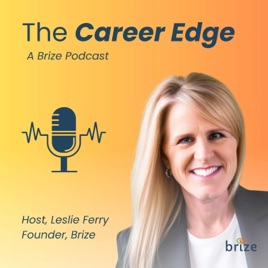
The Career Edge™ - by Brize®

Advertise on podcast: The Career Edge™ - by Brize®

Rating
★★★★★
5
from
8 reviews
This podcast has
34 episodes
Language
English
Publisher
Brize
Explicit
No
Date created
2021/05/24
Latest episode
2026/04/23
Average duration
11 min.
Release period
4 days

Description

Welcome to The Career Edge, where we unpack how work actually works. Most professionals spend years figuring out the unwritten rules of the workplace on their own. This show is built to change that. Hosted by Leslie Ferry, founder of Brize and creator of Zandra, The Career Edge explores the questions most career conversations never ask. What actually drives careers forward. How others interpret your decisions, communication, and actions through their unique lens. And how small, deliberate shifts based on this information create momentum that compounds over time. No generic advice. No recycled career tips. Just honest conversations designed to provoke a question worth thinking about long after the episode ends. New episodes every Tuesday and Thursday.

Unlock The Career Edge™ - by Brize® podcast Email contact info,
Listeners & Audience details

Email contact information

Direct podcast contact details

Listeners

Audience numbers & engagement insights

Audience details

Podcast Insights

Social media

Check The Career Edge™ - by Brize® social media presence


Podcast episodes

Check latest episodes from The Career Edge™ - by Brize® podcast


The Gap You Can't See From the Inside
2026/04/23
Every decision we make, every conversation we have, every signal we send passes through another person's unique wiring. What eventually lands on the other side is filtered through who they are, not who we are. That is the interpretation layer. That is why the gap between the signal we intend to send and what is received can be so wide. And it shapes more than most of us realize. In this episode, Leslie Ferry makes The Wiring Gap™ concrete. Not as a concept, but as something you will recognize from your own experience. Three of the most common places it shows up: how we make decisions, how we respond to tension, and how we communicate. In each one, the gap has nothing to do with bad intentions. It has everything to do with wiring. In this episode: Why The Wiring Gap is invisible from the inside and what makes it so hard to see without helpHow our natural decision-making style creates signals others are already readingHow three different approaches to tension produce three very different perceptionsWhat our communication style signals to people wired differently than we areWhy the first step to closing the gap starts with curiosity, not changeThe thinking in these episodes is designed to provoke a question. Zandra is built to help you answer it — personally, in the context of your own work: zandra.app
A Career Plan Isn’t Enough
2026/04/21
Most professionals have a plan. Know where you want to go. Build the skills to get there. Find the right relationships. Make your work visible. Execute. And that framework works until it doesn't. Because every piece of conventional career advice assumes something most professionals never stop to examine. It assumes that how you intend to show up is how others are actually experiencing you. Most of the time, there's a gap between those two things. In this episode, Leslie Ferry is joined by Christa Fisher, Head of Sales Training & Development at Thermo Fisher Scientific, for a conversation that surfaces the one layer most career development conversations never reach. In this episode: Why conventional career advice works early -- and why it starts to feel incomplete at a certain pointHow the bar shifts at every level and what demonstrating next-level thinking before you have the role actually looks likeWhy career stalls are almost never about capability -- and what is usually going on insteadThe difference between waiting to be recognized and signaling readinessWhy awareness is the multiplier that makes every other skill work betterThe gap between how professionals intend to show up and how others are actually experiencing them -- and why it quietly shapes more than most people realizeWhy closing that gap changes what becomes possible -- not just in how others experience you, but in what doors openThe thinking in these episodes is designed to provoke a question. Zandra is built to help you answer it -- personally, in the context of your own work: zandra.app
Accountability: Leading Others and Leading Yourself
2026/04/16
Accountability is one of those words everyone uses. And most professionals experience it the same way, as something that happens after things go wrong. A reckoning rather than a rhythm. In this episode, Leslie Ferry is joined by Christa Fisher, Head of Sales Training & Development at Thermo Fisher Scientific, for a conversation that reframes accountability entirely. Accountability isn't punishment. It's clarity plus ownership plus follow-through. And it starts before the work begins, not after it goes wrong. Christa and Leslie look at accountability through two lenses: managers holding others accountable, and individuals holding themselves accountable. Both matter. And when both sides operate with high accountability, something changes; trust builds, friction drops, and results follow. In this episode: Why most accountability breakdowns are actually clarity failures, not performance issuesThe Impeccable Agreement: Who is doing what by when, and why it changes everythingWhy follow-up is not micromanagement. It's supportive leadershipThe difference between owning your effort and owning your outcomesWhy proactive communication is one of the simplest forms of professionalismWhat self-accountability actually looks like, and why it's what people mean when they say someone is easy to work withThe most common places accountability breaks down, even in teams that genuinely want to do the right thingWhy you don't build trust by being nice. You build it by being consistent.The thinking in these episodes is designed to provoke a question. Zandra is built to help you answer it — personally, in the context of your own work: zandra.app
The Feedback You're Hearing Isn't the Feedback You Need
2026/04/14
We know feedback is how we grow. We tell ourselves we want it. We believe we're open to it. But knowing something intellectually and experiencing it emotionally are two completely different things. And the gap between wanting feedback and truly letting it in sits quietly in the middle of most professionals' careers. In this episode, Leslie Ferry unpacks what's actually happening when feedback arrives, why we can struggle to truly receive it, and what changes when we recognize that feedback isn't a verdict. It's someone else's experience of us filtered through their wiring, not ours. In this episode: Why wanting feedback and acting on it productively are two different thingsWhat's happening subconsciously when feedback lands and why our wiring shapes what we hearThe difference between hearing feedback, and truly receiving it and why it's similar to how most people think about active listeningWhy the most confident professionals are often the most likely to quietly filter out what doesn't fitWhat the person giving feedback is actually offering and why even imperfect feedback is one of the only windows into how we're actually landingHow the Performance Loop™ — Intelligence × Reflection × Adjustment = Growth — applies directly to feedbackWhy managers face this dynamic in both directions simultaneouslyThe thinking in this episode is designed to provoke a question. Zandra is built to help you answer it — personally, in the context of your own work: zandra.app
Your Story Is Your Career Edge
2026/04/09
The shortcuts that used to signal capability — the title, the credential, the brand name on the resume — are carrying less weight than they used to. What's filling that gap is something most professionals have never been taught to do deliberately. Not because it's complicated. Because no one ever told them it mattered. In this episode, Leslie Ferry goes one level deeper than the prior episode, moving from why the title isn't the story to what makes the contribution story so compelling. Context, thinking, collaboration, outcome. The four elements that make someone lean in rather than tune out. In this episode: Why title inflation and organizational flattening are changing how professional value gets evaluatedThe difference between a story that lands and a summary that gets forgottenWhy starting with context rather than credentials immediately changes how someone listens to youHow to show your thinking, not just your outcome, in a way that reveals how you actually workWhy honesty about collaboration makes your story more compelling, not lessThe distinction between bragging and contribution storytelling, and why genuine excitement is what makes the differenceHow the contribution story changes the way you pitch ideas at work — and why that's influence, not self-promotionThe thinking in this episode is designed to provoke a question. Zandra is built to help you answer it, personally, in the context of your own work: https://zandra.app
Your Title Isn't Your Career Story
2026/04/07
A title is an outcome. Your contribution is your career. Most professionals have those two things backward, spending more energy thinking about the title than the contribution that earns it. And measuring their progress against a scoreboard that isn't even standardized across companies, industries, or functions. In this episode, Leslie Ferry reframes how professionals think about career progress, away from the title as the measure and toward the question that actually tells you something true about where you are. What did I make possible? In this episode: Why the title feels good for a week, and then it's just Tuesday againWhy comparing titles across companies and industries is even more misleading than it appearsThe difference between describing what you were part of and what became possible because you were thereHow the contribution question works for both individuals and managersWhy tracing your effort to its actual outcome sharpens your thinking over timeHow genuine excitement about contribution lands completely differently than self-promotionThe thinking in this episode is designed to provoke a question. Zandra is built to help you answer it — personally, in the context of your own work: zandra.app/insight
The Wiring Gap
2026/03/31
There's a gap shaping every professional relationship you have right now. You can't see it from the inside. And some professionals never do. In this episode of The Career Edge, we name it for the first time: The Wiring Gap™. The distance between who you intend to be at work and who others actually experience. Most professionals assume that distance is zero. That their intent is what lands. That the clarity they feel inside is the clarity others experience on the outside. It rarely is. And that gap, the one invisible from the inside, present in every professional relationship, is quietly shaping how your ideas move forward, how trust builds or stalls, and how your career actually unfolds. Once you see it, something shifts permanently. This episode introduces The Wiring Gap, explores why it's so hard to detect, and connects it to The Performance Loop, the mechanism that makes closing it possible. Because Intelligence, Reflection, and Adjustment aren't just a framework for career growth. They're exactly how The Wiring Gap gets closed deliberately, consistently, over time. The Career Edge is your guide to how work actually works — and how to navigate it with more clarity, intention, and impact.
The Trust Signals You Don't Know You're Sending
2026/03/26
Trust isn't built on intention. It's built on evidence. Evidence that others observe, interpret, and draw conclusions from — through their own wiring, not yours. In this episode of The Career Edge, we go one level deeper into the three elements of trust, ability, integrity, and benevolence, and explore what it actually means to demonstrate each one intentionally. Because most professionals assume they're being seen as trustworthy. The more useful question is: what evidence are you actually creating? This is where the Performance Loop applies directly. Intelligence means understanding how the people around you are wired and what signals matter most to them. Reflection means honestly asking what signal you actually sent, not what you intended to send. And adjustment means making deliberate choices about how you show up across all three elements. Trust doesn't accumulate passively. It's built through conscious, observable action. And when you start thinking about it that way, something shifts. You stop assuming trust is present. You start building it deliberately. The Career Edge is published for professionals who want to understand how work actually works — and how to navigate it with more clarity, intention, and impact.
Trust Can’t Be Assumed. It Must Be Signaled.
2026/03/24
Trust isn't a feeling that quietly builds in the background while you focus on your work. It's a conclusion other people reach based on specific signals they observe. And if you're not consciously sending those signals, you have no way of knowing what conclusion they're reaching. In this episode of The Career Edge, we unpack what trust at work is actually made of and why most professionals are leaving it to chance. Trust is built from three distinct elements: ability, integrity, and benevolence. All three need to be present for someone to see you as genuinely trustworthy. And each one requires conscious, observable behavior, not just good intentions. Because there's a gap between who you are and what others actually observe. That gap is where trust either builds or quietly stalls. The Career Edge is your guide to how work actually works and how to navigate it with more clarity, intention, and impact.
How to Recognize Work Style Patterns in Real Time
2026/03/19
Most professionals spend meetings focused on their own contribution — their idea, their analysis, their recommendation. But the most valuable information in any collaborative conversation isn't what's being said. It's what's being reached for. In this episode of The Career Edge, Leslie Ferry explores one of the most observable — and most overlooked — signals available to you in real time: the first question someone asks. Not the content of the question. What the question is reaching for. That signal reveals how someone is naturally wired to evaluate work — and understanding it changes everything about how your ideas move forward. What you'll take away: Why people don't announce how they think — they reveal it. And where to look. The three orientations that shape how people evaluate every idea, decision, and direction they encounter at work. Why the colleague who keeps asking about impact isn't being difficult — and what they're actually telling you. How really listening for what someone is reaching for rather than just what they're saying — is one of the most underdeveloped skills in professional life. What effective communicators do differently — and how to develop the same quiet pattern recognition over time. Why this awareness matters even more for managers — and what changes when you start reading your team's signals instead of wondering why alignment feels slow. The insight worth sitting with: Just as you can misread others — others are misreading you. Right now. The gap between how you intend to show up and how others actually experience you through their own wiring is invisible from the inside. And it's often the most consequential gap in your professional life. What we covered today is one signal — one visible corner of something that runs much deeper. Work style orientation shapes how people process information, make decisions, handle conflict, build trust, respond under pressure, give and receive feedback, and what motivates or depletes them. Today's episode is the tip of the iceberg.
Why the Same Idea Lands Differently With Different People
2026/03/17
Have you ever presented the same idea to three different colleagues and gotten three completely different reactions? One person engages immediately. Another starts asking detailed questions. Someone else seems hesitant or concerned. Nothing about the idea changed. But the response did. In this episode of The Career Edge, Leslie Ferry explores why this happens and why understanding it changes everything about how your ideas move forward at work. What you'll take away: The hidden gap most professionals never see between how you naturally present ideas and how the people around you are wired to receive them. Why this gap has nothing to do with intelligence, intentions, or office politics — and everything to do with how people are fundamentally oriented toward work. How task-first and people-first orientations shape what signals different people need to feel clear, confident, and ready to move forward. What this means for individuals whose ideas aren't landing the way they expect. What this means for managers whose teams aren't aligning as quickly as the direction deserves. And the quiet pattern recognition skill that strong professionals develop over time — noticing what different people are actually looking for when they engage with your ideas. The insight worth sitting with: The way you naturally present ideas is almost certainly aligned with your own orientation. Which means you're automatically clearer to some people than others — not because of the quality of your thinking, but because of where you start. That's the gap. And closing it changes everything. Try First Insight — free, 10 minutes, no signup required: https://myzandra.ai/insightai/insight. Zandra will help you see your own orientation and the gap between how you intend to show up and how others are actually experiencing you. Subscribe to The Career Edge on Substack: thecareeredge.substack.com The Career Edge — where we unpack how work actually works.
Why Ideas Stall – And How to Adjust
2026/03/12
In collaborative work environments, the same idea can produce very different reactions. One colleague immediately sees the value. Another asks detailed questions. Someone else hesitates because they’re thinking about how it affects others. Nothing about the idea changed. So why does the response vary so much? In this episode of The Career Edge, Leslie Ferry explores why professionals evaluate work from different starting points and how recognizing these patterns can dramatically improve collaboration. Instead of assuming resistance or communication failure, these moments can become valuable signals about how people process information and make decisions. Understanding those signals allows professionals and managers to adjust how ideas are introduced, helping conversations move forward more smoothly. In this episode, you’ll learn: Why ideas sometimes stall even when the thinking is soundThe different ways professionals naturally evaluate workHow to recognize the signals people reveal through their questionsA simple way to structure ideas so more people in the room can engage with themHow the Performance Loop (Intelligence × Reflection × Adjustment) helps refine communication over timeThink about a recent meeting or conversation where your idea didn’t move forward as expected. What questions did people ask? Those questions often reveal how they were evaluating the idea and what information they needed to engage. Recognizing those patterns is one of the most useful skills you can develop in collaborative environments.
When Your Work Doesn’t Land
2026/03/10
Most professionals can remember a moment when their work didn’t land the way they expected. You share an idea in a meeting. You explain a recommendation you’ve been thinking through. You present a direction that seems clear to you. And the response in the room isn’t what you expected. The conversation slows. Questions appear that feel slightly off. Or the idea simply doesn’t gain momentum. Moments like this are easy to interpret as a communication problem—or even a sign that something went wrong. But more often, these moments are something else entirely. They’re signals. In this episode of The Career Edge, Leslie Ferry explores why moments when work doesn’t land are actually some of the most valuable signals professionals receive and how noticing those signals is an essential part of strengthening performance over time. You’ll learn: Why ideas can land differently with different people Why moments of hesitation or confusion are often signals, not failures How to recognize the difference between misunderstanding and interpretation Why noticing signals is the first step in the Performance LoopWhen professionals learn to recognize these signals, they gain the insight needed to refine how their work moves forward in collaborative environments. Because careers don’t accelerate when everything lands perfectly. They accelerate when we learn from the moments that don’t.
Build The Performance Loop Into Your Rhythm of Work
2026/03/05
Growth doesn’t stall dramatically. It softens gradually, when reflection becomes occasional instead of intentional. In this episode of The Career Edge, Leslie Ferry explores how to keep the Performance Loop running consistently by building it into the rhythm of your work. We’ve defined the loop as: Intelligence × Reflection × Adjustment = Growth But insight alone isn’t enough. And intention alone doesn’t create consistency. Habits do. In this episode, you’ll hear: Why growth slows quietly, not dramaticallyWhy the loop doesn’t need more time, it needs a triggerHow to attach reflection to moments that already exist in your workdayA simple 5–10 minute framework to sustain deliberate calibrationHow managers extend the loop beyond personal behavior to system refinementYou’ll learn how to make the Performance Loop: Part of your weekly rhythmVisible through simple documentationSmall enough to sustainStructured enough to compoundBecause consistency shapes environment. And environment shapes performance.
Why Reflection Alone Doesn’t Improve Career Performance
2026/03/03
Over the last several episodes, we’ve explored the Performance Loop: Intelligence × Reflection × Adjustment = Growth Intelligence expands what you understand. Reflection analyzes how your work actually played out. But reflection alone doesn’t change performance. Growth happens when reflection turns into deliberate experimentation. In this episode of The Career Edge, Leslie Ferry explores the adjustment step. Adjustment isn’t reinvention. It isn’t trying harder. And it isn’t a personality change. Adjustment is variable testing. You’ll hear: Why reflection without action becomes ruminationWhat “variable testing” actually looks like for individual contributorsHow managers adjust systems — not just behaviorWhy overcorrection breaks the loopA simple 3-question framework to structure deliberate adjustmentSmall shifts, tested consistently, are what compound growth over time.

Podcast reviews

Read The Career Edge™ - by Brize® podcast reviews


5 out of 5
8 reviews
★★★★★
VParks03 2021/10/23
Awesome Insight
This conversation is fascinating - here we are running around thinking we’re so self-aware, but in reality it’s not as easy as it seems - especially i...
★★★★★
sk8tegr8 2021/10/23
Thought provoking
Host Leslie Ferry does a great job combining her own experiences in the workplace with the topics and trends todays young professionals need to be awa...
★★★★★
Suzi0505 2021/10/22
Insightful
The topics are insightful and applicable. Subscribed!
★★★★★
drax fears 2021/10/22
Words to the wise
Great insights into self-awareness and made me recognize ways to reduce stress. I too often procrastinate, as discussed by the psychologists, unnecess...
★★★★★
Ransonnote 2021/10/22
A must listen!
This is a must listen podcast for anyone navigating the modern workforce. The episodes are enlightening, and full of useful tools that are easy to app...
★★★★★
Busylifer 2021/10/22
I did not realize the importance
Of self-awareness and soft skills at work, not only on my productivity, but mental well-being. I like how this podcast includes real-world examples wi...
check all reviews on apple podcasts

Podcast sponsorship advertising

Start advertising on The Career Edge™ - by Brize® relevant audience podcasts


What do you want to promote?