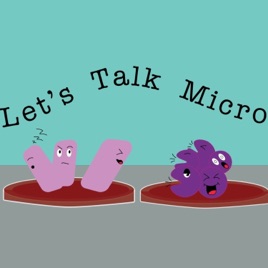
Advertise on podcast: Let's Talk Micro
Rating
4.9from
This podcast has
255 episodes
Language
EnglishPublisher
Luis PlazaExplicit
No
Date created
2021/05/26
Latest episode
2026/10/01
Average duration
40 min.
Release period
10 days
Description
Clinical microbiology explained in simple terms, suitable for students and microbiologists alike. We discuss organisms, reactions, infectious diseases, and more. Hosted by Luis Plaza, a Medical Laboratory Scientist and microbiologist, who also shares his experiences in the field.
Unlock Let's Talk Micro podcast Email contact info,
Listeners & Audience details
Email contact information
Direct podcast contact details

Listeners
Audience numbers & engagement insights

Audience details
Podcast Insights

Podcast episodes
Check latest episodes from Let's Talk Micro podcast
246: Inside ATCC: From Biological Materials to the Bench
2026/10/01
Many microbiology professionals are familiar with ATCC strains used for quality control, validation, and verification—but what happens before those biological materials reach the laboratory? ATCC, the American Type Culture Collection, maintains biological materials used by scientists and laboratories around the world.
In this episode of Let's Talk Micro, Luis is joined by Dr. Shahin Ali, Senior Scientist at ATCC, to take a closer look at the work behind biological reference materials. Dr. Ali discusses how ATCC identifies and acquires microorganisms, what characteristics are considered when adding them to the collection, and how materials are authenticated, characterized, preserved, and maintained over time.
The conversation also explores expert curation and complete provenance, why authenticated reference materials are important for laboratory quality and reproducibility, and how individual strains of the same species can have meaningful differences. Luis and Dr. Ali also discuss antimicrobial resistance, the growing importance of genomic and metadata quality, and how curated biological collections may support AI-driven research in the future.
And, as always, stay until the end to hear Dr. Ali's favorite microorganism—and the personal connection behind his answer.
Resources Learn more about ATCC:
https://www.atcc.org/ Stay connected with Let's Talk Micro:
Website: letstalkmicro.com
Questions or feedback? Email me at [email protected]
Interested in being a guest on Let's Talk Micro? Fill out the form here: https://forms.gle/V2fT3asjfyusmqyi8
Support the podcast:
Venmo
Buy me a Ko-fi
World Rabies Day: Revisiting Rabies with Dr. Rodney Rohde
2026/09/28
Originally published on September 28, 2022, this episode returns to the Let's Talk Micro feed in recognition of World Rabies Day.
Dr. Rodney Rohde joins the podcast to discuss rabies and his extensive experience working with the virus in public health. We start with the basics: What is rabies? How is it transmitted? What are the signs and symptoms? From there, we discuss potential exposures, post-exposure prophylaxis, vaccination, and ways to prevent rabies. Dr. Rohde also shares his experience working in rabies diagnostics and molecular epidemiology, as well as his involvement with wildlife rabies vaccination efforts.
We also discuss the importance of recognizing potential exposures, the role of wildlife—particularly bats—and considerations when traveling to areas where rabies may be more prevalent.
Finally, what is World Rabies Day, and why is it observed on September 28? Dr. Rohde discusses the history and significance of the day and the importance of education, prevention, and collaboration in the fight against rabies.
Tune in as we revisit this conversation and learn more about rabies.
Resources
World Rabies Day:
https://rabiesalliance.org/world-rabies-day
Dr. Rohde's rabies book:
https://www.elsevier.com/books/rabies/wilson/978-0-323-63979-8
Dr. Rohde's website:
https://rodneyerohde.wp.txstate.edu/
Related publication:
https://pubmed.ncbi.nlm.nih.gov/33659941/
Stay connected with Let's Talk Micro:
Website: letstalkmicro.com
Questions or feedback? Email me at [email protected]
Interested in being a guest on Let's Talk Micro? Fill out the form here: https://forms.gle/V2fT3asjfyusmqyi8
Support the podcast:
Venmo
Buy me a Ko-fi
245: Antimicrobials Conference: The Next Chapter for MAD-ID and SIDP
2026/09/24
MAD-ID (Making a Difference in Infectious Diseases) and the Society of Infectious Diseases Pharmacists (SIDP) have joined forces to create a new annual meeting focused on antimicrobial therapeutics, stewardship, infectious diseases, and more.
In this episode of Let's Talk Micro, Luis is joined by Dr. Erin McCreary and Dr. Mike Rybak to discuss the history of MAD-ID and SIDP, what brought the two organizations together, and highlights from their 2026 meeting. They also discuss sessions relevant to clinical microbiology, practical approaches to applying new science, opportunities for networking and trainees, and what attendees can expect as the meeting moves forward under its new name: Antimicrobials Conference.
Resources MAD-ID:
https://www.mad-id.org/
Society of Infectious Diseases Pharmacists (SIDP):
https://sidp.org/
Information on upcoming Antimicrobials Conference meetings:
https://sidp.org/annualmeetings
Want to check out the Breakpoints podcast?
https://breakpoints-sidp.org/
Stay connected with Let's Talk Micro:
Website: letstalkmicro.com
Questions or feedback? Email me at [email protected]
Interested in being a guest on Let's Talk Micro? Fill out the form here: https://forms.gle/V2fT3asjfyusmqyi8
Support the podcast:
Venmo
Buy me a Ko-fi
244: Group A Strep: Breaking Down the New IDSA Guidelines
2026/09/17
Group A Streptococcus (GAS) is a common cause of pharyngitis, but deciding who should be tested and which testing method to use isn't always straightforward. In 2025, the Infectious Diseases Society of America (IDSA) released updated guidelines on Group A streptococcal pharyngitis, bringing renewed attention to diagnostic stewardship and the use of clinical scoring systems to help guide testing decisions.
In this episode of Let's Talk Micro, Dr. Christopher Doern returns to the podcast to break down the updated IDSA guidelines and what they may mean for clinical practice. We discuss clinical scoring systems such as Centor and McIsaac, antigen testing, culture, molecular diagnostics, and point-of-care testing. We also explore turnaround time and cost considerations, GAS carriage and the interpretation of positive results, and how diagnostic decisions connect with antimicrobial stewardship.
Tune in as we take a practical look at what's changing in Group A strep testing and how laboratories and clinicians can approach these updated recommendations.
This podcast episode is sponsored by Cepheid. The views and opinions expressed by the interviewer in this interview are their own and do not necessarily reflect the position of Cepheid.
Resources IDSA Clinical Practice Guideline Update on Group A Streptococcal (GAS) Pharyngitis:
IDSA 2025 Group A Streptococcal Pharyngitis Guideline
Current Laboratory and Point-of-Care Pharyngitis Diagnostic Testing and Knowledge Gaps:
https://pubmed.ncbi.nlm.nih.gov/39688598/
Stay connected with Let's Talk Micro:
Website: letstalkmicro.com
Questions or feedback? Email me at [email protected]
Interested in being a guest on Let's Talk Micro? Fill out the form here: https://forms.gle/V2fT3asjfyusmqyi8
Support the podcast:
Venmo
Buy me a Ko-fi
243: When AI Meets Medicine
2026/09/10
Artificial intelligence is changing how healthcare professionals access and use clinical information. But what does that look like at the point of care?
In this episode of Let's Talk Micro, Luis is joined by Dr. Declan Kelly, physician, software engineer, and founder of Eolas Medical, to discuss the role of AI in clinical decision support. Dr. Kelly shares how challenges accessing institutional guidelines and clinical knowledge led to the development of Eolas Medical and how AI can help healthcare professionals find the information they need when making clinical decisions.
The conversation explores the importance of local guidelines, the connection between the clinical microbiology laboratory and antimicrobial stewardship, and how AI can help bridge the gap between laboratory data, institutional knowledge, and patient care. They also discuss evidence supporting these technologies, concerns surrounding AI hallucinations and clinical safety, and how clinical decision support may evolve in the years ahead.
Tune in to learn how AI is changing the way clinical knowledge is accessed and what that could mean for the future of healthcare.
This episode is brought to you in collaboration with Eolas Medical.
Eolas Medical is a clinical knowledge platform founded by physician Dr. Declan Kelly, who saw firsthand how hard it can be to find trusted guidance at the point of care. Using AI grounded exclusively in an organization's own approved protocols and guidelines, Eolas gives clinicians fast, accurate answers instead of generic search results. It is used across 90% of acute NHS trusts and 600+ sites globally, including Stanford and Mass General Brigham. For antimicrobial stewardship, a peer-reviewed study published in Nature Portfolio's npj Antimicrobials and Resistance found prescribing accuracy improved from 47% to 100% with Ask Eolas at the point of care.
Resources
Eolas Medical: https://www.eolasmedical.com/
Study — Enhancing quality of antimicrobial prescribing through 'Ask Eolas' (language model): a user-testing and simulation evaluation:
https://www.nature.com/articles/s44259-026-00187-7
Summary of study: Eolas Medical — Summary of the study and implications for antimicrobial stewardship
Stay connected with Let's Talk Micro:
Website: letstalkmicro.com
Questions or feedback? Email me at [email protected]
Interested in being a guest on Let's Talk Micro? Fill out the form here: https://forms.gle/V2fT3asjfyusmqyi8
Support the podcast:
Venmo
Buy me a Ko-fi
242: Microbiology & Infection Prevention: Partners in Crime
2026/09/03
Let's Talk Micro is back for a new season! In this season premiere, Luis is joined by Dr. Megan Amerson-Brown to discuss the important connection between clinical microbiology and infection prevention.
Dr. Amerson-Brown shares her career journey from the microbiology bench to infection prevention and ultimately laboratory leadership. She discusses how microbiologists contribute to infection prevention through surveillance, diagnostic stewardship, outbreak investigations, and collaboration with infection prevention teams.
The conversation also explores how laboratorians can become more involved in infection prevention while remaining in the laboratory, resources and certifications for those interested in the field, the importance of mentorship, and potential career pathways for microbiologists considering a transition into infection prevention.
Tune in to the season premiere and learn more about the role microbiologists play in infection prevention and the opportunities available both at and beyond the bench.
Additional Resources a-IPC™ (Associate – Infection Prevention and Control) Examination — Information about the entry-level infection prevention and control certification discussed during the episode.
CIC® (Certification in Infection Control and Epidemiology) Examination — Information about the CIC certification examination.
APIC – Association for Professionals in Infection Control and Epidemiology — Education, career development, and other resources for infection prevention professionals.
Stay connected with Let's Talk Micro:
Website: letstalkmicro.com
Questions or feedback? Email me at [email protected]
Interested in being a guest on Let's Talk Micro? Fill out the form here: https://forms.gle/V2fT3asjfyusmqyi8
Support the podcast:
Venmo
Buy me a Ko-fi
241: What Can Whole Genome Sequencing Realistically Tell Us About Resistance?
2026/07/02
Recorded live at ASM Microbe 2026 in Washington, DC, this special episode marks the first live recording of Let's Talk Micro. Joining me are co-host Dr. Andrea Prinzi and guest Dr. Nathan Ledeboer for a discussion on the evolving role of whole genome sequencing (WGS) in clinical microbiology and antimicrobial resistance.
Can whole genome sequencing predict antimicrobial susceptibility? What are its current limitations? How close are we to incorporating WGS into routine clinical microbiology laboratories? Throughout the conversation, we explore the opportunities and challenges of implementing sequencing technologies, including bioinformatics, workflow, reimbursement, and the need for continued collaboration between microbiologists, infectious diseases specialists, pharmacists, and antimicrobial stewardship teams.
We also discuss how WGS may transform outbreak investigations, epidemiologic surveillance, and the future role of the clinical microbiologist as advanced diagnostics become increasingly integrated into patient care.
Whether you're a bench microbiologist, laboratory leader, infectious diseases professional, or student, this episode offers an exciting look at where clinical microbiology is headed and what whole genome sequencing can realistically tell us about antimicrobial resistance.
Stay connected with Let's Talk Micro:
Website: letstalkmicro.com
Questions or feedback? Email me at [email protected]
Interested in being a guest on Let's Talk Micro? Fill out the form here: https://forms.gle/V2fT3asjfyusmqyi8
Support the podcast:
Venmo
Buy me a Ko-fi
240: CLSI M100 2026: Actualizaciones
2026/06/30
En este episodio en español de Let's Talk Micro, Luis conversa nuevamente con el Dr. Germán Esparza sobre los cambios más relevantes incluidos en la edición 2026 del documento CLSI M100. Durante la conversación, revisan nuevas opciones terapéuticas como aztreonam-avibactam, actualizaciones en los puntos de corte para Acinetobacter y Neisseria gonorrhoeae, cambios en aminoglucósidos, consideraciones de control de calidad y los desafíos asociados con las pruebas de susceptibilidad para el complejo Burkholderia cepacia.
Además, discuten cómo los laboratorios pueden evaluar e implementar estos cambios de manera segura, la importancia de la colaboración con los programas de optimización de antimicrobianos y ofrecen un adelanto de la próxima edición del documento CLSI M45.
Temas discutidos:
Aztreonam-avibactam y resistencia antimicrobiana
Actualizaciones de puntos de corte y pruebas de susceptibilidad
Control de calidad e implementación de cambios en el laboratorio
Avances y perspectivas para CLSI M45
🔗 Recursos Acceda gratuitamente al CLSI M100: https://em100.edaptivedocs.net/Login.aspx
Manténgase conectado con Let's Talk Micro:
Página web: letstalkmicro.com
¿Preguntas o comentarios? Escríba a [email protected]
¿Le interesa participar como invitado en Let's Talk Micro? Complete el siguiente formulario: https://forms.gle/V2fT3asjfyusmqyi8
Apoya el pódcast:
Venmo
Buy me a Ko-fi
239: Inside ASM Microbe 2026
2026/06/25
ASM Microbe is the largest microbiology meeting in the United States, bringing together thousands of scientists, laboratorians, clinicians, and industry partners to discuss the latest advances in microbiology.
In this episode, Luis shares highlights from ASM Microbe 2026, including sessions on diagnostic challenges, antimicrobial resistance, rapid susceptibility testing, emerging therapeutics, laboratory automation, phage therapy, and whole-genome sequencing. Topics include a Brucella case that reinforces the importance of Gram stain interpretation, updates on resistance mechanisms in Pseudomonas aeruginosa and KPC-producing organisms, advances in rapid AST, and innovations showcased in the vendor hall.
Luis also discusses several posters that caught his attention, covering pharyngeal gonorrhea, direct-from-specimen susceptibility testing, phage testing, rapid resistance reporting for Mycobacterium abscessus, and CRISPR-based diagnostics for bloodstream infections.
Whether you attended ASM Microbe 2026 or couldn't make it this year, this episode provides a practical overview of some of the trends, technologies, and conversations shaping the future of clinical microbiology.
Topics Discussed: • Diagnostic challenges in clinical microbiology
• Rapid identification and susceptibility testing
• Antimicrobial resistance and emerging therapies
• ESKAPE pathogens and Pseudomonas aeruginosa
• Laboratory automation and AI-assisted workflows
• Phage therapy and phage susceptibility testing
• Whole-genome sequencing and CRISPR diagnostics
Stay connected with Let's Talk Micro:
Website: letstalkmicro.com
Questions or feedback? Email me at [email protected]
Interested in being a guest on Let's Talk Micro? Fill out the form here: https://forms.gle/V2fT3asjfyusmqyi8
Support the podcast:
Venmo
Buy me a Ko-fi
238: From the Bench to CPEP: An MLS Journey
2026/06/18
What does it take to go from working at the bench to becoming a future clinical microbiology laboratory director?
In this episode, Luis is joined by Dr. Mackenzie Collins, a CPEP fellow at UCLA, to discuss her journey from Medical Laboratory Scientist (MLS) to PhD scientist and CPEP fellow. Mackenzie shares how she discovered laboratory medicine, her experience working as an MLS in molecular microbiology, and the mentors and opportunities that helped shape her career path.
The conversation explores the CPEP fellowship, the role of laboratory directors, and how MLS professionals can strengthen their applications through projects, research, presentations, and professional involvement. Mackenzie also discusses her PhD work involving HIV reservoirs and long-read sequencing, and why genomics and molecular diagnostics will continue to play an increasingly important role in clinical microbiology.
Whether you're considering graduate school, interested in the CPEP fellowship, or exploring career paths in laboratory medicine, this episode offers a firsthand look at one MLS's journey from the bench to clinical microbiology leadership.
Topics discussed:
The MLS-to-CPEP pathway and transitioning from the bench to graduate school
Mentorship, professional development, and building a competitive application
The role of clinical microbiology laboratory directors and career opportunities beyond the bench
Sequencing, genomics, and the future of clinical microbiology
Additional Resources CPEP Fellowship Overview with Dr. Sam Goodfellow
Interested in learning more about the CPEP Fellowship? In this episode, Dr. Sam Goodfellow discusses the structure of the program, the application process, and what to expect from CPEP training.
https://directory.libsyn.com/episode/index/id/36395120
Understanding the ABMM Certification Examination
Learn more about the American Board of Medical Microbiology (ABMM) certification, its importance for future laboratory directors, and what candidates can expect from the examination process.
https://directory.libsyn.com/episode/index/id/35868345
Stay connected with Let's Talk Micro:
Website: letstalkmicro.com
Questions or feedback? Email me at [email protected]
Interested in being a guest on Let's Talk Micro? Fill out the form here: https://forms.gle/V2fT3asjfyusmqyi8
Support the podcast:
Venmo
Buy me a Ko-fi
237: Micro Minutes: A Case of Mistaken Identity
2026/06/11
Have you ever received an identification result that just didn't make sense?
In this episode, Luis shares three cases of mistaken identity from the microbiology laboratory: a Gram-positive rod identified as Kocuria, another reported as Sphingomonas, and a yeast that somehow became Brucella. While automated identification systems are powerful tools, they can only work with the information we provide.
These examples highlight an important lesson for every microbiologist: always correlate the identification with the Gram stain, colony morphology, and other bench observations. When the result doesn't fit, take a step back and ask a simple question:
Does it make sense?
Join us for a quick Micro Minutes on critical thinking, correlation, and why the Gram stain remains one of the most valuable tools in the microbiology laboratory.
Stay connected with Let's Talk Micro:
Website: letstalkmicro.com
Questions or feedback? Email me at [email protected]
Interested in being a guest on Let's Talk Micro? Fill out the form here: https://forms.gle/V2fT3asjfyusmqyi8
Support the podcast:
Venmo
Buy me a Ko-fi
236: Let's Talk Andes Virus
2026/06/04
In Part 2 of this hantavirus series, Luis continues the conversation with Dr. Ryan Relich and Dr. Stephanie Seifert by focusing on the recent Andes virus cruise ship outbreak and what makes this hantavirus different from others.
The discussion explores the outbreak investigation, the evidence for person-to-person transmission, and why the Andes virus has received so much attention from the public health community. Ryan and Stephanie also discuss diagnostic testing, including PCR and serology, the role of public health laboratories, current treatment options, prevention strategies, and how concerned the public should be about future outbreaks.
Tune in for a closer look at Andes virus and its role in the recent cruise ship outbreak.
Stay updated: https://www.cdc.gov/hantavirus/situation-summary/index.html
Stay connected with Let's Talk Micro:
Website: letstalkmicro.com
Questions or feedback? Email me at [email protected]
Interested in being a guest on Let's Talk Micro? Fill out the form here: https://forms.gle/V2fT3asjfyusmqyi8
Support the podcast:
Venmo
Buy me a Ko-fi
235: Let's Talk Hantavirus
2026/05/28
Hantaviruses have recently been in the headlines, but what exactly are they and how do they spread? In Part 1 of this hantavirus series, Luis is joined by Dr. Ryan Relich and Dr. Stephanie Seifert for a deep dive into the world of hantaviruses.
The conversation explores the basics of hantaviruses, including their ecology, rodent reservoirs, transmission, and the diseases they cause in humans. The guests also discuss Old World vs New World hantaviruses, hantavirus pulmonary syndrome (HPS), environmental risk factors, climate influences, and why these infections may be underdiagnosed.
From deer mice and spillover events to aerosol transmission and public health concerns, this episode breaks down the science behind these important zoonotic viruses in a practical and approachable way.
Stay tuned next week for an episode where our guests talk about the Andes virus.
Stay updated: https://www.cdc.gov/hantavirus/situation-summary/index.html
Stay connected with Let's Talk Micro:
Website: letstalkmicro.com
Questions or feedback? Email me at [email protected]
Interested in being a guest on Let's Talk Micro? Fill out the form here: https://forms.gle/V2fT3asjfyusmqyi8
Support the podcast:
Venmo
Buy me a Ko-fi
234: High School, the Laboratory, and Workforce Development
2026/05/21
Workforce shortages continue to impact clinical laboratories across the country, especially in rural healthcare settings. In this episode of Let's Talk Micro, Luis is joined by Kenzi Haigler to discuss an innovative high school laboratory program designed to introduce students to laboratory medicine early and help strengthen the future workforce pipeline.
Kenzi shares her journey into the laboratory profession, her experiences working in rural healthcare, and the unique challenges small hospitals face when it comes to staffing, training, and retaining laboratory professionals. She also explains how her community came together to create a hands-on clinical laboratory assistant program that gives students exposure to phlebotomy, microscopy, waived testing, and laboratory workflows before graduation.
This conversation highlights the importance of mentorship, early exposure to laboratory medicine, and creative approaches to workforce development in clinical laboratory science.
Follow Kenzi on TikTok: @lablifewithmrsh
Stay connected with Let's Talk Micro:
Website: letstalkmicro.com
Questions or feedback? Email me at [email protected]
Interested in being a guest on Let's Talk Micro? Fill out the form here: https://forms.gle/V2fT3asjfyusmqyi8
Support the podcast:
Venmo
Buy me a Ko-fi
233: The Background Singers of Gram-Negative Cocci
2026/05/14
In this episode of Let's Talk Micro, we close out our gram-negative cocci series by talking about the "background singers" of the group—the organisms that quietly show up on respiratory cultures and oral flora plates every day.
We explore the world of non-pathogenic Neisseria species, along with rod-shaped and coccobacillary Neisseria and Moraxella that break the classic gram-negative diplococci rule. From commensals and opportunistic pathogens to their role in respiratory cultures and bench identification, this episode focuses on how to think through these isolates in the clinical microbiology laboratory.
As always, we tie it back to the bench—because sometimes the organisms sitting quietly in the background still matter.
Stay connected with Let's Talk Micro:
Website: letstalkmicro.com
Questions or feedback? Email me at [email protected]
Interested in being a guest on Let's Talk Micro? Fill out the form here: https://forms.gle/V2fT3asjfyusmqyi8
Support the podcast:
Venmo
Buy me a Ko-fi
Podcast reviews
Read Let's Talk Micro podcast reviews
Jeanie315 2024/12/09
Invaluable
I love this podcast! I find myself turning to it for ways to explain difficult concepts to my clinical rotation students. Would really love to hear an...
CeeBee__ 2024/10/02
Helpful
I’m studying for ascp micro and he explains concepts very well! Thank you!
mam2wm 2023/07/28
Great podcast
I love this podcast! As a non-microbiologist working in the microbiology field, Luis does a great job of explaining complex concepts in an easy-to-und...
Luys plaza 2022/11/21
Great podcast!
Love the podcast. Great explanations and interviews. Love how he mentions things he has learned while on the bench.
alfred ismael plaza 2022/11/16
Love for micro
Excellent podcast! Very informative, you can feel how much the presenter loves microbiology.
TristaH1309 2022/11/16
Great study tool!
Thank you for your podcasts. Much of the information was instrumental for passing my boards and fully understanding micro concepts.
Can we get some y...
pasmul 2022/11/15
Great podcast
Very informative. Love the way the host explains terms in a simple manner.
Roxxann3 2022/11/14
Great podcast!!
I’ve learned so much listening to this podcast. Luis is extremely knowledgeable and passionate about micro and brings in great guests. I think it’s a ...
Jay73227 2022/09/19
Great show!
Really good stuff here - I learned a lot from these hosts. Love the show!
Kai Bobbi 2022/03/05
Love it!
Thank you for creating this space for people to share their stories and helpful resources. Great questions with a very engaged host! Already shared wi...
Podcast sponsorship advertising
Start advertising on Let's Talk Micro relevant audience podcasts
You may also like to advertise on these Podcasts
4.711465388
Matt and Shane's Secret Podcast
Matt McCusker & Shane Gillis

4.82496178
Smosh Reads Reddit Stories
Smosh
4.975140746
Small Town Murder
James Pietragallo, Jimmie Whisman
4.71271593
Bulwark Takes
The Bulwark
4.8583398
Didn't I Just Feed You
Stacie Billis and Meghan Splawn
4.4503509
Warfare
History Hit

4.8296551979
Fantasy Footballers - Fantasy Football Podcast
Fantasy Football
4.712830545
True Crime All The Time
Emash Digital
4.8160001996
Watch What Crappens
Ben Mandelker & Ronnie Karam
4.638771157
Modern Wisdom
Chris Williamson