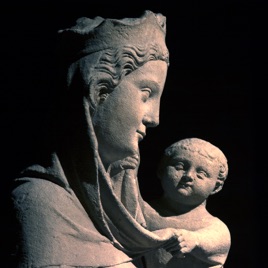
Advertise on podcast: Ad Jesum per Mariam
Rating
4.8from
This podcast has
500 episodes
Language
EnglishPublisher
Ad Jesum per MariamExplicit
No
Date created
2021/07/22
Latest episode
2026/02/06
Average duration
19 min.
Release period
4 days
Description
Podcast by Ad Jesum per Mariam
Unlock Ad Jesum per Mariam podcast Email contact info,
Listeners & Audience details
Email contact information
Direct podcast contact details

Listeners
Audience numbers & engagement insights

Audience details
Podcast Insights

Podcast episodes
Check latest episodes from Ad Jesum per Mariam podcast
Jesus Asks, Why Are You Afraid? Awakening Faith Within
2026/02/06
Jesus Asks, Why Are You Afraid? Awakening Faith Within
TheHomily reviews the Gospel account of Jesus calming the storm . . .
. . . (Mark 4:35–41) with moral and spiritual lessons drawn from King David’s repentance and everyday human experience.
The disciples’ fear during the storm reveals their fragile faith, even though Christ is present with them. Jesus’ calm, even while asleep, demonstrates perfect trust in the Father and offers a model for finding interior peace amid life’s storms.
The Homily contrasts human judgment . . . quick to condemn others but slow to recognize personal sin . . . with David’s humility in acknowledging his own wrongdoing. Sin, while forgivable, always leaves consequences, illustrated through the parable of nails hammered into a wall. The reflection urges self-awareness, repentance, and mercy.
Awaken Christ Within You
Ultimately, the Homily calls believers to awaken Christ within themselves through prayer and the sacraments, especially Confession and the Eucharist. True peace comes from allowing Jesus to dwell actively in one’s heart, enabling courage, trust, and stability amid the storms of life.
Listen to
Jesus Asks, Why Are You Afraid? Awakening Faith Within
--------------------------------------------------------------
Art Work
Christ Asleep during the Tempest: French Painter: Eugène Delacroix: 1853
The painting is now displayed in the Metropolitan Museum of Art in New York City.
--------------------------------------------------------------
Gospel Reading: Mark 4: 35-41
First Reading: 2 Samuel 12: 1-7, 10-17
--------------------------------------------------------------
Why was this image selected:
The artist emphasizes Christ sleeping peacefully while chaos reigns around Him. This directly reflects the Homily’s insight that fear arises when Christ is “allowed to sleep” within us, and that faith must actively awaken His presence through prayer and sacramental life.
True Happiness Is Found in God
2026/02/04
True Happiness Is Found in God
The Gospel of the Beatitudes presents a vision of happiness that overturns ordinary human expectations. While the world associates blessedness with wealth, power, and security, Jesus proclaims the blessed as those who are poor in spirit, meek, merciful, pure of heart, and persecuted for righteousness.
Drawing from Greek and Hebrew traditions, the Homily explains that “blessed” no longer means being untouched by suffering, but rather living with a heart oriented toward God.
Blessed Means . . .
A divided heart seeks happiness in wealth, power, pleasure, and fame, yet remains restless and unfulfilled. In contrast, a pure or undivided heart finds its fulfillment in God alone. From this God-centered heart flows mercy, justice, and love for others.
True happiness, the Homily informs us, is not found in worldly achievements but in meditating on and living according to the law of the Lord, allowing God to be the sole treasure of the heart.
Listen to this Meditation Media.
True Happiness Is Found in God
-------------------------------------------------------------------------
Gospel Reading: Matthew 5: 1-12
First Reading: Zephaniah 2: 3; 3:12-13
Second Reading: 1 Corinthians 1: 26-31
-------------------------------------------------------------------------
Art Work
Snowbow: QoAHs Digital Team: 2026
Taken near Rochester, NY
-------------------------------------------------------------------------
Why was this image selected:
Have you ever just stopped and looked at the world and appreciate the beauty within it … the beauty God has made within this world?
The QoAH digital team recently experienced a special nature moment viewing a Snowbow.
Ok, is there really such a word? The answer is yes! It happens when the rising sun shines off snow crystals in the air. The above image shows the rising sun on the right and snow crystals revealing an orange and red stream of color. The vertical bands of color are straight up and down, unlike the normal arc curve of a typical rainbow. There was another upward band to the right of the sun … off camera.
Just an amazingly beautiful view of nature…
Happiness Found in God!
Jesus: The True King Before the Sea of Need
2026/02/01
Jesus: The True King Before the Sea of Need
The Homily focuses on the Gospel of Mark . . .
. . . and the Old Testament account of David and Saul to contrast two radically different models of kingship and authority.
In the Gospel, Jesus draws overwhelming crowds from every direction . . . Galilee, Judea, Jerusalem, and beyond. The weight of human need is so great that his disciples must prepare a boat to keep him from being crushed. Jesus heals, teaches, and confronts unclean spirits, yet refuses acclaim or self-promotion. His kingship is defined not by ego or force, but by mercy, humility, and service to the wounded.
This is set against the tragic example of King Saul, whose victory over Goliath becomes the seed of his downfall. Saul’s fragile ego turns David . . . God’s chosen servant . . . into a perceived enemy. Saul embodies the ruler who serves God on his own terms, seeking praise, control, and personal glory. David, though deeply flawed, remains oriented toward God’s will, capable of repentance and humility.
The Homily culminates in Christ as the true Son of David and Mary as Queen through obedience. God’s kingdom is revealed not as conquest by power, but as a conquest of love—founded on surrender to God’s will rather than domination. True authority flows from hearts mastered by God, not from self-assertion or acclaim.
Listen to
Jesus: The True King Before the Sea of Need
----------------------------------------------------------------------------
Art Work
Christ Healing the Paralytic at the Pool of Bethesda: Spanish Painter: Bartolomé Esteban Murillo: 1667
----------------------------------------------------------------------------
Gospel Reading: Mark 3: 7-12
First Reading: 1 Samuel 18: 6-9; 19:1-7
----------------------------------------------------------------------------
Why was this image selected:
Murillo’s Christ stands amid a mass of broken, desperate humanity . . . bodies pressed close, faces marked by suffering. The painting mirrors Mark’s emphasis on overwhelming crowds and Christ’s quiet authority. Jesus is central not as a ruler demanding praise, but as a healer absorbing the crushing weight of human need.
Waiting for God’s Time
2026/02/01
Waiting for God’s Time
The Gospel recounts Jesus ascending the mountain to call and appoint the Twelve Apostles, . . .
. . . choosing them to be with him, to preach, and to exercise spiritual authority. This act highlights divine initiative: God chooses, calls, and sends according to His will, not human ambition.
The Homily then turns to the Old Testament encounter between David and Saul. Saul, consumed by jealousy, seeks to kill David in order to preserve his power, while David . . . though unjustly persecuted for many years . . . refuses to take revenge when Saul’s life is placed in his hands. David recognizes Saul as “the Lord’s anointed” and entrusts justice and fulfillment of God’s promise entirely to God’s timing.
True Faith Resists the Urge to Hasten God’s Promises
The central lesson contrasts jealousy and revenge with patience, discernment, and reverence for life. Jealousy corrupts the heart and leads toward death, while waiting on God preserves life and aligns human action with divine purpose.
David teaches that God’s plans do not require human violence or manipulation to be fulfilled. True faith resists the urge to hasten God’s promises and instead allows God alone to sign His work, especially when life itself is at stake.
Listen to this Meditation Media.
Waiting for God’s Time
------------------------------------------------------------------------------
Art Work
King David – the King of Israel: Dutch Painter: Gerard van Honthorst: 1622
King David playing the harp.
God’s Call and Our Response
2026/01/29
God’s Call and Our Response
The Homily reflects on readings from Scripture, focusing on how Saul . . .
. . . despite being appointed and anointed by God and filled with the Holy Spirit . . . fell from grace.
The central question, “How have the warriors fallen?” is repeated to emphasize a tragic decline rooted in disobedience to God and jealousy. Saul stopped listening to God, chose his own ego, and became consumed by comparison and envy toward David’s success. The Homily compares this to everyday experiences of comparison and highlights that the antidote is gratitude and obedience to God, recognizing that God’s grace meets our needs, not our wants.
The Homily closes with a prayer that we remain attentive, obedient, and grateful to God so as not to fall like Saul.
Listen to
God’s Call and Our Response
---------------------------------------------------------------------------
Why was this image selected:
This moment of divine calling highlights the importance of listening and responding to God . . . a central lesson in the text. It contrasts obedience with Saul’s failure to heed God.
---------------------------------------------------------------------------
Art Work
The Calling of St. Matthew: Italian Painter: Michelangelo Merisi da Caravaggio, : 1599-1600
This painting is unique. It depicts Jesus, with an outstretched arm, pointing to Levi. The tax collectors are illuminated by light as they look at Jesus. St. Peter stands near Jesus, as He tells Levi to Follow Me!. The painting resides in Rome within San Luigi dei Francesi. The painting hangs next to two other St. Matthew paintings, including the Martyrdom of St. Matthew.
---------------------------------------------------------------------------
Gospel Reading: Mark 3: 20-21
First Reading: 2 Samuel 1: 1-4, 11-12, 19, 23-27
Jesus Tells Us: Follow Me: The Claim That Changes Everything
2026/01/21
Jesus Tells Us: Follow Me: The Claim That Changes Everything
Today’s Homily reflects on call and claims as central to God’s action in human lives.
Drawing first from Saul’s unexpected anointing as king, it shows that God’s call is never earned, sought, or managed . . . it arrives unanticipated and places a claim on the person to grow into what God has given. Saul’s tragedy is not that he was unworthy, but that he failed to grow into the dignity of the call.
This theme reaches its fullness in the Gospel account of Jesus calling Levi. Jesus does not invite Levi politely or negotiate terms; He commands, “Follow me.” The call is immediate, authoritative, and relational. Levi’s response . . . getting up and following at once . . . is remarkable precisely because it defies normal human hesitation.
Jesus Calling Levi
The Homily emphasizes that Jesus does not come to be with us; He comes for us to be with Him. Levi’s place is no longer the customs booth but with Christ. Even when Jesus leads Levi home, it is Jesus who brings Levi there rightly, transforming his home into a gathering place for sinners in need of mercy.
The scandal for the Pharisees is that Jesus places Himself among sinners. Their mistake is wanting to assign God a place. Jesus corrects them by revealing the deeper truth: God defines our place, and our place is with Him. Christ comes not for the self-proclaimed righteous, but for those who recognize their need for healing.
Ultimately, the Homily continues and reassures believers that salvation is not based on righteousness achieved, but on mercy received. In the Eucharist, Christ again calls, “Follow me,” and the faithful respond by rising and moving toward Him . . . then following Him back into daily life, where their true place remains with Him.
Listen to this Meditation Media. Listen to:
Jesus Tells Us: Follow Me: The Claim That Changes Everything
--------------------------------------------------------------------------
Art Work
The Calling of St. Matthew: Dutch Artist and Painter: Hendrick ter Brugghen: 1621
--------------------------------------------------------------------------
Why was this image selected:
Brugghen’s interpretation emphasizes movement and decision. Matthew’s rising from the table reflects the homily’s insistence that hearing the call is not enough . . . the response requires motion, leaving behind comfort, status, and certainty.
--------------------------------------------------------------------------
Gospel Reading: Mark 2: 13-17
First Reading: 1 Samuel 9: 1-4, 17-19; 10:1
He Must Increase, I Must Decrease
2026/01/18
He Must Increase, I Must Decrease
He Must Increase, . . .
The Homily weaves together the Letter of St. John and the Gospel’s encounter . . .
. . . with John the Baptist to confront a central Christian tension: believers are truly begotten of God and called to freedom from sin, yet they still struggle daily with weakness and divided hearts. St. John’s stark claim that those begotten of God do not sin is not naïve or dismissive of human frailty; rather, it holds before us the full vision of what God’s grace is meant to accomplish over time . . . a gradual but real transformation into holiness.
This struggle is most clearly expressed in the warning, “Beware of idols.” Idolatry is not merely the worship of false gods in stone or wood, but the subtler temptation to fashion God in our own image—to follow Him on our terms, according to our preferences, fears, and egos. Such self-made gods quietly displace the true God and fracture the heart. As surrender to Christ deepens, these idols lose their power.
. . . I Must Decrease
The Gospel illustrates this truth through John the Baptist’s humility. Faced with questions about ritual washings and concerns about his diminishing prominence, John redirects attention away from himself and toward Christ. Rituals, ministries, and even religious figures have meaning only insofar as they prepare the way for Jesus. John’s defining posture . . . “He must increase; I must decrease” . . . is not self-negation but right ordering: Christ must be central, and everything else finds its place in relation to Him.
As the Christmas season draws to a close with the Baptism of the Lord, the reflection culminates sacramentally in the Eucharist. Christ, once an infant in the manger, now comes to dwell within the believer. Each “Amen” becomes a renewed rejection of idols and a consent to Christ’s growth within the heart. Slowly, faithfully, this diminishing of self allows believers to approach the freedom and joy of true children of God.
Listen to this Meditation Media. Listen to:
He Must Increase, I Must Decrease
--------------------------------------------------------------------------
Art Work
St John the Baptist in the Wilderness: Spanish Artist and Painter: Diego Velazquez: 1620
The Heavens Were Opened
2026/01/17
The Heavens Were Opened
Today’s Homily centers on the Baptism of the Lord, which concludes the Christmas season . . .
. . . and inaugurates Jesus’ public ministry. Though troubling to early Christians . . . since Jesus is sinless and baptism was for repentance . . . Matthew emphasizes that Jesus submits to baptism to “fulfill all righteousness.” In doing so, Jesus completes God’s long-standing pattern of serving and saving His people through water, seen throughout the Old Testament: the Flood, the crossing of the Red Sea, and the crossing of the Jordan into the Promised Land, each accompanied by the presence of divine wind or Spirit.
At Jesus’ baptism, the waters are not parted; instead, the heavens are opened, and the Holy Spirit descends like a dove, revealing Jesus as the beloved Son. Through this act, heaven is opened to humanity. Christian baptism now immerses believers into the very life of the Triune God, making them adopted children of God.
This baptism carries a mission: to proclaim good news to the poor, bring light to those in darkness, and freedom to those imprisoned.
The Homily concludes by urging believers, especially as Ordinary Time begins, to renew their baptismal commitment and actively live out the mission that flows from it.
Listen to
The Heavens Were Opened
-------------------------------------------------------------------
Gospel Reading: Matthew 3: 13-17
First Reading: Isaiah 42: 1-4, 6-7
Second Reading: Acts 10: 34-38
-------------------------------------------------------------------
Art Work
The Baptism of Christ: Italian Painter: Piero della Francesca: 1449
Where Christ Is, There Is Our Home
2026/01/16
Where Christ Is, There Is Our Home
Where Christ Is, . . .
Today’s Homily on the Feast of the Epiphany explores the manifestation of Christ . . .
. . . not only to Israel, but to all nations. Through the journey of the Magi, the Homily reveals God’s universal plan of salvation and the deeply personal invitation each person receives to seek, meet, and honor Christ.
The Magi’s response to the star becomes a spiritual model: they step outside the ordinary, look up, and allow themselves to be guided by a light beyond themselves. Seeing the star is not enough . . . they move toward Christ, recognizing that His coming is for them. Their journey reflects the innate human longing for God, a desire placed in every heart that, when followed, leads closer to Christ.
. . . There Is Our Home
The gifts of gold, frankincense, and myrrh symbolize enduring spiritual virtues . . . charity, prayer, and self-denial . . . virtues acquired along the journey rather than possessed at the outset. In contrast, Herod and Jerusalem represent resistance to grace: agitation without movement, power without surrender.
Ultimately, the Epiphany is not merely an ancient story but the ongoing rhythm of Christian life. Like the Magi, believers are drawn week after week to Christ’s presence, where He not only receives their offerings but gives Himself in return, gathering not just some, but all, into His saving light.
Listen to this Meditation Media. Listen to:
Where Christ Is, There Is Our Home
--------------------------------------------------------------------------------
Art Work
The Adoration of the Magi: Flemish Artist and Painter: Peter Paul Rubens: 1609
--------------------------------------------------------------------------------
Why was this image selected:
Rubens’ dynamic composition draws all attention toward Christ at the center. Earthly power fades into the background, underscoring the homily’s teaching that the true Jerusalem is not a place, but a Person . . . Jesus Christ.
--------------------------------------------------------------------------------
Gospel Reading: Matthew 2: 1-12
First Reading: Isaiah 60:1-6
Second Reading: Ephesians 3:2-3, 5-6
Finding the Child by Finding the Mother
2026/01/14
Finding the Child by Finding the Mother
Today’s Homily reflects on the Gospel of Christ’s birth and naming, . . .
. . . emphasizing that the Nativity is not a past event but a living, ever-new mystery that renews time itself.
The Church proclaims that the birth of Jesus . . . God entering human history. . . stands at the true beginning of every year, making time “full” through Christ. January 1st, the Octave Day of Christmas and the Solemnity of Mary, Mother of God, and that to know the Son is to know the Mother.
The Homily further highlights the blessing from the Book of Numbers . . . “May the Lord let his face shine upon you” . . . fulfilled in Christ, whose face first shines upon Mary and then upon all humanity. Shepherds and Magi alike find Jesus by finding His Mother, illustrating their inseparable bond.
Jesus comes not for us to take Him home, but to bring us home into God’s family through adoption. Mary, entrusted with the name of Jesus, reveals it to the world, making her the Mother of God, the Church, and all believers. The faithful are invited to begin the year seeking God’s blessing, peace, and grace, confident that Christ . . . Son of God and Son of Mary . . . continues to shine His face upon them in the Eucharist.
Listen more to
Finding the Child by Finding the Mother
------------------------------------------------------
Quote from the Homily
To know the Mother, to find the Mother, is to know and find the Son. This too is the great mystery that the scriptures of these days unfold before us. First it is the shepherds who come, and they find the child by finding His mother. This coming Sunday, we will celebrate the Feast of the Epiphany and the three magi come, and they will find the child by finding the mother. Know how wonderful this is, this inseparability between the two of them.
To know the Son is to know the Mother. To know the Mother is to know the Son. This should not surprise us because the Lord has come. The Lord has come. Born of woman, born of Mary, born of a mother, not simply for us to receive Him. He has come to receive us. Jesus does not come into the world for us to take him home with us. Jesus comes into the world to bring us home with him.
------------------------------------------------------
Art Work
Adoration: Italian Painter: Cappella Sassetti: 1485
------------------------------------------------------
Gospel Reading: Luke 2: 16-21
First Reading: Numbers 6: 22-27
Second Reading: Galatians 4: 4-7
Born in Time, Born into Glory . . . A Christmas Lesson For All of Us
2026/01/02
Born in Time, Born into Glory . . . A Christmas Lesson For All of Us
Today’s Homily centers on the profound pairing of Christmas Day and the Feast of St. Stephen, . . .
. . . highlighting the mystery of Christ’s Incarnation alongside the Church’s first martyr. Christ humbles Himself, laying aside heavenly glory to enter human fragility, while Stephen, in turn, lays aside earthly life to be clothed in heavenly glory. This contrast reveals a single pattern: humble self-giving leads to exaltation.
Stephen’s Martyrdom
Stephen’s martyrdom mirrors Christ’s own Passion . . . not only in rejection and death outside the city, but most strikingly in his prayer of forgiveness for his persecutors. His final words reveal the true mark of life in the Holy Spirit: not power or eloquence, but radical love and trust.
The Gospel’s warning about persecution is fulfilled in Stephen, who does not rely on rehearsed words or self-control, but allows the Spirit to speak through him.
The Homily emphasizes that martyrdom is not primarily suffering or death, but testimony . . . a witness forged through ordinary, daily faithfulness. Saints are not made by extraordinary moments alone, but by perseverance in fidelity.
In Stephen, the Church sees not only the first martyr, but the pattern for all believers: faithfulness today prepares us for whatever witness tomorrow may demand.
Listen more to
Born in Time, Born into Glory . . . A Christmas Lesson For All of Us
--------------------------------------------------------------------------------
A Quote from the Homily
This is Jesus Christ, In his Incarnation, He leaves heavenly glory and veils the light of His being in fragile human flesh. And on this day, Stephen, the martyr, rudely stoned, and put to death, lays aside the fragility of his body that he might be vested and robed in the glory of the victorious realm . . .
--------------------------------------------------------------------------------
Art Work
The Martyrdom of St Stephen: Italian Painter: Annibale Carracci: 1603
--------------------------------------------------------------------------------
Why was this image selected:
Carracci’s painting shows Stephen at the moment of violent death, yet spiritually lifted beyond it. The painting embodies the Homily ’s central contrast: Christ born into time, Stephen born into eternity . . . two “birthdays” revealing the same divine victory.
--------------------------------------------------------------------------------
Gospel Reading: Matthew 10: 17-22
First Reading: Acts 6: 8-10; 7: 54-59
The Meaning of Christmas: Sharing Our Humanity, Sharing His Divinity
2025/12/30
The Meaning of Christmas: Sharing Our Humanity, Sharing His Divinity
The Homily reflects on the Prologue of the Gospel of John, . . .
. . . proclaiming Jesus as the eternal Word who was with God and is God, through whom all things were made. This Word, existing from the beginning, did not come into being but became flesh in the Incarnation. The Homily links this mystery to the liturgical gesture of mixing water and wine at Mass, symbolizing humanity being united with divinity through Christ, who humbled Himself to share fully in our human condition.
This mystery of the Word becoming flesh is presented as the heart of Christmas and of Christian life itself: God became human so that we may become Divine.
Christianity is Participation in Divine Life
The Homily challenges us to apply this truth practically . . . by humility, self-giving, and a willingness to “become less” for the sake of love and relationship. Through a story about two outsiders responding differently to villagers’ fear of a rabbit, the message illustrates that transformation happens only through solidarity and shared experience.
Ultimately, Christianity is described not merely as morality or spirituality, but as participation in divine life made possible by God’s radical act of love in the Incarnation.
Listen to
The Meaning of Christmas: Sharing Our Humanity, Sharing His Divinity
--------------------------------------------------------------------------------------
Art Work
The Adoration of the Shepherds (cropped): German Painter: Anton Raphael Mengs: 1765
The Hidden Moment That Changed the World
2025/12/27
The Hidden Moment That Changed the World
The Homily centers on the Annunciation (Luke 1:26–38) as the hidden . . .
. . . yet decisive turning point of human history.
Though proclaimed quietly to a single listener . . . Mary . . . it is an announcement of universal significance: the Word takes flesh. The Homily emphasizes how God’s greatest act enters the world not through spectacle, but through humility, attentiveness, and consent.
An Event Hidden from the World Yet Thunderous with Eternity
Mary is portrayed as the one who is already listening when heaven speaks. Gabriel’s greeting . . . “Hail, full of grace” . . . reveals her true identity, known fully only by God. Troubled but attentive, Mary questions not from doubt but from reverent understanding. When she says, “Behold, I am the handmaid of the Lord,” her obedience allows the ineffable, eternal Word to become incarnate within her.
The Homily also highlights the paradox of the Annunciation: an event hidden from the world yet thunderous with eternity, a public salvation accomplished in private obedience.
Mary becomes the living “book” in whom the unspeakable Word is written. The Church, contemplating this mystery especially in Advent as it prepares for Christmas, and asks for the grace to imitate her humility, attentiveness, and surrender to God’s will.
Listen more to
The Hidden Moment That Changed the World
-------------------------------------------------------------------------
A Quote from the Homily
As the angel completes his message to her, Our Lady says to the angel, behold. Note how remarkable this is!!!
Now this is Our Lady speaking to heaven . . . She says, behold and now Our Lady speaks her own truth, her understanding of the truth that heaven has given her.
-------------------------------------------------------------------------
Art Work
The Annunciation.: Netherland Painter: Robert Campin: 1422
-------------------------------------------------------------------------
Why was this image selected:
This work places the Annunciation within the texture of daily life, emphasizing the “fullness of time” arriving quietly in a domestic setting. It visually expresses the theological claim that God enters history not through power, but through grace-filled obedience.
-------------------------------------------------------------------------
Gospel Reading: Luke 1: 26-38
First Reading: Isaiah 7: 10-14
Emmanuel: God With Us: Let the King of Glory Enter
2025/12/24
Emmanuel: God With Us: Let the King of Glory Enter
Today’s Homily centers on the Advent call to welcome the King of Glory . . .
. . . Emmanuel, God with us . . . through obedience and trust, rather than self-reliance. Drawing from Matthew’s Gospel and the Psalm proclamation, the homily presents three figures as models of response to God’s invitation.
King Ahaz represents the human tendency to solve problems independently, refusing God’s offer of guidance and ultimately falling into bondage. Saint Paul embodies humble submission, identifying himself as a servant whose mission flows entirely from God’s grace. Saint Joseph stands as the ultimate model of obedient faith, listening to God’s word and allowing divine will to direct his life.
The Homily culminates in the affirmation that Emmanuel is not distant: Christ remains present among the faithful, especially in the poor, the suffering, and the gathered community. As Advent concludes, believers are invited to examine their attitude . . . self-sufficiency or obedient trust . . . and to welcome God who desires to dwell in their midst.
Listen to
Emmanuel: God With Us: Let the King of Glory Enter
The Adoration of the Shepherds: Italian Painter: Giorgione: 1510
Why was this image selected:
The intimate presence of God among ordinary people reflects Emmanuel’s nearness. The painting’s quiet reverence aligns with the homily’s emphasis on God dwelling with us in daily life.
Our Lady’s Promise: I Remain With You
2025/12/22
Our Lady’s Promise: I Remain With You
This Homily weaves together . . .
. . . the Visitation (Luke 1:39–45), the mystery of Advent, and the apparition of Our Lady of Guadalupe, revealing a single, unifying truth: the Lord is always on the way to His people.
God does not arrive once and withdraw; He continually comes, drawing near in mercy, joy, and life. This dynamic is first revealed when Mary, bearing Christ within her, hastens to Elizabeth. Though unseen, Christ Himself arrives, and His presence awakens joy, life, and praise. The leap of John the Baptist becomes the first fruit of salvation’s nearness.
He Continually Comes
That same pattern unfolds across history, most vividly at Tepeyac in 1531, where Our Lady visits a wounded people and a struggling Church. Through Juan Diego, Mary brings Christ’s joy into barrenness, transforming despair into life. The miracles . . . healing, roses blooming from stone, and the enduring image on the tilma . . . unfold in sequence, culminating in a sign that abides, just as Mary remained with Elizabeth and Christ remains with His Church.
Throughout, Mary is revealed as the one through whom Christ comes, not only once, but always . . . into hearts, cultures, and history itself. Where He arrives, life stirs, joy breaks forth, and meaning is restored.
Listen more to
Our Lady’s Promise: I Remain With You
------------------------------------------------------------------------------------
A Quote from the Homily
Imagine a greeting so powerful that its words don’t matter. . . The voice of the woman with the joy of salvation growing in her womb speaks in such a tonality that that joy penetrates the life of another.
------------------------------------------------------------------------------------
Art Work
The Virgin of Mercy or Madonna della Misericordia.: Italian Painter: Piero della Francesca: 1462
------------------------------------------------------------------------------------
Why was this image selected:
Mary stands sheltering the faithful beneath her mantle, a powerful visual expression of abiding presence. Like the tilma that endures and Mary’s three-month stay with Elizabeth, the painting reflects the promise: I am not going anywhere.
Podcast reviews
Read Ad Jesum per Mariam podcast reviews
Longtime Friend Nancy 2024/10/12
Thank you!
I am so grateful to have access to these most beautiful and necessary podcasts!
I have been listening to them on the quiet and they feed my soul. God ...
Podcast sponsorship advertising
Start advertising on Ad Jesum per Mariam relevant audience podcasts
You may also like to advertise on these Podcasts

4.715892001
The Beet: A Podcast For Plant Lovers
Epic Gardening
4.8542550
Ongoing History of New Music
Curiouscast

4.83237500
The Curbsiders Internal Medicine Podcast
The Curbsiders Internal Medicine Podcast

4.8459405
How to Spanish Podcast
How to Spanish Podcast

4.661972000
The Dr. Laura Podcast
Dr. Laura Schlessinger & SiriusXM

4.6220682000
Mark Levin Podcast
Cumulus Podcast Network

4.547192000
The Daily Stoic
Daily Stoic | Backyard Ventures

4.51356812
Somewhere in the Skies
SpectreVision Radio

4.71474958
Establish The Run Fantasy Football
Fantasy Football

4.61929611
Paranormal Mysteries
Nic Ryan | Paranormal Mysteries Podcast