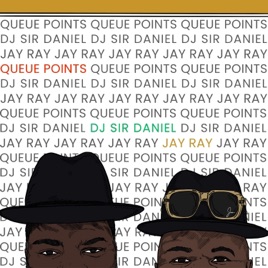
Advertise on podcast: Queue Points
Rating
4.8from
This podcast has
266 episodes
Language
EnglishPublisher
Queue Points LLCExplicit
No
Date created
2021/08/28
Latest episode
2026/10/12
Average duration
38 min.
Release period
7 days
Description
Queue Points is the Black Podcasting Award and Ambie Award-nominated music podcast that is dropping the needle on Black Music history and celebrating Black music through meaningful dialogue. The show is hosted by DJ Sir Daniel and Jay Ray. Follow us on social media @queuepointspod everywhere.
Unlock Queue Points podcast Email contact info,
Listeners & Audience details
Email contact information
Direct podcast contact details

Listeners
Audience numbers & engagement insights

Audience details
Podcast Insights



Podcast episodes
Check latest episodes from Queue Points podcast
Freddie Jackson: Quiet Storm, Rock Me Tonight & Harlem Legacy
2026/10/12
Following the passing of R&B vocalist Freddie Jackson, DJ Sir Daniel and Jay Ray examine the artist’s impact on 1980s Quiet Storm, R&B chart history, and Harlem’s musical ecosystem. The conversation explores Jackson’s vocal development from White Rock Baptist Church and Mystic Merlin to his debut album Rock Me Tonight, which spent 14 weeks atop the Billboard R&B albums chart. The hosts analyze his commitment to authentic R&B over pop crossover trends, his hit "You Are My Lady," and his deep mentorship within the Black music community.
The BreakdownHarlem Church Roots and Band Discipline: How gospel training and ensemble work with Mystic Merlin shaped Jackson's vocal mastery.Hush Productions and Community Networks: The collaborative ecosystem connecting Paul Laurence, Melba Moore, and Kashif.The Retro Nouveau Era: Rejecting pop dilution to deliver sophisticated, chart-topping 1980s R&B.Mentorship and Character: Remembering Jackson's generosity toward emerging artists like Tanya Blount.
Chapter Markers00:00 Introduction & Welcome
01:38 Early '80s Quiet Storm Sound
04:27 Rock Me Tonight as a Childhood Soundtrack
05:02 Church Roots and Band Training
10:35 Community Web of Hits
13:27 Retro Nouveau and Refusing Pop
14:35 Debut Album and Grammy Nod
15:24 Hip-Hop Blends and Harlem Legacy
19:08 Positive Songs About Women
20:20 Losing the Titans of Song
23:59 Chart Success and Sales
25:24 Tanya Blount and Freddie's Generosity
28:10 Legacy of Kindness
29:31 Final Tributes
30:08 Outro and Calls to Action
31:04 Outro Theme
Support Queue Points Become An Insider: https://link.queuepoints.com/membership
#FreddieJackson #QuietStorm #RnBHistory #BlackMusic #QueuePoints
Young Thug, Chuck D, Gamble & Huff & The NYT Greatest Songwriter List
2026/10/05
Prompted by The New York Times list of the greatest living American songwriters, DJ Sir Daniel and Jay Ray analyze the criteria behind modern music canonization and legacy preservation. The conversation interrogates Young Thug's inclusion on the list, evaluating the tension between traditional lyrical craftsmanship, vocal melody, and generational influence. The hosts highlight essential omitted creators across R&B, hip-hop, and Philly Soul—including Gamble & Huff, Chuck D, Phonte Coleman, Kipper Jones, Brian Alexander Morgan, and Wendy & Lisa—while examining broader producer-songwriter contributions.
The BreakdownCritiquing The New York Times Songwriter List and the Young Thug Debate: Analyzing lyricism versus vocal influence, John Caramonica's commentary, and the "karaoke test" for songwriting legacy.Jay Ray’s Unsung Lyricists: Gamble & Huff, Chuck D, and Phonte: Examining Philly Soul's disco foundation, Public Enemy's conscious hip-hop impact, and the blueprint for modern rap-singing.Sir Daniel’s Essential Catalog Craftsmen: Kipper Jones, Brian Alexander Morgan, and Wendy & Lisa: Revisiting Brandy’s debut, SWV’s It's About Time, and Prince-era collaborative songwriting.Angela Winbush, Linda Perry, and Catalog Ethics: Highlighting overlooked female producer-songwriters and discussing the cultural handling of controversial catalogs in contemporary R&B.
Read the Article“The 30 Greatest Living American Songwriters:” https://link.queuepoints.com/30-greatest-nyt
Chapter Markers00:00 Intro Theme
00:04 Welcome to Queue Points
00:19 Quick Transition
00:22 The NYT Greatest Living Songwriters List
02:30 The Young Thug Debate
07:24 Transition
07:30 Our Top Three Songwriters
07:48 Jay Ray's Picks
13:11 Quick Transition
13:13 Sir Daniel's Picks
19:43 Quick Transition
19:44 Glaring Omissions & Extras
24:30 The R. Kelly Conversation
26:30 Outro & Call to Action
27:07 Outro Theme
Support Queue Points Become An Insider: https://link.queuepoints.com/membership
#Songwriting #BlackMusicHistory #HipHop #RnB #QueuePoints
Protest Music History: Marvin Gaye to Kendrick Lamar
2026/09/28
Black protest music has evolved significantly from the Vietnam War-era anthems of Marvin Gaye and Curtis Mayfield to modern social commentary from Kendrick Lamar, Janelle Monáe, and Donald Glover. Hosts DJ Sir Daniel and Jay Ray examine why contemporary major record labels, corporate co-optation, and changing listener attention spans make mainstream revolutionary music rare today compared to the 1960s and 1970s. The discussion explores the shift toward independent music platforms, corporate radio consolidation, and the role of modern artists and gospel music in driving cultural change.
The BreakdownThe Commercial Evolution of Black Protest Songs: Examining how record label priorities shifted from supporting civil rights-era anthems to restricting political expression.Corporate Co-Optation and Radio Consolidation: Understanding how corporate media ownership, market incentives, and activist burnout limit the reach of revolutionary music.Modern Resistance Releases Across Genres: Evaluating contemporary social commentary tracks by Kendrick Lamar, Donald Glover, Janelle Monáe, and independent artists.The Silence of Modern Gospel Music: Analyzing gospel's departure from historical civil rights activism and the importance of community-level unity.
Chapter Markers00:00 Disclaimer
00:19 Intro Theme
00:23 Intro & Catching Up
00:41 Can We Make Revolutionary Music?
04:26 Record Labels & The Commercial Music Problem
05:10 Protest Burnout & Corporate Co-optation
15:48 Artists Making Protest Music Now
20:33 Gospel Artists & The Disappointment
23:30 Community, Unity & Moving Forward
31:16 Outro Theme
Support Queue Points Become An Insider: https://link.queuepoints.com/membership
#ProtestMusic #BlackMusicHistory #KendrickLamar #MarvinGaye #QueuePoints
John Crooms on Archiving Atlanta's Black Music Nightlife
2026/09/21
Veteran photographer and documentarian John Crooms joins hosts DJ Sir Daniel and Jay Ray to examine over three decades of capturing Atlanta's Black music nightlife and underground culture. The conversation traces Crooms' transition from film to digital media, his focus on documenting underground house music scenes over hip-hop, and the inspiration he drew from New York's Paradise Garage era. Crooms details his "A Great Day in Atlanta" group portrait project collaboration and explains how the city's independent radio stations and record shops formed the cultural infrastructure for Black creative expression.
The BreakdownDocumenting Underground House Music vs. Commercial Hip-Hop: Crooms explains his decision to prioritize underground house music events over hip-hop venues to avoid industry door politics and capture authentic community connections].Transitioning from Analog Negatives to Digital Archives: A look at the technical and logistical evolution of club photography from 1990s film negatives to digital files, along with the impact of smartphones on party culture].The Legacy of "A Great Day in Atlanta": The origins of the recurring decennial portrait documenting Atlanta's DJs, poets, and creatives, inspired by historical group photography and local community gatherings.Atlanta's Independent Music Infrastructure: How college radio stations like WCLK, WRFG, and Album 88 alongside record stores such as Earwax and Mood's Music sustained the city's Black music scene.
Guest BioJohn Crooms is an Atlanta-based photographer and historian who has chronicled the city's art, music, and cultural scene since the 1990s. Often referred to as "Everybody's Favorite Photographer", Crooms focuses on visual storytelling, preserving cultural memory, and documenting creative movements across the South.
Facebook: https://www.facebook.com/john.crooms
Instagram: https://www.instagram.com/jcrooms69/
Chapter Markers00:00 Intro Theme
00:04 Welcome to the Episode
02:42 Introducing John Crooms
02:56 A Personal Thank You from Jay Ray
05:17 Quick Transition
05:19 Advice for New Photographers
07:11 Birthday Reflections & Legacy
09:46 Transition
09:53 Three Decades Behind the Lens: Analog to Digital
11:40 How Phones Changed the Party Experience
13:24 Rediscovering Lost Moments in the Archive
16:29 Why House Music Over Hip-Hop
20:08 Transition
20:17 The Power and Responsibility of a Photographer
23:43 Name Recognition at the Door
25:20 Following the DJ: Choosing Where to Be
27:59 Quick Transition
28:01 Paradise Garage & Musical Roots
34:26 Hip-Hop's Fashion & Fetish Crossover
38:17 Quick Transition
38:19 A Great Day in Atlanta
42:55 Atlanta's Music Infrastructure
47:34 Where to Find John & Farewell
52:19 Outro Theme
Support Queue Points Become An Insider: https://link.queuepoints.com/membership
#BlackMusicHistory #AtlantaNightlife #HouseMusic #MusicPhotography #QueuePoints
Fat Joe, the N-Word & Hip-Hop's Reckoning
2026/09/14
Hosts DJ Sir Daniel and Jay Ray address Fat Joe's public defense of his N-word usage, examining how his Bronx hip-hop heritage intersects with accountability, racial identity, and audience boundaries. They analyze the potential impact of this rhetoric on his long-term legacy alongside the cultural friction surrounding non-Black artists using the slur. The conversation pivots to current debates within the DJ community, assessing discussions around technical skill, performance aesthetics, and generational dynamics sparked by viral DJ clips and responses from DJ Rob Swift. Together, they explore how mentorship, continuous learning, and intentionality sustain the integrity of Black music culture across generations.
The BreakdownFat Joe, Bronx Roots, and the N-Word Discourse: An examination of how Fat Joe leverages his upbringing in hip-hop’s birthplace to justify his usage of racial slurs, and why historical trauma complicates that argument.Tainting Hip-Hop Legacies and Audience Disengagement: How doubling down on controversial language risks damaging an artist's long-term standing in hip-hop culture, and why listener boundary-setting matters.Gatekeeping vs. Technical Skill in DJ Culture: A breakdown of viral online debates regarding DJing fundamentals, performance aesthetics, and ageism following commentary from Rob Swift and discussions around The Krate Doc with DJ Krate Digga and Dominic Lawson.Preserving Community and Joy in DJ Performance: How modern social media dynamics impact mentorship, continuous learning, and the emotional connection between DJs and their audiences.
Chapter Markers00:00 Intro Theme
00:17 Welcome Back
00:52 Quick Transition
00:53 Fat Joe and the N-Word Debate
02:17 Fat Joe's Bronx Roots Argument
15:35 No Resolution: Choosing Not to Engage
18:12 Transition
18:19 Gatekeeping in DJing
21:04 The Canyon DJ Set Controversy
32:54 Quick Transition
32:55 Listening to Learn: Community & Joy in DJing
40:21 Quick Transition
40:22 Wrap-Up & Shoutouts
42:12 Outro Theme
Support Queue Points Become An Insider: https://link.queuepoints.com/membership
#FatJoe #HipHopCulture #DJing #RobSwift #QueuePoints
Krate Digga & Dominic Lawson on 'The Krate Doc' Film
2026/09/07
This episode centers on The Krate Doc, the new documentary from The Ummah Creative Group that follows DJ Krate Digga through five gigs in a single weekend in Columbus, Ohio. DJ Sir Daniel and Jay Ray split the conversation in two: Jay Ray talks with director Dominic Lawson about building the film's visual language out of his background in narrative podcasting, while DJ Sir Daniel sits down with Krate Digga to trace 29 years behind the turntables back to a dorm room at Kentucky State University. Between them, the two conversations cover documentary craft, HBCU DJ culture in the mid-'90s, and the current debate over branding, social media, and gatekeeping among working DJs. It's a two-part look at the same subject from behind and in front of the camera.
The BreakdownHow a podcast producer became a documentary filmmaker: Dominic Lawson explains how his narrative audio work on Black Is America and his mentorship under Krystal Hill shaped his approach to sound design, pacing, and cinematography on his first documentary.Building a DJ set list for Kentucky State University in the 1990s: Krate Digga breaks down how the school's regional mix of students demanded fluency in Master P, UGK, and Cash Money's Southern catalog alongside Nas, Jay-Z, and Mobb Deep, plus the Detroit house and ghetto-tech influence of DJ Assault and the J Dilla school of production.The mechanics and philosophy of blending genres and eras: Krate Digga details his signature move of dropping the Isley Brothers' "Between the Sheets" around Biggie's "Big Poppa," and how that same instinct for connecting eras extends to hearing Bob Marley's bars resurface through Drake and Dead Prez.DJ culture, branding, and the gatekeeping debate: Krate Digga responds to criticism of boiler-room sets, celebrity DJs, and mashup culture by arguing that DJing means different things depending on whether someone approaches it through hip-hop culture, wedding entertainment, or pure commerce.
Watch the FilmThe Krate Doc on YouTube: https://qpnt.net/kratedoc
Chapter Markers00:00 Intro
00:04 Welcome and Introductions To Conversation
01:09 Introducing Dominic Lawson
02:08 The Conversation Begins
02:58 Origin of The Krate Doc
06:57 Columbus as a Character & Filming Process
10:56 From Podcasting to Filmmaking
14:30 The Evolution to Film
19:55 Start With What You Got
22:28 The Editing Process
25:05 Where to Connect
27:05 Transition & Introducing Next Segment
28:01 Welcome Back and Introducing Krate Digga
29:10 Origins: Starting DJing at Kentucky State
32:45 Quick Transition
32:46 DJing at an HBCU: Building Regional Range
42:16 DJs, Branding, and Social Media Pressure
48:43 DJ Culture, Tropes, and Gatekeeping
55:16 Quick Transition
55:18 Krate Digga on Retirement and Why he DJs
59:26 Connecting with Krate Digga
01:01:22 Closing Thoughts
01:02:35 Outro Theme
Support Queue Points Become An Insider: https://link.queuepoints.com/membership
#DJCulture #BlackMusicHistory #HipHopDocumentary #HBCU #KrateDigga
Nicki Minaj, Whitney Houston & the Business of Trauma Commerce
2026/08/31
DJ Sir Daniel and Jay Ray examine how celebrity culture turned personal trauma into a marketing tool, tracing the shift from the mystique of stars like Michael Jackson, Prince, and Madonna to today's model of public vulnerability as promotion. The conversation moves from Whitney Houston and Bobby Brown's reality-TV unraveling to R. Kelly's combative Gayle King interview, then into present-day flashpoints involving Nicki Minaj and Jonathan Majors. Sir Daniel and Jay Ray coin and unpack "trauma commerce," their term for how artists, labels, and publicists use crisis and confession to stay relevant and move product. The episode also revisits Tina Turner's story as a case study in trauma that outlives an artist's attempt to move past it.
The BreakdownFrom mystique to overexposure: How the record industry's old model of curated privacy — the approach that shaped Michael Jackson, Prince, and Madonna's stardom — gave way to constant public disclosure.Reality TV's role in reshaping celebrity: How Bobby Brown and Whitney Houston's reality series, plus shows like Flavor of Love, normalized "regular" as a marketable persona for musicians.R. Kelly, Tammy Faye Bakker, and the tears-as-strategy playbook: A look at how public figures — from R. Kelly's Gayle King sit-down to Tammy Faye Bakker's televised breakdowns — have used emotional display to manage scandal and sway public opinion.Nicki Minaj, "crashing out," and the trauma-commerce cycle: How Nicki Minaj's Instagram Live tirades and Queen Radio history illustrate a modern pattern of using public meltdowns to drive attention around new music, and why Tina Turner's story shows the cost artists pay when trauma becomes their defining narrative.
Chapter Markers00:00 Disclaimer
00:19 Intro Theme
00:50 Topic Intro: Did We Create Talentless Celebrities?
01:50 Celebrity vs. Stardom: The Old Guard Had Mystique
02:48 Trauma as the Currency of Modern Fame
03:56 Michael Jackson Case Study: When Stars Lean Into Trauma
06:45 Quick Transition
06:47 Record Labels Used to Sell Perfection
08:01 Jonathan Majors' Redemption Tour: Vulnerability as Marketing
09:36 Historical Examples: R. Kelly, Tammy Faye & Whitney Houston
11:51 Quick Transition
11:53 Reality TV & the Rise of 'Regular' as a Brand
13:15 The Music Industry's Diminishing Power
16:17 Celebrities Going Live: Who Worries You?
18:44 Defining 'Crashing Out' & Nicki Minaj as the Queen
21:30 Transition
21:37 Introducing 'Trauma Commerce'
23:27 Tina Turner: Trauma You Can't Escape
25:21 Parasocial Relationships & Why We're Drawn to Damaged People
27:37 Quick Transition
27:39 Does Good Music Change the Equation?
30:40 Closing Thoughts: Protect Your Peace
32:05 Outro Theme
Support Queue Points Become An Insider: https://link.queuepoints.com/membership
#TraumaCommerce #NickiMinaj #WhitneyHouston #RKelly #BlackMusicHistory
Kim Wayans Parodies: From Crystal Waters to Vanessa Williams
2026/08/24
DJ Sir Daniel and Jay Ray examine Kim Wayans' run of music parodies on "In Living Color" and trace how her characters critiqued the treatment of Black women in pop music while making audiences laugh. The conversation covers her castmate collaborations with T'Keyah Crystal Keymáh and Kim Coles, her parody of Crystal Waters' "Gypsy Woman," her Vanessa Williams sketch tied to the singer's ousting from Miss America, and her Tracy Chapman bit that doubled as commentary on the music industry's demand for repeat hits. The hosts also revisit her film appearance in "I'm Gonna Git You Sucka" and the "Rhythmless Nation" sketch aimed at Whitney Houston and Janet Jackson, arguing Kim Wayans used impersonation as a tool of cultural observation rather than mockery.
The BreakdownHow Kim Wayans and T'Keyah Crystal Keymáh's "Cook It" sketch turned Salt-N-Pepa's "Push It" into an "In Living Color" showcase for Black women rappers and R&B artists dominating the charts in 1990Why the "My Songs Are Mindless" parody of Crystal Waters' "Gypsy Woman" and the "Kiss My Ass" send-up of Vanessa Williams' "Save the Best for Last" used comedy to comment on Black women's treatment in the music industryWhat the Tracy Chapman "Fast Car" parody revealed about the recording industry's pressure for artists to repeat a hit, and how "Rhythmless Nation" played off Whitney Houston and Janet Jackson's contrasting public personasHow Kim Wayans' appearance as the Lounge Singer in Keenen Ivory Wayans' "I'm Gonna Git You Sucka," alongside scene-stealing turns from Anne-Marie Johnson, set up her run of R&B and hip-hop-era caricatures on "In Living Color"
Chapter Markers00:00 Intro Theme
00:16 Introduction: Celebrating Kim Wayans
04:29 The Salt-N-Pepa Parody: Cook It
06:54 Quick Transition
06:55 Crystal Waters Parody: My Songs Are Mindless
11:05 Vanessa Williams Parody: Kiss My Ass
13:23 Tracy Chapman Parodies
16:32 Quick Transition
16:33 Whitney Houston & Janet Jackson: Rhythmless Nation
20:03 Kim's Respect for the Artists She Parodied
21:56 I Love LaQuita: The Lucille Ball Parody
24:09 Transition
24:15 Kim Wayans' Scene Stealing Appearance: I'm Gonna Git You Sucka
29:03 Shoutout to Anne-Marie Johnson
31:10 Quick Transition
31:11 Closing Thoughts & Call to Action
33:42 Outro Theme
Support Queue Points Become An Insider: https://link.queuepoints.com/membership
#KimWayans #InLivingColor #BlackMusicHistory #WayansFamily #90sPopCulture
MTV Unplugged Helped Redefine the New Jack Swing Era
2026/08/17
DJ Sir Daniel and Jay Ray trace MTV Unplugged from its late-1989 launch through its rise in popularity as the Milli Vanilli lip-syncing scandal put a spotlight on which artists could actually perform live. The conversation centers on how the acoustic format pressured artists to demonstrate vocal and instrumental skill in real time, with particular attention to Uptown Records' 1993 label-wide taping featuring Heavy D & the Boyz, Jodeci, and Mary J. Blige. The hosts connect that moment to the broader shift away from the drum machine and keyboard production that defined New Jack Swing, and examine how Unplugged performances by Mariah Carey, LL Cool J, Maxwell, Lauryn Hill, and Jay-Z shaped audience perception of these artists' range.
The BreakdownHow the Milli Vanilli scandal fueled Unplugged's popularity, even though the series had already launched months earlierUptown Records' 1993 label showcase and its role in repositioning Mary J. Blige and Jodeci beyond New Jack Swing's studio-built soundYo! MTV Raps Unplugged and what LL Cool J, A Tribe Called Quest, and MC Lyte's performances revealed about hip-hop's live capabilityMaxwell's 1997 Unplugged and Lauryn Hill's 2001 special, and how each artist used the format at very different points in their careers
Uptown Records, Andre Harrell, Sean "Puffy" Combs, Heavy D & the Boyz, Jodeci, Mary J. Blige, Maxwell, Lauryn Hill, and Jay-Z all factor into a discussion that positions Unplugged as a turning point for how New Jack Swing-era artists were evaluated on musicianship rather than production polish.
Chapter Markers00:00 Intro Theme
00:16 Welcome to Queue Points
00:57 MTV's Evolution and the Birth of Unplugged
04:42 Quick Transition
04:43 The Unplugged Concept and Mariah Carey
08:06 Nirvana and Yo! MTV Raps Unplugged
15:15 Insert Transition
15:22 Uptown Records MTV Unplugged
22:36 Quick Transition
22:37 Maxwell's Unplugged
26:21 Insert Transition
26:28 Lauryn Hill's Unplugged
32:38 Dream Unplugged Performances That Never Were
38:54 Jay-Z Unplugged
41:01 Outro and Sign Off
42:27 Outro Theme
Support Queue Points Become An Insider: https://link.queuepoints.com/membership
#NewJackSwing #MTVUnplugged #BlackMusicHistory #UptownRecords #90sRnB
Sly Stone, D'Angelo & the Myth of Black Genius
2026/08/10
DJ Sir Daniel and Jay Ray use the Hulu documentary on Sly Stone as a jumping-off point to examine the label of "Black genius" and what it costs the artists who carry it. The conversation moves from Sly Stone's songwriting credit on "Somebody to Love" and D'Angelo's silent on-camera appearance to the real-world controversy around Lil Baby's name surfacing in an Atlanta Police Department shooting investigation. Along the way they weigh whether visibility and talent create an obligation to represent or uplift the Black community, using Jay-Z, Beyoncé, Stevie Wonder, Prince, and Michael Jackson as reference points.
The BreakdownSly Stone's documentary and the "Black genius" question — how Ahmir "Questlove" Thompson's film reframes genius as both a gift and a burden, and what D'Angelo's brief, wordless cameo signals about visibility and exhaustion.The Lil Baby/Atlanta Police Department controversy — how a rap video shoot in rival gang territory got tied to a real shooting, and what that reveals about the outsized influence assigned to Black celebrities.Genius versus celebrity — why the hosts argue the term "genius" has been diluted into a marketing label, and how that dilution puts pressure on young people looking for role models.The financial and emotional cost of being labeled "Black genius" — including Sly Stone's real-life clash over a $100,000 community demand, and how expectations placed on Jay-Z and Beyoncé echo the "talented tenth" framework from the Civil Rights era.
Chapter Markers00:00 Disclaimer
00:19 Intro Theme
00:36 The Lil Baby / Atlanta Police Department Story: Setting the Stage
03:36 The Sly Stone Documentary Sparks the Question: What Is Black Genius?
09:48 Transition
09:54 Genius vs. Celebrity: How the Term Gets Watered Down
11:23 The Danger of Mislabeling: Young People, Role Models & Influence
13:43 Everyone Has a Genius — But What Does It Cost?
15:38 Excusing Bad Behavior Under the Label of Genius
18:30 Is It Fair to Expect Black Genius to Represent Us All?
21:19 Transition
21:26 Unreasonable Expectations & The Ivory Prison of Black Genius
24:08 Community Responds: Responsibility to Musicianship
28:14 Quick Transition
28:15 The Bar for Genius Was Once Very High — And the Cost of Coveting Gifts
31:20 Brilliance Over Genius: Audience Takeaways & Closing Thoughts
33:08 Outro Theme
Support Queue Points Become An Insider: https://link.queuepoints.com/membership
#BlackMusicHistory #SlyStone #DAngelo #LilBaby #BlackGenius
Faith Evans' Faith Turns 30: An R&B Masterpiece
2026/08/03
DJ Sir Daniel and Jay Ray mark the 30th anniversary of Faith Evans' 1995 debut album Faith by asking whether it stands as a stronger debut than Mary J. Blige's What's the 411. The conversation traces Faith Evans' path through Bad Boy Records, her writing and vocal contributions to Blige's My Life, and producer Chucky Thompson's role in shaping both records. Sir Daniel and Jay Ray unpack the Diddy-engineered rollout that built anticipation around Faith Evans' identity, the tabloid narrative that pitted her against Mary J. Blige, and the album's standing as a defining quiet storm and R&B project of the Bad Boy era.
The Breakdown (Topics Discussed)Comparing debut albums: how Faith Evans' Faith and Mary J. Blige's What's the 411 set different templates for 1990s R&BChucky Thompson's production fingerprint on both Faith and My Life, and Faith Evans' behind-the-scenes writing contributions to Blige's workDiddy's marketing playbook for introducing Faith Evans, including the obscured album art and the joint Vibe magazine feature with The Notorious B.I.G."Soon As I Get Home" and the album's place in the quiet storm and slow jam canon
Chapter Markers00:00 Disclaimer
00:19 Intro Theme
00:36 Welcome to the Show and Context
03:18 Quick Transition
03:19 The Question: Does Faith Wash What's the 411?
03:43 Breaking Down the Case for Faith
05:23 My Life Is the Magnum Opus Argument
06:04 Faith's Connection to Bad Boy & Mary's My Life
07:48 Vocal Ability vs. Star Quality
09:01 The Mary vs. Faith Rivalry & Diddy's Role
11:45 Transition
11:51 Diddy's Artist Rollout Formula
13:31 The Biggie & Faith Vibe Cover Moment
17:44 Quick Transition
17:45 Faith as a Pure R&B Album vs. What's the 411
21:01 Deep Dive: Soon As I Get Home
23:41 Transition
23:48 Verdict and Reactions
25:07 Outro Theme
Support Queue Points Become An Insider: https://link.queuepoints.com/membership
#FaithEvans #MaryJBlige #SlowJamsCanHealUs #BadBoyRecords #90sRnB #ChuckyThompson
This episode was originally recorded on January 30, 2025.
Chaka Khan's Rock Era: 1986, Bowie, Palmer, and Winwood
2026/07/27
DJ Sir Daniel and Jay Ray examine Chaka Khan's standing as a rock and roll artist, tracing her genre-crossing career from her 1973 arrival as Rufus's lead singer through her celebrated 1986 stretch working alongside David Bowie, Robert Palmer, and Steve Winwood. The conversation centers on Chaka Khan's voice as an instrument—a framing like a trumpet credited to Miles Davis—and how that approach shaped her work across rock, funk, and jazz. The hosts also revisit her third solo album, What'cha Gonna Do for Me, on its 45th anniversary, and unpack her uncredited vocal arrangement work on Palmer's "Addicted to Love."
The Breakdown (Topics Discussed)How Chaka Khan uses her voice as an instrument, a lesson traced back to Miles Davis and reinforced through her range and control decades laterThe 45th anniversary of What'cha Gonna Do for Me, including its jazz influences and the Ned Doheny-penned title trackChaka Khan's 1986 run with David Bowie's Labyrinth soundtrack, Robert Palmer's "Addicted to Love," and Steve Winwood's "Higher Love"Her recognition as VH1's 17th Greatest Woman in Rock and her under-discussed rock credits from the 1970s, including work with Ry Cooder and Chicago
Chapter Markers00:00 Intro Theme
00:16 Welcome to the Show
01:01 Chaka Khan as Fire — Voice as an Instrument
04:21 45 Years of What'cha Gonna Do
09:20 What You're Gonna Do For Me — The Ned Doheny Story
12:08 Transition
12:08 VH1 Voted Chaka Khan #17 Greatest Woman In Rock
14:36 1986 — Chaka's Rock Star Year
19:05 Reflecting on an Era of Black Women in Rock
21:09 Quick Transition
21:11 Chaka Khan Appears On 1970's Rock Songs
23:19 The Peter Cetera Duet
24:25 The Voice as an Instrument — The Colors Performance
26:16 The 1987 B.B. King & Friends Performance
36:53 Closing Thoughts
38:03 Outro Theme
Support Queue Points Become An Insider: https://link.queuepoints.com/membership
#ChakaKhan #RufusBand #RobertPalmer #SteveWinwood #BlackMusicHistory
Dame Dash: From Harlem Hustler to Hip-Hop Villain
2026/07/20
Queue Points hosts DJ Sir Daniel and Jay Ray dig into the career and reputation of Dame Dash, the Harlem-born co-founder of Roc-A-Fella Records and Rocawear, tracing his rise alongside Jay-Z from the label's 1994 launch through its 2004 breakup. The conversation uses Jay-Z's recent Yankee Stadium concerts celebrating 30 years of Reasonable Doubt as a jumping-off point to examine how Dame built a public persona around flash, confrontation, and proximity to power rather than musical talent. The hosts unpack his relationships with Aaliyah, Rachel Roy, and Kanye West, and argue that Dame's current media presence functions as a cautionary tale about legacy, self-awareness, and staying relevant in hip-hop culture.
The Breakdown (Topics Discussed)How Jay-Z's Yankee Stadium shows celebrating Reasonable Doubt's 30th anniversary reignited conversation about Dame Dash and Roc-A-Fella's founding storyDame Dash's evolution from behind-the-scenes hustler to the flashy, villain-coded public face of Roc-A-Fella, and why the label's 2004 collapse sealed his reputation as a liabilityWhat Dame Dash represents in hip-hop history
Chapter Markers00:00 Hook
00:00 Intro Theme
00:16 Welcome to the Show
00:31 Jay-Z's Yankee Stadium Concert Recap
04:10 Transition
04:17 Dame Dash's Background and Rise
07:17 Dame Emerges as a Public Figure
09:53 Dame's Villain Persona
11:48 Dame Becomes a Liability
13:32 Quick Transition
13:34 What Does Dame Represent in Hip-Hop?
17:22 Quick Transition
17:24 The Shark and Remora Analogy
19:26 Main Character Energy
19:50 Dame's Relationships: Aaliyah, Rachel Roy, and Kanye
22:33 Comparing Dame to Kanye
24:27 Transition
24:34 The 'Real Friend' Warning
26:43 Show Close-Out
27:56 Outro Theme
Support Queue Points Become An Insider: https://link.queuepoints.com/membership
#DameDash #RocAFella #JayZ #HipHopHistory #BlackMusicHistory
Remembering Sparky D: Golden Era Battle Rap Queen
2026/07/13
DJ Sir Daniel and Jay Ray dedicate this episode to Sparky D, born Doreen Broadnax, tracing her run from Brownsville, Brooklyn dancer to one of hip-hop's first female battle rappers during the Roxanne Wars. The hosts walk through her time with The Playgirls, her creative partnership with Spyder D, her connection to DJ Red Alert, and the 1988 album "This Is Sparky D's World," while weighing her songwriting and delivery against contemporaries like MC Lyte, Salt-N-Pepa, and Queen Latifah. They also address her addiction, the isolation that came with working outside a larger crew or label team, and her eventual path to recovery and ministry in Atlanta.
The BreakdownSparky D's rise from Brownsville dancer to Playgirls member and how that group's "Our Picture of a Man" led to her solo work with Spyder DThe Roxanne Wars origin story, including how "Sparky's Turn (Roxanne, You're Through)" came together and the sisterhood that formed between Sparky D and Roxanne Shanté on tourSparky D's songwriting and vocal delivery on record, and how limited production resources and industry isolation affected her sound compared to golden era peersHer addiction, the personal trauma tied to it, and her later recovery and transition into ministry and community work
Chapter Markers00:00 Intro Theme
00:16 Welcome to the Show
01:02 Sparky D Passes Away
07:24 Sparky D's Career Overview
08:18 The Playgirls & the Roxanne Wars
12:01 Sisterhood on the Battle Tour
16:46 Transition
16:53 Sparky D's Artistry and Songwriting
22:27 Isolation, Production, and Missed Potential
23:32 Transition
23:39 Addiction and Personal Struggles
30:06 Transition
30:13 Recovery, Ministry, and Legacy
34:46 Closing Thoughts
36:16 Outro Theme
Support Queue Points Become An Insider: https://link.queuepoints.com/membership
#SparkyD #RoxanneWars #GoldenEraHipHop #FemaleMCs #HipHopHistory
Cold Chillin Records: The Juice Crew, Big Daddy Kane, Roxanne Shanté And Biz Markie
2026/07/06
DJ Sir Daniel and Jay Ray break down the history of Cold Chillin' Records, the Warner Brothers-distributed label that gave street rappers major-label reach. They trace the label's roots to Tyrone "Fly Ty" Williams and Len Fichtelberg, correcting the common misconception that Marley Marl founded the label rather than serving as its in-house producer. The conversation covers the Juice Crew roster, including Big Daddy Kane, Roxanne Shanté, Kool G Rap, MC Shan, and Biz Markie, and how the label's Prism Records merger and Warner distribution deal helped these Queensbridge and Brooklyn artists cross into mainstream visibility. The hosts also connect Biz Markie's 1991 "I Need a Haircut" sampling lawsuit to the industry-wide shift toward sample clearance practices still used today.
The BreakdownCold Chillin's origin story: how Fly Ty and Len Fichtelberg built the label out of Prism Records and secured Warner Brothers distribution, and why Marley Marl's role was producer rather than founderJuice Crew's rise to fame: Big Daddy Kane's debut impact with "Ain't No Half-Steppin'," Roxanne Shanté's early singles-first career path, and Kool G Rap and DJ Polo's influence on mafioso rap"The Symphony" posse cut: why the Marley Marl-produced track featuring Big Daddy Kane, Kool G Rap, Craig G, and Master Ace still stands as a high point for hip-hop group collaborationsBiz Markie's crossover run and its fallout: "Just a Friend" becoming a 1991 pop hit, followed by the Gilbert O'Sullivan lawsuit over "Alone Again" that reshaped sampling clearance rules in the music industry
Chapter Markers00:00 Intro Theme
00:16 Welcome to the Show
00:56 Quick Transition
00:57 Cold Chillin Records A Groundbreaking Label
02:22 The Founders and Early Days of Cold Chillin
05:33 Transition
05:40 The Juice Crew and Their Impact
15:29 Big Daddy Kane A Game Changer
18:27 Roxanne Shante The Queen of the Juice Crew
25:38 Quick Transition
25:39 Kool G. Rap and DJ Polo Innovators of Mafioso Rap
27:36 The Juice Crew Female Members
28:07 The Legendary Posse Cut The Symphony
31:43 Biz Markie Had Crossover Success with Just a Friend
34:30 The Impact of Sampling Lawsuits on Hip Hop
37:50 Cold Chillin Records Legacy in Hip Hop
39:07 Transition
39:14 Cold Chillin Had the Flyest Logo
39:49 Closing Remarks and Farewell
40:38 Outro Theme
#ColdChillinRecords #JuiceCrew #BigDaddyKane #BizMarkie #HipHopHistory
Podcast reviews
Read Queue Points podcast reviews
future ralph 2025/03/15
banger
Came here for the Isaac Hayes episode, was not disappointed! now i have to listen to that Bernard Purdie album. Excellent work, sirs!
Shorty2009 2023/07/13
Hola 👋🏽
Hello QP
Just stopping by to say thank you guys for all you do for those of us who tune to watch and listen to the Podcast. It’s like going to night...
Dr. Ed Garnes 2023/04/21
Musicology
This heady joint is actually a series of music documentaries with two affable hosts who invite us into their living room to explore all music has to o...
tremills1 2022/06/17
The Best Podcast EVER!!!
Musical History, DJ’s, and Great Guests! What else could you ask for in a podcast? This is where MusicHeads can come together and talk about different...
Lucksterama 2021/12/09
A must listen
Queue Points is one of the best music podcasts out there, point blank period. It’s like digging into music crates with your most knowledgeable friends...
MangoJuiceDrip 2021/12/07
Because I Know Love Queue Points
This is literally one of my favorite podcasts. I laugh, reflect, talk at the speakers, and learn. All the components that I need. So excited that this...
SumthinSevere 2021/10/16
My Conversational Fantasy fulfilled!
Queue Points is literally like my conversational fantasies come true! It’s all about music and culture from a black queer perspective. The conversa...
Podcast sponsorship advertising
Start advertising on Queue Points relevant audience podcasts
You may also like to advertise on these Podcasts

51088171
Middle Children
Jessie Jolles and Chris Burns

4.9264982000
Morning Wire
The Daily Wire

4.518767374
American Scandal
Audible

4.689331209
Get Sleepy: Sleep meditation and stories
Slumber Studios

4.79026375
Life is Short with Justin Long
Audible

4.714107348
Bad Friends
Bobby Lee & Andrew Santino

4.7126170
10 to Life
Annie Elise

4.76754462
Criminology
Emash Digital & Mike Ferguson, Mike Morford

4.87501973
The Dr. John Delony Show
Ramsey Network

4.512577662
RedHanded
RedHanded