1585456150
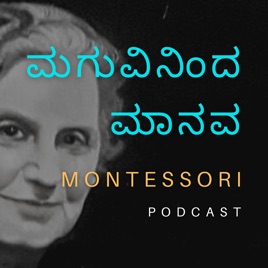
Maguvininda Manava Montessori Podcast

Advertise on podcast: Maguvininda Manava Montessori Podcast

This podcast has
23 episodes
Language
English
Explicit
No
Date created
2021/09/11
Latest episode
2021/09/08
Average duration
9 min.
Release period
-4 days

Description

Maguvininda Manava Montessori podcast is about the Montessori Method of education. People visiting the Montessori schools think that children only play in the Montessori classrooms and do not learn any reading and writing. They believe either children have been given too much freedom or disciplined too much. Furthermore, Montessori schools are considered to be the schools for differently-abled children. I am Dr S Rekha Reddy, excited to share three decades of my experience in the Montessori field as a teacher and Montessori Teacher Trainer and intend to clear some of the misconceptions about the Montessori Method. I also share a few fundamental Montessori Principles in this podcast. The podcast is beneficial to all parents irrespective of whether your children are in Montessori school or not. It is advantageous for teachers, principals and anyone interested in the Montessori method of education.

Unlock Maguvininda Manava Montessori Podcast podcast Email contact info,
Listeners & Audience details

Email contact information

Direct podcast contact details

Listeners

Audience numbers & engagement insights

Audience details

Podcast Insights

Podcast episodes

Check latest episodes from Maguvininda Manava Montessori Podcast podcast


Maguvininda Manava Montessori Podcast
2021/09/08
In this episode, Dr S Rekha Reddy shares her experience visiting Montessori school for the first time. A Montessori school is called ‘House of Children’ since it’s a place specifically created for the children. It is categorically different from regular schools as it has been constructed keeping in mind the specific needs of the children. It is quite an enigma to see the children work independently within the confines of discipline when they are seemingly contradictory. What is typical of a Montessori environment is the premise of this episode.
2. Freedom and Discipline
2021/09/09
Freedom and discipline are essential in a child's development. We can observe both these in the Montessori Houses of Children. How does discipline prevail with freedom? The kinds of freedoms and their limitations in the Montessori environment.
3. Natural Laws of Development
2021/09/09
All living and non-living things in this world are influenced by some power. Human beings are not exempt from this. The child also develops according to the rules laid by that power which Maria Montessori calls Natural Laws of Development. Understanding these laws helps us to support the child better. This episode provides a brief introduction to the Laws of Development.
4. Metamorphosis
2021/09/10
This episode explores the idea of metamorphosis in children. Ordinarily, metamorphosis is associated with Insects and frogs, which go through striking transformations in their life cycle. Contrary to the popular belief that development is constantly upward, the child's development has ups and downs, births and rebirths, and metamorphosis in mental and physical aspects! This is exactly how the child develops.
5. Developmental Stages
2021/09/10
This episode is about the developmental stages of the human being. It discusses the difference in growth and development and the reasons for classifying developmental stages in the blocks of 6 years.
6. The Spiritual Embryo
2021/09/28
This episode discusses how the child is born incomplete compared to the animal babies. At birth, the child has eyes but no sight, ears but no listening, hands but no grasp, legs without coordination. In short, the child is almost a mass of flesh. During the first days of life, the spirit is blown into this mass of flesh. Nature has provided the child with the powers to create his future being.
7 The Non-Conscious Powers
2021/10/05
This episode presents the non-conscious powers: Absorbent Mind, Horme and Mneme in the Spiritual Embryo. While the Absorbent Mind absorbs the elements from the environment, the Mneme incarnates whatever absorbent mind has absorbed. Horme drives the child to accomplish the tasks. The child will not retain these powers forever. Once the conscious powers like Intelligence, Willpower and conscious memory are developed, the non-conscious powers, Horme, Mneme and Absorbent Mind, gradually decrease and fade away. 
8. Development from Birth to 3 years
2021/10/13
This episode presents the first phase of the first plane of development – birth to three years. Its characteristics, needs, and the help required to satisfy those needs to develop to the fullest.
9. The Young Explorer of 3 to 6years
2021/10/15
The podcast discusses the development of the child between 3 and 6 years, who still retains the Absorbent Mind, keeps exploring his environment, can choose and strives to be perfect. Provides insights into preparing the environment for the child passing through the time of grace and courtesy.
10. The Tough Guy of 6 to 12years
2021/10/20
This episode presents the developmental needs and characteristics of children between 6 and 12 years. Children of this age group are lean and tall but are strong and do not easily fall sick. They are outwardly bound and keen on exploring society. They have moved from ‘what’ to ‘Why’ questions and are interested in knowing what is fair and unfair, differentiating right from wrong. Tune in!
11. The Socially Conscious Individual of 12 to 18years
2021/10/27
This episode gives you a picture of an adolescent child between 12 and 18 years. The third stage of development is similar to the first stage of development in many ways. The child goes through several changes, transformations like in the first stage. The child is newly born during adolescence again as he has a new set of physical and psychological characteristics. He is getting prepared for the social life of society. Now, he needs a different type of prepared environment called ‘Erde-Kinder’ (Children of Earth). In these youth settlements around villages, the adolescents develop faith in themselves, gain economic independence, learn to participate in social life and get ready for the bigger adult society. Tune in!
12. The Sensitive Periods
2021/11/02
This episode presents how Dr Maria Montessori applied the sensitive periods for human development that were first recognized in the animal world.  It discusses the characteristics, significance and consequences of neglecting the sensitive periods. One of the neglected sensitive periods was evidenced in the life of Aveyron boy, the inspiration for Rudyard Kipling's Jungle Book's Mogli. The concept of dropped stitches in our mental life when the sensitive periods are not fully utilized is explored.

Podcast reviews

Read Maguvininda Manava Montessori Podcast podcast reviews


0 out of 5
0 reviews

Podcast sponsorship advertising

Start advertising on Maguvininda Manava Montessori Podcast relevant audience podcasts


What do you want to promote?