Advertise on podcast: Policy Implications Podcast
This podcast has
35 episodes
Language
EnglishExplicit
No
Date created
2021/09/28
Latest episode
2026/07/05
Average duration
28 min.
Release period
109 days
Description
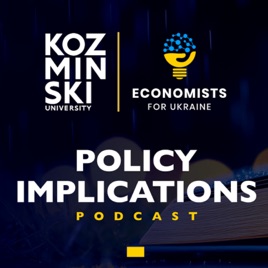
Policy Implications is a podcast where we dive into new research in economics and finance and ask what it means for policymakers in the real world. This season, we focus on Ukraine – the war, the economy, and the institutions that will shape the country’s future. The host of the show is Olha Zadorozhna, an economist whose main areas of research expertise are governance, institutions, and resilience in Ukraine and the neighboring region. This series is supported by the Economists for Ukraine and Kozminski University.
Unlock Policy Implications Podcast podcast Email contact info,
Listeners & Audience details
Email contact information
Direct podcast contact details

Listeners
Audience numbers & engagement insights

Audience details
Podcast Insights

Podcast episodes
Check latest episodes from Policy Implications Podcast podcast
S03. Episode 13. Funding Ukraine, Defending Europe: The Future of European Security.
2026/07/05
In this episode of Policy Implications, Olha Zadorozhna speaks with Jacob Funk Kirkegaard, a senior fellow at Bruegel and the Peterson Institute for International Economics, about Europe’s response to Russia’s full-scale invasion of Ukraine and what it says about Europe’s future security role. Theydiscuss why the war led to much more EU financing for Ukraine without creating a true European defence union, why geography and fiscal capacity shaped which countries moved fastest, how coalitions of the willing have become central toEurope’s military response, and why Ukraine itself may become a key part of Europe’s long-term defence capacity. They also explore what all of this means as Europe faces growing pressure to take more responsibility for its ownsecurity.
Link to the paper discussed in this episode: https://tinyurl.com/sz3ube6d
💛💙 Support Ukraine:Please consider donating to support Ukraine. Trusted ways to do so include:
· United24 – official fundraising platform of the Ukrainian Government: https://u24.gov.ua
· Come Back Alive Foundation: https://savelife.in.ua/en/
· Leleka Foundation – support for Ukrainian medics on the frontlines: https://leleka.care/en
🎧 Listen to Policy Implications as a podcast:
🟢 Spotify: https://shorturl.at/Ho3jh
🍎 Apple Podcasts: https://shorturl.at/gOlvb
▶️ YouTube Podcasts: https://shorturl.at/otJaq
🔔 Subscribe for more conversations on Ukraine’s economy, institutions, and the challenges of reconstruction.
S03. Episode 12. Not Just Putin: Russian Support for the War in Ukraine.
2026/06/15
In this episode of Policy Implications, Olha Zadorozhna hosts a conversation with Olle Hammar on Russian public opinion, wartime attitudes, and what survey evidence can tell us about support for the invasion of Ukraine. Drawing on new research using data from the Levada Center and the Gallup World Poll, they discuss whether Russia’s war against Ukraine is really just Putin’s war, or whether it has broader backing inside Russian society. Together, they explore why the evidence points to a strong rally effect after the full-scale invasion, how support for Putin and optimism about the future both increased while positive attitudes toward the West and migration aspirations declined, why Moscow stands out as a partial exception, what the temporary backlash to partial mobilization actually reveals, and what all of this means for policymakers in Ukraine and the West who may still hope that internal Russian opposition will end the war.
Link to the paper discussed in this episode: https://tinyurl.com/y3f9w9vk
💛💙 Support Ukraine:Please consider donating to support Ukraine. Trusted ways to do so include:
· United24 – official fundraising platform of the Ukrainian Government: https://u24.gov.ua
· Come Back Alive Foundation: https://savelife.in.ua/en/
· Leleka Foundation – support for Ukrainian medics on the frontlines: https://leleka.care/en
🎧 Listen to Policy Implications as a podcast:
🟢 Spotify: https://shorturl.at/Ho3jh
🍎 Apple Podcasts: https://shorturl.at/gOlvb
▶️ YouTube Podcasts: https://shorturl.at/otJaq
🔔 Subscribe for more conversations on Ukraine’s economy, institutions, and the challenges of reconstruction.
S03. Episode 11. How Ukrainian Migration Changed Voting in Poland?
2026/05/04
In this episode of Policy Implications, Olha Zadorozhna hosts a conversation with Dariia Mykhailyshyna on migration, politics, and how large inflows of migrants can reshape voting behavior. Drawing on new research on two waves of Ukrainian migration to Poland — the labor migration that followed Russia’s aggression in 2014 and the refugee inflow after the full-scale invasion in 2022 — they discuss whether more migration really leads to more support for nationalist and far-right parties. Together, they explore why the Polish case tells a more nuanced story, how local exposure to Ukrainian migrants often reduced rather than increased far-right support, why labor migrants and refugees produced different political effects, and what this reveals about the role of labor markets, social benefits, and political rhetoric in shaping public attitudes toward migration.
Link to the paper discussed in this episode: https://tinyurl.com/mtskp3rh
💛💙 Support Ukraine:Please consider donating to support Ukraine. Trusted ways to do so include:
· United24 – official fundraising platform of the Ukrainian Government: https://u24.gov.ua
· Come Back Alive Foundation: https://savelife.in.ua/en/
· Leleka Foundation – support for Ukrainian medics on the frontlines: https://leleka.care/en
🎧 Listen to Policy Implications as a podcast:
🟢 Spotify: https://shorturl.at/Ho3jh
🍎 Apple Podcasts: https://shorturl.at/gOlvb
▶️ YouTube Podcasts: https://shorturl.at/otJaq
🔔 Subscribe for more conversations on Ukraine’s economy, institutions, and the challenges of reconstruction.
S03. Episode 10. Can Poland Make Better Use of Ukrainian Talent?
2026/04/20
In this episode of Policy Implications, Olha Zadorozhna hosts a conversation with Ivanna Kyliushyk on migration between Ukraine and Poland — not just as a humanitarian story, but as a question of skills, talent, and long-term economic strategy. Drawing on research on the Ukraine–Poland migration skill corridor, they discuss who today’s Ukrainian migrants in Poland are, why so much talent remains underused, and what this reveals about the gap between labour market demand and migration policy. Together, they explore whether this movement should be seen as brain drain or brain circulation, why Poland struggles to retain Ukrainian talent, and what a more strategic approach could mean for both countries’ economic future and for Ukraine’s reconstruction.
💛💙 Support Ukraine:Please consider donating to support Ukraine. Trusted ways to do so include:
· United24 – official fundraising platform of the Ukrainian Government: https://u24.gov.ua
· Come Back Alive Foundation: https://savelife.in.ua/en/
· Leleka Foundation – support for Ukrainian medics on the frontlines: https://leleka.care/en
🎧 Listen to Policy Implications as a podcast:
🟢 Spotify: https://shorturl.at/Ho3jh
🍎 Apple Podcasts: https://shorturl.at/gOlvb
▶️ YouTube Podcasts: https://shorturl.at/otJaq
🔔 Subscribe for more conversations on Ukraine’s economy, institutions, and the challenges of reconstruction.
S03. Episode 9. Wartime Giving: What Keeps Donations Flowing?
2026/04/06
In this episode of Policy Implications, Tatyana Deryugina steps in for Olha Zadorozhna to host a conversation on charitable giving during wartime. She is joined by Margaryta Klymak, Dariia Mykhailyshyna, Andrew Kosenko, and Kathryn Vasilaky, authors of a paper on wartime fundraising in Ukraine. Together, they discuss how donations evolve during a long conflict, what motivates people to keep giving, and what Ukraine’s experience can teach us about solidarity, media attention, and collective action during war.
More details about the papers discussed in this episode may be found here: https://tinyurl.com/5n84rye8.
💛💙 Support Ukraine:Please consider donating to support Ukraine. Trusted ways to do so include:
· United24 – official fundraising platform of the Ukrainian Government: https://u24.gov.ua
· Come Back Alive Foundation: https://savelife.in.ua/en/
· Leleka Foundation – support for Ukrainian medics on the frontlines: https://leleka.care/en
🎧 Listen to Policy Implications as a podcast:
🟢 Spotify: https://shorturl.at/Ho3jh
🍎 Apple Podcasts: https://shorturl.at/gOlvb
▶️ YouTube Podcasts: https://shorturl.at/otJaq
🔔 Subscribe for more conversations on Ukraine’s economy, institutions, and the challenges of reconstruction.
S03. Episode 8. Rebuilding Ukraine: What Will It Take to Grow Again?
2026/03/23
In this episode of Policy Implications, Olha Zadorozhna talks with Yuriy Gorodnichenko (UC Berkeley) and Maurice Obstfeld (UC Berkeley and former IMF Chief Economist) about what it really takes to put Ukraine on a sustainable postwar growth path.
Reconstruction is not just about rebuilding what was destroyed. It’s about creating the conditions for long-term investment, higher productivity, and the return of millions of Ukrainians.
In this conversation, we discuss:▪ why investment — not just aid — is the key to growth▪ how Ukraine can attract foreign capital▪ what policies ensure that financial inflows translate into real economic development▪ how to avoid boom-bust cycles after large inflows▪ what the EU, US, and international institutions should do next
This episode focuses on concrete policy choices that could shape Ukraine’s economic future for decades.
More details about the papers discussed in this episode may be found here: https://www.nber.org/papers/w34715.
💛💙 Support Ukraine:Please consider donating to support Ukraine. Trusted ways to do so include:
· United24 – official fundraising platform of the Ukrainian Government: https://u24.gov.ua
· Come Back Alive Foundation: https://savelife.in.ua/en/
· Leleka Foundation – support for Ukrainian medics on the frontlines: https://leleka.care/en
🎧 Listen to Policy Implications as a podcast:
🟢 Spotify: https://shorturl.at/Ho3jh
🍎 Apple Podcasts: https://shorturl.at/gOlvb
▶️ YouTube Podcasts: https://shorturl.at/otJaq
🔔 Subscribe for more conversations on Ukraine’s economy, institutions, and the challenges of reconstruction.
S03. Episode 7. Oil Sanctions: The Long Game Against Russia’s Energy Sector.
2026/03/09
In this episode of Policy Implications, Olha Zadorozhna speaks with Erik Katovich, assistant professor of Economics at the University of Connecticut, about what really happens inside sanctioned industries. Focusing on Russia’s oil sector after the 2014 sanctions, they discuss how energy companies adjusted their production and investment decisions when access to Western finance and technology was restricted. The conversation reveals why sanctions may not immediately reduce oil output, but can quietly undermine future production by discouraging exploration and accelerating resource depletion. The episode explores what this dynamic response means for evaluating sanctions today — and why policymakers should look beyond short-term indicators when assessing economic pressure on Russia.
💛💙 Support Ukraine:Please consider donating to support Ukraine. Trusted ways to do so include:
· United24 – official fundraising platform of the Ukrainian Government: https://u24.gov.ua
· Come Back Alive Foundation: https://savelife.in.ua/en/
· Leleka Foundation – support for Ukrainian medics on the frontlines: https://leleka.care/en
🎧 Listen to Policy Implications as a podcast:
🟢 Spotify: https://shorturl.at/Ho3jh
🍎 Apple Podcasts: https://shorturl.at/gOlvb
▶️ YouTube Podcasts: https://shorturl.at/otJaq
🔔 Subscribe for more conversations on Ukraine’s economy, institutions, and the challenges of reconstruction.
S03. Episode 6. The Price Cap, the Shadow Fleet, and the Economics of Russian Oil Sanctions.
2026/02/23
In this episode of Policy Implications, Olha Zadorozhna talks with Julien Daubanes, associate professor at Technical University of Denmark. They discuss how sanctions on Russian oil are designed to reduce the Kremlin’s war revenues, how Russia has adapted by building a so-called “shadow fleet,” and why some sanctions that look tougher on paper may be less effective in practice. The conversation explores which sanction mechanisms hurt Russian oil profits the most and what policymakers in the EU, US, and G7 should prioritize going forward. More details about the papers discussed in this episode may be found here: “The Dynamics of Evasion: The Price Cap on Russian Oil Exports and the Amassing of the Shadow Fleet”: https://shorturl.at/3GcQB.
💛💙 Support Ukraine:Please consider donating to support Ukraine. Trusted ways to do so include:
· United24 – official fundraising platform of the Ukrainian Government: https://u24.gov.ua
· Come Back Alive Foundation: https://savelife.in.ua/en/
· Leleka Foundation – support for Ukrainian medics on the frontlines: https://leleka.care/en
🎧 Listen to Policy Implications as a podcast:
🟢 Spotify: https://shorturl.at/Ho3jh
🍎 Apple Podcasts: https://shorturl.at/gOlvb
▶️ YouTube Podcasts: https://shorturl.at/otJaq
🔔 Subscribe for more conversations on Ukraine’s economy, institutions, and the challenges of reconstruction.
S03. Episode 5. Science Under Fire — and How to Get Published in Top Journals.
2026/02/09
In this episode of Policy Implications, Olha Zadorozhna talks with Sasha Talavera, Professor of Economics at the University of Birmingham and Co-Editor of the journal Economic Modelling. They discuss how Russia’s war has reshaped Ukrainian science, the challenges researchers face today, and the sources of resilience and renewal within Ukrainian academia. The conversation also draws on Sasha’s experience as a journal editor to explore what makes research publishable in top journals, common reasons for rejection, and practical advice for researchers navigating the peer-review process. More details about the papers discussed in this episode may be found here: “Research Productivity during the Russian War in Ukraine”: https://shorturl.at/UmYsU. VoxEU article about the paper: https://shorturl.at/YgKpX. VoxUkraine article about the paper: https://shorturl.at/MZ7gu. More details about publishing at Economic Modelling: https://shorturl.at/XbTPr. 💛💙 Support Ukraine:Please consider donating to support Ukraine. Trusted ways to do so include:
· United24 – official fundraising platform of the Ukrainian Government: https://u24.gov.ua
· Come Back Alive Foundation: https://savelife.in.ua/en/
· Leleka Foundation – support for Ukrainian medics on the frontlines: https://leleka.care/en
🎧 Listen to Policy Implications as a podcast:
🟢 Spotify: https://shorturl.at/Ho3jh
🍎 Apple Podcasts: https://shorturl.at/gOlvb
▶️ YouTube Podcasts: https://shorturl.at/otJaq
🔔 Subscribe for more conversations on Ukraine’s economy, institutions, and the challenges of reconstruction.
S03. Episode 4. When Berlin Went Dark: What Europe Can Learn from Ukraine’s Blackouts.
2026/01/26
In this episode of Policy Implications, Olha Zadorozhna talkswith Tatyana Deryugina, an economist specialising in environmental and energy issues, and Ilona Sologoub, a policy expert and head of VoxUkraine. They discuss the recent major blackout in Berlin, Ilona’s first-hand experience of living through long blackouts in Ukraine, and what these crisesreveal about Europe’s energy security. The conversation explores how Ukraine has learned to cope with and adapt to systematic attacks on its energy system, and what practical lessons European countries can draw from Ukraine’s experience to make their own grids and societies more resilient.
💙 Support Ukraine:Please consider donating to support Ukraine. Trusted ways to do so include:
· United24 – official fundraising platform of the Ukrainian Government: https://u24.gov.ua
· Come Back Alive Foundation: https://savelife.in.ua/en/
· Leleka Foundation – support for Ukrainian medics on the frontlines: https://leleka.care/en
🎧 Listen to Policy Implications as a podcast:
🟢 Spotify: https://shorturl.at/Ho3jh
🍎 Apple Podcasts: https://shorturl.at/gOlvb
▶️ YouTube Podcasts: https://shorturl.at/otJaq
🔔 Subscribe for more conversations on Ukraine’s economy, institutions, and the challenges of reconstruction.
S03. Episode 3. More Than Guests: How Ukrainian Businesses Spark Polish Entrepreneurship
2026/01/12
In this episode of Policy Implications, Olha Zadorozhna talks with Pierre-Louis Vézina, a Professor of Economics at King’s College London. They discuss Pierre-Louis’s recent research on how Ukrainian refugees in Poland are not just workers, but entrepreneurs who start businesses, create jobs, and even stimulate new Polish firms. The conversation explores what this evidence means for how we think about refugees, the Polish economy, and migration policy more broadly. More details about the papers discussed in this episode may be found here:
- “Refugees and Entrepreneurship: Evidence from Ukrainians in Poland”: https://shorturl.at/Ns0oX. 💛💙 Support Ukraine:Please consider donating to support Ukraine. Trusted ways to do so include:
· United24 – official fundraising platform of the Ukrainian Government: https://u24.gov.ua
· Come Back Alive Foundation: https://savelife.in.ua/en/
· Leleka Foundation – support for Ukrainian medics on the frontlines: https://leleka.care/en
🎧 Listen to Policy Implications as a podcast:
🟢 Spotify: https://shorturl.at/Ho3jh
🍎 Apple Podcasts: https://shorturl.at/gOlvb
▶️ YouTube Podcasts: https://shorturl.at/otJaq
🔔 Subscribe for more conversations on Ukraine’s economy, institutions, and the challenges of reconstruction.
S03. Episode 2. Ukraine Aid: The Real Price Tag of U.S. and EU Support.
2025/12/29
In this episode of Policy Implications, Olha Zadorozhna talks with James Hodson, a leading AI researcher and entrepreneur whose AI for Good Foundation has advised the Ukrainian government on economic and policy questions since the start of Russia’s full-scale invasion. They discuss James’s recent research on the real economic value of U.S. support for Ukraine – how much aid has actually been delivered, how it compares to European support, and to what extent this money benefits Ukraine versus the economies of the countries providing it.
More details about the papers discussed in this episode may be found here:
· “A HIMARS in the Hand is Worth Two in the Bush: Measuring the Real Economic Value of U.S. Support for Ukraine”: https://shorturl.at/aOZUv.
💛💙 Support Ukraine:Please consider donating to support Ukraine. Trusted ways to do so include:
· United24 – official fundraising platform of the Ukrainian Government: https://u24.gov.ua
· Come Back Alive Foundation: https://savelife.in.ua/en/
· Leleka Foundation – support for Ukrainian medics on the frontlines: https://leleka.care/en
🎧 Listen to Policy Implications as a podcast:
🟢 Spotify: https://shorturl.at/Ho3jh
🍎 Apple Podcasts: https://shorturl.at/gOlvb
▶️ YouTube Podcasts: https://shorturl.at/otJaq
🔔 Subscribe for more conversations on Ukraine’s economy, institutions, and the challenges of reconstruction.
S03.Episode 1. Perception vs Reality: What Data Say About Corruption in Ukraine.
2025/12/15
In this episode of Policy Implications, Olha Zadorozhna talks with Tatyana Deryugina, a distinguished economist, co-founder of “Economists for Ukraine” network, and an Associate Professor of Finance at the University of Illinois at Urbana-Champaign. They discuss Tatyana’s recent research on how to measure corruption using household data and public procurement, and what these new measures say about Ukraine compared to other countries.
More details about the papers discussed in this episode may be found here:
· “Measuring Corruption From Household Income and Consumption Micro-Data: An International Perspective”:https://shorturl.at/SUxvB.
· “Rating Government Procurement Markers”: https://shorturl.at/Hd2ua.
💛💙 Support Ukraine:Please consider donating to support Ukraine. Trusted ways to do so include:
· United24 – official fundraising platform of the Ukrainian Government: https://u24.gov.ua
· Come Back Alive Foundation: https://savelife.in.ua/en/
· Leleka Foundation – support for Ukrainian medics on the frontlines: https://leleka.care/en
🎧 Listen to Policy Implications as a podcast:
🟢 Spotify: https://shorturl.at/Ho3jh
🍎 Apple Podcasts: https://shorturl.at/gOlvb
▶️ YouTube Podcasts: https://shorturl.at/otJaq
🔔 Subscribe for more conversations on Ukraine’s economy, institutions, and the challenges of reconstruction.
Episode 22. Economic Distress and Support for Radical Right Parties.
2022/05/26
In this episode of the Policy Implications Podcast together with dr. Sirus Dehdari from Stockholm University we discuss the how support for far-right parties is related to economic distress. Also, we talk about ways to prevent such parties from gaining popularity at times of economic crisis.
Guest: dr. Sirus Dehdari - Stockholm University.
More details about the paper discussed in this episode can be found here: https://journals.sagepub.com/doi/10.1177/00104140211024301.
Episode 21. Environmental policies and green investments: a pathway to cleaner production.
2022/05/12
In this episode of the Policy Implications Podcast together with dr. Kinga Tchórzewska from Kozminski University we discuss the effect of tax incentives on firms’ employment and green investments. Also, we talk about the most effective ways to induce cleaner production and reduce pollution.
Guest: dr. Kinga Tchórzewska - Kozminski University.
More details about the paper discussed in this episode can be found here: https://sites.google.com/view/kingatch/research_1.
Podcast reviews
Read Policy Implications Podcast podcast reviews
Podcast sponsorship advertising
Start advertising on Policy Implications Podcast relevant audience podcasts
You may also like to advertise on these Podcasts

4.82510178
Smosh Reads Reddit Stories
Smosh

4.975169748
Small Town Murder
James Pietragallo, Jimmie Whisman
4.71285595
Bulwark Takes
The Bulwark

4.8583398
Didn't I Just Feed You
Stacie Billis and Meghan Splawn
4.4503509
Warfare
History Hit

4.8296651983
Fantasy Footballers - Fantasy Football Podcast
Fantasy Football

4.712833547
True Crime All The Time
Emash Digital

4.8160071996
Watch What Crappens
Ben Mandelker & Ronnie Karam

4.638851160
Modern Wisdom
Chris Williamson

4.66182306
True Crime with Kendall Rae
Mile Higher Media & Audioboom Studios