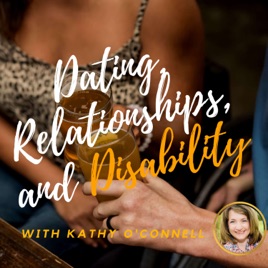
Advertise on podcast: Dating, Relationships, and Disability
Rating
5from
This podcast has
231 episodes
Language
EnglishPublisher
Kathy O'ConnellExplicit
No
Date created
2021/10/29
Latest episode
2026/02/03
Average duration
32 min.
Release period
8 days
Description
We offer strategies, encouragement, and mindset tips on dating with a disability. We talk about how to navigate sexual ableism, focus on your power to attract, and develop happy and healthy relationships.
Unlock Dating, Relationships, and Disability podcast Email contact info,
Listeners & Audience details
Email contact information
Direct podcast contact details

Listeners
Audience numbers & engagement insights

Audience details
Podcast Insights

Podcast episodes
Check latest episodes from Dating, Relationships, and Disability podcast
228 - Finding Neurobelonging: From Self-Acceptance to Partnership
2026/02/03
Overview
Marriage and family therapist Pasha Marlowe, with 32 years of experience, discusses relationships through the lens of neurodiversity and non-apparent disabilities. She reveals that 53% of Gen Z identifies as neurodivergent and/or disabled, challenging common misconceptions.
Understanding Neurodivergence
Neurodivergence is an identity, not a diagnosis, encompassing autism, ADHD, dyslexia, traumatic brain injury, cerebral palsy, epilepsy, Down syndrome, and mental health challenges like anxiety, depression, CPTSD, and bipolar disorder. It represents anyone diverging from society's idea of "normal." This identity rejects the notion that differences equal disorder or brokenness, instead depathologizing and destigmatizing variations while acknowledging real challenges.
Key Relationship Tools
Access Intimacy: Partners share their access needs, support needs, and sensory needs—a universal practice beneficial for all couples, regardless of disability identity.
RESPECT Framework: Neuro-inclusive questions covering how people prefer to receive recognition, communicate, their energy levels, and sensory preferences for environments and activities.
Reframing Language
Marlowe encourages removing "too" from descriptions—reframing "too emotional" as passionate, "too intense" as deep, and "impulsive" as spontaneous. She advocates for strength-based, affirming language rather than high/low functioning labels.
Core Challenges
Communication tops the list of issues, with couples often feeling they speak different languages or interpret words and tones differently. Honoring sensory needs is crucial for nervous system regulation and preventing conflict.
NeuroBelonging
The most important mindset shift: belonging to yourself first. Understanding personal values, truths, and needs creates wholeness whether partnered or not, preventing the "I'll be happy when" trap.
Contact Pasha here.
227 - Why I Pivoted
2026/01/27
I recently pivoted my work in dating and relationships and began a new company, Relatability LLC. Our mission is simple but transformative: we believe love is for everyone, and we're dedicated to making relationships accessible for people with disabilities. We work at every level of the disability services ecosystem—training professionals, developing curriculums, and providing one-on-one coaching for individuals ready to pursue meaningful romantic relationships.
Training Professionals in Disability Services
Our professional training programs create significant ripple effects. If you work in disability services, you know that dating and relationships are often the least addressed aspect of the lives you serve, yet it's one of the areas they care about most. Our training equips you with knowledge, sensitivity, and practical tools to support individuals in navigating romantic relationships, including our Five Stages of Dating Success framework you can implement immediately.
The Impact on Communities
When professionals receive the right training, they create environments where people with disabilities feel empowered to pursue relationships with confidence and dignity. That transformation starts with investing in the people who do this vital work every day.
Dating and Relationships Curriculums
Our curriculum development includes our Empowering Relationships Curriculum and Five Stages of Dating Success, which will be published in a few months. These comprehensive, structured programs allow organizations to provide consistent, high-quality relationship education. They focus on building genuine self-worth that includes one's disability, increasing confidence in dating and relationships, and developing essential skills—deep dives into the mindsets and strategies that lead to healthy, fulfilling relationships.
Personalized Individual Coaching
I offer personalized one-on-one coaching for individuals ready to take action in their dating lives. We address specific challenges, fears, and goals each person brings. Whether you're just starting to think about dating, getting back into it, or working through obstacles, coaching provides accountability, guidance, and practical strategies to move forward with confidence.
Creating a Comprehensive Ecosystem of Support
Together, professional training, curriculum development, and individual coaching create a comprehensive ecosystem. Professionals facilitate conversations and create supportive environments. Organizations implement curriculums that normalize relationship education. Individuals receive personalized coaching to apply these principles. That's how we're making love accessible—through sustained, multi-level support that creates lasting change. Visit relatabilityllc.com to learn more.
Take our dating quiz or give it to someone you support.
226 - Mission Statements for Dating
2026/01/20
Dr. Robin Buckley, a clinical psychologist turned executive coach, specializes in helping female executives apply business strategies to their personal relationships.
Overcoming Negative Dating Mindsets
Dr. Buckley addresses how people—especially those who've been divorced or experienced relationship failures—often believe they're "not the relationship type." She explains this self-defeating thinking comes from the amygdala (fear center) and recommends challenging these thoughts with evidence to engage the prefrontal cortex (logical brain).
The Power of Personal Mission Statements
A key strategy Dr. Buckley recommends is creating a personal mission statement. She encourages clients to research how companies craft mission statements, then apply that structure to identify their own values, purpose, and unique traits. Her personal example centers on kindness as her highest value—a non-negotiable in all her relationships. The guide to writing a Kick Butt Dating Profile can help with this.
Dating with Disabilities
When discussing women with disabilities in dating, Dr. Buckley emphasizes separating disability from identity. She encourages focusing on what challenges have created in one's personality—resilience, humor, perseverance—rather than leading with the disability itself. Authenticity and acknowledging "the elephant in the room" with humor can help move past surface-level judgments.
Sexual Ableism & Intimacy
Dr. Buckley addresses how people with disabilities are often not seen as sexual beings. Her advice: know your own body first through self-exploration, then clearly communicate preferences to partners. A good partner will be willing to learn and be guided.
Final Advice
Put yourself out there despite vulnerability. Exposure is how others learn to understand and connect. While the burden often falls on those with disabilities to educate others, they hold the power to create change.
Contact: drrobinbuckley.com and various social media platforms @drrobinbuckley.
225 - You Don't Have to Figure Dating Out Alone: Why Coaching Works
2026/01/13
Dating isn't magic—it's a skill set. If you have a disability and feel dating is complicated or terrifying, know this: it can be learned with time, guidance, and resilience. I've dedicated my practice to helping people with disabilities transform their dating lives. If you're ready to stop feeling stuck, keep listening.
The Reality
Dating is hard. You'll face rejection. But every "no" gets you closer to the right person. Every disappointment is data on your journey. You shouldn't do this alone. If you live with a disability, you've already built resilience in ways others haven't. That's a superpower. Together, we'll harness it.
My Framework
I use the Five Stages to Dating Success. A quiz identifies where you are, then we get clear on what skills help you level up. I give you specific activities that build those skills. This is where the real work begins.
Worthy Fails
One fun part is creating twenty-five Worthy Fails for thirty days. A Worthy Fail is a deliberate attempt at something challenging, knowing it might not be perfect—and that's okay. Strike up a conversation. Practice boundaries. Send that message. These are experiments that build competence and confidence.
How It Works
I work with three-session packages because one session isn't enough. Each is thirty minutes focused on what you do next. Between sessions, you take action. Real transformation happens through action. All sessions are virtual on Zoom. I also offer low-cost sessions for people on Social Security. You pay one at a time with proof of benefits.
What Changes
You'll gain increased self-esteem that spills into all areas of your life. You'll have a concrete dating plan. You'll feel secure bringing your disability into dating, knowing it adds to your value. You'll develop healthy boundaries and a clear vision of the partner you want. And you'll know you have the resilience to keep going—with someone in your corner believing in you.
Ready?
Take the Dating Success Quiz. Reach out. I'm taking on a limited number of clients. Maybe you need a three-session package or low-cost sessions. Either way, let's talk. You deserve a partner. You deserve a healthy relationship. You deserve to know you have what it takes.
224 - Burned, Blocked, and Brave: Rewriting Your Story
2026/01/06
Joni Woods is the author of "Burned, Blocked, and Better Than Ever," a book about her divorce experience and re-entry into dating. She wrote the book while going through her divorce in 2016 after 15 years of marriage, exploring both the pain of separation and the unexpected joy of dating again at age 36. She is also a mother of two.
The Breaking Point in Marriage
Joni stayed in an unhealthy marriage for years, spending 8 of 15 years in marriage counseling. The turning point came during a therapy session when her ex-husband claimed 100% of their problems were her fault. Even after years of therapy, he believed she hadn't changed or done the work. This moment made Joni realize the relationship would never improve, and she decided to leave.
Performing Peace
A key concept in her book is "performing peace"—constantly putting aside her own needs to maintain household harmony. Despite being a stay-at-home mom, her love language was words of affirmation, yet her husband refused to acknowledge her efforts, believing she was simply doing what was expected. This pattern of self-sacrifice left her emotionally unfulfilled.
Radical Self-Awareness
Joni discovered radical self-awareness by rejecting external expectations. Having spent her life as a pastor's wife adhering to church standards, she realized she didn't have to conform to others' definitions of who she should be. A missions trip incident—where she was criticized for showing kindness to a struggling team member—sparked her decision to live authentically rather than by imposed rules.
Dating After Divorce
Re-entering the dating world through apps shocked Joni with people's candor and requests. However, she also found many hurting individuals using dating to cover unresolved pain. Dating taught her she had an "inner tigress"—confidence and empowerment she'd suppressed for years. She grew comfortable being single and not needing relationships, which paradoxically made her more confident in dating.
Key Lessons on Relationships
Joni observes that people staying too long in unhealthy relationships often jump into rebound relationships without processing their pain. The critical first step toward change is self-reflection and accountability—understanding the role you played, not from guilt, but to prevent repeating patterns. She emphasizes that rejection isn't personal; it reflects the other person's limitations, not your worth.
Advice for People with Disabilities
For readers with disabilities facing rejection fears, Joni advises embracing self-love first and recognizing that rejection is about another person's capacity, not your value. She encourages people to define themselves on their own terms and love all parts of themselves.
Parting Message
Relationships and dating should be fun and life-giving. If you're miserable and not enjoying your relationship, it's worth reconsidering. Connection should bring joy, not drain your energy.
Joni's website and book information
Connect with Joni on Instagram
223 - Doing the Impossible in Dating
2025/12/30
Dating with a disability feels impossible until you take action. The impossible becomes possible through perspective shift and meaningful action.
Understanding Worthy Failures
A worthy failure is an intentional attempt where you take a calculated risk and learn from the outcome. Rejection, awkward conversations, and unsuccessful dates aren't signs you're not good enough—they're data. From a growth mindset, every experience builds confidence and self-understanding.
The Psychology of Failure and Disability
Rejection stings harder with a disability because we wonder if it's disability-specific. But rejection doesn't mean you're unlovable. It might mean incompatibility, timing, or needing a different approach. The key shift: see failure as a catalyst for growth, not something to avoid.
Taking Intentional Action
Intentional action means consciously deciding to risk and learn. Update your dating profile authentically, reach out to people, attend social events, have vulnerable conversations. Each action builds evidence that contradicts limiting beliefs about your worth.
The 25 Epic Fails Strategy
Set a goal for 25 worthy dating attempts per quarter. This removes pressure and shifts focus from outcome to process. Research shows this yields better results because people are more relaxed and authentic.
Strategic Byproducts of Dating Action
Beyond finding a relationship, intentional dating builds confidence, self-awareness, and sexual power. For people with disabilities, reclaiming desirability directly counters cultural desexualization. Every time you show up authentically, you reclaim your power.
Building Your Personal Action Plan
Get clear on what you actually want, not what you think you should want. Embrace discomfort in reaching out. Invest energy strategically in dating apps and communities that matter. Plan how you'll handle rejection ahead of time—don't react from hurt; follow through on growth.
Your Impossible Goal Starts Now
Your impossible goal—finding a partner, going on dates without catastrophizing, being honest about your disability, building a healthy relationship—sits on a pile of worthy failures. You have more power than you've been told. Take those first 25 steps.
222 - Being Single During the Holidays (Replay)
2025/12/23
If you're listening around the time this publishes, it's the holiday season—and if you're single, loneliness may be hitting hard.
You're not alone. I recently asked single people with disabilities about their holiday feelings. Their responses: wondering why they're still single, missing loved ones, wanting someone to cuddle by the fire with. I remember feeling that same loneliness for years, watching family and friends build their own families.
These feelings are human and understandable. This episode explores how to cope with them—and how to use them to your advantage.
Acknowledge How You Feel
When loneliness and longing strike, simply acknowledging them can help enormously. You might resist: "Why admit sadness about being alone?" But facing your feelings creates emotional release. You stop pretending they don't exist, stop pushing them down.
Remember: an emotion is part of you, not all of you. Don't fear being overwhelmed—most emotions, when fully felt, last only about 90 seconds. And don't judge yourself for having them. Be gentle with yourself. Self-judgment on top of hard emotions only makes things worse.
Use How You Feel for Fuel
Looking back at my single years, I did something crucial: I used my loneliness to motivate myself to keep taking risks, keep dating, keep trying to meet someone.
I wanted that vision—waking up with my own family, cuddling by the fire. (Reality check: my husband and I barely use our fireplace because it's so much work.)
How can you take your struggle this season and channel it toward your own vision? Let that longing propel you forward.
221 - Be So Amazing You Cannot Be Ignored
2025/12/16
Anil Gupta, known as the Love Doctor, has spoken in 18 countries across 4 continents, sharing practical relationship tools. He emphasizes that awareness is the foundation of everything in relationships and personal growth.
Core Qualities for Healthy Relationships
When choosing a partner, Anil identifies three essential qualities to look for: integrity (being truthful and reliable), being genuinely loving toward others, and being healthy emotionally, physically, spiritually, mentally, and financially. These qualities matter regardless of whether someone has a disability.
Honesty and Transparency
For people with disabilities, being upfront about their situation is crucial. Hiding aspects of yourself creates problems, but when you're honest, potential partners can make informed choices. The issue isn't the disability itself—it's the lack of awareness and communication.
The Light Metaphor
Instead of trying to remove negativity, focus on being the light. Write down 50 things you're grateful for, list your accomplishments, and recognize your positive qualities. What you focus on expands—focus on what you have left, not what you've lost.
The Happiness Formula: G × G × G
Anil shares his formula: Happiness equals Give times Gratitude times Grow. When feeling low, identify which G has dropped and work on raising it. He demonstrated this after breaking his wrist, going from a happiness score of 729 to 1, then rebuilding to 125 by practicing gratitude, thanking helpers, and choosing growth over self-criticism.
Finding Compatible Partners
Go where your ideal partner would naturally be—meetups, associations, charity events, churches, or groups where like-minded people gather who would understand and appreciate you.
Powerful Mindset Shift
"Be so amazing that you cannot be ignored." Show up as your best self, bringing joy, playfulness, and authenticity. Either you bring energy to a room or take it away—choose to be the person who lights up the space.
Connect with Anil
220 - Five Essential Green Flags for Dating
2025/12/09
Download My Relationship Vision to help you identify your green flags.
Importance of Green Flags
While we often focus on red flags in dating, green flags are equally vital—the positive indicators of respect, compatibility, and emotional maturity that signal someone might be a genuinely good match. These are the qualities that make you feel seen, valued, and excited about building something meaningful.
Consistent and Respectful Communication
A fundamental green flag is someone who listens, asks thoughtful questions, and remembers details about your life. They communicate clearly about intentions and feelings without playing games. For those with disabilities, this means asking appropriate questions and treating you as the expert on your own experience.
Emotional Availability and Maturity
Look for someone who can discuss feelings, take responsibility, and apologize genuinely. They handle conflict constructively and respond to your needs with empathy rather than defensiveness or unsolicited fixes.
Respect for Boundaries and Autonomy
A good partner respects your "no," celebrates your "yes," and never pressures you to move faster than comfortable. They understand ongoing consent and respect boundaries around mobility aids, personal care, and autonomy.
Genuine Interest in Your Whole Life
Watch for genuine curiosity about your work, passions, goals, and interests. They encourage your independence and see you as a complete, complex person with a rich life—not just someone who revolves around them.
Consistency Between Words and Actions
Actions should match stated values. Do they show up as promised? Do their behaviors align with what they claim to believe? Consistency over time reveals character and builds trust.
Determining Your Personal Green Flags
Reflect on past relationships when you felt most valued. What qualities did those people possess? Align green flags with your values and non-negotiables.
Trusting Your Intuition and Overall Feeling
Beyond checklists, pay attention to how you feel. Do you feel safe, energized, and able to be yourself? Your green flags should help you recognize connections with real potential for lasting happiness.
219 - Feeling Beauty: Redefining Attraction After Loss
2025/12/02
Kalindi Jordan is a sex and intimacy coach with 16 years of experience, specializing in helping people develop primary relationships with themselves before entering partnerships. Her work covers sexual intimacy, relationship dynamics, communication, and dating challenges.
Personal Journey with Alopecia
Five years ago, Kalindi lost all her hair—including eyebrows and eyelashes—within 10 days due to alopecia. Initially, she feared her partner wouldn't find her attractive, worried clients wouldn't work with her, and questioned if friends would be embarrassed to be seen with her. This challenged her entire professional foundation built on body confidence work.
Mirror Work and Self-Reconciliation
After three weeks of negative self-talk, Kalindi sat before a mirror daily for at least 30 minutes. She allowed every part of herself to have a voice, letting all feelings emerge. This process became a journey of reconciliation between sadness, pain, and loss—maintaining a relationship with grief rather than resisting it.
Redefining Beauty
Kalindi discovered that beauty isn't what we see but what we feel. When disconnected from her body through negative thoughts, she stopped feeling beautiful. The key insight: beauty arises from deeply feeling sensations in our bodies, not from visual appearance. Her partner's attraction evolved to emphasize personality, energy, and character over physical appearance alone.
Practical Guidance
For those struggling with body image or disability, Kalindi recommends:
Defying cultural narratives about beauty standards
Staying curious and fascinated about your body
Developing a relationship with grief (we only grieve what we love)
Focusing on sensory experiences rather than visual judgments
Remembering that nature wanted you—life said yes to your existence
Dating and Worthiness
For dating, focus on the feeling and flavor of connection you seek, not on finding the "right" person. Attraction works mutually—focus on what you want to experience in relationship rather than what another person should be like.
Connect with Kalindi.
218 - From Codependent to Confident: Building Boundaries in Dating
2025/11/25
About Barb - Boundaries Coach
Barb is a boundaries coach, speaker, podcaster, and author who hit a "codependent bottom" at age 52 in 2015. After decades of self-help and therapy, she entered 12-step recovery and discovered that learning to build healthy boundaries was the antidote to her codependency. She's now in her first healthy romantic relationship (7 years), which she attributes to both partners having healthy boundaries.
What is Codependency?
A codependent person is typically fixated on other people and situations—constantly asking "what does everybody else need?"—while ignoring their own needs. Barb didn't know who she was, where she ended and others began, or what her own preferences were. She acted like a chameleon, which proved unsustainable and prevented authentic connections.
Building Boundaries: Where to Start
The core shift is caring more about what you think of yourself than what others think of you. Barb emphasizes living with integrity—being honest even when it's uncomfortable. For people with disabilities facing devaluation, she stresses: people who judge you aren't your people. Start by setting boundaries with yourself first (like not reading triggering messages), then practice with easygoing people before tackling difficult relationships.
Difficult Feelings
Common feelings when setting boundaries include guilt, shame, and fear of abandonment. People feel guilty for putting themselves first, believing it's selfish. The reality: some people will abandon you when you set boundaries, but most won't. Being judged for your authentic self is easier to live with than being judged for a fake version.
Online Dating Advice
Create red light/yellow light/green light lists of behaviors you'll tolerate. Don't wait too long to meet someone in person—you'll build unrealistic expectations. Most importantly: address issues immediately when they arise. Deal with problems when they're "buds, not full-blown trees" to assess how someone handles conflict.
Connect with Barb
For a free 30 minute Unshakable You call to learn about my private coaching and to see if we're a good fit.
Podcast: Fragmented to Whole Life Lessons from 12-Step Recovery
217 - Why I'm Ending Dating Made Easier
2025/11/18
You know how sometimes life can begin nudging you in a certain direction. At first you say, “Ut uh, I am NOT going there. I’m not doing that.”
But life persists. There are signs, indicators that maybe life is pointing you in the right direction.
This is what has happened to me over the last few months. I have decided to close Radiant Abilities at the end of the year. This means the Dating Made Easier program will be ending, as well as my training platform for professionals, Supporting Dating and Relationships.
What brought about this decision?
Quite simply, my vision for Radiant Abilities and its programs haven’t grown the way I thought they would.
I truly thought people would be more interested in support for successful dating and developing healthy relationships than they were. The research we did before developing the programs seemed to indicate that people with disabilities were looking for coaching, guidance and community support for their dating journey.
It just didn’t pan out that way. For my own sake and to maximize my strengths, I need to move on.
What won’t change, though, is I’ll still be in the space of dating and relationships for people with disabilities.
And I’m pleased to share that this podcast will continue.
New Endeavors
I’m beginning a new company. Details, along with its name, are still marinating. Here’s what I can share about the new company.
It will be more focused on providing in person and virtual training to disability service organizations on teaching the skills for dating and relationships.
I’ll be presenting at more conferences in an effort to further the national conversation about decreasing isolation for people with disabilities by supporting relationship development.
A new curriculum will be coming out for professionals in guiding people through the five stages of dating success.
I’ll be developing Continuing Education Units, particularly for other mental health professionals.
I’m even toying with writing a new book for which I already have the title.
And I’ll be doing individual coaching for dating, which will include four low cost slots a month for those who qualify.
While it’s bittersweet to say goodbye to the company I have built over the last 15 years, I’m reminded of my favorite Oprah quote: “When I look into the future, it's so bright it burns my eyes."
Thank you for listening, for journeying with me as we debunk the mistaken beliefs that keep sexual ableism alive and demand that we be seen as the worthy partners we are. You have blessed my life.
I’ll be providing updates on the new company and the new projects I undertake.
Click here to join the email list for updates.
Join me in grabbing the shades for that bright future. 😎
216 - Your Worth Is Unshakable: Dating, Disability, and Conscious Relationships
2025/11/11
Conscious Love and Personal Transformation with Christian de la Huerta
Christian de la Huerta, a personal transformation expert with over 30 years of experience, joins Kathy O'Connell to discuss relationships, self-worth, and emotional healing—particularly for people with disabilities navigating the dating world.
The Foundation: Self-Worth
Christian emphasizes that looking for love begins with removing internal obstacles, especially our sense of self-worth. Drawing from A Course in Miracles, he explains that we can't expect others to respect us if we don't respect ourselves. Having overcome depression and self-hatred in his own life, Christian knows healing is possible for anyone.
The Two-Pronged Healing Approach
Christian's method combines understanding the source of negative beliefs with breathwork—extended breathing practices lasting 60-90 minutes. He considers breathwork the most effective tool for healing trauma, so powerful that it led him to abandon his PhD pursuit in psychology.
Emotions and the Body
When we suppress emotions—swallowing our breath when scared or angry—these energies become stuck in our bodies, leading to depression, rage, or physical illness. Christian advocates developing emotional intelligence and expressing feelings authentically rather than stuffing them down.
Breaking Relationship Patterns
Through a personal story about people not showing up in his life, Christian illustrates a key principle: if something triggers us "out there," it reflects something "in here." He realized he wasn't showing up for his writing commitments. Within an hour of this insight, both situations resolved.
Overcoming Fear of Rejection
Our worth is inherent and unshakable—nobody can give it or take it away. Christian challenges listeners: if all 8 billion humans deserve happiness and meaning, why would we be the exception? He encourages doing the inner work through coaching, therapy, or breathwork before approaching relationships.
His books "Conscious Love" and "Awakening the Soul of Power" explore these themes further. Find more at SoulfulPower.com.
215 - The Anti-Ableist Manifesto: Transforming Dating and Relationships
2025/11/04
About Tiffany Yu
Tiffany Yu is the author of "The Anti-Ableist Manifesto" and founder of Diversability, a community of over 80,000 people focused on disability leadership. She became disabled at age 9 in a car accident that took her father's life and left her with paralysis in one arm. She's also a paraclimber competing internationally for Team USA.
Disability Pride and Dating
Disability pride is how disabled people combat ableism—showing up as the fullest embodiment of who they are. In dating, this means feeling secure in one's disabled body rather than hiding it. Tiffany shared her evolution from waiting until the third or fourth date to disclose her disability to now prominently featuring it in dating profiles and conversations.
Personal Journey
For 12 years after becoming disabled, Tiffany didn't tell anyone about her accident. Her "second disability origin story" began in college in 2009 when she started her disability pride journey. From 2009-2019, she worked on owning her story, but it wasn't until recently that she became comfortable with the physical manifestation of her disability, learning to stop hiding her arm in photos.
Anti-Ableism in Relationships
Anti-ableism in dating means actively not devaluing someone based on how their body or mind works. It includes understanding access needs, recognizing microaggressions (like constantly being asked "what happened?"), and practicing "access intimacy"—anticipating a partner's needs without them having to ask.
Advice for Dating
Tiffany emphasizes building community support, working with therapists, and checking in with yourself before dating. She uses a 1-10 scale—only dating when she's at least a 7 or 8 out of 10 excited, avoiding bringing exhaustion or jadedness into new connections.
What Needs to Change
Dating apps have fundamental flaws, relying on photos and prompts rather than genuine interaction. Society needs to close the perception gap around disability—recognizing that disabled people always been here, are valuable partners, and deserve to be seen.
Tiffany's Website
The Anti-Ableist Manifesto
Kathy's Diversability Talk on Sexual Ableism and Dating
214 - Dating While Neurospicy
2025/10/28
Understanding Neurospicy Relationships
Dr. Kristen Williamson, a licensed professional counselor with a doctorate in behavioral health management, shares her journey of being diagnosed with autism and ADHD at 39. She prefers the term "neurospicy" over neurodivergent, believing it captures "the spice of life" that comes with different brain wiring.
Communication Challenges and Solutions
Dr. Williamson explains how her autism can make her sound robotic when she's not actively thinking about vocal inflection, which her ADHD husband initially misinterpreted as anger or criticism. Her advice: learn about your brain and advocate for yourself upfront. Tell potential partners, "I like to ask questions. I might ask you 17 questions in a row—I'm not interrogating you, I'm just really interested."
Overcoming Rejection Sensitivity
Neurospicy individuals often experience rejection sensitivity dysphoria (RSD), described as "a thousand micro cuts across your psyche." Dr. Williamson acknowledges this pain while emphasizing that there are people who will accept you authentically. Masking who you are only delays potential rejection and makes it hurt more after emotional investment.
Finding Your Community
Rebuilding confidence requires "a hundred tiny steps," starting with finding places where you fit. Dr. Williamson recommends online communities, Discord channels, Reddit threads, meetup groups, and conventions where you can connect with others who share your interests and experiences.
Creating Authentic Dating Profiles
Rather than disclosing diagnoses, share characteristics: "I prefer direct communication," "I don't always get subtext," "I prefer texting over phone calls," or "I prefer small groups over big concerts." If someone can't meet you where you are during the "best behavior" phase, they likely won't later.
The Core Message
"It is not your job to make yourself smaller in order to make anybody else fit in. You can shine just as bright as everybody else."
Connect with Kristen on Instagram
Podcast reviews
Read Dating, Relationships, and Disability podcast reviews
Podcast sponsorship advertising
Start advertising on Dating, Relationships, and Disability relevant audience podcasts
You may also like to advertise on these Podcasts
4.4622106
Second Date Update Podcasts
New Country 96-3 | Cumulus Media Dallas

4.11029106
PBS News Hour - Segments
PBS News
4.61214519
The People's Pharmacy
Joe and Terry Graedon

4.4265100
11Point7: The College Baseball Podcast
11Point7
4.719501212
Motivation Daily by Motiversity
Motiversity
4.217732000
The Sarah Fraser Show
Sarah Fraser

4.39471944
Learn French with daily podcasts
Choses à Savoir
4.74312665
EntreLeadership
Ramsey Network
4.8700937
Crushing Iron Triathlon Podcast
Crushing Iron
4.91253925
Ten Junk Miles
Ten Junk Miles, LLC