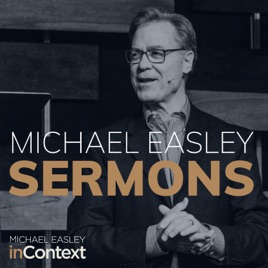
Advertise on podcast: Michael Easley Sermons
Rating
4.5from
This podcast has
170 episodes
Language
EnglishPublisher
Michael EasleyExplicit
No
Date created
2021/11/18
Latest episode
2026/02/02
Average duration
32 min.
Release period
8 days
Description
Verse by Verse Bible teaching from Dr. Michael Easley. From the ministry of Michael Easley inContext.
Unlock Michael Easley Sermons podcast Email contact info,
Listeners & Audience details
Email contact information
Direct podcast contact details

Listeners
Audience numbers & engagement insights

Audience details
Podcast Insights

Podcast episodes
Check latest episodes from Michael Easley Sermons podcast
Why We Believe What We Believe: Jesus
2026/02/02
In a culture increasingly resistant to Christian conviction, clarity about who Jesus Christ is has never mattered more. In this sermon, Dr. Michael Easley challenges believers to move beyond cultural Christianity and shallow faith by grounding their lives in a robust, biblical understanding of Christology—the doctrine of Christ.
As pressure mounts from media, politics, and public opinion, believers are tempted to prioritize tolerance over truth, presentation over substance, and success over faithfulness. Dr. Easley argues that the antidote is not better marketing or strategy, but a deeper knowledge of Jesus Himself. To know Christ rightly is not optional; it is foundational.
Walking through Scripture, he highlights five key titles of Jesus: Son of Man, Messiah, Son of God, Lord, and God. Each reveals essential truths about Christ’s humanity, authority, mission, divinity, and redemptive work. Jesus fully identifies with our suffering, fulfills God’s promises, perfectly reveals the Father, reigns as Lord, and stands as God Himself.
This sermon reminds us that Christology is not abstract theology—it is intensely practical. When we truly know who Jesus is, it reshapes our humility, worship, courage, and witness. The ultimate question remains: when others look at us, would they see Jesus?
Takeaways
Cultural pressure tempts believers to soften truth, but a clear Christology anchors faith with conviction and humility.
Jesus most often called Himself the Son of Man, fully identifying with our humanity and suffering.
As Messiah, Jesus fulfills God’s promises and reigns as the rightful King from David’s line.
Jesus, the Son of God, is the perfect and complete revelation of the Father.
Declaring Jesus as Lord means recognizing His supreme authority over every life and allegiance.
True Christology is practical—when we know Jesus rightly, others should see Him in us.
To read the bible online, click here.
Click here for other Michael Easley Sermons.
Why We Believe What We Believe: The Trinity
2026/01/26
Summary
Why doctrine matters is not theoretical; it is deeply practical. What we believe shapes how we live, worship, serve, and remain faithful. We rarely form our theology in a vacuum. It is forged through conflict, culture, and confrontation with error.
In this sermon, Dr. Michael Easley explains why belief demands clarity and conviction. He focuses on the doctrine of the Trinity as foundational, not optional. Scripture reveals one God in three persons: Father, Son, and Holy Spirit. This truth anchors Christian faith across both Old and New Testaments.
Dr. Easley walks through the Shema, the Great Commission, and key apostolic teachings. He shows that Trinitarian belief shapes salvation, fellowship, and access to God. The Father is the source. The Son accomplishes redemption. The Spirit indwells and seals believers.
The Trinity reveals perfect divine community. God invites His people into that same fellowship with Him and one another. Doctrine is not dry or abstract when rightly understood. It leads to worship, unity, and faithful obedience.
We believe Scripture because God has revealed Himself. We trust the Word because God is true. Why you believe what you believe is not merely important. It is crucial.
Takeaways
We don't form our doctrine in isolation but in real world trials.
The Bible reveals one God who exists eternally as Father, Son, and Holy Spirit.
The Trinity is essential to understanding salvation, redemption, and assurance.
God’s triune nature models perfect community and calls believers into meaningful fellowship.
Baptism and discipleship are rooted in Trinitarian identity, not personal preference.
We believe Scripture because God is true—not because we’ve proven the Bible to be reliable.
To read the bible online, click here.
Click here for other Michael Easley Sermons.
Why We Believe What We Believe: The Bible
2026/01/19
Summary
In this sermon, Dr. Michael Easley calls believers back to the bedrock of Christian faith: doctrine rooted in the Word of God. While many come to faith through the local church, Easley argues that too few believers develop a biblical worldview strong enough to withstand cultural pressure. Salvation must be settled—anchored in Christ alone—but growth requires more than experience or emotion. It requires truth.
Tracing the cultural shift from theism to humanism, modernity, and postmodern relativism, Easley explains how truth has been diluted and authority rejected. Words like tolerance, inclusion, and equality, while common in modern language, carry meanings shaped by the world—not Scripture. When believers adopt these definitions uncritically, theology quietly erodes.
Easley warns that doctrinal drift rarely happens through sudden rebellion but through slow, subtle shifts—like tectonic plates beneath the surface. Using Scripture from 2 Timothy and the teaching authority of Jesus in Mark’s Gospel, he reminds listeners that truth is not subjective and doctrine is not optional.
Just as Vince Lombardi returned his team to the fundamentals, Easley urges Christians to return to the basics: God has spoken, His Word is authoritative, and belief must shape life. Why you believe what you believe is not merely important—it is crucial.
Takeaways
Salvation must be settled once for all, grounded in Christ alone with full assurance.
Experience without theology leaves believers vulnerable to cultural confusion.
The world’s definitions of truth, tolerance, and equality are not biblical by default.
Doctrinal drift happens slowly when believers stop grounding themselves in Scripture.
Truth and authority belong together because God has spoken clearly in His Word.
A “gentle dogmatism” rooted in Scripture is essential for faithful Christian living today.
To read the bible online, click here.
Click here for other Michael Easley Sermons.
Genesis: The Beginning of God's Redemptive Story
2026/01/12
Summary
In this sermon, Dr. Michael Easley opens the book of Genesis and reminds us why beginnings matter. Genesis is not merely an ancient record of origins—it is the foundation of God’s redemptive plan for humanity. From the very first verse, Scripture makes clear that God is the central character, actively creating, commanding, and revealing Himself to mankind.
Dr. Easley explains how Genesis is carefully structured through repeated sections called toledotes—“accounts” or “generations”—which form the literary framework of the book and move the story forward. These accounts trace both humanity’s repeated failure and God’s unwavering faithfulness, introducing themes of blessing and curse that echo throughout the entire Bible.
The first eleven chapters outline four key events—creation, fall, flood, and nations—while the remainder of the book focuses on four people: Abraham, Isaac, Jacob, and Joseph. Central to the story is God’s promise to Abraham, a covenant that reveals salvation is always God’s work, not man’s achievement.
Genesis ultimately shows that while humanity cannot rescue itself, God is relentlessly committed to redemption. As Dr. Easley emphasizes, this book is not written to settle scientific debates but to reveal God’s character, His purposes, and His promises—promises that still shape the lives of believers today.
Takeaways
Genesis begins with God, establishing Him as the central actor in all of Scripture.
The structure of Genesis reveals both humanity’s failure and God’s sovereign design.
Blessing and curse form a foundational pattern that runs throughout the Bible.
God’s covenant with Abraham is central to understanding redemption and salvation.
Genesis shows that salvation is God’s work, not man’s effort.
The promises God made in Genesis still apply to believers today, offering hope despite repeated failure.
To listen to The Big Book Cover to Cover, click here.
To read the book of Genesis, click here.
Click here for other Michael Easley Sermons.
Dwell on These Things (Philippians 4:8-9)
2026/01/05
Summary
As a new year begins, Dr. Michael Easley reminds us how quickly we forget what matters most. Drawing from Philippians 4:8–9, he explains why repetition is not a weakness of the Christian life but a safeguard for spiritual growth. Paul’s instruction to “write the same things again” reflects a reality we all share—we need continual reminders of truth.
Dr. Easley shows that spiritual maturity begins with disciplined thinking. Paul calls believers to dwell intentionally on what is true, honorable, right, pure, lovely, and commendable. These virtues are not abstract ideals but categories that shape how we see the world and respond to it. What we allow into our minds eventually forms our character.
But right thinking alone is not enough. Paul pairs dwelling with doing. Believers are called to practice what they have learned, received, heard, and seen. Learning is complete only when truth moves from information to understanding and finally to obedient action.
This sermon challenges listeners to stop dwelling on past sins, future fears, or sinful desires, and instead focus intentionally on godly things. The promise is clear: when we think rightly and live faithfully, we experience not only the peace of God but the presence of the God of peace.
Takeaways
Repetition of biblical truth is essential because spiritual growth depends on continual reminders.
What we choose to dwell on shapes our thoughts, actions, character, and destiny.
Paul’s list in Philippians 4:8 calls believers to focus intentionally on godly categories, not isolated moments.
Learning is complete only when truth moves from information to understanding and then to action.
Dwelling on sin, fear, or immorality robs believers of peace and spiritual clarity.
When believers think rightly and practice faithfully, they experience both God’s peace and God’s presence.
To read the book of Philippians, click here.
Click here for other Michael Easley Sermons.
Anticipating God's Deliverance (Luke 1:68, 78)
2025/12/29
Summary
After Christmas fades and decorations come down, many of us instinctively begin looking ahead to what’s next. In this sermon, Michael Easley reminds us that this longing is not accidental—it is eternal. God has placed eternity in our hearts, wiring us to anticipate His ultimate deliverance.
Tracing Scripture from Genesis to Revelation, Dr. Easley explores the biblical theme of divine visitation—God personally stepping into history to accomplish redemption. From Joseph’s deathbed confidence in God’s future deliverance, to Zechariah’s Spirit-filled praise at the birth of John the Baptist, Scripture reveals a consistent hope: God will visit His people to save them.
Luke’s Gospel declares that God has “visited us and accomplished redemption,” using a word that means more than appearing—it means showing up to act. In the New Testament, divine visitation demands a response. Some reject the Deliverer, while others recognize Him as the fulfillment of God’s promises.
The sermon concludes by shifting our focus away from obsessing over end-times signs and toward eager expectation of Christ Himself. Our confidence does not rest in circumstances or experiences, but in God’s unchanging Word. Faithful living means trusting God’s promises, anticipating Christ’s return, and persevering with hope—knowing the Deliverer will come again.
Takeaways
God has placed eternity in our hearts, causing us to long for what lies beyond this world.
Divine visitation in Scripture means God personally stepping in to accomplish deliverance.
From Joseph to Zechariah, God’s people trusted His promises even when fulfillment seemed distant.
The New Testament emphasizes our response to God’s visitation—rejection or faith-filled recognition.
Scripture calls believers to watch for Christ Himself, not obsess over signs of His return.
Our assurance and hope rest not in experience, but in the unchanging truth of God’s Word.
To read the book of Luke, click here.
Click here for other Michael Easley Sermons.
The God Who Visits His People (Genesis 50:22-26)
2025/12/22
Summary
As Christmas approaches, Dr. Michael Easley invites us to look beyond familiar traditions—food, travel, gifts, family rhythms—and consider a deeper anticipation: the divine visitation of God. Drawing from Genesis 50, Dr. Easley traces Joseph’s final words and the Hebrew term pachad, a rich word describing God “visiting” His people in judgment, blessing, discipline, or deliverance. Joseph, at 110 years old, stands as a man who endured betrayal, injustice, imprisonment, and loss, yet he dies full of hope—insisting his bones be carried to the Promised Land because God will keep His word.
Dr. Easley contrasts God’s sovereign plan with human evil, reminding us that even the darkest chapters of Joseph’s life were woven into God’s purposes. He also emphasizes that death does not break God’s promises; Joseph died without seeing the deliverance he believed in, yet he trusted the God who brings the dead to life. As we prepare for Christmas, this sermon invites us to consider the greatest visitation of all—the arrival of the divine Deliverer—and to rest in the certainty that God keeps His promises, even when our circumstances say otherwise.
Takeaways
God’s sovereign plan operates even through the evil intentions and injustices of people.
The Hebrew word pachad shows that God “visits” His people in discipline, blessing, and deliverance.
Joseph believed God’s promises even though he never saw their fulfillment in his lifetime.
Death does not—and cannot—break the promises of God.
The anticipation we feel around birth reflects a deeper longing wired into our souls for God’s divine visitation.
The birth of Christ is the ultimate visitation of God, bringing redemption exactly as He promised.
To read the book of Genesis, click here.
Click here for other Michael Easley Sermons.
The Lord’s Table (1 Corinthians 10:1-4)
2025/12/15
Summary
In this sermon from 1 Corinthians 10, Dr. Michael Easley unpacks the sobering contrast between God’s supernatural provisions for Israel and Israel’s repeated failures in the wilderness. He begins with a relatable observation: we often want the benefits of something without paying the cost. The Christian life, however, comes with a clear cost of discipleship—an intentional, obedient walk with Christ. Paul reminds the Corinthians of five divine provisions God gave Israel: supernatural guidance and protection through the cloud, supernatural deliverance through the Red Sea, identification with Moses through baptism, supernatural food from heaven, and supernatural water from the rock—ultimately pointing to Christ Himself. Yet despite these blessings, Israel fell into five destructive patterns: craving evil things, idolatry, immorality, testing God, and constant grumbling.
Paul calls these events examples and instruction for believers today. We, too, are prone to drift even after receiving God’s grace. Dr. Easley presses five reflective questions: What are you craving? What idols have crept in? Are you living immorally? Are you trying God? What are you grumbling about? The passage assures believers that God always provides a way of escape from temptation—and calls us to stand firm, repent, and walk faithfully with the One who guides, provides, and sustains.
Takeaways
God provides supernatural guidance, protection, and sustenance, yet our hearts can still drift toward sin.
Israel’s story is given as an example and instruction, warning believers not to repeat the same patterns.
Craving anything more than Christ reveals a deeper spiritual problem beneath the surface.
Idolatry arises whenever the “stuff” of life demands more of our time and devotion than our walk with God.
God always provides a way of escape from temptation, but standing firm requires humility and vigilance.
Honest self-examination before Christ transforms grumbling hearts into grateful, obedient disciples.
To read the book of 1 Corinthians, click here.
Click here for other Michael Easley Sermons.
From Slavery to Sonship (Romans 8:14-15)
2025/12/08
Summary
In this message from Romans 8, Dr. Michael Easley walks through Paul’s rich transition from talking about “putting to death the deeds of the flesh” to embracing our identity as sons and daughters of God. Building on the assurance that there is now no condemnation for those in Christ, Dr. Easley emphasizes that the Christian life is not self-powered moral improvement—it is life led, empowered, and sustained by the Holy Spirit. When we place our faith in Christ, the Spirit becomes our permanent resident, the One who enables us to resist sin and live in cooperation with God’s will.
Paul’s shift to familial language—sons, daughters, children, heirs—reveals that believers are not merely forgiven; we are adopted. Dr. Easley unpacks Paul’s contrast between the “spirit of slavery” and the “spirit of adoption,” reminding us that adoption is rooted in God’s kindness, redemption through Christ’s blood, and His intentional choice of us. This adoption enables us to cry out, with profound emotion, “Abba, Father,” just as Christ did.
Finally, Dr. Easley highlights the Spirit’s testimony within us: He confirms we are God’s children, assures us of our inheritance, strengthens us in present suffering, and anchors us in the future glory that outweighs every earthly hardship.
Takeaways
The Christian life is not powered by our will but by the indwelling Holy Spirit who leads and enables us.
Believers are adopted into God’s family, moving from slavery and fear to sonship and intimacy.
The Spirit Himself testifies within us that we are God’s beloved children.
Adoption is rooted in God’s sovereign kindness and Christ’s redemptive work—not our merit.
Our ability to call God Father reflects the deep emotional reality of belonging fully to God.
As children and heirs, we share both in Christ’s sufferings now and His glory to come.
To read the book of Romans, click here.
Click here for other Michael Easley Sermons.
Killing Sin Through The Spirit (Romans 8:12-13)
2025/12/01
Summary
Romans 8:12–13 sits at the center of Paul’s teaching on life in the Spirit, and in this sermon Dr. Michael Easley draws attention to the decisive shift that takes place when a person trusts Christ. Salvation is not merely forgiveness—it's a complete reorientation of our spiritual starting point. When the Spirit of God takes up residence in a believer, everything changes. We are no longer obligated to obey the flesh, no longer bound to its impulses, and no longer defined by its demands.
Dr. Easley explains that many Christians continue living as though the flesh still holds authority, when Scripture says the opposite. The flesh is not neutral; it is hostile to God and must be confronted. Paul calls believers to put sin to death, but he also makes clear that this cannot be accomplished through willpower or personal resolve. It is the Spirit who enables us to kill the deeds of the body and to live in the freedom God intends.
This passage invites believers to acknowledge sin honestly, take responsibility for their choices, and actively depend on the Spirit for transformation. Life in Christ begins—and continues—with the power of the Spirit making us alive, responsive, and obedient to God.
Takeaways
Trusting Christ moves your point of departure from the flesh to the indwelling Spirit.
The believer does not have to follow the flesh—its pull is a lie, not an obligation.
Only the Holy Spirit empowers us to put sin to death; the flesh cannot improve.
Sin behaves like bamboo—relentless and invasive—requiring continual Spirit-empowered resistance.
To mortify sin, believers must first acknowledge its true evil without minimizing or excusing it.
Life in the Spirit is not passive; it is a daily, intentional dependence on the One who empowers obedience.
To read the book of Romans, click here.
Click here for other Michael Easley Sermons.
The Power That Controls You (Romans 8:5-11)
2025/11/24
Summary
In this sermon, Dr. Michael Easley illustrates the power of sin with a vivid analogy: a commercial floor buffer so strong that no person—not even the strongest among us—can control it. Like that machine, sin isn’t something we manage, tame, or muscle through. Sin seeks to control us. Paul has already shown in Romans 6–7 that human effort cannot free us from sin’s grip. But God has given us something far greater—His own Spirit.
Dr. Easley explains Paul’s sharp contrast: the mindset on the flesh is death; the mindset on the Spirit is life and peace. There is no neutral ground. The flesh is hostile toward God, unable to please Him, bent toward self, and spiritually dead. Before Christ, our minds were fixed on ourselves, our desires, and our autonomy, even if we didn’t realize it.
But the good news is stunning. Those who belong to Christ have the very Spirit who raised Jesus from the dead dwelling in them. The Spirit empowers us to live differently, to resist sin’s control, and to pursue God’s desires instead of our own. Through the Spirit, believers move from death to life, from hostility to peace, and from self-rule to the power of God at work within them.
Takeaways
Sin is not something we manage — it is a power that seeks to control us.
A mind set fixed on the flesh is death, but the mind set on the Spirit is life and peace.
There is no spiritual neutrality; the flesh is hostile toward God and cannot please Him.
Before Christ, our minds are bent entirely toward ourselves and opposed to God’s will.
The Holy Spirit indwells every believer with the same power that raised Jesus from the dead.
Through the Spirit, believers move from death to life and are empowered to live in obedience.
To read the book of Romans, click here.
Click here for other Michael Easley Sermons.
What The Law Couldn’t Do (Romans 8:1-4)
2025/11/17
Summary
Every believer knows the sting of regret and the weight of guilt that can linger long after coming to Christ. In this powerful sermon on Romans 8:1–4, Dr. Michael Easley unpacks one of the most freeing truths in all of Scripture: “There is therefore now no condemnation for those who are in Christ Jesus.” We all live with memories of past failures, yet in Christ, those sins are not just forgiven—they’re washed away in Him.
Dr. Easley walks through Paul’s rich theological argument to show that our freedom from condemnation isn’t based on self-improvement or keeping the law. It’s entirely rooted in the work of Christ and the indwelling power of the Holy Spirit. The same Spirit who raised Jesus from the dead now empowers believers to overcome sin and live righteously. Because God did what the law could never do—He sent His Son to deal with sin once and for all—we can live free from shame and confident in His grace. This message invites listeners to walk not in guilt, but in gratitude, boldly declaring, “I am in Christ.”
Takeaways
Every believer wrestles with guilt and regret, but the gospel declares us free from condemnation.
God’s righteousness demands perfection, yet Christ meets that standard on our behalf.
Jesus condemned sin in His own flesh, taking our punishment once and for all.
The Holy Spirit empowers believers to overcome the power of sin and live righteously.
What the law could never accomplish, God accomplished through His Son.
To be “in Christ” means to live with confidence, freedom, and no fear of condemnation.
To read the book of Romans, click here.Click here for other Michael Easley Sermons.
The War Inside (Romans 7:14-25)
2025/11/10
Summary
Romans 7 reveals one of the most honest confessions in Scripture: Paul’s ongoing struggle with sin even after trusting Christ. Dr. Michael Easley unpacks this tension between knowing what’s right and still doing what’s wrong—the spiritual “finger trap” every believer experiences. Paul’s transparency isn’t weakness; it’s maturity. The more we grow in Christ, the more aware we become of our sin and our desperate need for His grace.
Legalism, Dr. Easley warns, distorts this truth by pretending righteousness can be earned. Instead, Paul’s self-portrait mirrors that of every believer. We are sinners saved by grace, constantly at war with the flesh yet secure in Christ’s victory. Sanctification is not smooth progress but a lifelong conflict between the Spirit and sin’s lingering power. Our hope is not in moral perfection but in dependence on Jesus. “Wretched man that I am—who will deliver me?” Paul cries. And the answer is the heart of the gospel: “Thanks be to God through Jesus Christ our Lord.”
Takeaways
The law exposes sin but cannot save—it condemns, not redeems.
Paul’s struggle in Romans 7 reflects every believer’s battle with sin.
True maturity begins with admitting our sinful nature and need for grace.
Sanctification is a lifelong conflict, not a straight line of progress.
Evil still dwells within us, but sin no longer controls us.
Our only deliverance from sin’s power is through Jesus Christ alone.
To read the book of Romans, click here.
Click here for other Michael Easley Sermons.
The Sinfulness of Sin (Romans 7:7-13)
2025/11/03
Summary
In this sermon from Romans 7:7–13, Dr. Michael Easley unpacks one of Scripture’s most complex questions: If God’s law is good, why does it seem to lead us into sin? Paul reminds us that the problem isn’t the law—it’s the sin within us. God’s law is holy, righteous, and good, but sin twists what is good into an opportunity for rebellion. Dr. Easley outlines seven functions of the law, revealing that while the law defines and exposes sin, it cannot save us from it. The law condemns, provokes, and reveals the depth of our sinfulness, pointing us instead to our desperate need for Christ. No set of rules or moral codes can make us good; only intimacy with Jesus transforms the heart.
When we seek fulfillment in Him rather than in the false promises of the world—whether through lust, greed, or pride—sin loses its grip. Dr. Easley reminds us that the Christian life isn’t about trying harder to stop sinning; it’s about walking more closely with Christ. Only when He becomes our “all in all” can we find the true freedom the law could never provide.
Takeaways
God’s law is holy, righteous, and good—but sin twists it into an opportunity for rebellion.
The law reveals sin’s power but cannot save us from it.
No number of rules can make us righteous; only Christ can transform the heart.
Sin deceives and provokes, taking what is good and turning it against us.
True freedom comes not from resisting sin but from pursuing intimacy with Jesus Christ.
When Christ becomes our all in all, the world’s temptations lose their hold.
To read the book of Romans, click here.
Click here for other Michael Easley Sermons.
When Death Brings Freedom (Romans 7:1-6)
2025/10/27
Summary
In this sermon from Romans 7, Dr. Michael Easley explores what it means to die to the law and live in the Spirit through Jesus Christ. Using Paul’s illustration of marriage, Dr. Easley explains that the law only has authority over the living—once a person dies, they are free from its jurisdiction. Likewise, believers who have died with Christ are no longer bound to the law’s condemnation but are joined to Him to bear fruit for God.
Dr. Easley takes time to address divorce and remarriage, acknowledging the pain, complexity, and lifelong consequences that often accompany them. While God hates divorce, it is not an unforgivable sin, and believers are called to respond with grace and mercy toward those who have suffered through it. Ultimately, he reminds listeners that reconciliation, humility, and forgiveness are essential for any marriage to thrive.
The sermon concludes with a clear call: the law cannot save, but it can warn. Righteousness comes not through rules but through relationships—being joined to Christ in His death and resurrection. Freed from the condemnation of the law, believers are empowered by the Spirit to live in obedience and holiness that bear lasting fruit for God.
Takeaways
The law only has jurisdiction over the living; death in Christ frees believers from its condemnation.
Romans 7 teaches that we are joined to Christ to bear fruit for God, not bound to the old law.
Divorce grieves God but is not beyond His forgiveness or grace.
The church must show mercy and compassion to those who have experienced brokenness.
Obedience to God’s moral law, empowered by the Spirit, sanctifies believers, conforming them to Christ’s image.
The same resurrection power that saves us empowers us to live holy, Spirit-filled lives.
To read the book of Romans, click here.
Click here for other Michael Easley Sermons.
Podcast reviews
Read Michael Easley Sermons podcast reviews
jhop_8 2025/11/22
Washing the feet
I came across this in study on Jesus washing the feet of his apostles. I love the honesty and love the question “Can I go a day without sin?”
Great p...
Jhsams 2025/06/10
Love this study in Romans
One of my favorite series! Preach it Michael!
Podcast sponsorship advertising
Start advertising on Michael Easley Sermons relevant audience podcasts
You may also like to advertise on these Podcasts

4.71446555
Woman of Influence
Julie Solomon

4.7191119
Borrowed & Returned
Brooklyn Public Library

44404
Talk Birdie To Me
Nick O'Hern & Mark Allen

4.918387
SeaBros Fishing Podcast - Fishing Stories, Tactics, and Interviews from Top Captains, Mates, and Outdoorsmen from Across the
SeaBros Fishing Podcast - Sears Brothers

4.719426
Fever Dreams: A Pulp Collection
Voyage Media
4.72541957
The Hypnotist
Adam Cox

4.81883253
Mea Culpa
Michael Cohen

4.933177329
Zane and Heath: Unfiltered
Zane & Heath
4.82711152
Emergency Medical Minute
Emergency Medical Minute

4.7175376
The Struggle Climbing Show
Ryan Devlin