1599757941
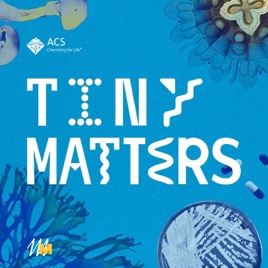
Tiny Matters

Advertise on podcast: Tiny Matters

Rating
★★★★★
4.9
from
107 reviews
This podcast has
192 episodes
Language
English
Publisher
Multitude
Explicit
No
Date created
2021/12/10
Latest episode
2026/09/30
Average duration
32 min.
Release period
6 days

Description

Science shapes every part of our lives, but so much of its influence is overlooked or buried in the past. Tiny Matters is an award-winning podcast about tiny things — from molecules to microbes — that have a big and often surprising impact on society. From deadly diseases to forensic toxicology to the search for extraterrestrial life, hosts and former scientists Sam Jones and Deboki Chakravarti embrace the awe and messiness of science and its place in history and today, and how it could impact our world’s future. New episodes every Wednesday. Tiny Matters is brought to you by the American Chemical Society, a non-profit scientific organization based in Washington, D.C., and is produced by Multitude.

Unlock Tiny Matters podcast Email contact info,
Listeners & Audience details

Email contact information

Direct podcast contact details

Listeners

Audience numbers & engagement insights

Audience details

Podcast Insights

Podcast episodes

Check latest episodes from Tiny Matters podcast


How do you save a species?: Breakthroughs from cheetahs, red wolves, and 'spicy' toads
2026/09/30
Cheetahs carry the genetic scars of an Ice Age bottleneck, red wolves are so rare that every egg matters, and harlequin frogs need their natural toxins restored before they can thrive in the wild again. But avoiding extinction requires far more than protecting habitat alone. In this episode, we talk with scientists at Smithsonian's National Zoo and Conservation Biology Institute to explore cutting-edge science helping these animals not just survive but thrive, including innovative reproductive technologies like ‘ovary-on-a-chip.’ Similar episodes you may enjoy: Extinction: Rethinking the dodo's demise, and could a supervolcano threaten humanity's future?What is de-extinction, really? Conservation, genetics, and lessons from 'dire wolves'See Privacy Policy at https://art19.com/privacy and California Privacy Notice at https://art19.com/privacy#do-not-sell-my-info.
Introducing What Could Go Right?
2026/09/30
We'd like to recommend a podcast called What Could Go Right, from the Progress Network. It's a refreshingly different perspective on the news and issues like sustainability, geopolitics or the future of work. We hope you enjoy it as much as we do.
[BONUS] Milking spiders and why this scientist’s grave is covered in gifts: Tiny Show and Tell Us #56
2026/09/23
In this episode of Tiny Show and Tell Us, we first discuss funnel-web spiders, who are among the most venomous spiders on Earth. Maybe somewhat paradoxically, their toxins are being studied to treat human disease and chronic pain. Then we talk with historian Claire Aubin about J. Willard Gibbs’ grave at Yale, where she’s a professor. Gibbs was a quiet scientific genius whose work transformed chemistry. He was also seemingly a very cool dude, and today his gravesite is decorated by students seeking good luck before exams.  Check out This Guy Sucked wherever you get podcasts! We need your stories — they're what make these bonus episodes possible! Write in to [email protected] or fill out this form with your favorite science fact or science news story for a chance to be featured. A transcript and references for this episode can be found at acs.org/tinymatters. See Privacy Policy at https://art19.com/privacy and California Privacy Notice at https://art19.com/privacy#do-not-sell-my-info.
Biofilms: The sticky, slimy communities behind some of medicine's toughest infections
2026/09/16
Biofilms are everywhere: your teeth, your kitchen sponge, and even medical implants. Scientists are uncovering how these highly organized microbial communities protect bacteria from antibiotics and the immune system, and how understanding their hidden lives could help us fight some of the scariest infections, particularly those that disproportionately impact people with cystic fibrosis. Learn more about CALM here. Check out Wow If True wherever you listen to podcasts! A transcript and references for this episode can be found at acs.org/tinymatters. See Privacy Policy at https://art19.com/privacy and California Privacy Notice at https://art19.com/privacy#do-not-sell-my-info.
[BONUS] ‘Drinking Grandma,’ digital cadavers and debunking a grave robbing myth: Tiny Show and Tell Us #55
2026/09/09
In this episode of Tiny Show and Tell Us, we explore the fascinating history of embalming, from ancient mummies to arsenic-laced funeral practices (that weren’t all that long ago!). Then we chat about cadaver dissection, the importance of Leonardo da Vinci's anatomical drawings, and whether virtual reality could someday replace anatomy labs. Plus, what's the real story behind those creepy iron cages found above burial plots in old cemeteries? Learn more about CALM here. We need your stories — they're what make these bonus episodes possible! Write in to [email protected] or fill out this form with your favorite science fact or science news story for a chance to be featured. A transcript and references for this episode can be found at acs.org/tinymatters. See Privacy Policy at https://art19.com/privacy and California Privacy Notice at https://art19.com/privacy#do-not-sell-my-info.
The Shroud of Turin: American Medieval x Tiny Matters crossover episode
2026/09/03
In this special bonus episode, we join American Medieval with host Matthew Gabriele, a professor of medieval studies and who knows about a LOT of history that we don’t. We're there to chat with Matt about some new science research surrounding the Turin Shroud — a cloth that many Christians believe was used to wrap Jesus after he was killed. The debates over this artifact are fascinating and the science only adds to it! So if you like science, history, and a little controversy, you’re going to love this episode.  American Medieval is a podcast about the Middle Ages, but with an American twist. Each week, Professor Matthew Gabriele is joined by expert guests to explore either some fascinating part of the medieval world, or some way Americans have used this period to help them understand themselves. Matthew Gabriele is a professor of Medieval History and an elected Fellow of the Royal Historical Society (UK). In addition to hosting the podcast "American Medieval," he’s the co-author of the books The Bright Ages: A New History of Medieval Europe (Harper Books, 2021), and Oathbreakers: The War of Brothers that Shattered an Empire and Made Medieval Europe (Harper Books, 2024). His new book, Violence: A Christian History, will be out with WW Norton in late 2027/ early 2028. Learn more about CALM here. See Privacy Policy at https://art19.com/privacy and California Privacy Notice at https://art19.com/privacy#do-not-sell-my-info.
Foraminifera: The one-celled predators that shaped our planet (and kept the receipts)
2026/09/02
Single-celled marine organisms called foraminifera may be microscopic, but they've had a massive impact on life on Earth. They also leave behind intricate shells that have become part of a fossil record stretching back more than 500 million years. Today, they're one of the most powerful tools scientists have for reconstructing Earth's past climates, helping us put the current (alarming) state of our warming planet into context. Learn more about CALM here. Check out Pale Blue pod here or wherever you listen to podcasts! A transcript and references for this episode can be found at acs.org/tinymatters. See Privacy Policy at https://art19.com/privacy and California Privacy Notice at https://art19.com/privacy#do-not-sell-my-info.
[BONUS] Dangerously tiny frequencies, endometriosis tests, and cookies made from ... plastic?: Tiny Show and Tell Us #54
2026/08/26
In this episode of Tiny Show and Tell Us, we discuss new blood tests and research into blood biomarkers that could make diagnosing endometriosis faster and less invasive. Next, we unpack subsynchronous resonance, a phenomenon that can damage power infrastructure, and is gaining new attention with so many AI data centers being built across the country. Then we hear from guest Emily Schneider who shares some delicious (maybe? You be the judge!) new research where scientists have engineered yeast to convert plastic waste and agricultural leftovers into cookies. We need your stories — they're what make these bonus episodes possible! Write in to [email protected] or fill out this form with your favorite science fact or science news story for a chance to be featured. A transcript and references for this episode can be found at acs.org/tinymatters. See Privacy Policy at https://art19.com/privacy and California Privacy Notice at https://art19.com/privacy#do-not-sell-my-info.
Giant viruses: How these amoeba-infecting behemoths are rewriting the rules of virology
2026/08/19
Scientists spent decades searching for viruses by filtering out anything too large to be one. That strategy seemed to work well... until it didn't. When researchers discovered a microbe living inside an amoeba that looked like a bacterium but behaved like something else entirely, they uncovered a hidden world of giant viruses with massive genomes, unusual genes, and even their own viral parasites. In this episode, we dive into the discoveries that forced scientists to rethink what viruses are, how they evolve, and whether the rules historically used to define them still hold up. Check out Dreaming Against the Machine here or wherever you listen to podcasts! A transcript and references for this episode can be found at acs.org/tinymatters. See Privacy Policy at https://art19.com/privacy and California Privacy Notice at https://art19.com/privacy#do-not-sell-my-info.
[BONUS] Fairy tale evolution and the 400(ish) year old elusive Greenland shark: Tiny Show and Tell Us #53
2026/08/12
In this episode of Tiny Show and Tell Us, we explore how scientists are using evolutionary methods to reconstruct the history of folktales like Little Red Riding Hood, Beauty and the Beast, and Jack and the Beanstalk. Then guest Matt Gabriele, professor of medieval studies and host of the podcast American Medieval, shares his fascination with Greenland sharks, leading us into the science of radiocarbon dating, longevity genetics, and the ongoing debate over whether these elusive deep-sea predators truly live for 400 years or more. We need your stories — they're what make these bonus episodes possible! Write in to [email protected] or fill out this form with your favorite science fact or science news story for a chance to be featured. A transcript and references for this episode can be found at acs.org/tinymatters. See Privacy Policy at https://art19.com/privacy and California Privacy Notice at https://art19.com/privacy#do-not-sell-my-info.
From cow’s milk to blood banks: The surprising evolution of blood transfusions
2026/08/05
Before modern blood transfusions, doctors tried some odd alternatives, including cow's milk. In this episode, we trace the fascinating history of blood transfusions, from risky animal experiments and failed milk injections to the discovery of blood types and disease screening. You'll hear how blood transfusions became one of medicine's safest procedures, why researchers are still debating exactly when patients need them, and what innovations could make blood easier to store, transport, and use in emergency situations including the military battlefield. Check out Dreaming Against the Machine here or wherever you listen to podcasts! A transcript and references for this episode can be found at acs.org/tinymatters. See Privacy Policy at https://art19.com/privacy and California Privacy Notice at https://art19.com/privacy#do-not-sell-my-info.
[BONUS] Bread clip taxonomy and power poles on fire: Tiny Show and Tell Us #52
2026/07/29
In this episode of Tiny Show and Tell Us, we dive into the surprisingly elaborate world of occlupanids: the humble plastic bread bag clips that have inspired an entire taxonomy complete with Latin names, species classifications, and a community of collectors. Then, we investigate a strange power outage in central Texas, where power poles caught fire after a light drizzle. We unpack the science behind pole-top fires, the "Goldilocks" weather conditions that fuel them, and the surprising technologies being used to inspect and maintain power grids across the world.  We need your stories — they're what make these bonus episodes possible! Write in to [email protected] *or fill out this form* with your favorite science fact or science news story for a chance to be featured. A transcript and references for this episode can be found at acs.org/tinymatters. See Privacy Policy at https://art19.com/privacy and California Privacy Notice at https://art19.com/privacy#do-not-sell-my-info.
Placebo: Why ‘fake’ treatments can have real power
2026/07/22
A sugar pill shouldn't work as well as a real drug ... except sometimes it does. In this episode, we explore the fascinating science of the placebo effect and how expectations can shape biological outcomes. From open-label placebos and AI healthcare chatbots to the nocebo effect, we unpack what scientists know, what they still don't understand, and why the placebo response is still largely mysterious.  Check out Spirits here or wherever you listen to podcasts! A transcript and references for this episode can be found at acs.org/tinymatters. See Privacy Policy at https://art19.com/privacy and California Privacy Notice at https://art19.com/privacy#do-not-sell-my-info.
[BONUS] A pathology lab, a sausage duel, and the fascinating lives of yeast: Tiny Show and Tell Us #51
2026/07/15
In this episode of Tiny Matters, a listener who works in a pathology lab explains how even the ickiest specimens become ho-hum with time, sending Sam and Deboki down a rabbit hole of pathology history and the bizarre life of Rudolf Virchow, the “father of pathology” who was also rumored to have brought worm-filled sausages to a duel. Then, a listener's sourdough experiments spark a conversation about yeast and how these microscopic organisms are the chemists behind tasty bread, beer, wine, and more. We need your stories — they're what make these bonus episodes possible! Write in to [email protected] *or fill out this form* with your favorite science fact or science news story for a chance to be featured. A transcript and references for this episode can be found at acs.org/tinymatters. See Privacy Policy at https://art19.com/privacy and California Privacy Notice at https://art19.com/privacy#do-not-sell-my-info.
Fireworks over millennia: From battlefields and royal displays to sustainable spectacles
2026/07/08
In medieval Europe, people who worked with early cannons and gunpowder were viewed as untrustworthy, boorish outsiders. But just a few centuries later, as they began creating elaborate fireworks displays for royalty, they went from outcasts to artists. From black powder to modern low-smoke pyrotechnics, in this episode of Tiny Matters we look at the chemistry, engineering, and artistry behind one of humanity's favorite forms of celebration. We also learn how scientists are reinventing pyrotechnics with cleaner-burning compounds that deliver brighter colors and fewer emissions. And check out this video from our friends at Headline Science to get a behind the scenes tour of the Science History Institute’s new exhibit: Flash! Bang! Boom! A History of Fireworks. Check out Simple and Clean here or wherever you listen to podcasts! A transcript and references for this episode can be found at acs.org/tinymatters. See Privacy Policy at https://art19.com/privacy and California Privacy Notice at https://art19.com/privacy#do-not-sell-my-info.

Podcast reviews

Read Tiny Matters podcast reviews


4.9 out of 5
107 reviews
★☆☆☆☆
jenzahara 2026/09/15
LIKE
If I hear the word LIKE one more g-d time.......just stop. Be professional.
★★★★★
B1uef1am3 2026/08/23
Nice
Fascinating topics combined with an amazing energy. Love it!
★★★☆☆
RussianJudge 2026/08/17
Content 💪🏻
Love the content but … the overuse of the word “like” is killing me. My pet peeve but I just can’t. Thanks, bye-bye
★★☆☆☆
Peter Ahl 2026/04/13
Embarrassing
How many times can purportedly intelligent people say “like” and “whatever” in any given minute Must unsubscribe
★★★★★
Casey Marie's Music 2025/03/16
Excellent
This podcast is phenomenal. Thoroughly researched, but digestible for listeners of almost any age. I find myself in awe of the facts I learn with near...
★★★★★
artemis179 2025/03/05
Keeps me in touch
As a retired chemist living away from my previous scientific realm, it is super to tune into Tiny Matters for some interesting science. I love the bre...
★★★★★
R be l. 2025/01/29
Best podcast
I listen to about a dozen podcasts. Tiny Matters is by far the most entertaining and informative.
★★★★★
kohlrabi518 2024/10/30
Great Science Podcast!
Interesting topics - well told.
★★★★★
txgrown303 2024/09/02
Science Pod Perfection
Always well put together stories that are interesting and relevant. More Channels pleaseee! :)
★★★★★
Roberge3 2024/07/24
Fascinating and Interesting
A really well put together podcast. Fascinating topics discussed in a way that brings science to the masses, bridging the ‘two cultures’ in a lighthea...
check all reviews on apple podcasts

Podcast sponsorship advertising

Start advertising on Tiny Matters relevant audience podcasts


What do you want to promote?