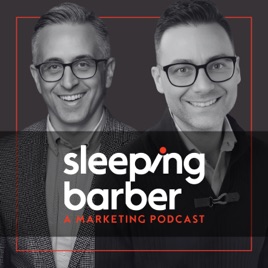
Advertise on podcast: Sleeping Barber - A Marketing Podcast
Rating
5from
This podcast has
176 episodes
Language
EnglishPublisher
Sleeping BarberExplicit
No
Date created
2022/02/13
Latest episode
2026/02/05
Average duration
34 min.
Release period
6 days
Description
Ready to rethink business strategy and supercharge your marketing game? Join hosts Marc Binkley and Vassilis Douros as they break down big questions at the crossroads of strategy, marketing effectiveness, and creative impact. From real-world case studies to hot-off-the-press business news, each episode dives deep into how modern companies navigate complexity. Plus, interviews with global thought leaders bring you fresh insights and actionable strategies to drive growth and build unforgettable customer experiences. This is your backstage pass to smarter thinking and better business results.
Unlock Sleeping Barber - A Marketing Podcast podcast Email contact info,
Listeners & Audience details
Email contact information
Direct podcast contact details

Listeners
Audience numbers & engagement insights

Audience details
Podcast Insights

Podcast episodes
Check latest episodes from Sleeping Barber - A Marketing Podcast podcast
SBP 171: The PostPod - Making Super Ads
2026/02/05
With the Big Game just days away, Marc and Vassilis unpack the biggest ideas from their recent conversation with Vanessa Chin (System1) — and what marketers should actually be watching for when the ads roll.
This PostPod dives deeper into why emotion beats logic, why branding is still underused in creative, and how storytelling, distinctive assets, humour, and cultural context combine to create ads that work — not just on the Big Game stage, but all year long.
If you’re watching the ads more closely than the game, this one’s for you.
Key takeaways
Distinctive brand assets are underleveraged - Logos alone are weak. Sonic cues, characters, colors, taglines, and product design work harder together — and compound over time.“Seven brand cues” isn’t as crazy as it sounds - When you consider logos, music, characters, colors, settings, taglines, and product shots, strong brands already do this — often subconsciously.Great ads balance art and commerce - If people love the ad but can’t remember the brand, you didn’t make advertising — you made entertainment.Storytelling still wins — but resolution matters - Negative emotion is fine if it resolves positively. Bait-and-switch storytelling erodes trust and memorability.Length matters more than platforms admit - The strongest emotional response happens between 20–40 seconds — despite the industry’s obsession with short formats.Humour works — when it fits the brand - Amusement and light schadenfreude outperform sadness, but humour must feel authentic and repeatable.Celebrities aren’t required - Strong characters and stories outperform star power when brand linkage is clear.Cultural references can accelerate emotion - They work best as context or setting — not as the idea itself — and when the product remains the hero.Consistency compounds-Rebranding for novelty breaks mental shortcuts. Growth comes from reinforcing memory, not resetting it.
Chapters / Timestamps
0:00 — Post-Pod Setup & Big Game Context: Intro to the Post-Pod, why we’re watching the ads, and framing the conversation around Making Super Ads with Vanessa Chin (System1).
1:40 — First Reactions & What Stood Out: Initial reflections on the Vanessa conversation and why this episode landed — setting up the core themes.
2:05 — Distinctive Brand Assets & the “7 Brand Codes” Idea: Deep dive into brand codes beyond logos: jingles, characters, colours, taglines, product design — and why having a palette of assets matters across channels.
5:55 — Art vs Advertising: Why Branding Protects the Investment: The risk of making ads people love but can’t attribute to a brand — and where creative often breaks down.
7:54 — Storytelling, Emotion & Resolution: Why great ads tell focused stories, the danger of bait-and-switch emotion, and why negative emotion only works if it resolves positively.
9:41 — Length Matters More Than Platforms Admit: Why 20–40 seconds still delivers the strongest emotional impact — and how ultra-short formats can undermine memorability.
12:05 — Humour & the Emotion Palette: Why humour (amusement, light schadenfreude) often...
SBP 170: Making Super Ads. With Vanessa Chin.
2026/02/03
Super Bowl ads cost ~$8M for 30 seconds. So what separates a legendary “Super Ad” from an expensive shrug?
In this episode of The Sleeping Barber Podcast, Mark and Vassilis welcome back Vanessa Chin from System1 to break down what actually drives impact when the stakes are highest.
You’ll learn how System1 measures emotion and brand recognition (Star, Spike, and Fluency ratings), why “more you feel, more you buy,” and how brands can avoid the Super Bowl trap: making something people love… but can’t attribute to the advertiser.
Together, you’ll unpack four winning patterns behind the best Super Bowl work:
Classic storytelling (tension + resolution)Distinctive brand assets (and why “7 brand codes” matters)Humor as the highest-performing emotionCultural references that celebrate vs. exploit
If you’re watching the game for the ads (or running campaigns all year long), this one’s a masterclass in making creative that’s not just entertaining — but commercially effective.
Enjoy the show!
Key Takeaways:
Super Bowl ads cost about $8 million for 30 seconds.Emotion is the best predictor of consumer behavior.Storytelling is crucial for effective advertising.Brands should use at least seven distinctive assets in ads.Humor drives positive emotional responses in ads.Cultural references can enhance emotional engagement.Consistency in branding is key for recognition.You don't need a celebrity to create a successful ad.Understanding your audience's emotions is vital.Dissecting ads can improve future marketing strategies.
Timestamps / Chapters
00:00 - Introduction to Super Bowl Ads
02:28 - Understanding Ad Effectiveness Metrics
05:25 - The Power of Storytelling in Ads
10:47 - Brand Recognition and Consistency
17:11 - The Role of Humor in Advertising
23:03 - Cultural References in Advertising
30:05 - Key Takeaways for Marketers
SBP 169: The Sharp Cut - Personas, we have a problem.
2026/01/29
Welcome back to The Sharp Cut — where Marc and Vassilis take scissors to marketing’s biggest comfort blankets. This episode’s target: personas.
Not “burn them all”… but the idea that personas are a valid operating system for audience strategy. Marc and V argue that personas don’t fail because they’re fictional — they fail because they pretend markets are stable, targetable, and neatly categorized, when real buying behaviour is context-driven, messy, and dynamic.
They unpack why personas became popular (stakeholder comfort, platform narratives, proxy metrics), then bring in evidence — including an Adobe test where the “expected” persona audience underperformed an unexpected segment by 50%. The conclusion is blunt: personas are a story, not a strategy — and if you confuse the two, you’ll underreach, overfit, and misallocate budget.
The alternative? Shift from identity to category entry points, need-states, broad reach, and experimentation — and use personas only as a creative communication layer after the real strategy is built.
Key takeaways
Personas aren’t dead — but they’re not a foundation. They can help internal alignment, but they shouldn’t drive budget.Context beats identity. People don’t buy because they “are” a persona; they buy due to situations, triggers, and barriers.Personas encourage exclusion. That’s dangerous when growth requires reaching more category buyers (especially light and ultra-light buyers).Markets are more similar than persona decks imply. The Ehrenberg-Bass “law of brand user profiles” suggests rival brand buyers often look alike; growth is about penetration, not “unicorn” profiles.Testing beats theorizing. The Adobe example shows how persona-led targeting can blind you to better-performing audiences.Privacy + platform automation should push you away from persona obsession. Your edge becomes positioning, reach, creative quality, and measurement — not “knowing Sarah.”Replace persona-led planning with: category entry points, need-states, barriers/motivations, creative territories, broad reach by default, and guardrail measurement.
Chapters / Timestamps
00:00 — Welcome to The Sharp Cut: “Personas, we have a problem.”
Why this topic matters right now.
01:10 — The “Underwear Crisis”: when a persona sounds smart but makes no decisions
Why polished personas often collapse at decision time.
02:20 — The core myth: “If we can describe them, we can target them.”
The promise of precision and why it’s so seductive.
04:25 — Persona theatre: why decks reward stories over strategy
Checkbox segmentation, stakeholder comfort, and agency incentives.
05:00 — Evidence check: Adobe says the persona era is over
The “inside-out” problem and why context drives outcomes.
06:10 — The 50% conversion wake-up call: testing beyond the persona
How “sport lovers” beat the “correct” persona audience.
07:15 — Why personas persist: org design, proxy metrics, platform narratives, psychology
Control feels good — even when it’s false.
09:10 — The marketing science critique: brand buyers aren’t that different
Penetration, light buyers, and why “special customers” are overrated.
10:30 — Category entry points: what people actually buy for
Identity vs situations, triggers, and motivations.
12:05 — “But B2B...
SBP 168: The Barber's Brief - Marketers beware! Less is not more.
2026/01/27
In this week’s Barber’s Brief, Marcc and Vassili unpack four timely stories that cut to the heart of modern marketing leadership: strategy clarity, AI’s real role in organizations, and why going small in marketing is often the riskiest move of all.
The conversation starts with a sharp diagnosis of “strategy anxiety”—the condition where everything is labelled a priority, trade-offs disappear, and teams are left busy but directionless. From there, they examine why many organizations are stuck using AI to make marketing cheaper, not more valuable, and why that mindset risks turning marketing into a disposable cost center rather than a strategic function.
The episode then tackles the growing backlash against “less is more” marketing, drawing on effectiveness research that shows scale, reach, and creative boldness still matter—even in a world obsessed with efficiency dashboards.
They close with Ad of the Week, spotlighting Petro-Canada’s “No Time to Hibernate” Winter Games campaign, breaking down why distinctive assets, emotion, and long-term creative commitment still outperform cautious, forgettable work.
If you’re feeling pulled in too many directions, overwhelmed by priorities, or pressured to optimize your way to growth, this episode offers a much-needed reset.
Key Takeaways
If everything is a priority, you don’t have a strategy.Strategy requires exclusion. Anxiety fills the gap when leaders avoid hard choices.Activity is not clarity. More dashboards, roadmaps, and urgency don’t replace direction—they often create noise.AI used only for efficiency shrinks marketing’s importance. Making content cheaper doesn’t make marketing more valuable or more defensible.AI is moving from experimentation to infrastructure.Organizations that fail to move from tools to orchestration risk building tech debt, not advantage.“Less is more” is often a trap.Small, fragmented marketing doesn’t reduce risk—it guarantees invisibility.Reach, scale, and salience still drive growth. Efficiency metrics are useful, but they don’t replace business outcomes.Brand vs. performance is a false dichotomy. Every marketing activity builds the brand—customers experience one system, not silos.Great campaigns compound over time. Distinctive assets and creative consistency matter more than short-term optimization.
Chapters / Timestamps
00:00 – Welcome to the Barber’s Brief - What caught Marc and V’s attention this week.
01:00 – Strategy Anxiety: When Everything Is a Priority - Why lack of focus creates burnout, reactivity, and execution without confidence.
04:45 – Strategic Drift and the Cost of Avoiding Hard Choices - Why exclusion matters as much as inclusion in real strategy.
06:40 – AI, Davos, and the Efficiency Trap - Why using AI to do “more with less” risks shrinking marketing’s role.
09:15 – From AI Pilots to Enterprise Infrastructure - How AI becomes tech debt without orchestration and outcomes.
11:45 – Less Is Not More: Why Marketing Needs Scale - Why cautious, fragmented spend often delivers the worst ROI.
14:45 – Efficiency Metrics vs. Business Outcomes - The danger of optimizing dashboards instead of growth.
16:30 – Brand vs. Performance: A False...
SBP 167: The PostPod - The Only Growth Lever Marketers Control.
2026/01/22
In this post-pod discussion, Vassilis and Marc unpack the biggest ideas from their recent conversation with Dale Harrison on The Only Growth Lever Marketers Control — and what those ideas actually mean for marketers in practice.
They explore a critical but often uncomfortable distinction: revenue growth is not the same as real growth. When categories expand, tides rise for everyone — but that doesn’t mean brands are gaining market share, competitive advantage, or long-term resilience.
This episode digs into why marketers over-index on revenue and ROI, why market share is harder (but more honest) to use as a growth signal, and why a huge part of marketing’s job is simply not screwing things up. The discussion also reframes advertising as both an offensive and defensive investment, emphasizing the role of creative effectiveness, mental availability, and protecting existing demand — not just chasing new sales.
If you’ve ever been told to “just grow revenue” without clarity on what growth actually means, this episode is for you.
Topics covered:
Why revenue growth can mask stagnationMarket share vs. revenue: why they’re not interchangeableThe danger of confusing category growth with brand growthWhy marketers are often rewarded for being “in the right boat at the right time”Advertising as demand protection, not just demand creationThe three levers marketers actually have (and why they’re mostly equalized)Creative effectiveness as the only real multiplierWhy “don’t screw it up” is an underrated marketing strategyHow to think about growth accelerants and external shocksWhy long-term success depends on solving for the 95%, not the 5%
Timestamps
00:00 – Introduction
02:00 – Revenue vs. Growth: The Core Misunderstanding - Why increasing revenue doesn’t automatically mean a brand is growing — and why market share matters.
05:00 – Category Growth, Timing, and the Illusion of Marketing Genius - How external forces (COVID, category expansion, timing) create false signals of success.
08:30 – Market Share Is Hard (But More Honest) - Why market share is rarely reported, difficult to measure, and still the most truthful growth signal.
11:30 – Advertising as Protection, Not Just Growth - Why a major part of marketing’s job is maintaining demand and preventing decline.
14:30 – The Three Levers Marketers Actually Control - Spend, creative effectiveness, and media quality — and why none are silver bullets on their own.
17:00 – The Real Takeaway: Don’t Screw It Up - Creative quality, mental availability, and being ready when growth accelerants appear.
19:30 – Final Reflections and Close - What marketers should do differently on Monday morning.
19:25 – Final reflections and closing thoughts
SBP 166: The Only Growth Lever Marketers Control. With Dale Harrison.
2026/01/20
Most brands do not grow. Despite the industry's obsession with "growth porn," relative market share remains remarkably stable over decades. In this episode, Dale Harrison—physicist, former CFO, and consultant—joins Marc and V to dismantle the illusion of marketing-driven growth. He argues that most "hockey stick" curves are the result of external technological innovations or massive capital injections, not tactical marketing genius.
For the mid-to-senior marketer, the reality is stark: your Reach is largely "locked" by your current market share and budget. This leaves you with a singular, high-stakes variable to manipulate: Creative Effectiveness. We explore why 90% of a campaign’s success relies on reach you often can't control, and why your only move is to ensure your creative isn't "pissing away" the precious budget you do have.
Key TakeawaysThe Reach Limiter: 90% of effectiveness is driven by Reach (IPA data), but reach is a function of cash. Unless you have $700M in venture capital (like Warby Parker), your reach is capped by your existing revenue.The Price-to-Value Ratio: Real growth happens when technology drops the cost of a solution by 10x–100x (e.g., the iPod or Electronic Spreadsheets). Marketing merely rides the "rising lake" of these disruptions.The Zero Choice Rule: There is no statistical correlation between what a consumer bought last time and what they will buy next. Loyalty is a probability distribution, not a behavior to be "built."Creative as the "Last Resort": Because you cannot outspend the incumbent, you must out-think them. Creative is the only lever that can multiply your limited reach.
Timestamps & Chapters
02:00 – Why growth is the exception, not the rule.
03:15 – Revenue Growth vs. Market Share Growth: Knowing the difference.
08:30 – The "Rising Lake" Effect: How external factors mask marketing performance.
13:45 – Case Study: How the iPod changed the price-to-value ratio of music.
22:50 – Warby Parker and the $700M "Share of Voice" shortcut.
31:10 – Creative: The only lever marketers actually control.
38:55 – Deconstructing the Loyalty Myth and the "Zero Choice Rule."
46:20 – The "Shape of Loyalty": Why market share is so stable over decades.
51:30 – Practical Application: How to stop "pissing away" your limited budget.
About the GuestDale Harrison is a strategy consultant and former CFO with a background in physics. He is known for "slaying marketing’s sacred cows" by applying mathematical rigor and evidence-based principles to B2B and B2C strategy. His work focuses on market dynamics, the limits of loyalty, and the mathematical reality of brand growth.
Reference Links
Ehrenberg, A. S. C. (1988). Repeat-buying: Facts, theory and applications (2nd ed.). Oxford University Press.
Harrison, D. (2024). The shape of loyalty: Why market share remains stable. LinkedIn Strategy Series.
Sharp, B. (2010). How brands grow: What marketers don't know. Oxford University Press.
Tellis, G. J. (2004). Effective advertising: Understanding when, how, and why advertising works. SAGE Publications.
SBP 165: The Sharp Cut - Right Message Wrong Everything: The Truth About 1:1 Targeting.
2026/01/15
Welcome to the first Sharp Cut from The Sleeping Barber Podcast — a tighter, opinion-led format designed to challenge marketing’s most persistent assumptions. In this episode, Vassilis and Marc take on one of the industry’s most widely accepted beliefs: one-to-one personalization.
Despite overwhelming surveys claiming consumers want personalization and businesses need it, the evidence tells a very different story. Drawing on peer-reviewed research from Ehrenberg-Bass, MIT, Melbourne Business School, Nielsen, and the Journal of Advertising Research, this Sharp Cut separates belief from evidence.
They unpack why personalization systems are built on inaccurate data, why targeting errors compound rather than optimize, why click-through rates are meaningless, and how narrow targeting actively undermines growth by excluding future buyers.
Most importantly, they outline what actually works: reach, creative quality, mental availability, contextual relevance, and proper experimentation.If you care about effectiveness over mythology, this episode is for you.
Chapters:
00:00 - Introduction
04:13 - Beliefs vs. Evidence
07:48 - The Targeting Effectiveness Evidence
11:07 - The Compound Problem
12:54 - The Measurement Illusion
14:47 - The Hidden cost of Narrow Targeting
17:21 - What Actually Works
20:00 - Our Final TakeKey
Key Takeaways
Personalization is widely believed, not well proven. Most supporting stats come from surveys and vendor case studies, not controlled experiments.Data accuracy is poor. Identity and attribute targeting accuracy often ranges between 32–69%, with many segments no better than a coin flip.Targeting errors compound. Stacking multiple “precise” attributes multiplies mistakes, not accuracy—often reaching less than 15% of the intended audience.Third-party targeting performs no better than random. This holds true in both B2C and B2B contexts, even for senior decision-makers.CTR is a vanity metric.Studies show click-through rates have near-zero correlation with brand outcomes or ROI.Narrow targeting hurts growth. It focuses spend on the ~5% in-market while excluding the 95% who drive future demand.
What works instead:
Reach over precisionContext over profileFirst-party data for retention, not acquisitionCreative as the real targeting leverMeasurement tied to business outcomesControlled testing with holdouts
Links:
The value of getting personalization right—or wrong—is multiplying. https://www.mckinsey.com/capabilities/growth-marketing-and-sales/our-insights/the-value-of-getting-personalization-right-or-wrong-is-multiplying
Artist sells invisible sculpture—Adtech sells the same thing. Forbes. https://www.forbes.com/sites/augustinefou/2021/06/03/artist-sells-invisible-sculptureadtech-sells-the-same-thing/
Yeo, T. E. D., Chu, T. H., & Li, Q. (2025). How persuasive is personalized advertising? A meta-analytic review of experimental evidence of the...
SBP 164: The Barber's Brief - Don’t Create Bite-Sized Chunks of Your Content
2026/01/12
In this Barber’s Brief, V and Marc cover the biggest marketing and platform stories from the last couple of weeks—plus introduce a new segment.
First up, they unpack why marketers should stop trying to re-label marketing as CapEx, and why misusing finance terms (like ROI) can damage credibility with CFOs. Then they move into search and AI: Google’s Danny Sullivan warns publishers not to restructure content into “bite-sized chunks” just to appease AI search—because what works today may not work tomorrow.
Next, they revisit Paul Feldwick’s classic “message myth” argument: advertising isn’t just a rational “message delivery” machine—it’s showmanship, emotion, and association-building that shapes preference and memory. Finally, they break down the strategic implications of the Google + Walmart partnership and what it signals about the future of retail discovery, closed-loop measurement, and platform power consolidation.
Ad of the Week: Miller Lite starring Christopher Walken, a “masterclass in showing up without shouting,” built around a simple cultural truth: people aren’t showing up like they used to—and maybe we should.
To close, they preview The Sharp Cut: an upcoming POV episode on one-to-one marketing, mass personalization, and whether the promise is real or overhyped.
Listen, share, and stay sharp, everyone!
Key Takeways
Stop calling marketing “CapEx” to sound finance-savvy. If you misuse accounting language (ROI, CapEx/OpEx), you lose credibility fast—especially with CFOs.Marketing doesn’t cleanly fit CapEx logic. Brand value is uncertain, often maintenance-based, and hard to capitalize like a tangible asset.Better move: push for practical governance: separate marketing line items on the P&L, and treat “foundational” work (e.g., rebrand) more like development/R&D where appropriate.Google’s warning on AI-era SEO: don’t rebuild your site into short “LLM-friendly chunks” just because it may perform temporarily—optimize for humans, not the machine.The “Message Myth” still matters: effective advertising is often less about what it says and more about what it does—creating emotional associations and mental availability.Digital vs. analog communication: boards tend to prefer “digital” (logic, claims, propositions), but “analog” (music, mood, emotion, showmanship) is what drives preference.Google + Walmart = retail discovery power shift. Expect more closed-loop, AI-driven commerce experiences where media, merchandising, and checkout blur together.Ad of the Week insight: sometimes the strongest creative move is restraint—Walken’s presence sells “showing up” as a cultural reset, not a hard sell.
Chapters
00:00 Introduction and Marketing Moments
01:14 The Language of Marketing and Finance
07:47 Content Strategy in the Age of AI
12:51 The Message Myth in Advertising
18:57 Google and Walmart's Retail Partnership
25:19 Ad of the Week: Miller Lite's Campaign
27:43 Upcoming Changes in the Podcast
Links:
Marketing is Not CapEx—Stop Saying It Is - https://www.marketingweek.com/marketing-not-capex-ridicule-finance/
Google doesn’t want you to create bite-sized chunks of your content -...
SBP 163: The PostPod - Fear is Killing Your Innovation
2026/01/08
Vassilis and Marc reflect on their conversation with Tom Fishburne, the Marketoonist. They explore the art of cartooning, the importance of humour in marketing, and the challenges posed by AI and innovation in the industry. The duo emphasizes the need for levity in the face of challenges, particularly as they prepare for the uncertainties of 2026.
Enjoy the episode!
Key Takeaways
Tom's insights into cartooning reveal the depth of thought behind humour.Stripping ideas down to their essence is crucial in creativity.Humour serves as a pressure release valve in tense situations.Marketing should be fun and engaging, not overly serious.Navigating AI's impact requires a balance of caution and experimentation.Building a culture of innovation involves embracing risk and creativity.Self-observation is key to understanding absurdities in marketing.Levity can enhance productivity and team dynamics.Preparing for future challenges necessitates a light-hearted approach.
Chapters
00:00 - New Beginnings: Celebrating Year Five
01:12 - The Art of Cartooning: Insights from Tom
03:05 - Humour in Marketing: A Pressure Release Valve
06:52 - Navigating Change: The Role of AI in Marketing
10:32 - Risk and Innovation: Building a Culture of Creativity
14:43 - Finding Levity in Challenges: Preparing for 2026
SBP 162: Fear Is Killing Your Innovation (And The Simple Tool That Fixes It). With Tom Fishburne, Marketoonist.
2026/01/06
What if the biggest barrier to innovation in your organization isn't lack of ideas, budget, or talent—but fear?
Tom Fishburne, the Marketoonist, whose cartoons have appeared in more marketing decks than most actual strategies joins Marc and V to reveal why corporate fear is sabotaging innovation, and the surprisingly simple tool that breaks through it.
With his weekly cartoons reaching over 500,000 readers and experience at General Mills, Nestlé, Method Products, and HotelTonight, Tom has spent two decades documenting what actually stops good ideas from becoming reality.
In this conversation, we explore:
The "Scolded Syndrome": The DBS Bank story where fear of being "scolded" paralyzed an entire organization until one senior executive squatted in a corner holding his earlobes and changed everythingWhy fear kills innovation faster than any competitor: How "I might get scolded" becomes the silent phrase that stops transformationThe simple tool hiding in plain sight: Why humour isn't just comic relief—it's Apple's "most powerful tool to drive fear out of the system"From business school to half a million readers: The terrifying moment a Harvard professor threw Tom's first cartoon on an overhead projector, and how that panic became a callingThe pressure release valve every team needs: How humour defuses tension, unlocks honest conversations, and enables better decision-makingWhy you're juggling unicycles on pogo sticks: The impossible "more with less" paradox and how to survive it without breaking
Tom reveals how he's used cartoons to navigate impossible client situations, transform hierarchical cultures at major banks, and help teams move from fear-based paralysis to innovation-driven action. This isn't about becoming funnier—it's about becoming braver.
The takeaway: Innovation doesn't die because we lack good ideas. It dies because we're too afraid to voice them, test them, or defend them. And the antidote isn't another framework or process it's giving people permission to be human.
If you've ever felt your team second-guessing every decision, if "we might get in trouble" stops more initiatives than budget constraints, or if innovation feels like performance theater rather than actual progress this episode offers a path forward.
Featured in this episode:
Tom Fishburne, The Marketoonist Creator of 23 years of weekly marketing cartoonsPublished author and contributor to NYT, Fast Company, Wall Street JournalTED speaker on "The Power of Laughing at Ourselves at Work"
TIMESTAMPS/CHAPTERS00:00 - 04:30 | The First Laugh That Changed Everything
Tom's origin story: the terrifying moment a Harvard Business School professor put his first cartoon on an overhead projector in front of 80...
SBP 161: The Barber's Brief - Toyota Promotes Escape, Whatever The Car.
2025/12/18
In this final episode of our Barber's Briefs for 2025, Marc and Vassilis discuss various marketing and advertising topics, including pricing power, the effectiveness crisis in advertising, global media trends, and the rise of influencer marketing.
They also feature an insightful conversation with Paul Tedesco about the Alchemy of Effectiveness report, which highlights the importance of creativity and emotional connection in marketing.
The episode concludes with a powerful ad campaign by Toyota Hellas (Ogilvy Greece) that addresses gender-based violence, showcasing how advertising can stand for meaningful social issues.
Enjoy the show!
Episode Takeaways
Nine in ten marketers believe strong brands command higher prices.Most marketing teams fail to prove their impact on pricing power.Creativity and emotional connection are crucial for effective advertising.The effectiveness crisis in advertising reflects a shift in media spending.Global ad spend is growing despite economic challenges.Digital native categories are driving ad spend growth.Influencer marketing is becoming more data-driven and measurable.Long-term objectives can drive both short-term and long-term results.Agency-client relationships significantly impact marketing effectiveness.Canadian ads outperform foreign ads in various markets.
Chapters
00:00 - Welcome to the Final Episode of Barbara's Briefs
02:45 - Pricing Power and Marketing Effectiveness
05:55 - The Effectiveness Crisis in Advertising
09:11 - Global Media Trends and Advertising Spend
12:00 - The Rise of Influencer Marketing
17:48 - The Alchemy of Effectiveness with Paul Tedesco
38:12 - Toyota's Powerful Ad Campaign by Ogilvy Greece
Episode Links:
Pricing Power Depends on Marketing (And How to Prove It)
Link: http://linkedin.com/pulse/why-your-brands-pricing-power-depends-marketing-how-prove-pauwels-paiye/
The ‘effectiveness crisis’ is really media becoming democratized - James Hankins
Link 1: https://www.marketingweek.com/effectiveness-crisis-media-democratised/
Global Ad Trends: Media’s new normal
Link: https://www.warc.com/content/paywall/article/Warc-Data/Global_Ad_Trends_Medias_new_normal/en-GB/162121?
WPP Media enriches influencer offering with YouTube creator data deal
Link: https://www.marketingdive.com/news/wpp-media-enriches-influencer-offering-with-youtube-creator-data-deal/807813/
The Marketing Moment - The Canadian Effies - Alchemy of Effectiveness, with Paul Tedesco
Link: https://theica.ca/alchemyofeffectiveness-2025
Ad of the week - Title: Toyota promotes escape, whatever the car.
Link: https://ogilvy.gr/work/toyota-escape-vehicle
SBP 160: The PostPod - Why Awareness Is Not Enough.
2025/12/11
In this episode of the Sleeping Barber Podcast, Marc and Vassilis reflect on their conversation with Ty Heath. Together, they discuss the complexities of B2B marketing, emphasizing the importance of understanding customer relationships across various departments. They also dive into the significance of physical availability in B2B marketing strategies, the need for a holistic view of the customer journey, and the challenges of measuring ROI. The conversation also touches on the necessity of simplifying the buyer experience and the evolving landscape of marketing channels.
Enjoy the show!
Takeaways
Sales and marketing must work together for a holistic view.Physical availability is crucial for B2B success.Understanding customer relationships is key to effective marketing.The power of three dimensions: presence, prominence, and portfolio.Channel strategies should focus on de-duplicated reach.GEO is becoming increasingly important in marketing.The traditional ROI formula is flawed and needs reevaluation.B2B marketing is becoming more creative and opportunistic.Simplifying the buyer's journey is essential for success.Navigating the complexities of product offerings is a challenge.
Chapters
00:00 - Introduction
02:53 - Understanding Customer Relationships Across Departments
05:50 - The Importance of Physical Availability in B2B Marketing
08:57 - Reframing Marketing Strategies: The Power of Three
12:00 - Navigating Channel Strategies and Frequency in Marketing
14:56 - The Role of GEO in Modern Marketing
17:58 - Challenges in Measuring ROI and Simplifying Buyer Experience
SBP 159: Why Awareness Isn't Enough. With Ty Heath.
2025/12/09
B2B Institute's Ty Heath on Why Mental Availability Without Physical Availability Is Wasted Investment
In collaboration with the Ehrenberg-Bass Institute, Ty Heath, Director and Co-founder of LinkedIn's B2B Institute, reveals research showing B2B brands typically appear in only 3-4 channels while buyers engage with an average of 32 touchpoints.
The result?
Buyers who prefer your brand default to competitors who are easier to find and buy from. Heath argues physical availability (being easy to find and buy) is marketing's responsibility, not sales alone. She explains why 60% aided awareness means nothing if your website is confusing, your sales team doesn't cover key regions, or you're absent from review sites buyers check.
This conversation covers the diagnostic questions every CMO should ask, how to allocate budget between mental and physical availability (60/40 split), and why fixing your biggest gap in the next 90 days matters more than trying to fix everything at once.
Chapters
00:00 Opening: The Physical Availability Problem
02:50 Why the B2B Institute Cares About Physical Availability
07:30 The Missing Half: What Physical Availability Actually Means
15:00 The Three Ps: Presence, Prominence, Portfolio
25:00 Why This Is Marketing's Problem, Not Sales' Problem
40:00 Real Examples: Where Brands Lose Buyers
55:00 Budget Allocation and Cross-Functional Orchestration
01:05:00 The Diagnostic Question Every Marketer Should Ask This Week
Links
The B2B Institute's Report on Easy to Find https://business.linkedin.com/marketing-solutions/b2b-institute/easy-to-find-being-where-b2b-buying-happens
Ty Heath on LinkedIn https://www.linkedin.com/in/tyronaheath/
SBP 158: The Barber's Brief - Omnicom and IPG: Congrats On Being Huge!
2025/12/03
In this episode of the Sleeping Barber Podcast, Marc and Vassilis discuss topics that caught their attention over the last couple of weeks, including the recent merger between Omnicom and IPG, the impact of AI on retail, particularly through Amazon's new shopping assistant Rufus, and Adidas' innovative approach to market research by utilizing search data instead of traditional surveys.
They also delve into leadership insights as a part of their marketing moment, emphasizing the importance of happiness and well-being in the workplace, and conclude with a case study on the emotional marketing strategy of John Lewis' Christmas ads.
Enjoy the show!
Episode Takeaways
The Omnicom and IPG merger creates the largest advertising holding company.AI is significantly influencing retail, as seen with Amazon's Rufus.Adidas has shifted from traditional surveys to using search data for brand tracking.Happiness can be cultivated through daily habits and leadership practices.Unhappy leaders can negatively impact team morale and productivity.Auditing meetings can free up time and improve team well-being.The John Lewis Christmas ad exemplifies emotional marketing and connection.Music plays a crucial role in the effectiveness of advertisements.Retailers need to adapt to changing consumer behaviours and preferences.The holiday shopping experience has evolved into a multi-day event rather than a single day frenzy.
Chapters
00:00 - Introduction and Personal Updates
03:01 - Industry News: Omnicom and IPG Merger
05:50 - AI in Retail: Amazon's Rufus and Holiday Shopping Trends
12:11 - Adidas' Shift to Search Data
19:11 - The Marketing Moment - The Four Habits of Happier Leaders
32:12 - John Lewis Christmas Ad: A Case Study in Emotional Marketing
Episode Links:
Omnicom finalizes IPG acquisition with experts calling it the ‘natural outcome’ of a changing agency model - https://www.marketingweek.com/omnicom-finalises-ipg-aquisition/
Amazon's $124B Christmas Bet - https://stocks.apple.com/ASmqJwrDDQD2AuFnWpJbglA
Winners and losers of Black Friday 2025 - https://www.retaildive.com/news/winners-losers-black-friday-2025/806610/
Adidas Ditches Surveys for Search Data - http://warc.com/content/feed/adidas-sees-big-returns-from-using-share-of-search-for-brand-tracking/en-GB/11070
The Four Habits of Happier Leaders - https://www.youtube.com/watch?v=g7S6MMcYM6k
Ad of the week - John Lewis "The Man On The Moon" - https://www.youtube.com/watch?v=AsyD3W2pWU8
SBP 157: The PostPod - Principles Beat Tactical Noise.
2025/11/26
In the latest episode of the Sleeping Barber Podcast, Marc Binkley and Vassilis reflect on their conversation with Jane Ostler Chief Insights officer at Kantar.
Marc and Vassilis discuss the challenges brands face in a rapidly changing environment, particularly focusing on the impact of AI on branding and marketing strategies. They explore the concept of 'sea of sameness' in branding, the importance of distinguishing between trends and strategy, and the unique challenges faced by small brands. The conversation emphasizes the need for strategic clarity and the irrefutable principles of brand growth, regardless of technological advancements.
You won't want to miss it!
Takeaways:
AI can contribute to a sea of sameness in branding.Brands must avoid dullness and strive for uniqueness.Understanding the difference between strategy and tactics is vital.Small brands face unique challenges in acquiring customers.Brand growth principles remain constant despite changing technologies.Trends should not replace core marketing strategies.Strategic clarity is essential for effective marketing execution.Small brands should focus on encouraging customer switching.The market is constantly changing, requiring adaptability.Innovation is crucial for brand differentiation.
Chapters
00:00 - Introduction to the Podcast and Themes
00:55 - The Sea of Sameness and AI's Role
08:30 - Trends vs. Strategy in Marketing
14:15 - The Unique Challenges of Small Brands
19:54 - Core Principles of Brand Growth
Podcast reviews
Read Sleeping Barber - A Marketing Podcast podcast reviews
melisrose1 2026/02/03
Actionable insights
I love this podcast for when I need actionable insights and the evidence to back it. Great line up of guests, too!
Winning_!!! 2025/10/19
Actionable insights!
I have really enjoyed the last few episodes! Keep up the great work!
~B.A. 2025/10/01
Great podcast!
Easy, conversational podcast littered with valuable insights!
tim …….. 2024/05/02
Great show
Excellent guests, enjoyable hosts, and a willingness to discuss questions that shake the status quo.
ninja steth jelly 7655 2023/08/14
Great podcast!
Tons of tips and guidance on marketing and branding; highly recommended
Andrea Belk Olson 2023/01/31
Actionable insight, honest candor
One of the best marketing podcasts - not only for the amazing guests, perspectives, and ideas, but for the honesty and transparency which isn’t found ...
wndyfrg 2022/06/18
People who believe in max shareholder value believe storks deliver babies.
Top of my podcast list! A marketing podcast that informs and, with career-changing guests, takes you on a journey that reminds you why you went into m...
underwood3000 2022/02/17
Great stuff!
Loved it. As someone who appreciates, but doesn’t truly understand branding etc. this was really useful and insightful.
Podcast sponsorship advertising
Start advertising on Sleeping Barber - A Marketing Podcast relevant audience podcasts
You may also like to advertise on these Podcasts

4.4371061566
The Megyn Kelly Show
SiriusXM

4.888901269
Fearless with Jason Whitlock
Blaze Podcast Network
4.8118931000
Mind Pump: Raw Fitness Truth
Sal Di Stefano, Adam Schafer, Justin Andrews, Doug Egge

4.8102131585
Tara Brach
Tara Brach

4.541561215
Something You Should Know
Mike Carruthers | OmniCast Media

4.513841343
Strictly Anonymous Confessions
Kathy Kay
4.8292781897
Fantasy Footballers - Fantasy Football Podcast
Fantasy Football

4.62382612
Football Weekly
The Guardian

4.45387666
Two Judgey Girls
Two Judgey Girls

3.8258501152
The Viall Files
Nick Viall