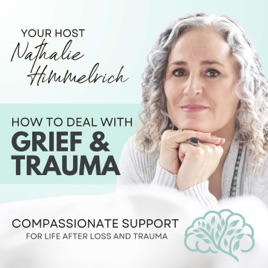
Advertise on podcast: How To Deal With Grief and Trauma
Rating
4.8from
This podcast has
177 episodes
Language
EnglishPublisher
Nathalie HimmelrichExplicit
No
Date created
2022/06/21
Latest episode
2026/02/07
Average duration
24 min.
Release period
8 days
Description
You can't go through life without experiencing loss and trauma the question is how do we deal and live with the grief and pain? Join Nathalie Himmelrich, grief expert and author, talking to people who have experienced grief and trauma first-hand. If you want to be inspired by others who traveled through their grief and trauma, found that healing is possible, and came out the other end knowing they can survive and thrive in life after loss. For more info: www.nathaliehimmelrich.com
Unlock How To Deal With Grief and Trauma podcast Email contact info,
Listeners & Audience details
Email contact information
Direct podcast contact details

Listeners
Audience numbers & engagement insights

Audience details
Podcast Insights

Podcast episodes
Check latest episodes from How To Deal With Grief and Trauma podcast
169 The Many Faces of Trauma | Betrayal Trauma: When Trust Becomes Unsafe
2026/02/07
Send us a text
Betrayal trauma can be uniquely disorienting because it not only breaks trust—it can disrupt your sense of reality and self-trust. In this episode, we explore betrayal trauma as a nervous system injury that often leads to hypervigilance, rumination, shutdown, and relationship fear. Using simple polyvagal-informed language, we look at why the body moves from connection to surveillance after betrayal and how healing often centres on truth, boundaries, and rebuilding trust in yourself. The episode ends with a short “Truth Anchor” practice to stabilise the present moment.
In this episode, you’ll learn
What betrayal trauma is and why dependency makes it more traumaticHow betrayal can create “reality doubt” and self-questioningPolyvagal-informed patterns: mobilised protection vs shutdown after trust breaksCommon impacts on body, mind, and relationships (non-diagnostic)What helps: clarity, boundaries as safety structures, and rebuilding self-trustA short grounding practice to anchor reality and support regulationGrounding practice (2–3 minutes): “Truth Anchor”
Name 3 present-moment factsUse thumb-to-fingertip pressure as a physical anchorChoose one truth sentence: “My feelings make sense,” “I’m allowed to protect myself,” etc.Name one small next stepRelated Episode:
S9 E83 Ambiguous Grief with Stephanie SarazinCheck the website for the free resources offered for both those affected by trauma and those supporting them.
What’s next: Single-Incident Trauma: When ‘Before’ and ‘After’ Split
Support the show
💡 If today’s episode touched you, please share it with someone who might need it.
🤝 Become a supporter of the show! Starting at $3/month & leave a review.
Stay Connected
🌐 Visit nathaliehimmelrich.com 💌 Subscribe to the newsletter for resources and updates 🎧 Never miss an episode—follow the podcast! 💛 Socials Instagram Facebook Find Support Resources
💜 For Grievers – Resources
https://nathaliehimmelrich.com/grief-trauma-support/ 💜 For Supporters – Supporting someone https://nathaliehimmelrich.com/supporters-resources/ 💜 Books – Explore books on grief and healing https://nathaliehimmelrich.com/books/ 💜 Support – Offers - free and paid
https://nathaliehimmelrich.com/free-resources-hub/
168 The Many Faces of Trauma | Intergenerational Trauma: What Gets Carried Forward
2026/02/05
Send us a text
Intergenerational trauma is what happens when the impact of trauma is passed down through families and communities—through nervous system patterns, emotional rules, family roles, and the stories we inherit about safety, trust, and worth. In this episode, we explore how people can carry burdens that didn’t start with them, why this isn’t about blaming previous generations, and how healing begins by naming what you’re holding and choosing what you want to continue—or interrupt. Using simple polyvagal-informed language, we look at how children’s nervous systems entrain to the adults around them, shaping a baseline of mobilised protection or shutdown. We close with a gentle practice to help you release what isn’t yours to carry.
In this episode, you’ll learn
A clear definition of intergenerational trauma and how it differs from “personal” traumaFour ways trauma gets carried: nervous system patterns, emotional rules, roles, and inherited beliefsA polyvagal-informed lens on how family stress becomes a child’s baselinePresent-day signs you may be carrying an older load (guilt, loyalty binds, over-responsibility, rest intolerance)Practical first steps: naming the pattern, guilt tolerance, new rituals, support outside the systemA short grounding practice focused on release and choiceGrounding practice (2–3 minutes): “Release What Isn’t Yours”
Feel your feet on the groundMake a loose fist (notice holding)Open the hand (practice release)Phrase: “I honour what came before. I don’t have to carry it all.”Name one small new-pattern choiceCheck the website for the free resources offered for both those affected by trauma and those supporting them.
What’s next: Betrayal Trauma: When Trust Becomes Unsafe
Support the show
💡 If today’s episode touched you, please share it with someone who might need it.
🤝 Become a supporter of the show! Starting at $3/month & leave a review.
Stay Connected
🌐 Visit nathaliehimmelrich.com 💌 Subscribe to the newsletter for resources and updates 🎧 Never miss an episode—follow the podcast! 💛 Socials Instagram Facebook Find Support Resources
💜 For Grievers – Resources
https://nathaliehimmelrich.com/grief-trauma-support/ 💜 For Supporters – Supporting someone https://nathaliehimmelrich.com/supporters-resources/ 💜 Books – Explore books on grief and healing https://nathaliehimmelrich.com/books/ 💜 Support – Offers - free and paid
https://nathaliehimmelrich.com/free-resources-hub/
167 The Many Faces of Trauma | Developmental Trauma: A Brief Map (Building on Earlier Episodes)
2026/02/02
Send us a text
Developmental trauma often forms through chronic, repeated stress during childhood—especially when safety, support, and repair are inconsistent. In this episode, you’ll get a clear, non-overwhelming map of what developmental trauma is, why it affects so many areas (regulation, identity, relationships), and how it can show up later as survival patterns like scanning, pleasing, protecting, or disconnecting. Using simple polyvagal-informed language, we explore how a developing nervous system adapts to ongoing stress. We close with a gentle “pendulation light” practice to help the body experience movement between tension and neutral, supporting regulation without forcing a story.
In this episode, you’ll learn
A practical definition of developmental trauma (chronic stress + limited escape + limited repair)Why developmental trauma can affect regulation, self-concept, boundaries, and relationshipsA simple polyvagal lens: safety/connection vs mobilised protection vs shutdownFour common survival patterns (non-diagnostic): Scanner, Pleaser, Protector, DisconnectorWhat helps as first steps: micro-doses of safety, regulation before deep processing, boundaries, and safe repairA short grounding practice that teaches the system that it can shift statesGrounding practice (2–3 minutes): “Pendulation Light”
Notice one neutral sensationBriefly notice a mild tension areaReturn to neutralRepeat onceClosing phrase: “This is a body that adapted—and it can learn safety now.”Check the website for the free resources offered for both those affected by trauma and those supporting them.
What’s next: Intergenerational Trauma: What Gets Carried Forward
Support the show
💡 If today’s episode touched you, please share it with someone who might need it.
🤝 Become a supporter of the show! Starting at $3/month & leave a review.
Stay Connected
🌐 Visit nathaliehimmelrich.com 💌 Subscribe to the newsletter for resources and updates 🎧 Never miss an episode—follow the podcast! 💛 Socials Instagram Facebook Find Support Resources
💜 For Grievers – Resources
https://nathaliehimmelrich.com/grief-trauma-support/ 💜 For Supporters – Supporting someone https://nathaliehimmelrich.com/supporters-resources/ 💜 Books – Explore books on grief and healing https://nathaliehimmelrich.com/books/ 💜 Support – Offers - free and paid
https://nathaliehimmelrich.com/free-resources-hub/
166 The Many Faces of Trauma | The Wound in the Bond: Attachment & Relational Trauma
2026/01/31
Send us a text
Attachment and relational trauma can be hard to name because it often doesn’t come from one dramatic event—it forms through patterns over time: inconsistency, emotional absence, unpredictable caregiving, chronic criticism, or rupture without repair. In this episode, we explore attachment as nervous-system education through relationship, and why closeness can become a trigger for protection (anxiety, control, people-pleasing, withdrawal, shutdown). You’ll learn a simple polyvagal-informed lens for understanding relational responses, plus practical starting points for repair and regulation. We close with a short grounding practice designed to support boundaries while staying connected.
In this episode, you’ll learn
What attachment is (beyond “neediness”) and why it’s biological as well as psychologicalHow rupture and repair shape nervous-system safetyWhat relational trauma is and how it forms over timeWhy closeness can trigger fight/flight or shutdown (polyvagal-informed, plain language)Common relational patterns (non-diagnostic): fawning, withdrawal, over-apologising, control, fear of abandonmentWhat helps: naming states, repair language, predictability, and safe connectionA gentle grounding practice that supports boundaries and connectionCheck the website for the free resources offered for both those affected by trauma and those supporting them.
What’s next: Developmental Trauma: A Brief Map (Building on Earlier Episodes)
Support the show
💡 If today’s episode touched you, please share it with someone who might need it.
🤝 Become a supporter of the show! Starting at $3/month & leave a review.
Stay Connected
🌐 Visit nathaliehimmelrich.com 💌 Subscribe to the newsletter for resources and updates 🎧 Never miss an episode—follow the podcast! 💛 Socials Instagram Facebook Find Support Resources
💜 For Grievers – Resources
https://nathaliehimmelrich.com/grief-trauma-support/ 💜 For Supporters – Supporting someone https://nathaliehimmelrich.com/supporters-resources/ 💜 Books – Explore books on grief and healing https://nathaliehimmelrich.com/books/ 💜 Support – Offers - free and paid
https://nathaliehimmelrich.com/free-resources-hub/
165 The Many Faces of Trauma | Before Words: Understanding Preverbal Trauma
2026/01/28
Send us a text
Preverbal trauma can be hard to name because it often isn’t stored as a clear story. In this episode, we explore how early experiences, which occur before language development, can shape the nervous system through implicit memory and felt sense. You’ll learn why people can say “nothing happened” and still carry intense body reactions, relationship patterns, or shame responses that feel bigger than the moment. Using simple polyvagal-informed language, we’ll look at how early safety is wired through connection, and what helps when the body remembers what the mind cannot. The episode ends with a varied, trauma-neutral grounding practice using senses and gentle movement.
In this episode, you’ll learn
What preverbal trauma is (and what it isn’t)How early experiences are stored as implicit memory and felt sense rather than narrativeWhy reactions can feel “irrational” when the origin happened before wordsA simple polyvagal lens on early wiring: safety & connection vs mobilised protection vs shutdownCommon adult patterns linked to early nervous system adaptation (non-diagnostic)Practical, gentle starting points: micro-doses of safety, co-regulation, body-first tools, repair over perfectionA varied grounding practice designed to be supportive for preverbal materialGrounding practice (2–3 minutes): “Senses + Support”
Notice one point of contact (feet, back, hands)Name two soundsRest your eyes on one neutral colourGentle shoulder roll or press feet into the floorA soft phrase: “In this moment, I’m here” (or “safe enough” if it fits)Check the website for free resources available to both those affected by trauma and those supporting them.
What’s next? The Wound in the Bond: Attachment & Relational Trauma
Support the show
💡 If today’s episode touched you, please share it with someone who might need it.
🤝 Become a supporter of the show! Starting at $3/month & leave a review.
Stay Connected
🌐 Visit nathaliehimmelrich.com 💌 Subscribe to the newsletter for resources and updates 🎧 Never miss an episode—follow the podcast! 💛 Socials Instagram Facebook Find Support Resources
💜 For Grievers – Resources
https://nathaliehimmelrich.com/grief-trauma-support/ 💜 For Supporters – Supporting someone https://nathaliehimmelrich.com/supporters-resources/ 💜 Books – Explore books on grief and healing https://nathaliehimmelrich.com/books/ 💜 Support – Offers - free and paid
https://nathaliehimmelrich.com/free-resources-hub/
164 The Many Faces of Trauma | Small t, Big T and the Missing Middle
2026/01/26
Send us a text
“Small t” and “big T” are common trauma terms meant to validate, but they can also trigger comparison, minimisation, or shame. In this episode, you’ll learn what these labels usually mean, why they sometimes backfire, and how to replace ranking with a more compassionate, nervous-system-based framework. You’ll also get a simple reframe list (cumulative, relational, chronic vs single-incident, acute) and a short grounding practice to help your system step out of comparison and back into the present.
In this episode, you’ll learn
What people typically mean by big T and small t traumaWhy the “missing middle” matters (quiet, chronic, relational stress that still shapes the nervous system)How comparison keeps people stuck: “It wasn’t bad enough” vs “I’m permanently damaged”A clearer alternative to ranking: impact + support + recoveryPolyvagal-informed understanding of why the nervous system doesn’t rank events “on paper”A short, safe-for-most grounding practice focused on validation and present-moment safetyGentle reminders
Trauma isn’t a competition, and you don’t need to justify your pain to deserve support.If you feel activated or numb while listening, that’s a nervous system response; pause anytime.Check the website for free resources available to both those affected by trauma and those supporting them.
What’s next
Next episode: Before Words: Understanding Preverbal Trauma
We’ll explore how the body can carry trauma from experiences that happened before you had language and how to work with it gently.
Support the show
💡 If today’s episode touched you, please share it with someone who might need it.
🤝 Become a supporter of the show! Starting at $3/month & leave a review.
Stay Connected
🌐 Visit nathaliehimmelrich.com 💌 Subscribe to the newsletter for resources and updates 🎧 Never miss an episode—follow the podcast! 💛 Socials Instagram Facebook Find Support Resources
💜 For Grievers – Resources
https://nathaliehimmelrich.com/grief-trauma-support/ 💜 For Supporters – Supporting someone https://nathaliehimmelrich.com/supporters-resources/ 💜 Books – Explore books on grief and healing https://nathaliehimmelrich.com/books/ 💜 Support – Offers - free and paid
https://nathaliehimmelrich.com/free-resources-hub/
163 The Many Faces of Trauma | When the Body Learns Danger: What Trauma Is (and Isn’t)
2026/01/23
Send us a text
Trauma isn’t only about what happened—it’s about what happened inside your nervous system when an experience was too much, too fast, too soon, or too long, without enough support, choice, or protection. In this episode, we clarify what trauma is (and isn’t), using simple, polyvagal-informed language—so you can replace shame and confusion with understanding. You’ll also be guided through a short grounding practice you can use anytime.
In this episode, you’ll learn
A clear, compassionate definition of trauma that goes beyond the “one big event” narrativeWhy two people can experience similar events and be impacted differentlyThe difference between stress and trauma (and why that matters)Why trauma responses are adaptations, not character flawsHow trauma can be remembered as sensations, triggers, and patterns—not just a storyA simple polyvagal lens: safety & connection, mobilised protection (fight/flight), and shutdown protectionA short, trauma-neutral grounding practice to support regulationGentle reminders
Trauma is not a competition. You don’t need to justify your pain.If your body reacts while listening—tightness, racing thoughts, numbness—this is information, not failure.You’re invited to pause, skip ahead, or return later. Your pace matters.Check the website for the free resources offered for both those affected by trauma and those supporting them.
Coming next: Small t, Big T—and the Missing Middle
We’ll explore why these terms can be helpful, where they can become misleading, and how to use them without comparison or shame.
Share this episode with someone who…
Minimises their experience (“It wasn’t that bad…”)Feels confused by their reactions (“Why am I like this?”)Supports others and wants a clearer, kinder framework for understanding traumaSupport the show
💡 If today’s episode touched you, please share it with someone who might need it.
🤝 Become a supporter of the show! Starting at $3/month & leave a review.
Stay Connected
🌐 Visit nathaliehimmelrich.com 💌 Subscribe to the newsletter for resources and updates 🎧 Never miss an episode—follow the podcast! 💛 Socials Instagram Facebook Find Support Resources
💜 For Grievers – Resources
https://nathaliehimmelrich.com/grief-trauma-support/ 💜 For Supporters – Supporting someone https://nathaliehimmelrich.com/supporters-resources/ 💜 Books – Explore books on grief and healing https://nathaliehimmelrich.com/books/ 💜 Support – Offers - free and paid
https://nathaliehimmelrich.com/free-resources-hub/
162 The Many Faces of Trauma | The Trauma Map: How This Series Works
2026/01/21
Send us a text
Welcome to the first episode of my new series “The Many Faces of Trauma.” In this opening episode, I share why I’m creating this series and how I’ll guide you through different trauma types in a way that’s clear, gentle, and not overwhelming. I introduce the “trauma map” I’ll be using across two seasons, explain what I mean by “trauma types” (as pathways, not labels), and offer a simple, polyvagal-informed way to understand what your nervous system may be doing.
In this episode, I cover
Why I’m creating a trauma-types series—and how naming can reduce shameWhat I mean by “trauma type” (a pathway, not a box you live in)This series is structured across two seasons, so you can go at your own paceThe five big pathways:FoundationsEarly imprint traumaEvent-based traumaSociety-shaped & environment-based traumaWhat trauma can become (including how trauma can affect the body)My simple, plain-language polyvagal map of nervous system states:Safety & connection - ventral Mobilised protection (fight/flight) - sympatheticShutdown protection (numb/freeze/collapse) - dorsalHow to listen in a way that supports your system Gentle content note
In this episode, I talk about trauma in general terms with no graphic detail. You’re always welcome to pause, step away, or come back later.
Grounding practice
I guide you through a brief practice that’s safe for most people, including:
Orienting (noticing a few neutral objects around you)Longer-exhale breathingContact + choice (feeling support in your body and naming one small next step)How I recommend you use this series
You don’t have to listen in order; start where you feel steady or curiousYou may relate to more than one episode (that’s common)This series is not a diagnosis tool; it’s a map for understanding and supportI invite you to check my website for the free resources offered for both those affected by trauma and those supporting them.
Coming next:
Support the show
💡 If today’s episode touched you, please share it with someone who might need it.
🤝 Become a supporter of the show! Starting at $3/month & leave a review.
Stay Connected
🌐 Visit nathaliehimmelrich.com 💌 Subscribe to the newsletter for resources and updates 🎧 Never miss an episode—follow the podcast! 💛 Socials Instagram Facebook Find Support Resources
💜 For Grievers – Resources
https://nathaliehimmelrich.com/grief-trauma-support/ 💜 For Supporters – Supporting someone https://nathaliehimmelrich.com/supporters-resources/ 💜 Books – Explore books on grief and healing https://nathaliehimmelrich.com/books/ 💜 Support – Offers - free and paid
https://nathaliehimmelrich.com/free-resources-hub/
Season 16 & 17 - Trailer: News About the Upcoming Show
2026/01/19
Send us a text
Welcome again to the How to Deal With Grief and Trauma Podcast Season 16.
HOW TO DEAL WITH GRIEF AND TRAUMA is completely self-funded, produced, and edited by me, Nathalie Himmelrich.
Consider making a small donation to support the Podcast: bit.ly/SupportGTPodcast. Thank you!
For more information, please visit Nathalie’s website, join the podcast’s Instagram page, and subscribe to the newsletter to receive updates on future episodes here.
Today is Monday, 19th January and for me a significant day: It is the 14th death-iversary of my Mother. With this in mind, I'm taking a moment to honour her and the body of work I've created with this podcast - even though I'm not one to applaud my own accomplishments easily.
For the coming season 16 and 17, I'm planing a whole set of episodes on the topic of trauma, starting with last week's episode on cultural grief following a traumatic event.
Before we begin, a gentle content note: we’ll be talking about trauma in general terms. There will be no graphic details. You don’t have to push through any of the episodes. If you notice your body tightening, your breath changing, or your mind drifting away, that’s not failure—that’s your nervous system doing its job. You’re allowed to pause, come back later, or choose a different episode.
The intent is to educate, to inform and to support - both those affected and those supporting those who are.
With that in mind, have a gentle day.
Let you nervous system guide you.
With Love, Nathalie
Support the show
💡 If today’s episode touched you, please share it with someone who might need it.
🤝 Become a supporter of the show! Starting at $3/month & leave a review.
Stay Connected
🌐 Visit nathaliehimmelrich.com 💌 Subscribe to the newsletter for resources and updates 🎧 Never miss an episode—follow the podcast! 💛 Socials Instagram Facebook Find Support Resources
💜 For Grievers – Resources
https://nathaliehimmelrich.com/grief-trauma-support/ 💜 For Supporters – Supporting someone https://nathaliehimmelrich.com/supporters-resources/ 💜 Books – Explore books on grief and healing https://nathaliehimmelrich.com/books/ 💜 Support – Offers - free and paid
https://nathaliehimmelrich.com/free-resources-hub/
161 Collective Grief and Trauma | When Disaster Strikes: Understanding Collective Grief and Trauma After Sudden Tragedy
2026/01/13
Send us a text
In this episode, Nathalie explores the emotional, psychological, and communal impact of the tragic event that took place on January 1st at Le Constellation in Crans-Montana.
Together, we examine what happens in the immediate aftermath of sudden disasters, how individuals and communities—both local and global—are affected, and why events like these evoke such strong collective responses.
Topics include:
Immediate physiological and emotional reactions after a tragic eventHow local and wider communities experience shock, disbelief, and shared griefCommon grief and trauma responses following sudden, collective lossThe effects of prolonged uncertainty, media presence, and legal processesWhy global attention intensifies around sudden tragedies, even amidst ongoing crisesWhat those affected can expect in the weeks and months aheadHow to support yourself and others through trauma and community-wide griefFor resources, support, and further guidance, visit:
Support Page: https://nathaliehimmelrich.com/grief-trauma-support/
To explore more conversations on grief, trauma, and healing, browse the full episode catalogue:
Podcast Archive: https://nathaliehimmelrich.com/episode-overview-latest-episode-first/
Thank you for listening and for taking gentle care of yourself and your community.
Support the show
💡 If today’s episode touched you, please share it with someone who might need it.
🤝 Become a supporter of the show! Starting at $3/month & leave a review.
Stay Connected
🌐 Visit nathaliehimmelrich.com 💌 Subscribe to the newsletter for resources and updates 🎧 Never miss an episode—follow the podcast! 💛 Socials Instagram Facebook Find Support Resources
💜 For Grievers – Resources
https://nathaliehimmelrich.com/grief-trauma-support/ 💜 For Supporters – Supporting someone https://nathaliehimmelrich.com/supporters-resources/ 💜 Books – Explore books on grief and healing https://nathaliehimmelrich.com/books/ 💜 Support – Offers - free and paid
https://nathaliehimmelrich.com/free-resources-hub/
160 Shavaun Scott | Revisiting Loss and Trauma 20 Years After A Revenge Suicide
2025/11/24
Send us a text
HOW TO DEAL WITH GRIEF AND TRAUMA is completely self-funded, produced, and edited by me, Nathalie Himmelrich.
Consider making a small donation to support the Podcast: bit.ly/SupportGTPodcast. Thank you!
For more information, please visit Nathalie’s website, join the podcast’s Instagram page, and subscribe to the newsletter to receive updates on future episodes here.
About this week’s episode Today’s guest is Shavaun Scott, a psychotherapist and author who shares a deeply personal and courageous story with us in our conversation. In her memoir Nightbird, Shavaun explores the devastating experience of her husband’s revenge suicide, an act he carried out on the very day she told him she wanted a divorce. After 17 years in an abusive relationship, Shavaun was left not only with the trauma of a gruesome scene staged in her own home, but also with the complex emotional aftermath, grief not just for the loss of life, but for the relationship that never truly was. As a therapist herself, Shavaun offers a profound and nuanced perspective on the psychological toll of intimate partner abuse, the moral injuries of suicide, and the long road of healing. This is a powerful and honest conversation about trauma, survival, and the complicated nature of grief.
About this week’s guestShavaun has been a psychotherapist for nearly 35 years in Oregon and California in the US. Shavaun shares her passion for mental health and wellness through writing, speaking, and podcasting; she is the author of four books. While she has worked extensively with grief and trauma, she has also experienced it in multiple ways throughout her life. She lost her mother when she was 16, her father when she was 35, and her previous husband of 17 years died by suicide in 2004. Shavaun now lives and works from her home in the forest in Portland, Oregon, which she shares with her husband and a houseful of beloved animals.
www.shavaunscott.com www.instagram.com/shavaunscott/Support the show
💡 If today’s episode touched you, please share it with someone who might need it.
🤝 Become a supporter of the show! Starting at $3/month & leave a review.
Stay Connected
🌐 Visit nathaliehimmelrich.com 💌 Subscribe to the newsletter for resources and updates 🎧 Never miss an episode—follow the podcast! 💛 Socials Instagram Facebook Find Support Resources
💜 For Grievers – Resources
https://nathaliehimmelrich.com/grief-trauma-support/ 💜 For Supporters – Supporting someone https://nathaliehimmelrich.com/supporters-resources/ 💜 Books – Explore books on grief and healing https://nathaliehimmelrich.com/books/ 💜 Support – Offers - free and paid
https://nathaliehimmelrich.com/free-resources-hub/
159 Mary-Catherine McDonald | The Joy Reset: How Trauma Steals Joy and How To Win It Back
2025/11/17
Send us a text
HOW TO DEAL WITH GRIEF AND TRAUMA is completely self-funded, produced, and edited by me, Nathalie Himmelrich.
Consider making a small donation to support the Podcast: bit.ly/SupportGTPodcast. Thank you!
For more information, please visit Nathalie’s website, join the podcast’s Instagram page, and subscribe to the newsletter to receive updates on future episodes here.
About this week’s episodeToday’s guest is someone many of you will remember from episode 87. She’s here today to talk about her latest book, The Joy Reset, a groundbreaking and deeply compassionate guide that takes the powerful tools of positive psychology and adapts them for those of us who have lived through trauma. Joy, she reminds us, isn’t about toxic positivity or forced gratitude. It’s about finding light in the dark, one gritty, bite-sized moment at a time.
In this book, she explores why joy can feel so elusive after trauma—and how we can gently reclaim it. Through neurobiological insights, real-life examples, and actionable practices, MC gives us a new framework to understand hope, gratitude, and resilience—not as fluffy ideals, but as essential, hard-won emotional tools for healing.
About this week’s guestMary Catherine (MC) McDonald, PhD, is a research professor and life coach who specializes in the psychology of trauma, stress, and resilience. She has been researching, lecturing, and publishing on the neuroscience, psychology, and lived experience of trauma and stress for over a decade. She is passionate about destigmatizing trauma, stress, and mental health issues in general, as well as reframing our understanding of trauma in order to better understand and treat it.
Website: alchemycoaching.lifeIG: @mc.phdTikTok: www.tiktok.com/@mc.phdSupport the show
💡 If today’s episode touched you, please share it with someone who might need it.
🤝 Become a supporter of the show! Starting at $3/month & leave a review.
Stay Connected
🌐 Visit nathaliehimmelrich.com 💌 Subscribe to the newsletter for resources and updates 🎧 Never miss an episode—follow the podcast! 💛 Socials Instagram Facebook Find Support Resources
💜 For Grievers – Resources
https://nathaliehimmelrich.com/grief-trauma-support/ 💜 For Supporters – Supporting someone https://nathaliehimmelrich.com/supporters-resources/ 💜 Books – Explore books on grief and healing https://nathaliehimmelrich.com/books/ 💜 Support – Offers - free and paid
https://nathaliehimmelrich.com/free-resources-hub/
158 Mary-Frances O’Connor | The Grieving Body
2025/11/10
Send us a text
HOW TO DEAL WITH GRIEF AND TRAUMA is completely self-funded, produced, and edited by me, Nathalie Himmelrich.
Consider making a small donation to support the Podcast: bit.ly/SupportGTPodcast. Thank you!
For more information, please visit Nathalie’s website, join the podcast’s Instagram page, and subscribe to the newsletter to receive updates on future episodes here.
About this week’s episodeMary-Frances’s book The Grieving Brain has inspired me from the moment I started reading it. In this episode Mary-Frances is back to speak about her second book The Grieving Body.
So I’m very excited today to be speaking with Mary-Frances again, neuroscientist to find out even more about the science behind grief and all that Mary-Frances and her colleagues have researched in their lab.
About this week’s guestMary-Frances O’Connor, PhD is an Associate Professor of Psychology at the University of Arizona, where she directs the Grief, Loss and Social Stress (GLASS) Lab.
Her research focuses on the physiological correlates of emotion, in particular, the wide range of physical and emotional responses during bereavement, including yearning and isolation. She believes that a clinical science approach toward the experience and mechanisms of grieving can improve interventions for prolonged grief disorder, newly included in the revised DSM-5.
Website: https://maryfrancesoconnor.org/
Support the show
💡 If today’s episode touched you, please share it with someone who might need it.
🤝 Become a supporter of the show! Starting at $3/month & leave a review.
Stay Connected
🌐 Visit nathaliehimmelrich.com 💌 Subscribe to the newsletter for resources and updates 🎧 Never miss an episode—follow the podcast! 💛 Socials Instagram Facebook Find Support Resources
💜 For Grievers – Resources
https://nathaliehimmelrich.com/grief-trauma-support/ 💜 For Supporters – Supporting someone https://nathaliehimmelrich.com/supporters-resources/ 💜 Books – Explore books on grief and healing https://nathaliehimmelrich.com/books/ 💜 Support – Offers - free and paid
https://nathaliehimmelrich.com/free-resources-hub/
157 PAIL Mini Series | Carrying Hope Alongside Grief & Sustaining Support Beyond the Early Weeks
2025/10/30
Send us a text
October is Pregnancy and Infant Loss Awareness Month, and with it comes a deeply meaningful PAIL Mini Series here on How to Deal With Grief and Trauma.
In this seventh and last episode of the PAIL Mini Series, we explore two central themes:
how hope and grief can coexist — how life can slowly expand again without erasing love, andcompassionate insights on sustaining long-term support for grieving parents, reminding us that presence months and years later can mean even more than words in the early days.🕊️ What You’ll Hear in This Episode
How to allow hope to return naturally after deep lossUnderstanding that healing and grief can exist side by sideWays hope manifests in small, meaningful momentsHow to stay connected and supportive after initial condolences fadePractical suggestions for long-term, sustainable supportReflections on the beauty of ongoing love and remembrance🗓️ About the Mini Series
The PAIL Mini Series runs through October with episodes released every four days, combining solo reflections and replays of the most loved guest episodes on pregnancy and infant loss.
🩷 Replays: October 4, 8, 12, 16, 20, 24, 28
💬 Solo episodes: October 6, 10, 14, 18, 22, 26, 30
Support the show
💡 If today’s episode touched you, please share it with someone who might need it.
🤝 Become a supporter of the show! Starting at $3/month & leave a review.
Stay Connected
🌐 Visit nathaliehimmelrich.com 💌 Subscribe to the newsletter for resources and updates 🎧 Never miss an episode—follow the podcast! 💛 Socials Instagram Facebook Find Support Resources
💜 For Grievers – Resources
https://nathaliehimmelrich.com/grief-trauma-support/ 💜 For Supporters – Supporting someone https://nathaliehimmelrich.com/supporters-resources/ 💜 Books – Explore books on grief and healing https://nathaliehimmelrich.com/books/ 💜 Support – Offers - free and paid
https://nathaliehimmelrich.com/free-resources-hub/
156 PAIL Mini Series: Episode with Katherine Lazar on a Mission to Help You Find Light in the Darkness after Loss REPLAY
2025/10/28
Send us a text
HOW TO DEAL WITH GRIEF AND TRAUMA is completely self-funded, produced, and edited by me, Nathalie Himmelrich.
Consider making a small donation to support the Podcast: bit.ly/SupportGTPodcast. Thank you!
For more information, please visit Nathalie’s website, join the podcast’s Instagram page, and subscribe to the newsletter to receive updates on future episodes here.
About today’s episodeDuring October, which is Pregnancy and Infant Loss Awareness Month, we will dedicate all the episodes to increasing awareness around what parents experience. Today, we feature a conversation with Katherine Lazar, a mum who has experienced her first child's death through stillbirth.
About this week’s guestKatherine Lazar currently lives in Atlanta, GA in the US and is married to the love of her life, Brody’s dad, Michael. When she was 37 weeks pregnant, her precious son died and was stillborn. The sorrow following his death almost killed her. Conversations with other loss moms saved her. She decided to record them and put them out for others to hear. If they helped her feel less alone, maybe they could help others. She’s so proud to have created this in Brody’s honor and to give other mothers a platform to talk about their babies.
At the time of recording this episode, they were expecting their second child, and navigating the world of pregnancy after loss is a whole new battle. However, Katherine has spent a lot of time putting in the work with grief therapy & trauma recovery, surrounding herself with good people, having a great support system, and amazing doctors this time around. She feels ready for whatever comes her way.
She misses her son every day and knows that she will see him again someday. Until then, she will continue to tell her story, be very open about her journey, and help other loss mothers find light in the dark.
Support the show
💡 If today’s episode touched you, please share it with someone who might need it.
🤝 Become a supporter of the show! Starting at $3/month & leave a review.
Stay Connected
🌐 Visit nathaliehimmelrich.com 💌 Subscribe to the newsletter for resources and updates 🎧 Never miss an episode—follow the podcast! 💛 Socials Instagram Facebook Find Support Resources
💜 For Grievers – Resources
https://nathaliehimmelrich.com/grief-trauma-support/ 💜 For Supporters – Supporting someone https://nathaliehimmelrich.com/supporters-resources/ 💜 Books – Explore books on grief and healing https://nathaliehimmelrich.com/books/ 💜 Support – Offers - free and paid
https://nathaliehimmelrich.com/free-resources-hub/
Podcast reviews
Read How To Deal With Grief and Trauma podcast reviews
Blue Highways 2024/07/24
Balm For the Griever’s Heart
I only wish I’d discovered this podcast sooner. Nathalie’s compassionate and soothing presence makes me feel immediately welcomed and understood. She ...
Katy_Grace 2024/04/10
A space to navigate grief with kindness, care, and wisdom
Nathalie combines personal stories with expert guides to shed light on the painful and deeply human journey through grief. Her expertise, compassion, ...
Eden1771 2024/04/08
One of the best of its kind
There are so many griefcasts to choose from … I encourage you to make this one of yours. Nathalie’s gentle wisdom, experience, and dedication make eac...
charclam 2023/11/24
Conversations that Matter
Grief has a way of helping us cut to the heart of what matters. Nathalie’s gentle, welcoming energy as a host has a way of getting guests to the essen...
mgbenyo 2023/02/20
Gentle Compassionate Conversations
Nathalie has a gentle, compassionate way of exploring her guests’ unique experiences to illuminate what make each loss profound and tender. She guides...
Aimberlyn 2022/11/04
An Important Resource
Nathalie has created such an important resource, suitable for anyone. As she states, in life we will all encounter grief or trauma and it is an import...
Glan123 2022/10/31
So appreciative of this space
Such important space to educating on grief and not feeling alone - must follow and listen
Podcast sponsorship advertising
Start advertising on How To Deal With Grief and Trauma relevant audience podcasts
You may also like to advertise on these Podcasts

4.4371061566
The Megyn Kelly Show
SiriusXM

4.888901269
Fearless with Jason Whitlock
Blaze Podcast Network

4.8118931000
Mind Pump: Raw Fitness Truth
Sal Di Stefano, Adam Schafer, Justin Andrews, Doug Egge
4.8102131585
Tara Brach
Tara Brach

4.541561215
Something You Should Know
Mike Carruthers | OmniCast Media

4.513841343
Strictly Anonymous Confessions
Kathy Kay

4.8292781897
Fantasy Footballers - Fantasy Football Podcast
Fantasy Football

4.62382612
Football Weekly
The Guardian

4.45387666
Two Judgey Girls
Two Judgey Girls

3.8258501152
The Viall Files
Nick Viall