1656530299
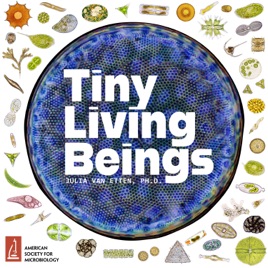
Tiny Living Beings

Advertise on podcast: Tiny Living Beings

Rating
★★★★★
5
from
17 reviews
This podcast has
28 episodes
Language
English
Explicit
No
Date created
2022/11/26
Latest episode
2025/12/22
Average duration
62 min.
Release period
74 days

Description

Tiny Living Beings is a weekly podcast where listeners get to know a scientist, a weird microorganism they like, and why they think it's interesting. Our planet is full of billions of different microscopic organisms, most of which are still unknown to science. The ones we do know are diverse and strange. Microbiology knowledge is often gatekept by scientists who discuss this information in exclusive professional circles, but more of these topics need to be shared with the public! Although generally upbeat and fun, conversations often tangentially address frustrations with society or become existential, which, because of the time we are living through, is inherently connected to any discussion of topical scientific information. Content is geared toward all ages and backgrounds, anyone who is scientifically curious.

Unlock Tiny Living Beings podcast Email contact info,
Listeners & Audience details

Email contact information

Direct podcast contact details

Listeners

Audience numbers & engagement insights

Audience details

Podcast Insights

Podcast episodes

Check latest episodes from Tiny Living Beings podcast


Introducing the Fire Amoeba - with Angela Oliverio and Beryl Rappaport
2025/12/22
Eukaryotes are "complex" organisms with nuclei and membrane-bound organelles: plants, animals, fungi, and protists. Protists include many understudied lineages of fascinating organisms that challenge our understanding of cell biology, and so many protist species remain undiscovered. This week Dr. Angela Oliverio and Beryl Rappaport come on the podcast to discuss a new amoeba species called Incendiamoeba cascadensis that lives and reproduces at the highest temperature ever described for a eukaryote, earning the title of "fire amoeba". Angela and Beryl take us through their research and discovery process, highlighting the collaborative nature of their groundbreaking work. You can read about the structure, function, behavior, and genome of I. cascadensis in their recent preprint. On the episode, we discuss what this amoeba looks like, how it moves, its relatives, the volcanic lake it was found in, and current hypotheses for how it is able to survive in such hot temperatures. Angela explains how studying a novel species like this can leave us with more questions than answers which means that there is more exciting work to come!  Angela Oliverio is an assistant professor of Biology at Syracuse University and Beryl Rappaport is a PhD student studying microbial eukaryote evolution and occasionally fermented foods in the Oliverio lab. You can follow them on Bluesky at @oliverio.bsky.social and @[email protected], and learn more about their research at http://oliveriolab.org/ and their Google Scholar pages (Angela, Beryl).  They've also provided some links and photos for further reading, and make sure to read their preprint! A great thread by Beryl A geothermal amoeba sets a new upper temperature limit for eukaryotes preprint Extreme environments offer an unprecedented opportunity to understand microbial eukaryotic ecology, evolution, and genome biology perspective paper  Lessons from Extremophiles: Functional Adaptations and Genomic Innovations across the Eukaryotic Tree of Life article Popular media articles about the fire amoeba in Nature and Scientific American More about amoebozoan amoebas: Wikipedia Brief history about Thermus aquaticus (bacteria) and the advent of PCR from USGS For more info on microbes and to follow updates of this podcast, find @couch_microscopy on Instagram or visit www.couchmicroscopy.com/store for merch! The views and opinions expressed on this program are those of the host and guests and do not reflect the views of any institution.
Parasites in our pets' poop - with Ben Alverson
2025/05/26
Microbes are everywhere, including inside our pets! This week, Ben Alverson comes on to give us a crash course in veterinary parasitology. He discusses the variety of worms and protists that can live inside mammals and cause problems ranging from being a mild nuisance to causing death. We talk about the different types of animals that get tested for these parasites including cats and dogs, zoo animals like big cats, and farm animals. Ben does a great job explaining how diagnoses are made from examining poop samples, what that process looks like, how identifications of different eggs and and parasites are made using microscopy, and treatment options. This episode showcases a non-academic career path in microbiology that's absolutely fascinating! (But it is not for the squeamish!) Ben Alverson is a microbiologist with experience in the veterinary field. He runs the brilliant Instagram account @veterinary_parasitology_ where he posts photos of ova (eggs) and parasites found in his work. I HIGHLY recommend following him! You can also find him on Twitter. Resources from this episode: Textbook recommendation: Diagnostic Parasitology for Veterinary Technicians (I posted the link from the publisher but I recommend looking for this used or free online) Vetpocket app For more info on microbes and to follow updates of this podcast, find @couch_microscopy on Instagram or visit www.couchmicroscopy.com/store for merch! The views and opinions expressed on this program are those of the host and guests and do not reflect the views of any institution or funder.
Is science political? - with Kevin Bird
2025/05/05
American science has been under attack since this Trump administration began. Tens of thousands of scientists and federal workers have lost their jobs and the effects are starting to permeate through society. This week I have Dr. Kevin Bird on to explain the events of the last 3 months, how science is funded in the United States, why it is being attacked so aggressively, and the ideologies behind these attacks. He also gives us a history lesson on movements of the past that sought to protect the scientific enterprise. It is really important to protect science. Publicly-funded research benefits us all! (Also, sorry for the choppy editing on this episode; I wanted to get this one out quickly!) Kevin is a NSF Plant Genome Postdoctoral Research Fellow at UC Davis studying the evolutionary impact of structural variation in plant genomes. He also researches scientific racism and posts lots of interesting stuff on his Bluesky account. You can also learn more about his work on his website or Google Scholar page. Here are some articles Kevin recommends: Brand new article about the NSF freeze Article about the impacts on US science Article about US brain drain USDA and food security US-AID labs that were cut Article on the admin's resegregationism and Project 2025 Article about TESCREAL Article about neoreaction Radical science movements from the past For more info on microbes and to follow updates of this podcast, find @couch_microscopy on Instagram or visit www.couchmicroscopy.com/store for merch! The views and opinions expressed on this program are those of the host and guests and do not reflect the views of any institution or funding agency.
The Diatom Detective - with Kirstie Scott
2025/04/14
If you tuned in last week, you'll know that diatoms produce one quarter of the air we breathe (and they produced this podcast's logo), but did you know that they can also be used to solve crimes???! Rather than spoiling too much by writing a long caption here, you should just press play to hear from Dr. Kirstie Scott, a forensic diatomist and one of the most interesting people I've spoken with. In this episode we discuss how certain environments have certain cells and how these cells can travel on clothes and in bodies. We also talk about different types of evidence, testifying in court, and many ways in which trace signatures of organisms in the environment can be used in to answer diverse research questions. If you like Dexter or Bones or true crime, this episode is for you! Kirstie is a senior lecturer in forensic bioscience at Liverpool John Moores University in the UK where she specializes in diatom analysis. You can find her on Linkedin, Google Scholar, X, and Bluesky. Here are some resources Kirstie recommends: How microscopic algae are helping forensic teams catch criminals Research article on marine diatoms as trace evidence indicators Dead bodies can reveal details of their death through microscopic diatoms For more info on microbes and to follow updates of this podcast, find @couch_microscopy on Instagram or visit www.couchmicroscopy.com/store for merch! The views and opinions expressed on this program are those of the host and guests and do not reflect the views of any institution.
Diatoms and dinoflagellates and dinotoms, oh my! - with Brittany Sprecher
2025/04/07
Diatoms are beautiful (and weird). Dinoflagellates are weird (and beautiful). They are completely different organisms but both are protists that can both support whole ecosystems or cause devastating environmental hazards. However, only one of them inspired Alfred Hitchcock to make his famous movie, The Birds (listen to find out which). Both organisms can produce oxygen to help us breathe, and diatoms alone produce over 20% of the oxygen in the atmosphere. And sometimes dinoflagellates will ingest diatoms and use their innards to steal photosynthesis, creating a new type of organism called a "dinotom"! That was a very chaotic group of sentences but luckily this week we have Dr. Brittany Sprecher on the podcast who is an expert at diatoms, dinoflagellates, AND dinotoms. What a combo! We discuss a lot on this episode and you will come away learning all about the amazing research going on with these funky microbes. Brittany Sprecher is a postdoctoral researcher at Woods Hole Oceanographic Institution. You can follow her work on Google Scholar. Here are some links Brittany recommends to learn more about these protists: Short Klaus Kemp diatom arranging documentary Phytoplankton Identification guide (California coast) Microorganisms PARODY video "The algae that saved an astronaut's life" video Wiki for Amoebophrya, the dinoflagellate parasite that infects other dinoflagellates Bioluminescent waves in Monterey Bay Bioluminescence vs. fluorescence video For more info on microbes and to follow updates of this podcast, find @couch_microscopy on Instagram or visit www.couchmicroscopy.com/store for merch! The views and opinions expressed on this program are those of the host and guests and do not reflect the views of any institution.
Sharks of the plankton - with Matt Johnson
2025/03/31
Did you know that some organisms, from protists to sea slugs, steal photosynthesis? This week Dr. Matt Johnson is on the podcast to talk about his work on kleptoplasty, the process by which organisms steal plastids (photosynthetic organelles) from other organisms to become photosynthetic. These special cells with stolen plastids are mixotrophs, that is, they can both eat food and produce their own from solar energy. Matt discusses why kleptoplasty and mixotrophy are special processes that aren't as rare as we might think and how they affect the ocean and planet. He also talks about ciliates, a very enigmatic group of protists that he uses to study mixotrophy. And listen all the way through for a crash course on the Grateful Dead! Matt is an associate scientist with tenure at Woods Hole Oceanographic Institution. You can follow his work on his Google Scholar page or website. To learn more about ciliates, other protists, and kleptoplasty: Foissner user-friendly guide to ciliate identification (1996) Open source protist illustrations by Keeling and Eglit (2023) Nat Geo "Solar-Powered Sea Slugs" article For more info on microbes and to follow updates of this podcast, find @couch_microscopy on Instagram or visit www.couchmicroscopy.com/store for merch! The views and opinions expressed on this program are those of the host and guests and do not reflect the views of any institution.
Urine for a treat - with Owen Hale
2025/03/24
Newsflash! Urine is not sterile! This week we have Owen Hale on the podcast to talk about the urinary tract microbiome, which is really understudied. We discuss which bacteria live inside us, what they do, why so many people get UTIs, and what urinary tract bacteria can tell us about evolution more broadly. Owen also points out that because UTIs affect women so frequently, this is one of the few systems in biomedical science where females have been studied more than men, and what we can learn from these types of studies. He also explains why UTIs are political and some surprising results from his own research. Owen is a PhD candidate at Vanderbilt University. You can follow his work on X (@owenmicro) or Google Scholar. Here are some resources relevant to this episode: A 2020 review paper called "Advances in Understanding the Human Urinary Microbiome and Its Potential Role in Urinary Tract Infection" by Neugent et al. "Mutation Rates: How Low Can You Go?" by Sniegowski and Raynes Tee wikipedia page for the drift-barrier hypothesis. This link is easier to read than the journal articles... For more info on microbes and to follow updates of this podcast, find @couch_microscopy on Instagram or visit www.couchmicroscopy.com/store for merch! The views and opinions expressed on this program are those of the host and guests and do not reflect the views of any institution.
Where did plants come from? - with Blair Young
2025/03/17
Bryophytes are an ancient group of plants that include hornworts, liverworts, and mosses. They are the evolutionary link between land plants and the green algal ancestors that plants evolved from. But bryophytes are also really interesting in their own right and they are very understudied so it is lucky that I got to chat with an expert bryologist! This week, Blair Young discusses what bryophytes look like, where to find them, and why we study them. Blair is a PhD student at Rutgers University in the Struwe lab. She is also the assistant curator at the Chrysler herbarium and a field surveyor for the New Jersey Department of Environmental Protection. You can follow her on instagram (@polarblairx). If bryophytes are interesting to you, check out these useful resources Blair has provided that will help you get started exploring these unusual plants! Bryophyte Ecology e-book mentioned on the episode Moss identification key Liverwort identification key Glossary of bryophyte-specific terminology For more info on microbes and to follow updates of this podcast, find @couch_microscopy on Instagram or visit www.couchmicroscopy.com/store for merch!
4.5 billion years of Earth history in one hour - with Bolton Howes
2025/03/10
Did you know the continents move at the same rate as your fingernails grow? Welcome BACK to Tiny Living Beings after a couple years off! For the first episode of the new season, I have Dr. Bolton Howes on to give a geologist's perspective on the history of the Earth that I hope will give context for all the other episodes of this show. We discuss everything from the origin of the planet 4.5 billion years ago to the first life, when plants and animals evolved, the two times Earth turned into a literal snowball, giant bugs, dinosaurs, climate change, and why it's so hard to reconstruct the past. Bolton is a sedimentary geologist finishing up his postdoctoral research fellowship at University of Washington and Western Washington University. He will be starting a professorship at Wheaton College in the summer. You can follow his work here or on his website. Some resources Bolton mentions during the episode that may be of interest if you want to learn more about Earth's history are: Wonderful Life: The Burgess Shale and the Nature of History by Stephen Jay Gould Extinction: How Life on Earth Nearly Ended 250 Million Years Ago by Douglas H. Erwin Radiolab episode about dino extinction: Dinopocalypse Redux I also enjoyed this book many years ago: Life on a Young Planet by Andrew H. Knoll For more info on microbes and to follow updates of this podcast, find @couch_microscopy on Instagram or visit www.couchmicroscopy.com/store for merch! Music is "Introducing Cosmic Space" (2021 remix) by Elf Power and "Vorticella Dreams" by L. Felipe Benites. The views and opinions expressed on this program are those of the host and guests and do not reflect the views of any institution.
Life is beautiful - with Ursula Goodenough
2023/07/24
Dr. Ursula Goodenough has a scientific career that spans six decades, numerous accolades, and is a writer of both textbook and popular science books. But her crowning achievement is being a guest on this podcast. This week, Ursula and I have a conversation that covers topics like algal research, work-life balance, science communication and story telling, life-changing microscopy finds, why sex is so prevalent in nature, and relatedly--Richard Gere. We also discuss her book, The Sacred Depths of Nature, and what it means to be of the religious naturalist orientation. I highly recommend this book as a thought-provoking, yet easy-to-read history of life and evolution and our personal connections to the great mysteries of the universe.Ursula Goodenough is a professor emerita at Washington University in St. Louis, a member of the National Academy of Sciences, and a best-selling author. She now resides in Martha's Vineyard where she spends a lot of time with her children and grandchildren.To learn more about Ursula and her book The Sacred Depths of Nature and, click here. The second edition was recently published.For more about religious naturalism, click here. You can also sign up for a monthly newsletter from the Religious Naturalist Association here. And here is a piece in NPR written by Ursula. For more info on microbes and to follow updates of this podcast, find @couch_microscopy on Instagram, @CouchMicroscopy on Twitter, or visit www.couchmicroscopy.com/store for merch!Music is "Introducing Cosmic Space" by Elf Power and "Vorticella Dreams" by L. Felipe Benites.The views and opinions expressed on this program are those of the host and guests and do not reflect the views of any institution.
Choanoflagellates and animal evolution - with David Booth
2023/04/17
Choanoflagellates are unicellular protists but they also happen to be the closest living relatives to animals. This week, David Booth discusses what choanoflagellates are, where you can find them, and the connection to animal evolution. He also talks about how these microbes are interesting in their own right, impacting whole food webs and ecosytems and interacting with bacteria. We talk about the fossil record and cover a bunch of major evolutionary transitions and how microbial life was the precursor to the kingdoms of organisms we're most familiar with today.Dr. David Booth, PhD, is an assistant professor at University of California San Francisco. His lab investigates the ecological interactions and cell fate of choanoflagellates. You can follow him on Twitter (@dsboothacosta), Instagram (@bioboothlab) or find his work on his lab website or on Google Scholar.For more info on microbes and to follow updates of this podcast, find @couch_microscopy on Instagram, @CouchMicroscopy on Twitter, or visit www.couchmicroscopy.com/store for merch!Music is "Introducing Cosmic Space" by Elf Power and "Vorticella Dreams" by L. Felipe Benites.
Getting to know lichens - with Dennis Waters
2023/04/10
Do you ever walk past an old building or a tree or a big rock and notice splotchy green or orange or yellow blobs growing all over it? Well, these are probably lichens! Lichens aren't plants and they aren't even technically just fungi. They are actually many organisms living together and functioning as one unit. These "composite" organisms are fungi with symbiotic algae or cyanobacteria living inside them, providing them with sugars produced by photosynthesis. On this episode, Dennis Waters explains what lichens are, why we see them everywhere, what they do, and even what they taste like! We cover topics from symbiosis, to climate change to lichens living in space, suspended outside of the International Space Station. Dr. Dennis Waters, PhD is a lichenologist and is currently a visiting scientist at the Chrysler Herbarium at Rutgers University. He is also an author and his book "Behavior and Culture in One Dimension: Sequences, Affordances, and the Evolution of Complexity" is available here or on his website.Dennis has also provided some links to resources if you want to learn more about lichens: North American Lichen Checklist Database of Lichens in North American Herbaria Catalog of research papers on lichens Some helpful books: Urban Lichens (this is the one I have), Lichens of North America, Delmarva Lichens: An Illustrated Manual, Field Guide to the Lichens of Great Smoky Mountains National Park, Common Lichens of Northeastern North America, and The Macrolichens of New England Some images: source 1, source 2, source 3 Music is "Introducing Cosmic Space" by Elf Power and "Vorticella Dreams" by L. Felipe Benites.
Fungi are everywhere - with Kaydubs the hiking scientist
2023/03/20
Is fungi everywhere? Is it on our eyeballs and in our nose hairs? Yes, yes, and yes! This week I talk to Dr. Kristen aka Kaydubs about fungi in general and forest fungi in particular. We discuss what these organisms are made of, why they're only now being studied in depth, and the devastating outcomes of American chestnut blight. We also talk about how to become a master naturalist and why it's okay to be weird and/or join a mushroom club! Dr. Kristen, PhD is a plant pathologist and an amazing science communicator. You can follow her on instagram: @kaydubsthehikingscientist. I highly recommend following this account (it is hands down my favorite) because you will learn so much about all the organisms in the forest, from trees to insects to lichens. Lots of cool hiking info and adorable cat content as well. Also, here's a link to Kristen's linktree. And here are links to the lists of North American mushroom societies and American native plant societies. Sorry people on other continents! I'm tired and this episode comes out in an hour and I didn't have time to look up your societies. For more info on microbes and to follow updates of this podcast, find @couch_microscopy on Instagram, @CouchMicroscopy on Twitter, or visit www.couchmicroscopy.com/store for merch! Music is "Introducing Cosmic Space" by Elf Power and "Vorticella Dreams" by L. Felipe Benites. While some of the content on this podcast may be relevant to human or veterinary medicine, this information is not medical advice. The views and opinions expressed on this program are those of the host and guests and do not reflect the views of any institution.
Tardigrade takedown - with Chloé Savard
2023/03/13
Tardigrades aka water bears aka moss piglets are extremely popular! This is due to their tolerance of harsh environments and because of their perceived "cuteness". This week, I speak with Chloé Savard (@tardibabe) about what tardigrades are, what it actually means to "survive" in extreme conditions, and how to find them in nature. We also talk quite a bit about some of the tardigrade misinformation that's constantly circulating that paints these animals as indestructible or even immortal. Chloé uses her expertise on these charismatic microscopic animals to help debunk some strange clickbait claims. We had a lot of fun on this episode and if you have an interest in getting started with hobby microscopy, this is definitely a good episode to listen to! Chloé Savard is a microbiology student and social media sensation. You can follow her work on Instagram, TikTok, and YouTube. She is also launching a website soon that will be selling prints so stay tuned! Here is a great article she wrote about how to find and image tardigrades! https://moticmicroscopes.com/blogs/articles/tardigrades-waterbears For more info on microbes and to follow updates of this podcast, find @couch_microscopy on Instagram, @CouchMicroscopy on Twitter, or visit www.couchmicroscopy.com/store for merch! Music is "Introducing Cosmic Space" by Elf Power and "Vorticella Dreams" by L. Felipe Benites. While some of the content on this podcast may be relevant to human or veterinary medicine, this information is not medical advice. The views and opinions expressed on this program are those of the host and guests and do not reflect the views of any institution.
The gut microbiome - with Haley Hallowell
2023/02/27
What are the microbes in our gut up to? And how does their life affect our lives? This week, Dr. Haley Hallowell teaches us all about the gut microbiome and virome, that is, how microbes and viruses inside us affect each other and our own health! We also play a game on this episode where I make some bold claims that have gained traction on social media recently-some true, some ridiculous, some in between-and Haley becomes a professional myth-buster, using the latest science of course. Make sure to listen to the end because this episode wraps up with the two of us trying to figure out how much poop can fit in the human body. Dr. Haley Hallowell, PhD is a postdoctoral researcher in the Suez lab at Johns Hopkins University where she studies how bacteriophages influence the microbiome and how the host immune system responds to these viruses. She is also a fabulous science communicator and you can follow her on Twitter and TikTok, where she sets the record straight on pseudoscientific health claims about the gut. Her videos are amazing! Definitely follow her! Some resources we discuss on the episode for getting trustworthy scientific information: Pubmed, Nature, Elisabeth Bik's Microbiome Digest. Some papers Haley mentions: The Gut Virome Database Reveals Age-Dependent Patterns of Virome Diversity in the Human Gut A microbiome-dependent gut-brain pathway regulates motivation for exercise The pros, cons, and many unknowns of probiotics The promise of the gut microbiome as part of individualized treatment strategies Phage therapy: From biological mechanisms to future directions For more info on microbes and to follow updates of this podcast, find @couch_microscopy on Instagram, @CouchMicroscopy on Twitter, or visit www.couchmicroscopy.com/store for merch! Music is "Introducing Cosmic Space" by Elf Power and "Vorticella Dreams" by L. Felipe Benites. While some of the content on this podcast may be relevant to human or veterinary medicine, this information is not medical advice. The views and opinions expressed on this program are those of the host and guests and do not reflect the views of any institution.

Podcast reviews

Read Tiny Living Beings podcast reviews


5 out of 5
17 reviews
★★★★★
acerrubus 2024/05/11
Science that makes you feel things
My new favorite podcast! Excellent for science lovers who want both the facts and the stories. Learning about microbes is always great for a nice worl...
★★★★★
That model guy 2023/01/13
This is a Podcast for all science lovers
Ms. Van Etten does a wonderful job at taking a complex topic and breaking it down so just about anyone can understand and follow. Love the topic, keep...
★★★★★
Waterfalls and rainbows 2022/11/29
Microbiology in a fun and approachable format.
I listen to many science podcasts as a non scientist and this one gets top marks so far. I really enjoyed it!
★★★★★
akruger90 2022/11/29
Talking biology with friends
Love how this show feels like a causal conversation between friends talking about science in an accessible way. Informative, fun, and pro-protist!
check all reviews on apple podcasts

Podcast sponsorship advertising

Start advertising on Tiny Living Beings relevant audience podcasts


What do you want to promote?