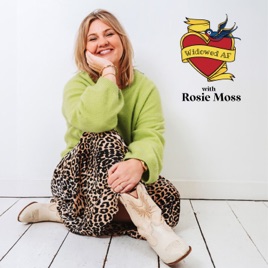
Advertise on podcast: Widowed AF: Real stories of love, grief and beyond - With Rosie Moss
Rating
5from
This podcast has
198 episodes
Language
EnglishPublisher
Rosie MossExplicit
No
Date created
2023/01/12
Latest episode
2026/10/05
Average duration
75 min.
Release period
9 days
Description
British Podcast Awards 2025 - Winner. In 2018, Rosie Moss lost her husband Ben in a diving accident, leaving her widowed at 37 with three children. Finding grief resources shallow and platitudes empty, she created Widowed AF—a podcast offering honest conversations about loss. Through guest stories and expert advice, the show covers practical challenges (finances, single parenting) and emotional realities (anger, loneliness, joy). From processing her own grief to building a global community, Rosie helps others feel less alone. The podcast provides tools and shared experiences for rebuilding life after loss.
Unlock Widowed AF: Real stories of love, grief and beyond - With Rosie Moss podcast Email contact info,
Listeners & Audience details
Email contact information
Direct podcast contact details

Listeners
Audience numbers & engagement insights

Audience details
Podcast Insights

Podcast episodes
Check latest episodes from Widowed AF: Real stories of love, grief and beyond - With Rosie Moss podcast
“He Went to Football and Never Came Home” | Louise Liddell
2026/10/05
Content warning: death, sudden bereavement, traumatic injury, ICU, children’s grief and legal proceedings.
When Louise Liddell’s husband John cycled off to play five-a-side football one evening, there was no reason to think he wouldn’t be coming home.
But later that night, Louise was woken by flashing lights and a knock at the door. John had been hit by a bus while cycling home and had suffered catastrophic brain injuries.
In this episode of Widowed AF, Louise joins Rosie to talk about the 18 extraordinary days that followed, the limbo of ICU, being told John had died at the roadside and been brought back, and the impossible reality of trying to prepare their two young boys for the possibility that their dad wasn’t going to survive.
But this is also a story about the life that came before.
Louise shares how she and John met on a 2:10am train, how a 12-minute journey turned into a life together, and the decade they spent growing up alongside one another before becoming parents. She remembers John as the content one, the hands-on dad who rearranged his working life around school runs, football and family, and the enormous hole his death left behind.
Louise and Rosie talk candidly about taking children into ICU, the very different ways children process trauma and grief, withdrawing life support and the days of waiting that followed.
And then there is everything that comes after a sudden death like John’s.
Louise describes the police investigations, press intrusion, CPS decisions, coroner’s court and civil proceedings that repeatedly pulled her back into the circumstances of John’s death. She also talks about challenging language she felt blamed John, her fight for accountability and how she has channelled some of her anger into campaigning for road safety.
This is a conversation about traumatic loss, but also about love, parenting, anger, injustice and what it means to begin living again when the life you knew changed in a single night.
The Grief I Inherited: Losing Mum to Suicide with Natalie Sutherland
2026/09/28
Natalie was just two years old when her mum, Elaine, died by suicide at only 26.
She grew up without memories of her mum and, perhaps even harder, without anyone really talking about her. Natalie learned very young that her mum was a subject best avoided. She didn’t even discover how she had died until she was 13.
In this incredibly open conversation, Natalie talks to Rosie about what that silence did to her. The anger. The risk-taking. The desperate need to understand where she came from. The years spent searching for someone to blame, including her mum, her dad and eventually herself.
Becoming a mother brought much of that buried grief crashing back to the surface. When her own children reached the age she had been when Elaine died, Natalie became terrified that history might somehow repeat itself.
Years later, during an extraordinarily dark period in her own life, Natalie attempted to take her own life.
Surviving changed something. For the first time, she began to understand how her mum might have reached a place where dying felt like the only option. And with that understanding came forgiveness, not just for Elaine, but eventually for herself.
Rosie and Natalie talk candidly about maternal suicide, addiction, shame, motherhood, inherited trauma and the complicated reality of loving someone who died by suicide. They also explore the enormous pressure placed on those left behind to spot the “signs”, the fear many parents have about asking for help when they are struggling, and what happens when the support people desperately need simply isn’t there.
They also talk about children. When do you tell a child that their parent died by suicide? What words do you use? How do you give them the truth without making that truth something frightening or shameful?
Natalie was raised in silence. She has chosen to raise her own children very differently.
And after growing up feeling as though her mum had almost been erased, she made herself a promise: people would know her name.
Her name was Elaine.
This is a raw, funny, painful and deeply important conversation about what suicide leaves behind, how grief can echo through generations, and what can happen when we finally start talking about the things families have been too frightened to say out loud.
TikTok: @therantingma
Instagram: @natalie_rantingma
Support CALM
Widowed AF is currently fundraising for CALM (Campaign Against Living Miserably) and its work to prevent suicide and support those affected by it.
Rosie’s JustGiving page:
https://www.justgiving.com/page/rosie-moss-1
Find out more about CALM and access support:
https://www.thecalmzone.net/
Content warning: This episode contains detailed discussion of suicide, suicidal thoughts and a suicide attempt, as well as alcohol misuse and difficult childhood experiences.
If you or someone you know is in immediate danger, please call 999 or go to your nearest A&E.
Say the Word: Suicide, Survival & the People Left Behind with CALM’s Michael Jarvis
2026/09/21
Say the Word: Suicide, Survival & the People Left Behind with CALM’s Michael Jarvis
What happens when we stop being afraid to say the word suicide?
This week, Rosie is joined by Michael Jarvis from CALM (Campaign Against Living Miserably) for a conversation about suicide, the people left behind, and why talking openly could help save a life.
Michael comes to the conversation from both sides. He works in suicide prevention, but he also knows the devastation of suicide loss personally. In 2016, his close friend Matt died by suicide at just 23. Matt was the loud one, the funny one, the friend who filled a room and grabbed life by the horns. His death landed like a bomb in their friendship group and changed the course of Michael’s life.
Rosie and Michael talk about the questions that can haunt those left behind: Were there signs? Should I have known? Could I have done something? They explore the guilt, anger, confusion and isolation that can make suicide bereavement so uniquely complicated, as well as the unexpected ways grief can reshape friendships and futures.
They also tackle one of the biggest fears around suicide: if we ask someone directly whether they are suicidal, could we put the idea into their head?
Michael explains why asking the question can instead create a safe space for someone to tell the truth, and why you don't need to be a mental health professional to notice that something isn't right, start a conversation and help someone find support.
From talking side-by-side rather than face-to-face, to choosing the right moment, creating a safety plan and knowing what to do if somebody says, “Actually, no, I'm not okay,” this is a practical conversation as much as an emotional one. Michael also shares the tools and support available through CALM for people experiencing suicidal thoughts, those worried about someone they love, and those bereaved by suicide.
And, because this is still Widowed AF, there is dark humour, marathon chat, an unexpected cat appearance and plenty of swearing along the way.
Most importantly, this episode is about bringing suicide out of the darkness and into conversation. Because sometimes asking an uncomfortable question could be the beginning of somebody feeling less alone.
Support CALM
Throughout September, Widowed AF is taking part in CALM’s Stay Tuned campaign, raising money to support its suicide prevention work. If you’d like to donate, you can support Rosie’s fundraiser here:
Rosie’s CALM fundraiser:
https://www.justgiving.com/page/rosie-moss-1
For information, practical resources and support from CALM:
CALM:
https://www.thecalmzone.net/
Content warning: This episode contains frank discussion of suicide, suicidal thoughts and suicide bereavement. If you are affected by anything discussed, please seek support. In an immediate emergency, call 999.
Widowed With Kids: Sharon Rosenbloom on Parenting Through Grief, 24 Years On
2026/09/14
Content warning: cancer, death, end-of-life care, child bereavement and serious illness.
Twenty-four years ago, Sharon Rosenbloom’s husband Simon died from cancer, leaving her with two young children and a life she had never imagined having to live without him.
Today, Sharon is a bereavement therapist, coach and author of Widowed With Kids. But before we get to everything she has learned since Simon died, we go right back to the beginning.
Sharon and Simon met on a blind date she nearly didn’t go on. She spilled his Diet Coke all over him, somehow didn’t put him off, and he went on to drive from Surrey to North London night after night just to see her.
Both had already survived major health scares before they met. Simon had undergone major surgery following pancreatic cancer, while Sharon survived a brain tumour at just 26 after initially being sent home with what doctors thought was a virus.
Together they built a family and had Sophie and Oliver.
Then Simon became ill again.
Secondary cancer was discovered, followed by chemotherapy, a precious family trip to Disneyland Paris, sepsis, a rapid deterioration and hospice care at the end.
And then Sharon had to work out how to raise two grieving children while grieving herself.
Sophie was seven. Oliver was five and had complex additional needs, meaning his understanding of his dad’s death unfolded very differently. Every day he would ask, “When’s Daddy coming ding dong?”, waiting for Simon to come home.
We talk about children grieving in completely different ways, the advice Sharon was given not to cry in front of them and why she now believes the opposite. We also discuss children and funerals, solo parenting, family support and the sheer practical weight of becoming the only adult responsible for everything.
Simon’s funeral took place on Father’s Day. Afterwards, Sophie would give Sharon cards telling her:
“You’re my mum and my dad.”
And Sharon says that is exactly what she became.
What makes this conversation particularly special is the length of the view. Twenty-four years later, Sharon can tell us what happened next.
There were relationships, mistakes, difficult lessons, training in counselling and coaching, writing Widowed With Kids, supporting other bereaved people and eventually learning how to be genuinely happy in her own company.
This is an episode about raising grieving children, becoming mum and dad, surviving the years that follow and discovering that while widowhood may stay with you, life keeps growing around it.
Take care of yourselves, and each other.
“I Don’t Believe His Death Was Preventable” | Reshma Kearney on Suicide, Stigma & Raising Grieving Children
2026/09/12
In this episode of Widowed AF, Rosie speaks with Reshma Kearney, a US-based mum of three, trauma-informed yoga teacher and grief advocate, whose husband Sean died by suicide in September 2022.
Sean was an orthopaedic surgeon, a lieutenant colonel in the US Army, a dad, husband, outdoorsman and high achiever. He had also lived for years with periods of depression, anxiety, anger and increased alcohol use.
But when he died, Reshma wasn’t expecting it.
There was no obvious final downward spiral. No neat collection of warning signs. Sean had recently left the military, started a new job and moved with his family to the Seattle area to begin the “forever” life they had spent years working towards. He had plans. He had a fishing trip booked.
And then, on Friday 30 September 2022, he died by suicide.
Reshma talks candidly about the shock of his death and the extraordinary moment she had to tell their three children, then aged 10, eight and seven, that their dad had died. With the help of a volunteer police chaplain, she made the decision to tell them the truth from the very beginning.
She shares the simple but powerful way she explained depression to them, describing a mind in which illness had taken away the brightness and filled it with darkness, and why she believes honest, age-appropriate conversations about suicide can help children feel safer, rather than more frightened.
Rosie and Reshma also talk about something much harder to say: what if a suicide simply wasn’t preventable at the point at which it happened?
Reshma explains why the language of Suicide Prevention Month can be painful for those left behind, particularly when it seems to place responsibility on families to recognise the right signs, say the right thing or somehow save the person they love.
Because sometimes people do ask. Sometimes families do see someone struggling. Sometimes they desperately try to get them help. And sometimes the person still dies.
They discuss the barriers that can prevent people, particularly men in high-stakes professions and military environments, from seeking mental-health support. Sean feared that therapy, medication or admitting he was struggling could appear on his record, affect his career or make him look weak.
Reshma also speaks about the judgement that still surrounds suicide, the cruel comments she receives online, why she sometimes deliberately leaves them visible, and the uncomfortable reality that stigma is still very much alive.
There’s also an honest conversation about parenting after traumatic bereavement, watching three children grieve in three completely different ways, and the hypervigilance that can come with knowing that your children have already experienced something you desperately wish you could have protected them from.
And ultimately, there is acceptance.
As Reshma beautifully puts it: “Acceptance does not mean the same thing as preference.”
She can accept that Sean died. She can accept that he died by suicide. That does not mean she wanted this life. Instead, she is choosing to honour the 17 years they shared, the three children they created and the man he was, while speaking openly about the reality of his death.
A quick production note: due to a technical hiccup at our end, we sadly lost the video recording of this conversation. The audio survived, thankfully, and this was far too important a conversation not to share. So this week, Widowed AF is going slightly old school: podcast for your ears rather than your eyes.
This is a conversation about suicide, but it is also about honesty, stigma, motherhood, mental health, grief and what happens when we stop looking for someone to blame.
As Reshma says at the end of the episode:
Hold grace. For yourself, and for other people. We never really know what somebody else is carrying.
Content note: This episode contains detailed discussion of suicide, suicidal thoughts, mental illness and bereavement. Please listen with care and seek appropriate support if you need it.
“Look Through the Turn."The Day Paula’s Husband Didn’t Come Home
2026/09/07
Content warning: sudden death, fatal road collision, bereavement, anxiety and depression.
Paula Thomas had spent years knowing that her husband Jeff’s job carried risk.
He was an active-duty US Navy submariner. There were long deployments, months without contact and the strange reality of loving someone whose job sometimes took him beneath the ocean for months at a time.
But when the knock at the door finally came, it wasn’t because of something that had happened at sea.
Jeff had gone out for an afternoon motorcycle ride with friends from the Navy. His own bike was in the shop, so he asked Paula if he could borrow hers.
She said yes.
It was a decision she would inevitably revisit after he was killed in a collision later that day. But Paula doesn't regret it. Because saying no would have meant allowing fear to dictate their marriage, and that simply wasn't who they were.
In this episode, Paula brings Jeff properly into the room.
We hear about the sweet, slightly awkward boy she met in high school, the hours they spent driving around talking, the man she eventually drove to the Navy recruiting station herself, and the husband whose steadiness helped her through years of anxiety and depression.
We also talk about the terrible mechanics of sudden death. The knock at the door. The uniforms. The instinctive search for another explanation. The woulda, coulda, shoulda that follows when someone dies doing something you could theoretically have stopped them from doing.
And Paula tells me what happened in the final seconds of Jeff's life.
Realising a truck was turning across his path, Jeff used precious seconds to warn the motorcyclist behind him. That rider stopped just inches from the vehicle. His wife was pregnant at the time.
Jeff almost certainly saved his life.
But this isn't only an episode about how Jeff died. It's about how Paula has continued to live.
She talks about returning to riding, finding tiny daily reasons to get off the sofa, getting her dog Phoenix, allowing herself to love again, and carrying Jeff with her into the life she is still building.
And she shares the piece of motorcycle advice that became a philosophy for surviving grief:
Look through the turn.
You don't pretend the hazard isn't there. You don't ignore it. But you don't stare at it so hard that it becomes the only place you can go.
You acknowledge it, and then you look towards where you're going next.
This is a conversation about love, fear, guilt, survival and what it means to keep moving when the road ahead looks nothing like the one you thought you were on.
Take care of yourselves, and each other.
If this episode resonated with you, please follow Widowed AF, rate and review the podcast.
“We Have to Clock In Today”: Keisha Wheeler on Widowhood & Raising Seven Children
2026/08/17
When Keisha Wheeler met Patrick at college, she wasn’t looking for a husband. Patrick, however, seemed fairly certain he’d found his wife.
What followed was a marriage full of faith, family, music, ministry and, eventually, seven children.
Then, in December 2021, everything changed.
Patrick developed chest pain while the family were preparing to deliver food to their community. Within hours, Keisha was being told that he had suffered a ruptured aorta. He underwent emergency surgery but never regained consciousness, dying six days later.
Suddenly, Keisha was a widow and the sole parent of seven children.
In this episode of Widowed AF, Keisha joins Rosie for a remarkably open conversation about the reality of surviving a loss that changes absolutely everything.
They talk about the strange autopilot of those first hours and days, the impossible responsibility of telling your children their dad has died, and what it means to keep getting up when other people mistake functioning for coping.
Keisha also speaks candidly about something that is often much harder to discuss: what happens to faith when the person you prayed to doesn’t save the person you love.
Having spent much of her life in church and ministry, Patrick’s death profoundly changed Keisha’s relationship with God. She talks about anger, betrayal, losing her ability to sing and watching her children wrestle with their own faith, including one daughter crying out: “I know you love us, God, this doesn’t feel like love.”
Rosie and Keisha also talk about solo parenting after bereavement: the relentless decisions, the exhaustion, the compromises you make simply to keep everybody going and the reality that the parent your older children had may be very different from the one your younger children experience after loss.
But this is also a conversation about community and what can grow alongside grief.
After discovering the power of grief support for her own children, Keisha went on to create a space for other bereaved families through the Patrick Wesley Wheeler Foundation. What began with her own seven children has grown to support dozens of others, giving children somewhere they can grieve, laugh, remember and simply be around people who understand.
There is no neat ending here. Keisha still misses Patrick. Her children still miss their dad. Life hasn’t become “normal”.
But, together, they keep showing up.
As Keisha puts it: sometimes you wake up wanting to quit. But you woke up alive today.
So you clock in.
FIND KEISHA & SUPPORT HER WORK
Instagram: @servingwith7
Keisha is the founder of Hand in Hand Brandon, part of the Patrick Wesley Wheeler Foundation. The grassroots organisation supports bereaved children and families, offering a space where they can grieve openly and be alongside others who understand.
As Keisha says: “We can’t fix your grief, but we can walk alongside you.”
Website: handinhandbrandon.org
You can find out more about Hand in Hand, the Patrick Wesley Wheeler Foundation, upcoming events and ways to support or donate through the website.
Renata Scofield on Cancer, Sudden Loss and Raising Two Young Daughters Alone
2026/07/27
For ten years, Renata Scofield and her husband Colin packed a lot of living into a short time. They met online despite living a block apart, married quickly, moved countries, built careers, welcomed two daughters and created a life together in Edinburgh.
Then, in April 2023, Colin was diagnosed with kidney cancer that had already spread to his lungs.
The treatment appeared to be working. Five days before he died, doctors told them the immunotherapy was shrinking lesions and things were looking positive. But what nobody realised was that the cancer had spread to his brain. A sudden stroke changed everything.
In this episode, Renata shares the devastating reality of becoming widowed while raising two young girls aged just three and six, with no family nearby and no time to prepare. She talks about doing school drop-offs and pick-ups while her husband lay in hospital, making the decision to switch off life support, and the practical chaos that follows when the person holding your family together is suddenly gone.
We also talk about Colin himself: a fourth-degree black belt in jiu-jitsu, a devoted hands-on dad, and the calm, steady presence who made everything feel possible.
Along the way we discuss children’s grief, the importance of community, returning to work after loss, and why preparation is one of the greatest gifts we can leave the people we love, from wills and insurance to the passwords we never think to share.
A conversation about love, resilience, solo parenting, and finding a way forward when life changes in an instant.
Widowed Far From Home | Nathalie Bruneau
2026/07/20
What happens when the worst day of your life unfolds thousands of miles from home?
This week I'm joined by Nathalie Bruneau, who moved from France to China for what was meant to be a short adventure. Instead, she fell in love with Leo, built a life in Shanghai, and together they had two young sons.
Nathalie shares the extraordinary story of navigating marriage across cultures, the challenges alcohol brought to their relationship, and the difficult decision to separate while continuing to co-parent.
Then, one Sunday morning, everything changed.
After a phone call in a language she barely understood, Nathalie was taken to a police station and then a hospital, where she discovered she was there to identify Leo's body. Alone, in a foreign country, she suddenly found herself having to navigate grief, language barriers, unfamiliar traditions and the unimaginable task of telling her two little boys that their dad had died.
We also explore Chinese mourning rituals, life after sudden loss, parenting through trauma, and how, somehow, we find the strength to keep going when we think we can't.
This is a remarkable conversation about love, culture, addiction, resilience and the universal language of grief.
If this episode resonates with you, please follow Widowed AF, leave a rating or review, and share it with someone who might need to hear it. Your support helps these conversations reach more people.
Funerals: Everything Nobody Tells You | With Poppy Mardell
2026/07/13
Most of us don’t think about funerals until we’re forced to.
And by then we’re expected to make some of the biggest decisions of our lives whilst barely able to think straight.
This week Rosie is joined by funeral director Poppy Mardell, founder of Poppy’s Funerals, for one of the most practical, eye-opening conversations we’ve ever had on Widowed AF.
Together they dismantle the myths surrounding death, funerals and grief, exploring why so many of us feel rushed, overwhelmed and completely unprepared when someone dies.
They discuss why the funeral industry remains unregulated, why there often isn’t the urgency we’re led to believe, and how reclaiming time and choice can make an enormous difference to grieving families.
Rosie and Poppy also talk about seeing the person who has died, whether children should attend funerals, the importance of ritual (whether you’re religious or not), and why wakes might be one of the most important parts of saying goodbye.
They also look to the future of funerals, from direct cremation and natural burials to water cremation, human composting and what really happens to thousands of unclaimed ashes.
Whether you’re recently bereaved, supporting someone who is, or simply want to feel less afraid of talking about death, this is an episode everyone should hear.
In this episode:
• How Poppy went from Sotheby’s to founding one of the UK’s most progressive funeral companies
• Why the funeral industry is still unregulated — and why that matters
• The myth that funerals have to happen quickly
• Why seeing the body can help us “see to believe” — for adults and children alike
• Practical ways to include children in funerals without overwhelming them
• Creating meaningful farewells that genuinely reflect the person who has died
• Why rituals matter, even if you have no faith
• Direct cremation, natural burial, water cremation and human composting explained
• What happens to unclaimed ashes — and why the law is finally changing
As always, if this episode resonated with you, please consider leaving a review or sharing it with someone who might need it. It really does help more grieving people find the podcast.
Holly Matthews: “Just Tell Them I Was Alright” | Brain Cancer, Anticipatory Grief & Parenting Through Loss
2026/06/29
What happens when you have to grieve the person you love before they’ve even gone?
This week I’m joined by Holly Matthews. Holly is a former actress, TEDx speaker, founder of The Happy Me Project, and was widowed at just 32 when her husband Ross died from grade four brain cancer, leaving her to raise their two young daughters alone.
But before any of that, there was a Pimm’s promotional job, an instant connection, and a love story that moved at lightning speed. Holly and Ross built a relationship full of adventure, brutal honesty and the kind of laughter that makes two people feel like they’re speaking a language nobody else understands.
Then came headaches. Anxiety. Focal seizures that were dismissed as panic attacks. Until one scan changed everything.
Holly talks candidly about anticipatory grief, watching the person you love slowly disappear while they’re still alive, and the impossible conflict of desperately wanting more time while also wanting their suffering to end.
We also discuss what good healthcare communication looks like, why Holly later stood in front of a room full of brain surgeons to tell them exactly where they were getting it wrong, and how a single compassionate doctor made all the difference.
As always, we don’t shy away from the harder conversations. Holly shares what it was like preparing two little girls for the death of their dad, why she chose honesty over euphemisms, and the practical ways she’s helped them navigate grief ever since.
This is a conversation about love, truth, parenting, neurodivergence, identity, and what it really means to live fully when you’ve learned just how fragile life is.
In this episode we cover:
• Falling in love almost instantly and trusting your instincts, even when everyone else thinks you’re making a mistake.
• The symptoms that were repeatedly dismissed before Ross’s brain tumour was finally discovered.
• Anticipatory grief and losing someone long before they physically die.
• Hospice life, dark humour, and navigating the final weeks together.
• Why the way doctors deliver devastating news matters so much.
• Raising bereaved children with honesty, curiosity and space to ask every question.
• Neurodivergence, masking and building a life that feels authentic after loss.
S4 - EP22 - How’s the Weather? Erin Clark on Grief, Love and Learning to Live Again
2026/06/22
What do you say when “How are you?” feels impossible to answer?
This week I’m joined by Erin Clark, whose husband Greg died suddenly from a heart attack in 2021 after more than 30 years of marriage. One moment they were enjoying a simple family dinner with their children, and the next Erin found herself performing CPR on the man she’d loved since she was 19.
In this deeply moving conversation, Erin shares the reality of losing her person overnight, the guilt she carried after falling asleep in a different room for the first time in three decades, and the crushing loneliness of learning to navigate a world that no longer made sense.
We talk about the strange business of grief, the impossible task of telling your children their father has died, and why the second year can sometimes feel even harder than the first.
Erin also shares the story behind How’s the Weather?, a simple but powerful question she created when she realised she no longer knew how to answer “How are you?”. Together we explore the idea that grief, like the weather, is constantly changing. Storms give way to sunshine, only for clouds to roll back in again.
This is a conversation about enduring love, surviving the unsurvivable, and finding your way back to life one tiny step at a time.
If you’re currently in the thick of grief, consider this your reminder that surviving today is enough.
🎧 Trigger warning: This episode contains discussion of sudden death, CPR, grief, trauma and bereavement.
S4 - EP21 - Chatty Episode- The Life We Never Got to Have with Julie Farrin
2026/06/19
In this 'chatty' episode I’m joined once again by the wonderful Julie Farrin, who first appeared on Widowed AF to share the story of losing her husband Andy to glioblastoma just months after they were married.
A year on from her first appearance, we’re talking about what happens after the immediate chaos of grief. After the funeral, after the paperwork, after everyone else has gone back to their lives. What does rebuilding actually look like?
Julie opens up about losing not only her husband, but also the future they had planned together. We discuss the children they hoped to have, the difficult decisions that followed Andy’s diagnosis, and the complicated grief that comes with losing a life you thought was still ahead of you.
We also talk about widowhood without children, redundancy, identity, therapy, dating apps, panic attacks, endometriosis, hysterectomy grief, body confidence, boudoir photoshoots, yoga, friendship and learning to put yourself first after years of caring for someone else.
Along the way, we explore why so many widowed people struggle to find purpose after loss, the pressure society places on us to “move on”, and how rebuilding your life often starts with something much smaller: learning that you are worth getting out of bed for.
It’s an honest, funny and deeply moving conversation about love, loss, womanhood, friendship and discovering that life isn’t over just because everything changed.
Whether you’re newly bereaved, years down the line, or supporting someone through grief, I think you’ll find something in Julie’s story that resonates.
As always, if this episode speaks to you, I’d love to hear from you.
You can find me on Instagram at @widowed_af or visit the website at www.widowedaf.com.
S4- EP20 – Josh Was 33: Charlotte Jenkins on SADS, Survivor’s Guilt and Solo Parenting
2026/06/15
When Charlotte’s husband Josh died suddenly from SADS (Sudden Adult Death Syndrome), she was just 32 years old.
One ordinary Monday morning, Josh went for a run, came home, started work and then, without warning, collapsed and died. Hours later, Charlotte found him at home while their two-year-old daughter waited downstairs.
In this deeply moving episode, Charlotte shares the reality of navigating life just nine months after losing the love of her life. We talk about the trauma of finding Josh, the crushing guilt that followed, and the endless questions that come when someone young and healthy dies without explanation.
Charlotte speaks candidly about raising a toddler who is beginning to ask questions about her dad, the fear of living with uncertainty after a sudden death, and the challenge of rebuilding a life that no longer resembles the one she planned.
We also discuss EMDR, grief therapy, widowhood in your thirties, learning to parent alone, and why connecting with other widowed people can make all the difference.
This is a conversation about devastating loss, but also about love, resilience and finding hope when life has been turned completely upside down.
If you’ve ever wondered how someone survives the unimaginable, this episode is for you.
S4 - EP19 - He Was Planning Our Wedding: Josie Jakub on Suicide Loss, Love and Life After Olivier
2026/06/08
In this episode of Widowed AF, Rosie is joined by Josie Jakub, CEO of Survivors of Bereavement by Suicide (SOBS).
Josie shares the story of her fiancé Olivier, a kind, spiritual French lorry driver who was loved by everyone around him. Together they were building a life, planning their wedding and creating a future in rural France. Then, just weeks before they were due to marry, Olivier died by suicide.
Josie talks openly about the mental health struggles that Olivier had hidden for years, the shocking way she received the news of his death, and the impossible task of making sense of a loss that seemed to come out of nowhere.
She also shares one of the most extraordinary stories ever told on Widowed AF: her attempt to marry Olivier after his death through a little-known French law that allows posthumous marriage with presidential approval. What followed was a four-year journey involving handwritten letters, evidence of their love story and a dossier that eventually reached the desk of President Emmanuel Macron.
Rosie and Josie discuss suicide bereavement, stigma, mental illness, survivor guilt, finding community through SOBS and the life-changing power of peer support.
This is a conversation about grief, love, resilience and what happens when the future you planned disappears overnight.
Podcast reviews
Read Widowed AF: Real stories of love, grief and beyond - With Rosie Moss podcast reviews
Ladydi101010 2025/07/22
A relatable young widow
Being widowed at the age of 40 with 2 young daughters, I felt so alone and like no one understood what I was going through. I attended a widow retreat...
Charleenyweeny 2023/03/06
Thank you
My dearest husband passed by suicide a month ago. 25 magnificent years today spending every free moment with each other. Met and married within 3 week...
Podcast sponsorship advertising
Start advertising on Widowed AF: Real stories of love, grief and beyond - With Rosie Moss relevant audience podcasts
You may also like to advertise on these Podcasts
4.510829768
The Joe Budden Podcast
The Joe Budden Network
4.611610506
The Bulwark Podcast
The Bulwark

4.711457387
Matt and Shane's Secret Podcast
Matt McCusker & Shane Gillis

4.82492177
Smosh Reads Reddit Stories
Smosh

4.975128744
Small Town Murder
James Pietragallo, Jimmie Whisman
4.71271593
Bulwark Takes
The Bulwark
4.8583398
Didn't I Just Feed You
Stacie Billis and Meghan Splawn
4.4503509
Warfare
History Hit

4.8296511978
Fantasy Footballers - Fantasy Football Podcast
Fantasy Football
4.712826544
True Crime All The Time
Emash Digital