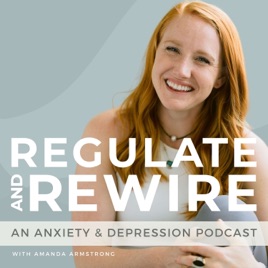
Advertise on podcast: Regulate & Rewire: An Anxiety & Depression Podcast
Rating
4.9from
This podcast has
146 episodes
Language
EnglishPublisher
Amanda ArmstrongExplicit
No
Date created
2023/02/28
Latest episode
2026/02/03
Average duration
29 min.
Release period
9 days
Description
Millions of people struggle with anxiety & depression every single day. Regulate & Rewire is where Amanda, a nervous system focused and trauma-informed practitioner, teaches you the lessons she learned on her healing journey and the tangible research-based tools she uses with clients everyday to help them regulate their nervous system & rewire their mind – in hopes of helping you do the same. Each episode features specific takeaways for you to apply to your healing journey today. Website: www.riseaswe.com
Unlock Regulate & Rewire: An Anxiety & Depression Podcast podcast Email contact info,
Listeners & Audience details
Email contact information
Direct podcast contact details

Listeners
Audience numbers & engagement insights

Audience details
Podcast Insights

Podcast episodes
Check latest episodes from Regulate & Rewire: An Anxiety & Depression Podcast podcast
Regulated Activism
2026/02/03
When the world feels like it's falling apart, how do we stay connected to ourselves while still showing up for what matters? In this episode, we're talking about collective trauma, what it actually means to be "regulated" (hint: it doesn't mean calm), and the tangible nervous system tools that can help you stay resourced during ongoing crisis. This isn't about fixing everything—it's about staying grounded enough to keep going.
In this episode, you'll learn:
What collective and vicarious trauma actually are, and how your nervous system processes witnessing suffering even through a screenWhy "regulated" doesn't mean calm—and what regulated activism actually looks like in practiceThe neuroscience behind tools like predictability, warmth, and nostalgia as primitive safety signals for your nervous systemWhy "tangible help kills the helplessness" and how micro-acts of care keep you connected and resourcedHow to practice dialectical thinking: holding both the horror and the helpers at the same time3 Takeaways:
Regulated doesn't mean calm—it means connected. You can be furious, heartbroken, and activated AND still be regulated. Regulation is about staying connected to your body, your breath, and your capacity to respond (not just react) while you feel all the feelings and fight for what matters.Tangible help kills the helplessness. When everything feels too big and overwhelming, do something small and real. Drop off coffee for a neighbor. Text a friend "thinking of you." Bake bread and share it. These micro-acts of care aren't trivial—they're how we stay connected and resourced enough to keep going.Look for the helpers—it's neuroscience, not toxic positivity. Witnessing acts of courage, kindness, and resistance activates your vagus nerve and counters compassion fatigue. Your nervous system needs evidence that while the monster is real, the protector is active too. Practice dialectical thinking: horrifying things are happening AND people are showing up for each other. Both are true.Resources mentioned:
CLICK HERE to join my monthly release class. Use the code "REGULATE" for 100% off.CLICK HERE to get 10% off my favorite phone boundary support (BRICK)Post from @meghanbreentherapy—
Looking for more personalized support?
Book a FREE discovery call for RESTORE, our 1:1 anxiety & depression coaching program (HSA/FSA eligible & includes comprehensive bloodwork)Join me inside Regulated Living, a mental health membership and nervous system healing space (sliding scale pricing available)Order my book, Healing Through the Vagus Nerve today!*Want me to talk about something specific on the podcast? Let me know HERE.
Website: https://www.regulatedliving.com/podcast
Email: [email protected]
Instagram: @amandaontherise
TikTok: https://www.tiktok.com/@amandaontherise
Regulating In A World On Fire (Repost)
2026/01/27
New intro, repeat episode of one I published almost exactly a year ago. While the examples I offer are a year old, the suggestions offered apply just as much to some of the chaos we're all experiencing this week as well. Hit play on this episode again, see what resonates, and I'll be back next week with some new thoughts.
-
In this episode of Regulate & Rewire, we explore how to navigate collective trauma and maintain mental health in a world that feels increasingly chaotic. From California wildfires to global conflicts, we discuss why our ancient nervous systems struggle with modern information overload and offer practical strategies for staying regulated while staying informed. Learn about the concept of "conscious oscillation," tips for healthy information consumption, and why finding moments of joy isn't just allowed - it's necessary for sustained resilience and impact.
Three Takeaways:
Our nervous systems evolved for a world of immediate, local threats - not the constant stream of global catastrophes we now face through modern technology. Understanding this mismatch helps explain why we feel overwhelmed and gives us permission to set boundaries.Balance Information and Regulation: Limit news consumption, take meaningful action when you can, and prioritize rest and joy to keep your nervous system balanced.Finding joy and allowing moments of lightness during dark times isn't privilege or denial - it's a biological necessity for nervous system regulation. Conscious oscillation between engagement and rest helps us stay resilient and effective.Website: https://www.regulatedliving.com/podcast
Email: [email protected]
Instagram: @amandaontherise
TikTok: https://www.tiktok.com/@amandaontherise
Why 'New Year, New You' Backfires (Nervous System Edition)
2026/01/20
Why does “New Year, New You” feel so motivating… and then fall apart just weeks later? In this episode, we explore why New Year’s resolutions often backfire—not because you lack discipline or willpower, but because they ask your nervous system to do something it’s biologically wired to resist. Through a nervous-system and mental-health lens, we unpack why massive change feels threatening, how winter is a season of rest (not reinvention), and what a more sustainable, regulated approach to the new year actually looks like. This is an invitation to move away from pressure and performance—and toward safety, support, and gentle, lasting change.
In This Episode, You’ll Learn:
Why your nervous system resists big, fast change—and why that resistance is protection, not self-sabotageHow “New Year, New You” puts your body into threat mode and leads to burnout, not transformationWhy January is biologically a season for rest and reflection—not aggressive goal-settingThe four phases of the Resolution Crash: Mobilization, Sustainable Burn, the Crash, and the Shame SpiralHow to use "laughably small" habits to bypass your internal alarm system and create lasting change3 Takeaways:
Resistance Is Protection
When your nervous system pushes back against change, it’s not because you’re broken—it’s because your body equates familiarity with safety. Change requires resourcing, not force.Winter Is Not a Growth Season
Nature rests in winter, and so do we. Trying to overhaul your life in January asks your body to act like it’s spring—when it’s wired for conservation, reflection, and repair.Measure Regulation, Not Performance
Lasting change doesn’t come from dramatic overhauls. It comes from tiny additions, moments of safety, and choosing regulation over all-or-nothing goals.
—
Looking for more personalized support?
Book a FREE discovery call for RESTORE, our 1:1 anxiety & depression coaching program (HSA/FSA eligible & includes comprehensive bloodwork)Join me inside Regulated Living, a mental health membership and nervous system healing space (sliding scale pricing available)Order my book, Healing Through the Vagus Nerve today!*Want me to talk about something specific on the podcast? Let me know HERE.
Website: https://www.regulatedliving.com/podcast
Email: [email protected]
Instagram: @amandaontherise
TikTok: https://www.tiktok.com/@amandaontherise
What I'm NOT Taking Into the New Year
2026/01/06
In Part 2 of our New Year mini-series, we’re moving beyond the "New Year, New You" hype to have a more honest conversation about what it actually looks like to let go. Following Amanda's annual NYE Circle event, she's sharing the raw, real list of patterns and beliefs that she is choosing to leave behind.
From the "addiction to urgency" to the "shoulds" we place on our grieving bodies, this episode is an invitation to gently acknowledge and begin to untangle the habits or patterns that once kept us safe but no longer serve us.
Resources Mentioned:
The Brick: That little device I'm using to help curb my phone addiction. (Get 10% off via this link: https://www.getbrick.app/AMANDA99695) *Disclosure: This is link an affiliate link, meaning I may earn a small commission at no extra cost to you. I only recommend tools I personally use and trust to support my own nervous system.Annual NYE Circle: My 6th-year community ritual for intentional reflection. If you'd like to participate in the full NYE Circle you can CLICK HERE to access the replay which will be available until January 11th.—
Looking for more personalized support?
Book a FREE discovery call for RESTORE, our 1:1 anxiety & depression coaching program (HSA/FSA eligible & includes comprehensive bloodwork)Join me inside Regulated Living, a mental health membership and nervous system healing space (sliding scale pricing available)Order my book, Healing Through the Vagus Nerve today!*Want me to talk about something specific on the podcast? Let me know HERE.
Website: https://www.regulatedliving.com/podcast
Email: [email protected]
Instagram: @amandaontherise
TikTok: https://www.tiktok.com/@amandaontherise
Completing the Year (A Somatic Closure Practice)
2025/12/31
The calendar says the year is over, but has your nervous system caught up? In Part 1 of our New Year’s Mini Series, we’re moving away from high-pressure goal setting and "new year, new you" rhetoric. Instead, we are creating a "pocket of space" to let the previous year actually complete.
Our bodies don’t experience time through dates; they experience it through processed or unprocessed sensations. Join me for a condensed version of my annual New Year’s Eve Circle—a somatic practice designed to help you exhale, acknowledge what you’ve carried, and release what no longer belongs to you before moving forward.
If you'd like to participate in the full NYE Circle you can CLICK HERE to access the replay which will be available until January 11th.
How to Engage With This Episode:
Passive: Simply listen and let the reflections move through you like a meditation.Active: Grab a pen and paper, light a candle, and use the pauses to engage with the journaling prompts and release ritual.Now hit play to join me for a guided experience where we will regulated, reflect, release, and resource.
—
Looking for more personalized support?
Book a FREE discovery call for RESTORE, our 1:1 anxiety & depression coaching program (HSA/FSA eligible & includes comprehensive bloodwork)Join me inside Regulated Living, a mental health membership and nervous system healing space (sliding scale pricing available)Order my book, Healing Through the Vagus Nerve today!*Want me to talk about something specific on the podcast? Let me know HERE.
Website: https://www.regulatedliving.com/podcast
Email: [email protected]
Instagram: @amandaontherise
TikTok: https://www.tiktok.com/@amandaontherise
My Dumpster Fire Day & An Invite to My NYE Circle
2025/12/17
Sign up for the NYE Circle – Sunday, December 28th at 8 PM ET - CLICK HERE
In this episode I yap about my dumpster fire day. Thought I had childcare, I didn't. My 2 year old had 47 meltdowns. My 4mo old joined me for the membership Q&A— cute but not ideal. I found out a full bag of Christmas gifts got accidentally taken out with the trash last night. My son pulled our fish tank down off the shelf. Gallons of water and tiny rocks EVERYWHERE, a gash in his leg, but luckily the fish survived and is currently swimming around in a soup bowl. Andddd tomorrow is a big grief anniversary for me.
I will be crying into a cookie immediately after hitting post on this podcast but before I do I'll invite you to my NYE Circle event happening on the 28th. I share those details the last 10 or so minutes of the episode.
—
Looking for more personalized support?
Book a FREE discovery call for RESTORE, our 1:1 anxiety & depression coaching program (HSA/FSA eligible & includes comprehensive bloodwork)Join the Regulated Living Membership waitlist to be first to know when doors open again!Order my book, Healing Through the Vagus Nerve today!Website: https://www.regulatedliving.com/podcast
Email: [email protected]
Instagram: @amandaontherise
TikTok: https://www.tiktok.com/@amandaontherise
How to Manage Seasonal Depression
2025/12/10
In this episode (a repeat conversation from 2023), Amanda dives into a common struggle during the winter months: Seasonal Affective Disorder (SAD), or seasonal depression. She shares listener struggles, the science behind how light impacts our mood, and actionable, research-backed tools to help you navigate the winter blues.
In this episode you'll learn:
The definition of Seasonal Affective Disorder (SAD) and why the decrease in daylight hours is the biggest contributing factor.The three empirically supported treatments for SAD: Antidepressant medication, Bright Light Therapy, and CBT-SAD.The fascinating science behind how melanopsin cells in the eye and retinal responsivity link directly to your vulnerability to seasonal depression.Why the single most high-payoff habit for mental and physical health—especially in winter—is getting morning sunlight exposure.Practical guidance on using a Bright Light Therapy (Happy Lamp) device as an accessible, research-backed alternative to natural light.3 Takeaways:
SAD is linked to decreased daylight hours, but understanding your unique contributing factors (biological vs. seasonal stressors) is essential for choosing the most supportive intervention.New research points to lower retinal effectiveness to light in winter months as a possible biological vulnerability for SAD, suggesting why light-based interventions are often highly effective.Daily morning sunlight is essential for optimal health of every human, but appears especially supportive for those struggling with SAD, who may benefit from supplementing with a bright light therapy pad.—
📘 Other Resources:
"Happy Light" Recommendations: Verilux® HappyLight w/ Timer ($39)Other resources:Understanding and Treating Seasonal Affective Disorder | UPMC HealthBeat PodcastDr. Samer Hattar: Timing Light, Food, & Exercise for Better Sleep, Energy & Mood | Huberman Lab #43Using Light to Optimize Health | Huberman Lab Podcast #68 (helpful times stamp @ ~ 1:12:00), Huberman Lab Light ProtocolThe Role Of Environmental Light ExposureMelanopsin Driven Pupil Responses and Physical ActivityWebsite: https://www.regulatedliving.com/podcast
Email: [email protected]
Instagram: @amandaontherise
TikTok: https://www.tiktok.com/@amandaontherise
Regulation or Avoidance? How to Tell the Difference
2025/12/02
We all bump into the blurry line between regulating and avoiding. In this episode, Amanda unpacks the difference between soothing your nervous system and emotionally bypassing—using a real client story to show how even “healthy” tools can become numbing when the intention and impact are off. Learn how to choose between regulation and resourcing, and try a simple check-in to turn coping back into connection.
In this episode, you’ll learn:
The clear definitions of regulation (state-shifting) vs avoidance/numbing (state-escaping)Why the same behavior (TV, scrolling, exercise, breathwork) can heal or hide depending on intention & impactThe difference between regulating and resourcing—and when each is appropriateHow “pop healing” can unintentionally promote bypassing (and what to do instead)A quick two-question experiment to notice whether you’re shifting away from or expanding capacity for what you feel3 Takeaways:
The same behavior can heal or hide, intention & impact are the tells.
Regulation restores presence and energy; avoidance suppresses and disconnects. Ask: Does this make me more present or less present?We need both regulating and resourcing tools. Use regulation when a state feels too big or inaccurate to the moment; use resourcing to expand your ability to be with what’s here safely.Awareness is the work. Before you reach for a tool, pause: What am I feeling? What’s my intention? That tiny check-in turns numbing into nourishment and coping into true regulation.—
Looking for more personalized support?
Book a FREE discovery call for RESTORE, our 1:1 anxiety & depression coaching program (HSA/FSA eligible & includes comprehensive bloodwork)Join me inside Regulated Living, a mental health membership and nervous system healing space (sliding scale pricing available)Order my book, Healing Through the Vagus Nerve today!*Want me to talk about something specific on the podcast? Let me know HERE.
Website: https://www.regulatedliving.com/podcast
Email: [email protected]
Instagram: @amandaontherise
TikTok: https://www.tiktok.com/@amandaontherise
Your Invitation to Regulated Living
2025/11/25
This week, I’m pulling back the curtain on the Regulated Living Membership—because doors are officially open.
If you've been stuck in survival mode, if therapy and mindset work helped you understand the why but didn’t give you a way forward—this is for you.
In today’s episode, I walk you through the what, why, and who of the membership. You’ll hear real member stories, learn what makes this space different, and get a behind-the-scenes look at Course Club—our 5-week guided orientation that starts Monday.
We talk:
Why your symptoms make senseWhat traditional mental health models are missingThe difference between Restore and the membershipWhat’s inside, how it works, and how to know if it’s for youEnrollment closes Saturday at midnight. This episode is your personal invitation to join us—no pressure, just a chance to feel seen, supported, and grounded again.
🔗 Learn more & join: https://regulatedliving.com/membership
💌 Questions? email [email protected]
Website: https://www.regulatedliving.com/podcast
Email: [email protected]
Instagram: @amandaontherise
TikTok: https://www.tiktok.com/@amandaontherise
When Self-Discipline Is Self-Care
2025/11/18
Sometimes, the kindest thing you can do for your nervous system isn’t to rest—it’s to move. This episode is for the ones who don’t relate to overachieving or overfunctioning because they’re on the other end of the spectrum: the stuck, the shut down, the ones who can’t seem to get going no matter how much they want to.
If motivation feels impossible and even small tasks feel like climbing a mountain, this episode will help you understand why—and how to begin again with gentleness and devotion instead of shame.
In this episode, you’ll learn:
Why low energy, lack of motivation, and “laziness” are actually physiological responses, not character flawsThe nervous system science behind shutdown and how it traps you in inactionWhy waiting for motivation doesn’t work—and what to do insteadHow to reclaim the word discipline as an act of devotion, not punishmentThe 5-Minute Win: a simple practice to help you break inertia and start rebuilding energy3 Takeaways:
For a shut-down system, discipline is self-care. Gentle action—one small, consistent thing—is the medicine that restores motion and energy.Motivation is the result, not the prerequisite. Waiting to “feel like it” keeps you stuck. Taking one tiny action is the jumpstart that recharges your system.Reframe discipline as devotion. It’s not a drill sergeant yelling “get up,” it’s the loving inner parent or part saying, “Let’s do one small thing together because you deserve to feel better.”—
Looking for more personalized support?
Book a FREE discovery call for RESTORE, our 1:1 anxiety & depression coaching program (HSA/FSA eligible & includes comprehensive bloodwork)Join me inside Regulated Living, a mental health membership and nervous system healing space (sliding scale pricing available)Order my book, Healing Through the Vagus Nerve today!*Want me to talk about something specific on the podcast? Let me know HERE.
Website: https://www.regulatedliving.com/podcast
Email: [email protected]
Instagram: @amandaontherise
TikTok: https://www.tiktok.com/@amandaontherise
Why You Drop Self-Care When Life Gets Good
2025/11/11
Today's conversation is for the Type A, high achieving, often overwhelmed and anxious nervous system folk. Amanda talk about the pattern we often see where we stop our self-care habits when we feel good, but stopping them often puts us back into a spiral of anxiety and the story of, "why do I do this? I'm just not disciplined or motivated enough, etc..." But what if that’s not the problem at all?
In this episode, we reframe what it means to “stay consistent,” explore why many of us use overwhelm as our barometer, and talk about how true discipline might actually look like doing less, not more.
3 Takeaways:
1. Maybe you're not falling back into "bad habits" - you're overcommitting until self-care becomes impossible. When life gets good, we reflexively add more to our plates instead of maintaining what's working. The problem isn't lack of discipline; it's trying to fit 60 hours of life into 24 hours of human capacity.
2. Not all regulation tools are meant to be forever - and that's okay. Healing requires adjusting your “protocol.” Just like you don't need an ankle brace after your sprain heals, some nervous system supports are temporary medicine for acute times. The key is knowing which practices are your anchors (the ones you need even when you're well) versus which ones can naturally fade as you heal.
3. Redefine discipline: Maybe it's not the choice to do more, it's the courage to do less. True discipline means saying no to opportunities even though you could squeeze them in, maintaining white space in your calendar even though it makes you anxious, and remembering that feeling good isn't permission to overwhelm yourself again. Ask yourself: "At what cost?" before saying yes.
—
Looking for more personalized support?
Book a FREE discovery call for RESTORE, our 1:1 anxiety & depression coaching program (HSA/FSA eligible & includes comprehensive bloodwork)Join me inside Regulated Living, a mental health membership and nervous system healing space (sliding scale pricing available)Order my book, Healing Through the Vagus Nerve today!*Want me to talk about something specific on the podcast? Let me know HERE.
Website: https://www.regulatedliving.com/podcast
Email: [email protected]
Instagram: @amandaontherise
TikTok: https://www.tiktok.com/@amandaontherise
Guided Regulation Practice for Anxiety
2025/11/04
Today’s going to be a little bit different, instead of our normal educational chat this is going to be a guided experiential episode that you can come to when you’re feeling activated to find some support in getting more regulated through various somatic exercises. If you’re listening in the car or while doing something else, come back to this episode then you can be more fully present with the guided exercises. Hit play to join me for this guided regulation practice!
—
Looking for more personalized support?
Book a FREE discovery call for RESTORE, our 1:1 anxiety & depression coaching program (HSA/FSA eligible & includes comprehensive bloodwork)Join me inside Regulated Living, a mental health membership and nervous system healing space (sliding scale pricing available)Order my book, Healing Through the Vagus Nerve today!*Want me to talk about something specific on the podcast? Let me know HERE.
Website: https://www.regulatedliving.com/podcast
Email: [email protected]
Instagram: @amandaontherise
TikTok: https://www.tiktok.com/@amandaontherise
dYsReGuLaTiOn & Activation Are Not The Same Thing
2025/10/29
I (Amanda) signed up to chaperone my kindergartener's field trip. Then childcare fell through. Suddenly I'm responsible for my feral 2-year-old AND five other 5-year-olds. My nervous system panicked—heart racing, adrenaline spiking, pure chaos mode. But here's the thing: I wasn't dysregulated. In this episode, I'm using my chaotic morning to show you what nervous system regulation actually looks like in real life (hint: it's not about staying calm).
In this episode, you'll learn:
Why activation and dysregulation are NOT the same thing—and why confusing them keeps you stuckThe real questions that determine if you're regulated: Can you reset? How quickly? How long do you stay stuck?What to do when life throws you a curveball and your nervous system ramps upWhy building capacity matters more than eliminating stress
3 Takeaways:
Activation is not dysregulation. You can feel stressed, overwhelmed, or burnt out and still be regulated—regulation is about whether you can reset and move through it, not whether you feel it at all.The real markers of regulation are flexibility and resilience. Ask yourself: How long do I stay activated after the stressor passes? What's my capacity for discomfort or change without spiraling? Can I still access choice when I'm activated?A regulated nervous system isn't a calm nervous system—it's a flexible one. It can access energy when you need it and release it when you don't. That's a skill you can build.—
Looking for more personalized support?
Book a FREE discovery call for RESTORE, our 1:1 anxiety & depression coaching program (HSA/FSA eligible & includes comprehensive bloodwork)Join me inside Regulated Living, a mental health membership and nervous system healing space (sliding scale pricing available)Order my book, Healing Through the Vagus Nerve today!*Want me to talk about something specific on the podcast? Let me know HERE.
Website: https://www.regulatedliving.com/podcast
Email: [email protected]
Instagram: @amandaontherise
TikTok: https://www.tiktok.com/@amandaontherise
My Postpartum Crashout (and the Robot That Talked Me Off the Ledge)
2025/10/21
Ever feel like you're failing, no matter how hard you try to organize, optimize, or just push through? In this deeply personal and vulnerable episode, Amanda pulls back the curtain on her own postpartum season—navigating life as a new mom of three while running a business. She shares the story of a recent "crash out" spiral and the unlikely tool that gave her the reality check she desperately needed.
In this episode, you'll learn:
Why the feeling that you’re constantly "failing" is often a sign of an impossible equation, not a personal flaw, and how to spot the signs of a capacity crash out.A practical, step-by-step exercise to get an objective look at your true workload vs. your actual capacity (and why a robot might be the mirror you need).How to dismantle the cultural myth of "doing it all" and start separating your self-worth from your productivity.The two strategic choices you have when the math doesn't add up, and how to start implementing them with self-compassion.
3 Takeaways:
Do the Math on Your Life, you might be trying to solve an impossible equation without even realizing it.You have two options: Do less or get more support (usually both)You're not the problem, the expectation is. Sometimes the most regulated, aligned, grounded thing you can do is tell yourself the truth about what’s possible and what’s not.
Website: https://www.regulatedliving.com/podcast
Email: [email protected]
Instagram: @amandaontherise
TikTok: https://www.tiktok.com/@amandaontherise
Eldest Daughter Syndrome
2025/10/14
A deeply personal exploration of eldest daughter syndrome—the invisible load that comes with being the responsible one, the second mom, the example. If you're an eldest daughter who learned that being helpful mattered more than being carefree, this episode is for you. We explore how love and responsibility got tangled up early on, the connection to anxiety and depression, and the path toward healing while honoring both the gifts and the weight of this role.
In this episode, you'll learn:
Why eldest daughters are more likely to struggle with anxiety and high-functioning perfectionismThe research behind birth order, gender, and anxiety ratesThe "wolf pack metaphor" and why eldest daughters often walk in front, taking the hitsHow nervous system regulation creates space to hold both/and truths about your childhoodPractical steps for healing over-responsibility and self-abandonment patterns3 Takeaways:
The Eldest Daughter to High-Functioning Anxiety Pipeline is Real: Research shows firstborns with siblings are 48% more likely to be diagnosed with anxiety.You Can Love Your Role AND Grieve the Cost: It's not either/or—you can have had good parents AND experienced unintentional hurt. You can cherish being the big sister AND be healing from the weight of it. When your nervous system settles, you gain the capacity to hold both truths without one invalidating the other.Healing Requires Reclaiming Play and Rest: Far too early, many eldest daughters stopped playing and started managing. Healing means experimenting with "good enough," letting things go undone, and proving to your nervous system that rest and play are survivable—not frivolous.Practical Steps for Healing:
Name the pattern out loud: "I learned to be hyper-responsible and that my worth comes from what I do"Practice both/and thinking rather than either/orLearn to regulate your nervous system to access nuance and self-compassionExperiment with asking for help in low-stakes situations // Ask yourself: "What would 'good enough' look like today?"Play 1% more, rest 1% moreIf you have kids, model that responsibility doesn't mean carrying everything alone—
Looking for more personalized support?
Book a FREE discovery call for RESTORE, our 1:1 anxiety & depression coaching program (HSA/FSA eligible & includes comprehensive bloodwork)Join me inside Regulated Living, a mental health membership and nervous system healing space (sliding scale pricing available)Order my book, Healing Through the Vagus Nerve today!*Want me to talk about something specific on the podcast? Let me know HERE.
Website: https://www.regulatedliving.com/podcast
Email: [email protected]
Instagram: @amandaontherise
TikTok: https://www.tiktok.com/@amandaontherise
Podcast reviews
Read Regulate & Rewire: An Anxiety & Depression Podcast podcast reviews
lssweet 2025/12/16
Someone who understands
I feel very thankful to have found this podcast. I’m going through a very hard time and this has definitely helped me feel not so alone.
Deb Vrabel 2025/10/22
Found it when most needed
This podcast has helped me get through a very challenging time and given me greater understanding of how I can help some people I love.
Purposeinthepain 2025/07/05
What a find!!
This podcast is brilliant! I love the simplicity of the tools and the relatable stories! Thank you for sharing your gifts with the world. My son has m...
athenaphoto 2025/06/25
Exactly what I needed
Why could I not find this podcast sooner!? Listening to Amanda calmly explain the neuroscience about why we do what we do has helped me feel less alon...
MsDawntreader 2025/06/04
Exceptional!
Insightful, practical, heartfelt. Wish I had found her sooner. You just feel like you’re in good hands listening to her wisdom.
Gina OC 2025/03/28
A Must listen
This is a MUST listen for anyone suffering from anxiety and depression and/or anyone who loves someone with anxiety and depression. Amanda Armstrong ...
Adclifford19 2025/03/03
ADC27
I just with I would have found it sooner. All my symptoms make so much more sense and I can see now why I’ve felt stuck in therapy for so so long. I’l...
Mom2WhitandBeau 2025/02/28
Incredibly Helpful
This podcast has been incredibly helpful to me when it comes to learning how to regulate my nervous system. I love all of the practical and tangible t...
MLGM123 2025/02/28
Game changer
This podcast is the first to help me understand what is happening in my body and mind when these emotions arise, untangle their roots, and lessen them...
DeniseS87MN 2025/01/29
Thank You
This podcast has given me so many tools that I use to help regulate my nervous system. Thank you Amanda for teaching me so much!
Podcast sponsorship advertising
Start advertising on Regulate & Rewire: An Anxiety & Depression Podcast relevant audience podcasts
You may also like to advertise on these Podcasts

4.8605604
Get Rich Education
Real Estate Investing with Keith Weinhold

4.794798
David Feldman Show
David Feldman
4.7231233
Conversations with Peter Boghossian
Peter Boghossian
4.8161147
Heal Yourself. Change Your Life™
Brandy Gillmore
4.862919
SISTERHOOD OF SWEAT - Motivation, Inspiration, Health, Wealth, Fitness, Authenticity, Confidence and Empowerment
Linda Mitchell
4.71031261
Finding the Throughline with Kate Hanley
Kate Hanley

4.569596
Age Better with Liz Earle
Liz Earle
4.8188363
L8night with Choccy
L8night with Choccy
4.7236100
Chris Fabry Live
Moody Radio

4.271500
94WIP Middays with Hugh Douglas and Joe Giglio
Audacy