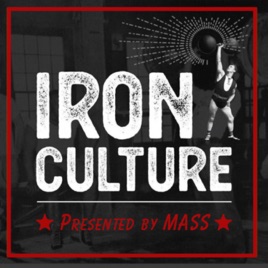
Advertise on podcast: Iron Culture presented by MASS
Rating
4.9from
This podcast has
161 episodes
Language
EnglishPublisher
MASS Research ReviewExplicit
No
Date created
2023/09/17
Latest episode
2026/10/06
Average duration
79 min.
Release period
7 days
Description
Iron Culture was started as a means of exploring the world of physical culture and attempting to distill a unified philosophy of lifting and to help listeners find greater meaning from the iron. It focuses on dispensing practical, useful information to the listener, bouncing from history, to philosophy, to contemporary lifting culture issues, to science. Iron Culture is proudly presented by the MASS Research Review.
Unlock Iron Culture presented by MASS podcast Email contact info,
Listeners & Audience details
Email contact information
Direct podcast contact details

Listeners
Audience numbers & engagement insights

Audience details
Podcast Insights

Podcast episodes
Check latest episodes from Iron Culture presented by MASS podcast
BONUS: The Missing Dimension to Optimum Sports Nutrition? - Eric Helms & Steve Hall
2026/10/06
In this episode, Eric Helms and Steve Hall explore the nature of aging, the importance of self-awareness, and practical insights into nutrition and training for bodybuilders.
They share personal stories, scientific perspectives, and coaching tips to help listeners optimize their health and performance.
Catch new Iron Culture episodes every Tuesday at 5:30 pm eastern time!
Be sure to use code "MRR10" for 10% off your order at elitefts.com
Iron Culture is proudly presented by the MASS Research Review
massresearchreview.com
Chapters
00:00 Introduction and reflections on aging
02:03 The linear acceleration towards death
03:52 Microplastics and health concerns
05:54 Leadership, responsibility, and feeling like an adult
10:04 The impact of losing a parent and human fallibility
14:58 Coaching Winnie and competition prep insights
24:11 Meal timing, protein intake, and practical nutrition
35:50 The science of nutrient timing and meal frequency
49:49 Constraints, individualization, and coaching philosophy
59:57 Closing thoughts and future topics
Ep 391 - What Can You REALLY Learn From Pre-Steroid Era Bodybuilders? (with Dr. Conor Heffernan)
2026/09/30
This episode looks at bodybuilding before steroids became widespread, arguing that the era is far more useful (and more complicated) than the usual “pure, simple, natty golden age” story. Drs Eric Helms and Conor Heffernan break down how strength sport, judging standards, gym access, and culture shaped physiques from the 1940s through the 1950s. The big takeaway is that early bodybuilding was not a direct comparison to modern natural bodybuilding. The sport was tied to Olympic weightlifting, evaluated with very different criteria, and influenced by training tools and social norms that changed the entire game.
Catch new Iron Culture episodes every Tuesday at 5:30 pm eastern time!
Be sure to use code "MRR10" for 10% off your order at elitefts.com
Iron Culture is proudly presented by the MASS Research Review
massresearchreview.com
Chapters
0:00 Intro
5:20 The "pre-steroid era" myth
13:48 Using history to break the rules
15:22 When did steroids actually arrive?
29:13 Were the silver-era physiques natural?
32:11 What the average lifter really looked like
39:33 Why old physiques look so different
43:02 Photography before Photoshop
51:37 Inside the Mr. America contest
1:05:27 Training shifts & the Weider–Hoffman rivalry
1:09:21 Equipment & accessibility
1:21:24 Why training volume was limited
1:22:41 The machine age changes everything
1:31:43 How your entry point shapes you
1:37:05 Lessons from the pre-steroid era
1:42:36 The "banned" lifts that were once normal
1:44:50 Wrap-up
Ep 390 - Is Muscle Loss Really a Big Deal?
2026/09/23
Bodybuilders are laser-focused on retaining as much muscle as possible while dieting, and for very good reason. In that context, the smallest details matter. But what about everybody else?
This episode explores a hot take on weight loss, lean mass loss, and why the usual fear of losing muscle may be overstated in the context of successful long-term weight loss. Drs Eric Helms and Eric Trexler break down what lean mass loss actually represents, how body composition changes in obesity differ from bodybuilding or weight cycling, and why the health benefits of sustained fat loss substantially outweigh moderate losses in fat-free mass.
Catch new Iron Culture episodes every Tuesday at 5:30 pm eastern time!
Be sure to use code "MRR10" for 10% off your order at elitefts.com
Iron Culture is proudly presented by the MASS Research Review
massresearchreview.com
Chapters
00:00 Introduction
15:16 Helms' hot take on losing lean mass
19:02 Defining lean mass loss
23:28 Why obesity increases fat-free mass
30:14 Temporary versus lasting muscle loss
35:05 DEXA versus MRI measurements
42:12 Prioritizing function and quality of life
47:29 Obesity, stigma, and public health
73:35 Weighing health benefits against muscle loss
Ep 389 - What the Erics Actually Do
2026/09/16
In this episode, Eric Helms and Eric Trexler share their current approaches to diet, training, and supplementation, emphasizing pragmatic strategies, individualization, and the importance of evidence-based practice. They discuss how constraints, habits, and intrinsic motivation shape their approaches to fitness, offering valuable insights for both athletes and everyday lifters.
Catch new Iron Culture episodes every Tuesday at 5:30 pm eastern time!
Be sure to use code "MRR10" for 10% off your order at elitefts.com
Iron Culture is proudly presented by the MASS Research Review
massresearchreview.com
Chapters
00:00 Introduction and episode overview
00:04 Introduction to current fitness and diet approaches
02:13 Eric Helms discusses his role as co-director at Sprints
04:00 The importance of legacy and impact in fitness and research
06:04 Transition to practical training and nutrition strategies
10:45 Current training routines and scheduling challenges
16:05 Training volume, frequency, and adaptation
22:44 Fasted training, resilience, and human adaptability
26:16 Frequency and assessment of deloads
31:32 Personal training journeys and health challenges
36:38 Training habits, constraints, and optimizing within limits
43:20 Philosophy of motivation, identity, and long-term adherence
50:49 Balancing evidence-based principles with real-world constraints
51:46 Eric Helms discusses his current diet and body composition
52:13 The importance of a holistic approach to dieting
52:25 Adjustments in diet based on body composition and goals
53:24 Caloric intake and daily habits
55:23 Meal structure and food choices
57:20 Flexible eating and meal planning
58:55 Strategies for gaining or losing weight
01:02:03 Impact of medication and food addiction on eating behavior
01:04:51 Behavioral strategies during extreme dieting
01:07:37 Supplements and their role in performance and health
01:19:15 Cardio, step counts, and cardiovascular health
01:24:34 Training adaptations and managing physical constraints
01:29:17 Balancing resistance training, cardio, and lifestyle constraints
01:34:05 Final thoughts on personalized, evidence-based practice
BONUS - Drop Sets & Myo-Reps: The Best Way to Use Them (w/ Eric Helms & Steve Hall)
2026/09/09
In this episode, Eric Helms and Steve Hall discuss training strategies, auto-regulation, the role of cardio in bodybuilding, and practical techniques for efficient training.
They share insights from their recent training camps and personal experiences to help listeners optimize their workouts and recovery.
Catch new Iron Culture episodes every Tuesday at 5:30 pm eastern time!
Be sure to use code "MRR10" for 10% off your order at elitefts.com
Iron Culture is proudly presented by the MASS Research Review
massresearchreview.com
Chapters
00:00 Introduction and episode overview
01:55 Training environment and mental focus during camps
03:57 Eric and Steve discuss recent training experiences
06:50 Auto-regulation and its role in effective training
11:59 Time-saving techniques: drop sets, clusters, and rest pause
19:49 Cardio in bodybuilding: health benefits and recovery
29:56 Monitoring performance and avoiding overtraining
39:58 Practical tips for implementing efficient training methods
49:58 Reflections on training, recovery, and future plans
Ep 388 - What Most Bodybuilders and Their Coaches Miss (ft. Richard Collins)
2026/09/03
In this episode, Eric Helms and Richard Collins explore the art and science of coaching, emphasizing the importance of motivation, rapport, and tailored strategies in achieving long-term success in fitness and bodybuilding. In this episode, Richard shares his extensive experience in physique sport coaching, mental performance training, and how athletes and coaches can optimize their mindset and preparation for peak performance.
Check out Richard's instagram (richard_collinscoach) to stay up to date with his work.
Catch new Iron Culture episodes every Tuesday at 5:30 pm eastern time!
Be sure to use code "MRR10" for 10% off your order at elitefts.com
Iron Culture is proudly presented by the MASS Research Review
massresearchreview.com
Chapters
00:00 Introduction and guest background
01:53 What is coaching and why it matters
04:04 The importance of motivation and internal drive
07:04 Building rapport and trust with clients
10:10 Transition from sports to bodybuilding coaching
14:53 Differences in motivation between athletes and general clients
19:56 Creating internal motivation in clients
25:07 The role of accountability and standards
29:54 The impact of emotional intelligence and relationship building
34:58 Misconceptions about tough love and discipline
40:14 The importance of understanding client context
45:04 Practical strategies for long-term adherence
49:55 Lessons learned from sports coaching
55:09 The value of humility and continuous learning
01:00:12 Closing thoughts and key takeaways
Ep 387 - Energy Cost of Building Muscle
2026/08/26
In this episode, Eric Trexler and Eric Helms explore the energetic cost of building human skeletal muscle, discussing recent research, practical implications, and misconceptions about muscle growth and energy expenditure.
Relevant papers:
https://pubmed.ncbi.nlm.nih.gov/31482093/
https://pubmed.ncbi.nlm.nih.gov/37914977/
https://www.biorxiv.org/content/10.64898/2026.08.17.745156v1.full.pdf
Catch new Iron Culture episodes every Tuesday at 5:30 pm eastern time!
Be sure to use code "MRR10" for 10% off your order at elitefts.com
Iron Culture is proudly presented by the MASS Research Review
massresearchreview.com
Chapters
00:00 Introduction
01:52 Powerlifting shout-out
11:55 Introduction to new paper on energetic cost of building muscle
20:01 Components of muscle tissue building and their energy costs
22:59 Practical implications of the 3500 calorie rule
30:05 The five additive components of muscle growth energy cost
33:49 Variability in individual energy expenditure responses
40:12 Limitations and future directions in research
50:10 Summary and concluding thoughts
Ep 386 - Sleep, Hypertrophy, and Creatine
2026/08/20
Trexler and Helms dig into sleep and how it intersects with body composition and supplementation. They open on the sleep-and-lifting landscape, then work through the frequently cited 2010 study on insufficient sleep and fat loss, laying out its design and the details behind its dramatic-sounding numbers. From there they discuss what the broader literature does and doesn't establish, the acute effects of sleep restriction on power, skill, and pain perception, and observational data — including sleep patterns in hunter-gatherer societies and among elite athletes — plus the relationship between sleep duration and sleep efficiency. The back half turns to supplementation. They trace the history of research on creatine and sleep, from early findings that creatine might reduce sleep need to newer work on brain creatine under sleep deprivation. This leads into a crossover trial testing caffeine and creatine against a sleep-deprivation cognitive challenge, its findings on rugby passing accuracy, and how to interpret an isolated positive result on a little-studied question. They cover a more recent high-dose replication, then close with the practical side — creatine dosing, the common report that creatine disrupts sleep, and caffeine timing — before wrapping up.
Join us for a live recording of Iron Culture! We go live Tuesdays at 5:30 pm eastern time.
Be sure to use code "MRR10" for 10% off your order at elitefts.com
Iron Culture is proudly presented by the MASS Research Review
massresearchreview.com
Chapters
0:00 Intro
9:44 Sleep & body composition
11:16 Unpacking the famous 2010 sleep study
20:52 The blind spot in the sleep literature
23:04 Sleep restriction, power, skill & pain
27:20 Sleep duration vs. sleep efficiency
31:45 The big takeaway on sleep & gains
34:57 Creatine & sleep: the research history
41:22 The caffeine vs. creatine study
44:47 What the study found
54:21 A newer high-dose replication
1:08:26 Practical application: dosing, timing & sleep complaints
1:15:44 Wrap-up
Ep 385 - Do Studies on Untrained Lifters Apply to Trained Lifters?
2026/08/12
Trexler and Helms dig into Helms's new MASS article, "Are studies on untrained lifters irrelevant to trained lifters?" It's built around a new umbrella review by Andy Fry and colleagues. The recurring internet claim is that most exercise research is done on untrained people, so a trained lifter is "built different" and the findings don't apply. The hosts unpack why that's mostly wrong. They start with the messy problem of defining how "trained" someone is. Then they discuss Fry's review, which reports that roughly 70% of resistance training study participants are sedentary or untrained, with fewer than 500 out of nearly 19,000 participants counting as genuinely well-trained. But the key focus of the episode is that this doesn't invalidate the research: what makes a beginner grow more will also make an advanced lifter grow more — the difference is rate, not mechanism.
Iron Culture is proudly presented by the MASS Research Review. Mostly because Helms and Trex are co-owners.
massresearchreview.com
If you're in the market for some new (ultra-high-quality) gym gear or apparel, be sure to use code "MRR10" for a 10% discount over at elitefts.com
If you'd like to submit a question for a future episode, head over to:
massresearchreview.com/ironculture
Chapters
0:00 Intro
8:25 The article: do untrained studies apply?
11:31 What does "trained" even mean?
22:26 How researchers try to define training status
25:51 Fry's approach & the McKay tiers
28:07 A review of reviews: mapping the literature
32:24 The finding: 70% untrained
37:46 Is that actually a problem?
43:44 Where meta-analyses fall short
51:27 Dose, stimulus & the maintenance threshold
58:27 Realistic rates of progress & goal-setting
1:14:51 Wrap-up: you don't need perfect
BONUS: Bulking Is Dead - Eric Helms & Steve Hall
2026/08/05
In this episode, Eric Helms and Steve Hall explore the nuances of body recomposition, optimal bulking and cutting strategies, and the science behind muscle gain and fat loss. They discuss recent research, practical insights, and debunk common myths to help athletes optimize their training and nutrition.
Iron Culture is proudly presented by the MASS Research Review. Mostly because Helms and Trex are co-owners.massresearchreview.com
If you're in the market for some new (ultra-high-quality) gym gear or apparel, be sure to use code "MRR10" for a 10% discount over at elitefts.com
If you'd like to submit a question for a future episode, head over to:massresearchreview.com/ironculture
Chapters
00:00 Audio Troubles and Nostalgia
02:47 Heat and Body Temperature During Massing
05:58 Gaining Weight: Personal Experiences and Insights
09:02 Recomposition: Understanding the Nuances
11:59 Surplus vs. Maintenance: The Anabolic Debate
14:45 The Role of Body Composition in Muscle Gain
18:05 Deficits and Muscle Gain: A Closer Look
20:53 The Impact of Training Experience on Gains
23:50 Psychology of Body Image and Muscle Growth
34:30 Evolution of Perspectives in Bodybuilding
35:30 The Surplus Dilemma: Muscle Gain vs. Fat Gain
39:35 Post-Show Recovery: Finding the Balance
43:43 The Impact of Body Fat on Muscle Growth
46:26 Psychological Aspects of Bodybuilding and Recovery
51:20 Understanding Muscle Memory and Recovery
01:04:31 The Complexity of Body Composition Studies
Ep 384 - Is Ultrasound Lying About Your Gains?
2026/07/29
A methods-focused episode about how muscle and body-composition measurements can mislead you when reading the research. The main event is a new Balshaw and colleagues paper concluding that ultrasound muscle thickness is a poor index of MRI-measured muscle growth. Trexler and Helms argue this shouldn't be read as "throw out all ultrasound research" — the real culprit is that muscle thickness is a crude one-dimensional snapshot with measurement error large enough to swamp the small changes seen in typical short studies, whereas MRI captures growth in more dimensions with better fidelity. They walk through why comparing across different dimensions and different devices matters, what researchers can do about it (bigger doses, larger samples, multiple measurements), and use the famous "sleep restriction kills your gains by 60%" study as an example of over-reading a tiny difference in ten people.
The second half turns to DEXA. Prompted by someone confused that DEXA fat mass didn't line up with the 3,500-calorie rule, they explain DEXA's three-compartment model, why it measures fat mass rather than adipose tissue, and why lean soft tissue readings are so sensitive to hydration. The practical upshot: don't build your worldview on a kilogram of day-to-day DEXA noise, be cautious using DEXA to estimate energy status, and understand that flattening a three-dimensional body into a two-dimensional scan introduces real limits. They close with an extended, tongue-in-cheek bit about trademarking "muscle journey" dimensions.
Iron Culture is proudly presented by the MASS Research Review. Mostly because Helms and Trex are co-owners.
massresearchreview.com
If you're in the market for some new (ultra-high-quality) gym gear or apparel, be sure to use code "MRR10" for a 10% discount over at elitefts.com
If you'd like to submit a question for a future episode, head over to:
massresearchreview.com/ironculture
Chapters
0:00 Intro
5:57 The paper: is ultrasound a poor muscle-growth measure?
18:04 What muscle thickness actually captures
25:38 Measurement error vs. a tiny signal
31:16 Different dimensions, different devices
37:52 What researchers should do about it
39:26 Case study: does sleep loss "kill gains"?
47:28 On to DEXA: where this started
53:26 How DEXA works & why fat mass ≠ adipose tissue
1:02:15 Why methods don't always agree
1:11:06 Water weight & the whooshing scale
1:16:43 Estimating energy status from DEXA
1:19:36 Wrap-up
Ep 383 - Q&A: Imbalances, Fatigue, & REDs
2026/07/22
In today's Q&A episode, the Erics work through a few listener questions. First they tackle upper/lower body imbalance — why lagging body parts usually call for improving training quality before adding volume, and why standout muscle groups can be maintained on surprisingly little work. Next is a long discussion on managing fatigue and exercise sequencing in high-frequency, non-traditional splits, including why the "48 hours between muscle groups" rule is more dogma than requirement and how to think about fatigue as continuous rather than categorical. The episode closes with a multifaceted question on REDs (relative energy deficiency in sport) — what it is, its warning signs, and the limits of what bloodwork can actually tell you.
Iron Culture is proudly presented by the MASS Research Review. Mostly because Helms and Trex are co-owners.
massresearchreview.com
If you're in the market for some new (ultra-high-quality) gym gear or apparel, be sure to use code "MRR10" for a 10% discount over at elitefts.com
If you'd like to submit a question for a future episode, head over to:
massresearchreview.com/ironculture
Chapters
0:00 Intro
4:25 Fixing upper/lower body imbalance
6:39 Quality before quantity
9:03 Why standout muscles hold with less work
12:25 Fatigue & sequencing high-frequency training
17:58 How to actually sequence back-to-back days
23:56 Lifting "rules" set in concrete
26:09 Are lifters too worried about fatigue?
39:34 REDs (relative energy deficiency in sport)
40:51 Liver enzymes, creatinine & training stress
46:07 Cholesterol/LDL & other markers
1:00:21 Wrap-up
Ep 382 - The Science of Building Bone (ft. Dr.Lora Giangregorio)
2026/07/15
The Erics sit down with bone health expert Dr. Lora Giangregorio, a professor of kinesiology at the University of Waterloo, to unpack what's actually known about how bone adapts to resistance training. The conversation covers why bone changes so slowly, the many sources of measurement error in DEXA scans, and why so much of the exercise-and-bone literature is underpowered and hard to interpret. Dr. G makes a central practical case: for building bone, the message shouldn't be "lift heavy" but rather "work hard." Emphasizing high effort over intimidating absolute loads lowers the barrier to entry, especially for older and osteoporotic populations, while still driving progressive overload. She argues the best current bet is combining moderate-to-high-intensity resistance training with impact work, introduced gradually on a foundation of strength. Along the way she debunks popular but weakly supported interventions, including weighted vests and whole-body vibration platforms, and discusses the difference between biological aging and simple chronic inactivity in bone loss.
Iron Culture is proudly presented by the MASS Research Review. Mostly because Helms and Trex are co-owners.
massresearchreview.com
If you're in the market for some new (ultra-high-quality) gym gear or apparel, be sure to use code "MRR10" for a 10% discount over at elitefts.com
If you'd like to submit a question for a future episode, head over to:
massresearchreview.com/ironculture
Chapters
0:00 Intro
4:13 Meet Dr. Lora Giangregorio
7:44 Why bone adapts so slowly
11:42 DEXA error & why to be skeptical
23:07 Does load matter?
33:58 "Heavy" vs "hard" & barrier to entry
42:42 What is impact training?
47:31 The science communication problem
52:55 The weighted vest myth
58:13 Muscle pull, compression & light loads
1:06:48 Do vibration platforms work?
1:09:54 Aging vs. inactivity
1:15:46 Drugs & HRT for bone
1:20:24 How the medications work
1:24:27 Wrap-up & where to find Dr. G
BONUS: Are Fitness Trackers Worth It? - Eric Helms & Steve Hall
2026/07/08
In this episode, Steve Hall and Eric Helms explore the nuances of training, recovery, and the use of technology in bodybuilding. They share insights on managing recovery, the limitations of fitness trackers, and the importance of personalized approaches to training and nutrition.
If you're in the market for some new (ultra-high-quality) gym gear or apparel, be sure to use code "MRR10" for a 10% discount over at elitefts.com
Iron Culture is proudly presented by the MASS Research Review. Mostly because Helms and Trex are co-owners.
massresearchreview.com
Chapters
00:00 Caffeine Consumption and Its Perception
03:02 Dietary Habits and Food Preferences During Prep
06:02 Understanding Energy Levels and Recovery
08:58 Psychological Aspects of Eating Behaviors
11:59 Navigating Off-Season and Recovery
15:05 Bodybuilding vs. Classic Physique Aspirations
30:29 The Journey to a Pro Card
36:06 Understanding Competitiveness in Bodybuilding
42:42 The Role of Fitness Trackers
49:29 Data-Driven Decisions in Bodybuilding
01:05:45 Recovery Strategies and Their Effectiveness
Ep 381 - Q&A: GLP-1s, Tendon Training, & Rep Ranges
2026/07/01
Trexler and Helms open with an overview of the new MASS issue (body recomposition, a protein consensus paper, reverse dieting) and a powerlifting World Championships recap before diving into a rapid-fire listener Q&A. Along the way they tackle whether protein needs scale with training volume, the science behind a supplement that's been called "Nature's Ozempic," evaluating protein quality based on food labels, dieting while chasing endurance adaptations, protecting tendons and bone when shifting from powerlifting to bodybuilding, and the myths around rep ranges and muscle shape. The back half centers on GLP-1 drugs like tirzepatide — their surprising off-label effects, who's actually a good candidate, and whether they should be banned in natural bodybuilding — before closing with a rapid-fire round on lengthened partials and the volume-versus-frequency question.
Be sure to use code "MRR10" for 10% off your order at elitefts.com
Iron Culture is proudly presented by the MASS Research Review
massresearchreview.com
Chapters
0:00 — Intro, audio gremlins & the new MASS issue
6:40 — Powerlifting news: World Championships & squat records
11:48 — Do protein requirements scale with training volume?
16:59 — PGX: is "Nature's Ozempic" actually legit?
22:49 — Protein quality & % Daily Value on food labels
26:47 — Chasing endurance adaptations while dieting in a deficit
36:52 — Protecting tendons & bone when leaving powerlifting
45:37 — Rep ranges, muscle "hardness" & fiber-type myths
50:21 — Tirzepatide & GLP-1s: are they really the wonder drug?
1:01:08 — Should GLP-1s be banned in natural bodybuilding?
1:11:11 — Rapid fire: lengthened partials & the volume/frequency question
1:15:39 — Wrap-up & sign-off
Podcast reviews
Read Iron Culture presented by MASS podcast reviews
Blah 11blah blah111 2025/05/01
Maybe the Best
The 2 Erics are among if not the best at at making what could be extremely boring, tediously nuanced things digestible and entertaining. Trex’s dry hu...
KORTKNEEE1989 2024/10/09
Mass office hours is hot and everyone knows it
These fellas know a thing or two about strength and muscle building
Brad Ekegren 2024/09/08
Time Stamps
Time Stamps are wildly inaccurate.
Public Commenter 2024/02/26
Give Omar A Raise!
I came here from the Iron Culture podcast. I’ll stay here as long as you make a public promise to TRIPLE Omar’s salary on the Iron Culture podcast. If...
Highyjuhgdt 2024/01/09
Fantastic!
This is a fantastic show / podcast staffed by experts in their field. They bring both an academic and practical side of all things training, nutrition...
Jasoninva 2023/10/23
FANTASTIC
Love the rapport Eric has with guests. There are the best sports science communicators in the business. Really amazing content. Very happy to be a mem...
Moonlight Graham 2023/09/21
Love the Office Hours
I subscribe to MASS Research Review, and this is just a great free addition. These are also streamed live, but it’s awesome to have a podcast availabl...
Podcast sponsorship advertising
Start advertising on Iron Culture presented by MASS relevant audience podcasts
You may also like to advertise on these Podcasts
4.6619612000
The Dan Bongino Show
Cumulus Podcast Network | Dan Bongino

4.97391794
Despertando
Dudas Media
4.831561350
The Late-Round Fantasy Football Podcast
iHeartPodcasts
4.930921696
Arseblog Arsecast, The Arsenal Podcast
arseblog.com
4.913820737
THE ED MYLETT SHOW
Ed Mylett
4.682441287
The Daily Beast Podcast
The Daily Beast, Joanna Coles

4.890601557
Fearless with Jason Whitlock
Blaze Podcast Network
4.6125371187
10% Happier with Dan Harris
10% Happier
4.6137741977
The Rubin Report
Dave Rubin

4.3230972424
Joel Osteen Podcast
Joel Osteen, SiriusXM