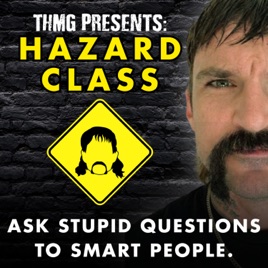
Advertise on podcast: HAZARD CLASS
Rating
5from
This podcast has
99 episodes
Language
EnglishPublisher
Jake RyksExplicit
Yes
Date created
2024/10/12
Latest episode
2026/09/30
Average duration
67 min.
Release period
7 days
Description
HAZARD CLASS is the podcast where the curiosity of genuine questions in and around the world of emergency services is met with the knowledge of leading experts in their fields.
Unlock HAZARD CLASS podcast Email contact info,
Listeners & Audience details
Email contact information
Direct podcast contact details

Listeners
Audience numbers & engagement insights

Audience details
Podcast Insights

Podcast episodes
Check latest episodes from HAZARD CLASS podcast
Free Speech, Retaliation, and the Cost of Integrity | Erik Holt Returns | HC0087
2026/09/30
What happens when doing what you believe is right costs you your career, your home, your financial security, and years of your life?
Erik Holt returns to Hazard Class for the next chapter in one of the wildest stories we’ve ever covered.
In Episode 47, Erik told us how he went from Army veteran and career firefighter to fire chief of a struggling Colorado fire district. In a matter of months, he helped rebuild the department from only a handful of responders into a 60-plus-member combination department, dramatically improving staffing, EMS capability, and response times.
Then came a fire district election, allegations of misconduct, security footage, a criminal investigation, and Erik’s sudden termination.
And somehow, that was only the beginning.
This time, Erik catches us up on everything that has happened since. We talk about his federal First Amendment case, his appeal to the Tenth Circuit Court of Appeals, newly uncovered evidence obtained through discovery, and his ongoing wrongful termination and breach-of-contract litigation in Colorado state court.
But this episode is about more than court filings.
Erik explains why he believes the oath taken by firefighters and public servants has to mean something, especially when honoring it becomes personally expensive. He talks about whistleblower protections, free speech, integrity, and the example he wants to leave for his daughters.
We also discuss his new book, Free Speech, Retaliation, and the Cost of Integrity, which documents the fire department, the election controversy, the legal battles, and the personal consequences his family experienced along the way.
If you heard Episode 47, this is the update you’ve been waiting for.
If you didn’t, start there first.
Because somehow, the Erik Holt story keeps getting crazier.
Book Link: https://www.amazon.com/Free-Speech-Retaliation-Cost-Integrity/dp/B0H8K257B5/ref=mp_s_a_1_1?crid=TYJ2JB6V4A1J&dib=eyJ2IjoiMSJ9.ssxEwq1W9emmsURVM_TzuZt-nedUVr_RI2VGYVjw_WO3ymdJJliR1MZW3JJWTGIFiN88XqaioNjde1SQrLKMpw.JZcwmtnOOjIFrC_iGqrp3uHgPjxjPj3LK9iEuxCuiL0&dib_tag=se&keywords=free+speech+retaliation+and+the+cost+of+integrity&nsdOptOutParam=true&qid=1790717256&sprefix=free+speech+ret%2Caps%2C241&sr=8-1
GoFundMe Link: https://www.gofundme.com/f/free-speech-retaliation-and-the-cost-of-integrity
GiveSendGo Link: https://www.givesendgo.com/JusticeForHolt
Website:
www.justiceforholt.com
Social Media:
https://www.facebook.com/justiceforholt?mibextid=wwXIfr
https://x.com/JusticeForHolt
https://www.tiktok.com/@justiceforholt?_t=ZP-8ylXnP9WaYY&_r=1
YouTube:
https://youtube.com/@justiceforholt?si=fHsg-0Phqqbp3dSt
Tenth Circuit Decision:
https://www.ca10.uscourts.gov/sites/ca10/files/opinions/010111463857.pdf
Oral argument recording:
https://www.ca10.uscourts.gov/sites/ca10/files/oralarguments/25-1159.mp3
HAIX USA: https://www.haixusa.com/Rigaku Analytical Devices: https://rigakuanalytical.com/
(BONUS EPISODE) Tradition, Progress & Why the Fire Service Matters | Dennis LeGear | Peter Matthews | Ryan Provencher
2026/09/23
In this special bonus episode of Hazard Class, Jake hits record during a late-night drive across Minnesota and lets the conversation go wherever the road takes it.
Part solo episode, part road-trip journal, and part rapid-fire interview show, the episode moves through engine company operations, fire service culture, training, fitness, leadership, and the constant challenge of balancing tradition with progress. Jake reflects on the ongoing transition to low-pressure smoothbore operations, the role of the engine company in supporting search, and why simply getting the fire out is not a high enough standard. The real goal is creating searchable, survivable space and continually finding ways to make fireground operations faster, simpler, and more effective.
Along the way, three friends join the ride..
Dennis DeGear digs into pump operations, discharge pressures, gating, apparatus plumbing, and the concept of moving toward more standardized pump discharge pressures across different attack lines. The conversation gets deep into the practical realities of making modern hose and nozzle packages work from the pump panel to the nozzle.
Peter Matthews, Editor-in-Chief of Firehouse Magazine, joins Jake for a conversation about the relationship between fire service history and innovation. They discuss why understanding where our practices came from is essential to knowing what should change, what should remain, and how lessons from incidents like Worcester and September 11 continue to influence the modern fire service.
Ryan Provencher of Firefighter Peak Performance talks about maintaining firefighter fitness when life gets busy. Ryan explains the idea of "movement snacks," short, intentional periods of activity or exercise that can help firefighters continue training movement patterns, maintain conditioning, and stay physically prepared even when a traditional workout does not fit into the day...
The episode ultimately lands on something bigger than hose, nozzles, fitness, or tactics: purpose.
The fire service cannot improve simply for the sake of innovation, and it cannot preserve tradition simply because something has always been done a certain way. Training, studying, experimenting, and refining the craft matter because eventually someone will be depending on those skills when everything has gone wrong.
Keep learning. Keep training. Keep pushing for better.
It is not for us. It is for them.
Dennis DeGearDennis DeGear is a nationally recognized fire service instructor and subject-matter expert in engine company operations, hose, nozzles, hydraulics, and water delivery. In this episode, Dennis joins Jake for a technical conversation about pump discharge pressures, apparatus plumbing, gating practices, and the possibilities created by designing hose and nozzle packages around more consistent operating pressures.
Peter MatthewsPeter Matthews is the Editor-in-Chief of Firehouse Magazine. He joins the episode to discuss the importance of understanding fire service history while continuing to evolve operational practices, equipment, training, and technology. Peter reflects on lessons passed down through major incidents and generations of firefighters, and why meaningful progress depends on understanding how the fire service arrived where it is today.
Ryan ProvencherRyan Provencher is the founder of Firefighter Peak Performance and a former fire service training officer with extensive experience developing fitness programs specifically for firefighters. In this episode, Ryan discusses practical ways firefighters can maintain strength, mobility, and conditioning during demanding periods of life, including the use of short, intentional "movement snacks" throughout the day.
Lessons From a Lifetime in the FDNY | Batt. Chief (Ret.) Jerry Tracy | HC0086
2026/09/16
Retired FDNY Battalion Chief Jerry Tracy joins Hazard Class for a wide-ranging conversation about fire service leadership, mentorship, training, professional standards, and the lessons learned over a lifetime in the New York City Fire Department.
Tracy reflects on the firefighters and officers who shaped his career, the importance of staying humble and teachable, and why the fire service depends on each generation passing its knowledge to the next. He shares stories from busy FDNY engine and ladder companies, discusses the standards that defined companies like Ladder 108 and Ladder 4, and explains how experience, discipline, teamwork, and preparation create competent firefighters.
The conversation also explores Tracy’s role in helping build FDNY Squad 18, including his decision to select legendary firefighter and instructor Andy Fredericks as one of the company’s original members. Tracy discusses Fredericks’ influence on firefighter training, the Back to Basics program, fireground credibility, and the importance of learning outside your own department or organization.
Jerry and Jake also dig into fire service leadership and the relationship between firefighters and chief officers. They discuss firefighter safety, aggressive fire attack, decision-making, training, operational competence, leadership credibility, and why safety is often achieved through knowledge, repetition, discipline, and strong fundamentals rather than policy alone.
Part FDNY history lesson and part kitchen-table firehouse conversation, this episode is packed with stories and lessons for firefighters, company officers, instructors, chief officers, and anyone interested in becoming more competent in the fire service.
GUEST BIO:
Jerry Tracy is a retired Battalion Chief of the New York City Fire Department and one of the fire service’s most respected voices on firefighting, training, leadership, and fireground operations.
During his FDNY career, Tracy served in engine and ladder companies throughout New York City and later became the captain of FDNY Squad 18, one of the department’s newly formed Special Operations Command squad companies. While assembling the company, Tracy selected firefighters and officers based on their experience, professionalism, and ability to train across multiple disciplines, including legendary FDNY firefighter and instructor Andy Fredericks.
Tracy was also involved in the development and delivery of FDNY training programs, including the department’s Back to Basics initiative, and has spent decades teaching firefighters about engine and truck company operations, fireground decision-making, leadership, professional standards, and operational readiness.
Known for combining extensive fireground experience with a strong commitment to mentorship and firefighter education, Tracy continues to share the lessons, traditions, and hard-earned knowledge of the FDNY with firefighters across the country. His approach emphasizes competence, discipline, teamwork, preparation, and the responsibility experienced firefighters have to pass what they have learned to the next generation.
THANK YOU TO OUR SPONSORS!HAIX Firefighting Boots:https://www.haixusa.com/Rigaku Analytical Devices:https://rigaku.com/
The Passion Triangle: How Firefighters Burn Out & Reignite | Corley Moore | HC0085
2026/09/09
Jake sits down with fire service veteran Corley Moore for a deep dive into firefighter mindset, mastery, and organizational culture. They unpack the core challenges of fire training: moving past minimum standards, confronting "hollow ego" and the Dunning-Kruger effect, and helping firefighters understand the life-or-death gravity of their craft. Moore outlines his "Passion Triangle" framework—heat (the calling), fuel (personal willpower and resilience), and oxygen (the surrounding network of peers)—to explain how enthusiasm burns out and how leaders can reignite it. The conversation emphasizes that competency is the bedrock of leadership, proving that lasting cultural change is driven not by administrative policy, but through relationships, shared values, and early adopters. Finally, the two reflect on the 25th anniversary of 9/11, honoring the enduring legacy of fallen mentors and the responsibility to carry the torch forward.KEY TOPICS COVERED• Moving from baseline compliance to true mastery and buy-in• Why extreme job competency acts as a primary shield against moral injury• Navigating the Dunning-Kruger effect, overconfidence, and "hollow ego"• Breaking down the Passion Triangle: Calling, Fuel, and Connection• Driving cultural buy-in through relationships rather than rulebooks• Honoring the legacy and impact of the 25th anniversary of 9/11GUEST BIO: CORLEY MOORECorley Moore is a 28-year fire service veteran, author, and widely recognized leadership instructor. He is the founder of Firehouse Vigilance and the host of The Weekly Scrap, a popular podcast dedicated to real talk, cultural growth, and professional excellence in the fire service. Known for developing impactful leadership concepts such as "The 9 L’s" and the "Passion Triangle," Moore travels nationally to teach firefighters and company officers how to build high-standard cultures through relational leadership, shared values, and unapologetic competence.CONNECT WITH CORLEY MOORE & FIREHOUSE VIGILANCE• Firehouse Vigilance Website: https://www.firehousevigilance.com• The Weekly Scrap Podcast: https://podcasts.apple.com/us/podcast/the-weekly-scrap-firefighter-podcast/id1518158884• Corley Moore on Facebook: https://www.facebook.com/firehousevigilanceSPONSORS • HAIX Boots (Fire Eagle Air & Fire Eagle Extreme): https://www.haixusa.com• Rigaku Analytical Devices (CQL Gen-X / Handheld Raman Solutions): https://www.rigakuanalytical.com
The Fire Service Will Never Love You Back | Curt "Ike" Isakson | HC0084
2026/09/02
Chief Curt “Ike” Isakson has spent more than three decades obsessed with the American fire service. In this episode of Hazard Class, he joins Jake for a deeply personal conversation about firefighting, leadership, mental health, resilience, family, and what it means to dedicate your life to the craft.
Chief Ike opens up about the difficult end of his 25-year career with Escambia County Fire Rescue, the leadership conflicts and personal struggles that followed, and the mental health crisis that ultimately led him to the IAFF Center of Excellence. He discusses suicidal ideation, spending 42 days in treatment, and how that experience changed the way he views his career, family, leadership, and future.
Now serving as Deputy Chief with Bay County Fire Rescue, Isakson describes what feels like the beginning of a new chapter. He discusses the rapid growth taking place in Bay County and his evolving leadership philosophy built around four ideas: caring, coaching, culture, and creativity.
The conversation also examines one of the contradictions of a career in the fire service: how do you give everything you have to the job without allowing the job to become everything you have?
Years ago, Isakson gave Jake a piece of advice that stuck with him: “The fire service will never love you back.” They revisit what that statement means after everything both men have experienced. Curt explains why firefighters should love the job, pursue competence, train relentlessly, and take pride in the profession while remembering that when the career ends, their family and relationships are what remain.
As the 25th anniversary of September 11 approaches, Curt reflects on his connection to the FDNY, the influence of Andy Fredericks, and the responsibility of today's firefighters to remember those who came before them and carry their knowledge forward.
That leads into a larger discussion about succession, mentorship, fire service culture, and why knowledge should be shared rather than guarded. The next generation should not simply preserve the fire service. They should make it better.
The episode eventually returns to the place where Chief Ike has always felt most at home: the fireground.
He explains why firefighting has always felt natural to him, why bunker gear once felt like putting on a Superman suit, and why decades later he still finds his greatest confidence with a hose line, Halligan, hook, axe, or saw in his hands.
This is a conversation about surviving the valleys, appreciating the mountaintops, learning from bad leadership, becoming a better leader yourself, protecting your family from your obsession with the job, and never losing respect for the craft.
Most importantly, it is a reminder that you can love the fire service with everything you have while still remembering there is a life beyond it.
GUEST BIO
Chief Curt “Ike” Isakson is a veteran firefighter, fire officer, instructor, and fire service leader with more than three decades of experience in the American fire service.
His career includes nine years with the Pensacola Fire Department and 25 years with Escambia County Fire Rescue, where he spent more than two decades serving as a battalion chief. In 2026, Isakson began a new chapter as Deputy Chief with Bay County Fire Rescue in Florida.
Known throughout the fire service for his passion for engine company operations, fireground tactics, training, and firemanship, Isakson has spent decades studying the craft and learning from some of the most influential firefighters and fire officers in the profession.
Despite the titles and decades of experience, Isakson still describes himself first and foremost as a fireman. His passion remains rooted in the fundamentals of the job: hose lines, nozzles, forcible entry, tools, fireground competency, and the relentless pursuit of becoming better at the craft.
County Fire Tacticshttps://countyfiretactics.com/
HAIXhttps://www.haixusa.com/
Rigaku Analytical Deviceshttps://www.rigakuanalytical.com/
Why Firefighters Need to Take Back Their Firehouses | Stephanie White | HC0083
2026/08/26
Stephanie White joins Hazard Class to discuss the future of the fire service, firefighter wellness, leadership, accountability, and what it takes to create meaningful change inside the firehouse.
Stephanie spent nearly two decades as a firefighter and paramedic with Fairfax County Fire and Rescue before transitioning into fire service media as the Editor-in-Chief of Firefighter Nation. In this conversation, she gives an inside look at the process of selecting classes and instructors for FDIC, including the challenge of choosing from hundreds of submissions while trying to identify instructors who can provide real value to attendees.
The conversation quickly moves beyond conferences and into some of the biggest cultural challenges facing the fire service today. Stephanie challenges the way the fire service talks about mental health, arguing that wellness should be viewed as a complete picture of a firefighter’s life, including sleep, physical health, family, organizational culture, and personal responsibility.
Jake and Stephanie discuss accountability inside the firehouse, including the growing tendency to outsource interpersonal problems instead of solving them through communication, trust, and leadership. They explore how healthy firehouse cultures are built, why firefighters need permission to have difficult conversations, and how officers can create environments where members feel comfortable asking questions and admitting mistakes.Stephanie also shares her experience as a female firefighter entering the fire service at a young age, the challenges she faced, and the importance of having mentors and advocates who helped her navigate a traditionally male-dominated profession. She discusses the difference between unhealthy behavior that should be addressed and the process of earning trust and belonging within a firehouse culture.
The episode closes with Stephanie reflecting on retirement, leaving the firehouse after 20 years, and her mission with Firefighter Nation: empowering firefighters at every level to realize they have the ability to influence and improve the fire service.
This episode is a wide-ranging conversation about leadership, culture, wellness, accountability, and why the future of the fire service depends on firefighters taking ownership of the profession they love.
GUEST BIO:
Stephanie White is the Editor-in-Chief of Firefighter Nation and a longtime voice in the fire service community. Before moving into fire service media, Stephanie spent nearly two decades as a firefighter and paramedic with Fairfax County Fire and Rescue Department in Virginia.
Throughout her career, Stephanie has been involved in firefighter training, peer support, leadership development, and conversations surrounding firefighter wellness and organizational culture. She has contributed to fire service education through writing, podcasting, and speaking engagements, with a focus on helping firefighters create stronger teams and healthier firehouses.
As Editor-in-Chief of Firefighter Nation, Stephanie works to amplify firefighter voices, share practical solutions, and provide a platform where members of the fire service can learn from one another regardless of rank or position. She believes that every firefighter has the ability to influence the future of the profession.
CONNECT WITH STEPHANIE WHITEFirefighter Nationhttps://www.firefighternation.com/Firefighter Nation Social Mediahttps://www.facebook.com/FirefighterNationhttps://www.instagram.com/firefighternation/EPISODE RESOURCESFDIC Internationalhttps://www.fdic.com/Fire Engineeringhttps://www.fireengineering.com/SPONSORSHAIX USAhttps://www.haixusa.com/Rigaku Analytical Deviceshttps://rigakuanalytical.com/
Why Firefighters Need to Get Outside Their Own Firehouse | Austin Beier & Taylor Hayes | HC0082
2026/08/19
Jake sits down with Austin Beier and Taylor Hayes from the Heart of the Lakes Fire Summit to talk firefighter training, firemanship, search tactics, hose and nozzle selection, and building a stronger training culture in the fire service.
The Heart of the Lakes Fire Summit was created to bring high-level regional and national fire service instructors to firefighters in Minnesota who may not otherwise have easy access to that level of training. Now entering its third year, the conference is expanding in 2026 with hands-on training in engine company operations and forcible entry.
But this conversation goes well beyond the conference.
Austin and Taylor discuss their experiences across the volunteer, paid-on-call, and career fire service and why every firefighter has a responsibility to maintain competency regardless of department size or employment status. They dig into complacency, getting outside the walls of your own firehouse, learning from failure, owning mistakes, and challenging the "this is how we've always done it" mentality.
The conversation also gets tactical. Austin explains why firefighters need to be proficient at searching without a hose line, while Taylor dives into why hose, nozzle, flow, pressure, and pump operations need to work together as a complete attack package.
That leads into a deeper discussion about smooth bore vs. combination nozzles, automatic fog nozzles, fire flow, nozzle reaction, hose selection, primary search, engine company operations, truck work, and the difficulty of changing deeply rooted fire department practices.
Ultimately, this episode is about becoming a more competent firefighter by questioning assumptions, training through failure, learning from others, and refusing to let experience become an excuse to stop improving.
Austin Beier is a firefighter and organizer of the Heart of the Lakes Fire Summit. He began his fire service career as a paid-on-call firefighter in Wadena, Minnesota, later became a volunteer firefighter in Osakis, and is currently a career firefighter in Moorhead. His experience spans the paid-on-call, volunteer, and career fire service.
Search is one of Austin's primary tactical passions, particularly developing firefighter competency and confidence in searching structures independently of a hose line. Through Heart of the Lakes, he works to expand access to advanced firefighter training throughout Minnesota.
Taylor Hayes is a firefighter and organizer of the Heart of the Lakes Fire Summit in Alexandria, Minnesota. He began his fire service career in 2013 as a volunteer firefighter in Bloomington before moving to Alexandria and later joining the Alexandria Fire Department.
Taylor is involved in community and public education and is a strong advocate for firefighters seeking training outside their own departments. His tactical interests include truck company operations, apparatus placement, aerial operations, hose and nozzle selection, and engine company effectiveness.
Through the Heart of the Lakes Fire Summit, Taylor works to bring regional and national-level fire service education to Minnesota and create opportunities for firefighters to challenge established practices and continue improving throughout their careers.
HEART OF THE LAKES FIRE SUMMIT
Conference Info: https://www.firenuggets.com/classes/heart-of-the-lakes-fire-summit-26
2026 Registration: https://firenuggets.regfox.com/26-hotlfs
SPONSORS
HAIX
https://www.haixusa.com/
RIGAKU ANALYTICAL DEVICES
https://www.rigakuanalytical.com/
Is the Fire Service Losing Its Identity? | Jeremy Donch | HC0081
2026/08/12
Jeremy Donch has built National Fire Radio into one of the most recognizable voices in the American fire service, but this conversation isn't about how he built a podcast. It's about what comes with having a voice people actually listen to.
Jeremy joins Jake for a raw conversation about the changing culture and identity of the modern fire service. They dig into authenticity in the age of social media, the difference between genuine influence and chasing attention, confidence versus empty bravado, personal accountability, leadership, competition, and why experience and competence still matter.
The conversation also tackles some of the harder questions facing today's firehouse. Are we becoming too corporate? Have we blurred the line between being a buddy and being a boss? Are we punishing people for making decisions while simultaneously asking them to show more initiative? And as departments take on more responsibilities, are we losing sight of the core mission that brought us here in the first place?
Jeremy also opens up about ego, loneliness, relationships, and the responsibility that comes with reaching a massive audience. Ultimately, this is a conversation about what the modern fire service is becoming, what we may be losing along the way, and why Jeremy believes we need to put firemanship first.
Jeremy Donch is the founder and voice behind National Fire Radio, a fire-service media platform built around honest conversations about leadership, culture, tradition, and the American fire service.
Since launching National Fire Radio in 2018, Jeremy has developed a large audience across podcasting and social media while remaining focused on what he considers the mission behind the platform: bringing value to firefighters and protecting the core values and traditions of the job.
Beyond National Fire Radio, Jeremy brings experience as a firefighter, leader, manager, teacher, entrepreneur, and business owner. His perspective blends lessons from the firehouse and fireground with decades of experience managing people in the private sector.
Rather than presenting himself as an expert on every aspect of the job, Jeremy has built his reputation around speaking candidly about the areas he knows best: leadership, management, fire service culture, history, tradition, and personal accountability.
At the center of his message is a simple philosophy: stay authentic, know your lane, take responsibility for your actions, and never lose sight of what it means to be a fireman.
NATIONAL FIRE RADIO
Website: https://nationalfireradio.com/
Instagram: https://www.instagram.com/national_fire_radio/
Facebook: https://www.facebook.com/nationalfireradio
TikTok: https://www.tiktok.com/@nationalfireradio
LinkedIn: https://www.linkedin.com/company/national-fire-radio/
EPISODE SPONSORS
HAIX: https://www.haixusa.com/
Rigaku Analytical Devices: https://www.rigakuanalytical.com/
How Fire Departments Become Toxic | Dr. Candace Ashby | HC0080
2026/08/05
Dr. Candace Ashby has spent more than 40 years in the fire service, and she's convinced the biggest threat facing today's fire departments isn't what's burning. It's the culture inside the firehouse.
In this episode, Candace shares the unlikely story that took her from a troubled teenager to Battalion Chief with the Indianapolis Fire Department before diving into the leadership lessons she learned the hard way. We discuss why company officers hold more influence than any fire chief, the difference between accountability and punishment, why communication breaks down inside organizations, and how fire departments can rebuild trust, ownership, and brotherhood.
If you've ever been frustrated by toxic station politics, ineffective leadership, or the "us versus them" mentality between administration and operations, this conversation offers practical advice for creating a healthier culture from the kitchen table to the fireground.
GUEST BIO:
Dr. Candace Ashby is a Battalion Chief with the Indianapolis Fire Department and has served in the fire service for more than four decades. She holds a Doctorate in Management and Organizational Leadership and is the founder of Elite Public Safety Consulting, where she helps fire departments improve leadership, organizational culture, and officer development. Known for her direct, practical teaching style, Candace has become one of the fire service's most respected voices on accountability, communication, and building high-performing organizations.
ELITE Public Safety Consulting
https://www.elitepublicsafety.com/
LinkedIn
https://www.linkedin.com/in/dr-candace-ashby-iaai-cfi-cfei-cfii-cvfi-mifiree-5010091a/
Episode Sponsors
HAIX USAhttps://www.haixusa.com
Rigaku Analytical Deviceshttps://rigakuanalytical.com
Why Firefighters Are Burning Out and How to Fix It | James Geering | HC0079
2026/07/29
James Geering's path to the fire service is anything but conventional. Raised on a farm in England, he pursued careers as a stunt performer before immigrating to the United States and ultimately becoming a firefighter and paramedic. In this episode, James shares the experiences that shaped his perspective, the lessons learned from serving in multiple fire departments across the country, and how those experiences led him to create the internationally recognized Behind The Shield Podcast.
The conversation explores firefighter wellness far beyond fitness. James explains why sleep deprivation, cumulative stress, organizational culture, and outdated scheduling models are driving many of the profession's biggest challenges, including burnout, cancer, injury, divorce, and suicide. He makes the case for the 24/72 shift schedule, discusses why recruitment and retention problems are symptoms of larger systemic issues, and outlines how departments can improve both firefighter performance and long-term health through evidence-based leadership.
Jake and James also examine the power of long-form podcasting, the importance of meaningful human connection, and why difficult conversations are essential if the fire service hopes to evolve. This episode is an honest, thought-provoking discussion about leadership, resilience, and building a healthier future for the next generation of firefighters.
Guest Bio
James Geering is a former firefighter, paramedic, strength and conditioning coach, and the creator and host of the Behind The Shield Podcast, one of the most respected podcasts in the fire service and tactical performance communities. Over nearly 1,300 episodes, he has interviewed world-leading experts in medicine, psychology, military special operations, leadership, fitness, sleep science, and emergency services. Today, James is a leading advocate for firefighter health, performance, and organizational change, dedicating his work to improving recruitment, retention, mental health, and longevity across the fire service through free, evidence-based education.
CONNECT WITH JAMES GEERINGBehind The Shield Podcasthttps://www.behindtheshieldpodcast.com/Instagramhttps://www.instagram.com/behindtheshield911/Facebookhttps://www.facebook.com/behindtheshield911/YouTubehttps://www.youtube.com/@BehindTheShieldPodcastLinkedInhttps://www.linkedin.com/in/james-geering/SPONSORSHAIX USAhttps://www.haixusa.com/Rigaku Analytical Deviceshttps://www.rigakuanalytical.com/FOLLOW THE HAZ MAT GUYSWebsitehttps://thehazmatguys.comTraininghttps://training.thehazmatguys.com
The Firefighter Fitness System That Actually Works | Ryan Provencher | HC0078
2026/07/22
After eight weeks of following Firefighter Peak Performance, Jake sits down with coach Ryan Provencher to review the results, lessons learned, and what's next. Rather than talking about what the program should do, this episode focuses on what it actually did, including nearly 20 pounds of weight loss, improved body composition, measurable gains in firefighter specific performance, and the challenges of balancing fitness with the unpredictable reality of shift work.
Ryan explains why firefighter fitness should be built around movement patterns, work capacity, recovery, and cognitive performance instead of traditional bodybuilding or gym routines. Together, Jake and Ryan discuss the Firefighter Tactical Fitness Assessment, the importance of managing intensity instead of constantly redlining, breathing techniques that improve efficiency, and why documenting workouts is just as important as completing them.
The conversation also dives deep into nutrition, sustainable meal planning, body recomposition, the 80/20 NET Scoring System, and why consistency beats perfection every time. They explore how firefighters can build fitness programs that actually fit their schedules, remove common barriers to healthy eating, and create habits that last well beyond a temporary weight loss phase.
The discussion expands into larger issues facing the fire service, including tactical athlete culture, firefighter wellness initiatives, academy standards, hiring philosophies, fitness requirements, and how departments can develop healthier firefighters without relying on punitive fitness testing. Whether you're looking to improve your own health or rethink how departments approach firefighter wellness, this episode offers practical, experience based strategies that can be applied immediately.
GUEST OVERVIEW:
Ryan Provencher is the founder of Firefighter Peak Performance and a retired Training Chief with decades of experience developing firefighter fitness, wellness, and performance programs. Combining a background in exercise science with a career in the fire service, Ryan specializes in helping firefighters improve strength, endurance, mobility, nutrition, recovery, and long term health through evidence based, job specific training.
His Tactical Athlete philosophy focuses on preparing firefighters for the physical and cognitive demands of emergency response while creating sustainable fitness and nutrition habits that improve performance both on and off the fireground.
Ryan Provencherhttps://www.firefighterpeakperformance.comFirefighter Peak Performance Coachinghttps://www.firefighterpeakperformance.com/coachingFirefighter Peak Performance Blog & Resourceshttps://www.firefighterpeakperformance.com/blogFirefighter Peak Performance Educationhttps://www.firefighterpeakperformance.com/educationFirefighter Peak Performance on LinkedInhttps://www.linkedin.com/company/firefighter-peak-performance/HAIX USAhttps://www.haixusa.comRigaku Analytical Deviceshttps://www.rigakuanalytical.com
I Flew in an F-16 With the Thunderbirds | Real Flight Footage + Maj. Sam "RaZZ" Larson
2026/07/20
This is not your typical episode of The Hazard Class Podcast.
For this special bonus mini episode, we're doing things a little differently. Jake recently had the once-in-a-lifetime privilege of flying with Major Sam "RaZZ" Larson of the U.S. Air Force Thunderbirds, and throughout this episode, actual in-flight footage from Jake's flight with "RaZZ" serves as the backdrop for their conversation. You'll see the real experience unfold while hearing directly from the pilot who was in the cockpit with him.
"RaZZ", a former F-22 Raptor pilot who transitioned to the F-16 and joined the Thunderbirds as Thunderbird 8, shares his journey from watching air shows as a kid in Iowa to flying with one of the most recognizable demonstration teams in the world. He also discusses the history and mission of the Thunderbirds and their role as ambassadors representing the Air Force and the United States.
Then, Jake and "RaZZ" break down their flight together. From a max-afterburner quick-climb takeoff to low-level sneak passes, flying over Duluth, joining the Thunderbirds in formation, experiencing the Delta Burst, pulling 9Gs, and even giving Jake the controls of the F-16, "RaZZ" explains exactly what went into an experience that is almost impossible to put into words.
But this episode goes beyond the flight itself.
Jake and "RaZZ" dig into the culture behind the Thunderbirds and the lessons that can be applied far beyond aviation. They discuss why Thunderbird debriefs can last many times longer than the flights themselves, the importance of leaving rank and ego at the door, openly admitting mistakes, and constantly working to become better as individuals and as a team. "RaZZ" also explains the surprising balance between precision and fun within the Thunderbirds, including how their unique radio communications help maintain safety and synchronization while keeping the energy high.
It's a short, unconventional episode about flying fast, pulling 9Gs, chasing perfection, learning from mistakes, building elite teams, and never losing sight of just how incredible it is to do something you love.
For the full experience, this is one you'll want to watch on YouTube or Spotify Video.
Firefighter Nutrition Myths Busted | GLP-1s, Protein & Weight Loss | Megan Lautz | HC0077
2026/07/15
Nutrition advice is everywhere, but how much of it actually applies to first responders?
In this episode of The Hazard Class Podcast, registered dietitian and RescueRD founder Megan Lautz returns to separate fact from fiction when it comes to firefighter nutrition, performance, and long-term health. The conversation explores why crash diets fail, how to build sustainable eating habits in an unpredictable profession, and why many firefighters unknowingly sabotage their own performance through unrealistic expectations.
Megan also tackles some of today's biggest nutrition debates, including GLP-1 weight loss medications, energy drinks, protein intake, body recomposition, meal timing, organic foods, processed foods, and the role of convenience foods on shift. Along the way, she shares practical strategies firefighters can actually use, from improving station eating habits to making smarter choices during busy shifts without chasing the latest fad diet.
Whether you're trying to lose weight, improve fitness, perform better on the fireground, or simply build healthier habits that last, this episode delivers evidence-based guidance tailored specifically to the realities of emergency responders.
Guest Overview
Megan Lautz is an award-winning registered dietitian, strength coach, and the founder of RescueRD, where she specializes in nutrition and performance for firefighters, law enforcement officers, EMS personnel, and other first responders. After serving as an embedded fire department dietitian, she now works full-time with departments across the country, helping agencies improve health, fitness, and operational readiness through practical, science-backed nutrition strategies. Megan is also the team dietitian for the Baltimore Orioles and the author of the upcoming firefighter nutrition book Fueling Fire.
RescueRD Websitehttps://www.rescuerd.com
Rescue RD CHALLENGE!
https://www.rescuerd.com/free-challenge.html
Nutrition Coaching & Department Serviceshttps://www.rescuerd.com/departments.html
Instagramhttps://www.instagram.com/rescue.rd/
LinkedInhttps://www.linkedin.com/in/meganlautz/
Thanks to our sponsors!
Rigaku Analytical Devices:
www.RigakuAnalytical.com
HIAX Boots:
www.HIAXUSA.com
What 5,000 Firefighter Rescues Taught Us About Saving Lives | Jeff Bryant | President of Fire Nuggets | HC0076
2026/07/08
What actually happens when firefighters rescue people from burning buildings, and what does the data tell us that decades of tradition never could?
In this episode of Hazard Class, I sit down with Jeff Bryant, President of Fire Nuggets, member of the Brothers in Battle cadre, and one of the driving forces behind the Firefighter Rescue Survey. We dive into the research that's changing the way the fire service thinks about search, rescue, victim survivability, and firefighter training.
Jeff shares his journey from growing up in a firefighter family to becoming a nationally recognized instructor and advocate for evidence-based fireground tactics. We discuss firefighter recruitment, the shortcomings of traditional Firefighter I & II curriculums, training scars, search techniques, victim location data, thermal imaging, engine company operations, and why collecting real-world rescue data matters.
If you're passionate about improving fireground performance, challenging outdated assumptions, and making more successful rescues, this is an episode you won't want to miss.
Guest Bio
Jeff Bryant is a third-generation firefighter with the Aurora, Illinois Fire Department, where he has served on both engine and truck companies since 2014. He began his fire service career as a volunteer in 2007 and has become widely recognized for his work in firefighter rescue research, education, and operational training.
Jeff serves as President of Fire Nuggets, is a member of the Brothers in Battle instructional cadre, and plays a leading role in the Firefighter Rescue Survey, helping collect and analyze firefighter rescue data from across North America. His work focuses on improving search operations, victim survivability, firefighter rescue tactics, and evidence-based fireground decision-making. Jeff regularly instructs at conferences and training events across the country, helping firefighters translate real rescue data into better outcomes on the fireground.
Firefighter Rescue Survey
Learn more about the survey, report firefighter rescues, and explore the data driving evidence-based fireground tactics.
Firefighter Rescue Survey FAQ
Answers common questions about the survey, how rescues are defined, and how the data is collected.
Firefighter Rescue Survey: About the Project
Background on the mission, history, and contributors behind the Firefighter Rescue Survey.
Fire Nuggets
Jeff Bryant serves as President of Fire Nuggets, a nonprofit dedicated to providing high-impact firefighter training nationwide.
Jeff Bryant Instructor Profile
Jeff's instructor bio, current assignments, affiliations, and areas of instruction.
Fire Nuggets Classes & Events
Find upcoming classes taught by Jeff Bryant and other nationally recognized instructors.
THANK YOU TO OUR SPONSORS!
Rigaku Analytical Devices:
www.rigakuanalytical.com
HIAX Boots:
www.HIAXUSA.com
Life Behind the Wheel of a Monster Truck | Paul Strong & Kaila Savage | HC0075
2026/07/01
In honor of America's 250th Birthday, we take a hard left turn from emergency services and dive headfirst into the wild world of monster trucks!
Jake sits down with husband-and-wife monster truck drivers Paul and Kaila Strong for an inside look at what it really takes to build, race, crash, and survive in one of motorsports’ most chaotic arenas. Paul shares his incredible story of how a difficult season in life, while spending years at the hospital with his premature twin daughters, unexpectedly led him to discover monster trucks and completely change the course of his life.
From quitting a stable software career to chasing teams, buying their first truck, and learning everything the hard way, Paul and Kaila break down the reality behind the sport: the mechanics, the crashes, the cost, and the adrenaline.
Kaila also shares the story behind becoming the first female driver to successfully land a monster truck backflip, including the nerves, the risk, and the unforgettable moment the stadium erupted.
The conversation dives deep into how monster trucks are actually driven, how drivers use rear steer, throttle, and brakes to control the truck in midair, what parts break the most, and how the sport has evolved from old-school car-crushing chaos into the polished arena spectacle fans know today.
They also talk about their newest venture: the Monster Truck Driving School at Horsepower Park in North Carolina, where fans can finally stop wondering what it feels like and actually find out for themselves.
This one is pure gearhead fun. If you’ve ever wondered what it’s like to send 12,000 pounds flying through the air, this episode is for you
Guest Bios:
Paul Strong is a veteran monster truck driver with nearly 20 years behind the wheel. Since starting in 2005, he has driven for major promotions including Monster Jam and currently pilots Quad Chaos on the Monster X Tour. Beyond competition, Paul co-owns Horsepower Park in North Carolina and is helping launch one of the first dedicated Monster Truck Driving Schools in the country.
Kaila Strong is a professional monster truck driver and trailblazer in the sport. In 2011, she became the first woman in history to land a monster truck backflip, cementing her place in motorsports history. Alongside Paul, she continues to compete, build trucks, and help grow the next generation of monster truck fans and drivers through Horsepower Park and their new driving school.
MONSTER TRUCK DRIVING SCHOOL:
https://monsterfreestyle.com/
Rigaku Analytical Devices:
www.RigakuAnalytical.com
HIAX Boots:www.HIAXUSA.com
Podcast reviews
Read HAZARD CLASS podcast reviews
BIBmissionfirst 2026/09/19
Great job
The episode with Jerry Tracy was great! Need to have a part 2 for sure!
Tim Hoag 2024/10/30
Podcast
Great podcast Jake
Haz mo 2024/10/16
This is going to be good.
This is a great idea for a podcast and I can’t wait!! Back to the basics meets down and dirty. Let’s f’ing go!!
Joel H2O 2024/10/15
Entertaining & Informative
I’m really dumb so this podcast is great for me. I feel a lot smarter after I listen to it.
Podcast sponsorship advertising
Start advertising on HAZARD CLASS relevant audience podcasts
You may also like to advertise on these Podcasts

4.712822542
True Crime All The Time
Emash Digital

4.8159901996
Watch What Crappens
Ben Mandelker & Ronnie Karam
4.638601153
Modern Wisdom
Chris Williamson

4.66158304
True Crime with Kendall Rae
Mile Higher Media & Audioboom Studios

4.73393774
The Ancients
History Hit
4.89065306
The Why Files: Operation Podcast
The Why Files: Operation Podcast

51088171
Middle Children
Jessie Jolles and Chris Burns

4.9264932000
Morning Wire
The Daily Wire

4.518760369
American Scandal
Audible

4.689261200
Get Sleepy: Sleep meditation and stories
Slumber Studios