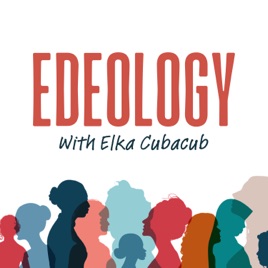
Advertise on podcast: EDeology: The People Behind Today's Eating Disorder Treatment Landscape
Rating
4from
This podcast has
38 episodes
Language
EnglishPublisher
Elka CubacubExplicit
No
Date created
2025/01/08
Latest episode
2026/06/02
Average duration
59 min.
Release period
23 days
Description
EDeology is a space for difficult conversations among eating disorder recovery professionals—not to debate fact, but to share the personal and professional experiences that shape each of our narratives. This podcast aims to represent the political and ideological spectrum without tone or language policing. My hope is that if, as professionals, we can hold each other’s stories with honesty, empathy, and compassion, we’ll be better able to do so for our clients.
Unlock EDeology: The People Behind Today's Eating Disorder Treatment Landscape podcast Email contact info,
Listeners & Audience details
Email contact information
Direct podcast contact details

Listeners
Audience numbers & engagement insights

Audience details
Podcast Insights

Podcast episodes
Check latest episodes from EDeology: The People Behind Today's Eating Disorder Treatment Landscape podcast
“My Favorite Psychotherapist Went to Jail” with Kayla Perry
2026/06/02
Moralistic judgment is the root of so much division in our field and in our society. The perception of ideologically opposing groups as uninformed, evil, or inherently harmful is the surest way to eliminate any possibility of dialogue. Moralistic judgment can be a way of naming oppressive systems that have been enabled or whitewashed; but when directed at individual people, it becomes a painful and dehumanizing form of exclusion.
There's a particular brand of moral outrage that is reserved for fellow mental health practitioners. It's designed to protect the integrity of our profession and is expressed in statements such as “how can you_________, and still be a therapist”, or “this person should never have been treating eating disorders to begin with”. In clear cases of abuse and exploitation, this is true. However, when applied more broadly, we run the risk of flattening the humanity of the practitioner and the experience of those who benefited from their work
I recently came across an Instagram post by Kayla Perry, our guest today, where she spoke about a psychotherapist who had benefited her tremendously, who she later discovered served a jail sentence for unlicensed practice and insurance fraud. In this episode, we dive deeper into Kayla’s experience with this therapist before her sentencing and her perceptions of her afterward.
I hope that you, the listener, will understand that this conversation is not condoning deception, but inviting you into the contradictions that live inside each of us, and exploring the question: are we defined by our worst behaviors?
Kayla Perry is a Licensed Behavior Analyst with master’s degrees in Clinical Psychology and Applied Behavior Analysis. Known for her bluntness, curiosity, and love of debate, she takes a practical, direct approach that emphasizes common sense, critical thinking, and honest conversation over rigid clinical jargon. You can find Kayla on her Instagram and substack accounts linked in the show notes.
Connect with Kayla
Subtack: honestlyunorthodox.substack.com.
Instagram: @kaylas.common.sense
Connect with Elka
Website: https://cubacubcounseling.com/
Email: [email protected]
Helping our Children Develop a Healthy Relationship with Food with Katie Gilder, RD
2026/05/12
Many of the hot topics in eating disorder recovery—health at every size, food neutrality, whether some foods are manufactured with addictive qualities—extend beyond eating disorders and to the messages we hold and teach our children about food and bodies.
In this episode I am joined by Katie Gilder and we talk about how we address these issues with young kids. We discuss whether there's “healthy” vs. “unhealthy” foods in our homes, if we communicate distinctions between food types (such as meal time vs dessert) to our kids, how we respond to the children's comments about different body types.
Katie is a registered dietitian with 15 years experience supporting clients across the lifespan. She specializes in treating adolescents and young adults with eating disorders, and has extensive training FBT(TAY). Katie works through a Health at Every Size lens and helps clients access intuitive eating. Katie is also a Board Certified Specialist in Sports Dietetics, and has a special interest in working with athletes.
Connect with Katie: https://www.cultivatecounselingmn.com/katiegilder
Connect with Elka:https://cubacubcounseling.com/
“I Learned from Some Very Smart Women You Don’t Do a Lot for Free”: On Money and Mental Health Care with Robyn Kievit NP, RD
2026/03/11
Periodically, I hear someone describe a past therapist, a particular therapy modality, or a treatment center as “just in it for the money.”
On the flip side, I’ve had many conversations with therapists and other mental health providers about how hard it is to hold fees, guilt for raising fees, strain strain related to enforcing cancellation policies, weak boundaries, and frustration with insurance policies that can make financial survival in this field difficult.
Money is an unavoidable part of mental health care.
My work brings me into regular contact with the depths of human suffering and the profound complexity of each person’s internal world. At times, I'm trusted with stories that haven't been told to another living soul. It is humbling. It's a gift.
The fact that mental healthcare is both a deeply human relationship and a paid service is an uncomfortable reality. Which makes it a topic worthy of conversation.
In this episode, Robyn Keivit shares her story as a female entrepreneur, business owner, registered dietitian, and nurse practitioner. We explore the tension between providing affordable care and supporting ourselves and our families, the relationship between money and self worth, and the personal narratives that shape how we engage with the business side of mental health care.
Robyn Kievit is a nurse practitioner and registered dietitian with more than 25 years of clinical experience. She specializes in supporting women through perimenopause and menopause using hormone therapy, medical science, and psychopharmacology, with particular expertise in eating disorders, disordered eating, and body image concerns.
Robyn is a sought-out speaker at professional conferences and events and has been featured in numerous national media outlets.
More on Robyn: https://robynkievit.com/
Robyn’s course, Integrating Hormone Therapy and Psychopharmacology in Eating Disorder Treatment During Perimenopause and Menopause: https://robynkievit.com/resources/course-for-dietitians-beyond-nutrition/
Roby's podcast, NPRD: https://open.spotify.com/show/05VKEcGOKE8ZefoaLIe4ol?si=jbhI9chKRhOlAPJdsMMe9g
More on Elka: https://cubacubcounseling.com/
This is your trigger warning!
2026/02/05
In this episode, I discuss why this podcast has no content rules and how I address information that might be triggering to the listener. I also do a deep dive into the question, can words cause harm?
More on Elka: https://cubacubcounseling.com/
Elka’s book, Binge Eating Demystified https://www.amazon.com/dp/B0FD493WZ3
Dialogue: Is eating disorder treatment evidence-based, heart-led, or some of both? Family-Based Treatment meets Somatic therapy
2026/01/21
How do we know what is real? There is a growing number of treatment modalities, each with its own acronyms and catchphrases. There is also a large diversity of opinions around issues related to food, health, and eating disorder recovery. How do we know what treatment approach to follow?
In this dialogue, I have two guests who are both highly skilled and experienced in their respective, and very different, approaches. Abby Sarret-Cooper practices Family-Based Treatment and Dialectical Behavior Therapy, presents on these topics, and has studied under some of the most prominent leaders in these modalities. Rachel Lewis-Marlow is the director of the Embodied Recovery Institute, where she facilitates and trains clinicians in somatic, trauma-informed, and attachment-based treatment.
They each briefly touch on their modalities and share how they determine whether an approach is useful, what guides the way in which they approach clients, the roles of confrontation, gentleness, and top-down vs. bottom up approaches. In many ways, this is a conversation about the science and the art of psychotherapy.
More on Abby: https://partnersincounseling.net/
More on Rachel: https://embodiedrecovery.org/
More on Elka: https://cubacubcounseling.com/
For complete solo interview with Abby, see episode titled “Evidence Based Treatment is Flexible and Compassionate”
For complete solo interview with Abby, see episode titled “Your Eating Disorder is not your Enemy
Does lived-experience matter in clinical work? With David Wiss, PhD, RDN, IFMCP
2026/01/07
When we argue with other clinicians about treatment-related issues, it’s natural to focus almost exclusively on content. And when it doesn’t go well, we often attribute that to the wrongness of the other person’s position. We might accuse them of perpetuating harm, or being small-minded or out of touch with reality or science.
I would argue that process is equally, if not more, important, particularly when we’re trying to bridge ideological divides. By process, I mean how we’re relating to one another. Process is closely tied to meta-emotion: how we see emotions and the role they serve? What do we believe about the value of expressing or not expressing emotion in different contexts.
With me today is Dr. David Wiss. David has been on this podcast for two prior episodes about food addiction. I’ve read and watched some of his work and have a lot of respect for it. And in previous conversations, we’ve also bumped into some of our differences in process and in how we approach emotion and lived-experience.
In this episode, we talk through some of those differences, what they brought up for each of us, and what it is to create a container that can hold differences, not only in what we believe, but in how we communicate.
We also discuss to what extent lived-experience is valuable while in a professional role. If you’ve listened to other episodes of this podcast, you likely know that I focus a lot on people’s lived experience, with the goal of bringing people together by understanding the contexts and stories that shape our positions.
At the same time, in this conversation, David helps me understand that dogmatic overemphasis on lived-experience can also drive people apart.
David Wiss, PhD, is a researcher, mental health nutritionist and Institute of Functional Medicine Certified Practitioner (IFMCP) who bridges nutritional science and psychiatric care through comprehensive root-cause analysis. He founded Nutrition in Recovery and the Wise Mind Nutrition app, integrating cutting-edge personalized nutrition protocols into substance use disorder and eating disorder care. David’s work has been cited in National Geographic, The New York Times, and The Washington Post, and he has authored over 30 peer-reviewed publications examining the complex relationships between ultra-processed food addiction, eating disorders, and mental health. As someone who witnessed firsthand how ancient wisdom can restore hope when traditional treatments fall short, David practices and trains clinicians in whole-person, integrative mental health.
Blog post from David about bridging divides: https://medium.com/@drdavidwiss/risking-belonging-how-mental-health-recovery-principles-can-heal-our-fractured-world-d7166f45748c
More on David: https://drdavidwiss.com/
More on Elka: https://cubacubcounseling.com/
The Invisible Specialty: Ethical veganism and eating disorder recovery with Maneva Gill
2025/12/23
It can be taken for granted that there are many non-disordered ways of eating. In addition to food preferences and aversions, allergies, food-sensitivities, and body composition, our food choices can be also shaped by spiritual, cultural, and ethical values. In eating disorder treatment, this simple truth becomes much more complicated for two reasons:
Firstly, because of the acuity and potential lethality of eating disorders, restoring weight and providing adequate nutrition takes priority over all else. Secondly, eating disorder behaviors can be subtle and hard to recognize. It can be difficult to determine whether food-related values are masking or being mistaken for eating disorder behaviors.
For example, our topic today—veganism. Veganism can be used to justify food restriction which can be deadly in certain eating disorders. And at the same time, ethical veganism is a legitimate belief system that exists outside of disordered eating.
Decisions about how much to accommodate food-related values and beliefs in treatment settings are practically and clinically complex. Regardless, the very least we can do is recognize the lived experience of the person in treatment and how conflicting values may impact them.
In this episode, Maneva Gill shares her experience grappling with ethical veganism during eating disorder recovery, the internal conflict this created, and how she ultimately chose recovery. She reflects on what she wished her treatment providers had understood at the time, and speaks to the challenges of feeling torn between the social constructs associated with ethical veganism and the demands of recovery.
Maneva is an Eating Disorder Recovery Coach based in California and certified through the Carolyn Costin Institute. Her training focused on working collaboratively with treatment teams and supporting clients in making meaningful behavioral changes toward recovery. Her approach integrates the 8 Keys to Recovery (a recovery framework developed by Carolyn Costin and Gwen Schubert Grabb that focuses on practical skills, mindset shifts, and sustained behavior change) alongside exposure and response prevention, Health at Every Size, and her own lived experience of full recovery.
Before becoming a coach, Maneva worked for over six years in banking and financial technology, and she volunteered for two years as a peer support group leader and peer mentor with the National Association of Anorexia Nervosa and Associated Disorders. Her work is grounded in compassion, practicality, and hope through example. She offers fully online coaching and is available for in-person and virtual speaking engagements.
More on Maneva: https://manevagill.com/ (website under construction)
More on Elka: https://cubacubcounseling.com/
Elka’s book, Binge Eating Demystified https://www.amazon.com/dp/B0FD493WZ3
Attraction, love, and erotic feelings in the therapeutic relationship with Rebecca Prolman, LMFT
2025/12/10
The therapeutic relationship is, in some ways, a bizarre one. On one hand, it’s a meeting between two people, a space where you share so much of yourself, your deeper emotions, and experiences. And at the same time, there are very clear and firm ethical and professional boundaries.
Human nature alongside the depth and vulnerability of the therapeutic space can create the conditions for attraction, love, and romantic or sexual feelings. And because these feelings cannot ethically evolve into a personal relationship, they can feel confusing and unspeakable.
In this episode, Rebecca Prolman shares her own story of falling in love with her therapist and navigating a relationship that was both healing and incredibly messy. She also talks about how she responds now, as a therapist herself, when a client shares that they’re attracted to her. We talk about making these kinds of feelings speakable, exploring the meaning behind romantic and sexual fantasy, and maintaining the personal and professional boundaries that make therapy safe.
Rebecca Prolman is a Licensed Marriage and Family Therapist who specializes in healing childhood attachment wounds, complex trauma, and eating disorders. She also offers affordable, self guided courses to support deep, lasting healing at rebeccaprolman.com.
More on Rebecca: https://www.rebeccaprolman.com/
Instagram, TikTok, and YouTube at @rebeccaprolman.
More on Elka: https://cubacubcounseling.com/
Elka’s book, Binge Eating Demystified https://www.amazon.com/dp/B0FD493WZ3
Is Therapy Political? With Allyson Inez Ford, MA, LPCC
2025/11/26
Is it a therapist’s responsibility to advocate for social justice, to take a stance on political issues that impact the lives of their clients and/or minoritized groups? Or are therapists supposed to be apolitical, to enter the therapy space without an ideological agenda so they can hold space for whatever belief systems the client brings in?
When we remove the “shoulds” the “supposed tos”, the moralistic judgements of what makes a good or bad therapist or a good or bad person, what we’re left with are very impactful clinical questions: What role do systemic forces play in the issues we face as individuals? What impact does acknowledging those systemic forces have on a person’s healing process? How do we address shame and internalized oppression in a way that empowers rather than disables? And how do we make impactful political issues speakable in the therapy space?
In this episode, Allyson Inez Ford talks about the role that understanding systemic oppression played in her own recovery from an eating disorder. She talks about the systems that shape us, the role that politics plays in how she holds the therapy space, and how she relates to clients and others who hold different, and potentially very triggering, political viewpoints.
Because one thing that is for certain is that so many people are holding so much pain around current events. We cannot shy away from these topics.
Allyson Inez Ford, LPCC, is a licensed mental health therapist specializing in eating disorders and obsessive-compulsive disorder. She has experience working with adults and adolescents in individual, group, and family therapy across multiple levels of care. Her work is informed by a liberatory and anti-oppression perspective.
She has a particular interest in supporting individuals with multiple marginalized identities, informed by her own experience as a multiracial, neurodivergent, and queer clinician. Allyson owns and operates a group private practice, hosts a podcast focused on eating disorders and social justice, and participates in speaking engagements and professional trainings. She also provides consultation for complex clinical cases.
More on Allyson
Instagram: @bodyjustice.therapist
Website: www.eatingdisorderocdtherapy.com
Body Justice Podcast: https://open.spotify.com/show/1jvTCV9IJ1YpIym9YmZQda?si=e9872c6dbef24dc5
More on Elka: https://cubacubcounseling.com/
Elka’s book, Binge Eating Demystified https://www.amazon.com/dp/B0FD493WZ3
A Bariatric Psychologist's Story
2025/11/11
Bariatric surgery is a medical procedure that modifies a person’s stomach and sometimes intestines to help them lose weight. In the eating disorder recovery world, this topic isn’t discussed often because so many professionals take an active stand against fat phobia and, by extension, intentional weight loss.
Our guest today brings together two worlds that don’t typically converge. She entered the field of bariatric psychology as an eating disorder professional. She shares her own lived experience of recovering from disordered eating through intuitive eating, her belief in rejecting dieting, and her awareness of fat phobia and how it shows up across society and in the lives of the individuals she assesses. At the same time, she is part of the process for one of the more invasive weight-loss procedures.
You may be wondering why we’re talking about weight loss surgery on a podcast focused on eating disorders. And I agree that there are settings, like meal support groups, where discussing this would clearly be harmful. However, on this podcast, my goal is to create a space where nothing is unspeakable, where the human experience in all of its complexity is welcome, where people from different disciplines and ideologies can come together. I enter this conversation with trust in you, the listener, to take care of yourself and feel free to skip any content that doesn't feel right for you.
Alisha B (pseudonym used for reasons we’ll share in the episode) is a clinical psychologist. She began her work as a clinician focused on eating disorders and disordered eating and has her own history struggling with food, substances, body image, and emotion. As her professional life evolved, she became a bariatric psychologist who is passionate about her work and has helped over 1800 patients on their weight loss surgery journeys. She works in private practice in a rural community where she is the sole bariatric psychologist. She has published a chapter on bariatric psychological evaluations and presented at the annual meeting of the American Society of Metabolic and Bariatric Surgery (ASMBS).
More on Elka: https://cubacubcounseling.com/
Elka’s book, Binge Eating Demystified https://www.amazon.com/dp/B0FD493WZ3
Adoption, Trauma in Infancy, and Eating Disorders
2025/10/28
In healthcare, we know that the same set of symptoms can reflect different underlying causes. The more we understand the range of causality and underlying dynamics in eating disorders, the more we can offer truly individualized and effective care.
In previous episodes, we’ve discussed the role that trauma, complex trauma, dissociation, and genetics can play in the development of an eating disorder.
In this episode, our guest Rebecca Berg, talks about the link between eating disorders and adoption. She shares her story as an adoptee with an eating disorder history and challenges the misconception that adoption during infancy has less impact on a child. She also discusses preverbal trauma and how it can be addressed in the therapy setting which so often centers around recounting verbal memories.
Rebecca Berg, MS, RDN, is a registered dietitian, adoptee, and self-proclaimed neuroscience nerd. Based in Los Angeles, California, she is the owner of No Strings Nutrition, a weight-inclusive virtual nutrition therapy practice dedicated to the thoughtful treatment of eating disorders, disordered eating, and body image concerns.
Rebecca is committed to empowering her clients to notice and refute the influence of diet culture in their lives through relational nutrition counseling. She provides compassionate, realistic support and challenges the oppressive systemic forces that make being in a body difficult. She helps each client understand that their interactions with food, body, and movement are shaped by unique individual perspectives, sociocultural factors, and systems.
Rebecca’s professional background as an eating disorder specialist, combined with her lived experience as a domestic infant adoptee, has fueled her passion for helping clinicians and all members of the adoption constellation better understand this unique intersection.
More on Rebecca: https://www.nostringsnutrition.com/
More on Elka: https://cubacubcounseling.com/
Elka’s book, Binge Eating Demystified https://www.amazon.com/dp/B0FD493WZ3
Anti-Racism in Group Psychotherapy
2025/09/16
In this episode, Dr. Marcia Nickow talks about anti-racism, DEI, and white privilege.
Marcia shares how her upbringing as the child of Holocaust survivors influenced her interest in these topics. She discusses how she approaches racially charged issues in therapeutic contexts, including group therapy and clinician DEI groups. She also talks about what it is to be a white-presenting clinician in DEI spaces.
We talk through difficult questions: What does it mean to acknowledge white privilege as someone who has fair skin, but whose life story and history don’t align with the archetype of the white oppressor? We also touch on the Israel–Gaza war, and how each of us relate to it as people who hold a Jewish identity.
If you’re someone who is sensitive to injustice and the suffering in the world around you, you will likely have strong reactions while listening. Those reactions are valuable, and I want to make space for meaningful conversation around them.
Because of this, I’d like to begin recording reaction episodes. These will be open to both clinicians and non-clinicians and will focus on exploring listener reactions to concepts from prior episodes.
Two points to note:
1. We will be exploring your personal story as it relates to the topic, rather than debating the truth or legitimacy of particular positions. For example, if you are reacting to something that I said in this episode, rather than each of us bringing in proof and data to support our own positions, my goal is to understand your story and the values, life experiences and emotions that are contained within your reaction.
2. To keep this a safe space, one of my guiding principles is: talk to me, not about me. This applies to myself and my guests. If you are responding to a point made by a prior guest who is not present, we’ll extract the concept you are reacting to and explore your response to that concept rather than critiquing the individual guest.
Marcia Nickow, Psy.D, CADC, CGP, is a clinical psychologist and group psychotherapist specializing in treating multi-generational legacies of trauma and addiction. She designed and implemented an intensive group psychotherapy program in her private practice and leads 16 weekly ongoing process groups: men’s, women’s, multigender, professionals, artists/writers, and clinical supervision groups. She also co-leads couples’ groups.
Her clinical interests include manifestations of racial and historical trauma; legacies of family and community trauma and healing; thriving after trauma; pedagogies of oppression; and anti-racist clinical practice.
Marcia serves as an organizational and clinical consultant at a Residential and Outpatient Treatment Center where she co-leads supervision groups for clinicians and staff of color. Marcia has presented nationally and internationally on trauma (complex, intergenerational, historical, collective); the full spectrum of addictions and eating disorders; de-colonizing approaches to treatment; group dynamics and group processes; and, more recently, on collective trauma including sequelae of COVID-19, racial violence, and mass shooting pandemics.
Marcia has co-presented intensive experiential workshops on the link between intergenerational addiction and historical trauma at American Group Psychotherapy Association conferences and at Haymarket House in Chicago.
I met Dr. Marcia nearly a decade ago, soon after completing my undergraduate in psychology and am grateful to consider her a teacher and mentor.
Resources mentioned in episode:
The People's Institute for Survival and Beyond https://pisab.org/
My Grandmother's Hands: Racialized Trauma and the Pathway to Mending Our Hearts and Bodies book by Resmaa Menakem
To connect with Marcia, visit https://marcianickow.com/
To connect with Elka, visit https://elkacubacub.com/ and https://www.psychologytoday.com/profile/1155490
If you would like to be interviewed in a future episode, please complete this form: https://forms.gle/rzCYiAwUNtWX6AFu9
Decentering Weight in Eating Disorder Treatment
2025/08/06
So much of Western medicine has been tied up with body weight. Weight is often disproportionately and inaccurately associated with health. Weight loss is a common recommendation for many health conditions.
Although eating disorder treatment typically emphasizes body acceptance and weight neutrality, weight remains central to so many aspects of the treatment process.
Body mass index (a measure of weight in relation to height) is used to diagnose: Is this anorexia, atypical anorexia, or OSFED? It's used to monitor recovery progress: Is this person “weight restored”? It is used to determine what level of care is needed, and when a person is ready to reintroduce physical activity.
Taking a person’s weight is easy. It's clear, objective, and requires only that they step on a scale—all of which makes it an appealing assessment measure. However, like most shortcuts, it carries the risks of promoting inaccurate conclusions about the individual and perpetuating harmful stereotypes and biases.
In this episode, Cathryn Williams, PsyD, discusses decentralizing weight as a marker of health and recovery. She shares her experience teaching Health at Every Size and eating disorder awareness to medical students, and touches on alternative physical and psychological markers that can provide more accurate, weight-neutral indicators of someone’s eating disorder status and recovery progress.
Cathryn Williams, Psy.D (she/her) is a licensed clinical psychologist and graduated with a doctoral degree from Massachusetts School of Professional Psychology ( William James College) in 2014. Dr. Williams completed her post-doctoral fellowship at the Cambridge Eating Disorder Center and has expertise in the treatment of eating disorders (cognitive-behavioral therapy, Radically Open Dialectical Behavioral Therapy, Family Based Treatment), substance use disorders (Motivational Interviewing, Dialectical Behavioral Therapy, Acceptance and Commitment Therapy) and Borderline Personality Disorder (Dialectical Behavioral Therapy; Internal Family Systems therapy). Prior to joining the department of psychiatry and behavioral sciences at UMass Chan Medical School in 2022, Dr. Williams provided individual and couples’ therapy and served as the clinical director of two outpatient mental health clinics. She has provided clinical supervision and didactic seminars for pre-doctoral trainees, post-doctoral fellows, and psychiatry residents.
Connect with Elka https://elkacubacub.com/
Elka’s book, Binge Eating Demystified https://www.amazon.com/dp/B0FD493WZ3
Symptom Management vs. Root Causes in Eating Disorder Treatment
2025/07/28
In eating disorder treatment, do we focus on managing symptoms or addressing root causes?
There are so many issues tied into this question, at both a theoretical and very practical level. Treatment focused on symptom management often rests on the premise that the issues encountered in eating disorder recovery are the result, not the cause, of food restriction. From this perspective, when a person is nutritionally rehabilitated and weight-restored, many co-occurring symptoms like mood disturbances and body dysmorphia will naturally resolve.
In contrast, an approach that emphasizes addressing the underlying root causes sees disordered food behaviors as coping strategies for difficult and painful biopsychosocial events, past or present. From this perspective, sustainable recovery requires that we understand and address these deeper, more complex, dynamics.
In practice, symptom management often involves allocating food related decisions to healthy adults, parents, caregivers, or treatment centers, until the client demonstrates readiness for increased autonomy. An approach centered around exploring root causes may involve more input from the client, working gradually toward behavioral stability in ways that feel accessible and manageable to them.
How much and how deeply do we enter a client’s internal, subjective experience?
What one school of thought sees as essential to recovery, another might view as a distraction. What one sees as respect for a client’s right to self-determination, another might view as colluding with the eating disorder.
Like most things in recovery, these questions require non-binary thinking.
In this episode, Kirsten Hunneyball shares how these issues showed up both in her own recovery and in her work with clients. She reflects on the aspects of behavior modification that were necessary and even life-giving, as well as the places where those approaches fell short. Together, we discuss managing risk and safety while also moving beyond mere survival toward holistic health and well-being. We explore somatic treatment, the reality that eating disorders can be subtle and manipulative, and the importance of knowing when to challenge a client versus when to approach with gentleness.
Kirsten Hunneyball is a trauma-informed recovery coach, yoga teacher, and wellness facilitator based in South Africa. Having lived experience with an eating disorder, she supports individuals and small groups through meaningful personal evolution, particularly but not limited to the space of disordered eating. Kirsten integrates intuitive coaching, embodiment practices, and creative expression to help people reconnect with themselves, move through transition, and lead purpose-driven lives. She also has a podcast called “Curious About Recovery - Diving into Eating Disorders” Which is available on Spotify. You can find her website at
More on Kirsten: www.kirstenhunneyball.co.za
Kirsten's podcast, Curious about Recovery: https://open.spotify.com/show/1TwaZ2ID4FRQthckqfjR0h?si=gbHRZstJTByPEARZ41svTg
Connect with Elka https://elkacubacub.com/
Elka’s book, Binge Eating Demystified https://www.amazon.com/dp/B0FD493WZ3
Spirituality in Eating Disorder Recovery: Crystals, Sound Healing, and Biofield Tuning
2025/07/21
How do you know?
So many challenges to any particular position boil down to this question.
How do you know that what you're saying is accurate? How do you know that the modality you're using is effective?
In the medical and academic communities, we're often taught that the only acceptable answer to this question is scientific study, preferably double blinded and/or within a randomized controlled trial.
But there are other types of knowing:
The knowing that lives in one's own gut. The knowing that is passed down through millennia of history. The knowing that is found within the collective.
And while the particulars of an intuited, spiritual, or collective experience cannot be generalized, the question “how do you know?” extends to how we teach our clients to know.
Do we encourage them to trust the experts? To believe only what is written in peer reviewed journals? Or do we help clients get in touch with the knowing that comes from deep within themselves?
In this episode, Dana Sedlack shares how spiritual practices helped facilitate her own recovery. She talks about how these differ from, and complement traditional therapy, and describes particular alternative healing methods including sound healing and Biofield tuning. We discuss the challenges of translating spiritual practices into traditional therapy settings, and the importance of creating space for clients, who are so inclined, to integrate spirituality with the growth they achieve in therapy.
Dana Sedlak, LCSW, CEDS-C is a Certified Eating Disorder Specialist and Consultant with over a decade of experience in the mental health field. She has led multidisciplinary teams and developed comprehensive treatment programs for eating disorders and co-occurring mental health conditions.
Dana offers individual clinical supervision and mentorship for clinical teams. She also provides consulting to help organizations develop and implement effective mental health and eating disorder treatment programs.
Connect with Dana https://www.ourinnerwellness.com/
Connect with Elka https://elkacubacub.com/
Elka’s book, Binge Eating Demystified https://www.amazon.com/dp/B0FD493WZ3
Podcast reviews
Read EDeology: The People Behind Today's Eating Disorder Treatment Landscape podcast reviews
Robyn KK 2026/07/06
On Money & Mental Health
Elka is a thoughtful interviewer and carefully suggests questions and next thought processes. A great addition to podcast by therapists covering eatin...
Notaboomer66 2026/02/20
Bummer, can’t listen
Can’t deal with the vocal fry of this host.
ksjduwhdhus 2025/12/26
Answering Questions You Didn’t Know to Ask, But Felt
This podcast does something rare—it answers the questions many of us are quietly carrying but aren’t sure how to name, let alone ask out loud. The sto...
Podcast sponsorship advertising
Start advertising on EDeology: The People Behind Today's Eating Disorder Treatment Landscape relevant audience podcasts
You may also like to advertise on these Podcasts
4.916161609
The Kristian Harloff Show
Kristian Harloff

4.917101543
DarrenDaily On-Demand
Darren Hardy LLC

4.549032000
The Daily Stoic
Daily Stoic | Backyard Ventures
4.6221632000
Mark Levin Podcast
Cumulus Podcast Network
4.737121980
The Eric Metaxas Show
Metaxas Media

4.682401276
The Daily Beast Podcast
The Daily Beast, Joanna Coles

4.834891999
Conservative Review with Daniel Horowitz
Blaze Podcast Network

4.87687824
Monsters Among Us
Derek Hayes | Audioboom Studios

4.827571695
Earn Your Happy
Lori Harder | YAP Media

4.89021965
Catholic Sprouts: Daily Podcast for Catholic Kids
Nancy Bandzuch