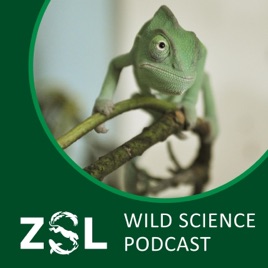
Advertise on podcast: ZSL Wild Science Podcast
This podcast has
53 episodes
Language
EnglishPublisher
Zoological Society of LondonExplicit
No
Date created
2025/02/18
Latest episode
2026/08/21
Average duration
32 min.
Release period
60 days
Description
Delve into topical issues in zoology, conservation and the environment, from saving species and protecting the planet, to finding out about the animals living across the globe, including in London's own river Thames. Learn more about the science behind the conservation work being done by ZSL and others, in this podcast from ZSL's Institute of Zoology. Hosted previously by Dr Monni Böhm and Ellie Darbey, and now by Harriet McAra.
Unlock ZSL Wild Science Podcast podcast Email contact info,
Listeners & Audience details
Email contact information
Direct podcast contact details

Listeners
Audience numbers & engagement insights

Audience details
Podcast Insights

Podcast episodes
Check latest episodes from ZSL Wild Science Podcast podcast
A Tiny Frog Facing an Urgent Crisis
2026/08/21
Deep in the dense rainforests of southern Chile lives a tiny amphibian. Just 3cm long, expertly blending into the browns and green of the forest floor, with a narrow-pointed nose and angular body, the Darwin's frog is fighting for survival.
Scientists at ZSL have spent more than 20 years working on a disease known as chytridiomycosis, which has devastated amphibian populations globally, to try and understand underlying drivers of the distribution, spread and impacts of the disease. In this episode, we hear about the work being done to protect and restore Darwin's frog populations, and how funding from the Postcode Lottery enables this vital research.
Overview
00:12 Harriet McAra, Host of Wild Science, Episode introduction
01:21 Dr Andrés Valenzuela-Sánchez, Research Fellow in Wildlife Health at ZSL
28:48 Will Humpington, Climate Change and Environment Advisor at the Postcode Lottery
33:35 Thank you and outro
Resources
If there's a topic you'd like to hear on a future podcast, or if you'd like to share your thoughts, email the ZSL Wild Science Podcast at: [email protected] Check out our science and conservation work at: www.zsl.org/Science or www.zsl.org/conservation Find out more about the Postcode Lottery's work supporting charitable causes: https://www.postcodelottery.co.uk/charities More about ZSL's relationship with the Postcode Lottery: https://www.zsl.org/support-us/charitable-trusts-and-foundations Find more information on amphibian chytridiomycosis: https://www.zsl.org/what-we-do/projects/amphibian-chytridiomycosis Darwin's frog vocal sac brooding behaviour: https://www.instagram.com/reel/DZQGJR6FGgh/ The first time that chytridiomycosis is documented in a terrestrial species, having previously thought to be only transmissible through water: Valenzuela-Sánchez, A., Delgado-Oyarzún, S., Azat, C. et al. Localized transmission of an aquatic pathogen drives hidden epidemics and population collapse in a terrestrial host. Nat Ecol Evol 10, 308–317 (2026). https://doi.org/10.1038/s41559-025-02930-1 Watch A Leap of Hope, a ZSL film capturing the rescue mission and 7000-mile expedition made by conservationists to protect the Darwin's frog: https://www.youtube.com/watch?v=fs1SIs0KRlk Ranita de Darwin and their work in Parque Tantauco: https://www.ranitadedarwin.org/en/rescatetantauco Get in touch
Email [email protected] with your questions, comments, and thoughts for future episodes! Find us @ZSLScience on X or @zslofficial.bsky.social on BlueSky and use the hashtag #ZSLWildScience Follow us on Facebook @ZSLScienceAndConservation
World Swallowtail Day 2026: Celebrating and Saving Iconic Butterflies
2026/06/14
Happy World Swallowtail Day to our listeners! 🦋
To mark this special day and celebrate these incredible insects, we catch up with Sophie Ledger, Red List Research Associate and Manager at ZSL's Institute of Zoology, and Dr Mark Collins, President of the Swallowtail and Birdwing Butterfly Trust, to explore the ecology, adaptations and challenges of this remarkable family of butterflies, and hear about the work being done to protect and conserve them. Whether you're a lifelong lepidopterist, or simply enjoy watching a butterfly in flight, we hope you enjoy this episode.
Overview
00:11 Harriet McAra, Host of Wild Science, Episode introduction
01:19 Sophie Ledger, Red List Research Associate and Manager at ZSL's Institute of Zoology gives an overview of the swallowtail butterfly family, the threats they currently face, and the wonderful (and sometimes weird) adaptations they have evolved to increase their chances of survival
13:29 Sophie and Harriet discuss the work of the IUCN Butterfly and Moth Specialist Group and what comes next for swallowtail populations
22:44 Dr Mark Collins, President of the Swallowtail and Butterfly Birdwing Trust, discusses the work of the Trust both further afield in Malaysia and Bhutan, and closer to home in Norfolk, UK
38:05 Thank you and outro
Resources
If there's a topic you'd like to hear on a future podcast, or if you'd like to share your thoughts, email the ZSL Wild Science Podcast at: [email protected] Check out our science and conservation work at: www.zsl.org/Science or www.zsl.org/conservation Sophie Ledger: https://www.zsl.org/about-zsl/our-people/sophie-ledger Collins, N. M., & Morris, M. G. (1985). Threatened swallowtail butterflies of the world: the IUCN Red Data Book. IUCN. Available for download from: https://portals.iucn.org/library/node/6844 IUCN SSC Butterfly and Moth Specialist Group: https://iucn.org/our-union/commissions/group/iucn-ssc-butterfly-and-moth-specialist-group IUCN Red List of Threatened Species assessment overview https://www.iucnredlist.org/assessment/process Genital photoreceptors have crucial role in oviposition for females and copulation for males (sees with its g******s). References: Kentaro Arikawa, Hindsight of Butterflies: The Papilio butterfly has light sensitivity in the genitalia, which appears to be crucial for reproductive behavior, BioScience, Volume 51, Issue 3, March 2001, Pages 219–225, https://doi.org/10.1641/0006-3568(2001)051[0219:HOB]2.0.CO;2 Kentaro Arikawa, Nobuhiro Takagi "Genital Photoreceptors Have Crucial Role in Oviposition in Japanese Yellow Swallowtail Butterfly, Papilio xuthus," Zoological Science, 18(2), 175-179, (1 March 2001) Swallowtail and Birdwing Butterfly Trust: https://www.sbbt.org.uk/ Saving Swallowtails Conference: https://youtube.com/playlist?list=PLbsU_zSUBrn7qcbUIxv1vONuqzcOhnHO-&si=mBA8eg-8cwmSu1pS Get in touch
Email [email protected] with your questions, comments, and thoughts for future episodes! Find us @ZSLScience on X or @zslofficial.bsky.social on BlueSky and use the hashtag #ZSLWildScience Follow us on Facebook @ZSLScienceAndConservation
ZSL #051 From Habitat to Husbandry: Evidence-based animal care
2026/04/30
Modern zoos play a critical role in global conservation, but supporting wildlife under human care goes far beyond habitat design. Hear how ZSL's experts use science, behavioural insight and veterinary care to help animals thrive and support species on the brink of extinction. From ensuring penguins can express their natural behaviours, to delivering tailored veterinary care to supports lions' long-term health and welfare, this episode of Wild Science shines a light on the dedication and expertise within ZSL's Evidence-based Animal Care Team and beyond.
Overview
00:13 Harriet McAra, Host of Wild Science, Episode introduction
01:05 Jim Mackie, Animal Behaviour Management Officer, ZSL A history of animal enrichment in zoos, recorded at London Zoo's Penguin Beach
06:57 How zoo animal welfare can contribute to wild species recovery, recorded in the Blackburn Pavilion
20:16 Training for health checks and veterinary care, recorded in the Land of the Lions
39:22 Thank you and outro
Resources
If there's a topic you'd like to hear on a future podcast, or if you'd like to share your thoughts, email the ZSL Wild Science Podcast at: [email protected] Check out our science and conservation work at: www.zsl.org/Science or www.zsl.org/conservation Jim Mackie: https://www.zsl.org/about-zsl/our-people/jim-mackie The Science of Saving Species: https://www.zsl.org/news-and-events/events/science-saving-species Lion feeding enrichment example: https://www.youtube.com/watch?v=-Hqrweox2UA&t=290 Get in touch
Email [email protected] with your questions, comments, and thoughts for future episodes! Find us @ZSLScience on X or @zslofficial.bsky.social on BlueSky and use the hashtag #ZSLWildScience Follow us on Facebook @ZSLScienceAndConservation
ZSL #050 Mapping Nature's Code
2026/02/27
How does our DNA, the tiny building blocks that make every species, and every individual, totally distinct, impact our evolution? In this episode, we learn how we can visualise our DNA, or genome, to allow us to better organise the tree of life, and how learning more about this genetic make-up can provide insights into how a species survives in the face of a changing environment. We head to Cambridge, to ring native UK birds and collect samples of their DNA, and then to the Wellcome Sanger Institute, to see learn how those samples are processed and sequenced as part of a collaborative project aiming to sequence the genomes of all eukaryotes in Britain and Ireland; the Darwin Tree of Life project.
Overview
00:11 Harriet McAra, Host of Wild Science, Episode introduction
01:26 Bird ringing in Cambridgeshire and Dr Ava Jenkins, Wildlife Veterinarian and Postdoctoral Research Associate, ZSL Institute of Zoology
03:13 Professor Mark Blaxter, Head of the Tree of Life Programme, Wellcome Sanger Institute
06:18 Dr Tom Mathers, Senior Computer Biologist, Wellcome Sanger Institute
12:44 A word of thanks
18:44 A final thought from Mark Blaxter
22:57 Outro
Hi-C contact map of the common crane (Grus grus)
Hi-C contact map showing the common crane genome (https://wellcomeopenresearch.org/articles/10-119/v1) after manual curation. Each block represents a chromosome in order of size from left to right and top to bottom, with dark red cluster in the bottom right hand corner showing unplaced repetitive content.
Resources
If there's a topic you'd like to hear on a future podcast, or if you'd like to share your thoughts, email the ZSL Wild Science Podcast at: [email protected] Check out our science and conservation work at: www.zsl.org/Science or www.zsl.org/conservation Darwin Tree of Life project: https://www.zsl.org/what-we-do/projects/darwin-tree-life-project Dr Ava Jenkins: https://www.zsl.org/about-zsl/our-people/dr-ava-jenkins BTO ringing scheme: https://www.bto.org/get-involved/volunteer/projects/bird-ringing-scheme Bortoluzzi, C., Wright, C.J., Lee, S., Cousins, T., Genez, T.A.L., Thybert, D., Martin, F.J., Haggerty, L., The Darwin Tree of Life Project Consortium, Blaxter, M., Durbin, R. (2023) Lepidoptera genomics based on 88 chromosomal reference sequences informs population genetic parameters for conservation. Pre-print: https://www.biorxiv.org/content/10.1101/2023.04.14.536868v1.full.pdf Get in touch
Email [email protected] with your questions, comments, and thoughts for future episodes! Find us @ZSLScience on X or @zslofficial.bsky.social on BlueSky and use the hashtag #ZSLWildScience Follow us on Facebook @ZSLScienceAndConservation
ZSL #049 The forest behind your floorboards
2025/10/24
Do you know where the wood in your floorboards comes from? Or your desk, or dining chairs? In this episode, we dig deep into the grain of a global issue that is often hidden in plain sight in our offices, our houses and our cities – tracing timber back to its source.
Harriet talks to Annabelle Dodson, ZSL's Sustainable Business Project Manager, and Victor Deklerck, Director of Science at World Forest ID, about how scientists use isotopes to pinpoint where the trees behind our wood products were grown, the role of digital tracking systems in supply chains, and real-world cases where traceability has driven more responsible sourcing and enforcement. This project is funded by Fondation Lombard Odier and the EU through the ECO-SOLVE project.
This episode is part of a series showcasing ZSL's Sustainable Business and Finance work.
Please note that this podcast was recorded before the European Commission confirmed changes to the implementation timeline of the EU Deforestation Regulation (EUDR). Compliance requirements for micro and small enterprises have been delayed to 30 December 2026 (previously June 2026), while medium and large enterprises must still comply by 30 December 2025.
Overview
00:14 Harriet McAra, Host of Wild Science, Episode introduction
02:10 Annabelle Dodson, Sustainable Business Project Manager, ZSL
03:19 How does illegal timber enter supply chains, and how does traceability help?
05:17 ZSL Cameroon and World Forest ID
07:50 Victor Deklerck, Director of Science, World Forest ID
09:06 From chemical fingerprints to final verification
12:36 Implications for industry
17:05 The future of supply chain transparency
19:21 What can consumers and companies do to support traceability?
20:40 Harriet McAra, summary and outro
Resources
If there's a topic you'd like to hear on a future podcast, or if you'd like to share your thoughts, email the ZSL Wild Science Podcast at: [email protected] Check out our science and conservation work at: www.zsl.org/Science or www.zsl.org/conservation Read more about the project: www.zsl.org/news-and-events/feature/responsible-sourcing-africa World Forest ID: https://worldforestid.org/ The Alliance for Wood ID Testing: https://worldforestid.org/insights/partnership-with-wwf ZSL SPOTT'S ESG policy transparency assessments of timber and pulp companies: https://www.spott.org/timber-pulp/ Free training materials on forest-driven commodities: https://www.spott.org/training-hub/ Help keep SPOTT going. Without continued funding, these assessments can't continue. Donate today at https://donate.zsl.org/spott/ or email [email protected] Find out more about ZSL's Sustainable Business and Finance team: https://www.zsl.org/what-we-do/working-with-business Get in touch
Email [email protected] with your questions, comments, and thoughts for future episodes! Find us @ZSLScience on X or @zslofficial.bsky.social on BlueSky and use the hashtag #ZSLWildScience Follow us on Facebook @ZSLScienceAndConservation Email [email protected] for questions about SPOTT assessments, methodology, or partnership. Follow SPOTT on LinkedIn @ZSL SPOTT, X @zslspott or BlueSky @zslspott.bsky.social ZSL's Sustainable Business and Finance team offers advisory services to help companies and investors take practical, science-based action for nature. Get in touch: https://www.zsl.org/what-we-do/working-with-business/advisory-services
ZSL #048 The rubber story and the road to sustainability
2025/08/22
What do car tyres, yoga mats and trainers have in common? They all contain natural rubber, tapped from trees by millions of small farmers, mostly in Asia. While natural rubber production is renewable, its impact on the environment through deforestation, habitat loss and soil degradation, can be great when not managed sustainably.
In this episode, we hear from a Thai rubber farmer, about the challenges faced on the ground, as well as one of the world's biggest tyre makers, Michelin, about rubber's colonial history, its tangled supply chains, and how they're working with farmers on sustainability. Finally, we explore how investors can use their influence to demand better practices and drive industry-wide change that benefits both people and nature.
This episode is part of a series showcasing ZSL's Sustainable Business and Finance work.
Overview
00:15 Harriet McAra, Host of Wild Science, and Rachel Poluan, ZSL SPOTT Team: Episode introduction
02:58 Introduction to the natural rubber sector and how rubber is produced
07:30 Edouard De Rostolan, Michelin: The historical legacy of rubber production and supply chains
12:54 Exploring ESG risks and opportunities
23:52 Khun Soontorn, a rubber smallholder in Thailand: A smallholder perspective
32:04 Agroforestry and the environmental aspects of rubber farms
41:38 Joe Horrocks Taylor, Columbia Threadneedle: How can investors and buyers affect change?
1:02:15 Rachel Poluan, summary and outro
Resources
If there's a topic you'd like to hear on a future podcast, or if you'd like to share your thoughts, email the ZSL Wild Science Podcast at: [email protected] Check out our science and conservation work at: www.zsl.org/Science or www.zsl.org/conservation SPOTT: https://www.spott.org/ Natural rubber: SPOTT'S ESG policy transparency assessments: https://www.spott.org/natural-rubber/ SPOTT training hub: https://www.spott.org/training-hub/ Help keep SPOTT going. Without continued funding, these assessments can't continue. Donate today at https://donate.zsl.org/spott/ or email [email protected] Find out more about ZSL's Sustainable Business and Finance team: https://www.zsl.org/what-we-do/working-with-business Get in touch
Email [email protected] with your questions, comments, and thoughts for future episodes! Find us @ZSLScience on X or @zslofficial.bsky.social on BlueSky and use the hashtag #ZSLWildScience Follow us on Facebook @ZSLScienceAndConservation Email [email protected] for questions about SPOTT assessments, methodology, or partnership. Follow SPOTT on LinkedIn @ZSL SPOTT, X @zslspott or BlueSky @zslspott.bsky.social ZSL's Sustainable Business and Finance team offers advisory services to help companies and investors take practical, science-based action for nature. Get in touch: https://www.zsl.org/what-we-do/working-with-business/advisory-services
ZSL #047 Shark Tales of North Wales
2025/06/27
The coastal waters of Wales are home to a whopping 27 species of sharks, skates and rays, known collectively as elasmobranchs, and they are a fundamental part of Wales' natural heritage. But even so, research on their biology and conservation status is lacking. In this episode, Wild Science hits the road to join scientists from Project SIARC and the Ocean Predator Lab in North Wales as they work with local fishing communities to monitor tope sharks, and contribute to better understanding and conservation of shark species in the region.
Overview
00:11 Harriet McAra, Host of Wild Science, Episode introduction
01:26 Welcome to Pwllheli
03:13 Interview with David Curnick, Research Fellow, Institute of Zoology, ZSL and Head of the Ocean Predator Lab
06:18 How to tag a tope shark
12:44 Interview with Daniel Montgomery, Postdoctoral Research Assistant, Institute of Zoology, ZSL
18:44 Interview with Jake Davies, Project SIARC Technical Specialist, ZSL and Natural Resources Wales
22:57 Outro and final reflections
Resources
If there's a topic you'd like to hear on a future podcast, or if you'd like to share your thoughts, email the ZSL Wild Science Podcast at: [email protected] Check out our science and conservation work at: www.zsl.org/Science or www.zsl.org/conservation Project SIARC: https://www.zsl.org/what-we-do/projects/project-siarc Ocean Predator Lab: https://www.oceanpredatorlab.com/ David Curnick: https://www.zsl.org/about-zsl/our-people/david-curnick A fisher's perspective: Using half a century of local fisher knowledge to identify socio-economic, ecological and legislative trends influencing angelshark (Squatina squatina) records in Wales: https://besjournals.onlinelibrary.wiley.com/doi/10.1002/pan3.70044 Get in touch
Email [email protected] with your questions, comments, and thoughts for future episodes! Find us @ZSLScience on X or @zslofficial.bsky.social on BlueSky and use the hashtag #ZSLWildScience Follow us on Facebook @ZSLScienceAndConservation
ZSL #046 Feeding the Zoo: Nutrition for animals under managed care
2025/04/16
Making sure that the animals held in ZSL's two conservation zoos, London and Whipsnade, are fed a diet that can help them thrive is crucial, both for keeping them healthy under managed care, and ensuring they are in the best possible shape for a return to the wild. Amanda Ferguson is ZSL's Diet Management Officer and is responsible for creating tailored diets for all the animals across both ZSL Zoos, from snails to elephants! We learn how to feed an animal for which there are no guidelines, why enriched feeding methods are so important, and why you'll rarely see a monkey at London Zoo with a banana.
Overview
00:11 Harriet McAra, Host of Wild Science, Episode introduction
01:10 Interview with Amanda Ferguson
25:16 How does nutrition help us recover wild populations?
33:04 Outro and final reflections
Resources
If there's a topic you'd like to hear on a future podcast, or if you'd like to share your thoughts, email the ZSL Wild Science Podcast at: [email protected] Check out our science and conservation work at: www.zsl.org/Science or www.zsl.org/conservation The Evolution of Enrichment, a public event held at ZSL featuring a talk from Amanda Ferguson on how diet presentation can meet the behavioural needs of animals: https://www.youtube.com/watch?v=-Hqrweox2UA Amanda Ferguson: https://www.researchgate.net/profile/Amanda-Ferguson-9 Corncrake conservation: https://www.zsl.org/what-we-do/projects/conserving-native-birds Mountain chicken frog conservation: https://www.zsl.org/what-we-do/projects/mountain-chicken-frog-conservation Comparison of the nutritional content of the captive and wild diets of the critically endangered mountain chicken frog (Leptodactylus fallax) to improve its captive husbandry https://pubmed.ncbi.nlm.nih.gov/30221785/ Get in touch
Email [email protected] with your questions, comments, and thoughts for future episodes! Find us @ZSLScience on X or @zslofficial.bsky.social on BlueSky and use the hashtag #ZSLWildScience Follow us on Facebook @ZSLScienceAndConservation
ZSL #045 BONUS Nature's Negotiators: Saving the planet one meeting at a time
2024/12/30
After our Nature's Negotiators miniseries, where we learned all about the complexities, challenges and importance of United Nations climate and biodiversity meetings, we wanted to give the gift of a bonus episode to round things off! We catch up with Bethan to hear how things went after she attended COP29, United Nations Climate Change Conference, in Azerbaijan.
Overview
00:11 Harriet McAra, Host of Wild Science, Episode introduction
00:54 Bethan Laughlin, ZSL's Senior Policy Specialist, on how the finance negotiations at COP29 played out
06:37 Bethan on the strength of language used in texts agreed at COP29, and how that came to be
10:38 Bethan on the accuracy of the portrayal of COP29 in the media
12:38 The other themes discussed at COP29
14:04 What can be expected at the next climate COP in Belem, Brazil
16:17 Outro
Resources
If there's a topic you'd like to hear on a future podcast, or if you'd like to share your thoughts, email the ZSL Wild Science Podcast at: [email protected] Check out our science and conservation work at: www.zsl.org/Science or www.zsl.org/conservation Bethan Laughlin: https://www.zsl.org/about-zsl/our-people/bethan-laughlin ZSL's United Nations and Intergovernmental Policy Engagement: https://www.zsl.org/what-we-do/conservation/creating-change/informing-policy/united-nations-and-intergovernmental-engagement
ZSL's COP16 position statement: https://cms.zsl.org/sites/default/files/2024-10/CBD%20COP16%20Key%20Asks%20-%20October%202024.pdf
"Negotiations ran out of time, but action on biodiversity loss cannot be postponed…" Blog written by Georgina Chandler: https://www.zsl.org/news-and-events/feature/cbd-cop16-negotiations-ran-out-time-action-biodiversity-loss-cannot-be
Get in touch
Email [email protected] with your questions, comments, and thoughts for future episodes! Tweet us @ZSLScience with the hashtag #ZSLWildScience Follow us on Facebook @ZSLScienceAndConservation
ZSL #044 Nature's Negotiators: The UN's Wildest Diplomatic Mission - Part 2
2024/12/18
2024 has been a big year for international climate policy, with two UN Conference of Parties, or COPs, taking place in quick succession; COP16 in Colombia followed just a few weeks later by COP29 in Azerbaijan. In this episode of Wild Science, we follow on from part one of our Nature's Negotiators miniseries, and are once again joined by Bethan Laughlin, ZSL Senior Policy Specialist. We discuss the challenges and successes of the two biodiversity and climate COPs, tackle some new UN lingo, and hear about key hopes for the future of climate policy.
Overview
00:12 Harriet McAra, Host of Wild Science, Episode introduction
01:12 Bethan Laughlin, ZSL's Senior Policy Specialist, speaking from COP16 in Cali, Colombia
02:13 Interview with Bethan Laughlin on the successes of COP16
04:05 Insights on the ground at COP16: Davi Teles, Mónica Franco Gutiérrez & Liliana Patricia Saboyá Acosta
07:47 Georgina Chandler, ZSL's Head of Policy and Campaigns, on digital sequence information
10:34 Continued: Interview with Bethan on the challenges of COP16 and opportunities for the future
17:56 Carly Siege, Manager for International Policy Conservation International
19:30 Thomas Pickford, UK Partnerships and Policy Lead, The Nature Conservancy
30:45 Final reflections, an update from Bethan, and outro
Resources
If there's a topic you'd like to hear on a future podcast, or if you'd like to share your thoughts, email the ZSL Wild Science Podcast at: [email protected] Check out our science and conservation work at: www.zsl.org/Science or www.zsl.org/conservation Bethan Laughlin: https://www.zsl.org/about-zsl/our-people/bethan-laughlin Georgina Chandler: https://www.zsl.org/about-zsl/our-people/georgina-chandler Read more about our EDGE Fellows: https://www.edgeofexistence.org/edge-fellows/ ZSL's COP16 position statement: https://cms.zsl.org/sites/default/files/2024-10/CBD%20COP16%20Key%20Asks%20-%20October%202024.pdf "Negotiations ran out of time, but action on biodiversity loss cannot be postponed…" Blog written by Georgina Chandler: https://www.zsl.org/news-and-events/feature/cbd-cop16-negotiations-ran-out-time-action-biodiversity-loss-cannot-be Get in touch
Email [email protected] with your questions, comments, and thoughts for future episodes! Tweet us @ZSLScience with the hashtag #ZSLWildScience Follow us on Facebook @ZSLScienceAndConservation
ZSL #043 Back to the Wild: Assessing disease risks for species reintroduction
2024/10/18
What does it take to reintroduce an animal to the wild safely? How do we make sure that disease risk to existing populations, and to the animals being reintroduced, is mitigated?
Hear from the Disease Risk Analysis and Health Surveillance Team (DRAHS) at ZSL who are working to give animals the best start possible as they return to the wild, and whose work has contributed to the recovery of over 30 species across the world.
Overview
00:11 Harriet McAra, Introduction to episode
01:01 Dr Tony Sainsbury, DRAHS lead, ZSL
05:44 Clare McNamee, Wildlife Veterinarian and Research Associate, ZSL
10:40 Dr Sophie Common, Wildlife Veterinarian and Research Associate, ZSL
17:27 Georgie Gerrard, DRAHS Project Manager, ZSL
20:32 Becky Foskett, Pathology and Field Technician, ZSL
27:45 Dr Claudia Carraro, Wildlife Veterinarian and Research Associate, ZSL
32:31 Outro and further information
Resources and references
If there's a topic you'd like to hear on a future podcast, or if you'd like to share your thoughts, email the ZSL Wild Science Podcast at: [email protected] Check out our science and conservation work at: www.zsl.org/Science or www.zsl.org/Conservation Wildlife Disease Risk Analysis and Health Surveillance: https://www.zsl.org/what-we-do/projects/wildlife-disease-risk-analysis-and-health-surveillance More about dormice health monitoring: Hazel dormice - People's Trust for Endangered Species (ptes.org) & National Dormouse Monitoring Programme (NDMP) (ptes.org) More about our Extinct in the Wild work: Extinct in the Wild | The Zoological Society of London (zsl.org) More about chequered skipper conservation: Chequered Skippers - Butterfly Conservation Vernet, M., Trask, A.E., Andrews, C.E. et al. Assessing invasion risks using EICAT-based expert elicitation: application to a conservation translocation. Biol Invasions 26, 2707–2721 (2024). https://doi.org/10.1007/s10530-024-03341-2 Gibson, L., Shadbolt, T., Paul, P. et al. Prevalence and Molecular Analysis of Encephalomyocarditis Virus-2 in the Hazel Dormouse. EcoHealth 21, 112–122 (2024). https://doi.org/10.1007/s10393-024-01680-z Get in touch
Email [email protected] with your questions, comments, and thoughts for future episodes! Tweet us @ZSLScience with the hashtag #ZSLWildScience Follow us on Facebook @ZSLScienceAndConservation
ZSL #042 Nature's Negotiators: The UN's Wildest Diplomatic Mission - Part 1
2024/08/21
You may have heard of a COP, and you've almost definitely heard of the United Nations (UN), but how much do you know about the negotiations that go into getting nature, climate and biodiversity embedded into international policy? Ahead of the United Nations Biodiversity Conference (CBD COP16) in Colombia this autumn, we're hearing from policy experts in this two-part miniseries on how we can save the planet one meeting at a time…or at least try to.
Overview
00:11 Introduction to Nature's Negotiators mini-series
00:24 Bethan Laughlin, ZSL's Senior Policy Specialist, speaking from a CBD intercessional meeting in Nairobi
01:07 Introduction from Harriet McAra
2:09 Interview with Bethan Laughlin on the history of the CBD, UNFCCC and Global Biodiversity Framework
10:02 Nelly Musyoka, ZSL Kenya's Community Liaison Officer, on how the 23 CBD targets are applied to real world conservation
14:39 Bethan Laughlin on what ZSL's priorities are for COP16 in Colombia
23:39 Fiona Dobson, RSPB, on what RSPB's priorities are for COP16 in Colombia
33:18 Outro and further information
Resources
If there's a topic you'd like to hear on a future podcast, or if you'd like to share your thoughts, email the ZSL Wild Science Podcast at: [email protected] Check out our science and conservation work at: www.zsl.org/Science or www.zsl.org/conservation Bethan Laughlin: https://www.zsl.org/about-zsl/our-people/bethan-laughlin Watch a recording of our Science and Conservation Event, Putting Nature at the Heart of Global Decision Making: https://www.zsl.org/news-and-events/events/putting-nature-heart-global-decision-making View the infographic depicting successes and failures following the Rio Earth Summit as described by Bethan in this episode: https://cms.zsl.org/sites/default/files/2024-08/CBD%20UNFCCC%20timeline.png Get in touch
Email [email protected] with your questions, comments, and thoughts for future episodes! Tweet us @ZSLScience with the hashtag #ZSLWildScience Follow us on Facebook @ZSLScienceAndConservation
ZSL #041 Reimagining Coral Reefs
2024/06/14
Out of sight…but not out of mind? Coral reefs exist largely out of sight for the majority of the world's population, so the vast array of ecosystem services they provide for local communities are often forgotten, leading conservation efforts to feel like an uphill battle. In this episode, we talk to the people trying to tackle this problem; from using the sounds that healthy and degraded coral reefs make to monitor their restoration, to bringing people closer to coral reefs using virtual reality.
Overview
00:13 Introduction to the topic from Harriet McAra
01:26 Ben Williams, PhD student at the Institute of Zoology and UCL, on coral reefs' importance, coral soundscapes and the Mars Assisted Reef Restoration System
08:30 Introduction to the Datascape Realities Project
08:52 John Zhang and Lourenco Viveiros, co-founders of Datascape Realities, and Jason Lynch, UCL and Institute of Zoology
28:14 Outro and further information
Resources
If there's a topic you'd like to hear on a future podcast, or if you'd like to share your thoughts, email the ZSL Wild Science Podcast at: [email protected] Check out our science and conservation work at: www.zsl.org/Science or www.zsl.org/conservation Ben Williams: https://www.zsl.org/about-zsl/our-people/ben-williams Mars Assisted Reef Restoration System: https://www.buildingcoral.com/ and https://www.buildingcoral.com/news/mars-data-scientists-turn-their-skills-to-coral-reef-restoration Datascape Realities: https://www.datascaperealities.com/ and @datascape_real
Get in touch
Email [email protected] with your questions, comments, and thoughts for future episodes! Tweet us @ZSLScience with the hashtag #ZSLWildScience Follow us on Facebook @ZSLScienceAndConservation
ZSL #040 Mammal conservation in Korea: Human-carnivore coexistence on the Korean Peninsula
2024/05/20
Co-existence between communities living on the Korean Peninsula and carnivores such as leopards, tigers and black bears, has historically presented many challenges leading to population declines in these species. However, thanks to international treaties such as the Convention on International Trade in Endangered Species, as well as economic growth and conservation translocations, the tide is now turning on these declines in South Korea. In this episode, host Harriet McAra is joined by Joshua Elves-Powell to discuss how wildlife trade has impacted carnivores in East Asia, and the conservation measures being taken to protect these globally threatened species.
Overview
00:20 - Introduction to the topic from Harriet McAra, and introduction to the podcast guest
02:24 - Josh Elves-Powell, PhD student at the Institute of Zoology and UCL, introduction and interview
27:06 - Outro and further information
Resources
If there's a topic you'd like to hear on a future podcast, or if you'd like to share your thoughts, email the ZSL Wild Science Podcast at: [email protected] Check out our science and conservation work at: www.zsl.org/Science or www.zsl.org/conservation Joshua Elves-Powell: https://www.zsl.org/about-zsl/our-people/joshua-elves-powell The latest publication from Joshua Elves-Powell, reporting major declines in South Korean big cat trade: https://journals.plos.org/plosone/article?id=10.1371/journal.pone.0299783 Project Moon Bear: https://en.projectmoonbear.org/Mission Korean Tiger and Leopard Conservation Fund: https://blog.naver.com/savetiger Blogs written by Joshua Elves-Powell Asiatic black bear restoration in South Korea: https://theconversation.com/south-korea-is-bringing-back-bears-in-a-country-of-52-million-people-i-went-to-find-out-how-164301 Moves to end bear farming in South Korea: https://theconversation.com/south-korea-to-ban-bear-farming-but-what-to-do-about-hundreds-of-captive-animals-that-remain-197316
Get in touch
Email [email protected] with your questions, comments, and thoughts for future episodes! Tweet us @ZSLScience with the hashtag #ZSLWildScience Follow us on Facebook @ZSLScienceAndConservation
ZSL #039 Wild Science is back for 2024
2024/05/10
The ZSL Wild Science podcast is back! After a break, we have returned to explore even more topical issues in zoology, conservation and the environment. New host, Harriet McAra, Science Communications and Events Manager at ZSL's Institute of Zoology, will take listeners on a journey to learn more about the incredible science behind ZSL's cutting-edge conservation work.
Resources
If there's a topic you'd like to hear on a future podcast, or if you'd like to share your thoughts any previous episodes, email the ZSL Wild Science Podcast at [email protected] Check out our science and conservation work at www.zsl.org/Science or www.zsl.org/conservation Tweet us @ZSLScience with the hashtag #ZSLWildScience Follow us on Facebook @ZSLScienceAndConservation
Podcast reviews
Read ZSL Wild Science Podcast podcast reviews
Podcast sponsorship advertising
Start advertising on ZSL Wild Science Podcast relevant audience podcasts
You may also like to advertise on these Podcasts
4.510846771
The Joe Budden Podcast
The Joe Budden Network
4.611626506
The Bulwark Podcast
The Bulwark
4.711480389
Matt and Shane's Secret Podcast
Matt McCusker & Shane Gillis

4.82510178
Smosh Reads Reddit Stories
Smosh

4.975169748
Small Town Murder
James Pietragallo, Jimmie Whisman
4.71285595
Bulwark Takes
The Bulwark
4.8583398
Didn't I Just Feed You
Stacie Billis and Meghan Splawn

4.4503509
Warfare
History Hit

4.8296651983
Fantasy Footballers - Fantasy Football Podcast
Fantasy Football

4.712833547
True Crime All The Time
Emash Digital