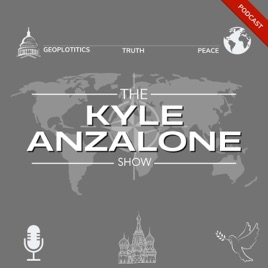
Advertise on podcast: Kyle Anzalone Show
Rating
4from
This podcast has
95 episodes
Language
EnglishPublisher
OMG Media PartnersExplicit
No
Date created
2025/05/27
Latest episode
2026/02/06
Average duration
38 min.
Release period
3 days
Description
Kyle brings his in depth knowledge of geopolitics twice a week. The Kyle Anzalone Show features guests each week breaking down world conflicts and US foreign policy. Kyle is also the opinion editor of Antiwar.com and a contributing writer at the Libertarian Institute. Produced and Distributed by OMG Media Partners.
Unlock Kyle Anzalone Show podcast Email contact info,
Listeners & Audience details
Email contact information
Direct podcast contact details

Listeners
Audience numbers & engagement insights

Audience details
Podcast Insights

Podcast episodes
Check latest episodes from Kyle Anzalone Show podcast
[GUEST] Kelley Vlahos : Does Trump’s Iran Policy Serve America or a Foreign Nation?
2026/02/06
Headlines shifted by the hour, but the stakes stayed high. We start with the last U.S.-Russia arms control guardrail, New START, and ask a simple question with massive consequences: extend the treaty and keep limits plus inspections alive, or gamble everything on a brand-new deal that tries to rope in China. We break down why a percentage-based framework is the only way Beijing would ever talk, and why tearing up what remains of verification invites a quiet arms race and louder miscalculation.
Then the ground moves under Washington’s feet. The Epstein emails aren’t just lurid; they expose how influence launders reputations and how elites normalize the indefensible. We talk names, patterns, and the corrosive effects of a culture that treats accountability as optional when a donor or fixer is involved. Trust in institutions doesn’t recover on its own; it’s rebuilt with transparency and consequences, not curated outrage.
Media independence is next on the line. A push to refit Stars and Stripes into a Pentagon PR vehicle would smother the reporting that actually helps service members: unsafe housing, contaminated water, VA gaps, recruitment realities. When oversight is replaced by messaging, readiness suffers. Troops and families deserve facts, not slogans.
Finally, the drumbeat around Iran grows louder. Talks relocate, terms shift, and a regional buildup accelerates. We run the numbers on cost asymmetry—a $20,000 drone versus a $2 million missile—and ask who benefits from demands designed to be rejected. If goalposts keep moving from nuclear limits to missiles to proxies, we’re not negotiating; we’re staging a lane to escalation. The smarter path is clear: lock in New START, protect independent reporting, treat the Epstein disclosures as a mandate for real accountability, and put disciplined diplomacy ahead of theatrics.
If this conversation resonates, follow the show, share it with a friend, and leave a review with your take: extend New START or start over—what’s the wiser move right now?
CHAPTERS:
0:34 A Whiplash Week In Foreign Policy2:22 The Fate Of New START5:02 Can Trump Land A Nuclear Deal7:51 Epstein Files Rock The Elite12:20 Power, PR, And Enablers16:43 Stars And Stripes Under Pressure23:46 Rhetoric And Risks On Iran28:06 Costs, Drones, And Mission Creep31:51 U.S.-Israel Coordination And War Warnings35:02 How Close Is A Strike On Iran
Support this podcast at — https://redcircle.com/kyle-anzalone-show/donations
Advertising Inquiries: https://redcircle.com/brands
Privacy & Opt-Out: https://redcircle.com/privacy
Sen. Schumer Touts Funding Genocide in Gaza, US Downs Iranian Drone Near Aircraft Carrier
2026/02/04
A single clip can reveal the whole playbook. When a powerful senator calls military aid to Israel his “baby,” it says everything about priorities, leverage, and who pays the price. We pull the thread from that moment into the reality on the ground in Gaza, where a supposed ceasefire overlaps with daily killings and a systematic assault on healthcare. Detained physicians describe torture and maiming that read less like isolated abuses and more like a strategy to make Gaza unlivable. Pair that with efforts to block international medical work and you get collapse by design, not accident.
We also tackle the battlefield of narratives. For years, Gaza’s death tolls were dismissed as propaganda. Now, with the IDF effectively acknowledging those figures, the numbers stand—and so does the moral weight behind them. Meanwhile, legacy outlets still reach for soft phrasing, telling readers a ceasefire is being “tested” while children are buried. That language isn’t neutral; it shapes consent. The question is whether accuracy can survive the pressure to keep audiences comfortable.
Then we turn to Iran, where swagger and strategy collide. We dissect claims about a near-term nuclear bomb, point to inspections and intelligence, and examine how a cheap Iranian surveillance drone downed by an F-35 exposes a losing economic logic for endless escalation. With carriers near the Strait of Hormuz and merchant vessels as potential triggers, miscalculation could do what no speech intends: start a war. Add in maximalist U.S. demands—from missile limits to severing regional ties to dismantling civilian enrichment—and it’s clear why talks stall. These aren’t guardrails; they’re tripwires.
We close by pushing back on a convenient myth that Americans don’t care about the Epstein files. Crimes against children cut across ideology, and accountability still matters. We’re lining up a guest to go deeper and separate signal from noise as more documents surface. If you value frank analysis over spin—on Gaza, Iran, media narratives, and elite impunity—this conversation is for you.
If this resonated, subscribe, share with a friend who cares about foreign policy and accountability, and leave a review so more people can find the show. Your support keeps independent voices in the fight.
CHAPTERS:
0:00 Opening And Listener Housekeeping2:45 Schumer’s Pledge Of Unlimited Israel Aid11:20 Ceasefire Claims Versus Ongoing Killings18:40 Targeting Gaza Doctors And Healthcare Collapse28:20 Death Toll Credibility And Media Evasion36:28 Trump’s Iran Rhetoric And Nuclear Myths
Support this podcast at — https://redcircle.com/kyle-anzalone-show/donations
Advertising Inquiries: https://redcircle.com/brands
Privacy & Opt-Out: https://redcircle.com/privacy
Should We Believe Trump’s Truth Social Threats?
2026/02/03
War planners love simple stories. Threaten, strike, and watch a “decisive” blow topple a hated regime. Today we peel back the layers on the rush toward Iran—what a decisive strike actually means, what the timelines look like from the Pentagon and Tel Aviv, and why air defenses are being surged across the Middle East. We connect the dots between public threats, carrier deployments, and leaked briefings that point to leadership-targeting plans paired with an oil blockade. Then we stress-test the assumptions: Iran’s missile and drone arsenal, Israel’s interceptor stockpiles, and the uncomfortable reality that U.S. bases from Iraq to Qatar sit squarely within range.
Diplomacy flickers at the edges with Turkish backchannels and whispered sit-downs, but Israeli “red lines” demanding zero enrichment and broader curbs on missiles and partners make agreement unlikely. We walk through the regional escalation ladder—Hezbollah in the north, Iraqi militias at home, the Houthis stretching air defenses from another axis—and explain how a “limited” strike becomes a map-wide conflict overnight. This isn’t an abstract war game; it’s a risk ledger for U.S. troops, Israeli civilians, and millions of people caught between missile arcs and sanction-induced scarcity.
Then we pivot to Cuba. The script feels eerily familiar: choke oil flows, squeeze the economy, court insiders, promise a clean transition. We unpack why decades of embargo failed to topple Havana, how sanctions can cement regimes by shifting blame, and why the most likely export of a forced collapse is a new migration wave to Florida, not a stable democracy. If the goal is real security, we argue for smarter off-ramps—credible diplomacy with Iran that sets achievable constraints, and calibrated engagement with Cuba that prioritizes humanitarian access and measured leverage.
If you care about avoiding a wider war and the blowback from brittle regime-change bets, this one’s for you. Subscribe, share with a friend who follows foreign policy, and leave a review with your take: what’s the off-ramp leaders keep missing?
CHAPTERS:
2:55 Threats Toward Iran Escalate6:12 What “Decisive” Strike Really Means13:35 Blockade Plans And Regime Change Goals19:40 Risks Of Iranian Retaliation26:39 U.S. Force Posture And Air Defenses33:05 Is The Buildup A Bluff39:18 Timelines From Pentagon And IDF
Support this podcast at — https://redcircle.com/kyle-anzalone-show/donations
Advertising Inquiries: https://redcircle.com/brands
Privacy & Opt-Out: https://redcircle.com/privacy
[GUEST] Connor Echols : How the IDF Influenced ICE, Is Trump Prepared to Attack Iran?
2026/01/30
A counterterror mindset has crept into everyday American enforcement, and the cost is now visible on city streets. We sit down with Responsible Statecraft’s Connor Eccles to trace how ICE moved from civil immigration work to a posture that looks and acts like domestic counterterrorism—fueled by years of U.S.–Israel security ties, training exchanges, and technology transfers. From Cellebrite-driven device exploitation to NGO-led law enforcement delegations, we connect the dots on how tactics honed in the West Bank filtered into U.S. policing, lowering profiling thresholds and normalizing aggressive arrests that turn protests into “battlespace.”
Minneapolis becomes the case study: a rapidly expanded force, inconsistent training, and a selection pipeline that rewarded the most gung-ho volunteers. Reports of on-duty misconduct collide with a leadership narrative that brands immigrants and even their defenders as “terrorists,” granting officers emotional permission to escalate. We explore why language matters, how legal labels like FTO designations shape behavior on the ground, and what happens when bureaucratic incentives and borrowed doctrine redefine entire communities as potential threats.
Then we pivot to the Middle East, where a swift U.S. buildup around Iran raises the specter of preemptive self-defense. We examine the strategic logic, the UN Charter, and the Constitution, and ask whether positioning troops inside missile range can ever justify a first strike. With carriers, air defenses, and proxy flashpoints in play, the risk of miscalculation is high. Yet there’s a practical off-ramp: reduce the footprint that keeps creating tripwires and political temptations to strike first. If you care about civil liberties, international law, and avoiding another unwinnable conflict, this conversation offers a clear map of how we got here—and what it would take to step back.
If this episode resonates, follow the show, share it with a friend, and leave a review with your take on the ICE–Israel link and the Iran buildup. Your feedback guides what we dig into next.
0:00 Guest Intro And Topic Setup3:55 Mapping ICE–Israel Security Ties9:30 Training, Tech Transfers, And NGOs15:45 Tactics From West Bank To U.S. Streets20:00 Minneapolis Shootings And Force Discipline24:45 Mission Creep And “Undisciplined Militia”30:20 Terror Labels, Profiling, And Public Risk
Support this podcast at — https://redcircle.com/kyle-anzalone-show/donations
Advertising Inquiries: https://redcircle.com/brands
Privacy & Opt-Out: https://redcircle.com/privacy
[GUEST] Keaton Weiss : Trump Admin LIES About Second Minneapolis ICE Killing
2026/01/26
A bystander helps a woman shoved into the snow, gets maced and beaten, and then is shot after an agent has already pulled his holstered gun away. That sequence is the heart of a Minneapolis video we unpack in painful detail—what orders were given, who had the weapon, and why multiple agents could be heard asking “Where’s the gun?” moments after the fatal shots. It’s a case study in escalation: a lawful act of recording officers becomes confrontation, communication breaks down, and militarized posture replaces control.
From there we widen the lens. We talk about how performative force hardens public life and why building consent for a nationalized security apparatus often relies on visible, viral crackdowns. Minneapolis wasn’t chosen by accident; it’s a city with a protest history and social supports that make it a symbolic battleground. We also call out glaring contradictions: leaders who champion concealed carry suddenly argue that simply having a holstered firearm voids your right to protest. The result is not just hypocrisy—it’s a selective approach to civil liberties that changes with the target.
Politics moves fast when the footage is undeniable. Polls sour on mass deportation theatrics, Republicans start to recalibrate their talking points, and a few lawmakers demand hearings. We assess what real leverage exists—appropriations, oversight, and enforceable rules like body cams and recording protections—and where past fights suggest resolve might crumble. Finally, we trace the throughline to foreign policy: carrier groups head toward Iran, pundits cheer regime change, and the same crisis logic that militarizes domestic streets justifies escalation abroad.
If this conversation resonates, tap follow, share it with a friend, and leave a review telling us the one reform you want prioritized first. Your input helps us push for accountability where it counts.
CHAPTERS
2:38 Guest Introduction And Agenda3:51 The Minneapolis ICE Shooting Breakdown6:47 Why This Killing Was “As Blatant As Can Be”9:38 Training Failures And Panic Dynamics12:34 Strategy Of Tension And Building A Police State16:17 Minneapolis As A Chosen Flashpoint18:19 Shifting The “Official Enemy” To Protesters21:22 Public Backlash And GOP Mixed Messages25:18 Gun At Protests: Rights, Risks, Hypocrisy30:21 Overreach, Consent, And Authoritarian Drift34:02 Can Democrats Leverage Funding Fights
Support this podcast at — https://redcircle.com/kyle-anzalone-show/donations
Advertising Inquiries: https://redcircle.com/brands
Privacy & Opt-Out: https://redcircle.com/privacy
Breaking: France Grabs Russian Ship, Trump Abandons Greenland Push
2026/01/23
Headlines can feel loud and disconnected, so we pulled the threads together. A French naval team boards a Russian tanker in international waters under Western sanctions, and the legal fog thickens: when enforcement isn’t anchored in the UN, it can look like a casus belli. We unpack why Moscow’s most likely responses—armed escorts or reciprocal seizures—raise the risk of direct confrontation without changing Russia’s core calculus on Ukraine.
From there we turn north. Trump’s vaunted “total access” to Greenland sounds bold until you measure it against decades-old agreements that already grant sweeping U.S. military latitude. We explain why calling enclave bases “sovereign” is symbolism with a price tag, how smarter burden-sharing could have looked, and why locals may resist any mineral-rights push tied to new infrastructure. This isn’t America first; it’s an expensive rerun.
Davos brought another twist: Zelensky’s call for regime change in Iran. We talk through the strategic tradeoffs, the finite stockpile of munitions and political will, and the awkward reality that Europe is carrying a huge share of Ukraine’s budget needs while taking public heat from the same podium. Meanwhile, at home, speech is getting squeezed. A resident gets a police knock over a mild post on Israel-Gaza. The ADL touts AI systems and a massive legal network to auto-generate letters and potential suits. We draw the line between protecting Jewish communities from bigotry and preserving the right to criticize a government’s actions, and we explore how foreign-funded influence operations—from pastoral tours to messaging blitzes—are shaping U.S. opinion with too little sunlight.
If you care about avoiding wider war, protecting civil liberties, and demanding real transparency in foreign influence, this one connects the dots. Listen, share with a friend who follows geopolitics, and leave a review telling us where you think the off-ramp still exists.
CHAPTERS:
0:00 Setting The Stakes And CTA4:14 France Seizes Russian Tanker9:15 What Counts As Sanctions And War13:50 Risk Of Russia Retaliation17:55 U.S. Guarantees To Ukraine24:00 Why Moscow Might Escalate29:10 Trump’s Greenland Deal Explained36:40 Sovereignty, Bases, And Costs
Support this podcast at — https://redcircle.com/kyle-anzalone-show/donations
Advertising Inquiries: https://redcircle.com/brands
Privacy & Opt-Out: https://redcircle.com/privacy
ICE Using AI to ID Targets, Breaking Down Trump’s WEF Speech
2026/01/21
Greenland on the table, NATO on edge, and an algorithm deciding who gets a knock at the door. We dive into President Trump’s Davos remarks claiming the U.S. will pursue Greenland, then trace the fallout across European capitals as Denmark draws a hard line on sovereignty and lawmakers move to unwind trade ties. If Greenland is already protected by NATO, what problem is “acquisition” solving—and at what cost to U.S. credibility, markets, and the transatlantic alliance?
From there, we cut through fuzzy NATO math. The much‑touted jump to 5 percent defense spending looks more like creative accounting than real muscle, with roads and rail counted as deterrence and deadlines pushed years out. Theater might buy applause, but it doesn’t buy readiness. On Ukraine, the rhetoric of nearing peace collides with a harsher map: mass drone and missile strikes, a frayed grid, rare hypersonic shots, and manpower strains that no press conference can paper over. Signing a bilateral pact that Moscow rejects as a red line isn’t a glide path to de‑escalation; it’s a fresh wedge that could harden the war.
The most chilling turn lands at home. We reveal how a Palantir‑powered tool helps ICE score neighborhoods and surface targets, while agencies purchase sensitive data from tech brokers to sidestep warrants. When a confidence number can trigger a raid, due process becomes optional and your phone becomes a surveillance beacon. Security doesn’t require pretending algorithms are oracles; it demands laws that protect rights and a strategy that separates signal from noise.
If you value clear analysis over spin, tap follow, share this episode with someone who tracks foreign policy and tech, and leave a quick review telling us which topic you want us to dig into next. Your support helps this show reach the people who need it most.
CHAPTERS:
0:00 Setting The Stakes: A Turbulent News Cycle4:16 Trump’s Davos Claim: “We Will Have Greenland”10:55 Denmark’s Red Lines And NATO Reality18:00 Tariffs, Treasuries, And Transatlantic Fallout25:40 NATO Spending Myths And Political Theater30:40 Ukraine “Peace” Claims Versus Escalation On The Ground38:20 AI-Driven ICE Targeting And Civil Liberty Risks44:34 Data Brokerage, Warrant Workarounds, And A Call For Action
Support this podcast at — https://redcircle.com/kyle-anzalone-show/donations
Advertising Inquiries: https://redcircle.com/brands
Privacy & Opt-Out: https://redcircle.com/privacy
Is Pam Bondi Miriam Adelson’s Tool to Censor Americans ?
2026/01/20
A letter about the Nobel Peace Prize. A claim that America needs “complete and total control of Greenland.” And a war that almost started, then didn’t. We follow the thread from ego-driven spectacle to real-world consequences, unpacking how image-making can bend strategy and endanger lives.
We begin with the Greenland fixation and why it fails every basic test of strategy. Greenland is already protected under NATO via Denmark, and the specter of a Chinese or Russian occupation collapses under logistics and alliance math. So what’s left? Legacy. The urge to redraw the map and be remembered becomes a risky compass when it steers policy toward symbolic victories over coherent national interest.
From there, the focus shifts to Iran and a night when airspace closed, assets moved, and insiders braced for impact. The order never came. Not because escalation was unthinkable, but because defenses were thin and retaliation looked imminent. Reports point to Netanyahu’s warning and U.S. readiness gaps as decisive. That’s sobering: it implies delay, not de-escalation, while carriers, interceptors, and air wings redeploy. We also dig into Lindsey Graham’s fury at Gulf allies who want to avoid turning their own bases and ports into targets—a reminder that geography and self-preservation shape their decisions more than Washington talking points.
Back home, we trace the money and the megaphone. Miriam Adelson’s outsized influence, built on massive checks, highlights how single-issue loyalty can purchase foreign-policy outcomes. Pam Bondi’s boasts about unprecedented DOJ actions on campus “anti-Semitism” expose the dangerous slide from policing threats to policing dissent. When pro-Palestinian protest and criticism of U.S.-Israel policy are rebranded as bigotry, federal power becomes a cudgel against speech rather than a shield for it.
We close with a regime change reality check. Dinesh D’Souza’s nostalgia for post-WWII “success” meets Dave Smith’s rebuttal: those outcomes were born of total war, mass death, and decades of occupation—conditions America will not, and should not, reproduce. Swapping in “friendlier thugs” isn’t strategy; it’s a recipe for failed states, insurgency, and endless costs.
If this breakdown helps you see the stakes more clearly, subscribe, share the show, and leave a review. What do you think is the biggest risk on the horizon: an Iran strike, a Greenland gambit, or the creeping crackdown on dissent?
CHAPTERS:
0:00 Trump’s Letter And Greenland Obsession7:30 Record Of Strikes And Prize Delusion15:30 Motives, Ego, And NATO Reality19:30 Pivot To Iran: Why Strikes Paused27:00 Lindsey Graham’s Fury And Gulf Calculus34:00 Netanyahu’s Warning And U.S. Readiness
Support this podcast at — https://redcircle.com/kyle-anzalone-show/donations
Advertising Inquiries: https://redcircle.com/brands
Privacy & Opt-Out: https://redcircle.com/privacy
[GUEST] Matt Wolfson: Israeli Connection to Maduro Kidnapping / Zionists Get Their War With Iran?
2026/01/15
Missed signals are costly; misplaced confidence is worse. We open by unpacking the concrete indicators that war planners watch—carrier deployments, airspace changes, and last‑minute strike deliberations—and what they tell us about the real likelihood of a U.S. hit on Iran. From there, the conversation widens to a quieter battlefield: development frameworks that trade normalization for access. Our guest, Matt Wolfson of the Libertarian Institute, explains how the Isaac Accords mirror the Abraham Accords across Latin America, offering water tech, finance, and modernization while pulling states into a specific geopolitical lane.
We trace how these packages play out on the ground—smart cities and smart villages that promise efficiency but often centralize control, displace farmers, and refit local economies around external capital. The throughline is leverage: funding and technology become tools to align foreign policy, not just build infrastructure. Tying this to current flashpoints, we connect Venezuela’s isolation and Iran’s containment to a paired strategy that narrows options for countries considering alternative blocs. Whether or not missiles fly, the architecture of influence expands through boards, grants, and MOUs.
Personalities and networks add sharp edges. Reports pointing to Marco Rubio and Stephen Miller as key drivers reflect long-standing alliances among neoconservatives, Zionist donors, and anti-communist exile circles, stretching from Iran-Contra to today. We weigh that ideological push against a president’s resource-first instincts and aversion to quagmires, a tension that explains dramatic reversals and transactional messaging. The big takeaway: sovereignty can erode by clause and contract as surely as by cruise missile. If we care about costs and consequences, we need to scrutinize the financing vehicles and “nonprofit” corridors that precede the headlines.
If this breakdown sharpened your lens, follow the show, share it with a friend who tracks foreign policy, and leave a review with the one question you want answered next. Your feedback shapes what we tackle in upcoming episodes.
CHAPTERS:
0:00 Setting The Stage On Iran2:07 Carrier Moves And War Signals4:03 Introducing Matt Wolfson4:35 What The Isaac Accords Do7:20 Development Deals And Lost Sovereignty10:50 Smart Cities And Smart Villages14:20 Latin America As A Test Bed16:28 Venezuela, Iran, And Paired Pressure21:10 Rubio, Miller, And The Networks25:02 America First Versus Ideology28:05 Will Zionists Tip War With Iran
Support this podcast at — https://redcircle.com/kyle-anzalone-show/donations
Advertising Inquiries: https://redcircle.com/brands
Privacy & Opt-Out: https://redcircle.com/privacy
Is Trump Making Himself a Dictator? Unchecked Power And A Looming War
2026/01/14
A president on camera says only his own morality can stop him. That single line sets the tone for a high-stakes hour where we track real-time war signals around Iran, interrogate the Greenland fantasy, and examine how power bends rules when no one close is willing to say no. We connect the dots between rhetoric, logistics, and escalating options—from sanctions and cyber operations to reports of potential strikes on non-military targets in Tehran—while reading the tea leaves of embassy closures, airspace changes, and force posture moves across the region.
We also unpack the protest landscape inside Iran: genuine economic anger, contested casualty figures, and the fog of information operations that can turn small fires into regional infernos. If the United States acts without congressional authorization or public persuasion, it won’t just risk a wider war; it will cement a template for executive overreach that future presidents will inherit. That same impulse shows up at home in the response to the ICE shooting in Minnesota, where dissent gets rebranded as disrespect and disrespect is treated like a crime. When loyalty becomes the yardstick for justice, constitutional limits become optional.
Finally, we turn to the media arena. Dave Smith’s blunt challenge to Dan Bongino raises a hard question: what happens when those who pledged to expose the “deep state” are accused of shielding it, especially on the Epstein saga? Independent platforms earn trust by pressing for receipts, not rehearsed talking points. Along the way we decode the Greenland push—why NATO already covers the threat it cites, and why chasing cartographic glory would shatter alliances without delivering strategic value.
If you care about constitutional guardrails, Middle East stability, media accountability, and honest statecraft, this one’s for you. Listen, share with a friend, and tell us where you draw the line—then hit follow so you don’t miss what comes next.
CHAPTERS:
0:00 Setting The Stakes: Power And Fear4:30 Trump’s First Term Vs Now11:30 “Only My Morality”: The Power Clip16:20 Executive Power And Guardrails Failing22:30 Are U.S. Strikes On Iran Imminent33:40 Protests, Propaganda, And Casualty Claims
Support this podcast at — https://redcircle.com/kyle-anzalone-show/donations
Advertising Inquiries: https://redcircle.com/brands
Privacy & Opt-Out: https://redcircle.com/privacy
[GUEST] Nick Cleveland-Stout : Making Big Money on War: Polymarket and Think Tanks
2026/01/12
What happens when war becomes a market and foreign policy turns into an odds board? We dive into the uneasy world of prediction platforms like Polymarket and Kalshi, where traders place bets on battlefield maps, covert raids, and even the exact words politicians will say. With researcher Nick Cleveland Stout from the Quincy Institute, we unpack how a briefly altered Ukraine map preceded a major payout, why a $400,000 win hit just hours before a surprise operation in Venezuela, and how these signals can tip off adversaries long before headlines catch up.
Together we explore the ethics and incentives behind “the news of tomorrow today.” If market rules hinge on a single source, a map tweak or an official statement can decide millions—inviting manipulation rather than insight. We look closely at the regulatory blind spot: the CFTC treats these venues as prediction markets, leaving no insider trading framework even when life-and-death events are on the line. That vacuum tempts those with privileged access to profit, while retail bettors absorb the risk and confusion.
The conversation follows the money. Defense contractors tout hardware after high-profile raids, budgets swell, and the arms industry wins. Oil players eye Venezuela’s reserves and refineries, with some majors ready to expand and others demanding ironclad guarantees after prior expropriations. We examine how talk of reimbursements, control over refining, and contested asset sales like Sitgo feed a broader strategy to exert power without boots on the ground—and how markets amplify or distort that story.
If prediction markets can surface real signals, they can also nudge reality. We outline concrete guardrails: diversified resolution sources, audit trails, institutional no-trade policies, event-type limits for active conflicts, and anomaly flags when flows cluster around sensitive moments. Then we ask the core question: should anyone profit from outcomes they can influence? Listen and decide with us, and if this conversation sharpened your thinking, follow the show, share it with a friend, and leave a review so others can find it.
CHAPTERS
0:00 Prediction Markets Enter The Spotlight3:30 Ukraine Map Manipulation Allegations9:30 Ethics And The Lawless Zone15:20 Venezuela Raid And A Huge Payout22:00 National Security Signals In Markets27:00 From Insider Bets To Shaping Reality
Support this podcast at — https://redcircle.com/kyle-anzalone-show/donations
Advertising Inquiries: https://redcircle.com/brands
Privacy & Opt-Out: https://redcircle.com/privacy
From ICE To “I Seized Your Oil”: How Not To Run A Country
2026/01/08
A young woman lies dead on a Minneapolis street, an ICE officer pulled the trigger, and the official story leans on power instead of necessity. We open with what the footage actually shows, why the shot trajectory matters, and how a federal investigation shifts accountability away from local control. The human loss is personal and visceral—and the reaction is telling. When partisan voices celebrate lethal force as a message, we all lose a piece of our democratic soul.
From there we follow the thread to Venezuela, where a brazen kidnapping of a foreign leader and airstrikes get sold as something short of war. Megyn Kelly’s caution and Kat Timpf’s pushback puncture the cheerleading and force the real questions: What’s the plan after the “win”? Who pays when “rebuilding” turns into contracts for friends and photo ops in Caracas? And if drug flows are the excuse, why ignore the obvious—demand starts at home, and public health beats cruise missiles every time. We break down the Senate’s War Powers maneuver, applaud rare moments of GOP restraint, and explain why a veto threat still matters for shaping the debate.
Finally, we take apart the latest NATO spin. If Europe adds little to American defense relative to what we provide, committing more while inflating 5 percent spending fantasies won’t fix deterrence. It’s mission creep masquerading as solidarity. Across policing, foreign policy, and alliances, our case is simple: draw firm lines, resist the spectacle, and demand strategy over swagger. If you value clear-eyed analysis without the corporate gloss, hit subscribe, share this with a friend, and leave a review telling us where you stand on Minneapolis, Venezuela, and NATO. Your voice shapes what we dig into next.
CHAPTERS:
0:00 Setting The Agenda1:05 Minneapolis Shooting Breakdown5:20 Jurisdiction And Federal Overreach7:36 Policing, Militarization, And Backlash9:42 Media Reaction And Federal Crackdown Fears12:07 Border Policy vs Deportation State15:26 Right-Wing Skeptics Of Venezuela Intervention20:48 Independent Media And War Narratives24:20 Costs And Lessons From Iraq27:15 Drugs, Demand, And False Casus Belli31:06 Is This Regime Change?34:40 Trump’s Vague Venezuela Plan38:20 Who Profits From “Rebuilding”?
Support this podcast at — https://redcircle.com/kyle-anzalone-show/donations
Advertising Inquiries: https://redcircle.com/brands
Privacy & Opt-Out: https://redcircle.com/privacy
[GUEST] Patrick Henningsen : Venezuela: America’s Next Disaster ?
2026/01/07
A president is kidnapped, the government remains, and we’re told it isn’t regime change. We pull back the curtain on what our guest calls “regime changeover,” a strategy that uses spectacle and lawfare to force leverage without admitting occupation. From sanctions that harden national unity to a reworked indictment against Nicolás Maduro that quietly retreats from early cartel claims, we dissect how narratives are built, sold, and then reshaped when facts don’t fit the script.
We get specific about why Venezuela resists the usual playbook. The Bolivarian civil-military structure blunts elite-driven coups, and a hybrid economy makes redistribution politics both urgent and volatile. When sanctions stall, pressure shifts to the shadows: covert action, destabilization, and the threat of a managed civil war. But force carries a heavy price. Without the will to occupy, Washington risks isolating itself across Latin America and the Global South while strengthening alternative alliances. That’s where heavy crude and strategic minerals enter the story—these aren’t just commodities; they’re logistical lifelines for militaries and power systems in a world edging toward multipolar confrontation.
The regional map matters. Cutting fuel flows to Cuba raises the stakes, inviting Russian or Iranian lifelines and reviving Cold War optics—tankers instead of missiles. Meanwhile, the financial track turns sanctions into profit centers, enabling distressed-asset deals and court-enabled seizures that move wealth under the veneer of legality. At home, executive overreach and headline diplomacy make lasting agreements harder, not easier. Durable deals rely on predictability and trust; tweets and tariffs deliver neither. We close with a clear takeaway: if the policy toolkit is limited to pressure and spectacle, the outcome is shrinking leverage, hardened resistance, and a region looking elsewhere for partners.
If this perspective challenges how you’ve seen Venezuela, Cuba, and U.S. foreign policy, share the episode, leave a review, and subscribe so you never miss future deep dives. Your feedback shapes what we dig into next.
CHAPTERS:
0:35 Meet Patrick Henningson1:12 Defining Regime Change In Venezuela2:36 Trump’s Rhetoric Versus Reality3:11 Regime Changeover And U.S. Long Game6:29 Why Venezuela Resists Coups8:21 From Sanctions To Jackals9:56 The Limits Of Force And Soft Power12:24 DOJ’s Shifting Case Against Maduro16:43 Media, Intelligence, And Fabricated Narratives19:45 Oil, Minerals, And A Desperate Hegemon24:27 Cuba As The Next Domino26:06 Oligarchs, Lawfare, And Asset Seizures30:20 Heavy Crude And War Planning33:58 Provoking Russia And Global Risk39:22 Donors, Lobbies, And Foreign Policy Control44:04 Constitution, Power, And Creeping Authoritarianism
Support this podcast at — https://redcircle.com/kyle-anzalone-show/donations
Advertising Inquiries: https://redcircle.com/brands
Privacy & Opt-Out: https://redcircle.com/privacy
[GUEST] Dave DeCamp : Maduro Kidnapped! Was It a Coup? Did Israel Have a Role? Is Cuba Next?
2026/01/05
A president is snatched in a pre-dawn raid, 80-plus Venezuelans are reported dead, and the White House declares it will “run” the country until a “judicious transition.” We break down what actually happened in Caracas, why the official story keeps contradicting itself, and how oil, drugs, and great-power rivalry collided to create a volatile new reality in the Americas.
We dig into the shifting justifications—from drug boats to “our oil”—and why the numbers and indictments don’t match the talking points. If Maduro had signaled openness to energy deals and dialed-back ties with Moscow, Beijing, and Tehran, why choose abduction over negotiation? We analyze the risks of trying to convert a headline-grabbing operation into a stable energy policy, and the lessons Iraq should have already made clear about post-strike production, contracts, and political risk.
We also examine the regional crosscurrents: Netanyahu’s praise, Hezbollah claims, and the hard limits of U.S. naval and missile defense assets as Washington hints at Iran and looks south toward Cuba. If carriers and interceptors are finite, where does deterrence give way? And what happens when Latin America’s electoral calendars intersect with coercive U.S. leverage in places like Colombia? Across it all runs a deeper concern: when theatrics drive decisions—right down to leaders’ optics on TV—diplomacy withers and smaller states harden their alignments.
Listen for a clear-eyed assessment of the raid’s aftermath, the strategic tradeoffs ahead, and the uncomfortable question hanging over the hemisphere: is this deterrence with a plan, or regime change as a reflex? If this conversation helps you think more critically about the stakes, follow the show, share it with a friend, and leave a review to keep these deep dives coming.
CHAPTERS:
0:38 Opening And Guest Introduction1:59 The Raid And Maduro’s Capture4:27 Airstrikes, Casualties, And Possible Collusion8:27 Trump’s Plan To “Run” Venezuela10:39 Ditching Machado And Picking Power Brokers13:22 Drugs, Oil, And Why Trump Moved16:35 Rubio’s Rationale And Mixed Messages20:18 Legal Pretexts And The New Monroe Doctrine24:48 Did Dancing Push Trump Over The Edge27:31 From Bluster To Bombs: Admin Two
Support this podcast at — https://redcircle.com/kyle-anzalone-show/donations
Advertising Inquiries: https://redcircle.com/brands
Privacy & Opt-Out: https://redcircle.com/privacy
Trump Announces US Take Over of Venezuela, Kidnaps Maduro & Bombs Caracas
2026/01/04
A pre-dawn post, a capital in darkness, and a president in cuffs aboard a U.S. ship—what started as a “one-night raid” is already morphing into something far bigger. We unpack how the strike on Venezuela unfolded, why the official story leaves key gaps, and what it means when the White House says, without hesitation, that we’ll “run the country” until a “judicious transition.” If that sounds like regime change and occupation, it’s because that’s exactly how it’s being sold.
We walk through the mechanics of the operation—air defenses knocked out, a citywide blackout, special operators intercepting Maduro before a reinforced bunker—and the uncomfortable questions that raises about access and complicity. Then we pull the legal thread: the Article II claim that troops were inserted first and then “defended” with airstrikes, the decision to bypass Congress entirely, and the attempt to rebrand a cross-border assault as “law enforcement.” War powers aren’t a suggestion, and treating sovereignty like a paperwork issue invites blowback that won’t stop at Venezuela’s borders.
The promises don’t get sturdier from there. “Oil will pay for it” clashes with reality: a battered energy sector, massive capital needs, sabotage risks, and the legitimacy crisis that follows any U.S.-installed authority. We map potential power paths—opposition figures abruptly dismissed, Delcy Rodríguez floated for continuity—and ask the hard question: if negotiation was possible, why bomb first? Along the way, we hit the regional shockwaves, from casual warnings aimed at Cuba and Colombia to the mismatch between cocaine narratives and the fentanyl crisis that actually kills Americans. Expect migration pressure, market risk, and a new precedent great powers will cite when it suits them.
CHAPTERS:
0:39 Breaking: U.S. Strikes Venezuela3:30 What Trump Posted And Claimed6:40 Inside The Operation And Odds12:45 Casualties And Damage In Caracas16:25 Constitutionality And Article II Claims24:12 No Congress, No Notice31:44 From Raid To Occupation36:20 Oil Fantasies And Costs
Support this podcast at — https://redcircle.com/kyle-anzalone-show/donations
Advertising Inquiries: https://redcircle.com/brands
Privacy & Opt-Out: https://redcircle.com/privacy
Podcast sponsorship advertising
Start advertising on Kyle Anzalone Show relevant audience podcasts
You may also like to advertise on these Podcasts

4.9127325
Design Life
Charli Prangley, Femke Van Schoonhoven
4.949250
Economic War Room
Blaze Podcast Network

4.824319
Crime story
Le Parisien

4.5227100
The College Essay Guy Podcast: A Practical Guide to College Admissions
Ethan Sawyer

3.579500
Packers Coverage
Audacy

4.921469
Evangelization & Culture Podcast
Word on Fire Institute

4.1178289
Story Archives, a TV and Film Podcast
Story Archives
4.5247181
Just Think: The Podcast
Just Think: The Podcast

4.6141084
Equity Mates Investing Podcast
Equity Mates Media

529394
KYW Newsradio's 1-On-1 with Matt Leon
Audacy