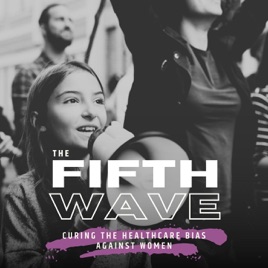
In The Fifth Wave: Curing the Healthcare Bias against Women, healthcare champions, the IWK Foundation, bring to light the profound and often dangerous consequences the gap in women’s health and research has had on women. The study of human biology has defaulted to the male body, which has hindered understanding of sex-based biological differences and results in fewer available and less effective treatments for women. We have been living in a world built for men, not only in heath care, but transportation, technology and beyond. This series will spark both curiosity and outrage leaving you wanting large scale change – a movement even. With insights from medical experts and researchers, The Fifth Wave challenges the default male standard and asks: What happens when half the population is left out of the equation? We hope to empower every woman and girl with the awareness and information to take charge of her health. Hosted by Avis Favaro.
Advertise on The Fifth Wave
Advertise on The Fifth Wave to promote your brand to thousands of podcast listeners
Breaking the Bias: Science That Finally Includes Women
2026/09/23
In this episode of The Fifth Wave, Avis Favaro asks a hard question: what happens when women aren't counted? Only 7% of Canadian health research funding specifically targets women, a number that hasn't moved in 15 years, even though women make up 51% of the population. Through conversations with Dr. Justine Dol of IWK Health, Kearie Daniel of the Black Women's Institute for Health, and Dr. Alice Aiken of Dalhousie University, this episode breaks down why the data gap exists, how it compounds for Black women and other underrepresented groups, and what it would take to finally fix it.Key Takeaways:Just 7% of Canadian health research funding specifically targets women, and that number hasn't moved in 15 years, according to a 2025 study of Canadian Institutes of Health Research grants.Closing the women's health research gap could add an estimated $37 billion a year to the Canadian economy by 2040, according to the McKinsey Health Institute.Black women in Canada are chronically underrepresented in health data. Voices Unheard, the first national survey of its kind, found that 42% of Black women delay seeking care out of fear of how they'll be treated.Disaggregated data, broken down by race, age and other factors, reveals gaps that averages hide, and it's the only way to actually fix the system for everyone.The thing you really NEED to know:You can't fix what you can't measure. Until Canada collects, funds and actually uses disaggregated data on women's health, including Black women, Indigenous women and other underrepresented groups, the healthcare system will keep being built around a population it was never designed to serve.
--
Guest Info/Resources: Dr. Justine Dol, Dr. Margaret Oulton Accelerate Chair in Women+ Health Research, IWK Health: justinedol.comKearie Daniel, Founder and Executive Director, Black Women's Institute for Health: LinkedIn ProfileDr. Alice Aiken, Professor, School of Physiotherapy, Dalhousie University; co-founder, Canadian Institute for Military and Veteran Health Research: LinkedIn ProfileResource: Maritime Women+ Health Priority Setting Partnership StudyResource: Voices Unheard: Healthcare Barriers and the Lived Experience of Black Women in Canada, Black Women's Institute for Health (November 2025).
The views, thoughts, and opinions expressed by the hosts, guests, and participants of the Fifth Wave belong solely to the individuals involved and do not necessarily reflect the official policy or position of the IWK Foundation. The information discussed in this podcast is for informational purposes only and should not be taken as medical, legal, or professional advice from the IWK Foundation. While we strive for accuracy, the IWK Foundation makes no representations as to the accuracy, completeness, suitability, or validity of any information on this podcast and will not be liable for any errors, omissions, or any losses, injuries, or damages arising from its use. Listener discretion is advised.
Europe's Progress on Women's Health
2026/09/09
In this episode of The Fifth Wave, Avis Favaro looks at how Europe is pushing women's health policy forward, and what Canada can learn from it. Since 1957, gender equality has been part of EU law, but almost seven decades later, true equality still hasn't been achieved anywhere, including in healthcare. Through conversations with Peggy Maguire of the European Institute of Women's Health, Dr. Martina Alberani of the Young Women's Health Group, Jennifer Gillivan of the IWK Foundation, and Dr. Graeme Smith of Queen's University, this episode explores concrete European policy wins, like paid menstrual leave in Spain and free period products in Scotland, and asks what it would take for Canada to build its own national women's health strategy.
Key Takeaways:
Europe has taken concrete policy action: paid menstrual leave in Spain, free period products in Scotland, and a 2014 EU mandate requiring gender to be included in clinical trials.Progress is inconsistent even within Europe. The EU has 27 member states with very different systems, and being listened to and believed remains the single biggest factor shaping women's care.Canada is starting to move. A bill to establish a national framework for women's health has been introduced in the Senate, but progress is still a patchwork of provincial plans.Canadian innovation is already leading internationally. Dr. Graeme Smith's postpartum maternal health record, developed in Kingston, has been translated into more than a dozen languages and is now recommended globally by FIGO, the International Federation of Gynaecology and Obstetrics.The thing you really NEED to know:
Equity in women's health doesn't happen by accident. It happens when data, policy and lived experience come together in the same room. Canada doesn't need to reinvent the system, it needs to assemble what already works and hold itself accountable to measurable outcomes.
–
Resources & Guest Information:
Peggy Maguire, Director General, European Institute of Women's Health.Dr. Martina Alberani, public health physician and Chair, Young Women's Health Group.Jennifer Gillivan, President and CEO of the IWK Foundation: LinkedIn ProfileDr. Graeme Smith, Professor and Head, Obstetrics & Gynaecology, Queen's University; editor-in-chief, Journal of Obstetrics and Gynaecology Canada: Faculty Profile
The views, thoughts, and opinions expressed by the hosts, guests, and participants of the Fifth Wave belong solely to the individuals involved and do not necessarily reflect the official policy or position of the IWK Foundation. The information discussed in this podcast is for informational purposes only and should not be taken as medical, legal, or professional advice from the IWK Foundation. While we strive for accuracy, the IWK Foundation makes no representations as to the accuracy, completeness, suitability, or validity of any information on this podcast and will not be liable for any errors, omissions, or any losses, injuries, or damages arising from its use. Listener discretion is advised.
Fitness For Women
2026/06/24
Movement is one of the most powerful…and overlooked…tools for women’s long term health. In this episode of The Fifth Wave, insights from sport and exercise physician Dr. Tina Atkinson, athletic trainer Kaelin Agar, strength coach Michelle MacDonald and neuroscientist Dr. Lisa Galea help to break down how every day activity can transform women’s physical, mental and cognitive well being. From age related muscle loss to the mental health benefits of exercise, to a stunning fitness transformation that began at age 70, this episode reframes movement as essential medicine. The message is clear, women don’t need perfection or extreme workouts. They need consistent, enjoyable movement that supports strength, energy, longevity and confidence.
Key takeaways:
Movement is medicine. Especially for women. Women lose bone density and muscle mass earlier and faster than men. Regular strength training and daily activity significantly reduce the risk of osteoporosis, mobility issues and chronic disease. You don’t need intense workouts. You need consistency. Experts emphasize that walking, light strength work and movement you genuinely enjoy are more sustainable and far more impactful than short bursts of extreme effort. It’s never too late to get stronger. Michelle MacDonald’s 70 year old mother transformed her health with simple, consistent training. Proving that women can build strength function and confidence at any age. The thing you really NEED to know:
Exercise is more effective than medication in preventing stroke and heart disease, which are the top causes of death for women. Small, consistent habits can literally save lives.
---
Guest Info/CTAs/Resources (pertaining to the episode)
Dr. Tina Atkinson, sport and exercise physician, Chief Medical Officer of The Canadian Sport Centre Atlantic; Maritime Sport Medicine; LinkedIn ProfileKaelin Agar, athletic trainer, Agar AthleticsMichelle MacDonald, fitness and strength coach, founder and CEO of The Wonder Women; Train With JoanDr. Liisa Galea: Treliving Family Chair in Women’s Mental Health at the Centre for Addiction and Mental Health; https://www.galealab.com/
The views, thoughts, and opinions expressed by the hosts, guests, and participants of the Fifth Wave belong solely to the individuals involved and do not necessarily reflect the official policy or position of the IWK Foundation. The information discussed in this podcast is for informational purposes only and should not be taken as medical, legal, or professional advice from the IWK Foundation. While we strive for accuracy, the IWK Foundation makes no representations as to the accuracy, completeness, suitability, or validity of any information on this podcast and will not be liable for any errors, omissions, or any losses, injuries, or damages arising from its use. Listener discretion is advised.
The Postpartum Abyss
2026/06/10
Nearly 50% of young women report negative healthcare experiences. And that is more and more visible in postpartum care. In this episode of The Fifth Wave, Avis Favaro explores why new mothers often “fall off a cliff” once the baby arrives, what the six week check up does and doesn’t cover, and how major gaps in Canada’s healthcare system are putting maternal physical and mental health at risk. Leading voices, Dr. Graeme Smith, psychologist Dr. Naomi Giberson and Nestwell Health co-founder Ellen Cohen unpack the consequences of inadequate postpartum care: missed diagnosis, untreated mental health concerns, inequitable access to support and overwhelmed clinicians. They also highlight innovative solutions, from interdisciplinary virtual clinics to female led models that proactively support mothers before crisis hits.
Key takeaways:
Postpartum care in Canada is inconsistent and often insufficient, with many mothers receiving only a six week check up. If that. This leads to missed issues like iron deficiency, hypertension, diabetes follow up and mental health concerns.Mental health needs are critical and under-recognized. In Nova Scotia, 31% of women experience postpartum depression or anxiety, with real impacts on mother baby bonding and long term child development. Women-led interdisciplinary models like Nestwell are emerging to fill dangerous gaps, but unequal access means many families still cannot get the wrap-around support they need. System level change is essential. The thing you really NEED to know:
Postpartum care isn't something that’s “nice to have”. It’s an essential medical care that protects mothers, babies and future pregnancies.
---
Guest Info/CTAs/Resources (pertaining to the episode)
Dr. Graeme Smith, Professor of Maternal and Fetal Medicine and head of the Department of Obstetrics and Gynecology, Queen’s University; editor- in- chief of The Journal of Obstetrics and Gynaecology; The Postpartum Health RecordDr. Naomi Giberson, licensed psychologist and co founder and COO of Nestwell Health; LinkedIn ProfileEllen Cohen, co founder and CEO of Nestwell Health; LinkedIn ProfileJennifer Gillivan, president and CEO, IWK Foundation; LinkedIn ProfileThe MotHERS Program
The views, thoughts, and opinions expressed by the hosts, guests, and participants of the Fifth Wave belong solely to the individuals involved and do not necessarily reflect the official policy or position of the IWK Foundation. The information discussed in this podcast is for informational purposes only and should not be taken as medical, legal, or professional advice from the IWK Foundation. While we strive for accuracy, the IWK Foundation makes no representations as to the accuracy, completeness, suitability, or validity of any information on this podcast and will not be liable for any errors, omissions, or any losses, injuries, or damages arising from its use. Listener discretion is advised.
Delayed Diagnosis, Denied Relief
2026/05/06
Endometriosis affects 1 in 10 people who menstruate, nearly 190 million worldwide. Yet it remains one of the most misunderstood and underdiagnosed women’s health conditions. In this episode of The Fifth Wave, public health Dr. Martina Alberani, women’s health advocate Maggie Archibald and Jocelynn Cook of the SOGC break down what endometriosis is, why severe period pain is not normal, and how stigma, a lack of education and long surgical wait times keep millions suffering, many in silence. This episode exposes the systemic barriers that prevent early diagnosis and effective care. Our guests also outline the critical reforms needed, like better menstrual education, improved physician training, expanded surgical capacity and national policy change.
Key takeaways:
Endometriosis is common, but chronically dismissed. Symptoms often mimic other conditions, like IBS and bladder issues. With no simple test and ongoing stigma around menstruation, diagnosis can take 5-12 years. Lack of education fuels delayed care. Many adolescents grow up believing debilitating period pain is just a part of life. Clinicians often receive too little training, and imaging frequently misses the disease. System level change is essential. Experts call for better surgical access, updated wait time strategies, stronger medical training, menstrual health education and investment in women’s health research, which still makes up only 7% of Canada’s research funding. The thing thing you really NEED to know:
Severe period pain is NOT normal. If your pain disrupts school, work, or daily life, it deserves medical attention, and could be endometriosis.
---
Guest Info/CTAs/Resources (pertaining to the episode)
Jocelynn Cook, Chief Scientific Officer for the Society of Obstetricians and Gynecologists of Canada Dr. Martina Alberani, public health resident and chair of the Young Women’s Health Group; LinkedIn Profile Maggie Archibald, women’s health advocate LinkedIn Profile Jennifer Gillivan, president and CEO, IWK Foundation; LinkedIn Profile
Resources:
The Endometrosis Network Canada
yourperiod.ca
The views, thoughts, and opinions expressed by the hosts, guests, and participants of the Fifth Wave belong solely to the individuals involved and do not necessarily reflect the official policy or position of the IWK Foundation. The information discussed in this podcast is for informational purposes only and should not be taken as medical, legal, or professional advice from the IWK Foundation. While we strive for accuracy, the IWK Foundation makes no representations as to the accuracy, completeness, suitability, or validity of any information on this podcast and will not be liable for any errors, omissions, or any losses, injuries, or damages arising from its use. Listener discretion is advised.
Menopause At Work
2026/04/22
This episode of The Fifth Wave dives into one of the least discussed but most consequential workplace issues today: menopause and its massive impact on women, employers and the economy. With nearly 2 million working women in Canada aged 45-55, unmanaged symptoms like insomnia, heavy bleeding, hot flashes and brain fog are driving burnout, reducing productivity and even pushing women out of the workforce.
Featuring insights from Dr. Sarah Vadeboncoeur, Dr. Stephanie Faubion of the Menopause Society and Rhode Island legislators Senator Lori Urso and Representative Karen Alzate, this episode uncovers the stigma, the silent suffering and the transformative policy movement emerging across North America. From invisible symptoms to groundbreaking legislation, this conversation reveals why supporting menopausal women at work isn’t just compassionate, it’s economically essential.
Key takeaways:
Menopause symptoms are often invisible, and women are silently powering through. Night sweats, insomnia, heavy bleeding, anxiety and cognitive shifts aren’t always visible. Many women “push through” to avoid stigma or being seen as unreliable. Stigma keeps women quiet. And careers are paying the price. Fear of being labeled “hormonal” or “unstable” leads many women to hide symptoms. This silence can cost them promotions, earning potential and long term retirement security. Policy change is finally happening. It’s reshaping the workplace. Rhode Island is the first US jurisdiction to mandate menopause accommodations. Other states are already moving to follow. Experts emphasize that menopausal women are not a liability. They are often an organization’s most experienced, strategic and valuable contributors. The thing you really NEED to know:
Unmanaged menopause symptoms cost the Canadian economy $3.5 billion every year. It costs individual women $33.3 billion in lost income due to reduced hours, lower pay, or leaving the workforce entirely.
---
Guest Info/CTAs/Resources (pertaining to the episode):
Dr. Sarah Vadeboncoeur, naturopathic doctor https://drsarahv.ca/; InstagramDr. Stephanie Faubion, medical director of the Menopause Society and director of the Mayo Clinic Center for Women’s HealthSenator Lori Urso, State of Rhode IslandRepresentative Karen Alzatee, State of Rhode IslandJennifer Gillivan, President and CEO of the IWK Foundation: LinkedIn Profile
The views, thoughts, and opinions expressed by the hosts, guests, and participants of the Fifth Wave belong solely to the individuals involved and do not necessarily reflect the official policy or position of the IWK Foundation. The information discussed in this podcast is for informational purposes only and should not be taken as medical, legal, or professional advice from the IWK Foundation. While we strive for accuracy, the IWK Foundation makes no representations as to the accuracy, completeness, suitability, or validity of any information on this podcast and will not be liable for any errors, omissions, or any losses, injuries, or damages arising from its use. Listener discretion is advised.
Carrying The Mental Load
2026/04/08
In this episode of The Fifth Wave, we expose the deep rooted gender bias baked into women’s healthcare, from being dismissed as “emotional” to receiving later diagnoses and poorer mental health support.
Featuring insights from healthcare leaders, psychologists and researchers, we uncover how systemic bias, outdated medical norms and the invisible mental load are shaping women’s physical and mental health. The message is clear: women are carrying a burden that is neither imagined or inevitable and the system must change.
Key takeaways:
Women’s symptoms are routinely dismissed. Often with real consequences. Experiencing fatigue and pain, women are often told they are “overreacting”, “emotional”, or imagining symptoms. This bias delays diagnoses, worsens outcomes and erodes trust in the healthcare system. The mental load and systemic pressures hit women hard. Caregiving, workplace expectations and societal norms create a perfect storm. This invisible labour intensifies stress, fuels mental health struggles and disproportionately affects mothers, women of colour and those facing economic barriers. Healthcare research still centers on men and women pay the price. With 97% of research historically based on men or sex neutral models, women’s symptoms are misunderstood, mislabeled or minimized. Even postpartum depression studies face pushback for not including male subjects despite biology making that impossible. The thing you really NEED to know:
Women are still diagnosed two years later than men across more than 1,300 medical conditions, including depression, anxiety and Alzheimer's disease. Not because their symptoms are rare, but because their symptoms are labeled “atypical”, even when women make up the majority of cases.
---
Guest Info/CTAs/Resources (pertaining to the episode)
Dr. Liisa Galea, Treliving Family Chair in Women’s Mental Health at the Centre for Addiction and Mental Health; https://www.galealab.com/Dr. Christine Korol, registered psychologist https://drchristinekorol.ca/Dr. Naomi Giberson, licensed psychologist and co founder and COO of Nestwell Health; LinkedIn ProfileJennifer Gillivan, President and CEO of the IWK Foundation: LinkedIn Profile
The views, thoughts, and opinions expressed by the hosts, guests, and participants of the Fifth Wave belong solely to the individuals involved and do not necessarily reflect the official policy or position of the IWK Foundation. The information discussed in this podcast is for informational purposes only and should not be taken as medical, legal, or professional advice from the IWK Foundation. While we strive for accuracy, the IWK Foundation makes no representations as to the accuracy, completeness, suitability, or validity of any information on this podcast and will not be liable for any errors, omissions, or any losses, injuries, or damages arising from its use. Listener discretion is advised.
Not Built For Us
2026/03/25
In this deeply compelling episode, we hear how racism, bias and systemic inequities shape the healthcare experiences of Black, Indigenous and women of colour. Featuring powerful conversations with entrepreneur Vivian Kaye, cancer advocate Michelle Audoin and researcher Dr. Thirusha Naidu, this episode exposes the hidden ways discrimination shows up. From diagnostic delays to insufficient medical training tools to the emotional labour women must carry just to receive adequate care.
Through lived experiences and expert insights, this discussion reveals the urgent need for inclusive medical education, culturally informed care and healthcare systems that recognize and respond to the realities of racialized women. It’s essential listening for anyone committed to equity in women’s health, patient advocacy and dismantling harmful medical biases.
Key Takeaways:
Racial bias in healthcare isn’t rare. It’s built into the system. From dismissive interactions to unequal treatment pathways, women of colour face structural barriers that affect diagnoses, pain management,surgical outcomes and trust in providers. Representation in medical tools and research still has a long way to go. Most anatomical models, reference images, and clinical training material fail to reflect women of colour. This leads to things like misdiagnosis and care that doesn’t align with real patient needs. Advocacy isn’t optional. It’s a survival skill. Guests share strategies for self advocacy, raising questions, requesting alternatives and pushing back when care falls short -kills many women rely on simply to be heard. The thing you really NEED to know:
Black, Indigenous and women of colour are navigating a healthcare system that was not built for them and the consequences are real. Until representation, research, and training change, women of colour will continue to unfairly bear the burden. Awareness and advocacy are the first steps toward fixing a system that urgently needs transformation.
---
Guest Info/CTAs/Resources (pertaining to the episode):
Vivian Kaye, business and empowerment expert and keynote speaker: https://viviankaye.com/Michelle Audoin, educator and cancer care advocate: LinkedIn ProfileDr. Thirusha Naidu, associate professor, department of innovation in Medical Education at the Faculty of Medicine at the University of Ottawa
The views, thoughts, and opinions expressed by the hosts, guests, and participants of the Fifth Wave belong solely to the individuals involved and do not necessarily reflect the official policy or position of the IWK Foundation. The information discussed in this podcast is for informational purposes only and should not be taken as medical, legal, or professional advice from the IWK Foundation. While we strive for accuracy, the IWK Foundation makes no representations as to the accuracy, completeness, suitability, or validity of any information on this podcast and will not be liable for any errors, omissions, or any losses, injuries, or damages arising from its use. Listener discretion is advised.
The Kitchen Sponge
2026/02/25
In this episode of The Fifth Wave, Avis Favaro shows us the quiet crisis in women’s health. Underfunded research. Outdated medical devices. And training tools that are so inadequate, they border on the unbelievable - like teaching perineal suturing on a sponge. Through conversations with innovators reshaping Femtech and reproductive health, including Christine Goudie of Granville Biomedical, Rashmi Prakash of Aruna Revolution and Rachel Bartholomew of HighIvy Health, we explore why women continue to be left behind in medical research, product design and clinical training.
From pacemakers never tested on women, to menstrual products dismissed as “niche” , this episode shines a light on systemic biases and barriers. And it highlights the entrepreneurs who are fighting to build a healthcare system where women are finally prioritized.
Key Takeways:
Women’s health is dangerously under researched. Diseases affecting men receive double the funding. Many medical devices, from pacemakers to pelvic tools, were developed without accounting for women’s bodies. Outdated and inadequate training harms patient safety. Medical residents have long been trained using sponges, fruit or cow tongues, leaving them unprepared for real procedures on women’s bodies.Femtech leaders are rewriting the system from the ground up. Innovators like Goudrie, Prakash and Bartholomew are creating accurate anatomical models, rethinking menstrual care and driving policy advocacy.
The thing you NEED to know:
Women make up 50% of the population, yet are still excluded from medical studies, device testing, funding priorities and even basic clinical training. The consequences are harming real women every day. Change starts with education, advocacy and refusing to accept that “This is the way we’ve always done it.”
---
Guest Info/CTAs/Resources (pertaining to the episode):
Christine Goudie, Co founder and CEO, Granville Biomedical: LinkedIn ProfileRashmi Prakash, CEO Aruna Revolution: LinkedIn ProfileRachel Bartholomew, founder and CEO, HighIvy Health, Femtech Canada and Femtech Across Borders: LinkedIn ProfileJennifer Gillivan, President and CEO of the IWK Foundation: LinkedIn Profile
The views, thoughts, and opinions expressed by the hosts, guests, and participants of the Fifth Wave belong solely to the individuals involved and do not necessarily reflect the official policy or position of the IWK Foundation. The information discussed in this podcast is for informational purposes only and should not be taken as medical, legal, or professional advice from the IWK Foundation. While we strive for accuracy, the IWK Foundation makes no representations as to the accuracy, completeness, suitability, or validity of any information on this podcast and will not be liable for any errors, omissions, or any losses, injuries, or damages arising from its use. Listener discretion is advised.
How FemTech is Reshaping Women’s Health
2026/01/28
his episode explores the fast growing FemTech sector, where we talk about the technology being created to address women’s health needs. Our guests Rachel Bartholomew and Dr. Jennifer Johnston are both FemTech founders, who created their companies in response to personal and professional frustrations with outdated tools and knowledge in women’s health. They shed light on the persistent gender data gap, the importance of designing inclusive diagnostics and the massive economic and social opportunities that exist in women’s health innovation.
Key Takeaways:
Innovation is born of necessity. Both Bartholomew and Johnston developed new tech after identifying major gaps in women’s care and treatment options. Data is power. FemTech offers new ways to generate objective, consistent health data. This is essential to closing the gender data gap in medicine and in diagnostics. It’s a sector on the rise. FemTech in Canada is becoming a global player, but still receives just a fraction of healthcare funding. ----
Rachel Bartholomew, founder and CEO of Hyivy and founder of FemTech CanadaDr. Jennifer Johnston, family physician and founder of Elle, MDThe Fifth Wave is produced by Story Studio Network.
The views, thoughts, and opinions expressed by the hosts, guests, and participants of the Fifth Wave belong solely to the individuals involved and do not necessarily reflect the official policy or position of the IWK Foundation. The information discussed in this podcast is for informational purposes only and should not be taken as medical, legal, or professional advice from the IWK Foundation. While we strive for accuracy, the IWK Foundation makes no representations as to the accuracy, completeness, suitability, or validity of any information on this podcast and will not be liable for any errors, omissions, or any losses, injuries, or damages arising from its use. Listener discretion is advised.
What’s Next? AI in Women’s Health
2026/01/14
Artificial Intelligence is not just here, it’s constantly advancing. In this episode, we look at how AI can reshape women’s healthcare. And the risks that come with it. From smartwatches that collect gender specific data, to algorithms that are trained on male dominated data sets, we look at the promise, as well as the pitfalls of AI in a space that has long been underserved by medical research. Our guests weigh in on how bias, data quality, and culture affect the tools shaping our future. And what it will take to close the gender health gap.
Key Takeaways:
If there is bias going in, we’ll have bias coming out. AI tools often rely on existing healthcare data that skews male, which creates risks for misdiagnosis and inequity for women’s healthcare. Wearables, like smart watches and rings, may be the tool that helps crack the gender data gap by providing a proliferation of gender specific health data. AI is a support, not a substitute for medical advice. While it can empower patients with more precise language and self tracking, we still need expert diagnosis and human oversight.----
Giles Crouch, Digital Anthropologist https://www.gilescrouch.com/Dr. Gillian Einstein – University of Toronto Dr. Gillian Einstein U of TDr. Maria Migas, Menopause Specialist, Halifax, NSUjwal Arkalgud, Cultural Anthropologist, Author and Entrepreneur
The Jetsons Pillcam Episode 1962: The Jetsons Pillcam (1962)
The Fifth Wave is produced by Story Studio Network.
The views, thoughts, and opinions expressed by the hosts, guests, and participants of the Fifth Wave belong solely to the individuals involved and do not necessarily reflect the official policy or position of the IWK Foundation. The information discussed in this podcast is for informational purposes only and should not be taken as medical, legal, or professional advice from the IWK Foundation. While we strive for accuracy, the IWK Foundation makes no representations as to the accuracy, completeness, suitability, or validity of any information on this podcast and will not be liable for any errors, omissions, or any losses, injuries, or damages arising from its use. Listener discretion is advised.
Looking Elsewhere
2025/11/12
Where does Canada sit on the world stage when it comes to women’s healthcare? We have some catching up to do. In this episode of The Fifth Wave: Curing the Healthcare Bias Against Women, we look at what places like the UK, Australia and Nordic countries are doing right, and what we can learn from them. Expert voices Dr. Jocelynn Cook and Dr. Martha Hickey weigh in on the importance of data, as well as tailored policies and community informed research. While systems differ, it’s clear that in order to move forward, Canada must build a women centred strategy that reflects its own reality. And that starts by listening to women and gathering the right data.
Key Takeaways:
Countries like the UK and Australia have national strategies for women’s health that include menopause care, stillbirth prevention and access to contraception and abortion. The barrier in Canada is solvable. Differences in delivery from province to province can make national coordination difficult, but we can still adopt best practices rooted in solid gender specific data.It has to start with listening to women. With accurate data on women’s health issues, we can start to build an effective strategy. Asking women what they want is the first step towards real progress.----
Dr. Jocelynn Cook, Chief Scientific Officer for the Society of Obstetricians and Gynecologists of Canada. https://www.pehe-esep.ca/jocelynn-cookDr. Martha Hickey, Professor of Obstetrics and Gynaecology at the University of Melbourne. https://www.thewomens.org.au/research/research-centres/womens-gynaecology-research-centre/wgrc-our-people/martha-hickeyThe Fifth Wave is produced by Story Studio Network.
The views, thoughts, and opinions expressed by the hosts, guests, and participants of the Fifth Wave belong solely to the individuals involved and do not necessarily reflect the official policy or position of the IWK Foundation. The information discussed in this podcast is for informational purposes only and should not be taken as medical, legal, or professional advice from the IWK Foundation. While we strive for accuracy, the IWK Foundation makes no representations as to the accuracy, completeness, suitability, or validity of any information on this podcast and will not be liable for any errors, omissions, or any losses, injuries, or damages arising from its use. Listener discretion is advised.
Around the Kitchen Table
2025/10/22
In this episode of The Fifth Wave, host Avis Favaro sits around the virtual kitchen table with women to share deeply personal stories about gender bias. From life threatening misdiagnosis to breaking down barriers in male dominated fields, the conversation reveals the hidden ways gender shapes women’s lived experiences. And why talking about it matters. Our guests, Rose Fisher and Carliegh Bell tell us about the consequences of being unheard, and the importance of creating inclusive spaces where women can be fully recognized.
Key Takeaways:
Gender bias is not just systemic, it is also personal. Rose tells us how her heart attack was initially misdiagnosed as anxiety. Carliegh describes the emotional toll it takes on women to be accepted in a male dominated sector. Women’s voices are data. The importance of listening to women’s stories to help bridge the gender data gap, and improve systems that have been designed without women in mind. Representation is vital for equity and survival. As Rose points out, women are not just “small men”, and solutions have to account for gender specific realities.The Fifth Wave is produced by Story Studio Network.
The views, thoughts, and opinions expressed by the hosts, guests, and participants of the Fifth Wave belong solely to the individuals involved and do not necessarily reflect the official policy or position of the IWK Foundation. The information discussed in this podcast is for informational purposes only and should not be taken as medical, legal, or professional advice from the IWK Foundation. While we strive for accuracy, the IWK Foundation makes no representations as to the accuracy, completeness, suitability, or validity of any information on this podcast and will not be liable for any errors, omissions, or any losses, injuries, or damages arising from its use. Listener discretion is advised.
The Consumerism of Menopause
2025/09/24
The conversation around menopause has exploded….but are there complications with that? In this episode of The Fifth Wave, we explore the public discussion, celebrity branding and online influencers shaping the menopause narrative. We get insight from guests Jennifer Barsky, Dr. Heidi Bentley and Dr. Martha Hickey as we look at the tension between empowerment and exploitation. As women look for answers and relief for symptoms that are often misunderstood or ignored, they are navigating a booming $600 billion industry where we sometimes see marketing and desperation collide.
Key Takeaways:
While visibility is rising, so is misinformation. The flood of celebrity products and influencer advice can confuse or mislead women healthcare looking for real help. Healthcare gaps are fueling the market. Many women lack access to informed providers, which can push them towards unregulated supplements and social media for support. Education is empowerment. Experts are urging women to turn to credible sources for guidance, like national menopause societies and certified providers. And recommend a sceptical eye towards online advice that is attached to products and supplements.
----
Jennifer Barsky, founder and executive director of the Menopause Global Alliance Dr. Heidi Bentley, Halifax, NSDr. Martha Hickey, Professor of Obstetrics and Gynaecology at the University of Melbourne. https://www.thewomens.org.au/research/research-centres/womens-gynaecology-research-centre/wgrc-our-people/martha-hickeyThe Fifth Wave is produced by Story Studio Network.
The views, thoughts, and opinions expressed by the hosts, guests, and participants of the Fifth Wave belong solely to the individuals involved and do not necessarily reflect the official policy or position of the IWK Foundation. The information discussed in this podcast is for informational purposes only and should not be taken as medical, legal, or professional advice from the IWK Foundation. While we strive for accuracy, the IWK Foundation makes no representations as to the accuracy, completeness, suitability, or validity of any information on this podcast and will not be liable for any errors, omissions, or any losses, injuries, or damages arising from its use. Listener discretion is advised.
(All Aboard) The Menopause Train
2025/08/20
In this eye-opening episode, we step aboard “The Menopause Train” to explore the biological, emotional, and societal impact of menopause. Once whispered about as “The Change,” menopause is now entering mainstream conversation thanks to advocates like journalist Tamsen Fadal and menopause specialist Dr. Maria Migas. We unpack the reality of perimenopause and menopause, the lack of medical training around it, and the pressing need for better education, support, and workplace accommodations. This episode encourages us all—regardless of gender—to recognize, normalize, and support the menopausal journey.
Key Takeaways:
Menopause is more than just hot flashes. With over 30 potential symptoms, including brain fog, anxiety and bladder infections, menopause can significantly impact daily life and is often misunderstood or misdiagnosed. Medical training and awareness are lagging behind. Most doctors receive minimal education on menopause, leaving many women without adequate support or treatment options during this stage of life. Advocacy is fueling change. Voices like Tamsen Fadal’s are pushing menopause into public conversations. These kinds of public conversations are calling for better research, resources and workplace policies to address the huge economic cost of unmanaged symptoms in Canada alone. ----
Tamsen Fadal: https://www.tamsenfadal.com/Dr. Maria Migas, Halifax, NS The Menopause Society of Nova ScotiaJennifer Gillivan, President and CEO of the IWK Foundation, Halifax, NS https://iwkfoundation.org/Menopause Foundation of CanadaThe Fifth Wave is produced by Story Studio Network.
The views, thoughts, and opinions expressed by the hosts, guests, and participants of the Fifth Wave belong solely to the individuals involved and do not necessarily reflect the official policy or position of the IWK Foundation. The information discussed in this podcast is for informational purposes only and should not be taken as medical, legal, or professional advice from the IWK Foundation. While we strive for accuracy, the IWK Foundation makes no representations as to the accuracy, completeness, suitability, or validity of any information on this podcast and will not be liable for any errors, omissions, or any losses, injuries, or damages arising from its use. Listener discretion is advised.