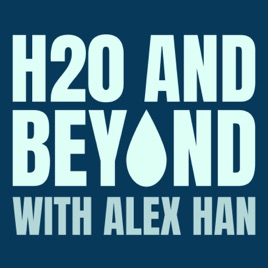
Advertise on podcast: H2O and Beyond
This podcast has
26 episodes
Language
EnglishPublisher
Alex HanExplicit
No
Date created
2025/07/18
Latest episode
2026/04/04
Average duration
45 min.
Release period
14 days
Description
H2O and Beyond is your weekly deep dive into the science, systems, and stories behind the water we use every day. Hosted by a student with a passion for the environment, this podcast makes complex topics—from pollution to policy—easy to understand. Get clear, engaging episodes that explore the forces shaping our water future—without watering down the truth. Follow and Subscribe to our socials! (psst we also have a Youtube Channel on there where we post video podcasts as well) https://linktr.ee/h2oandbeyond
Unlock H2O and Beyond podcast Email contact info,
Listeners & Audience details
Email contact information
Direct podcast contact details

Listeners
Audience numbers & engagement insights

Audience details
Podcast Insights

Podcast episodes
Check latest episodes from H2O and Beyond podcast
Episode 25 - "California's Tulare Lake"
2026/04/04
In this episode of H2O and Beyond, we explore the story of Tulare Lake — once the largest freshwater lake west of the Mississippi — and one of the most overlooked water systems in the United States.
Joined by experts from the Tulare Basin Watershed Partnership, we dive into the history, science, and complexity of a lake that doesn’t behave like most others. Unlike permanent lakes, Tulare Lake has always been dynamic — rising and falling with storms, droughts, and human intervention. But over the past century, it’s been almost completely engineered, drained, and reshaped to support agriculture in California’s Central Valley.
Timestamps:
00:00 Intro – The lake that disappeared… and came back
04:20 How the basin works (why water gets trapped)
09:00 Why the lake constantly rises and falls
13:20 Human engineering – levees, farming, and control
19:05 Ecosystem overview – why this place was unique
27:30 Wildlife + biodiversity of the lake
34:10 Native communities and how they lived with the lake
40:50 Modern challenges – agriculture, water demand, sustainability
42:40 Hope for the future + closing thoughts
🎧 Listen to more episodes & follow us here: https://linktr.ee/h2oandbeyond
Feedback Form: https://forms.gle/RNjdFLY2wSrk7PW2A
Resources: https://www.tularebasinwatershedpartnership.org/
If you liked this episode, please Like and Subscribe!
Episode 25 - The Aral Sea - World's Worst Water Disaster?
2026/02/28
In this episode of H2O and Beyond, I’m joined by historian Dr. Sarah Cameron to unpack the story of the Aral Sea — one of the greatest environmental catastrophes of the 20th century.
How did a massive inland sea in Central Asia nearly disappear?
What role did Soviet cotton production play?
And what happens to communities when an entire ecosystem collapses?
We dive into the Cold War politics behind the diversion of the Amu Darya and Syr Darya rivers, the rise of cotton as a “strategic crop,” and how irrigation infrastructure slowly strangled the sea.
We also explore the human side of the crisis — from fishing communities forced to abandon their livelihoods to toxic dust storms that reshaped public health in the region.
Timestamps:
0:00 Intro
3:59 What is the Aral Sea?
10:46 How did the sea affect the climate?
12:07 Why did the Soviets drain the sea?
24:13 How were locals affected?
28:41 Dust Storms
31:54 What does the Aral Sea look like now?
38:04 Revival Efforts
45:41 Closing
🎧 Listen to more episodes & follow us here: https://linktr.ee/h2oandbeyond
Feedback Form: https://forms.gle/RNjdFLY2wSrk7PW2A
Resources:
https://www.cornellpress.cornell.edu/book/9781501730436/the-hungry-steppe/#bookTabs=5
https://decentarch.hypotheses.org/866
https://www.wilsoncenter.org/article/life-and-death-aral-sea-conversation-wilson-fellow-sarah-cameron
If you liked this episode, please Like and Subscribe!
Episode 24: "Water Wars"
2026/02/13
In this episode of H2O and Beyond, I’m joined by Morgan Shimabuku from the Pacific Institute to break down how water becomes a trigger, casualty, and weapon in conflict. We explore what actually qualifies as a water conflict, why the term “water wars” can be misleading, and what global data reveals about where and how these conflicts are increasing.
We discuss real-world examples from around the globe, including the Middle East, sub-Saharan Africa, South Asia, Ukraine, and Gaza—examining how water infrastructure is destroyed, shut off, or weaponized, and what that means for civilian populations.
Timestamps:
00:00 Intro
7:39 What are water conflicts?
11:12 Trends in water conflicts
17:30 Are water conflicts an issue in the developed world?
22:04 How are water conflicts resolved?
29:09 Conflicts in Gaza
34:09 Other work at the Pacific Institute
36:28 Closing
🎧 Listen to more episodes & follow us here: https://linktr.ee/h2oandbeyond
Feedback Form: https://forms.gle/RNjdFLY2wSrk7PW2A
Pacific Institute Resources: https://www.worldwater.org/water-conflict/https://www.worldwater.org/conflict/map/www.pacinst.org
Episode 23: "Southeast Asia's Unregulated Rare Earth Mines"
2026/01/29
In this Episode of H2O and Beyond, I'm joined by Mr. Regan Kwan, a research analyst from the Stimson Center as we talk about the unregulated rare earth mines of Southeast Asia. Rare earth elements are crucial to modern life. They’re in our phones, computers, electric vehicles, and renewable energy technologies. But the environmental cost of extracting them is often paid far from where these technologies are used.
We examine how a technique known as in-situ leaching is devastating river systems, groundwater, ecosystems, and human health. While these mines may appear less destructive on the surface, the water impacts are severe: acidic wastewater pumped directly back into rivers, abandoned waste pools that overflow during monsoon seasons, and pollutants that infiltrate soil, crops, and drinking water. In Myanmar, there are over 800 unregulated rare earth mines!
Timestamps:
0:00 Intro
7:07 What are rare earth minerals?
12:57 Why the sudden spike in interest?
18:57 How are rare earth minerals mined?
23:45 Myanmar's 800 unregulated mines
33:07 Ecological impacts
38:22 Should outsiders care about this issue?
43:50 Just how big is the rare earth industry?
45:39 How are these mines detected?
47:14 New trends in the industry
51:59 Role of the Stimson Center
58:42 Closing🎧 Listen to more episodes & follow us here: https://linktr.ee/h2oandbeyondFeedback Form: https://forms.gle/RNjdFLY2wSrk7PW2AStimson Center Links:
https://www.stimson.org/2025/unregulated-mining-along-rivers-in-mainland-southeast-asia/https://www.stimson.org/2025/mining-in-mainland-southeast-asia-river-basins-dashboard/https://www.stimson.org/event/testing-the-waters-unregulated-mining-in-the-mekong-region/
Some major media hits from the data release:
Reuters: https://youtu.be/AezIFldj5uA?si=W3FNcClmCpdeFEaJ
Mongabay: https://news.mongabay.com/2025/11/toxic-runoff-from-politically-linked-gold-mine-poisons-cambodian-rivers-communities/
CNN: https://www.cnn.com/2025/11/25/asia/rare-earth-river-pollution-myanmar-china-intl-hnkT
PBS: https://youtu.be/lV7NkSebOMU?si=hyDB0lTYMJgWyGhj
CNA (with Regan): https://youtu.be/XPX9hqZOlXc?si=cDPK8i68kQ7ZecNn
Korean OBS: https://youtube.com/shorts/2-XVqWNq0SA?si=ybmyTtT3hNMP9aB1If you liked this episode, please Like and Subscribe!
Episode 22: The Power of Traditional Climate Knowledge
2026/01/23
For thousands of years, Pacific Island communities survived rising seas, volcanic eruptions, tsunamis, and storms—without satellites, sensors, or climate models.
In this episode of H2O and Beyond, I speak with Patrick Nunn, a geologist who has spent more than three decades working with Pacific Island communities, learning how traditional knowledge preserved real environmental history—and how colonization disrupted it.
We explore how myths and legends are actually encoded memories of past disasters, why many Pacific Islanders historically avoided coastlines, and how modern climate adaptation efforts often fail when they ignore local knowledge. We also discuss why money alone won’t solve climate change, and why the future depends on combining Indigenous knowledge with Western science. This episode challenges the idea that vulnerable communities are helpless—and asks what we’ve lost by failing to listen.
00:00 Intro
06:10 Who are the Pacific Islanders?
10:28 What is traditional knowledge?
16:39 Current sea level rise in the Pacific Islands
21:24 The problem with money-first climate aid
24:12 When scientists ignore traditional knowledge
29:00 Why money won’t solve climate change
30:38 How have communities lost their traditional knowledge?
33:00 Place-based knowledge vs global science
35:51 Why has traditional knowledge been ignored in the past?
43:04 How should aid communities go about helping?
46:17 What role does religion play in educating pacific islanders?
49:07 Closing
Feedback Form: https://forms.gle/RNjdFLY2wSrk7PW2A🔗
https://linktr.ee/h2oandbeyond
Learn more about Dr. Nunn's work! https://patricknunn.org/
The Cost of the Truth: Special Interview with Time 100 Scientist Marc Edwards
2026/01/16
What happens when the people responsible for protecting public health become the ones doing the harm?
In this episode of H2O and Beyond, I’m joined by Dr. Marc Edwards, a Virginia Tech professor who was named to TIME’s 2016 TIME 100 for his role in helping expose the Flint water crisis. But this conversation goes far beyond Flint.
Dr. Edwards breaks down how the Washington D.C. lead crisis unfolded, why he believes government agencies knowingly covered up dangerous lead exposure for years, and what happens to scientists who refuse to stay quiet. We talk about the real consequences of whistleblowing, the collapse of trust in institutions, and why fixing water infrastructure becomes almost impossible once the public believes the system is lying.
We also dive into Flint—what was true, what got distorted, and why Dr. Edwards says the narrative around the crisis has sometimes caused harm of its own. Finally, he shares blunt advice for young scientists: how to stay honest in a system that rewards quantity over truth.
Timestamps:
0:00 Intro
5:19 The start of it all: Washington D.C
9:37 Experiences testifying in Congress
10:35 Bad scientists?
12:06 How can the EPA get away with lying to the public?
14:50 Why do most Americans not know about D.C?
15:54 Why did the EPA cut Dr. Edwards funding?
17:06 What kept Dr. Edwards pushing for the truth?
18:29 Punishments for whistleblowing
20:33 How bad was Flint, from a scientist’s perspective?
25:20 Are the kids in Flint really that much behind developmentally?
31:25 Why do scientists lie?
33:32 How do you deal with defamation as a scientist?
34:40 Problems with funding
37:17 Why do we reward quantity over quality in science?
41:09 Advice for young scientists
42:26 How do we solve this broken system of science right now?
🔗 Follow H2O and Beyond: https://linktr.ee/h2oandbeyond
Dr. Edward's website:
https://www.webapps.cee.vt.edu/index.php?category=people&pagetype=bio&do=getprofile&user=edwards.html
https://pmc.ncbi.nlm.nih.gov/articles/PMC10103158/
Episode 20: The Impossible Journey of Salmon
2025/12/19
In this episode of H2O and Beyond, I’m joined by Ian Giancarlo, Oceans Advocate at Environment Oregon, to break down what’s really happening to salmon in the Pacific Northwest—and why dams on rivers like the Columbia and Snake are at the center of the crisis.
For thousands of years, salmon have made one of the most demanding migrations on Earth. From the Pacific Ocean, they swim hundreds—sometimes thousands—of miles upstream to the exact rivers where they were born. But today, that journey is being cut short. Some salmon runs have declined by over 90%!
⏱️ Timestamps
00:00 Intro
4:00 The great salmon migration
12:49 Dam effects on salmon runs
20:14 Salmon farms
21:48 Resident orcas and starvation
28:17 What would happen if we removed all dams?
33:54 Run for salmon runs
37:52 Arguments against dam removal
40:06 Closing
🎧 Listen to more episodes & follow us here: https://linktr.ee/h2oandbeyond
Feedback Form: https://forms.gle/RNjdFLY2wSrk7PW2A
Learn more about Mr. Giancarlo's work!
https://environmentamerica.org/oregon/center/updates/the-run-for-salmon-runs-crosses-the-finish-line/
Episode 19: The Great Salt Lake's Dust Problem - Explained
2025/12/12
In this episode of H2O and Beyond, I’m joined by Dr. Kevin Perry from the University of Utah to uncover the science behind one of the most urgent environmental issues in the American West: the shrinking Great Salt Lake and the dust it’s leaving behind.
Dr. Perry spent years studying the exposed lakebed — even biking more than 2,300 miles around it — to map where dust originates and what’s actually in it. His research reveals surprising truths about arsenic levels, dust “hotspots,” and how only a small fraction of the lakebed is responsible for most dust emissions.
We’ll also dig into his thoughts on the role of scientists in today’s society, and how important it is to maintain credibility as a researcher.
0:00 Intro
6:15 Introduction to the Great Salt Lake
8:25 Why is the lake shrinking?
12:23 What happens when the lake shrinks?
14:03 Research techniques utilized
18:23 Elements of concern in the dust
24:19 Dust events in Utah
28:41 Current efforts to save the lake
34:49 Future of the lake
38:10 Role of scientists in society
42:58 Advice for listeners
46:32 Closing
🎧 Listen to more episodes & follow us here: https://linktr.ee/h2oandbeyond
Feedback Form: https://forms.gle/RNjdFLY2wSrk7PW2A
Learn more about Dr. Perry’s work!
https://gardner.utah.edu/great-salt-lake-strike-team/ (Great Salt Lake Strike Team)
https://webapps.usgs.gov/gsl/ (USGS Hydromapper - GSL Data
)https://greatsaltlake.utah.gov/wp-content/uploads/Great-Salt-Lake-Strategic-Plan-1.pdf (GSL Strategic Plan)
https://water.utah.gov/gsl-basin-integrated-plan/ (GSL Basin Integrated Plan)
https://d1bbnjcim4wtri.cloudfront.net/wp-content/uploads/2019/12/10101816/GSL_Dust_Plumes_Final_Report_Complete_Document.pdf (GSL Dust Composition Report)
Episode 18: California's Lithium Valley
2025/11/14
In this episode of H2O and Beyond, I’m joined by Dr. Michael McKibben from UC Riverside to explore and learn more about lithium, its environmental impacts, and the future of the lithium market in the US.
Traditional lithium extraction is very harmful to the environment. In the case of the salars in South America, they pump brine from underground into these large ponds where the sun evaporates and concentrates lithium and other metal ions in the water. This depletes groundwater levels and harms surrounding ecosystems.
The Salton Sea is seen as a potential hotspot for a more environmentally friendly method of lithium extraction called DLE (Direct Lithium Extraction) and if tapped into, could help the US become self-dependent in the lithium market.
0:00 Intro
4:04 Introduction to lithium
6:55 Where does lithium currently come from?
9:16 Extraction methods
12:26 Environmental concerns
14:24 Community impacts
15:28 Salton Sea and geothermal brine lithium extraction
23:02 Importance of domestic lithium production
25:32 Challenges of Salton Sea lithium extraction
30:18 How far are we from seeing USA lithium take off?
31:50 How much lithium is available in the USA?
33:13 Environmental impacts of geothermal brine extraction
36:24 Current research in the field
38:13 Closing
🎧 Listen to more episodes & follow us here: https://linktr.ee/h2oandbeyond
Feedback Form: https://forms.gle/RNjdFLY2wSrk7PW2A
Learn more about Dr. McKibben’s work!https://www.linkedin.com/in/michael-mckibben-1012b69/
Episode 17: The Salton Sea - California's Most Dangerous Lake
2025/11/07
In this episode of H2O and Beyond, I’m joined by Dr. Mia Maltz, a professor of microbial biology and soil health from the University of Connecticut to discuss the health effects of the Salton Sea.
The Salton Sea is California's largest lake. But the area surrounding it has some of the highest rates of pediatric asthma in the country. Why is that? The lake is currently shrinking, and the lakebed is currently being exposed. Winds are picking the dust up and residents of Imperial County California are now breathing it in.
Stay tuned to learn more!
0:00 Intro
3:31 Overview of the Salton Sea
4:54 Overview of research
5:26 What is a microbiome?
6:41 Experimental methodology
10:22 Results
11:59 Similarities to the Great Salt Lake
14:22 What's actually causing the reactions to the dust?
17:05 What do you do with this data?
18:45 LPS (Lipopolysaccharides) and immune reactions
22:12 What's being done to protect the public?
22:57 Is it actually safe to visit the Salton Sea?
23:23 How does this affect surrounding communities?
25:16 Future of the Salton Sea
26:16 Restoration projects
28:43 Future research
31:04 Closing
🎧 Listen to more episodes & follow us here: https://linktr.ee/h2oandbeyond
Feedback Form: https://forms.gle/RNjdFLY2wSrk7PW2A
Learn more about Dr. Maltz's work and the Salton Sea!
https://www.miamaltz.com/
https://psla.uconn.edu/person/mia-maltz/https://www.saltonseasummit.org/
Episode 16: The Mighty Mekong
2025/10/31
In this episode of H2O and Beyond, I’m joined by Brian Eyler, Director of the Energy, Water & Sustainability Program at The Stimson Center, to explore one of the most important rivers in the world: the Mekong.
Over 70 million people rely on this river for food, income, and transportation — but its future is changing fast. From hydropower dams and rare earth mining, to flood pulse disruption and climate-driven storms, the Mekong is becoming one of the most engineered and pressured rivers on the planet.
0:00 Intro
5: 11 Geography of the Mekong
6:39 Why is the Mekong "Mighty"?
10:10 Rare Earth Mining on the Mekong
14:10 Effects of damming the Mekong
15:05 What is the Mekong "Flood Pulse"?
20:00 Dams in China
23:06 Why does China feel a need to build such large dams?
26:11 Geopolitics of the region
31:17 Who feels the effects of these changes in the Mekong?
35:10 Climate change and its effects on the Mekong
38:07 What are the solutions to climate change along the Mekong?
43:22 US diplomatic relations in the region
47:00 Future of the Mekong
51:17 Closing
🎧 Listen to more episodes & follow us here: https://linktr.ee/h2oandbeyond
Feedback Form: https://forms.gle/RNjdFLY2wSrk7PW2A
Follow the Stimson Center Socials!
X: @mekongmonitor
X: @stimsoncenter
Facebook: https://www.facebook.com/mekongdammonitor
Facebook: https://www.facebook.com/stimsoncenter
Episode 15: Saving the Sea Otters
2025/10/24
Did you know that sea otters were almost hunted to extinction for their fur? In this Episode of H2O and Beyond, I'm joined by Mr. Ian Giancarlo from Environment Oregon to discuss the importance of Sea Otters in the ecosystem!
We'll talk about the history of sea otters, the exact role they play in maintaining kelp forests, what threats they face today, and future plans to help stabilize their populations.
We'll even share some fun facts about sea otters that may surprise you! Did you know that sea otters have the densest fur out of any mammal on earth?
0:00 Intro
4:38 What are Sea Otters?
7:36 What is a keystone species?
8:40 Why were they almost hunted to extinction?10:21 Failed reintroduction of sea otters
13:10 Historical attempts to help save sea otters
14:35 What happens to an ecosystem without otters?
18:49 Kelp Forests for oxygen production
22:15 How else do otters contribute to the ecosystem?
25:12 Biggest challenges otters face in today's world
29:48 Orcas eating sea otters
32:42 What's being done today to save the otters?
42:20 Closing Remarks
🎧 Listen to more episodes & follow us here: https://linktr.ee/h2oandbeyond
Feedback Form: https://forms.gle/RNjdFLY2wSrk7PW2A
Follow the Environment Oregon Socials!
Instagram :@environmentoregon
Facebook: @enviroregon
X: @enviroregon
If you liked this episode, please Like and Subscribe!
Episode 14: The Salton Sea - From Paradise to Ecological Crisis
2025/10/17
In this episode of H2O and Beyond, I'm joined by Ms. Cassandra VanDyne from California State Parks to learn about the Salton Sea. It was once a desert oasis! Millions would flock here in the 1960s and 70s to swim, fish, boat, and even hold speedboat competitions!
However, once a desert paradise, it's turned into a public health and ecological disaster. All the fish inside have died out through mass extinction events and toxic dust is kicking up from the lake bed and causing residents in the surrounding area to fall ill. So what can be done to save it?
0:00 Intro
1:25 What is the Salton Sea?
6:13 Formation of the sea
12:30 Ecosystem of the sea
17:02 Why is the Salton Sea salty?
20:15 Pre-1970s Salton Sea Oasis
21:43 Decline of the sea
25:00 Fish Extinctions
28:55 Saving the Salton Sea
34:42 Closing Remarks
🎧 Listen to more episodes & follow us here: https://linktr.ee/h2oandbeyond
Feedback Form: https://forms.gle/RNjdFLY2wSrk7PW2A
Follow the Salton Sea Socials!
https://www.facebook.com/SaltonSeaSRA
https://wildlife.ca.gov/Regions/6/Salton-Sea-Program/Background
https://water.ca.gov/saltonsea/
If you liked this episode, please Like and Subscribe!
Episode 13: The Hidden Power of Stormwater
2025/10/10
Did you know that it only takes less than 1/20th of an inch of rain in New York City to overwhelm the sewer system and cause raw sewage to flow out into the surrounding bodies of water?
In this episode of H2O and Beyond, we dive into the hidden power of stormwater - something many of us at home never think about. We'll discuss how cities are combating CSO's, or Combined Sewer Overflows. We'll also talk about Green Infrastructure, and how cities are implementing smart strategies to combat the growing risk of heavy rains.
0:00 Intro
1:02 What happens when it rains?
1:43 Combined Sewer Overflows (CSO)
4:46 What is Green Infrastructure?
6:47 Major Cities Implementing these Strategies
8:15 Sponginess Rankings
10:41 Ending
🎧 Listen to more episodes & follow us here: https://linktr.ee/h2oandbeyondFeedback Form: https://forms.gle/RNjdFLY2wSrk7PW2AIf you liked this episode, please Like and Subscribe!
Episode 12: Saving the Great Salt Lake
2025/10/03
The Great Salt Lake is the largest endorheic in the Western Hemisphere - but it's dying fast. Join Mr. Micah Safsten, the Great Salt Lake Water Coordinator for the State of Utah as we uncover the story behind the lake.
We'll talk about the important ecosystem and industry it supports - like sea monkeys and brine flies! We'll also discuss the causes and effects of declining water levels and what it means for the residents of Utah.
0:00 Intro
2:12 What is the Great Salt Lake?4:45 North arm vs. south arm11:36 Snowpack and lake levels14:34 Ecosystem of the lake
18:39 Sea Monkeys
20:53 Lake's effect on the climate
22:15 Recreation on the lake
26:05 Shrinking of the lake
28:44 Mineral Extraction
30:50 Quantifying drops in lake levels
36:30 Toxic Dust as a result of the exposed lakebed
40:27 Solutions to help save the lake
48:54 How can residents help out?
53:32 Optimism for the lake
55:28 Closing
🎧 Listen to more episodes & follow us here: https://linktr.ee/h2oandbeyond
Feedback Form: https://forms.gle/RNjdFLY2wSrk7PW2A
Utah Department of Natural Resources links
https://www.instagram.com/utah_dnr/
https://www.youtube.com/c/UtahDepartmentofNaturalResources
https://www.facebook.com/UtahDNR/
https://twitter.com/utahdnr
If you liked this episode, please Like and Subscribe!
Podcast reviews
Read H2O and Beyond podcast reviews
Podcast sponsorship advertising
Start advertising on H2O and Beyond relevant audience podcasts
You may also like to advertise on these Podcasts
4.4503509
Warfare
History Hit

4.8296651983
Fantasy Footballers - Fantasy Football Podcast
Fantasy Football

4.712833547
True Crime All The Time
Emash Digital

4.8160071996
Watch What Crappens
Ben Mandelker & Ronnie Karam
4.638851160
Modern Wisdom
Chris Williamson

4.66182306
True Crime with Kendall Rae
Mile Higher Media & Audioboom Studios
4.73416778
The Ancients
History Hit
4.89101310
The Why Files: Operation Podcast
The Why Files: Operation Podcast

51088171
Middle Children
Jessie Jolles and Chris Burns

4.8265052000
Morning Wire
The Daily Wire