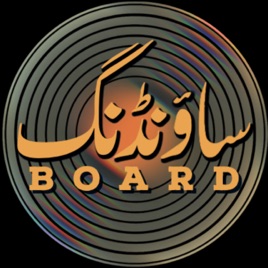
Advertise on podcast: Sounding Board
Rating
5from
This podcast has
27 episodes
Language
Urdu (Pakistan)Publisher
Ali RajExplicit
No
Date created
2025/09/30
Latest episode
2026/07/23
Average duration
11 min.
Release period
19 days
Description
Sounding Board is an audio series about South Asian music, Islamic sound arts and the Urdu literary tradition. It features readings of essays by influential Urdu scholars, musicologists, poets and critics from the 19th and 20th centuries, exploring themes of identity, inheritance and imagination. The project is supported by Columbia University Society of Fellows/Heyman Center for the Humanities and Humanities New York. Produced by Ali Raj
Unlock Sounding Board podcast Email contact info,
Listeners & Audience details
Email contact information
Direct podcast contact details

Listeners
Audience numbers & engagement insights

Audience details
Podcast Insights

Podcast episodes
Check latest episodes from Sounding Board podcast
The Recitation of Mir Anis - Naiyer Masud
2026/07/23
Naiyer Masud (1936-2017) was a noted Urdu scholar, critic and short story writer. The essay excerpted in this episode was published as part of his trailblazing 1990 book, “Marsiyakhwani ka Fann” (The Art of Marsiya Recitation). It analyzes the recitation style of the master Lucknow poet Mir Anis (1800-1874), and how it revolutionized the art form of the Urdu marsiya recitation. Masud narrates vivid anecdotes about Anis’s delivery from a variety of extant sources, delves into a discussion about the formal differences between storytelling and acting, and how syntactical and semantic flourish are subtly communicated through the medium of tehetul lafz.Featured recitations:1. Lata Mangeshkar - Husain jab ke chale2. Hamid Kararvi - Jab rann mein sarbuland
Husain Kashifi and the Oratory of Karbala - Mujtaba Hasan Kamunpuri
2026/07/06
Allama Mujtaba Hasan Kamunpuri (1913-1974) was a Shi’i scholar from India. Born in Ghazipur, he earned his Ph.D. at Al-Azhar, and held various teaching and administrative roles at the Lucknow and Aligarh universities. The essay excerpted in this episode was published in a 1969 issue of the journal Sarfaraz. It talks about the central role of the Timurid scholar and orator Mulla Husain Vaez Kashifi (1436-1504) in shaping modern Shi’i oratory, and the Indo-Islamic mourning culture surrounding the Battle of Karbala. Kamunpuri traces Kashifi’s biography, delves into the debates surrounding his Shi’i persuasion, and critically analyzes the historical, literary, and aesthetic dimensions of Kashifi’s landmark work, “Rawzatush Shuhada” (The Garden of Martyrs).
Featured recitation:
Umme Habiba - Aan Imam-e Ashiqaan (Allama Iqbal)
Early Days of Music in Dhaka - Abbasuddin Ahmed (Eng.)
2026/03/22
Abbasuddin Ahmed (1901-1959) was a renowned Bengali musician, scholar and recording artist. He was among the earliest Indian artists to take to the gramophone, and gained widespread acclaim in Calcutta before moving to Dacca in 1947. The essay featured in this episode is part of his 1961 autobiography, translated into English by his granddaughter, the musician and scholar Nashid Kamal. It talks about the early days of life in a newly independent East Pakistan, and the various struggles that Ahmed had to endure to establish a foothold in Dacca. Ahmed recalls traveling across the country, singing songs of hope to his fellow citizens, his many trips representing Pakistan at folk festivals across the world, the unease of East Pakistani musicians in singing songs of an 'Islamic' character, and the future of classical and folk music in the region.
Featured music:
1. Abbasuddin Ahmed - Zameen Firdaus Pakistan ki Hogi(Courtesy of Absar Ahmed)
2. Abbasuddin, Hemlata - Naiyur Chariya Dau Mor
Hindu Dhrupad vs. Muslim Khayal - Adeeb Suhail
2026/02/19
Adeeb Suhail (1927-2017) was a poet, editor and music scholar. Born in Munger, Bihar as Zuhurul Haq, Suhail migrated to East Pakistan and remained stationed in Dacca and Saidpur. He was editor of the East Pakistan Urdu daily "Pasban," and coined popular Urdu slogans against the Ayub Khan regime. Suhail migrated to Karachi in 1974 and worked as a contributing editor at various literary magazines. He also contributed to music programming on Pakistan Television. In the essay featured in this episode, Suhail speaks to the core differences of the khayal and dhrupad styles of Indian classical music. He frames the differences in the context of Muslim contribution to Indian music, a major theme in Urdu musicology, and identifies the various historical figures and lineages that contributed to the development of khayal's overarching dominance.
Featured music:Roshan Ara Begum - Mishra Pahari
The Law of Tones in Indian Classical Music - Atiya Fyzee-Rahamin (Eng.)
2026/02/08
Atiya Fyzee-Rahamin was an educationist, musicologist and socialite. Born in 1877 in Ottoman Turkey, she was arguably the first woman to have authored a text on North Indian classical music. Atiya was also among the founders of the first All India Music Conference, which was held in Baroda in 1916. The essay featured in this episode, is part of her 1914 introduction to Indian music, which she authored under the pen name Shahinda. It covers the fundamentals of the laws of tones (sur addhya) in North Indian music, elaborating on the temperaments, deities, costumes and colours of each of the seven musical notes.
Music courtesy Eternal Tarang.
The Dawn of Tehet in Karachi - Syed Aley Raza
2026/01/27
Syed Aley Raza (1896-1978) was a renowned ghazal and marsiya poet. He was born in Unnao, and practiced law in Lucknow before moving to Pakistan in 1947. A pupil of Arzu Lakhnavi, Raza was one of the boldface names of the modern marsiya. He is more widely remembered for penning the salam-e akhir (farewell salutation), which was recited by Nasir Jahan and ended the Ashura transmission each year on Radio Pakistan and Pakistan Television. Raza was a proponent of the modern style of tehetul lafzkhwani. Tehet is a form of non-melodic marsiya recitation, delivered with a sensitivity toward poetic meter and semantic connotation. The 1965 essay featured in this episode provides a history of tehetul lafzkhwani in Karachi after the creation of Pakistan. Raza begins with the state of the marsiya in Lucknow at the turn of the century, how a new style of oratory was being popularized by Maulana Sibte Hasan, and how the traditional Mir Anis style of affected marsiya recitals was going out of vogue. He explains the logic, not only behind his breaking from tradition in writing the marsiya, but also behind his style of recitation, and how it differed from the theatrical style of Zulfiqar Ali Bukhari, which gained widespread popularity over the airwaves. Raza provides insight into the city's cultural scene during the early years of independence, and into the modern marsiya tradition and its 'philosophical' pretensions.Featured recitations:
1. Syed Aley Raza - Shahadat se Pehle
2. Zulfiqar Ali Bukhari - Bakhuda faris-e maidan-e tahavvur tha Hur
Pakistani Music in Bangkok - Mumtaz Shireen
2026/01/19
Mumtaz Shireen (1924-1973) was a pioneering Urdu critic and short story writer. Born in Hindupur and raised in Mysore, she migrated to Pakistan in 1947 and soon became a prominent voice against the autocratic tendencies of the Progressive Writers' Movement. In this reportage, written some time between 1958 and 1961, Shireen provides an account of the editor and musicologist Shahid Ahmed Dehlvi's series of lectures and workshops on Pakistan's musical heritage. Dehlvi toured Bangkok, where Shireen briefly resided, under a Southeast Asia Treaty Organization (SEATO) arrangement, and was invited to address audiences as part of a broader cultural exchange between member states. While describing the contents of Dehlvi's presentations, Shireen elaborates on his unique expertise in both music and literary production, and how the two came together in his enduring contribution as an editor and essayist.Featured music:
Turab Ali Khan - Raag Hemant
The Lullabies of East Pakistan - Nasim Ahmed
2026/01/02
Nasim Ahmed (d. ?) was a writer based in East Pakistan, who frequently contributed to Urdu and Bengali periodicals. The essay featured in this episode provides an overview of the culture of Bengali lullabies in the cities and villages of Pakistan's eastern wing. Published in 1963, the essay covers the various themes that feature in these lullabies, including the topography of the Bengal region, its flora and fauna, and the mother's prayers for the safety and success of her child. The conversation is punctuated by translations of various Bengali lullabies in non-standard Urdu, which is spoken by various communities in the region.
How Can Music Be Food for the Soul? - Mufti Muhammad Shafi
2025/12/26
Mufti Muhammad Shafi (1897-1976) was a leading scholar and jurist of the Deoband school in Pakistan. In this episode, we revisit an essay from his Arabic treatise on the permissibility of music, translated by Muhammad Abdul Muiz. The essay examines from a Hanafi standpoint the German philosopher Arthur Schopenhauer's proverbial phrase about music being food for the soul.Featured recitation:Muzaffar Warsi - Wohi Khuda Hai
There's No Such Thing as Pakistani Music - Rafiq Ghaznavi
2025/12/18
Rafiq Ghaznavi (1907-1974) was a pioneering musician and actor of Indian and Pakistani cinema. In this essay, written in 1953, Ghaznavi attends to a most fundamental question: can there be such a thing as Pakistani music? Ghaznavi holds Pakistan's broadcasting czar Zulfiqar Ali Bukhari responsible for deliberately pushing for a separate Pakistani musical identity, distinct from its Indian counterpart. The essay was republished as part of anthology by Professor Shahbaz Ali in 2012.Featured music:1. Ustad Shahid Pervez - Yaman Kalyan2. Aziz Mian Qawwal - Aasman se utara gaya
Listening on Trial at the Sultan's Court in Delhi - Qasim Firishta
2025/12/12
Muhammad Qasim Hindu Shah Firishta (d. circa 1623) was a Persian historian who served the Sultanate of Bijapur in the Deccan. His seminal work, the "Gulshan-i Ibrāhīmī" (The Garden of Ibrahim) is a long history of the Muslim conquest of India. It was named after his patron, Sultan Ibrahim Adil Shah II. The essay featured in this episode is based on an excerpt from the book's first volume. It tells the story of the famous trial of Nizamuddin Auliya (d. 1325) in the court of Sultan Ghyasuddin Tughluq at the Tughlaqabad Fort in Delhi. Displeased with Nizamuddin for failing to return an endowment, Sultan Tughluq convened a court to try him for his Sufi practice of samā' (listening). The excerpt was translated into Urdu by Khwaja Abdul Hameed Yazdani and published in 1966.
The Partitioned Airwaves of All India Radio - Zulfiqar Ali Bukhari
2025/12/01
Zulfiqar Ali Bukhari (1904-1975) was a pioneering broadcaster, as well as a poet and musicologist. Born in Peshawar, Bukhari was among the earliest administrators of All India Radio, and the founder of Radio Pakistan. In this essay, excerpted from his autobiography that was serialized in an Urdu newspaper between 1962 and 1966, Bukhari recalls the days of Hindu-Muslim disputation over All India Radio airtime. He talks about his resentment for the harmonium, the origins and instant popularity of Muharram programming. Written many years after Partition, the essay’s tenor recalls the political atmosphere of 1940s British India, and the familiar trappings of Urdu musicology.Featured music and recitations:1. Ustad Shahid Parvez - Des2. Ustad Habibuddin Khan - Harmonium3. Agha Maqsood Mirza Dehlvi - Aye salami hashr ke din4. Aftab Ali Kazmi - Behek rahay ho kyun
The Sacred Sarangi of Ustad Bundu Khan - Muhammad Hasan Askari
2025/11/24
Muhammad Hasan Askari (1919-1978) was a critic, essayist and short story writer. Born in Bulandshahr, Askari spent his most productive years in Delhi, Lahore and Karachi. The essay featured in this episode was written circa 1956-57 as an ode to the sarangi legend Ustad Bundu Khan. Keeping Bundu Khan's person as a centerpiece, Askari meanders through his various intellectual preoccupations with Indo-Islamic culture, drawing upon Urdu musicology, Sufi practices, and his reading of Hindu metaphysics.Featured music:1. Bundu Khan - Yaman Kalyan2. Gundecha Brothers - Bhopali3. Salamat Ali Khan, Nazakat Ali Khan - Bhopali
Radio Pakistan’s Ban on Rabindra Sangeet – Abul Mansur Ahmad (Eng.)
2025/11/18
Abul Mansur Ahmad (1898–1979) was a Bengali politician, journalist and writer. He participated in the Pakistan Movement and later played a leading role in the struggle for East Pakistan’s political autonomy. The essay featured in this episode was written by Ahmad in August 1967, in the aftermath of the controversial Radio Pakistan ban on Rabindranath Tagore’s music. Historians sometimes describe — and at other times overstate — this controversy as one of the turning points in the turbulent history of East Pakistan (now Bangladesh). In the essay, Ahmad examines the claim that Tagore is essential to East Bengali culture from the standpoint of a staunch Muslim nationalist who, while acknowledging Tagore’s genius, rejects his idea of India and Indian nationalism—ideas that, in Ahmad’s view, leave no room for a distinct Bengali Muslim culture and identity.
Featured music:1. Aji Bangladesher Hridoy Hote2. Amar Sonar Bangla – Poriborton Foundation
Poetry, Music and the Mushairah - Sajjad Zaheer
2025/11/12
Sajjad Zaheer (1905–1973) was a Marxist poet and revolutionary who lived and worked in both India and Pakistan. The essay featured in this episode, written around 1958, explores the tradition of tarannum (melodic recitation) in the Urdu mushairah (poetic symposium). Zaheer examines why poets who recite their verses melodiously are so beloved by mushairah audiences, and whether tarannum allows listeners to overlook questions of literary merit. He discusses the performance styles of poets such as Jigar Moradabadi and Josh Malihabadi, his own introduction of full-fledged singing at a Calcutta mushairah, and the popularity of inferior or suggestive verse. Crucially, Zaheer argues for the cultivation of refined taste among mushairah audiences and emphasizes the crucial role of second-tier poetry in sustaining the Urdu literary tradition.Featured recitals and music:1. Khumar Barabankvi - Akele hain wo2. Jigar Moradabadi - Sad arzu-e khushgavar3. Barkat Ali Khan - Ah ko chahiye ik umr4. Josh Malihabadi - Mojid-o Mufakkir {6:103}
Podcast sponsorship advertising
Start advertising on Sounding Board relevant audience podcasts
You may also like to advertise on these Podcasts
4.7292702000
The Michael Knowles Show
The Daily Wire

4.736021306
The Bonfire with Big Jay Oakerson and Robert Kelly
SiriusXM

4.6313051080
Wow in the World
Tinkercast

4.762552000
The Lawfare Podcast
The Lawfare Institute
4.732651954
The President's Daily Brief
The First TV

4.629942035
Optimal Living Daily - Personal Development and Self-Improvement
Justin Malik

4.838332000
Entrepreneurs on Fire
John Lee Dumas of EOFire
4.619782875
All Ears English Podcast
Lindsay McMahon and Michelle Kaplan

4.847072000
Pat Gray Unleashed
Blaze Podcast Network

4.922981174
Dropping Bombs
Brad Lea: CEO, Entrepreneur, and Host of The Bottom Line