1851898517
Influencing Outcomes

Advertise on podcast: Influencing Outcomes

This podcast has
30 episodes
Language
English
Publisher
Fabulate
Explicit
No
Date created
2025/11/10
Latest episode
2026/10/07
Average duration
37 min.
Release period
10 days

Description

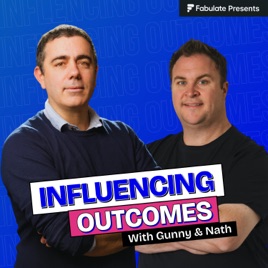
Welcome to Influencing Outcomes, the podcast that gets real about what drives success in influencer marketing. Each week, we break down the latest headlines, share smart takes, and chat with the people shaping the creator economy. From brand marketers and agency leads to creators and talent managers, we explore what’s working, what’s changing, and how influence is turning into measurable results. If you care about the mix of creativity, strategy, and performance, this is your place to learn, laugh, and stay ahead of the curve. Hosted by Nathan Powell and Ben Gunn, Co-Founders of Fabulate, this duo knows the influencer world inside out. Nathan brings a strategic mind that connects creativity with data, while Ben’s experience in business development and digital media fuels his passion for building partnerships and driving growth. Together, they bring smart conversations, fresh insights, and genuine curiosity to every episode of Influencing Outcomes.

Unlock Influencing Outcomes podcast Email contact info,
Listeners & Audience details

Email contact information

Direct podcast contact details

Listeners

Audience numbers & engagement insights

Audience details

Podcast Insights

Podcast episodes

Check latest episodes from Influencing Outcomes podcast


Do the Rules of Marketing Change When You’re Working With Creators?
2026/10/07
In this episode of Influencing Outcomes, Nathan Powell and Ben Gunn are joined by Valerie Madon, Director of Creative Strategy SEA/KR/JP at Fabulate, and Nina Drakalovic, Client Strategy Lead ANZ at Fabulate, to ask a deceptively simple question: do the rules of marketing actually change when you’re working with creators? Creator marketing may no longer be new, but for many marketers it can still feel like a “mystical black hole”. Valerie and Nina explore why the category is still developing its own principles, why many brands remain focused on followers and reach, and how briefs are evolving from straightforward creator execution into much bigger marketing problems. As investment grows, the conversation also looks at the shift from measuring buzz and engagement towards proving harder business outcomes. The discussion then turns to the relationship between brands and creators. How much creative freedom should creators actually have? When should they be brought into the strategic process? And are brands sometimes briefing out the very thing that made them choose a creator in the first place? The team argues that the fundamentals of good marketing haven’t disappeared: clear objectives, strong briefs and creative effectiveness still matter. The challenge is creating enough structure to protect the brand without removing the creator’s voice. Finally, the team looks at what better creator strategy actually involves, from starting with the business problem rather than the creator or platform, to choosing talent based on what they can achieve rather than simply the size of their following. With creators ranging from highly polished storytellers to hyper-local voices capable of reaching communities traditional media cannot, the opportunity is much broader than buying influence. The real question is whether marketers are prepared to start treating creators as creators, rather than another media space to fill with a message. Timecodes: ●      (03:01) Why does creator marketing still feel like a “mystical black hole”? ●      (05:10) What are brands actually asking for from creator strategy? ●      (06:42) Are marketers becoming more sophisticated in how they approach creators? ●      (12:58) Do the rules of marketing change when you’re working with creators? ●      (16:34) When should creators be brought into the creative process? ●      (23:05) Where should a creator strategy actually start? ●      (27:49) What is the one thing marketers should change about their approach to creators? Follow, Subscribe and Stay Connected. Enjoyed the episode? Follow Influencing Outcomes on your favourite podcast platform so you never miss an update. For more insights, industry trends and behind the scenes content: Follow Fabulate on socials: ⁠⁠LinkedIn⁠⁠ | ⁠⁠Instagram⁠⁠| ⁠⁠TikTok⁠⁠ | ⁠⁠Youtube⁠⁠ Visit our website:⁠⁠ www.fabulate.co
Is It Time for Creator Marketing to Grow Up? With Gai Le Roy, CEO of IAB Australia
2026/09/30
In this episode of Influencing Outcomes, Nathan Powell and Ben Gunn are joined by Gai Le Roy, CEO of IAB Australia, to ask whether creator marketing is entering its own coming-of-age moment, and what the industry can learn from the evolution of digital advertising. Drawing on IAB Australia’s latest creator research, the conversation looks at how creators are influencing the way Australians discover, research and buy products, and why creator marketing increasingly needs to be considered alongside the rest of the media mix rather than treated as a standalone channel. They explore the relationship between creators, brands and consumer trust, including the finding that 44% of Australians say they are less likely to act on a creator recommendation once they know the creator has been paid or compensated. The discussion then turns to one of the category’s biggest challenges: measurement. As investment continues to grow, brands increasingly need to understand not only reach and engagement, but how creator activity contributes to broader marketing and business outcomes. Gai discusses the role of MMM, creative effectiveness and better integration of creator data into existing measurement frameworks, as well as why proving value does not simply mean proving an immediate sale. Finally, the conversation looks at what a genuinely mature creator marketing industry could look like. From global audiences and increasingly complex regulation to transparency, standards and the role of agencies, platforms and brands, the team considers how the industry can professionalise without professionalising the magic out of creator content. And as creators increasingly operate as media businesses in their own right, what will we look back on in three to five years and wonder why we were still getting wrong in 2026? Timecodes: ●      (02:08) Is creator marketing having its coming-of-age moment? ●      (05:49) What does the latest research tell us about creator marketing? ●      (08:14) Where do creators influence the customer journey? ●      (10:11) Why creator marketing cannot be measured in isolation ●      (15:11) What happens to trust when consumers know a creator has been paid? ●      (21:02) How do we professionalise creator marketing without losing its magic? ●      (23:56) What does a mature creator marketing industry actually look like? Learn more and download the latest Creator Connect Report 2026 from IAB Australia:https://www.iabaustralia.com.au/resource/creator-connect-report-2026/ Follow, Subscribe and Stay Connected. Enjoyed the episode? Follow Influencing Outcomes on your favourite podcast platform so you never miss an update. For more insights, industry trends and behind the scenes content: Follow Fabulate on socials: ⁠⁠LinkedIn⁠⁠ | ⁠⁠Instagram⁠⁠| ⁠⁠TikTok⁠⁠ | ⁠⁠Youtube⁠⁠ Visit our website:⁠⁠ www.fabulate.co
How Much Is a Creator Actually Worth?
2026/09/24
In this episode of Influencing Outcomes, Nathan Powell is joined by Terri Owens and Ben Gunn to tackle one of creator marketing’s most persistent questions: how much is a creator actually worth? Starting with Forbes’ 2026 Top Creators List, the team looks at how the world’s biggest creators are turning attention into increasingly valuable businesses, and why audience size alone tells us surprisingly little about earning potential. From MrBeast’s estimated US$300 million annual earnings to creators with much smaller followings generating significantly more revenue than larger peers, they explore what separates having an audience from knowing how to monetise it. The conversation then turns to what brands actually pay for creator content and why creator pricing has proven so difficult to standardise. The team breaks down what can sit inside a creator fee, including production, distribution, audience access, usage rights, exclusivity and revisions. They also examine the role of talent managers, creator agencies and other intermediaries, and why transparency matters when additional fees and margins can influence how a creator’s performance and ROI are ultimately judged. Finally, the team asks what creators are worth to the platforms themselves. With creators building businesses across multiple platforms and revenue streams, YouTube, Netflix and other entertainment platforms are increasingly competing for the audiences they command. From YouTube reportedly offering multimillion-dollar deals to keep top creators away from Netflix to Ninja’s move from Twitch to Mixer, the discussion explores the difference between followers and fans, and how much value sits in an audience willing to follow a creator somewhere new. The conclusion is that there is no universal formula for what a creator is worth. Price and value are different things. A creator can have a different value to every brand and platform they work with, and potentially be worth far more to themselves when they turn their audience into a business. Timecodes: ●      (01:06) How much are the world’s biggest creators earning? ●      (08:24) Why is creator pricing so difficult to standardise? ●      (13:36) Are brands overpaying for creator content? ●      (16:37) Where does a creator campaign budget actually go? ●      (21:23) Why transparency matters in creator pricing ●      (23:45) What are creators worth to the platforms? ●      (29:17) Why platforms are competing for top creators ●      (34:17) Followers vs fans: who really owns the audience? ●      (40:00) So, how much is a creator actually worth? Follow, Subscribe and Stay Connected. Enjoyed the episode? Follow Influencing Outcomes on your favourite podcast platform so you never miss an update. For more insights, industry trends and behind the scenes content: Follow Fabulate on socials: ⁠⁠LinkedIn⁠⁠ | ⁠⁠Instagram⁠⁠| ⁠⁠TikTok⁠⁠ | ⁠⁠Youtube⁠⁠ Visit our website:⁠⁠ www.fabulate.co
Fix the Feed, or Fix the Problem?
2026/09/17
In this episode of Influencing Outcomes, Nathan Powell is joined by Eliza Lewis and Ben Gunn to examine Australia’s proposed changes to social media feeds and ask a bigger question: are algorithms really the problem we need to fix? With the Australian Government’s proposed Digital Duty of Care legislation set to give users greater choice over personalised recommendations, the team starts by looking at what it actually means to switch off an algorithm. They explore how recommendation systems shape what people see, the echo chambers they can create, and why personalised feeds can make our individual version of the world feel much more representative than it really is. The conversation then turns to whether removing personalisation would actually create a better social media experience. From chronological feeds potentially rewarding the accounts that post most often to the role recommendations play in helping people discover new creators, the team looks at what could be lost alongside the risks the legislation is trying to address. They debate whether the problem is recommendation itself, or what platforms allow their systems to optimise for and repeatedly amplify. For creators, the implications could be significant if enough people choose to move away from personalised feeds. The team explores whether follower-led distribution could favour established creators while making it harder for emerging voices to break through. They also consider what it could mean for brands, earned distribution and a creator economy where great content can currently travel far beyond an existing follower base. Finally, the discussion asks where responsibility should sit. Giving users greater control over their feeds does not remove the responsibility platforms have for what their systems recommend, but switching off personalisation cannot remove harmful content from the internet either. The team considers whether the better approach is to focus on what platforms recommend, what their systems optimise for and when content should be eligible for algorithmic distribution in the first place. The conclusion is that user choice and platform responsibility do not have to be competing ideas. People can have greater control over how their feeds work while platforms remain accountable for what their systems amplify. The challenge is finding a way to reduce the harms of recommendation without losing the discovery, competition and diversity that have made social media such a powerful distribution model. Timecodes: ●      (00:25) What does it actually mean to switch off the algorithm? ●      (03:08) Are personalised feeds creating echo chambers? ●      (05:16) Is the algorithm really the problem? ●      (08:40) What happens when you switch recommendations off? ●      (11:12) Why recommendation changed creator discovery ●      (14:19) Is there such a thing as a neutral feed? ●      (15:56) Would people actually turn personalisation off? ●      (22:25) What could this mean for creators? ●      (25:46) Could follower-led feeds change creator strategy? ●      (28:52) What does it mean for brands and paid distribution? ●      (30:36) Should all content have a right to algorithmic distribution? ●      (33:44) Can regulation actually fix the problem? Follow, Subscribe and Stay Connected. Enjoyed the episode? Follow Influencing Outcomes on your favourite podcast platform so you never miss an update. For more insights, industry trends and behind the scenes content: Follow Fabulate on socials: ⁠⁠LinkedIn⁠⁠ | ⁠⁠Instagram⁠⁠| ⁠⁠TikTok⁠⁠ | ⁠⁠Youtube⁠⁠ Visit our website:⁠⁠ www.fabulate.co
What Do AEO and GEO Mean for Creator Marketing?
2026/09/03
In this episode of Influencing Outcomes, Nathan Powell is joined by Eliza Lewis and Ben Gunn to explore Answer Engine Optimisation (AEO) and Generative Engine Optimisation (GEO), and what the rise of AI-powered discovery could mean for brands, creators and creator marketing.  Starting with the shift from traditional search to AI-generated answers, the team looks at how platforms like ChatGPT, Gemini and Claude are changing the way consumers discover products, brands and recommendations. They explore the idea that creator content now has another audience beyond people and social algorithms: AI systems that can use that content as evidence when deciding what brands, products and people to recommend.  The conversation then turns to machine-readable authority, asking whether being influential with people is the same as being visible and authoritative to an AI. The team examines the blind spots created by closed social ecosystems, why general-purpose LLMs may favour the creators they know the most rather than those who are genuinely the best fit, and the important distinction between using an LLM to interrogate purpose-built creator data and treating the LLM itself as the data source.  Finally, the team looks at what brands and creators should actually do today, from creating content around a wider range of genuine questions and experiences to building stronger digital footprints and adopting more always-on creator strategies. With AEO and GEO still evolving rapidly, the conclusion is simple: rather than trying to game the machines, create useful, authoritative content that answers real questions and gives both people and AI something worth discovering.   Timecodes:  ● (01:58) Why AEO and GEO matter for creator marketing  ● (06:03) What’s the difference between SEO, AEO and GEO?  ● (11:54) How creator content becomes evidence for AI  ● (19:20) How much creator content can AI platforms actually see?  ● (24:36) What is machine-readable authority?  ● (31:37) How creators can become more discoverable to AI ● (37:16) Does your brand need an AEO creator strategy yet?  Follow, Subscribe and Stay Connected. Enjoyed the episode? Follow Influencing Outcomes on your favourite podcast platform so you never miss an update. For more insights, industry trends and behind the scenes content: Follow Fabulate on socials: ⁠⁠LinkedIn⁠⁠ | ⁠⁠Instagram⁠⁠| ⁠⁠TikTok⁠⁠ | ⁠⁠Youtube⁠⁠ Visit our website:⁠⁠ www.fabulate.co
How Do You Know You’ve Got the Wrong Creator Marketing Partner?
2026/08/27
In this episode of Influencing Outcomes, Nathan Powell is joined by Eliza Lewis and Ben Gunn to explore the warning signs marketers should look for when choosing a creator marketing partner, and the questions they should be asking before appointing one. Starting with transparency, the team looks at where creator marketing budgets actually go, the difference between legitimate margins and hidden mark-ups, and why understanding who sits within the supply chain matters. They then turn to technology, asking how marketers can distinguish genuine proprietary platforms and AI capabilities from third-party tools, ChatGPT wrappers and technology claims that fall apart once you scratch beneath the surface. The conversation then explores why organic creator content alone is no longer enough, how paid media can turn creator content into a harder-working marketing asset, and why organic performance doesn’t necessarily predict paid effectiveness. Finally, the team tackles creator selection and the biases that can shape recommendations, arguing that the right creator isn’t determined by follower count, tier or who happens to sit on a talent roster, but by the objective they are being asked to deliver. Timecodes: ●      (01:00) The warning signs of the wrong creator marketing partner ●      (03:00) Why transparency should be one of the first questions marketers ask ●      (06:31) Where does your creator marketing budget actually go? ●      (09:11) Legitimate margins vs hidden mark-ups ●      (13:28) What brands should ask about fees and the supply chain ●      (14:11) How to tell whether your partner is really a technology company ●      (18:33) What “AI-powered” should actually mean ●      (23:56) Why organic-only creator strategies are a red flag ●      (25:12) When and how should brands boost creator content? ●      (28:23) Does the best organic content make the best paid ad? ●      (31:10) The hidden biases behind creator selection ●      (33:38) Is there really a “best” creator size? ●      (36:51) Why is this creator being recommended to you? ●      (38:30) Final takeaway: marketers need to ask more questions Follow, Subscribe and Stay Connected. Enjoyed the episode? Follow Influencing Outcomes on your favourite podcast platform so you never miss an update. For more insights, industry trends and behind the scenes content: Follow Fabulate on socials: ⁠⁠LinkedIn⁠⁠ | ⁠⁠Instagram⁠⁠| ⁠⁠TikTok⁠⁠ | ⁠⁠Youtube⁠⁠ Visit our website:⁠⁠ www.fabulate.co
Are We Entering the Post-Influencer Era?
2026/08/19
In this episode of Influencing Outcomes, Nathan Powell is joined by Eliza Lewis and Terri Owens to ask whether the influencer as we know it is dying, or simply evolving into something new. Starting with the backlash to OpenAI’s first influencer brand trip, the team explores what happens when creator relevance, audience trust and brand context fall out of alignment. They unpack why the right creator on paper can still be the wrong partnership in practice, and why brands may need to look beyond audience fit towards values, credibility and the permission a creator has earned with their community. The conversation then looks at how influence itself has evolved, from early creators built around expertise, through the lifestyle-driven influencer era, to today’s algorithm-led attention economy. As distribution becomes easier and AI makes content increasingly abundant, the team argues that trust, perspective and genuine human credibility could become the most valuable currencies in creator marketing. Rather than a post-influencer era, the next chapter may look surprisingly similar to where it all began: people with something genuinely worth listening to. Timecodes: ●      (01:02) Are we entering the post-influencer era? ●      (02:07) What OpenAI’s influencer trip reveals about audience trust ●      (07:53) Where creator relevance and brand context can fall apart ●      (10:15) Why audience fit may need to become a values match ●      (18:05) The audience always gets a vote on creator campaigns ●      (21:17) Why creators need to be more than a brand megaphone ●      (24:00) What influence actually means in creator marketing ●      (25:08) Influencer 1.0, 2.0 and 3.0: how the category evolved ●      (31:18) Why credibility could become the new currency of creator marketing ●      (38:42) Final takeaway: the influencer is evolving, not disappearing Follow, Subscribe and Stay Connected. Enjoyed the episode? Follow Influencing Outcomes on your favourite podcast platform so you never miss an update. For more insights, industry trends and behind the scenes content: Follow Fabulate on socials: ⁠⁠LinkedIn⁠⁠ | ⁠⁠Instagram⁠⁠| ⁠⁠TikTok⁠⁠ | ⁠⁠Youtube⁠⁠ Visit our website:⁠⁠ www.fabulate.co
Is the Future of Innovation Coming From the East?
2026/08/13
In this episode of Influencing Outcomes, Eliza Lewis is joined by Ben Gunn and Terri Owens to explore a major shift taking place across technology, commerce and creator marketing: what if the next wave of innovation isn't coming from the West, but from the East? From electric vehicles and robotics to AI infrastructure and social commerce, the team explores how China and Southeast Asia are increasingly setting the pace for innovation. They then bring the conversation back to creator marketing, examining Fabulate's own data showing how trends such as the shift towards micro creators, creator-led commerce and large-scale content production emerged in Southeast Asia years before similar patterns began appearing in western markets like Australia. The discussion also explores why Southeast Asia's complexity is forcing marketers and technology companies to solve problems earlier, from localisation and brand safety to AI-powered compliance and campaign automation. With creators already embedded across entertainment, education, live shopping and conversion, the team argues that Southeast Asia offers a preview of where creator marketing globally could be heading next. Timecodes: ●      (00:47) Is innovation starting to move from East to West? ●      (04:30) Why Southeast Asia is becoming an AI infrastructure powerhouse ●      (06:16) From robotics to culture: where the East is setting the pace ●      (10:29) What Fabulate's data reveals about the future of creator marketing ●      (14:39) Why Southeast Asia built creator marketing for scale first ●      (17:16) Solving brand safety, compliance and localisation at scale ●      (22:50) Why social commerce offers a glimpse of what's coming next ●      (26:03) How agentic AI could transform large-scale creator campaigns ●      (28:59) Final takeaway: stop looking West and start looking East Follow, Subscribe and Stay Connected. Enjoyed the episode? Follow Influencing Outcomes on your favourite podcast platform so you never miss an update. For more insights, industry trends and behind the scenes content: Follow Fabulate on socials: ⁠⁠LinkedIn⁠⁠ | ⁠⁠Instagram⁠⁠| ⁠⁠TikTok⁠⁠ | ⁠⁠Youtube⁠⁠ Visit our website:⁠⁠ www.fabulate.co
Can Influencer Marketing Actually Be Measured?
2026/08/06
In this episode of Influencing Outcomes, Eliza Lewis steps into the host's chair, joined by Ben Gunn and Terri Owens, to tackle one of the biggest questions facing creator marketing today: can influencer marketing actually be measured properly? As investment in creator marketing continues to accelerate, expectations around accountability have never been higher. The team explores why traditional metrics like reach and engagement are no longer enough, how marketers should think about measurement frameworks rather than chasing a single KPI, and why the industry's conversation has shifted from proving creator marketing works to understanding how it drives real business outcomes. The discussion also examines the rise of closed-loop attribution, brand lift, predictive analytics and AI-powered measurement, exploring how emerging technology is transforming measurement from a reporting exercise into a strategic planning tool. Rather than simply looking backwards, the future of creator marketing lies in helping brands predict which creators, audiences and creative approaches are most likely to deliver results before campaigns even begin. Timecodes: ●      (00:03) Can influencer marketing actually be measured properly? ●      (04:18) Why measurement has historically been so difficult ●      (08:35) There's no single metric that defines success ●      (10:52) Matching the right measurement framework to business objectives ●      (13:22) The five stages of measurement maturity ●      (17:15) How AI is changing campaign planning and optimisation ●      (19:27) What influencer measurement will look like by 2030 ●      (24:24) Final predictions: from reporting to decision intelligence Follow, Subscribe and Stay Connected. Enjoyed the episode? Follow Influencing Outcomes on your favourite podcast platform so you never miss an update. For more insights, industry trends and behind the scenes content: Follow Fabulate on socials: ⁠⁠LinkedIn⁠⁠ | ⁠⁠Instagram⁠⁠| ⁠⁠TikTok⁠⁠ | ⁠⁠Youtube⁠⁠ Visit our website:⁠⁠ www.fabulate.co
Has AI Changed Marketing, or Are We Just Using Better Tools?
2026/07/30
In this episode of Influencing Outcomes, Nathan Powell, Eliza Lewis and Terri Owens explore one of the biggest questions facing marketers today: has AI genuinely transformed marketing, or are most businesses simply using it to work a little faster? Drawing on new research from Boston Consulting Group and Fabulate's own experience producing more than 100,000 AI-assisted creative assets, the discussion examines the difference between AI adoption and true AI transformation. The team explores why redesigning workflows matters more than experimenting with new tools, how AI is changing the economics of content production, and why better briefs, stronger strategy and human creativity have become even more valuable in an AI-powered world. Rather than asking whether AI will replace creators or marketers, the episode asks a more important question: what becomes more valuable when production is no longer the constraint? Timecodes: (00:04) AI hype versus AI transformation: what marketers are getting wrong (07:23) From proving the technology to solving real marketing problems (10:37) Why AI shouldn't be judged against television commercials (13:30) The return of strategy: why better briefs matter more than ever (17:19) Can AI replace creators, or does it make them even more valuable? (24:03) Why AI adoption looks different across Asia and Western markets (28:09) What the history of CGI teaches us about the future of AI (32:27) Final thoughts: what marketers should actually be doing differently Follow, Subscribe and Stay Connected. Enjoyed the episode? Follow Influencing Outcomes on your favourite podcast platform so you never miss an update. For more insights, industry trends and behind the scenes content: Follow Fabulate on socials: ⁠⁠LinkedIn⁠⁠ | ⁠⁠Instagram⁠⁠| ⁠⁠TikTok⁠⁠ | ⁠⁠Youtube⁠⁠ Visit our website:⁠⁠ www.fabulate.co
Has Australia's Under-16 Social Media Ban Actually Worked?
2026/07/22
In this episode of Influencing Outcomes, Nathan Powell, Ben Gunn and Eliza Lewis revisit one of the biggest public policy debates of the past year: Australia's world-first under-16 social media ban. Six months after the legislation came into effect, the team explores what has actually changed, separating political intent from measurable outcomes. Drawing on new research, government data and international developments, the discussion examines whether the ban has reduced harm, why millions of accounts were removed while many young people still found ways around the restrictions, and whether governments are solving the root causes of online harm or simply treating its symptoms. The conversation also explores the growing importance of digital literacy, critical thinking and the changing role social media plays in how young people communicate, learn and consume news. Rather than asking whether the legislation was right or wrong, the episode asks a more important question: what would a genuinely effective long-term solution look like? Timecodes: (00:03) Six months on: revisiting Australia's under-16 social media ban (05:35) What the data says: 4.7 million accounts removed and did it make a difference? (09:03) New research reveals how young Australians are bypassing the restrictions (15:18) Ban versus education: should digital literacy be the real priority? (21:25) What happens when young people lose access to news and information? (26:07) Parenting, resilience and preparing children for the digital world (29:43) Final report cards: did Australia's social media ban actually work? Follow, Subscribe and Stay Connected. Enjoyed the episode? Follow Influencing Outcomes on your favourite podcast platform so you never miss an update. For more insights, industry trends and behind the scenes content: Follow Fabulate on socials: ⁠⁠LinkedIn⁠⁠ | ⁠⁠Instagram⁠⁠| ⁠⁠TikTok⁠⁠ | ⁠⁠Youtube⁠⁠ Visit our website:⁠⁠ www.fabulate.co
Creators, Sport and the Future of Digital Discovery
2026/07/15
In this episode of Influencing Outcomes, Nathan Powell, Ben Gunn and special guest co-host Terri Owens unpack three of the biggest stories shaping the creator economy. With the FIFA World Cup underway, the team explores how global sporting organisations are fundamentally rethinking fan engagement through creators, comparing FIFA's creator-first partnerships with TikTok and YouTube against the NRL's more traditional approach to broadcast rights and copyright. The discussion examines how creator content has transformed live sport from a 90-minute event into an always-on entertainment ecosystem, and what that means for the future of sports broadcasting. The conversation then shifts to Google's launch of Search Profiles and what it signals about creators becoming a permanent part of the internet's infrastructure, before unpacking Meta's new paid subscription features that allow creators to purchase greater visibility across its platforms. Together, the stories paint a picture of an industry where creators are no longer simply producing content, but becoming central to how audiences discover information, experience live events, and interact with digital platforms. The episode concludes with a broader discussion on the commercial future of creator marketing, social search, and the changing economics of attention. (00:03) Introducing special guest co-host Terri Owens (05:38) How FIFA is embracing creators and changing sports coverage (10:57) FIFA vs the NRL: comparing creator strategies (14:45) Does social media complement or cannibalise live sport? (21:10) Google's new Search Profiles and what they mean for creators (24:39) Search, trust and the rise of creators as the new discovery layer (27:42) Meta's paid creator subscriptions and the future of social media (30:47) Algorithm transparency and the future of organic reach (33:19) Closing thoughts and key takeaways. Follow, Subscribe and Stay Connected. Enjoyed the episode? Follow Influencing Outcomes on your favourite podcast platform so you never miss an update. For more insights, industry trends and behind the scenes content: Follow Fabulate on socials: ⁠⁠LinkedIn⁠⁠ | ⁠⁠Instagram⁠⁠| ⁠⁠TikTok⁠⁠ | ⁠⁠Youtube⁠⁠ Visit our website:⁠⁠ www.fabulate.co
Building Audiences Through Authentic Storytelling with Amy Dickinson
2026/06/25
In this episode of Influencing Outcomes, the team sits down with creator, entrepreneur, and Social Summit co-founder Amy Dickinson (TikTok: @amzdicko) to explore what it really takes to build an audience in today’s creator economy. Amy shares her journey from documenting life abroad in Amsterdam to building a community of more than 195,000 followers across TikTok and Instagram. The conversation dives into the power of storytelling, why authenticity consistently outperforms polished content, and how creators can turn audiences into meaningful communities rather than chasing viral moments. Amy also reflects on launching Social Summit, Australia’s leading event for creators, marketers, and brands, sharing lessons from building a business around creator culture. The discussion covers creator monetisation, community-building, handling online criticism, the realities of brand partnerships, and the misconceptions many people have about a career in content creation. The episode concludes with stories from Amy’s reality television experience, insights into where the creator industry is heading, and her passion for using her platform to raise awareness around domestic violence. Timecodes: (01:05) Amy Dickinson's journey from marketer to creator and entrepreneur (07:57) The Amsterdam dating story, authenticity, and building an audience online (14:02) The "Make Me Feel Important" philosophy and creating community at scale (17:42) The rise of Social Summit and lessons from the creator economy (24:36) Honeymoon Island: reality TV, editing, and life after the show (34:09) Using influence for impact, domestic violence awareness, and what's next for Amy Follow, Subscribe and Stay Connected. Enjoyed the episode? Follow Influencing Outcomes on your favourite podcast platform so you never miss an update. For more insights, industry trends and behind the scenes content: Follow Fabulate on socials: ⁠⁠LinkedIn⁠⁠ | ⁠⁠Instagram⁠⁠| ⁠⁠TikTok⁠⁠ | ⁠⁠Youtube⁠⁠ Visit our website:⁠⁠ www.fabulate.co
From Creator Economy to Creator Infrastructure
2026/06/18
In this episode of Influencing Outcomes, the team explores two major signals that the creator economy is maturing fast: Accenture Song’s acquisition of Whalar and LinkedIn’s launch of its Creator Marketplace. They discuss why investors are increasingly backing creator-led businesses, the growing role of creators in B2B marketing, and the rise of AI-generated influencers as regulators begin demanding greater transparency. The episode also features a deep dive with Intender CEO Phil Ohren  on the future of search, unpacking how TikTok, Instagram, AI platforms, and changing consumer behaviour are reshaping discovery. From social search and creator SEO to AI-driven context marketing, the conversation examines how brands, creators, and marketers need to adapt to stay visible in an increasingly fragmented digital landscape. Timecodes: (02:21) Accenture Song acquires Whalar: What it signals for the future of creator marketing (08:16) LinkedIn launches its Creator Marketplace and the rise of B2B creators (14:54) AI influencers, disclosure laws, and the future of digital trust (19:14) Phil Oren joins the podcast: How search is changing (22:55) Social search explained: Why TikTok and Instagram are becoming discovery engines (31:10) Creator authority, expertise, and the role of topical relevance (36:04) AI search, LLMs, and how brands should think about discoverability (39:19) Intent-based creator marketing and the future of creator SEO (44:38) Predictions for search, context marketing, and what comes next (48:51) Closing thoughts and key takeaways from the episode Follow, Subscribe and Stay Connected. Enjoyed the episode? Follow Influencing Outcomes on your favourite podcast platform so you never miss an update. For more insights, industry trends and behind the scenes content: Follow Fabulate on socials: ⁠⁠LinkedIn⁠⁠ | ⁠⁠Instagram⁠⁠| ⁠⁠TikTok⁠⁠ | ⁠⁠Youtube⁠⁠ Visit our website:⁠⁠ www.fabulate.co
TikTok World & The Great Instagram Purge
2026/05/28
In this episode of Influencing Outcomes, the team unpack key insights from TikTok World in New York, including major developments in generative AI, TikTok Shop’s rapid growth, and what it all means for brands and creators. They also dive into three major industry stories: Meta’s massive Instagram follower purge and what it reveals about fake audiences, growing government pressure to control platform algorithms in Europe, and the real-world consequences of social media history after an Australian artist is denied US entry. It’s a wide-ranging discussion on where the creator economy is heading—and the risks that come with it. Timecodes: (00:41) TikTok World recap: AI, Symphony, and the future of creator content  (05:32) TikTok Shop growth and what it means for social commerce  (12:48) “The Great Purge”: Instagram deletes millions of fake followers  (22:28) Governments vs platforms: Who controls online visibility?  (30:11) Social media scrutiny: When online content affects real-world access Follow, Subscribe and Stay Connected. Enjoyed the episode? Follow Influencing Outcomes on your favourite podcast platform so you never miss an update. For more insights, industry trends and behind the scenes content: Follow Fabulate on socials: ⁠LinkedIn⁠ | ⁠Instagram⁠| ⁠TikTok⁠ | ⁠Youtube⁠ Visit our website:⁠ www.fabulate.co

Podcast reviews

Read Influencing Outcomes podcast reviews


0 out of 5
0 reviews

Podcast sponsorship advertising

Start advertising on Influencing Outcomes relevant audience podcasts


What do you want to promote?