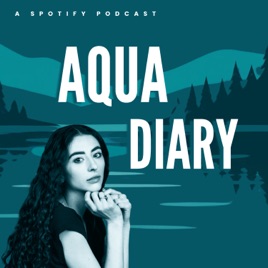
Advertise on podcast: AquaDiary: Water Mysteries, Science & News
Rating
4.6from
This podcast has
28 episodes
Language
EnglishPublisher
Ally BerryExplicit
No
Date created
2026/03/21
Latest episode
2026/10/02
Average duration
34 min.
Release period
9 days
Description
AquaDiary is a science podcast about the hidden stories, strange mysteries, and real-world risks lurking in our water. Hosted by environmental scientist Ally Berry, each episode breaks down fascinating water-related events — from toxic algae blooms and disappearing lakes to environmental headlines, hydrology, contamination, and bizarre aquatic phenomena — in a way that’s gripping, understandable, and actually relevant. If you like science, environmental mysteries, water disasters, lake science, or the kind of stories that make you look at the world differently, AquaDiary is for you.
Unlock AquaDiary: Water Mysteries, Science & News podcast Email contact info,
Listeners & Audience details
Email contact information
Direct podcast contact details

Listeners
Audience numbers & engagement insights

Audience details
Podcast Insights

Podcast episodes
Check latest episodes from AquaDiary: Water Mysteries, Science & News podcast
Atmospheric Rivers, El Nino, and Climate Change: Explained by a Scientist
2026/10/02
There's a river in the sky carrying up to 15x the flow of the Mississippi River. You've heard the term atmospheric river in the news — this episode is the explanation nobody gave you.
In this episode, environmental scientist Ally breaks down what atmospheric rivers actually are, how scientists measure and rate them on a scale from beneficial to catastrophic, why the West Coast depends on them for its water supply while also being devastated by them, what El Nino might change about that in 2026, and why the East Coast, the South, and the Midwest are not off the hook.
Topics covered: what an atmospheric river is, integrated vapor transport, orographic lift, the AR1-AR5 rating scale, the ARkStorm scenario, Oroville Dam, forecast informed reservoir operations, El Niño and what a very strong event means for this winter, and what climate change is doing to these systems.
The full source list is available for free on Patreon: https://www.patreon.com/c/TheAquaDiaryPodcast//About AquaDiary:AquaDiary is a science communication project focused on water, environmental science, and the systems that shape our world. You can reach Ally for collaborations at www.aquadiary.org or at [email protected]
Why Did Nepal Flood? Glaciology of a Changing Himalaya.
2026/09/18
How does a mountain collapse cause a flood when there is almost no rain?In August 2026, a rock-and-ice avalanche collapsed from the northern face of Langtang Lirung in Nepal, sending an enormous volume of material down the Himalayan valley and generating a seismic signal equivalent to a magnitude 5.2 earthquake. In this episode, we examine the glaciology, geology, hydrology, and remote-sensing evidence behind the event, including how hanging glaciers and fractured bedrock fail.
Sources:
34 sources are available for free on Patreon Official website: www.aquadiary.org
Support verified relief efforts:
https://www.nrnusa.org/https://allhandsandhearts.org/our-work/programs/nepal-flood-reliefNOTE: This video is for educational purposes. Where the evidence is still developing, we distinguish between established observations, scientific hypotheses, professional opinions, and open questions researchers are still investigating.
About AquaDiary:AquaDiary is a science communication project focused on water, environmental science, and the systems that shape our world.
You can reach Ally for collaborations at [email protected]
How Is Algae Managed in Drinking Water? Rochester, NY Water Bureau Explains.
2026/09/04
What happens when algae show up in the water that eventually becomes your drinking water?In this episode of AquaDiary, we go behind the scenes again with Rochester, NY to find out how the city monitors for algae, where and how they collect samples, what they're looking for in those samples, and how they ensure algae toxins never become a drinking water concern.
Ask me a question or work with me: [email protected] available and speaking event details on www.aquadiary.orgSubstack newsletter Patreon (sources)
Is Fluoride Lowering Your IQ? I Read the Studies So You Don't Have To.
2026/08/21
Fluoride is under a federal microscope right now. RFK Jr. told the CDC to drop its fluoridation recommendation, Utah already banned it, and the EPA fast-tracked a new toxicity review. So, is your tap water lowering your IQ?
I spent a while reading the actual primary sources both sides cite so you don't have to.
Short version: the studies finding an IQ effect are real and well-designed. So are the studies finding none. They're mostly answering different questions. Dose and timing turn out to matter more than "fluoride: yes or no." I walk through where the evidence actually lines up, and where the genuine open question still is.//
Full citations and in-text citations on Patreon: https://www.patreon.com/cw/TheAquaDiaryPodcastFree newsletter for updates and resources: substack.com/@aquadiarypodcastLearn more at aquadiary.org
120 Homes, 40 Years, One Radioactive Story: Niagara County
2026/08/14
Radioactive material has been found in the yards of over 120 homes in the Town of Niagara, NY, and four families have been relocated. But is this just a soil problem, or could it reach the water too?In this episode, I break down what's actually been found, why officials reportedly knew about radioactive hotspots in this area for nearly 40 years, and what the peer-reviewed science says about whether thorium contamination can migrate into groundwater.
Questions this episode answers:
What is happening in Niagara County, NY right nowHow does soil radiation impact water supplies?What is "slag" and why is it radioactive?Is Niagara County linked to the Manhattan Project?Why did officials know about this for 40 years?What are agencies doing about Niagara County's radiation?
Sources & further reading:
This episode cites 22 sources.
Full source list free on Patreon: https://www.patreon.com/c/TheAquaDiaryPodcastFull script with in-text citations available to $3/mo members
Get involved:
Local advocacy: Save Our Backyards Niagara Sign up for updates: https://substack.com/@aquadiarypodcastUpcoming events: aquadiary.org
Work with me:
Municipality, lake association, or organization needing help communicating a science or environmental issue clearly? Want me to speak at your next event?
Email [email protected]
📍 Town of Niagara, NY | Niagara County, NY
PFAS, Algae, and Lake Foam: What Issues Are We Seeing in the Finger Lakes?
2026/08/07
There's a beach on one of the cleanest lakes in America with foam sitting on the shoreline, and it just tested over 70x higher for PFAS than the lake water two feet away.
In this episode I sit down with Rick Smith of Global Aquatic Research to unpack what's actually happening across the Finger Lakes right now: the PFAS-in-foam research out of Canandaigua Lake and what it means as the project expands, why harmful algal blooms are starting earlier and lasting longer, and what we know about lake foam. This one got more unsettling than I expected, in the best way.
🔬 Guest: Rick Smith, Founder, Global Aquatic Research📍 Filmed in Auburn, NY - thank you to ARMA for the equipment and assistance.
NOTE: This episode's interview segment was shot on a greenscreen. The background used behind Rick and me was purchased (and made custom) from an online marketplace and found to be AI-generated. I didn't know at the time of editing. I'll be vetting background sources more carefully going forward. All audio and footage of us is raw from the interview and unaltered.// Links:
Follow Rick's Research: globalaquaticresearch.comGet Involved! - Introducing the Finger Lakes Foam Reporting Tool: https://www.globalaquaticresearch.com/finger-lakes.htmlNYSDEC HABs map & reporting: https://dec.ny.gov/environmental-protection/water/water-quality/harmful-algal-blooms/notificationsSupport the show on Patreon: https://www.patreon.com/c/TheAquaDiaryPodcastSubstack (free water quality guides): https://substack.com/@aquadiarypodcastInquiries: [email protected]
Full Transparency: Water Treatment Tour in Rochester, NY
2026/07/31
Rochester, New York has been voted the best-tasting water in New York State twice. In this episode, I go inside the Hemlock Filtration Plant with the Rochester Water Bureau, for a complete walkthrough of how drinking water treatment actually works.
This is the most in-depth water treatment plant tour I've filmed on this show. We walk through the entire process step by step, including pH Adjustment, coagulation, filtration, disinfection, corrosion control, and fluoridation.
Beyond the treatment steps themselves, we see what it actually takes to run a plant like this day to day: how backwash filtering works to keep the filters clean and operating efficiently, how chemical storage and chemical feed systems are managed and maintained, and how the Water Bureau is approaching aging infrastructure, including an old tugboat generator still in use, for which replacement control parts can only be found on eBay.
We also get into how tap water testing compares to bottled water regulation, and why your annual water quality report is one of the most underused resources for understanding what's actually in your water.
Mentioned in this episode:
The Bottled Water Scam: https://youtu.be/8t2hWfc-GfI?si=4L4Y5h6kXMPjlUfXRochester Water Bureau on Lead Pipes: https://youtu.be/1ScftnN7g8s?si=QTJINwVLeM4vmDJr
About AquaDiary:
AquaDiary is an independent media project covering water quality, lake science, and the infrastructure most people never think about until something goes wrong. New episodes weekly.
Support the show on Patreon: https://www.patreon.com/c/TheAquaDiaryPodcast
Substack (free water quality guides): https://substack.com/@aquadiarypodcast
Thanks to David Rowley and the Rochester Water Bureau for the access and the time.
Smoke on the Water: How Canada's Wildfires Change Lakes
2026/07/24
In 2023, Canada's wildfires turned the sky over New York the color of a traffic cone. In July 2026, it's happening again.
Everyone covers the smoke in our lungs. Almost nobody covers what that same smoke does to our drinking water and lakes. This episode traces the whole chain: the light-blocking, algae-fertilizing double effect of ash on a lake surface, the "lake that turns to tea" carbon browning problem, the neurotoxin that works its way up the food chain into the fish on your plate, and what all of it means for the water coming out of your tap.
I also talked to a silvicultural forester with the U.S. Forest Service (speaking personally, not for the agency) about the century of fire suppression policy sitting underneath all of this, and about a genuinely strange soil chemistry mechanism that turns a burned hillside into a mudslide waiting to happen.
And yes, we go there on the oil and gas question: how much of this traces back to Alberta's oil sands, what the actual peer-reviewed attribution science says, and where that research runs out.If 2023 felt like a freak year, 2026 is making a strong case that this is just what North American summers look like now. For us, and for our lakes.//
AquaDiary is an independent water science and investigative podcast that aims to teach people about water resources
🎙️ All sources cited on Patreon, full scripts for $3/mo - patreon.com/c/TheAquaDiaryPodcast📌 YOUTUBE MEMBERS — early access and monthly live Q&A🧪 NEWSLETTER – Free PDF on how to read your annual drinking water report [https://substack.com/@aquadiarypodcast]📩 SPEAKING + CONSULTING inquiries: [email protected],New Website!
Lead, Tested: Inside the Rochester, NY Water Bureau
2026/07/10
Rochester, NY has thousands of lead water service lines and a plan to replace all of them by 2030, years ahead of the federal deadline, at virtually cost to residents.How did they do it? And is the water in Rochester, NY safe to drink?In this episode, I go inside the Rochester Water Bureau's in-house lab to see exactly how lead testing works, down to the part-per-billion level. Then I sit down with the Director of the Water Bureau and the Manager of Water Production to talk about how Rochester's replacement program actually got built and what puzzle pieces are still moving. This is Part 1 of a Rochester, NY series where we will dig into where your water comes from, and how exactly it is managed.Thank you to the Rochester Water Bureau for the access and time that made this episode possible and for all the work you do for your customers.If you live in Rochester and would like your water sampled for lead, please email [email protected] or call 585 866-9258.//🎙️ AquaDiary is water science for people who want to understand what's actually in their water.📌 SUBSCRIBE to support the channel🧪 PATREON: / theaquadiarypodcast 📩 FREE NEWSLETTER: https://substack.com/@aquadiarypodcast🌊 Inquiries: Send me a photo of your bloom, ask about your water, or invite me to speak at your next event: [email protected].
Reflecting Pool Algae Pt. 2: A Silver Bullet Solution? Scientist Reviews Everything.
2026/07/03
Last week's reflecting pool video hit 400,000 views on YouTube.
The most common question in the comments: is there actually a fix for algae? Copper sulfate. Silver. Hydrogen peroxide. Ultrasound. Aeration.
I went through every tool, and gave you an honest verdict on each one.Is there a silver bullet for algae? What actually kills a harmful algal bloom? What are cyanobacteria toxins and how dangerous are they? How do you tell if a bloom is toxic just by looking at it? What do lake managers actually do differently?
I'm Ally, an environmental scientist. I manage lakes and algae professionally, and I'm giving you the honest version of what works, what doesn't. Full disclosure.
32 citations from EPA, NALMS, and peer-reviewed toxicology and limnology journals. Full reference list on Patreon.🎙️
AquaDiary is water science for people who want to understand what's actually in their water.
📌 FOLLOW for new episodes every week
🧪 PATREON — full citations: https://www.patreon.com/c/TheAquaDiaryPodcast
📩 FREE NEWSLETTER: https://substack.com/@aquadiarypodcast
🌊 Inquiries: Send me a photo of your bloom, ask about your water, or invite me to speak at your next event: [email protected].
$16 Million, Dead Ducks, and Algae: The Reflecting Pool Explained by a Scientist
2026/06/26
Why did the Reflecting Pool get an algae bloom? Why did thepaint peel off? Is the Reflecting Pool safe? What killed the ducks? Why did the $16 million renovation fail?
I'm an environmental scientist and work professionally inlake and algae management, and this is my professional breakdown of what actually happened, why it was completely predictable, and what the science says about the decisions that were made, including the species identification thatmay have been inconclusive before workers poured chemicals into the water.
The pool has had algae since 1922. This is not a newproblem. It is a physics and biology problem that no renovation has ever solved, and this episode explains why.
All sources cited on Patreon for $3 a month: patreon.com/c/TheAquaDiaryPodcast🎙️ AquaDiary is water science for people who want to understand what's actually in their water.📌 YOUTUBE MEMBERS — early access and monthly live Q&A🧪 NEWSLETTER – free PDFS on how to read your water report or analysis [https://substack.com/@aquadiarypodcast]📩 SPEAKING + CONSULTING inquiries: [email protected]
Microplastics in Your Water: What Scientists ACTUALLY Know
2026/06/19
Microplastics have been found in 83% of tap water samples tested worldwide, and yes, that includes yours. But here's what almost no one covering this topic will actually say: as of 2026, peer-reviewed science does not yet have a definitive answer on what that means for your health. I'm an environmental scientist, and this episode gives you the honest version; the research, the real gaps, and the practical steps that are actually supported by evidence.
We cover what microplastics are and why different studies report wildly different numbers (the range between studies is 400,000-fold — and that tells you something important), what the newest human health research actually concludes versus what it's still working on, why bottled water is measurably worse than tap water for microplastic exposure, and which water filters have the independent certifications to back up their claims (including an honest breakdown of the one I personally use and exactly where its certifications do and don't hold up.)
No panic. No dismissal. Just the science, the uncertainty, and what's actually worth doing about it.
Sign up for the email list to get free guides: https://substack.com/@aquadiarypodcastConsider supporting the show on Patreon for early access to scripts and full citation lists: https://www.patreon.com/c/TheAquaDiaryPodcastIn need of help? Email me at: [email protected]:
NSF filter certification lookup (verify any filter's actual certifications): https://www.nsf.org/consumer-resources/water-qualityEPA on microplastics: https://www.epa.gov/trash-free-waters/microplastics
Microplastic filter recommendations (affiliate):
Countertop RO: https://amzn.to/3QvlmsgBerkey: https://amzn.to/4oD8i0xUltrafiltration: https://amzn.to/4eSbja8
Micron Is Coming to Clay, NY. What Does That Mean for Your Water?
2026/06/12
Micron Technology is building the largest semiconductor fabrication complex in U.S. history in Clay, New York, and its wastewater will carry ( mostly unregulated) PFAS, the "forever chemicals," into a river system that connects to drinking water for half a million people. I'm an environmental scientist, and today we're doing the math the press releases aren't doing: what a $100 billion megafab and a projected 60% population boom in Onondaga County actually means for Central New York's water supply.
This episode covers PFAS in semiconductor wastewater (what the science actually shows, including a Cornell study that found 133 PFAS compounds in fab effluent), the demand math for 250,000 new residents on a drought-stressed water system, and the specific concern the Skaneateles Lake Association has formally raised about the region's most critical (and most vulnerable) drinking water source. Skaneateles Lake feeds 220,000 Central New Yorkers unfiltered. Its 18-year water retention time means that by the time a problem shows up in the water, the cause is years in the past. The planning window is now.
This is not a "stop Micron" episode. The jobs are real, the economic case is real, and this region has been waiting for a growth driver like this for decades. It's a planning story. And right now, the planning is not matching the scale of what's being built.
PFAS & Poisoned Water: Hoosick Falls, NY
2026/06/05
In 2014, a man in a small New York town did something almost no one does: he tested his own tap water. What he found, PFOA, a “forever chemical,” at hundreds of times the level regulators consider safe, would expose a national scandal and take roughly 18 months to be officially acknowledged. This is the story of Hoosick Falls, the frying-pan chemistry that poisoned a town’s drinking water, and why the same invisible contaminant may be sitting in your tap right now.
I’m Ally, an environmental scientist in the Finger Lakes region — and on AquaDiary I turn everyday people into the kind of person who can read a water-quality report and know when to actually worry. This episode breaks down PFAS and PFOA in plain language: what “forever chemicals” are, how they got into drinking water, what they do to the human body, how one ordinary resident (Michael Hickey) cracked the case before any agency did, and — most importantly — the concrete steps you can take to check and protect your own water at home.
If you’ve seen the movie Dark Waters, this is the same chemical. That’s not a coincidence. It’s a pattern. And once you can see it, you can’t unsee it.
Check your own water:
EPA — Find your local Consumer Confidence Report (annual water quality report): https://www.epa.gov/ccrEPA — PFAS in drinking water (the federal limits & why): https://www.epa.gov/sdwa/drinking-water-regulations-pfasEPA — Drinking water lab certification (find a state-certified lab for private wells): https://www.epa.gov/dwlabcert/learn-about-laboratory-certification-drinking-waterCDC / ATSDR — PFAS and your health, in plain language: https://www.atsdr.cdc.gov/pfas/NSF — Look up filters certified to reduce PFOA/PFOS (NSF/ANSI 53 & 58): https://www.nsf.org/consumer-resources/water-quality/water-filters
See the whole script and today's sources on Patreon:
Update: City Tracks Me Down. I Drink Radioactive Water
2026/05/29
A few weeks ago I was at a conference when someone from the City of Rochester's water bureau found me in person to ask for a follow-up deep dive into their water supply. On the drive home, I stopped in Saratoga Springs, and tried the water. I later learned that peer-reviewed science has found it contains radium isotopes and radon gas. The state tests the popular one. Not all of them. I want to solve that issue.
This general update episode covers where the show is going this summer, the Onondaga Lake investigation, and why I need your help to fund independent water testing in Saratoga Springs.
Please consider supporting the show on Patreon: The AquaDiary Podcast | Podcast for water science, news and mysteries. | Patreon
Podcast reviews
Read AquaDiary: Water Mysteries, Science & News podcast reviews
Kz Zk 2026/04/26
Water for idiots!!
Ally does the research, adds her experience, and helps the average bear understand some pretty interesting (and scary!) things about water.
Indianajoe77 2026/04/17
Like Clear Water
A fantastic podcast! Ally takes a difficult to understand subject and underlines the importance while explaining the mystery and details in context in...
Waterskiaddict2026! 2026/04/09
Excellent information
Factual, easy to understand and entertaining!!
Podcast sponsorship advertising
Start advertising on AquaDiary: Water Mysteries, Science & News relevant audience podcasts
You may also like to advertise on these Podcasts

4.7128571
10 to Life
Annie Elise

4.76755463
Criminology
Emash Digital & Mike Ferguson, Mike Morford
4.87509977
The Dr. John Delony Show
Ramsey Network

4.512608666
RedHanded
RedHanded

4.959852000
Legal AF by MeidasTouch
MeidasTouch Network
4.9247831447
Unashamed with the Robertson Family
Tread Lively

4.7106622000
FantasyPros - Fantasy Football Podcast
iHeartPodcasts
4.8224781794
The Andrew Klavan Show
The Daily Wire

4.838342000
Entrepreneurs on Fire
John Lee Dumas of EOFire
4.922682003
First15 Devotional
First15