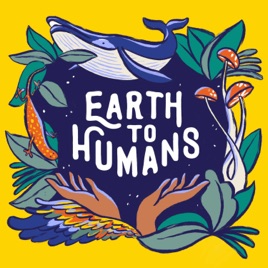
Advertise on podcast: Earth to Humans
Rating
4.9from
This podcast has
316 episodes
Language
EnglishPublisher
Earth to Humans PodcastExplicit
Yes
Date created
2014/09/05
Latest episode
2026/09/30
Average duration
46 min.
Release period
52 days
Description
Earth to Humans is a bi-weekly interview series featuring conversations with some of the amazing humans who are fighting for a brighter and more just future for all of Earth's inhabitants. earthtohumanspodcast.substack.com
Unlock Earth to Humans podcast Email contact info,
Listeners & Audience details
Email contact information
Direct podcast contact details

Listeners
Audience numbers & engagement insights

Audience details
Podcast Insights



Podcast episodes
Check latest episodes from Earth to Humans podcast
Ground Shift - Big Ideas about the Future of Public Land with Matt Lee-Ashley
2026/09/30
Matt Lee-Ashley has a fascinating background in politics and public land policy. He served as the chief of staff and director of policy and programs for the White House council on environmental quality under the Biden administration, and served as a deputy chief of staff for the Department of the Interior.
Ground Shift is a new project - Matt took on the Executive Director role in February of this year - but they are asking some big, fundamental questions about the structure of our public lands system here in the US.
I’ve been fascinated by public land management for many years now. I serve on the board of directors for a non-profit called the Birds of Prey NCA Partnership, which is a friends group associated with the Morley Nelson Snake River Birds of Prey National Conservation Area. This National Conservation Area is just south of Boise, ID, where I live, and my involvement with this protected area shapes my perspective on public land management.
I’ve seen the effects first hand of the current administration’s efforts to dismantle the Bureau of Land Management, the agency responsible for managing my local National Conservation Area. I’ve interviewed a number of folks over the past few years about efforts to fight back against this dismantling, and I’m always disappointed by the limitations that these positive initiatives face.
This is why I was so excited to speak with Matt. Ground Shift isn’t shying away from big ideas. They are leaning into the chaos, and treating it like an opportunity. Their ideas cross partisan lines, and benefit from the growing public understanding that our systems and institutions tasked with managing public lands are fundamentally broken.
I encourage folks to check out the Ground Shift website, where you’ll find a series of essays written by a diverse array of prominent thinkers focused on public lands.
Get full access to Earth to Humans Podcast's Substack at earthtohumanspodcast.substack.com/subscribe
Wartime and the World's First Bird Recordings w/ Anthea Kennedy & Ian Wiblin
2026/08/12
A few months ago I saw a story in The Guardian which answered a question I had wondered about for a while - when did we start using technology to identify wildlife through their calls? I’m an avid user of the Merlin Bird ID App, which records bird songs and attempts to identify them. Before this, I relied on the ears of others - usually experienced naturalists who had spent years honing their hearing before passing on their knowledge to others. But, what came before this?
The Guardian story that caught my eye discussed a short film that had recently been released - Alarm Notes - which was about a guy called Ludwig Koch, who is believed to have made the very first recordings of birds back in the late 1800s. This accolade is only part of Ludwig’s life story, and the further I read into it, the more astounding it got. As a jewish family living in Germany at the dawn of the second world war, Ludwig and his wife had to leave their home and escape to the UK. They also unknowingly hosted a Bulgarian communist who may or may not have burned down the Reichstag building in their home, putting them at even more risk from the incoming Nazi regime. The Bulgarian man managed to get away with the crime however, then later went onto become the first prime minister of Bulgaria, so things turned out ok for him!
The technology used in the early 1900s to record birds in zoos and in the wild would make modern day sound techs run for the hills - think miles of wires held up on stilts over bodies of water, tracing between microphones and a huge recording van. The technological advances that happened over the course of Ludwig’s life were truly remarkable.
Ludwig continued his bird recording work in the UK, becoming one of the very first natural history celebrities. He recorded song books - vinyl that came with a book about the birds that were featured - but also recorded the soundscapes of places, including parts of London and Paris, transporting the listener from their home to places they may have never visited before. He also featured on BBC radio, becoming a familiar voice and even the subject of comedy routines.
I wanted to speak to the makers of the film, Anthea Kennedy and Ian Wiblin about the story and the filmmaking process. I was also interested to hear about Andrea’s personal connection with the subject of the film, as she is Ludwig’s great granddaughter.
To find out more about the film, or any of the other films that Anthea and Ian have made about her family’s remarkable stories, head to their website.
The sound recordings used in this episode were digitalised by the British Library from Ludwig Koch’s archive. The music used in today’s episode is from Blue Dot Sessions.
Support the making of Earth to Humans by becoming a free or paid subscriber.
Get full access to Earth to Humans Podcast's Substack at earthtohumanspodcast.substack.com/subscribe
The Trail Provides
2026/06/25
After spending six months backpacking on the Appalachian Trail (AT), reaching the end felt like a joyous celebration. But there was a sadness lurking just around the corner. Reaching the end meant saying goodbye to the truly unique community of people on the trail, and it also meant the end of a routine focused on extreme exercise and exploring new places.
Post-trail depression is a common topic of conversation amongst thru-hikers on the AT - most hikers understand that the transition back into the real world can be challenging. But depression probably isn’t the right word for what most thru-hikers experience when their journey comes to an end - it’s more akin to grief or sadness. But for some, trail’s end can lead to real, clinical depression. That was the case for one of the members of my trail family, Chop Chop.
Chop Chop’s reason for embarking upon a thru-hike of the AT was drastically different from my own. I had been dreaming of hiking the Appalachian Trail since I was a kid - I spend years planning the trip. For Chop Chop, the AT was a lifeline. It was his last resort - the only thing that he thought might help when he found himself lost in a deep depression.
Despite our differences, Chop Chop and I connected immediately when we met on the trail. We first met in Virginia, and our paths criss-crossed regularly until Vermont, when we connected with a few additional hikers and formed an impromptu trail family. The time that we spend on the trail together was largely joyous and celebratory. But as I got to know Chop Chop a bit more, he started to open up about his struggles with anxiety and depression.
These conversations continued after we completed our hike. Chop Chop was one of the most vocal fans of my Common Land podcast series, and we began talking about sharing his story in an episode of the show.
It’s been a slow and intentional process - we recorded our first interview over a year ago - but we’re both extremely proud of what we’ve put together. Chop Chop’s primary goal in sharing his story is to inspire others who may be struggling to get outside, go for a hike, and find their own safe space in nature.
-Matt Podolsky
Get full access to Earth to Humans Podcast's Substack at earthtohumanspodcast.substack.com/subscribe
BONUS: A Thru-hike of the Appalachian Trail
2026/06/18
In 2022, I set out to thru-hike the Appalachian Trail. In addition to all of my necessary backpacking gear, I also carried small audio recorders and a suite of microphones that I could use to capture the sounds of the trail and document my journey.
I spend six months hiking the entire length of this iconic trail, something that I had been dreaming about for almost 20 years. For most of the hike, I was joined by my mom, who was 65 years old at the time. The two of us had the adventure of a lifetime, and I captured some amazing moments with my audio recorder.
It took me three full years to piece together the story of our long hike. The podcast series that resulted did more than just document my journey - I also captured expert interviews exploring the history of the trail and the conservation issues that it faces. What resulted was a 12-part radio documentary series, produced in partnership with New Hampshire Public Radio, which first aired in the summer of 2025. All 12 of the half-hour episodes are now available via the Common Land podcast feed.
But for the past year or so I’ve been working on a 13th episode - an epilogue to the series. This final episode will drop next week, and it explores a particularly important topic - how mental health is intertwined with long distance hiking. I explore this idea through the perspective of one of my close friends who I met on the trail, Kevin Remillard, AKA Chop Chop.
Chop Chop’s story is both fascinating and inspiring. But my hope is that it will also be instructive. I believe that long distance hiking can teach us about ourselves, illuminating the path towards a happier life. For Chop Chop, this idea serves as a guiding light, and both of us are eager to share this story with the wider world.
But for now, enjoy episode one of Common Land’s second season. If you want to know what comes next, just head over to our podcast feed for the series, or click here to check out the show’s website and see pics from the trail.
-Matt Podolsky
Get full access to Earth to Humans Podcast's Substack at earthtohumanspodcast.substack.com/subscribe
The 'Godfather of Rewilding' with Alan Watson Featherstone
2026/05/28
In Scotland, Alan Watson Featherstone is often referred to as the 'Godfather of Rewilding' - he has dedicated his life to saving Scotland's forests, after making a very public declaration to do so. Prepare to be inspired!
Get full access to Earth to Humans Podcast's Substack at earthtohumanspodcast.substack.com/subscribe
Rediscovering Forgotten Lands with Josh Jackson
2026/04/29
Josh didn’t know anything about the Bureau of Land Management (BLM) until he was looking for an escape during the pandemic. After visiting a few BLM managed areas in California, he decided to make it his mission to visit every area managed by this federal agency in the state. This marked the start of The Forgotten Lands Project, Josh’s effort to raise awareness about these largely unknown patches of public land.
I was drawn to Josh’s work because of my connection to a BLM managed protected area near my home in Boise, Idaho - the Morley Nelson Snake River Birds of Prey National Conservation Area. This National Conservation Area is a part of BLM’s National Conservation Lands system, and it is a truly special place. In less than an hour’s drive, I can be siting along the rim of a dramatic canyon with prairie falcons whizzing by and golden eagles circling overhead. This Conservation Area is home to one of the highest density nesting areas for birds of prey in the world. Because of its proximity to this unique area for raptors, Boise has become known as a global hub for raptor research. In the 1980s the Peregrine Fund established the World Center for Birds of Prey here, and Boise State University launched the Raptor Research Center, home to the only graduate degree program in Raptor Biology in the US. There’s also a famous raptor migration survey effort run by the Intermountain Bird Observatory just outside of town, and our minor league baseball team is called the Hawks!
Despite all of this, the Morley Nelson Snake River Birds of Prey National Conservation Area, which was designed to protect raptor populations, is woefully underfunded and understaffed. In my role as a board member of the Birds of Prey NCA Partnership, a “friends” group associated with this National Conservation Area, I’m trying to elevate the profile of these BLM managed public lands. Josh Jackson shares this mission, and the two of us had an engaged conversation about the role of public land in our society and the challenges facing the Bureau of Land Management.
A version of this interview was originally published as an episode of the Dedication Point podcast - a series focused on issues relevant to the Morley Nelson Snake River Birds of Prey National Conservation Area. Check out our latest season of Dedication Point for more discussions about the BLM’s current funding and staffing crisis.
-Matt Podolsky
Get full access to Earth to Humans Podcast's Substack at earthtohumanspodcast.substack.com/subscribe
In Search of Simple Shelter with Kat Hill
2026/03/25
For this episode, I’m bringing our global audience to the place I call home - the Scottish Highlands. In this historical landscape, where midgies reign and deer stand majestically atop purple-washed hillsides, simple shelters stand that welcome weary travellers to rest, dry off and, most importantly, connect with each other.
Known as ‘bothies’, these shelters may lack modern conveniences, but they offer a chance to escape, breathe and be at one with nature. Today’s guest Kat Hill is a researcher and author who explores landscape, people, and heritage.
After reading her book, Bothy: in Search of Simple Shelter, I wanted to explore what these shelters mean to the subculture of people who are dedicated to their preservation and exploration, their history, benefits and current surge in popularity.
Get full access to Earth to Humans Podcast's Substack at earthtohumanspodcast.substack.com/subscribe
Nature-Informed Therapy with Dr. Heidi Schreiber-Pan
2026/02/25
Heidi Schreiber-Pan is a leading expert on nature-based therapy, a psychotherapist and a public speaker. She’s the author of “Taming the Anxious Mind: A Guide Book to Relieve Stress and Anxiety", and the founder of the Center for Nature Informed Therapy.
Get full access to Earth to Humans Podcast's Substack at earthtohumanspodcast.substack.com/subscribe
Getting into the Weeds with Mo Wilde
2026/01/28
In this episode I speak to Mo Wilde - author, forager, ethnobotanist and research herbalist.
Throughout my life, I’d never ventured further into foraging than picking blackberries when they were in season. But reading Mo’s book opened my eyes to the incredible diversity of wild food that fills our forests, grasslands, hedgerows and coasts. On returning to the UK, I began to discover the abundant plants that could not only feed me, but heal me too. And thus began my foraging journey. So, I was intrigued to hear about what started hers, and delve deeper into her work…
Get full access to Earth to Humans Podcast's Substack at earthtohumanspodcast.substack.com/subscribe
Happy Earth Day?
2025/04/22
Hi friends,
Welcome back to the Earth to Humans podcast. It’s been a minute, but we’re back!
I’m senior producer Sarinah Simons, and today, on Earth Day, I’m here with a little season update and some reflection.
Yes, we are finally back from our break. Stepping away gave us time to rest, reflect, and sort through the noise—both out in the world and in our own heads. However, none of us quite anticipated the world we would be returning to.
While we typically start each season on Earth Day with a renewed sense of purpose, motivation, and curiosity, I’ll be honest: this year hardly feels like a celebration.
There’s this weight on everything right now, right? Climate and humanitarian grief, ecosystem collapse, a hostile administration…So, truly, if you’re feeling degrees of that heaviness, you’re not alone. I promise, we’re right there with you.
I remember a time, though, when Earth Day felt a little more hopeful. At least, I remember when we were talking about projections and tipping points, and it at least felt a little farther off. A time when we were hopeful because there were good people out there working towards solutions, and while projections looked alarming, there was a sense that we could and would figure this out. But today doesn’t feel like that at all to me, and maybe that’s just me! But I can’t help but feel in certain ways that the climate crisis is now, and we are running out of time. I could recite a laundry list of all the current emergencies we’re all facing and reading about, but that often feels like preaching to an already overwhelmed and exhausted choir…so I’ll spare you all the details of what’s currently keeping me up at night.
So, that begs the question: why are we still doing this podcast?
Honestly? Because we need each other. And we need stories. Not just data. Not just dire warnings (though yes, it’s important to highlight those too), but stories that remind us we’re not alone. That other people care. That fighting for a livable future is still possible. Still worth it.
So this season, we’re doing things a little differently. Yes, we’ll still have the scientists, the authors, the activists—the people doing powerful work on the frontlines of climate and conservation. But we’re also bringing ourselves to the mic a little more.
We want to talk more openly about what it feels like to live in this moment. Not just what we’re doing, but how we’re doing. The hope, the burnout, the weird little coping rituals. The late-night spirals and the tiny, absurd joys that keep us going.
We’re pulling the curtain back a bit. More check-ins between hosts. More behind-the-scenes messiness. Because if we’ve learned anything in the last few years, it’s that pretending to have it all figured out is exhausting—and pretty unhelpful in my opinion.
So, if you’ve been feeling the weight of it all…welcome. If you’re still searching for ways to make a difference, or just survive the news cycle without disappearing into the void, you’re in good company.
And we’re so glad you’re here.
New episodes will be dropping soon, and we’ve got some incredible guests lined up this season. Stay tuned. Stay weird. Stay mad. And stay connected.
And hey—Happy Earth Day 🌎
Let’s make this one count.
-Sarinah
Get full access to Earth to Humans Podcast's Substack at earthtohumanspodcast.substack.com/subscribe
Last One For the Year!
2024/12/31
Happy (almost) New Year!
We wanted to take a look back on all of our favorite Earth to Humans episodes that we produced in 2024. From redefining wilderness to the deepest parts of the ocean, the stories we got to tell this year continue to inspire and motivate us, especially as we prepare to navigate a murky future filled with uncertainty and inevitable environmental hurdles.
Hannah, Matt and Sarinah shares their thoughts on the episodes that make this challenging work worthwhile, and a few of them might surprise you!
We know it can be hard, but its more vital than ever that we stay engaged, tuned-in and laser focused on our environmental goals into 2025. Here on the pod, we’ll be with you every step of the way and we can’t wait to share new stories that we’ll be cooking up ahead of our return in the Spring.
Cheers!
Get full access to Earth to Humans Podcast's Substack at earthtohumanspodcast.substack.com/subscribe
The Age of Climate Conspiracy Theories w/ Mick West
2024/11/27
You know, it's amazing how despite this current age of information, we sometimes get lost in what’s actually true and struggle to wade through the constant barrage of misinformation. It sometimes feels like everyone's got a theory for something, whether it’s the results of the 2016 election, the source of COVID 19 or something more harmless like UFO’s and the existence of the Loch Ness Monster.
We see them everywhere online and, in the world, popping up in conversations with coworkers and overheard standing in line for coffee. So, it’s no wonder it can sometimes be hard to untangle this complex web of facts and falsities. My guest today has wrangled conspiracy theories head on with a level head and persuasive evidence. Mick West is a science communicator, author, and one of the leading voices in debunking misinformation. As the creator of Metabunk.org and author of Escaping the Rabbit Hole, Mick has dedicated his work to exploring how conspiracy theories take root, why they resonate, and how we can counter their influence with evidence-based reasoning.
From claims of secret geoengineering plots to the outright denial of climate science, conspiracy theories have a powerful ability to misinform, distract, and derail meaningful progress. In this conversation, we’ll uncover the real-world impacts of these narratives on climate science, public trust, and environmental policy—and discuss what we can do to move toward a more informed future.
https://www.metabunk.org
https://www.contrailscience.com
https://youtube.com/mickwest
Get full access to Earth to Humans Podcast's Substack at earthtohumanspodcast.substack.com/subscribe
Where We Go From Here
2024/11/13
We don’t have all the answers, but the Earth needs us now more than ever before.
Get full access to Earth to Humans Podcast's Substack at earthtohumanspodcast.substack.com/subscribe
Is Voting the Highest Form of Environmental Citizenship? Re-broadcast with Nathaniel Stinnett, founder of the Environmental Voter Project
2024/10/30
I recorded this interview with Nathaniel Stinnett, the founder of the Environmental Voter Project, in the summer of 2016. While there are lots of differences between this election cycle and that of 2016, the ideas that Nathaniel shared remain relevant and important today. The Environmental Voter Project has dramatically expanded it’s capacity and scope since 2016, and now has an expansive reach, with ground operations in 19 states and more than 10 million potential voters contacted.
Earth to Humans has changed a lot since 2016 as well. When we released this episode, the podcast was still called “Eyes on Conservation” and I was the sole producer, churning out episodes almost every week. When I launched the podcast back in the fall of 2014, I imagined it as an outlet to share the audio from unused interviews originally recorded for various documentary projects, but it quickly evolved into something much more than that. I feel extremely fortunate to now have the opportunity to work with an amazing team of producers that bring a far more diverse and interesting slate of stories to the show than I would be capable of producing on my own. But when prompted to dig into the archives for this week’s episode, I realized that our show’s humble beginning took place almost exactly 10 years ago.
So cheers to ten years of podcasting at the Wild Lens Collective! I hope that you enjoy this foray into our archives as much as I did! Happy voting.
-Matt Podolsky
Get full access to Earth to Humans Podcast's Substack at earthtohumanspodcast.substack.com/subscribe
Science on the Spectrum with Dr Lisa-Ann Gershwin
2024/10/16
I discovered Lisa while reading a book not penned by her - Phosphorescence by Julia Baird. In the book, Julia is faced with a life threatening illness, and goes on a journey to cultivate ‘inner light’ which sees her, amongst many other things, meeting up with jellyfish and fluorescence expert Dr Gershwin. She tells a very brief summary of Dr Gershwin’s life - her incredible accolade of identifying over 200 species of jellyfish, her experience with homelessness, and her adulthood autism diagnosis.
I remember putting the book down for a moment and thinking what an incredible story Lisa seemed to have, so I looked her up online and discovered that this story was barely scratching the surface. I bought Lisa’s first book, Stung, and learned so much about jellyfish and their role within their ecosystem that I discovered a newfound appreciation for them, and an understanding about why someone would dedicate so much of their career researching them. I decided to reach out to her to see if she would be a guest on Earth to Humans and, to my delight, she said yes!
Cut to six month’s worth of emails later - she is based in Tasmania, Australia and I am based in Scotland, which made scheduling tricky - we finally found the time to chat. I could’ve spoken to Lisa forever. We explored her amazing journey from high school dropout to finishing her second phd, and how receiving an aspergers diagnosis made everything suddenly make sense for her.
Artwork by Jasmine Hortop
Lisa is a truly open book, and speaking to someone who is so honest about their experiences with neurodiversity, depression and finding their ‘ert’ left me feeling like the world would be a much better place if we all lived with such unapologetic authenticity. I have so much admiration for this amazing woman, I’m so excited to share this episode.
Watch a snippet of the episode of ‘You Can’t Ask That’, featuring Lisa.
In this episode, Lisa mentions the book she read that gave her insight into Aspergers and led to her getting a diagnosis. The book was by Dr Tony Attwood - check out his books here.
If you’re visiting Tasmania and want to book onto one of Lisa’s Glow Tours, you can find out more on her website.
Get full access to Earth to Humans Podcast's Substack at earthtohumanspodcast.substack.com/subscribe
Podcast reviews
Read Earth to Humans podcast reviews
MeanderingTwist 2023/04/23
Engaging and Informative
A deep dive into nature, conservation, and the effort to improve the fragile relationship humans have to the natural world. Full of engaging discussio...
M1adise1 2022/07/20
Amazing Podcast
These interviews are so in-depth and I love Sarinah and Hannah as producers! Seriously great content, I learn so much every episode :)
Getupsidedidntworkforme 2021/11/24
Missing me some ETH!
I've been binging old episodes during the break but I am very much looking forward to some new episodes of thoughtfully curated conversations about co...
wildbio3 2021/11/23
ETH-You need to hear it!
This podcast covers conservation topics that are relatable whether you’re a novice or a professional in the field. These conversations and guests are ...
Frog_Lady 2020/10/08
One of the good ones!
The most recent episode on wildlife trafficking was really fascinating, I learned a lot. Keep it up!
Bfhuttghh 2020/10/07
Cochlear stimulation you won’t regret
This podcast... has restored my faith in God. But no seriously... if you’re interested in environmental issues/topics this is a must listen! One of th...
Cashie2018 2020/06/30
New to Podcast!
Started at 195 : Wetlands and host got me from beginning! Really great podcast!
Fixin Vixens 2020/05/12
Totally engaging!
This podcast is the perfect mix of scientific information and entertainment. The hosts and guests make the subject of conservation compelling and oh s...
GreggoPWN 2020/03/05
So Refreshing!
I think conservation is such an important topic, but sometimes it can really be dry. That’s not good, because we NEED to talk about these things! The ...
Katie Joy B. 2019/11/14
Caring Conservationists!
The entire Wild Lens team, along with their incredibly knowledgeable guests, do an AWESOME job at showing the various ways we can conserve and improve...
Podcast sponsorship advertising
Start advertising on Earth to Humans relevant audience podcasts
You may also like to advertise on these Podcasts
4.890611566
Fearless with Jason Whitlock
Blaze Podcast Network

4.959792000
Legal AF by MeidasTouch
MeidasTouch Network

4.725721047
The Dana Show with Dana Loesch – Politics & Culture Commentary
Dana Loesch – Conservative Political Commentary
4.723151959
Timeless Wisdom with Dennis Prager
Salem Podcast Network

4.816571994
Juicebox Podcast: Type 1 Diabetes
Scott Benner
4.8167502000
The GaryVee Audio Experience
Gary Vaynerchuk
4.6221672000
Mark Levin Podcast
Cumulus Podcast Network
4.7278302000
The Matt Walsh Show
The Daily Wire
4.814621641
The Big Honker Podcast
Andy Shaver & Jeff Stanfield
4.92486947
The 1000 Hours Outside Podcast
1000 Hours Outside