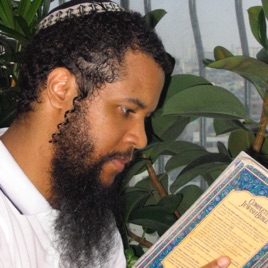
Advertise on podcast: Exodus (Messianic)
This podcast has
19 episodes
Language
EnglishExplicit
No
Date created
2014/12/23
Latest episode
2025/11/29
Average duration
35 min.
Release period
1 days
Description
We invite and encourage you to join the reading schedule that has so inspired the Jewish community since before the birth of “The Church.” At the same time, we challenge you to read the portions on your own, mining God’s rich, spiritual garden, gleaning the precious nuggets that lay in store for you. A Messianic commentary for each portion has been provided to assist you in your journey to become a more mature child of HaShem. May His Spirit richly bless you as you “Study to show thyself approved!” 2 Timothy 2:15
Unlock Exodus (Messianic) podcast Email contact info,
Listeners & Audience details
Email contact information
Direct podcast contact details

Listeners
Audience numbers & engagement insights

Audience details
Podcast Insights


Podcast episodes
Check latest episodes from Exodus (Messianic) podcast
13 Sh'mot (Part A) - Names - Exodus 1:1-6:1
2025/11/29
Moshe said to God, "Look, when I appear before the people of Isra'el and say to them, 'The God of your ancestors has sent me to you'; and they ask me, 'What is his name?' what am I to tell them?" God said to Moshe, "Ehyeh Asher Ehyeh [I am/will be what I am/will be]," and added, "Here is what to say to the people of Isra'el: 'Ehyeh [I Am or I Will Be] has sent me to you.'" God said further to Moshe, "Say this to the people of Isra'el: 'Yud-Heh-Vav-Heh [ADONAI], the God of your fathers, the God of Avraham, the God of Yitz'chak and the God of Ya'akov, has sent me to you. 'This is my name forever; this is how I am to be remembered generation after generation.
13 Sh'mot (Part B) - Names - Exodus 1:1-6:1
2025/11/28
I believe that HaShem wants us to come to the awesome realization, through the Ruach HaKodesh, that the “name” of the LORD is Yeshua! If you don’t believe me, read the rest of Philippians where the Torah teaches that one day, everyone will acknowledge that Yeshua is ADONAI, to the glory of God the Father! This word “adonai” is the Greek word “kurios”, which can be translated “sir” or “lord” depending on the context. Since Sha’ul is quoting from the TaNaKH book of Isaiah, then the context demands the rendering “LORD” (i.e. YHVH). In fact, to further the seeming controversy, Isaiah 45:23 is specifically referring to ADONAI the Father! This means that the verse in Philippians is hinting that Yeshua will be acknowledged as ADONAI without explicitly stating that Yeshua IS the Father. We must be careful not to put something into the text that is not there.
14 Va'era - I appeared - Exodus 6:2-9:35
2025/11/27
HaShem was revealing an aspect of his character that would later play a very important role in the identity of the Jewish People as a Nation. This title would also serve as a reminder to the surrounding nations that "with a great out-stretched arm, ADONAI almighty delivered his beloved people!" To be sure, the reference of HaShem as the "God who delivered [them] from the bondage of Egypt" would become a "household" name of sorts. Fast-forward in the book of Sh’mot to the "Ten Commandments" (Sh'mot 20:1, 2) and see if you can find this phrase used to identify HaShem. Thumb through the rest of your TaNaKH (Old Testament) and you will find that this phrase is used numerous times. As believers in Messiah Yeshua, we know that this is one of the primary character traits of HaShem, which unifies the Messiah and the Godhead as an "echad", that is as "one". The name of the Messiah is related to the Hebrew name "Y'hoshua", which itself stems from the Hebrew name "Hoshea". Both of these names are composites of the two Hebrew words for "God" and "will save", respectively. When we combine this knowledge with the fact that it is "YHVH" who offers us salvation from sin THROUGH Yeshua the Messiah, then we can begin to understand the significance of the type and shadow that the Exodus from Egypt plays in our lives as new creations.
15 Bo - Go - Exodus 10:1-13:16
2025/11/26
We have here at least two very important characteristics of our Loving, Heavenly Abba: he can be trusted at his Word, despite the chaotic circumstances surrounding us; he is faithful to deliver us completely, even before we have received his written revelation and put it into practice in our everyday lives! To be sure, the Children of Isra'el did not keep the Torah the way that they would eventually be instructed to keep it, after Sinai. Yet, HaShem honored their faith in him (demonstrated by the Pesach incident), and brought about the greatest collective deliverance that the world has ever known! This monumental deliverance should have caused that people, both Isra'el and Egyptian, to understand that faith in HaShem alone is what brings about the freedom so desperately desired in the midst of slavery! I must state it plainly one more time for my brothers according to the flesh, the majority of which are seeking to be justified by their Jewish heritage and by obediently keeping the "Torah" of Moshe, while remaining (seemingly) ignorant of the "Torah" of Avraham: our ancestors were delivered (a symbol of genuine faith in the Holy One) BEFORE they received the Torah on Mount Sinai! The sequence of the covenants is crucial for a proper understanding of the righteousness of HaShem!
16 B'shallach - After he had let go - Exodus 13:17-17:16
2025/11/25
Another lesson preserved within the stories of the Jewish People is the tradition that as the people observed the horses and riders drowning in the Sea of Reeds, as they began to rejoice, that HaShem became saddened, and scolded them. "How can you rejoice at the death of my children? For even Pharaoh and his armies are my children also." This causes us to recognize the fact that our Great Heavenly Abba is compassionate beyond our comprehension. Even though the King of Egypt willfully hardened his heart against the Holy One, it was not our Maker’s original intent to destroy him. Indeed as I have stated elsewhere, as taught in the Torah, our God is not willing that any should perish, but that all should come to repentance! Our LORD is not a "killing machine", ready to strike down all that oppose him. To be sure, he has demonstrated his patience and abundant mercy time and time again throughout the pages of the Torah. The option to turn from his wickedness, unto repentance, was offered to Pharaoh time and time again, yet he chose to refuse. Ours is a lesson in humility and fear: if he did not spare those evil men who persistently refused to surrender under the almighty hand of the Almighty personified, how much more will he not spare us, who have been given the revelation of the Son of God and the free gift of the Ruach HaKodesh who testifies of him (a short drash of Romans 11:21)?
17 Yitro (Part A) - Jethro - Exodus 18:1-20:23
2025/11/25
In traditional Jewish thought, a marriage is also certified by a wedding contract, known as a “ketubah” (say "keh-too-bah"). This legally binding document is agreed upon by both parties, and serves as a visible reminder to all that this bride belongs to this groom and vice-versa. The Hebrew word “ketubah” posses the root word “katav”, which means, “to write”. The Torah tells us in 19:3-8 that HaShem delivered them out of the bondage of the Egyptians so that he might enter into a special kind of relationship with them. This relationship would involve them adhering to the covenant that HaShem already made with their forefathers some 430 years prior to this. In this manner, they would become HaShem’s most peculiar treasure among all of the peoples of the earth! What was the people’s response in 19:8? “All the people answered as one, “Everything ADONAI has said, we will do.”” This is amazing when it becomes apparent that HaShem hadn’t even spelled out the conditions of this contract yet! But what was the contract? Where was the ketubah? The answer is obvious. The Torah is the ketubah, acting as a marriage contract between the groom (HaShem) and his bride (Isra'el)!
17 Yitro (Part B) - Jethro - Exodus 18:1-20:23
2025/11/24
18 Mishpatim (Part A) - Rulings - Exodus 21:1-24:18
2025/11/23
HaShem masterfully designed his Torah to permeate every single facet of human existence, from birth, to the grave. His people were to saturate themselves with his rich mercy, grace, loving-kindness, forgiveness, and judgment, as they carefully followed each and every mitzvah (command) of the Torah. Being raised in such a "Torah-Community" had its definite advantages. This type of community produced a positive atmosphere, whereby the children grew up immersed in the truths of God's ways, as they observed the rest of the community. They participated in the feasts and holy convocations year after year as a family. This instilled in them godly principles, which formed the seedbed for the life of faith and witness that HaShem called them to perform. This lifestyle did not save them. This lifestyle served to prepare them to meet the true "Teacher", the Messiah, as they reached the age of accountability. In this way, the New Covenant teaches that the Torah acted as a custodian, or a "schoolmaster" (read Galatians 3:24-25). Once we reached the age where a conscious decision could be made, the Torah should have presented us with the proper framework to make the right decision: trusting faithfulness in HaShem, as demonstrated through our dependency in his means of provision—namely his Son Yeshua! This faithful lifestyle is magnificently portrayed in the covenants that the people had experienced thus far.
18 Mishpatim (Part B) - Rulings - Exodus 21:1-24:18
2025/11/22
Chapter 21 – Verses 22-27 speak about restitution in the event of accidental injury. We are familiar with the saying, "An eye for an eye; a tooth for a tooth." We remember that our LORD Yeshua made a comment about this in the B'rit Chadashah book of Mattityahu 5:38-42. Chapter 22 – Verses 21-27 show us the compassionate heart that God has towards those less fortunate in our community. The widow, orphan, stranger, and the poor have always held a special place in our Heavenly Abba's eyes. We are challenged with establishing a communal system that will meet their needs. Indeed, Yeshua also challenged us when he stated that the poor would always be with us. Chapter 23 – Verses 10-33 form one complete unit of instructions that center on provision and blessing during the "resting years" that the Land is to experience. HaShem tells the people to grant unto the land a time period of rest (shabbat) so that the soil can replenish itself and provide a healthy crop on the eighth year after its rest. Consequently, during this time of supernatural provision, HaShem knew that some people would be inclined to doubt the providence of his Mighty Hand, and would be tempted to imitate the pagan society around them. The entire section is given over to HaShem assuring them of his provision and blessing despite the fact that no crops will be sown for and entire year! Chapter 24 – our portion concludes with Moshe, Aharon, and the elders having a meal with the God of Isra'el! In this magnificent revelation they actually see a form! Present during this meal is the presence of the atoning blood, splashed upon all the articles of the covenant—including the people themselves! What are we to make of all of this imagery? As we have read in other places of the Torah, the God of the universe is an invisible God! He cannot be seen! So what are the people seeing?
18 Mishpatim (Part C) - Rulings - Exodus 21:1-24:18
2025/11/21
In our current portion, everything was sprinkled with blood. The book of Hebrews informs us that, in accordance to the Torah, almost everything is purified with blood. This ceremony was performed on the earthly copies; Yeshua's is that effectual, atoning blood sprinkled on the heavenly originals! To be sure, Hebrews goes on to say that without the shedding of blood there is no forgiveness of sin! How could Moshe and the elders be in the presence of the Sinless One without a covering? The blood was their covering! If you want a "revelation", and need to be cleansed, come into the presence of the Living God of Isra'el! But be warned: You cannot experience his Glorious Presence without a "covering" of some sort! What covering am I referring to? The sinless blood of his Son, of course! Today, if you will receive the gift of the Son, the Spirit of HaShem will write the Torah of HaShem upon the doorposts of your heart! If you place your trusting faithfulness in the fullest, complete, visibly manifested presence of HaShem, that is his Son, then you will also receive a "revelation" of him who is the Living Torah! And you WILL be cleansed!
19 T'rumah - Contribution - Exodus 25:1-27:19
2025/11/20
I want to develop the “temporary dwelling place” theme for our study. From this commentary, the reader will soon see that there is a lot of “Messianic redemptive history” tied up in the concept of “dwelling”. HaShem has had a grand plan of becoming the one and only God of his people, from the beginning of history. Having said that, I will work from a basic outline this time. Let’s examine my main points: 1. Dwelling with men: Past History A. Exodus 25:1, 2, 8, 9 B. Leviticus 23:34-43; 26:11, 12 C. Ezekiel 37:27, 28 (Prophetic) 2. Dwelling with men: Present Reality A. John 1:14; 14:23b; 17:23 B. Hebrews 8:1, 2, 10 C. Jeremiah 31:33 (Prophetic) 3. Dwelling with men: Future Redemption A. Romans 11:25, 26 B. Revelation 21:3 C. Zechariah 14:16 (Prophetic)
20 Tetzaveh (Part A) - You are to order - Exodus 27:20-30:10
2025/11/19
The detailed account of the Tabernacle and its functions begins with a recount of the maintenance of the Menorah (Lamp Stand) that was found in the Holy Place. This lamp, if you will remember from last week's reading, was formed from a solid piece of pure gold. It is believed that this lamp weighed as much as sixty-six pounds! This was no light structure (pardon the pun). The menorah easily symbolizes the Messiah. Yeshua stated that he is the Light of the World. The menorah provided a glorious, eternal light to the priests who ministered within the Holy Place. Our previous parashah described the menorah as having seven lamps. The number seven in the Torah represents perfection. If the menorah is a symbol of our perfect Messiah, then where in the Torah can we find a correlation to the number seven? Let's take a look at a familiar passage in Yesha'yahu (Isaiah). In Yesha'yahu 11:1-5, we are given a vivid description of the coming Messiah. All rabbinical sources, as well as Christian scholars agree that this passage is a prophecy concerning the long-awaited Savior. The "Branch of Yishai" is a reference to his bloodline. Yishai (Jesse) was the father of Dah-vid the King. It was a well-known fact that the Messiah was to be born from Dah-vid's loins. The Torah describes him this way: "The Spirit of ADONAI will rest on him, the Spirit of wisdom and understanding, the Spirit of counsel and power, the Spirit of knowledge and fearing ADONAI—he will be inspired by fearing ADONAI. (11:2) As can be observed, the Spirit is referred to SEVEN times, and in an orderly fashion: (1) - the Spirit of ADONAI; (2) and (3) – the Spirit of wisdom and understanding; (4) and (5) – the Spirit of counsel and power; (6) and (7) – the Spirit of knowledge and fearing ADONAI. This is not an arbitrary use of words coined by the naviy (prophet). Yesha'yahu was writing under the direct inspiration of the very Spirit that he was speaking about!
20 Tetzaveh (Part B) - You are to order - Exodus 27:20-30:10
2025/11/18
In chapter 29 of our current portion, we catch a glimpse of the importance of blood sacrifice. Our God is a God of covenants. His covenants are ratified with the shedding of blood. The old Christian hymnal says it all: "There's power in the blood!" Actually, the reason that there is "power" in the blood is because the Torah explicitly teaches that there is "life" in the blood. The Torah paints a picture in 29:10-45 that an acceptable sacrifice sanctifies both the altar and the person who touches the altar (29:37). The sacrifice served an important function in the life of the average Isra'elite. Allow me to conduct a word study to explain. In our text of Ephesians chapter two we read, "But now, you who were once far off have been brought near through the shedding of the Messiah's blood. (2:13) There is a play on words found in the Hebrew thought conveyed in this passage, but not found in the English or the Greek. The Hebrew word for "sacrifice" is "karban". The sacrifice in question here is undoubtedly Yeshua's own. His was the spotless offering that was placed on God's altar, for the remission of the sins of the world. In our parashah we are told that the offerings of the morning and evening lambs, offered at the entrance of the Tent of Meeting, would create a pleasing aroma before ADONAI. These offerings would be at the place where HaShem would meet with and speak to the people (29:38-43). Moreover, verses 45-46 go on to promise that HaShem would live among his people (read last week's parashah), and that they would indeed know that he was the very one who delivered them from the slavery of Egypt. The sacrifice brought the people near to their God and it brought God near to his people. The Hebrew word translated as "near" in our above passage in Ephesians, is "karav". Here is the play on words: because of the sacrifice (karban) of Yeshua, we have been brought near (karav) to our Holy God! In fact, the two Hebrew words share the exact same root word. These words are not to be confused with the Hebrew word "keruv" which is translated as "cherub". Even though it was between the wings of the "k'ruvim" (cherubim) that the Glory of God was manifested, and it was the Mercy Seat (cover to the Ark) where the blood was splashed. The point is clear: our God instructed his people to offer the blood sacrifices in order that the covenant requirements might be met. Covenants are our key to relationship with an otherwise unapproachable, Holy God. It started with a sacrifice in B'resheet 3:21, and since then, there has existed a "scarlet thread" that has run through the entire Bible!
21 Ki Tissa (Part A) - When you take - Exodus 30:11-34:35
2025/11/17
Chapter 31 1-11 I have singled out B'tzal'el the son of Uri the son of Hur, of the tribe of Y'hudah and his assistant Oholi'av the son of Achisamakh, of the tribe Dan. These men were supernaturally gifted to oversee the construction of the fore-mentioned Mishkan (Tabernacle) and its furniture. The lesson is obvious: when HaShem sends his people to perform a task, he will also equip them with the necessary skill and gifting to accomplish the task for his glory. Conversely, if someone is occupying an office within the Body of Messiah, and there seems to be a lack of supernatural gifting and ability to function correctly within the said office, then the individual might want to "re-check" his or her calling to make sure they're in the right spot.
21 Ki Tissa (Part B) - When you take - Exodus 30:11-34:35
2025/11/16
Along with the fact that it is a memorial of Creation, the Sabbath day is also an identification of HaShem's authority. Only he could set a day apart as holy (read B'resheet 2:1-3). Only he could sanctify a day as an eternal memorial of his uniqueness. No other created being has this authority. This includes man. This includes religious institutions. When we attempt to override this authority, we undermine the very character, identification, and nature of our All-mighty God. Once we find ourselves playing God, it is then that we are in serious trouble. While it is true that we have been given the authority to make lasting decisions governing everyday communal matters (read Mattityahu 18:15-20 to understand an often-misunderstood application of heavenly authority), we have not been given the authority to switch God's Sabbath Day, nor to abrogate it.
Podcast reviews
Read Exodus (Messianic) podcast reviews
Podcast sponsorship advertising
Start advertising on Exodus (Messianic) relevant audience podcasts
You may also like to advertise on these Podcasts
4.736011303
The Bonfire with Big Jay Oakerson and Robert Kelly
SiriusXM

4.92471943
The 1000 Hours Outside Podcast
1000 Hours Outside
4.6253402000
The Glenn Beck Program
Mercury Radio Arts
4.922321830
The Ten Minute Bible Hour Podcast
Matt Whitman

4.916151617
The Kristian Harloff Show
Kristian Harloff

4.853512000
Men In Blazers
Men In Blazers
4.847052000
Pat Gray Unleashed
Blaze Podcast Network
4.920391996
Brant & Sherri Oddcast
Brant Hansen

4.672732000
Timcast News
Timcast Media

4.6221662000
Mark Levin Podcast
Cumulus Podcast Network