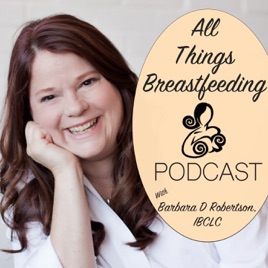
Advertise on podcast: All Things Breastfeeding Podcast
Rating
4.7from
This podcast has
99 episodes
Language
EnglishExplicit
No
Date created
2015/03/05
Latest episode
2026/01/13
Average duration
27 min.
Release period
26 days
Description
A Comprehensive, Professional Service for All of Your Breastfeeding Needs / Ann Arbor, MI
Unlock All Things Breastfeeding Podcast podcast Email contact info,
Listeners & Audience details
Email contact information
Direct podcast contact details

Listeners
Audience numbers & engagement insights

Audience details
Podcast Insights

Podcast episodes
Check latest episodes from All Things Breastfeeding Podcast podcast
All Things Breastfeeding Episode 106: 2025 ILCA Conference Recap
2026/01/13
Barbara and Nancy discuss their experience at the 2025 ILCA conference. This was the first conference at which LactaLearning participated in the exhibit hall! They were joined by a good friend and fellow IBCLC, Rene Fisher.
It was so much fun seeing old friends and making new ones! There was such a great response. When asked, some people had heard of LactaLearning; folks either said, “Yes, I love it!” or “No, but it sounds like a great idea in terms of what we are doing with education.” It was thrilling to get such good feedback.
Nancy and Barbara each attended several presentations and discuss what they learned. Because they are both lifelong learners, it is exciting to see what other leaders are doing in the field. In particular, Barbara and Nancy had dinner with Dr. Lisa Anders to continue their discussion of the pump flange fitting. Lisa’s poster presentation presents data suggesting that flange size fitting may not be as important as we thought. Stay tuned for more on that!
LactaLearning is the result of a long evolution and journey stemming from Barbara Robertson’s dreams and drive. Barbara started with a strong passion for learning and teaching, and then later fell in love with lactation. As a national and international professional trainer, Barbara realized her business needed to reflect this and created the LactaLearning brand with love and intention. Nancy Mohrbacher came on board to help with course creation and many behind-the-scenes tasks, and we are continuing to imagine new ideas and bring them to life. Jessica Beemsterboer is becoming increasingly involved in our professional training, especially in the areas of technology. Jessica gives us the confidence to keep LactaLearning’s technology use cutting edge.
The post All Things Breastfeeding Episode 106: 2025 ILCA Conference Recap appeared first on The Breastfeeding Center of Ann Arbor.
All Things Breastfeeding Episode 105: Working and Breastfeeding Made Simple
2025/12/15
Working and Breastfeeding Made Simple? Nancy and Barbara discuss this important topic and how their new book group, Working and Breastfeeding Made Simple, can help make you an expert on this topic. Here are just five topics that will be covered in depth during the book group!
Yes, it is possible to support working parents in achieving their infant feeding goals. Several critical factors for supporting breastfeeding/chestfeeding among employed parents have been identified in the literature and clinical practice. Despite the dire statistics, families in Barbara’s private practice actually do well. None of them discontinued breastfeeding during the first month of returning to work. Providing accurate information about how breast milk supply works and how to express breast milk, along with social and emotional support, appeared to help clients maintain breastfeeding despite occasional difficulties. Here are five critical factors that help families meet their breastfeeding goals.
1. Breastfeeding Is Going Well Before Returning to Work
One critical factor for success is having the parent be good at breastfeeding before they return to work. It is well established that breastfeeding becomes less labor-intensive (and generally easier) for most mothers at approximately 6–7 weeks (Mohrbacher & Kendall-Tackett, 2010). If breastfeeding isn’t going well or a mother goes back to work before 6–7 weeks, she is more likely to be unsuccessful with this transition. If a mother is struggling with pain, has a baby who doesn’t feed well at the breast, or her milk supply is low when she returns to work, she is doubly challenged from the get-go! Providing a plan to address these issues along with hope, accurate information, and support can help mothers continue breastfeeding even as they return to work.
2. Support From an International Board Certified Lactation Consultant
The support and information that an International Board Certified Lactation Consultant (IBCLC) can provide are critical for success. Many parents don’t have anyone in their lives who understands or cares about why they are even trying to continue to breastfeed and work. IBCLCs do care. They want them to achieve their breastfeeding/chestfeeding goals. Together, IBCLCs can help improve the low statistics on working and breastfeeding success.
3. Success at Milk Removals
Another critical factor for success is how effectively the parent expresses their milk when separated from their baby. Most clients use a standard, personal-use, double-electric breast pump. However, not all pumps are created equal. Some work well, and some don’t work as well. Using a pump with adequate vacuum, different-sized breast shields (as necessary), and variable speeds will increase her chances of success. At the same time, if a pump has all these things and they is still not getting out their milk, IBCLCs have to get creative. Perhaps they need to try a different pump brand, rent a hospital-grade pump, use a hand pump, or hand express. Watching a parent pump is essential. Test the vacuum. Make sure their shields fit well. Many families are unaware that different-sized breast shields even exist. Positive associations to help them “Feel the Love” for their pump. Without an oxytocin release, parents are trying to pull the breast milk out of their bodies. With an oxytocin release, they are working in sync with their body. Their body is pushing the milk out of their breasts. This is much more effective. If the parent is having trouble “feeling the love,” suggest warm compresses, warm breast shields (Kent, Geddes, Hepworth, & Hartmann, 2011), and/or massage before pumping (Bolman & Witt, 2013; Bowles, 2011). They can also use “hands-on” pumping techniques to help get the breast if the milk is flowing (Morton, n.d.). Additionally, hand expression for a minute or two on each breast after pumping can support milk production (Morton et al., 2012).
Some mothers find that visualizing their baby or their milk flowing helps. Others find that playing Candy Crush helps! There are some hypno-pumping visualization MP4 products out there. Have them practice pumping while getting a massage, eating chocolate, or watching their favorite comedy. It’s straight classical conditioning. Pair a condition with a response (think Pavlov’s dog). Clients can help train their bodies to have an oxytocin surge in response to their pumps.
If a mother is having difficulties with her milk production, encourage her to blame her pump for lack of breast milk, not her body! If breast milk is not being removed effectively while she is separated from her baby, her supply will go down.
4. Supportive Child Care
Working and breastfeeding success can also be at risk if the family’s child care provider does not value breast milk or the breastfeeding relationship with the baby. Overfeeding the baby while the parent is away is a common problem. The child care provider needs to understand that not all crying or fussiness is about food. They also need to know how to care for expressed breast/chest milk and how to bottle-feed a baby in a breastfeeding-friendly manner by pacing the bottle feed. It is now recommended that all infants be fed in this manner, not just breastfed infants, even when there is breast milk in the bottle. Pacing the feed helps the baby control his or her intake and prevents overeating, which may help prevent obesity in later life.
5. Avoid Overfeeding at Child Care
The final stumbling block concerns overfeeding and subsequent reduced breastfeeding when families are reunited. When a baby has been overfed at child care, not only is it almost impossible to keep providing enough pumped breast milk for the baby, but the baby also doesn’t need to breastfeed as often from mom when they get back together. It is as if the baby is saying, “No thanks; I’m good! I had all my needed calories for day from my caregiver.” This does not hold true for all babies, but it does for many. Additionally, being away from one’s mother can be stressful and tiring. Babies can sometimes sleep longer at night because of this. Between not needing to nurse because of the calorie overload during child care and sleeping longer at night, mothers can end up breastfeeding far less than they were before returning to work. Suggesting that mothers pump before going to bed if their baby is scheduled to sleep at 8:00 p.m. and will not feed much during the night can help. This strategy appears to help improve their breast milk supply.
Summary
In Barbara’s clinical practice, she has found that these five factors can undermine a parent’s ability to continue breastfeeding/chestfeeding after they return to work. Again, breastfeeding not working well, the lack of information and support, milk removals not working well, lack of paced bottle feeding, and a parent’s daily milk removals reducing over time are the most common culprits that have been found to sabotage a mother’s success in meeting her breastfeeding goals when returning to work. Providing information about these issues may help families anticipate problems before they arise, or at least help them quickly identify when they are moving down a slippery slope, and can significantly increase their odds of having the breastfeeding/chestfeeding relationship they dreamed of before returning to work.
The post All Things Breastfeeding Episode 105: Working and Breastfeeding Made Simple appeared first on The Breastfeeding Center of Ann Arbor.
All Things Breastfeeding Episode 104: Updates on Exclusive Pumping
2025/11/18
Exclusive pumping? Why would some one do this? Barbara and Nancy discuss the latest research on exclusive pumping. They look at who is exclusive pumping and why. This has shifted in the past 2o years or so. It used to be that the majority of exclusive pumpers were pumping for their preterm babies while they go mature enough to directly nurse. Not true anymore. Some people choose to exclusively pump from the very beginning but the majority of exclusive pumpers end up exclusively pumping because they had problems with breast/chestfeeding that they couldn’t resolve. There is also new research that shows maybe our suggestions in the past aren’t as accurate as we thought they were.
Listen to find out what the latest research says!
Important references:
Eden, C. (2024). Shifting the paradigm for establishing and maintaining milk production in the setting of mother/infant separation. Journal of Human Lactation, 40(4), 535-538. https://pubmed.ncbi.nlm.nih.gov/39313928/
Hoban, R., Pei, Q., Medina Poeliniz, C., Golan Maor, Y., Walker, R. E., Meier, P. P., Monk, A., & Parker, L. A. (2025). Maternal complications of pregnancy and achievement of secretory activation and coming to volume in breast pump-dependent mothers of preterm infants. Breastfeeding Medicine, 20(7), 512-520. https://pubmed.ncbi.nlm.nih.gov/40626629/
Levene, I., Fewtrell, M., Quigley, M. A., & O’Brien, F. (2024). The relationship of milk expression pattern and lactation outcomes after very premature birth: A cohort study. PLoS One, 19(7), e0307522. https://pubmed.ncbi.nlm.nih.gov/39074108/
Mago-Shah, D. D., Athavale, K., Fisher, K., Heyward, E., Tanaka, D., & Cotten, C. M. (2023). Early pumping frequency and coming to volume for mother’s own milk feeding in hospitalized infants. Journal of Perinatology, 43(5), 629-634. https://pubmed.ncbi.nlm.nih.gov/37037987/
Yuan, S., Wang, H., Xu, X., & Li, Q. (2025). A randomized control trial of early breast milk pumping interventions for mothers of moderately pretermi infants. Breastfeeding Medicine. https://pubmed.ncbi.nlm.nih.gov/40768317/
The post All Things Breastfeeding Episode 104: Updates on Exclusive Pumping appeared first on The Breastfeeding Center of Ann Arbor.
All Things Breastfeeding Episode 103: Finding Lactation Clinical Hours
2025/11/04
Are you looking to become an IBCLC and are having trouble finding clinical hours?
Let Nancy and Barbara help!
Deciding on which PATHWAY
The 3 exam eligibility pathways are open to individuals from a variety of backgrounds. Each person must decide which pathway will work best for them. For more info, go here: https://ibclc-commission.org/step-1-prepare-for-ibclc-certification/lactation-specific-clinical-experience/
Pathway 1 involves using appropriately supervised clinical experience obtained through paid employment or volunteer service as a health professional or mother support counselor. The kind of supervision that is considered appropriate depends upon the candidate’s professional background and scope of practice.
Under Pathway 2 and Pathway 3, the candidate completes clinical practice in lactation care under the direct supervision of experienced IBCLCs. Individuals with no paid or volunteer experience in providing care to breastfeeding families or those who desire a more structured way of learning lactation care clinical skills may choose to follow one of these pathways.
Pathway 1
Many candidates use clinical practice they have obtained through paid employment or volunteer service to qualify for the IBCLC certification exam. If you fall into one of the following categories, Pathway 1 is a reasonable choice to make.
Your current work or volunteer service includes providing care to breastfeeding families.
In the past 5 years, you worked or volunteered in a position in which you provided care to breastfeeding families.
Employment or volunteer experience in a position in which you will provide care to breastfeeding families is something you can reasonably expect to obtain.
Pathway 1 candidates must complete at least 1000 hours of clinical practice experience in lactation care that were accrued in the 5 years immediately prior to applying for the IBCLC certification exam.
Clinical practice may be obtained through paid employment or volunteer service in a variety of settings such as hospitals, clinics, birthing centers, medical practices, public health departments and mother support counselor organizations.
Appropriate supervision of your clinical practice in lactation care is required. Providing breastfeeding support to family and friends and/or in a setting without appropriate supervision may not be used to qualify for the IBCLC certification examination.
For assistance in determining if you have sufficient clinical practice hours in lactation care to qualify through Pathway 1, use the Lactation Specific Clinical Practice Calculator found on this page.
Pathway 2
We don’t have a lot of information on Pathway 2.
Pathway 3
Individuals seeking qualification through Pathway 3 must have an approved Pathway 3 Plan on file with IBLCE. This mentorship plan must be developed according to the specifications found in https://ibclc-commission.org/ibclc-information/pathway-3-plan-guide/ and must be approved by IBLCE prior to beginning the mentorship.
The first step toward qualification for the IBCLC certification examination through Pathway 3 is to develop and submit a mentorship plan to IBLCE. Details about Pathway 3 Plan development can be found in https://ibclc-commission.org/ibclc-information/pathway-3-plan-guide/
Pathway 3 requires a minimum of 500 hours of clinical experience in lactation care that were directly supervised by experienced IBCLCs and accrued within the 5 years immediately prior to applying for the IBCLC certification examination.
If you are considering Pathway 3, you must locate and contract with one or more IBCLCs. These IBCLCs will serve as your mentors and will provide the direct supervision of your clinical practice in lactation care.
Listen to the podcast to find the best places to connect with others to obtain your clinical hours.
The post All Things Breastfeeding Episode 103: Finding Lactation Clinical Hours appeared first on The Breastfeeding Center of Ann Arbor.
All Things Breastfeeding Episode 102: Interview with Nancy Mohrbacher
2025/10/07
Barbara takes the time to sit down with her LactaLearning co-founder, Nancy Mohrbacher to discuss her journey in the field of lactation.
Nancy Mohrbacher, IBCLC, FILCA fell in love with breastfeeding while nursing her three sons, Carl, Peter, and Ben, who are now grown. In 1982, before the lactation profession existed, she began working as a volunteer peer-supporter and found her passion: helping families meet their lactation goals.
Board-certified as a lactation consultant in 1991, from 1993 to 2003 Nancy started and grew a large private lactation practice in the Chicago area, where she saw thousands of families. Since then, she’s worked for a major breast-pump company and a national corporate lactation program. Currently, Nancy speaks at events around the world and trains aspiring and recertifying lactation consultants online via LactaLearning.com. She also contracts with hospitals to help improve breastfeeding practices.
Nancy’s mission is to simplify life for new families, many of whom–without realizing it–make breastfeeding more complicated than it needs to be.
To accomplish this mission, Nancy develops innovative lactation education and tools. Her textbooks for lactation specialists, Breastfeeding Answers, Second Edition and its Pocket Guide, are used worldwide. Her Natural Breastfeeding Professional Package provides digital resources for professionals for staff training and one-on-one work with families.
Her books for parents include Breastfeeding Made Simple: Seven Natural Laws for Nursing Mothers, which she co-authored with Kathleen Kendall-Tackett, Working and Breastfeeding Made Simple, and her tiny troubleshooting guide Breastfeeding Solutions: Quick Tips for the Most Common Nursing Challenges. Its companion Breastfeeding Solutions app is used worldwide and is available on the App Store and Google Play. Her YouTube channel is viewed by millions of families.
In 2008 the International Lactation Consultant Association officially recognized Nancy’s contributions to the field of lactation by awarding her the designation FILCA, Fellow of the International Lactation Consultant Association. Nancy was one of the first group of 16 to be recognized for their lifetime achievements in breastfeeding.
You can follow Nancy on Facebook, Twitter (@BFReporter), Pinterest, and YouTube.
If you work with breast/chestfeeding families and are passionate about lactation support OR you want to turn your passion for nursing into professional practice, check out LactaLearning.com and consider following us on social media!
The post All Things Breastfeeding Episode 102: Interview with Nancy Mohrbacher appeared first on The Breastfeeding Center of Ann Arbor.
All Things Breastfeeding Episode 101: Interview with Kathy Kendall-Tackett
2025/09/09
From Barbara Robertson:
Barbara spent some time with Dr. Kathy Kendall-Tackett. She is a health psychologist and International Board Certified Lactation Consultant, and the Owner and Editor-in-Chief of Praeclarus Press, a small press specializing in women’s health. Dr. Kendall-Tackett was the Editor-in-Chief of Clinical Lactation and is still the Editor-In-Chief for Psychological Trauma. She is Fellow of the American Psychological Association in Health and Trauma Psychology, Past President of the APA Division of Trauma Psychology, and a member of the Board for the Advancement of Psychology in the Public Interest. Dr. Kendall-Tackett specializes in women’s-health research including breastfeeding, depression, trauma, and health psychology. Her research interests include the psychoneuroimmunology of maternal depression and the lifetime health effects of trauma. Dr. Kendall-Tackett is Clinical Professor of Nursing at University of Hawai’i at Manoa.
Dr. Kendall-Tackett has won several awards for her work including the 2016 Outstanding Service to the Field of Trauma Psychology Award from the American Psychological Association’s Division of Trauma Psychology, the 2011 Community Faculty Award from the Department of Pediatrics, Texas Tech University School of Medicine, and the 2011 John Kennell and Marshall Klaus Award for Excellence in Research from DONA International (with co-recipient, Thomas Hale). She has authored more than 400 articles or chapters, and is currently completing her 35th book, a social history of The Phantom of the Opera. Her most recent books include: Depression in New Mothers, 3rd Edition (2016, Routledge, in press), Psychology of Trauma 101 (2015), The Science of Mother-Infant Sleep (2014), and The Psychoneuroimmunology of Chronic Disease (2010). She is also co-author of the bestselling book, Breastfeeding Made Simple, 2nd Edition (2010). Her websites are UppityScienceChick.com, BreastfeedingMadeSimple.com, KathleenKendall-Tackett.com, and PraeclarusPress.com.
If you work with breast/chestfeeding families and are passionate about lactation support OR you want to turn your passion for breast/chestfeeding into professional practice, check out LactaLearning.com and consider following us on social media!
Instagram @lacta.learning
Facebook LactaLearning
The post All Things Breastfeeding Episode 101: Interview with Kathy Kendall-Tackett appeared first on The Breastfeeding Center of Ann Arbor.
All Things Breastfeeding Episode 100! LactaLearning is 3!
2025/08/21
Nancy and Barbara are celebrating that LactaLearning, Inc is now 3 years old!
It is hard to believe that what started out as a dream for Barbara has evolved with Nancy into a thriving business.
This podcast shares how Barbara and Nancy became colleagues over forming a book group with Breastfeeding Answers, 2nd Edition in 2020 (now offered as a self-study program), then developed a self-study 95 hour course, brought LactaLearning to life with its first website, and then comprehensive recertification programs.
Now three years later, they offer lactation courses that are different than anyone else’s. Really, they have set up LactaLearning to be able to meet anyone’s lactation education needs!
They are also celebrating 10 years and 100 episodes of this podcast! Many new podcasts are in the hopper to continue to deliver interesting and informative topics on lactation. Barbara started the podcast in 2015 with the guidance of Barb Demske, then continued with Jessica Beemsterboer, and now Nancy has been added! Busy bees.
With a growing social media following, LactaLearning continues to offer posts on Facebook and Instagram that help keep their followers entertained and up to date on lactation happenings.
LactaLearning is offering a one day seminar on Low Milk Supply on Saturday, October 25th and in the winter of 2026 a new book group, Working and Breastfeeding Made Simple.
Nancy has recently been working on the LactLearning Youtube channel as well to help round things off.
Finally, Barbara and Nancy have launched the newly updated LactaLearning website. Check it out!
Again, as they celebrate three years in business, founders Barbara Robertson and Nancy Mohrbacher, along with the LactaLearning team, Jessica, Veronica, Heather, Janelle, and Carrie, unveil a new look and introduce easier-than-ever access to all things lactation. With a new glossary of terms, clear class descriptions, and resources designed to empower your lactation journey, we aim to be your go-to resource as you pursue lactation consulting. We invite you to visit lactalearning.com to browse our many options for lactation education. Barbara and Nancy are always available to answer your questions and to make your lactation goals attainable.
The post All Things Breastfeeding Episode 100! LactaLearning is 3! appeared first on The Breastfeeding Center of Ann Arbor.
All Things Breastfeeding Episode 99: Interview with Kimberly Seals Allers
2025/08/15
Kimberly Seals Allers’ words, “I’m a femtech founder, writer, speaker and maternal and infant health strategist with a bold vision to transform the experience of motherhood for all and to eradicate racial disparities in birth and breastfeeding.”
Kimberly is someone who sees an issue and works on solutions! She gets things done! Barbara was lucky to be able to catch up with Kimberly on All Things Breastfeeding.
From her website: “Veteran journalist and five-time author turned maternal and infant health advocate and femtech founder. A former senior editor at ESSENCE and writer at FORTUNE magazine, I created Irth, as in birth but we dropped the B for bias, as the first-of-its kind, doctor and hospital review & rating platform just for Black and brown women and birthing people. I leveraged decades of media experience and a passion for mothering into a vision and platform to use technology to amplify community voices to address racism and bias in Black maternal and infant care. Irth is a non-profit project of my 501C3, Narrative Nation, which also produces the Birthright podcast, where I share positive Black birthing stories as a direct counter to the doom and gloom narrative too common in mainstream media coverage of Black maternal health.”
Kimberly’s new project has been connecting families with a maternal loss at birth with a human milk bank so the baby can receive human milk for the beginning of their life. So powerful. Human Milk Justice for Infants “Powered by HMBANA & Kimberly Seals Allers. The Restoration Project (TRP) is an innovative national response mechanism that addresses the nutritional needs of newborns who have lost their mothers due to pregnancy-related deaths. A partnership between the Human Milk Banking Association of North America (HMBANA) and Kimberly Seals Allers, this initiative builds a nationwide network to collect and distribute donor milk to medically and economically vulnerable populations. Human milk is critical for infant health. TRP ensures that infants impacted by childbirth-related maternal loss receive compassionate care and immediate access to human milk, the best first food for an infant’s health and development.”
The post All Things Breastfeeding Episode 99: Interview with Kimberly Seals Allers appeared first on The Breastfeeding Center of Ann Arbor.
All Things Breastfeeding Episode 98: Relactation and Induced Lactation
2025/08/08
In this episode Nancy and Barbara discuss the latest findings on relacation and induced lactation.
According to University of Western Australia’s LactaPedia, an online comprehensive glossary of human lactation terms freely available to professionals and parents (https://lactapedia.com/lactapedia-site/homee), relactation is defined as the re-establishment of lactation after the immediate post-birth period. This restricts relactation only to mothers and other birthing parents who delivered the current baby. This differs from the broader definition used in the 2020 Breastfeeding Answers and other lactation textbooks, which includes anyone who had ever given birth to any baby. Due to the breast-tissue growth during pregnancy, this previous definition assumed those who had ever given birth had an advantage in bringing in milk. Now, establishing milk production by anyone who did not give birth to the current baby is defined as induced lactation.
Bringing in full milk production for a baby the parent did not birth is not easy but it can be done. However, thinking of nursing in terms of “all or nothing” is particularly unhelpful. Any nursing can be beneficial for the parent and the baby. Any human milk the baby receives is positive.
At the end of this Module, you will find many induced lactation resources. One of the best is Breastfeeding Without Birthing, a book by Alyssa Schnell, an easy read and loaded with information.
Here are some possible strategies for inducing lactation.
Before the baby arrives
One option is an induced lactation protocol using birth control pills and other medications and/or herbs, although these protocols have not been formally studied https://www.asklenore.info/breastfeeding/induced-lactation
Another option is taking galactagogues during the month before the baby is due
Consider improving gut health to improve milk production
Consider beginning a pumping schedule to maximize milk production.
For the adopted babies, breastfeeding more than just something nice to do http://www.internationalbreastfeedingjournal.com/content/pdf/1746-4358-1-5.pdf
Once the baby arrives, have the baby’s overall weight checked once a week to ensure proper gain and consider pre and post weights until milk supple is fully established and baby is exclusively nursing.
Spend lots of time with the baby skin to skin as soon as possible. Get comfy in a starter position and enjoy! It will help remind the babies about breastfeeding and trigger inborn feeding behaviours. https://vimeo.com/user64721573
Make sure the baby latches deeply. https://drive.google.com/file/d/1GvA-nXVp0esv3Y0TmZ-Q87Amv-4Ylbda/view
If the baby is nursing, consider supplementing the babies at the breast using a supplemental nursing system or a Lactaid https://youtu.be/-mDeRb_iGD4
If using bottles, consider paced bottle feeding. See Module VII.A.1 for more on this.
Until baby is nursing, consider finger feeding.
Induced lactation websites and resources:
Alyssa Schnell- Best one in our opinion https://alyssaschnellibclc.mykajabi.com/
Podcast (45 min.) hour) with Alyssa Schnell, Getting Off to a Good Start with Inducing Lactation/Relactation: https://podcasts.apple.com/us/podcast/042-getting-started-with-inducing-lactation-relactation/id1078526428?i=1000429588067
Podcast with Alyssa Schnell about her book https://bfcaa.com/all-things-breastfeeding-episode-13-breastfeeding-without-birthing-with-alyssa-schnell/
The biology of the induced lactation in a nutshell https://www.asklenore.info/breastfeeding/induced-lactation/an-introduction-to-induced-lactation/biology-of-induced-lactation
https://kellymom.com/ages/adopt-relactate/relactation-resources/
https://www.canadianbreastfeedingfoundation.org/induced/accelerated_protocol.shtml
https://breastfeedingusa.org/breastfeeding-your-adopted-baby/
https://www.breastfeeding.asn.au/resources/relactation-and-induced-lactation
Nice blog on Re-lactation http://lactationmatters.org/2012/11/29/providing-support-for-mothers-who-wish-to-relactate/
The post All Things Breastfeeding Episode 98: Relactation and Induced Lactation appeared first on The Breastfeeding Center of Ann Arbor.
All Things Breastfeeding Episode 97: Interview with Kay Hoover
2025/08/05
Barbara first meet Kay Hoover at her favorite conference, Lactation Consultants in Private Practice about 18 years ago. Kay and her dear friend Chris Mulford, created the conference to help private practice folks improve their skills. Kay has been in the field for years, in many different roles, working in private practice, at the hospital, and in public health.
From the introduction to The Breastfeeding Atlas, 7th Ediction, Kay…”retired from her hospital job as a lactation consultant at the end of 2019. During the pandemic she provided many on-line presentations to maintain her career-long commitment to educating the next generation of lactation consultants. Kay became an International Board Certified Lactation Consultant in 1985 and was recognized as a Fellow of the International Lactation Consultant Association in 2008.
During her career she served as a lactation consultant for four different hospitals. Kay was also employed as a lactation consultant by the Pennsylvania Department of Health for the Breastfeeding Awareness and Support Program, the Philadelphia Department of Public Health in the Division of Maternal, Child and Family Health, and the Center of Childhood Obesity Research at the Pennsylvania State University. In addition, she maintained a private practice for over 20 years. Kay has an international reputation as a lecturer, author, and clinical photographer.
Since 1971 she has been a La Leche League Leader and a member of the Pennsylvania Breastfeeding Coalition since its inception in 1992. She served for six years on the Board of Directors of the International Board of Lactation Consultant Examiners. Kay and Charlie, her husband of 55 years, raised their sons, Douglas, Steven, and David, in the Philadelphia area and are the grandparents of Daniel, Eric, and Robert.”
Articles Kay referred to:
Vazirinejad R, Darakhshan S, Esmaeili A, et al. The effect of maternal breast variations on neonatal weight gain in the first seven days of life. International Breastfeeding Journal Nov 2009 https://internationalbreastfeedingjournal.biomedcentral.com/articles/10.1186/1746-4358-4-13
Claesson IM, Larsson L, Steen L, et al. “You just need to leave the room when you breastfeed” Breastfeeding experiences among obese women in Sweden – A qualitative study. BMC Pregnancy Childbirth 18(1):39, 2018 https://bmcpregnancychildbirth.biomedcentral.com/articles/10.1186/s12884-017-1656-2
The post All Things Breastfeeding Episode 97: Interview with Kay Hoover appeared first on The Breastfeeding Center of Ann Arbor.
All Things Breastfeeding Episode 96: Interview with Dr. Anne Eglash
2025/08/05
Wanting to get to know some of her favorite mentors who are the leaders in the field of lactation, Barbara Robertson is creating a series of podcasts to share with all of you! The first is with Dr. Anne Eglash. Barbara did an interview with Dr. English in 2015 about pain that is published here. Since that time Barbara became an advid fan of IABLE, the Institute for the Advancement of Breastfeeding & Lactation Education that Anne is a huge part of. This organization has a great find lactation support including breastfeeding medicine doctors. It also has one of my favorite brain teasers, Clinical Questions.
In this podcast, Barbara and Anne talk about how Anne became interested and involved in the field of lactation, tracing her roots back to medical school.
Anne Eglash MD, IBCLC, FABM, is a clinical professor with the University of Wisconsin School of Medicine and Public Health, in the Department of Family and Community Medicine. In addition to practicing family medicine, she has been a board certified lactation consultant since 1994. Dr. Eglash is a cofounder of the Academy of Breastfeeding Medicine, the Medical Director and cofounder of the Mothers’ Milk Bank of the Western Great Lakes, and the Medical Director of the University of Wisconsin Lactation Services. She has published many peer- reviewed articles on breastfeeding medicine, and has special research interests in chronic breast pain, human milk storage, nipple shield use, and outpatient breastfeeding education for health professionals. She sits on the editorial board for Breastfeeding Medicine Journal. She co-hosts and produces a free breastfeeding medicine podcast series, co-sponsored by The Academy of Breastfeeding Medicine, called The Breastfeeding Medicine Podcast, available on i-tunes. Dr. Eglash is founder and president of The Milk Mob, a nonprofit organization dedicated to the creation of breastfeeding-friendly medical systems and communities.
The post All Things Breastfeeding Episode 96: Interview with Dr. Anne Eglash appeared first on The Breastfeeding Center of Ann Arbor.
All Things Breastfeeding Episode 95: Lipase
2025/08/05
What’s the deal with lipase?
There was a recent paper published called Food-Derived Compounds Extend the Shelf Life of Human Milk.
Nancy and Barbara found this very interesting and discuss the merits of the findings from this paper, what we actually know about lipase and human milk, and what should we be doing about lipase, if anything. They had many questions about this paper including the fact it was not peer reviewed, not published in a journal, they didn’t actually measure the lipase levels of individuals, and address the question of fresh expressed milk sometimes smelling “lipasey”.
Let’s start with what is lipase? We know it is an enzyme that helps break down food. Not everyone agrees about what is true concerning lipase and human milk. Dr. Katrina Mitchell says, “There is no scientific evidence to support the concept of high lipase breastmilk from the freezer. Milk may smell bad after thawing, but it is from general breakdown of fatty acids rather than an abnormally high content of lipase. Because the breast is an endocrine organ and sweat gland, breastmilk may smell in the same way our armpits or groins smell. Humans are smelly animals :). In addition, babies may dislike bottle milk because they prefer feeding at mom’s breasts, with her warmth and smell. The Academy of Breastfeeding Medicine Human Milk Storage Protocol reviews the fact there is no evidence to support the concept of “high lipase” and IABLE has an excellent podcast on this topic as well.”
So, do we even have a problem? It does seem like some parent’s milk becomes “smelly” after it has been expressed and some babies don’t seem to want to drink it. So what is going on? The fact is we are still not sure.
From the new article. “We developed a first-of-its-kind high-throughput screening platform to identify food-derived compounds and combinations of compounds that, when added to human breastmilk, preserve fat content, retain antioxidant capacity, and reduce production of rancid-associated free fatty acids during extended freezer storage. These formulations represent leads for the development of safe and affordable frozen breastmilk shelf-life extenders for easy at-home use to increase the longevity of stored breastmilk.”
But do we need this? Nancy and Barbara worry that people will use this compound in their milk preemptively, even when they very well might not have a “lipase” issue. Are we “solving” a problem that doesn’t need to be solved? In other words, exploiting worried families?
The author does note this:
“Competing Interest Statement
The authors disclose affiliation with and equity in PumpKin Baby Inc., a Princeton University spinout and for-profit public benefit corporation formed over the course of this work. PumpKin Baby Inc. is working to develop and commercialize the technology presented in this report, as the organization's stated purpose is to provide access to scientific research and products that aim to improve access to breastmilk, breastfeeding, and maternal and infant health. Several patents related to the technology described in this manuscript are pending and assigned to Princeton University.”
Clearly, he wants to make money off of this, well meaning or not.
If you come across colleagues or parents wondering about this, let them know the jury is still out. At this time we cannot say that this is a good solution to the problem.
My expressed breastmilk doesn’t smell fresh. What can I do?
https://llli.org/breastfeeding-info/smell-human-milk/
The post All Things Breastfeeding Episode 95: Lipase appeared first on The Breastfeeding Center of Ann Arbor.
All Things Breastfeeding Episode 94: How to Become an IBCLC – Common Questions
2025/08/05
How to become an IBCLC….
The answer to this is not as simple as we would hope!
In this podcast Nancy and Barbara answer some of the most common questions people ask about how to become an IBCLC.
Below is a description of the process. You can also join us for our monthly “How to become an IBCLC” Zoom meeting on Monday, August 25 at 7 PM ET. Email [email protected] to join!
How to become an IBCLC
The International Board of Lactation Consultant Examiners (IBLCE) defines the standards for IBCLC certification. These standards include:
Prerequisite education in the health sciences
Clinical experience in providing care to breastfeeding families-Deciding on which pathway
Education in human lactation and breastfeeding
Sign a pledge to adhere to the Professional Code of Conduct
Passing a professionally developed certification examination
Let’s look at each of these areas.
Prerequisite education in the health sciences
The IBLCE Board of Directors has specified 14 subjects in which all candidates for the IBCLC certification exam must complete courses of study.
All General Education requirements must be completed prior to applying for the IBCLC certification examination.
The General Education requirements include 8 higher education subjects and 6 continuing education
At least one course in eight (8) higher education subjects is required. Higher education is defined as education acquired after completion of compulsory education. It is typically provided at academies, universities, colleges, vocational schools, institutes of technology, trade schools and career colleges that award academic degrees or professional credentials.
Candidates must have a passing grade in each course.
Each course must be at least one academic term in length and completed at an accredited institution of higher learning.
Academic term varies from school to school. Semesters, trimesters, quarters and “mini-mesters” are all acceptable academic terms.
There is no time limit on this education. It is acceptable if it was completed some time ago.
This coursework may be completed as in-person classroom education or through distance learning methods such as on-line courses.
These Courses are:
Biology
Human Anatomy
Human Physiology
Important note: Human Biology can fulfill Biology, Human Anatomy, and Human Physiology!!!
Infant and Child Growth and Development
Nutrition
Psychology or Counseling or Communication Skills
Introduction to Research
Sociology or Cultural Sensitivity or Cultural Anthropology
Courses in the additional 6 topics are most typically available as non-credit, continuing education courses of varying length. IBLCE does not specify a certain number of instructional hours for these topics; therefore, courses of varying amounts of instructional time are acceptable.
There is no time limit on when these courses must be completed. Courses completed some time ago will be accepted.
Courses that combine more than one of the topics are acceptable.
There is no time limit on this education. It is acceptable if it was completed some time ago.
This coursework may be completed as in-person classroom education or through distance learning methods such as on-line courses.
Basic Life Support (e. g. CPR)
Medical Documentation
Medical Terminology
Occupational Safety and Security for Health Professionals
Professional Ethics for Health Professionals
Universal Safety Precautions and Infection Control
When applying for the IBLCE exam, individuals educated in the following health professions will be asked to identify their profession and submit a copy of their license, registration, diploma or transcript. Here is a list from the site. https://ibclc-commission.org/ibclc-information/recognised-health-professions-list/
Dentist
Dietitian
Midwife
Nurse
Occupational Therapist
Pharmacist
Psychologist
Physical Therapist or Physiotherapist
Physician or Medical Doctor
Speech Pathologist or Therapist
Individuals who are not educated in one of the above health professions will need to provide transcripts and certificates of completion for the General Education courses. For more information about the General Education requirements, please consult https://ibclc-commission.org/step-1-prepare-for-ibclc-certification/health-sciences-education-2/
Clinical experience in providing care to breastfeeding families-Deciding on which PATHWAY
The 3 exam eligibility pathways are open to individuals from a variety of backgrounds. Each person must decide which pathway will work best for them. For more info, go here: https://ibclc-commission.org/step-1-prepare-for-ibclc-certification/lactation-specific-clinical-experience/
Pathway 1 involves using appropriately supervised clinical experience obtained through paid employment or volunteer service as a health professional or mother support counselor. The kind of supervision that is considered appropriate depends upon the candidate’s professional background and scope of practice.
Under Pathway 2 and Pathway 3, the candidate completes clinical practice in lactation care under the direct supervision of experienced IBCLCs. Individuals with no paid or volunteer experience in providing care to breastfeeding families or those who desire a more structured way of learning lactation care clinical skills may choose to follow one of these pathways.
Pathway 1
Many candidates use clinical practice they have obtained through paid employment or volunteer service to qualify for the IBCLC certification exam. If you fall into one of the following categories, Pathway 1 is a reasonable choice to make.
Your current work or volunteer service includes providing care to breastfeeding families.
In the past 5 years, you worked or volunteered in a position in which you provided care to breastfeeding families.
Employment or volunteer experience in a position in which you will provide care to breastfeeding families is something you can reasonably expect to obtain.
Pathway 1 candidates must complete the following minimum requirements.
General Education in the Health Sciences
14 subjects
Education in Human Lactation and Breastfeeding
95 hours
Clinical Practice Experience in Lactation and Breastfeeding Care
1000 hours
The General Education requirements must be completed prior to applying for the IBCLC certification exam. You must evaluate the higher education that you have already completed and determine whether or not additional coursework is needed.
Education in human lactation and breastfeeding is available through various education providers. The required minimum of 90 hours in lactation education must be completed within the 5 years immediately prior to applying for the IBCLC certification examination.
Pathway 1 candidates must complete at least 1000 hours of clinical practice experience in lactation care that were accrued in the 5 years immediately prior to applying for the IBCLC certification exam.
Clinical practice may be obtained through paid employment or volunteer service in a variety of settings such as hospitals, clinics, birthing centers, medical practices, public health departments and mother support counselor organizations.
Appropriate supervision of your clinical practice in lactation care is required. Providing breastfeeding support to family and friends and/or in a setting without appropriate supervision may not be used to qualify for the IBCLC certification examination.
Individuals from two types of backgrounds are eligible under Pathway 1.
Health Professionals: Nurses, midwives, physicians and dieticians working in maternal-child care are the health professionals who most often seek IBCLC certification through Pathway 1.
Unless independent practice is permitted by their scope of practice, health professionals are expected to obtain their clinical experience in the same location in which their supervisor works.
Please note that you must possess the legal authority to practice as a health professional in the country, state or province in which your lactation care experience occurred.
Mother Support Counselors: Accredited mother-to-mother breastfeeding support counselors and breastfeeding peer counselors are among the mother support counselors who may use their experience to qualify through Pathway 1.
To qualify as a mother support counselor, you must volunteer with or be employed by an organization that requires its counselors to:
Complete a structured training program that includes comprehensive education in breastfeeding management.
Work within a supervision structure that is appropriate to their training.
Adhere to defined ethical standards for conduct.
Remain up to date by participating in continuing education.
Volunteer mother support group counselors must report to their appointed organizational supervisor and they receive credit for 500 clinical practice hours for each year of active volunteer service.
Mother support counselors who are not accredited volunteers must be supervised by an IBCLC or health professional who works in the same location where the mother support counselor works.
For assistance in determining if you have sufficient clinical practice hours in lactation care to qualify through Pathway 1, use the Lactation Specific Clinical Practice Calculator found on this page.
Pathway 2
Within the 5 years immediately prior to applying for the IBCLC certification examination, individuals seeking qualification through Pathway 2 must graduate from an academic program in human lactation and breastfeeding that meets all of the following requirements established by IBLCE.
The program must be offered at an accredited academic institution and the program director must be a recertified IBCLC.
Students must complete a curriculum that includes all of the following:
Completion of the General Education requirements either prior to enrollment or concurrent with the other academic requirements
At least 90 hours of instruction in human lactat
All Things Breastfeeding Episode 93: What’s the Deal with Infant Growth Spurts?
2025/02/04
What’s the deal with infant growth spurts?
The fact is we aren’t sure. One theory is that the babies are growing faster so needed more calories. The idea is the babies ate more frequently because they needed more food! However, a recent 2024 systematic lit review shows that this is most likely not true. It is true that there are times when babies do nurse intensely for several days. The problem is instead of understanding that this is a common part of infant growth and development, both families and health care providers panic and reach for infant formula which undermines milk supply. Sigh.
“In a systematic review of 120 studies, Davanzo and Baldassare found unsatisfied hunger, fussiness, and short intervals between feeding times have been documented as commonly and hastily attributed to inadequate milk supply. In order to provide an easy-to-understand explication for these, unsettled infant behaviors have been connected to the so-called infant growth spurt.”
Growth spurts are commonly believed to be short periods of time when a child shows a faster growth rate in height and weight until reaching physical maturity. They are often considered to be at roughly 2–3 weeks, 6 weeks, and 3 and 6 months. This term “infant growth spurt” has been embraced by websites on maternal health and/or breastfeeding, magazines for new parents, and certain public health recommendations on early childhood feeding.
“However, there is no evidence that this disproportion (of frequent feeding) might be due to a biological trigger, as suggested by the term “spurt”, but rather simply to physiological variable maternal production, which is expected to be periodically and transiently reduced or frankly inadequate, even in a mother who successfully breastfeeds. Low milk production, insofar as the infant is healthy and properly latches to the breast, can be overcome in most cases by exploiting the mechanism whereby the greater the baby’s request and the longer time spent sucking at the breast, the greater the stimulus to produce breast milk.
In fact, the weight growth of a healthy breastfed infant may show, at subsequent checks, a slowdown or arrest of growth followed by phases of true weight recovery (short-term catch-up growth) rather than acceleration (growth spurts) triggered by an endogenous mechanism.”
In other words, these “growth spurts” are not associated with increased infant growth.
So what are these periods of frequent feeding? They are real! Babies do have days when they seem to eat more intensely. Nancy and Barbara talk about possible theories. Nancy calls them “increased frequency days’ and wonders if either the parent or the baby have gotten a bit complacent with feedings and the baby needs to bump up the supply. Barbara wonders if they are associated with parent hormone drops. The milk ejection reflex is not as strong so the baby needs to pick up their nursing skills a bit. Practice makes perfect!
We still don’t know the answer to what is happening but it is a interesting question to think about.
The post All Things Breastfeeding Episode 93: What’s the Deal with Infant Growth Spurts? appeared first on The Breastfeeding Center of Ann Arbor.
All Things Breastfeeding Episode 92: Menopause and Nursing
2025/01/15
Nancy and Barbara discuss a new article that came out in 2024. The study was a large study (20,000 women) in Canada and it looked at the length of breastfeeding, overall years/months of breastfeeding and the onset of menopause. Breastfeeding and women are the terms used in the study so we will be using them here and in the podcast to reflect accurately how the authors used these terms.
As we age, this becomes more important to us!
They looked at different lengths of breastfeeding. We discuss the study and what does the term “menopause” mean.
“We analyzed survey data on 19,783 parous women aged 40 to 65 years at enrollment in the Alberta’s Tomorrow Project (2000–2022), a prospective community-based cohort study in Alberta, Canada. Duration of lifetime lactation across all births was categorized as: 1 month (reference group; 19.8% of women), 1–3 months (12.1%), 4–6 months (11.7%), 7–12 months (18.8%), and ??13 months (37.7%). Women were classified as premenopause, natural menopause (age at 1 year after the final menstrual period), surgical menopause (age at bilateral oophorectomy), or indeterminate menopause (age at premenopausal hysterectomy with ovarian preservation).”
The results: “In a dose-response manner, longer lactation was associated with reduced risk of natural menopause before age 50 (for ??13 months of lactation, adjusted hazard ratio at age 45: 0.68, 95% CI 0.59–0.78), surgical menopause before age 55 (age 45: 0.56, 0.50–0.63), and indeterminate menopause before age 50 (age 45: 0.75, 0.69–0.82). Longer lactation was associated with lower odds of surgical (adjusted odds ratio 0.54, 95% CI 0.45–0.66) and indeterminate menopause (0.63, 0.55–0.73), compared to natural menopause.”
So interesting! Just another reason for us to nurse!
The post All Things Breastfeeding Episode 92: Menopause and Nursing appeared first on The Breastfeeding Center of Ann Arbor.
Podcast reviews
Read All Things Breastfeeding Podcast podcast reviews
Tjlc 2022/08/06
Lovely Listen
Forget every stereotype you’ve heard about breastfeeding and lactation consultants. Barbara and Jessica are compassionate, knowledgeable and helpful i...
Rose*5678912 2021/04/21
Happy Mother
I love this podcast. It’s by far the best breastfeeding podcast. I love listening to it and getting tips for my breastfeeding journey.
kd_25 2020/11/10
Very informative
Highly recommended for new or expectant moms. This podcast presents facts so you can decide what’s right for you. It also helps clarify some of the le...
SLPvictoria 2020/08/17
D-MER
So funny to come across an episode about D-MER! I actually had this but didn’t realize what it was until about 4-5 months into breastfeeding. It laste...
RuthAnne08 2020/07/31
Awesome help!
I started listening to this podcast and it’s been so inspiring! I’m working on getting my IBCLC license and this was such great info 💗
cinnamongirl13 2020/06/03
Awesome breastfeeding podcast
Great information to support breastfeeding women. Love all the hosts!
Antia_khilen 2019/12/23
Milky
I love it! Keep it coming! Do you have any topics about breast feeding while on your cycle
abqbbb 2019/10/30
Great info and entertaining convo!
No matter where you are in your journey, this podcast is really fun and interesting to listen to. Highly recommend! Hope there are some more coming up...
PiratePuss 2019/02/06
Great Podcast for breastfeeding mothers and fathers
As a mother of 3 but first time successfully breastfeeding I must say, I LOVE this group. It is so helpful in many aspects. Thanks💚
Mom102428 2018/04/25
Great info
Great information! As a fellow IBCLC I found this podcast helpful and I will definitely be recommending your podcasts to my clients!
Podcast sponsorship advertising
Start advertising on All Things Breastfeeding Podcast relevant audience podcasts
You may also like to advertise on these Podcasts
4.6137172
Big Biology
Art Woods, Cameron Ghalambor, and Marty Martin

4.9186156
DUK Dogs
Josh Miller

4.99176
Not My Bagg
The Fellas Studios
4.936226
Money Maze Podcast
Money Maze Podcast
4.9183118
Stages Podcast
Marylee Fairbanks

4.34537
WBEN Extras
Audacy

4.913118
Frauenstimmen
Ildikó von Kürthy

54500
Sports Weekend with Steve Thomson
Audacy

4.41724
WBAP's Morning News Podcast
Cumulus Media Dallas

4.9254223
Mummy Dearest
Zach Mellen and Sloane Steel