1441935014
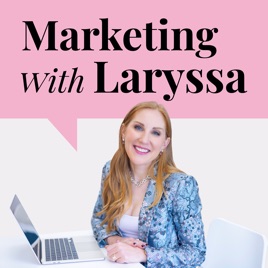
Marketing With Laryssa

Advertise on podcast: Marketing With Laryssa

Rating
★★★★★
4.8
from
65 reviews
This podcast has
387 episodes
Language
English
Explicit
No
Date created
2018/11/12
Latest episode
2026/04/19
Average duration
12 min.
Release period
7 days

Description

Formerly the Joy Joya Jewelry Marketing Podcast, Marketing With Laryssa is a podcast for purpose-driven, product-based brand owners who want to build real connections with their customers. Hosted by Laryssa Wirstiuk, founder of Joy Joya and marketing strategist since 2018, the show zooms out beyond tactics to explore the bigger picture of email, SMS, and digital storytelling. With a mix of practical tips, inspiring ideas, and behind-the-scenes insights, Laryssa shares how to grow your brand with creativity, strategy, and intention - without getting lost in the marketing noise. Whether you're an ecommerce founder or a creative entrepreneur, this podcast will help you market with clarity and confidence.

Unlock Marketing With Laryssa podcast Email contact info,
Listeners & Audience details

Email contact information

Direct podcast contact details

Listeners

Audience numbers & engagement insights

Audience details

Podcast Insights

Social media

Check Marketing With Laryssa social media presence


Podcast episodes

Check latest episodes from Marketing With Laryssa podcast


378 - Email Urgency Tactics That Are Costing You Subscriber Trust
2026/04/19
There's a lawsuit in the news right now involving a major retailer and their email marketing. I'm not going to weigh in on the legal debate - but it did make me want to talk about something I think gets overlooked when email programs are moving fast. Email is permission-based marketing. Someone gave you their address and said yes, you can communicate with me. That's not a small thing. And it comes with a responsibility that's easy to lose sight of when you're optimizing for clicks and conversions in the moment. Urgency isn't the problem. A sale that genuinely ends, an item that's almost gone, a seasonal moment that isn't coming back - that's real urgency, and communicating it clearly is good marketing. The problem is when urgency became so effective, and email became such a volume game, that it started getting used as a default. Not because there was something real to communicate, but because it moves people. And somewhere along the way, the subject line stopped reflecting reality - and started creating it. Most brands, when they audit their own emails honestly, find more manufactured urgency than they realized. And the cost isn't just legal. It's the slow erosion of the trust your whole email program runs on. In this episode, I break down the difference between urgency that's earned and urgency that's manufactured, why it matters more than most brands realize, and two practical things you can do right now to start thinking about your email program as a trust-building tool - not just a revenue lever. ✨ In this episode, you'll learn: What the Ulta lawsuit is actually about - and why it's worth paying attention to even if you're a small brand Why manufactured urgency became so common in email marketing (and why that doesn't make it okay) The difference between urgency that's earned vs. urgency that just borrows against your audience's trust How to think about every email you send as either a deposit or a withdrawal in your subscriber relationship Why the trust problem isn't new - even if the legal risk is How a promotional calendar stacked with rolling, overlapping sales is quietly training your audience not to respond Two practical steps to audit your own urgency habits and start building a more sustainable email program When your subscribers learn that your deadlines are real, you don't have to manufacture the pressure. The pressure's already there - because you've built a track record of meaning what you say. Work with Joy Joya: https://joyjoya.com
377 - Lists vs. Segments: The Email Marketing Mistake That Breaks Your Klaviyo Account Over Time
2026/04/12
Lists and segments both group people. They both show you a number. They both show up when you're sending emails. So it's easy to assume they're basically the same thing with different names - especially when you're moving fast and just trying to get a campaign out the door. But that assumption is one of the most common structural mistakes I see inside email accounts, and the tricky part is that nothing breaks immediately. Your campaigns still send. Your flows still run. People still get your emails. The damage is quieter than that. What actually happens is that the logic underneath your account starts to get a little off. Wrong groupings, automations firing when they shouldn't, reporting that's hard to trust - and over time, an account that technically works but is increasingly hard to navigate, delegate, or scale. The fix isn't complicated, but it does require understanding what lists and segments are actually for — and why they were never meant to be interchangeable in the first place. In this episode, I break down the real difference between lists and segments, why mixing them up causes problems that ripple out across your entire account, and how to start thinking about your email structure more clearly. ✨ In this episode, you'll learn: Why lists and segments look similar inside Klaviyo - and exactly where that similarity ends The functional difference: what lists answer vs. what segments answer How using the wrong one for the wrong job creates logic problems that compound over time Why the damage usually doesn't feel urgent - until the account is really hard to manage The three shifts that help you use lists and segments the way they were actually designed to work What to look for when auditing your own account - and the yellow flag that says it's time to simplify Why a clean email structure leads to better targeting, more predictable flows, and reporting you can actually trust If your email account feels hard to follow, hard to delegate, or just harder than it should be, there's a good chance this is part of why. Work with Joy Joya: https://joyjoya.com
376 - Should You Send Plain Text Emails? When They Work (And When They Don't)
2026/04/05
Plain text emails can feel almost too simple. No design, no product blocks, no polished layout. So why do they sometimes outperform emails that took way more time to build? A lot of ecommerce brands either dismiss plain text emails as unfinished - or overcorrect and treat them like a silver bullet. The truth is more nuanced than that. Plain text isn't a shortcut. It's a strategic format choice - and when it's used well, it can change how your audience experiences your message entirely. But here's the catch: without design to lean on, your writing has to do all the heavy lifting. And if the copy isn't strong enough, plain text won't save it - it'll expose the problem faster. In this episode, I break down when plain text emails actually make sense, why they sometimes outperform designed campaigns, and the biggest mistakes brands make when using them. Because this isn't really about choosing between plain text and design. It's about choosing the format that best supports the job your email needs to do. ✨ In this episode, you'll learn: Why plain text emails aren't automatically "better" - and what actually makes them work How email format shapes the way subscribers perceive and engage with your message The biggest mistake brands make when switching to plain text (hint: it's not about removing images) Why stripping design from a campaign-style email usually makes it perform worse, not better How plain text can be a powerful diagnostic tool for your email copywriting The key difference between what plain text emails and designed emails do best Three ways to use plain text more strategically in your email marketing If your email can't perform without design, it's not a design problem - it's a messaging problem. Plain text just makes that visible. Work with Joy Joya: https://joyjoya.com
375 - Is Your Welcome Discount Hurting Your Email Performance?
2026/03/29
Episode #375 – Is Your Welcome Discount Hurting Your Email Performance? When it comes to growing your email list, most ecommerce brands are focused on one thing: more. More subscribers. More signups. Higher pop-up conversion rates. But what if the way you're growing your list - especially through your welcome discount - is actually making your email performance worse over time? At first, it can feel like everything is working. Your list is growing quickly, your pop-up is converting, and new subscribers are coming in every day. But underneath that growth, something else might be happening. In this episode, I break down the hidden downside of optimizing for list growth without considering subscriber quality - and how your welcome offer might be shaping your results far beyond that first signup. Because your welcome flow can only perform as well as the people entering it. ✨ You'll learn: • Why more subscribers doesn't always mean more opportunity • How optimizing for pop-up conversion can quietly weaken your list • The two types of subscribers your welcome offer attracts — and why it matters • How low-intent subscribers impact engagement, conversions, and deliverability • Why your welcome flow performance depends on the quality of your inputs • How your welcome offer shapes the long-term relationship with subscribers • Why list growth should be measured by quality, not just volume • Three simple ways to evaluate and improve your welcome offer strategy Growing your list isn't just about getting more people in the door - it's about attracting the right people. When your welcome offer is aligned with your brand and your messaging, you build a list of subscribers who actually want to hear from you - and that's what drives long-term performance. Work with Joy Joya: https://joyjoya.com
374 - The Email Bottleneck That's Quietly Limiting Your Growth
2026/03/22
Episode #374 - The Email Bottleneck That's Quietly Limiting Your Growth When ecommerce revenue stalls, the instinct is almost always the same: we need more traffic. More ads. More eyeballs. More list growth. But what if the real problem isn't how many people are coming in - it's what happens after they arrive? In this episode, I'm breaking down the email bottleneck that quietly limits growth for so many online stores - and why adding more traffic on top of a weak system only makes the problem bigger. Because if your email ecosystem isn't built to convert, recover, and retain, you're not scaling revenue… you're scaling inefficiency. I walk through a real client example of an ecommerce brand that thought they had a traffic problem, but what we uncovered was something much more common: a backend system that wasn't designed to carry growth. We'll look at where the gaps typically show up, how to identify them in your own business, and what actually changes when you fix the middle of your funnel instead of just feeding the top. You'll learn: • Why "we need more traffic" is often the wrong conclusion • How weak email systems quietly cap your revenue potential • What a shallow welcome flow actually costs you in lost conversions • The difference between basic cart recovery and a system that consistently converts • Why checkout abandonment deserves its own strategy (and how many brands miss this) • The missed opportunity in post-purchase - and how it impacts repeat revenue • How to identify if your email ecosystem is the real bottleneck • Why growth doesn't start at the top - it compounds in the middle Most brands don't have a traffic problem. They have a system problem. And until your email marketing is engineered to guide, persuade, and retain - more traffic will only amplify what's already not working. Work with Joy Joya: https://joyjoya.com
373 - Why Your Email Campaigns Might All Sound the Same
2026/03/15
Episode #373 – Why Your Email Campaigns Might All Sound the Same Seasonal themes can make your email marketing feel cohesive and intentional - but lean too hard into one, and suddenly every email starts sounding the same. If you've ever planned a month of campaigns around a theme like Spring Refresh, Holiday Sparkle, or New Year Energy, you know how helpful it can feel at first. Themes give your calendar structure and make creative planning easier. But there's a hidden trap. When the theme quietly becomes the strategy, your messaging can start to feel repetitive, vague, and less effective - even if everything looks perfectly on-brand. In this episode, I'm breaking down what over-theming actually looks like in email marketing and how to keep seasonal messaging fresh without forcing every campaign to fit the same creative angle. Instead of letting the theme lead the strategy, you'll learn how to structure campaigns around the job each email needs to do - and use themes as supporting creative elements rather than the main message. You'll learn: • Why seasonal themes are helpful — but shouldn't drive your entire strategy • What over-theming actually looks like inside a campaign calendar • Why cohesive messaging doesn't automatically lead to conversions • The subtle way repeated theme language reduces urgency and engagement • How customers actually experience your emails in their inbox • The types of campaigns every ecommerce brand should rotate through • How to use seasonal themes as creative seasoning — not the main ingredient • A simple self-check to know when your theme has started weakening your messaging Themes should create momentum, not monotony. When each email focuses on a specific job — whether that's new arrivals, merchandising, proof, or urgency — your messaging stays clear, relevant, and much more likely to convert. Work with Joy Joya: https://joyjoya.com
372 - Why Your Abandoned Cart Flow Won't Recover Every Sale
2026/03/08
Episode #372 – Why Your Abandoned Cart Flow Won't Recover Every Sale Cart abandonment automations are powerful - but they're not a magic net that catches every abandoned cart you see in Shopify. If you've ever opened your Shopify analytics, seen a huge list of abandoned carts, and thought "Why aren't we getting all of these sales back?" - this episode will reset your expectations fast. Because here's the truth: an abandoned cart is not the same thing as a lost sale. In this episode, I explain what cart abandonment actually represents, why recovery rates are naturally lower than many founders expect, and what metrics really matter when evaluating the performance of your abandoned cart flow. Instead of obsessing over the carts you didn't recover, you'll learn how to measure success based on the revenue your automations consistently bring back over time. You'll learn: • Why an abandoned cart doesn't necessarily represent a guaranteed purchase • The real difference between cart abandonment and checkout abandonment • Why most shoppers add items to their cart without immediate buying intent • What normal abandoned cart recovery rates actually look like • The benchmarks high-performing brands typically achieve • The key levers that improve abandoned cart flow performance: timing, messaging, trust signals, and buyer intent alignment • Why the goal isn't eliminating cart abandonment - it's capturing the right buyers at the right moment Abandoned cart flows aren't designed to save every sale. They're designed to quietly recover the buyers who were already close - and when your automation is doing that consistently, it's working exactly as it should. Check out the accompanying blog post here: https://joyjoya.com/blogs/podcast/cart-abandonment-are-your-revenue-recovery-rates-healthy Work with Joy Joya: https://joyjoya.com
371 - Is a More Expensive Email Platform Actually Worth It?
2026/03/01
Episode #371 – Is a More Expensive Email Platform Actually Worth It? Is paying more for an email marketing platform actually worth it - or is that just industry hype? I've seen so many ecommerce brands choose tools based on price alone… and then regret it later when their strategy outgrows the platform. In this episode, I break down when investing more makes sense - and when it doesn't. Because your email platform isn't just a monthly subscription. It's infrastructure. And infrastructure decisions compound. If you're serious about email and SMS becoming revenue channels (not just newsletters), this is a decision that deserves more thought than "what's the cheapest option?" You'll learn: Why brands rarely regret investing in a stronger platform upfront The hidden cost of choosing a cheaper tool (it's not the subscription price) What "infrastructure decisions compound" really means in email marketing The real example of a brand locked into an annual deal that no longer fits What you're actually paying for in a premium email platform When it's perfectly fine to start with a lighter platform The question you should ask instead of "What's the cheapest option?" Price usually reflects capability in email marketing tools. And when your email program starts working, the last thing you want is to rebuild your foundation mid-growth. Work with Joy Joya: https://joyjoya.com
370 - Why "Just Be Consistent" Isn't an Email Strategy Anymore
2026/02/22
Episode #370 – Why "Just Be Consistent" Isn't an Email Strategy Anymore "Just be consistent" is one of the most common pieces of email marketing advice - and in 2026, it can quietly become a trap when it's misunderstood. For years, consistency meant momentum, visibility, and growth. But today, many founders are stuck sending emails out of obligation instead of intention - and that pressure often leads to weaker engagement, burnout, and unpredictable results. In this episode, I break down the difference between mechanical consistency (sending just to maintain a schedule) and strategic consistency (building predictable trust without adding noise to the inbox). Instead of chasing weekly streaks, I'll walk you through the real shift happening in modern email marketing - where success is driven by signals, not schedules. You'll learn: Why "send every week" can backfire when applied without strategy The difference between mechanical consistency and strategic consistency How forced frequency creates repetitive messaging and weaker engagement signals The four key signals that should determine your email cadence today: Audience readiness Message strength Lifecycle infrastructure Engagement stability How mature brands maintain presence without burning out their list — or themselves Strategic consistency isn't about never skipping a send. It's about showing up in ways that build trust, maintain deliverability, and support long-term revenue growth. Work with Joy Joya: https://joyjoya.com
369 - The Fastest Way to Stabilize Email Results (No Fancy Segmentation Required)
2026/02/15
Episode #369 – The Fastest Way to Stabilize Email Results (No Fancy Segmentation Required) If your email results feel inconsistent, you might be trying to use every campaign like it's doing CPR — reviving cold subscribers, persuading on-the-fence people, and rewarding the warm people all in one send. That's exhausting, and it rarely works. Segmentation fixes this by doing one simple thing: it lets you choose the room before you choose the words. Because when you send one email to your entire list, you're speaking to people who are at totally different points in the conversation — and the message either becomes a compromise, or it only lands for a fraction of the room. In this episode, I walk you through the three essential segments that stabilize campaign performance fast: Engaged subscribers (your dependable audience + deliverability protector) Unengaged subscribers (the people you stop emailing by default — and put into a re-engagement/sunset lane instead) Recent buyers (the relationship window you protect so you don't keep selling at someone who just purchased) You'll also get a quick segmentation self-check (so you know when segmentation will actually reduce your workload), plus the common mistakes that make segmentation feel like "extra work" instead of strategy. Work with Joy Joya: https://joyjoya.com
368 - Stop Overwriting Your Emails (Write Shorter Emails That Get More Clicks)
2026/02/08
Episode #368 – Stop Overwriting Your Emails (Write Shorter Emails That Get More Clicks) In email marketing, most ecommerce founders don't actually have a copywriting problem - they have an overwriting habit. Your email turns into a mini essay because you're trying to explain, prove, and reassure all at once. But in email marketing, simple, straightforward copy isn't boring — it's persuasive. Clear emails create momentum, get more clicks, and make buying feel easier. In this episode, I'm breaking down why overwriting happens, the mindset shift that makes clarity feel safe, and a repeatable email copy framework you can use to write shorter, higher-converting marketing emails. In this episode, you'll learn: Why ecommerce founders overwrite emails (and why it feels "responsible" in the moment) The 3 fears that lead to long, dense email marketing copy What "simple copy" actually means in email marketing (one point, one promise, one action) A quick clarity check to spot overwriting fast What not to do when you try to simplify (simple ≠ vague, simple ≠ corporate) The Straightforward Email Copy Framework: Hook → Value → Shop Path How to edit using the "So what?" filter so every line earns its place The mindset shift: email's job is to drive the click, not be the full sales page Dive deeper with the accompanying blog post: https://joyjoya.com/blogs/podcast/strong-email-copy-how-to-write-ecommerce-emails-that-sell Work with Joy Joya: https://joyjoya.com
367 - Unsubscribes Aren't Your Problem…List Churn Without Regrowth Is
2026/02/01
Episode #367 - Unsubscribes Aren't Your Problem…List Churn Without Regrowth Is Unsubscribes can feel personal. Like every time someone leaves your list, it's proof you're doing something wrong. But here's the truth: unsubscribes aren't your problem. List churn without regrowth is. In this episode, I'm breaking down what a healthy unsubscribe reality looks like, why unsubscribes are inevitable (and not a moral failure), and the simple replenishment system that keeps your email list renewing over time — so you can grow without spiraling. In this episode, you'll learn: The real reason people unsubscribe (and why it often has nothing to do with you) What a "healthy" unsubscribe rate looks like — and when it's a real warning sign The 1% unsubscribe threshold and how to interpret it (spikes vs patterns) Why "low unsubscribes" can actually be worse if opens are quietly falling The 3 common founder overreactions that hurt engagement and trust The simple list replenishment plan that prevents a slow leak in your growth engine: A clear reason to subscribe (beyond "get 10% off") A consistent capture moment A welcome experience that earns the subscription An ongoing visibility loop that keeps new subscribers flowing in Key takeaway: Your list isn't a bucket you fill once. It's a river. People will flow out — and the goal is to build a system that brings the right people in consistently. Dive deeper with the accompanying blog post: https://joyjoya.com/blogs/podcast/email-list-churn-obsessing-over-unsubscribes-isn-t-the-key Work with Joy Joya: https://joyjoya.com
366 - Your Emails Are Going to Promotions - Now What?
2026/01/25
Episode #366 - Your Emails Are Going to Promotions - Now What? There's a whole corner of the internet selling ecommerce founders the idea that one tiny tweak will magically make Gmail favor their emails. And the truth is: chasing that promise usually makes things worse. In this episode, I'm sharing my hot take on Gmail tabs (Primary vs Promotions): why Promotions isn't a penalty box, why "get into Primary" became such a thing, and what actually moves the needle if you want your emails to get opened, clicked, trusted, and drive revenue — even if they live in Promotions. In this episode, you'll learn: What Gmail "Primary" vs "Promotions" really means (in plain English) Why Promotions is often a filing system, not a punishment The real reason "Primary inbox hacks" became a trend — and why they're usually a distraction Why engagement and recognition matter more than tab placement The 4 things to optimize for instead: "I recognize you." "You're worth opening." "This is easy to read and act on." "You feel human." When it does make sense to try for the main inbox (and when it backfires) Dive deeper with the accompanying blog post: https://joyjoya.com/blogs/podcast/gmail-primary-inbox-promotions-tab-where-should-you-land Work with Joy Joya: https://joyjoya.com
365 - What Percentage of Revenue Should Email Marketing Drive? (Benchmarks for Ecommerce Brands)
2026/01/18
Episode #365 - What Percentage of Revenue Should Email Marketing Drive? (Benchmarks for Ecommerce Brands) If you've ever wondered, "Is my email program doing what it's supposed to be doing?" — you're not alone. Because everyone throws around percentages like they're universal truth… "Email should drive 30%." "No, it should be 40%." "Wait, mine is 12%… is that bad?" 🎧 In this episode, I'm making this simple and actually useful: what a healthy email revenue percentage looks like, what has to be true behind the scenes to hit 30–40%, and why this number is less about email "winning"… and more about your whole marketing system working together. We'll talk about Shopify's "green light" benchmark, why email gets credit so often (and why that's not a bad thing), and the calm way to interpret your number without spiraling — plus the simplest checklist to move it in the right direction. 💡 In this episode, you'll learn: ✅ A realistic "healthy range" for email revenue % — and why it's not one-size-fits-all ✅ Shopify's ~20% "green light" benchmark (and how to use it without shame) ✅ What usually needs to be true to reach 30–40% (hint: it's not just better copy) ✅ Why email should get a lot of the credit — and the difference between interest vs intent ✅ The real question to ask: "What's our path to the list?" ✅ How to interpret your number based on where you land (under ~10–15%, ~20–30%, ~30–40%) ✅ The "not a competition" speech: paid, organic, creators, and email as one ecosystem ✅ A simple checklist to move the number: flows, list growth quality, consistency, segmentation, onsite conversion Dive deeper with the accompanying blog post: https://joyjoya.com/blogs/podcast/what-percentage-of-revenue-should-email-drive Work with Joy Joya: https://joyjoya.com
364 - How Many Abandonment Emails Is Too Many? (Browse vs Cart vs Checkout)
2026/01/11
Episode #364 - How Many Abandonment Emails Is Too Many? (Browse vs Cart vs Checkout) Every ecommerce founder I know has two fears that live side-by-side: "Don't annoy my audience"… and "Don't leave money on the table." Abandonment flows hit both fears at the exact same time. 🎧 In this episode, we're getting real (and a little playful) about abandonment emails: how many nudges is too many, why the old "rules" exist, and why the right answer changes depending on what you sell and who you're selling to. You'll learn the key differences between browse abandon, cart abandon, and checkout abandon, why cart flows are usually the longest, and the calm, logical way to test your way to more recovered revenue—without over-contacting your list. If you've ever stared at email #4 and thought, "Are we being strategic… or are we being clingy?" — this one's for you. 💡 In this episode, you'll learn: ✅ What "abandonment flows" actually include (browse, cart, checkout) — and why they're not interchangeable ✅ Why "how many touches?" depends on intent level (and which flow you're talking about) ✅ My (intentionally boring) recommendation: start with 2, earn the right to add a 3rd ✅ The benchmark to sanity-check expectations (and why "add more emails" is rarely the fix) ✅ Why cart abandon flows tend to be the longest — and checkout abandon the shortest ✅ The real goal: recover intent without sacrificing subscriber goodwill ✅ When 4–5 emails can actually make sense (higher price, higher trust, more objections) ✅ A simple testing path: what to track (placed order rate, revenue per recipient, unsubscribes/complaints) and how to iterate Dive deeper with the accompanying blog post: https://joyjoya.com/blogs/podcast/how-many-abandonment-emails-are-too-many Work with Joy Joya: https://joyjoya.com

Podcast reviews

Read Marketing With Laryssa podcast reviews


4.8 out of 5
65 reviews
★★★★★
@copyoncall 2026/03/30
A new favorite
Strong valid advice from the jump!
★★★★★
Susan Burde 2025/01/07
Must listen!
As a jewelry designer, Laryssa’s podcast is both inspiring and very beneficial to my business. I love all of her tips and I’m excited to create conten...
★★★★★
three sisters design 2023/12/06
Awesome!
Really a great show. Stumbled across it and now I’m hooked. Have learned so many items from the show and so appreciative for this podcast. Thank you L...
★★★★★
DanaFreed 2023/06/20
The BEST!
I’m obsessed with this podcast! It’s a must for any jewelry entrepreneur. Even though I’ve been in the business a few years and *think* I know so much...
★★★★★
Dan1777999877 2023/03/21
Incredible!
No matter the subject, you’re guaranteed to gain something from every episode - can’t recommend Joy Joya Jewelry Marketing Podcast enough. 🙌
★★★★★
RockCandy3418 2023/03/01
The right words at the right time
Laryssa's themes and podcast topics have relevant and applicable advice. I have to say most recently, her advice have been words and concepts deliver...
★★★★★
Kchala 2022/12/01
Excellent
Joy makes sure to motivate me in ways that challenge me and make me take a step back to analyze. Without this podcast I didn’t have as many deep thoug...
★★★★★
Katie Dubs 2022/12/01
Essential advice
So helpful to learn about this fascinating industry with lots of insights.
★★★★★
Stone Cooper 2022/12/01
10/10!
I have been listening to Joy Joya for over a year now and I find Laryssa’s ideas and advice to be so informative and creative. I find myself looking f...
★★★★★
bignbeetful 2022/11/30
Gold Mine Indeed
As an avid student of business I would recommend this podcast 1000%. I have never heard the word “intrinsic” in this day and age until I started liste...
check all reviews on apple podcasts

Podcast sponsorship advertising

Start advertising on Marketing With Laryssa relevant audience podcasts


What do you want to promote?