1475023777
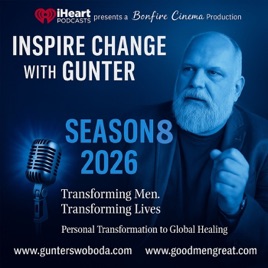
Inspire Change with Gunter

Advertise on podcast: Inspire Change with Gunter

Rating
★★★★☆
3.6
from
5 reviews
This podcast has
354 episodes
Language
English
Explicit
No
Date created
2019/07/31
Latest episode
2026/10/14
Average duration
36 min.
Release period
7 days

Description

MASTHEAD Inspire Change with Gunter is recorded in our Northern Beaches of Sydney, Australia studio and produced in Los Angeles by Bonfire Cinema. Thank you for listening! Network: iHeartMedia/Spreaker Originals Production Company: Bonfire Cinema Sponsored by: Distil Union, Everything you need in one place. Executive Producer/Showrunner: Miranda Spigener-Sapon Executive Producer/Creator/Host: Gunter Swoboda Co-Executive Producer/Gratitude Announcer: DeVonna Prinzi Showrunner's Assistant: Emilia Osborne Intro/Outtro Announcer: Grayson Arndt Composer/Original Theme Music: Irad Eshel About the Podcast International Psychologist, Author, Speaker and Producer Gunter Swoboda continues to Inspire Change and enlighten and educate on Masculinities and Male Empowerment. After 40 years of working with adolescent boys and men, Gunter founded Making Good Men Great. It focuses on helping men recognize how to evolve as a Man in all the spheres of his life. We continue with our regular of broadcasts of 20-30 minute episodes hosted by Gunter every week and then we will have special guests lined up during each season for special 50-1 hour episodes. We also will take requests from past guests or friends of the podcasts to fill in as a guest host. About Gunter, The Short Story……Gunter is a psychologist, speaker, author, mentor, coach and facilitator with over 30 years experience in counseling and organizational development. SPEAKER After more than 40 years experience Gunter’s passionate perspectives on what makes human beings thrive makes him a very insightful commentator and speaker. His aim is to stimulate your mind, touch your heart, and inspire your soul. Gunter is a psychologist, speaker, author, mentor, coach and facilitator with over 30 years experience in counseling and organizational development. Gunter has given keynotes all over Australia, NYC and Los Angeles as well as being a TEDx Speaker. Author We all have a story. Stories that touch us the most are about that moment when we make the choice to be real, to drop any pretense of pride, power and position. In that telling moment we step into a new space where our ability to overcome fear allows us to be truly authentic in our relationship to the world. In that moment we become fully human. Gunter has authored a novel Mountains of Sea published by Winterwolf Press and he self-published the non-fiction, Making Good Men Great: Surfing the New Wave of Masculinity. Both books are available at all major and independent retailers globally. The Making Good Men Great Movement also made Oprah’s #MustWatch list in 2018. Mentor In both the personal and professional sphere, Gunter has successfully worn many hats. Added to his education, experience and eloquence it allows him to develop a relationship with someone that ignites their aspirations. Coach In today’s world, the challenge to be ‘perfect’ is a constant source of stress. Gunter firmly believes that each person has to find their ‘own bliss’. His part in that journey is to engage with the person he is working with to unlock their aspirations, align them to their vision and to help keep them inspired. Facilitator Gunter is exceptional in facilitating outcomes in learning, productivity, and communication by providing a safe environment with unobtrusive assistance and guidance wherein participants experience the flow between content and context. His skill in utilizing philosophical and psychological methods enhances the participants experience in the process. To purchase Gunter's books, they are available at all retailers and online shops or check out: The Bookstore or direct from: Bonfire Cinema Publishing. To watch the Venice TV Award nominated documentary created by Gunter and directed by Miranda Spigener-Sapon you can rent or buy on Amazon Prime Alternative therapy options, try BetterHelp: betterhelp.com/GUNTER and get on your way to being your best self.” Get started today and enjoy 10% off your first mo

Unlock Inspire Change with Gunter podcast Email contact info,
Listeners & Audience details

Email contact information

Direct podcast contact details

Listeners

Audience numbers & engagement insights

Audience details

Podcast Insights

Podcast episodes

Check latest episodes from Inspire Change with Gunter podcast


8-353 | THE FILMS THAT MADE US: JACOB’S LADDER — WAR, TRAUMA & THE MIND THAT COMES HOME
2026/10/14
What happens when you come home physically, but part of your mind is still somewhere else?In this episode of Inspire Change with Gunter, Miranda Spigener-Sapon and DeVonna Prinzi welcome Army veterans Gerald Morgan and Jeffrey Ford for a powerful conversation inspired by Adrian Lyne’s psychological thriller Jacob’s Ladder. Through the film’s unsettling exploration of memory, perception, fear, and psychological trauma, we examine the complicated journey of returning home after war. What happens when the experiences of combat continue to affect the mind and body long after military service ends? How do veterans navigate the transition to civilian life, cope with trauma and survivor’s guilt, and find support when their experiences are difficult for others to understand?Gerald shares his perspective as an Army veteran who served in Iraq and Afghanistan, sustained injuries, and was medically retired. Jeffrey brings decades of experience as a Gulf War veteran and veterans’ health advocate, including testimony before presidential and congressional committees examining Gulf War illnesses. Together, our guests help us look beyond the familiar assumptions about military service to consider the human realities of trauma, the challenges veterans face when returning home, and the importance of being heard, believed, and supported.We also explore the film’s psychological implications, including the relationship between memory and perception, the body’s responses to trauma, survivor’s guilt, moral injury, and the expectations surrounding masculinity that can make asking for help difficult.Jacob’s Ladder reminds us that the wounds of war are not always visible—and that understanding another person’s experience requires more than looking at what we can see.The conversation is not only about war. It is about what we carry, how we cope, and what it takes to begin finding our way home. Please note: This episode discusses war, trauma, veterans’ health, and mental health challenges. Listener discretion is advised. IN THIS EPISODE, WE EXPLORE - The psychological impact of war and trauma - The transition from military service to civilian life - What it means to come home physically and emotionally - Jacob’s Ladder as a metaphor for trauma, memory, and perception - How trauma can influence the way we experience the world - Survivor’s guilt and moral injury - Gulf War illnesses and the challenges of veterans’ health advocacy - The effects of military experiences on mental health and relationships - Masculinity, emotional silence, and the courage to ask for help - The importance of community, connection, and support networks - Coping mechanisms, emotional resilience, and healing - Misconceptions civilians may have about veterans’ experiences - Why sharing our stories can reduce stigma and foster understanding KEY TAKEAWAYS - Asking for help is a sign of strength, not weakness. Seeking support takes courage, particularly when someone has been conditioned to believe they must handle everything alone. - Coming home can be a complicated process. Leaving a battlefield does not necessarily mean leaving its physical or psychological effects behind. - Trauma deserves understanding, not judgment. Listening to people's experiences can help challenge assumptions and reduce stigma. - Not every wound is visible. Veterans may face physical and psychological challenges that others cannot readily see or understand. - Community matters. Supportive relationships and opportunities to be heard can help people navigate difficult experiences. - Advocacy matters. Veterans deserve to have their health concerns taken seriously and to have access to appropriate evaluation, care, and support. - Shared experiences can create connection. Telling our stories can help others recognize that they are not alone. MEET OUR GUESTS Gerald Morgan is an Army veteran who joined the military shortly after high school and served in Iraq and Afghanistan. He sustained injuries during his service and was medically retired. Gerald served as a cook in the Army, a role he loved, and brings his personal perspective on military service, injury, and the challenges veterans can face when returning to civilian life. His family has roots in the Caribbean and Latin America. Jeffrey Ford is a Gulf War veteran, disabled veteran, and longtime advocate for veterans’ health. He served in the U.S. Army from 1988 to 1992 as an Airborne Combat Engineer with the 307th Engineer Battalion, 82nd Airborne Division, at Fort Bragg, North Carolina. His deployments included Operation Just Cause in Panama in 1989 and Operation Desert Shield/Desert Storm in Saudi Arabia and Iraq in 1990–1991.During his Gulf War deployment, Ford conducted demolition operations at the Khamisiyah Ammunition Storage Point near Nasiriyah, Iraq, from March 4–18, 1991. He was honorably discharged in 1992 and is a 100% service-connected disabled veteran.Following his military service, Ford became deeply involved in advocacy, research, and policy concerning Gulf War veterans’ illnesses. His work includes: - Presidential Advisory Committee on Gulf War Veterans’ Illnesses: Testified before the committee on October 9, 1996, and served as an advisor to its special report, published in January 1997. - National Gulf War Resource Center, Inc.: Served as executive director from 1996 to 1997. - U.S. House Committee on Veterans’ Affairs: Testified at congressional hearings concerning Persian Gulf War illness on February 11, April 9, and June 19, 1997. - Veterans’ health policy: Drafted S.2358, the Persian Gulf War Veterans Act of 1998, introduced during the 105th Congress. - Kansas Persian Gulf War Veterans Health Initiative: Served on its advisory board from 1996 to 1999. - Gulf War illness research: Served as a special advisor on research published in the American Journal of Epidemiology in November 2000 examining the prevalence and patterns of Gulf War illness among Kansas veterans. - Research Advisory Committee on Gulf War Veterans’ Illnesses: Provided testimony on September 29, 2015. - Veterans’ advocacy recognition: Received the Vietnam Veterans of America President’s Award for Veterans Advocacy at the organization’s eighth national convention in 1997. - Disaster response: Has served with Team Rubicon in disaster response since 2013. Ford later completed a Bachelor of Arts in Physical and Environmental Geography at the University of Missouri–Columbia in 2022. During his university years, he served as president of the Mizzou Student Veterans Association in 2021, received the Chancellor’s Excellence Award for Outstanding Transfer Student for 2018–2019, and was inducted into Tau Sigma National Honor Society.His broader educational background also includes an associate degree in Drafting and Design Engineering from MCC-Kansas City, and he earned the rank of Eagle Scout in 1979.His veterans’ health advocacy and experiences have received coverage from major news organizations, including CBS Evening News, The New York Times, The Washington Post, the Los Angeles Times, the Associated Press, and Reuters.Ford’s experience offers an important perspective on the long-term physical and psychological consequences of war, the challenges of investigating Gulf War illnesses, and the importance of ensuring veterans’ health concerns receive serious attention. Further Reading/References on Jeffrey Ford’s Work: - 1997 Congressional hearings on Persian Gulf War illness: https://www.govinfo.gov/content/pkg/CHRG-105hhrg44671/pdf/CHRG-105hhrg44671.pdf - 2015 Research Advisory Committee testimony: https://www.va.gov/RAC-GWVI/meetings/sep2015/C-Doc4JeffreyFord.pdf - Persian Gulf War Veterans Act of 1998, S.2358: https://www.congress.gov/bill/105th-congress/senate-bill/2358/all-info - Research on Gulf War illness among Kansas veterans: https://academic.oup.com/aje/article/152/10/992/55709#454128https://academic.oup.com/aje/article/152/10/992/55709#454128 - Contemporary reporting on Gulf War illness: https://www.nytimes.com/1997/01/22/us/us-agency-links-chemicals-to-one-illness-of-gulf-war-soldiers.htmlhttps://www.nytimes.com/1997/01/22/us/us-agency-links-chemicals-to-one-illness-of-gulf-war-soldiers.html - Team Rubicon: https://teamrubiconusa.org/ VETERANS CRISIS LINE YOU ARE NOT ALONEIf you or someone you love is a veteran experiencing emotional distress or a mental health crisis, confidential support is available 24 hours a day, seven days a week.You do not have to be enrolled in VA benefits or health care to connect. - Call: Dial 988, then press 1 - Text: 838255 - Chat online: https://www.veteranscrisisline.net/ Please reach out if you need support. You do not have to face a difficult moment alone. DISCLAIMER- The views/opinions expressed in this podcast are those of the hosts guests & intended for education, reflection, and conversation-not as professional advice. Become a supporter of this podcast: https://www.spreaker.com/podcast/inspire-change-with-gunter--3633478/support. Patreon If this episode resonates with you and you’d like to go deeper into practical exercises and guided reflection, Gunter offers extended self-development resources and exercises through our Patreon community: www.patreon.com/inspirechange Sponsor Distil UnionThis episode of Inspire Change with Gunter is brought to you by Distil Union, creators of beautifully designed, functional everyday carry accessories that help bring organization, simplicity, and intention into your daily life.Distil Union blends craftsmanship with thoughtful design to help you carry what matters most — without the clutter.👉 Explore their products and receive your exclusive listener discount by visiting: www.DistilUnion.com/discount/inspirechange Reach Out If you are interested in guest appearances, guest hosting opportunities, or suggesting topics, please contact Emilia Osborne, Showrunner’s Assistant: Emilia.Osborne
8-352 | THE FILMS THAT MADE US_ THE TRUMAN SHOW
2026/10/07
What if the life you call “yours” was shaped long before you ever had the chance to question it?In the first episode of The Films That Made Us, Miranda Spigener-Sapon and guest co-host Marsha Song explore the psychological and societal implications of The Truman Show and why the film remains remarkably relevant today.The conversation moves beyond the film's fictional constructed reality to examine the ways family, culture, social norms, media, and fear can shape our identities and perceptions of what is real. Miranda and Marsha explore the parallels between Truman's carefully controlled world and today's social media environment, including performance, voyeurism, celebrity culture, parasocial relationships, and the blurred line between authenticity and entertainment.They also consider the difference between genuine danger and conditioned fear, the tension between inherited and chosen beliefs, and why stepping outside a familiar life can be frightening even when that life no longer fits. At the heart of the conversation is a simple but difficult question:How much of the life we call “ours” was actually chosen by us?The episode ultimately invites listeners to question the realities they've inherited, recognize the fears that may have become invisible boundaries, and consider what it means to live with greater awareness, authenticity, and personal agency. Key TopicsThe premise of The Truman Show and its continuing relevanceFear and the role it plays in personal and societal changeDistinguishing genuine danger from conditioned fearSocial media as a modern parallel to Truman's constructed realityThe influence of family, culture, upbringing, and society on identityInherited beliefs versus consciously chosen beliefs and life pathsHow social norms shape our perceptions of what is “normal”Media manipulation and staged realities in entertainmentVoyeurism, celebrity culture, and parasocial relationshipsThe performative nature of social media and influencer cultureAuthentic relationships versus constructed rolesThe blurred line between performance and realityFear of the unknown and the difficulty of leaving familiar environmentsRecognizing constructed realities and regaining personal agencyThe importance of critical thinking in a media-saturated worldAuthenticity, vulnerability, and genuine human connectionPerforming different versions of ourselves in different contextsSelf-awareness and making conscious choicesThe choice to accept or reject the realities we have inheritedThe Truman Exercise: reflecting on personal authenticityKey TakeawaysFear can become self-reinforcing and prevent us from making meaningful changes.Not every fear represents genuine danger; some fears are conditioned by our environments and experiences.Family, culture, upbringing, and social expectations can heavily influence our understanding of ourselves and the world.Society can encourage us to perform roles rather than fully express who we are.Media and social platforms can distort our perceptions of reality and amplify voyeurism and parasocial relationships.Relationships can appear authentic while being shaped by expectations, performance, or social roles.The line between performance and reality has become increasingly blurred in modern media culture.Recognizing constructed realities can help us regain a greater sense of personal agency.Fear of change is often connected to identity, belonging, and the pressure to remain within familiar boundaries.Critical awareness is increasingly important in navigating a media-saturated world.Authenticity and self-awareness can create the possibility for more genuine relationships and a more consciously chosen life.Sometimes the doorway to freedom is the very fear we have been avoiding.Sound Bites “What’s going on? What’s really real?” “Good people don’t question.” “Our fears become invisible boundaries.” “The doorway to freedom is often the fear we avoid.” Chapter HighlightsWelcome to The Films That Made UsWhy We Chose The Truman ShowFear, Change, and the Boundaries We InheritGenuine Danger vs. Conditioned FearThe Truman Show as a Metaphor for ControlThe Influence of Family, Culture, and Social NormsInherited Beliefs vs. a Chosen LifeAuthentic Relationships vs. Constructed RolesMedia, Staged Reality, and Social MediaVoyeurism, Celebrity Culture, and Parasocial RelationshipsReality TV and the Business of Watching Other People's LivesHow Entertainment Shapes Our Perception of RealitySocial Media and the Performance of SelfWhy We Perform Different Versions of OurselvesThe Human Desire to Create, Perform, and Be SeenWhen Performance Becomes IdentityThe Importance of Authenticity and Self-AwarenessChoosing Whether to Accept or Reject the Constructed RealityThe Fear—and Thrill—of the UnknownMaking Conscious Choices About the Life We LiveBalancing Performance and AuthenticityQuestioning the Beliefs We InheritedThe Truman Exercise: Reflecting on Personal AuthenticityThe Truman Exercise As the conversation comes to a close, listeners are invited to reflect:What parts of my life did I consciously choose?What parts did I inherit?Which beliefs about myself were shaped by family, culture, or society?What am I doing because I genuinely want it?What am I doing because I was taught it is what people like me are supposed to do?What fears have become invisible boundaries in my life?Where might I be performing a version of myself for other people?If nobody were watching, would I still choose this life?Gratitude We want to extend a huge thank you to our listeners in St. Louis who brought Missouri to #4 on the Top 10 USA listeners list. And to our Global Listeners, we extend our gratitude to our listeners in Baku (baa-koo) for bringing Azerbijan (a-zr-bai-jaan) to #12 and Mumbai for pushing India to #5! CONGRATULATIONS!! you made the Top Listeners List. Become a supporter of this podcast: https://www.spreaker.com/podcast/inspire-change-with-gunter--3633478/support. Patreon If this episode resonates with you and you’d like to go deeper into practical exercises and guided reflection, Gunter offers extended self-development resources and exercises through our Patreon community: www.patreon.com/inspirechange Sponsor Distil UnionThis episode of Inspire Change with Gunter is brought to you by Distil Union, creators of beautifully designed, functional everyday carry accessories that help bring organization, simplicity, and intention into your daily life.Distil Union blends craftsmanship with thoughtful design to help you carry what matters most — without the clutter.👉 Explore their products and receive your exclusive listener discount by visiting: www.DistilUnion.com/discount/inspirechange Reach Out If you are interested in guest appearances, guest hosting opportunities, or suggesting topics, please contact Emilia Osborne, Showrunner’s Assistant: [email protected] To purchase Gunter's books, they are available at all retailers and online shops or check out: The Bookstore
8-351 | Stop Trying to Win_ Why Cooperation Is a Higher Form of Competition
2026/09/30
What if the problem isn't competition itself—but what happens when competition becomes disconnected from cooperation? In this episode of Inspire Change with Gunter, psychologist Gunter Swoboda examines our drive to compete and why constantly measuring ourselves against other people can undermine the very growth we're trying to achieve. Competition isn't inherently destructive.  But when it becomes untethered from collaboration, shared purpose and mutual respect, the goal can quietly shift.Instead of asking “How can I improve?”, we begin asking:“How do I rank?”And those are two very different psychological orientations.Gunter explores the distinction between ego involvement and task involvement within achievement psychology.With ego involvement, success depends heavily upon comparison. Did I win? Did I outperform someone else? Where do I stand in the hierarchy? Task involvement redirects that competitive energy toward mastery, learning and personal improvement.The competition hasn't necessarily disappeared.The opponent has changed.Instead of constantly trying to surpass someone else, we can begin competing with the person we were yesterday. As Gunter puts it: “Task involvement is about your own growth, not others' ranking. ”The episode also explores why cooperation doesn't necessarily sit in opposition to competition. In Gunter's framing, cooperation can provide a broader ethical structure within which healthy competition operates.Because sustainable achievement doesn't require somebody else to lose.Whether we're talking about work, leadership, relationships or everyday interactions, many of us may be competing far more often than we realize. Who gets credit? Who gets the last word? Who appears more successful? Who was right? Who won?Recognizing those moments gives us an opportunity to redirect the instinct.The question becomes less: “Did I beat them?” And more:“Did I get better? ”That shift—from winning to growing—can create a healthier relationship with achievement, other people and ultimately ourselves.And stay through the end of the episode, as Gunter shares what's coming next for Inspire Change while he's away—and hands the microphones over to Showrunner Miranda Spigener-Sapon and Co-Executive Producer DeVonna Prinzi for the October launch of our brand-new series: THE FILMS THAT MADE US Chapter HighlightsIntroduction: Competition and CooperationWhen Competition Becomes ToxicHierarchy, Comparison and RankCooperation as the Foundation for Healthy CompetitionAchievement Goals: Ego vs. Task InvolvementWhy Task Involvement Is More SustainableShifting the Goal from Winning to GrowingApplying Higher Competition in Everyday LifeWhat's Next: Introducing The Films That Made UsGratitude We want to extend a huge thank you to our listeners in Fairborn, Grafton, Cleveland, and Cincinatti for holding Ohio's spot at #2 on the Top 10 USA listeners list. And to our Global Listeners, we extend our gratitude to our listeners in Seoul (sowl) for bringing South Korea (to changed from at) #4 and Marseilles (mahr-say) pushing (changed tense to match the sentence) France to #3! CONGRATULATIONS!! you made the Top Listeners List. Become a supporter of this podcast: https://www.spreaker.com/podcast/inspire-change-with-gunter--3633478/support. Patreon If this episode resonates with you and you’d like to go deeper into practical exercises and guided reflection, Gunter offers extended self-development resources and exercises through our Patreon community: www.patreon.com/inspirechange Sponsor Distil UnionThis episode of Inspire Change with Gunter is brought to you by Distil Union, creators of beautifully designed, functional everyday carry accessories that help bring organization, simplicity, and intention into your daily life.Distil Union blends craftsmanship with thoughtful design to help you carry what matters most — without the clutter.👉 Explore their products and receive your exclusive listener discount by visiting: www.DistilUnion.com/discount/inspirechange Reach Out If you are interested in guest appearances, guest hosting opportunities, or suggesting topics, please contact Emilia Osborne, Showrunner’s Assistant: [email protected] To purchase Gunter's books, they are available at all retailers and online shops or check out: The Bookstore
8-350 | When Men Confuse Combativeness with Strength
2026/09/23
What does it actually mean to be strong?In this episode of Inspire Change with Gunter, Gunter Swoboda explores the difference between combativeness and genuine strength, examining how men can learn to equate winning, dominance and confrontation with being strong.  The episode looks at five values that patriarchal systems can hand men: territory, hierarchy, acquisition, competition and combativeness. While competition and assertiveness can have constructive roles, they can become damaging when they are disconnected from cooperation, respect and emotional awareness.Gunter examines what happens when the drive to compete becomes a drive to win at all costs—and how that mindset can show up not only in obvious conflict, but in everyday conversations, relationships and disagreements.At the center of the discussion is an important distinction:Being assertive is not the same as being aggressive.Assertiveness allows a person to communicate their needs, boundaries and perspective while still respecting the other person. Aggression, by contrast, can turn communication into a contest in which the objective becomes defeating or overpowering someone else.The episode also explores reactive versus responsive communication.When we react, we often allow emotion, ego or the desire to win to determine what happens next. Responsive communication creates something different: space and choice. That brief pause can allow us to decide how we actually want to communicate rather than simply responding to the emotional intensity of the moment.Gunter also discusses the damaging role of contempt in relationships. When disagreement becomes personal, dismissive or degrading, the conflict is no longer simply about the issue being discussed. The relationship itself begins to suffer.The alternative isn't weakness.It is a different understanding of strength.True strength doesn't require winning every argument.It can mean being able to hold your position while remaining open to another person's perspective. It can mean setting a boundary without attacking someone. It can mean disagreeing without turning the other person into an enemy.Gunter offers practical ways to begin developing this kind of assertiveness and emotional intelligence, including learning to recognize reactive patterns and deliberately creating space before responding. The goal isn't to eliminate competition or disagreement.It's to develop a healthier relationship with them.Because when combativeness becomes disconnected from cooperation, competition can become toxic. But when competition is paired with respect, collaboration and self-awareness, it can become a vehicle for growth rather than domination.And ultimately, practicing assertiveness is not something we master overnight. As Gunter puts it: “Practicing assertiveness is like building a muscle.”The more intentionally we practice it, the more natural it becomes. Key TopicsThe five values patriarchy hands men: territory, hierarchy, acquisition, competition and combativenessThe difference between being combative and being strongHow combativeness manifests in everyday life and relationshipsThe relationship between combativeness, insecurity and ego needsThe impact of contempt on relationshipsReactive versus responsive communicationThe difference between assertiveness and aggressionCreating space and choice before respondingRespectful communication during disagreementPractical approaches to developing assertivenessBuilding emotional intelligence through practiceUsing communication to strengthen relationships and personal growthTakeawaysCombativeness can mask insecurity and ego needs.True strength is assertiveness, not aggression or winning.Contempt can be deeply damaging to relationships.Responsive communication creates space and choice rather than immediate reaction.Disagreement does not have to become combat.Assertiveness allows people to communicate clearly while maintaining respect.Practicing new communication patterns can strengthen emotional intelligence and relationships.Competition can be healthier when it remains connected to cooperation.Chapter HighlightsIntroduction: Combativeness vs. StrengthHow Combativeness Damages RelationshipsThe Distinction Between Assertiveness and AggressionReactive vs. Responsive CommunicationHandling Disagreements with Respect and UnderstandingConclusion: Redefining Strength Through RespectGratitude We want to extend a huge thank you to our listeners in Denver and Boulder who brought Colorado to #6 on the Top 10 USA listeners list. And to our Global Listeners, we extend our gratitude to our listeners in Mumbai for bringing India back up to #10! CONGRATULATIONS!! you made the Top Listeners List. Become a supporter of this podcast: https://www.spreaker.com/podcast/inspire-change-with-gunter--3633478/support. Patreon If this episode resonates with you and you’d like to go deeper into practical exercises and guided reflection, Gunter offers extended self-development resources and exercises through our Patreon community: www.patreon.com/inspirechange Sponsor Distil UnionThis episode of Inspire Change with Gunter is brought to you by Distil Union, creators of beautifully designed, functional everyday carry accessories that help bring organization, simplicity, and intention into your daily life.Distil Union blends craftsmanship with thoughtful design to help you carry what matters most — without the clutter.👉 Explore their products and receive your exclusive listener discount by visiting: www.DistilUnion.com/discount/inspirechange Reach Out If you are interested in guest appearances, guest hosting opportunities, or suggesting topics, please contact Emilia Osborne, Showrunner’s Assistant: [email protected] To purchase Gunter's books, they are available at all retailers and online shops or check out: The Bookstore
8-349 | Boys Aren’t Less Emotional—They’re Taught What Not to Show
2026/09/16
Are boys actually less emotional than girls—or do they simply learn very early which emotions they're allowed to show?In this episode of Inspire Change with Gunter, psychologist Gunter Swoboda examines how boys learn to manage, conceal and communicate their emotions from childhood—and how family, peers and the adults around them can shape that development long before boys have the language to explain what's happening.Research into children's emotional expression reveals an important distinction: what a child feels and what a child displays are not necessarily the same thing.Boys learn to adjust emotional expression depending on who is watching, what response they expect and what displaying vulnerability may cost them socially. As Gunter asks:“Are boys less emotional than girls? That's the wrong question.”The episode explores the early architecture of emotional suppression and what Gunter describes as the development of the masculine introject—the internalized expectations through which boys begin learning what being male is supposed to look like.Peer culture can narrow that emotional vocabulary even further. Fear, sadness, tenderness and vulnerability may carry social consequences, particularly as boys grow older and become increasingly conscious of their standing among other boys. “Fear costs a boy his standing among his mates.”  Gunter also examines the role adults play in this process. How parents and caregivers respond when a boy is frightened, hurt or distressed can influence how he eventually learns to regulate—and whether he feels safe expressing—those emotions.The episode also looks at the decline of rough-and-tumble play, not simply as physical activity but as an informal emotional curriculum through which children can learn boundaries, regulation, trust, negotiation and how to read one another.Ultimately, this isn't about making boys more emotional.They already are emotional.It's about creating environments in which boys can develop a broader emotional vocabulary without learning that connection, intimacy or vulnerability threatens their identity. Because, as Gunter puts it: “Boys' capacity for intimacy is trained out early.” And if it can be trained out, perhaps we can become much more intentional about helping boys preserve it. Chapter HighlightsIntroduction and Episode OverviewAre Boys Really Less Emotional?What Research Reveals About Children's Emotional DisplaysThe Early Architecture of Emotional SuppressionPeer Culture and the Narrowing of Emotional ExpressionHow Early Relational Skills Become RestrictedThe Crisis of Connection in Adolescent BoysAdult Responses and Meta-Emotional PhilosophyRough-and-Tumble Play as an Emotional CurriculumStrategies for Fostering Emotional Openness in Boys Become a supporter of this podcast: https://www.spreaker.com/podcast/inspire-change-with-gunter--3633478/support. Patreon If this episode resonates with you and you’d like to go deeper into practical exercises and guided reflection, Gunter offers extended self-development resources and exercises through our Patreon community: www.patreon.com/inspirechange Sponsor Distil UnionThis episode of Inspire Change with Gunter is brought to you by Distil Union, creators of beautifully designed, functional everyday carry accessories that help bring organization, simplicity, and intention into your daily life.Distil Union blends craftsmanship with thoughtful design to help you carry what matters most — without the clutter.👉 Explore their products and receive your exclusive listener discount by visiting: www.DistilUnion.com/discount/inspirechange Reach Out If you are interested in guest appearances, guest hosting opportunities, or suggesting topics, please contact Emilia Osborne, Showrunner’s Assistant: [email protected] To purchase Gunter's books, they are available at all retailers and online shops or check out: The Bookstore
8-348 | The Songs That Made Us: Dolly Partons Coat of Many Colors & The Psychology of Shame
2026/09/09
What if one of the most beloved songs in American music is also a remarkably precise psychological portrait of childhood shame? For the closing chapter of The Songs That Made Us, Gunter turns to Dolly Parton's deeply personal “Coat of Many Colors”—a song born from poverty, childhood humiliation, a mother's love and one little girl's attempt to understand why something she treasured became a reason for others to ridicule her.At its heart is a powerful psychological distinction:The coat wasn't what created the shame. The schoolyard did.Through Dolly's childhood story, Gunter explores the social psychology of humiliation, attachment, memory and what happens when children begin seeing themselves through the judgments of others.But Dolly's story contains something else.Before she ever enters that schoolyard, her mother gives the coat meaning.Through storytelling, love and reassurance, something created from material deprivation becomes an object of pride. Psychologically, that act resembles reappraisal and co-regulation—a parent helping a child interpret an experience in a way that can protect their developing sense of self.It doesn't prevent the humiliation that follows.But it gives Dolly another story about who she is.The episode examines the important separation between poverty and shame. Material deprivation is one experience. Being taught by other people that your circumstances make you less worthy is another.And childhood shame can linger precisely because it is social. We learn something about ourselves by watching how other people respond to us.Yet Coat of Many Colors ultimately demonstrates another extraordinary human ability:We can retell the story.Dolly transformed an experience of childhood humiliation into music. The music became recognition for millions of people. And a deeply personal memory became part of a much larger cultural legacy. Perhaps that is one reason the song has endured.It doesn't simply tell us what happened to Dolly Parton. It gives language to something many people have lived themselves. Key TopicsDolly Parton and the story behind Coat of Many ColorsChildhood poverty, shame and humiliationWhy deprivation and shame are different psychological injuriesAttachment and the protective role of parental reassuranceReappraisal and co-regulationThe social psychology of the schoolyardThe “looking-glass self” and how children internalize others' judgmentsChildhood experiences and adult identityStorytelling as a way of transforming painful memoriesHow personal experience becomes cultural legacyWhy recognition gives certain songs extraordinary staying powerChapter HighlightsIntroduction: Coat of Many Colors and Its SignificanceThe Song's History and Original RecordingDolly Parton's Childhood and the Story Behind the CoatChildhood Shame, Attachment and IdentityHumiliation and the Looking-Glass SelfReappraisal, Co-Regulation and Emotional ResilienceTransforming Personal Stories into Cultural LegacyWhy Coat of Many Colors Continues to EndureObjects, Shame and Changing the NarrativeClosing Reflections and Mental HealthGratitude We want to extend a huge thank you to our listeners in Denver for bringing Colorado up to #10 on the Top 10 USA listeners list. And to our Global Listeners, we extend our gratitude to our listeners in Beirut for bringing Lebanon to #20 for the very first time! And to our listeners in Modena for pushing Italy to #19! CONGRATULATIONS!! you made the Top Listeners List. Become a supporter of this podcast: https://www.spreaker.com/podcast/inspire-change-with-gunter--3633478/support. Patreon If this episode resonates with you and you’d like to go deeper into practical exercises and guided reflection, Gunter offers extended self-development resources and exercises through our Patreon community: www.patreon.com/inspirechange Sponsor Distil UnionThis episode of Inspire Change with Gunter is brought to you by Distil Union, creators of beautifully designed, functional everyday carry accessories that help bring organization, simplicity, and intention into your daily life.Distil Union blends craftsmanship with thoughtful design to help you carry what matters most — without the clutter.👉 Explore their products and receive your exclusive listener discount by visiting: www.DistilUnion.com/discount/inspirechange Reach Out If you are interested in guest appearances, guest hosting opportunities, or suggesting topics, please contact Emilia Osborne, Showrunner’s Assistant: [email protected] To purchase Gunter's books, they are available at all retailers and online shops or check out: The Bookstore
8-347 | The Songs That Made Us CCR’s Fortunate Son & The Psychology of Unfairness
2026/09/02
What happens when sacrifice is demanded from everyone—but the consequences aren't shared equally?This week on The Songs That Made Us, Gunter explores Creedence Clearwater Revival’s “Fortunate Son,” one of the most enduring songs associated with the Vietnam era and a furious examination of class, privilege, fairness and who ultimately pays the price when societies go to war. At the center of the song isn't simply opposition to war.It is resentment toward unequal sacrifice.Through the story of John Fogerty and the origins of Fortunate Son, Gunter examines the social divisions surrounding the Vietnam War and the psychological consequences that can emerge when people believe the rules apply differently depending upon wealth, status or family connections.The episode explores relative deprivation, resentment and moral injury—and why perceived betrayal can sometimes leave wounds that extend far beyond the original event. “Resentment is a justice detector.” - Gunter Swoboda The episode also examines the extraordinary economy of the song itself. Fortunate Son doesn't slowly build its case. Its structure, performance and emotional force immediately place the listener inside its anger. More than half a century later, the song continues to appear throughout American culture—sometimes in contexts that seem strikingly disconnected from what the song is actually saying.And perhaps that endurance reveals something important.As long as people believe that sacrifice is being demanded unequally, the emotional machinery behind Fortunate Sonremains recognizable. Key TopicsThe origins of CCR’s Fortunate SonJohn Fogerty and the historical context behind the songThe Vietnam War, the draft and class divisionsPrivilege and unequal sacrificeRelative deprivation and perceived unfairnessResentment as a response to injusticeMoral injury and the psychological consequences of betrayalHow the song's structure amplifies its emotional forceProtest music as a vehicle for collective frustrationThe song's political and cultural legacyHow Fortunate Son has been misunderstood and reinterpretedWhy its central message continues to resonateChapter HighlightsIntroduction: Fortunate Son and Its Cultural SignificanceJohn Fogerty and the Origins of the SongClass, Privilege and Social JusticeRelative Deprivation and Moral InjuryThe Structure and Emotional Power of Fortunate SonVietnam, the Draft and America's Class DividePolitical and Cultural LegacyMisinterpretation and Enduring RelevanceReflections and Questions for ListenersGratitude We want to extend a huge thank you to our listeners in Newark for bringing Delaware up to #7 on the Top 10 USA listeners list. And to our Global Listeners, we extend our gratitude to our listeners in Prijidor for bringing Bosnia and Herzegovina to #15! And to our listeners in Pointe Noire for moving the Congo Republic to #18! CONGRATULATIONS!! you made the Top Listeners List. Become a supporter of this podcast: https://www.spreaker.com/podcast/inspire-change-with-gunter--3633478/support. Patreon If this episode resonates with you and you’d like to go deeper into practical exercises and guided reflection, Gunter offers extended self-development resources and exercises through our Patreon community: www.patreon.com/inspirechange Sponsor Distil UnionThis episode of Inspire Change with Gunter is brought to you by Distil Union, creators of beautifully designed, functional everyday carry accessories that help bring organization, simplicity, and intention into your daily life.Distil Union blends craftsmanship with thoughtful design to help you carry what matters most — without the clutter.👉 Explore their products and receive your exclusive listener discount by visiting: www.DistilUnion.com/discount/inspirechange Reach Out If you are interested in guest appearances, guest hosting opportunities, or suggesting topics, please contact Emilia Osborne, Showrunner’s Assistant: [email protected] To purchase Gunter's books, they are available at all retailers and online shops or check out: The Bookstore
8-346 | The Songs That Made Us: Joni Mitchell’s Both Sides Now & The Psychology of Wisdom
2026/08/26
How can the same words mean something entirely different when sung by the same person decades later? This week on The Songs That Made Us, Gunter explores Joni Mitchell’s “Both Sides Now” and the extraordinary transformation of a song written by a young woman in the 1960s and revisited by the artist more than three decades later. The lyrics hadn't fundamentally changed.Joni had. Through the evolution of Both Sides Now, Gunter examines the psychology of aging, wisdom, autobiographical memory and life review—and why something that can sound precocious when expressed in youth may sound profoundly wise after it has been lived.  The episode explores the song's movement through clouds, love and life, each viewed first through enchantment and then through experience and uncertainty. Rather than resolving those contradictions, Mitchell leaves them standing beside one another.Psychologically, that matters.The ability to hold seemingly contradictory emotions—to recognize beauty alongside disappointment, love alongside loss and certainty alongside doubt—can represent something deeper than simply becoming older.It can represent wisdom.The episode also explores reminiscence and life review, the relationship between music and autobiographical memory, and the fascinating idea that revisiting a song decades later can become something resembling a longitudinal study of the self.And Both Sides Now offers another remarkable possibility: music can encode autobiographical memory twice.We remember who we were when a song first mattered to us. Then, years later, we discover what that same song means to the person we've become. In This EpisodeThe evolution of Both Sides Now from the 1960s to 2000How age and experience change our perception of the same wordsJoni Mitchell's changing voice and perspectiveClouds, love and life: the song's three-part structureReminiscence and psychological life reviewHow music becomes connected to autobiographical memoryHolding positive and negative emotions simultaneouslyWhy uncertainty can represent wisdom rather than defeatThe cultural and gender significance of the songHow listeners complete the meaning Mitchell deliberately leaves unresolvedHearing our younger and older selves through the same piece of musicChapter HighlightsIntroduction: Both Sides Now and the Meaning of TimeJoni Mitchell's Changing Voice and PerspectiveThe Song's Biographical and Psychological OriginsCultural Impact in the 1960sClouds, Love and Life: From Enchantment to DisenchantmentReminiscence, Life Review and Psychological DevelopmentHolding Contradictory FeelingsWhen “I Don't Know” Becomes Wisdom1968 and the Song's Cultural MomentGender and the Song's Cultural AfterlifeWhy Mitchell Leaves the Song UnfinishedMusic as a Longitudinal Study of the SelfAging, Memory and UncertaintyReflections for the ListenerGratitude We want to extend a huge thank you to our listeners in Pittsburg and Philadelphia for bringing Pennsylvania up to #3 on the Top 10 USA listeners list. And to our Global Listeners, we extend our gratitude to our listeners in Pristina (preesh-tee-nuh) for bringing Kosovo (koh-soh-vah) to #20 for the first time! And to our listeners in Reykjavik (ray-kya-veek) for moving Iceland up to #18! CONGRATULATIONS!! you made the Top Listeners List. Become a supporter of this podcast: https://www.spreaker.com/podcast/inspire-change-with-gunter--3633478/support. Patreon If this episode resonates with you and you’d like to go deeper into practical exercises and guided reflection, Gunter offers extended self-development resources and exercises through our Patreon community: www.patreon.com/inspirechange Sponsor Distil UnionThis episode of Inspire Change with Gunter is brought to you by Distil Union, creators of beautifully designed, functional everyday carry accessories that help bring organization, simplicity, and intention into your daily life.Distil Union blends craftsmanship with thoughtful design to help you carry what matters most — without the clutter.👉 Explore their products and receive your exclusive listener discount by visiting: www.DistilUnion.com/discount/inspirechange Reach Out If you are interested in guest appearances, guest hosting opportunities, or suggesting topics, please contact Emilia Osborne, Showrunner’s Assistant: [email protected] To purchase Gunter's books, they are available at all retailers and online shops or check out: The Bookstore
8-345 | The Songs That Made Us_ John Lennon’s “Working Class Hero” & The Psychology of Class
2026/08/19
What happens when society teaches you who you are supposed to be before you've had the chance to decide for yourself? This week on The Songs That Made Us, Gunter explores John Lennon’s “Working Class Hero,” a stark examination of class, identity, social hierarchy and the psychological consequences of being shaped—or “processed”—into the roles society creates for us.At the center of the song is something deceptively powerful: Lennon speaks in the second person. Official Music Video: https://youtu.be/Ve-mANenpC4?si=p2aTdXZSB9bJGVRx Rather than simply recounting his own experience, he places the listener inside the machinery he is describing. The result transforms personal history into a broader confrontation with how class and social expectations become internalized.Gunter examines Lennon’s childhood and the contradictions within his own upbringing, including the difference between economic circumstances and the emotional experience of class. From there, the episode explores class injury, shame, contempt, social mobility, meritocracy and the ways hierarchy can become embedded in our sense of self.The discussion also considers Lennon’s experience with therapy and self-examination, and how that period of psychological exploration informed work that stripped away some of the mythology surrounding fame, success and status.More than half a century later, Working Class Hero continues to ask an uncomfortable question:How much of who we believe ourselves to be was actually chosen by us—and how much was assigned to us? Key Topics & TakeawaysWhy Lennon's use of the second person makes the song feel universalLennon's childhood and the idea of being socially “processed”How class and hierarchy influence identityThe psychology of class injuryWhy shame can transform into contemptThe emotional consequences of being taught inferiority—or superiorityTherapy, self-reflection and Lennon's examination of his own identitySocial mobility, meritocracy and structural barriersHow societal roles become psychologically internalizedWhy the song's isolation and lack of community matterThe continuing relevance of Lennon's critiqueChapter HighlightsIntroduction: Working Class Hero and Social CritiqueLennon’s Childhood and the Idea of Being “Processed”The Second-Person Voice: Putting the Listener Inside the SongClass, Identity and Social HierarchyUnderstanding Class InjuryWhen Shame Becomes ContemptTherapy, Self-Reflection and Lennon’s Personal HistorySocial Mobility and the Mythology of MeritocracyHow Society Becomes Part of the SelfIsolation, Community and the Structure of the SongWhy Working Class Hero Still MattersGratitude We want to extend a huge thank you to our listeners in Los Angeles, Van Nuys, Santa Monica, Santa Ana, Garden Grove, San Jose, Culver City, North Hollywood, and Folsom for bringing California up to #1 on the Top 10 USA listeners list. And to our Global Listeners, we extend our gratitude to two countries reaching our top 20 list for the very first time ever! First, our listeners in Hammamet (ha-muh-muht) for bringing Tunisia (too-nee-zhuh) to #20! And also to our listeners in Doha (dow-haa) for bringing Qatar (cuh-TAR) to #17! CONGRATULATIONS!! you made the Top Listeners List. Become a supporter of this podcast: https://www.spreaker.com/podcast/inspire-change-with-gunter--3633478/support. Patreon If this episode resonates with you and you’d like to go deeper into practical exercises and guided reflection, Gunter offers extended self-development resources and exercises through our Patreon community: www.patreon.com/inspirechange Sponsor Distil UnionThis episode of Inspire Change with Gunter is brought to you by Distil Union, creators of beautifully designed, functional everyday carry accessories that help bring organization, simplicity, and intention into your daily life.Distil Union blends craftsmanship with thoughtful design to help you carry what matters most — without the clutter.👉 Explore their products and receive your exclusive listener discount by visiting: www.DistilUnion.com/discount/inspirechange Reach Out If you are interested in guest appearances, guest hosting opportunities, or suggesting topics, please contact Emilia Osborne, Showrunner’s Assistant: [email protected] To purchase Gunter's books, they are available at all retailers and online shops or check out: The Bookstore
8-344 The Songs that Made Us: INXS ’ “The Stairs” & The Psychology of Loneliness
2026/08/12
Music Video for The Stairs: https://youtu.be/-9FOYTwxfcU?si=mFPQVDCKASBR1oFuLive from Wembley Stadium: https://youtu.be/N8CIBNJB2FM?si=sF_SoLZtDrzyaszv There’s a kind of loneliness that has nothing to do with being alone.You can live surrounded by hundreds—or thousands—of people, pass the same faces every day, share elevators, hallways, sidewalks and city blocks…and never truly know one another.  This week on The Songs That Made Us, Gunter explores INXS’ “The Stairs,” a haunting meditation on the anonymous lives unfolding around us and the strange human experience of being physically close while remaining emotionally separate.Through the song, Gunter examines the psychology of loneliness, our biological need for connection, the phenomenon of “familiar strangers,” and the surprising role architecture and urban design play in determining whether people simply pass one another—or actually meet.And more than three decades after The Stairs appeared on INXS’ X, its observations may be even more relevant in a digital world that gives us unprecedented proximity while often leaving genuine human connection painfully out of reach. In This EpisodeThe story and ideas behind INXS’ “The Stairs”Why loneliness can exist even when we're surrounded by peopleLoneliness as a biological signal rather than a personal failingThe evolutionary importance of human connectionThe psychology of the “familiar stranger”How urban environments can create proximity without interactionSocial infrastructure and the spaces where relationships formWhy cities designed primarily for movement can unintentionally discourage connectionPsychological overload and why we sometimes withdraw from people around usHow digital environments reproduce the same paradoxWhy The Stairs remains strikingly relevant todaySmall acts of recognition that can begin closing the distance between strangersChapter HighlightsIntroduction: The Stairs and the Loneliness of Being SurroundedINXS and the Album XThe Psychological Need to BelongSocial Overload in Urban EnvironmentsLoneliness as a Biological SignalWaiting, Recognition and the Structure of The StairsHow Urban Design Shapes Human ConnectionFrom Physical Cities to Digital LonelinessProximity Without ConnectionSmall Acts That Bridge the DistanceSharing Our Experiences of LonelinessKey Takeaways Loneliness is a signal. Like hunger or pain, it can alert us that an important human need isn't being met.Proximity isn't the same as connection. We can encounter the same people repeatedly without ever crossing the invisible boundary between stranger and acquaintance.Our environments matter. The spaces we build can either encourage spontaneous human contact or quietly discourage it.The digital world hasn't eliminated this paradox. In some ways, it has recreated the apartment building on a global scale: millions of people occupying the same space while remaining strangers.Connection can begin remarkably small. Recognition, conversation and simple acknowledgment can interrupt anonymity. Gratitude We want to extend a huge thank you to our listeners in Fairborn, Elyria (uh-lee-ree-uh), Columbus, Grafton, Northfield, Lorain, Ashland, and Cincinnati for keeping Ohio securely at the #2 spot on the Top 10 USA listeners list.And to our Global Listeners, we extend our gratitude to two countries reaching our top 20 list for the very first time ever! First, our listeners in Karachi (kr-aa-chee) for bringing Pakistan to #20! And also to our listeners in Jos (pronounced like loss with a J) Plateau State for bringing Nigeria to #18! CONGRATULATIONS!! you made the Top Listeners List. Become a supporter of this podcast: https://www.spreaker.com/podcast/inspire-change-with-gunter--3633478/support. Patreon If this episode resonates with you and you’d like to go deeper into practical exercises and guided reflection, Gunter offers extended self-development resources and exercises through our Patreon community: www.patreon.com/inspirechange Sponsor Distil UnionThis episode of Inspire Change with Gunter is brought to you by Distil Union, creators of beautifully designed, functional everyday carry accessories that help bring organization, simplicity, and intention into your daily life.Distil Union blends craftsmanship with thoughtful design to help you carry what matters most — without the clutter.👉 Explore their products and receive your exclusive listener discount by visiting: www.DistilUnion.com/discount/inspirechange Reach Out If you are interested in guest appearances, guest hosting opportunities, or suggesting topics, please contact Emilia Osborne, Showrunner’s Assistant: [email protected] To purchase Gunter's books, they are available at all retailers and online shops or check out: The Bookstore
8-343 | The Songs That Made Us_ Cat Stevens' Father and Son & The Psychology of Identity
2026/08/05
What happens when the voice you're arguing with belongs to someone you love—and eventually becomes part of your own?In this episode of The Songs That Made Us, Gunter explores Cat Stevens' timeless classic Father and Son, uncovering the remarkable psychological conversation hidden inside one of the most enduring songs ever written.Originally conceived for an abandoned musical project, Father and Son became something much larger: a dialogue between generations, identities, and ultimately, different versions of ourselves.Through psychology, culture, and music history, Gunter examines why the song continues to resonate more than fifty years later—and why its two voices may both live within us. In this episodeThe story behind Cat Stevens' Father and SonThe autobiographical myths surrounding the songSinging both father and son from a single voiceThe psychology of internal dialogueIdentity formation and individuationAttachment and separationFamily expectations across generationsMigration, culture, and belongingMasculinity and emotional languageWhy reconciliation sometimes takes decadesThe 2020 recording and what changed over fifty yearsChapter HighlightsIntroduction: The Power of a Solo PerformanceThe Song as a Conversation with OneselfWho Are We Really Arguing With?Cat Stevens' Early Life and Musical RootsPolitical and Personal InfluencesIllness, Recovery, and Creative TransformationFrom Rejected Song to Timeless ClassicSinging Both Father and SonThe Psychology of the Dialogic SelfIdentity, Individuation, and Growing UpAttachment, Separation, and Family BondsMasculinity and Emotional ExpressionMigration, Culture, and Generational ExpectationsRecognition, Transformation, and ReconciliationWhy Father and Son Still EnduresRevisiting the Song in 2020Reflection QuestionsClosing ThoughtsKey Takeaways Identity develops through dialogue. The conversations we have with parents often become the conversations we continue having with ourselves. Growing up isn't simply breaking away. Healthy independence balances autonomy with enduring connection.Internal voices shape our decisions. The father and son represent psychological perspectives many people carry throughout life.Reconciliation can arrive decades later. Time changes not only our understanding of others, but our understanding of ourselves.Great songs evolve because we evolve. The meaning of Father and Son changes as listeners move through different stages of life. Reflection Questions Which voice in the song feels closest to where you are today?When have you discovered your younger self and older self disagreeing?What family message still shapes the way you make important decisions?What advice have you rejected, only to understand years later?How do you remain connected without losing yourself?Gratitude We want to extend a huge thank you to our listeners in Tillamook (TILL-uh-muck) for bringing Oregon to #10 on the Top 10 USA listeners list! And to our Global Listeners, we extend our gratitude to our listeners in Zagazig (zah-gah-zeeg) for bringing Egypt to #11 on our Global listeners top 20 for the first time ever! CONGRATULATIONS!! you made the Top Listeners List. Become a supporter of this podcast: https://www.spreaker.com/podcast/inspire-change-with-gunter--3633478/support. Patreon If this episode resonates with you and you’d like to go deeper into practical exercises and guided reflection, Gunter offers extended self-development resources and exercises through our Patreon community: www.patreon.com/inspirechange Sponsor Distil UnionThis episode of Inspire Change with Gunter is brought to you by Distil Union, creators of beautifully designed, functional everyday carry accessories that help bring organization, simplicity, and intention into your daily life.Distil Union blends craftsmanship with thoughtful design to help you carry what matters most — without the clutter.👉 Explore their products and receive your exclusive listener discount by visiting: www.DistilUnion.com/discount/inspirechange Reach Out If you are interested in guest appearances, guest hosting opportunities, or suggesting topics, please contact Emilia Osborne, Showrunner’s Assistant: [email protected] To purchase Gunter's books, they are available at all retailers and online shops or check out: The Bookstore
8-342 | The Songs That Made Us_ Marvin Gaye’s “What’s Going On” & The Psychology of Grief
2026/07/29
Music Video for Marvin Gaye's What's Going On? https://youtu.be/o5TmORitlKk?si=tp-xjNHA4yQ0CYpO What happens when we ask a question—not because we expect an answer, but because we need someone to remain with us inside the uncertainty?In this episode of The Songs That Made Us, Gunter explores Marvin Gaye’s landmark recording, What’s Going On, and the psychological power of a song that responds to violence, war, injustice, and collective grief without becoming hardened by them.Born from an act of violence witnessed during the People’s Park demonstrations and shaped by the experiences of returning Vietnam veterans, the song challenged both Marvin Gaye’s artistic identity and the limits Motown placed upon its artists.Rather than accusing, commanding, or offering easy answers, What’s Going On asks us to stay present with suffering long enough to feel it.Gunter examines how the song creates recognition, belonging, empathy, and reconciliation; how it reflects the moral distress carried by returning soldiers; and why its tenderness has allowed it to remain meaningful for more than fifty years.Sometimes the most honest response to pain is not an answer. Sometimes it is a question held open in the company of others. In this episode The story behind Marvin Gaye’s What’s Going OnHow violence at People’s Park helped inspire the songMarvin Gaye’s struggle to move beyond romantic popHis brother Frankie’s return from the Vietnam WarBarry Gordy’s resistance to releasing the recordHow overlapping vocals created an internal conversationThe psychological concept of moral injuryRecognition, belonging, reconciliation, and empathyWhy the song chooses grief rather than rageThe power of remaining present without rushing toward answersWhy some questions endure longer than accusationsKey takeaways A question can create connection. Unlike a statement, a question requires another person. It turns distress into relationship and invites the listener to feel alongside the speaker.Grief and rage are not interchangeable. Anger may restore agency, but sorrow can sometimes reveal the deeper truth of an experience.Uncertainty can be emotionally productive. The song refuses to resolve its central question, asking listeners to tolerate doubt instead of reaching too quickly for certainty.Tenderness is not weakness. Marvin Gaye confronts catastrophe without becoming contemptuous, allowing the song to remain open, humane, and widely accessible.People often feel pain before they can explain it. A song that remains at the level of the question can meet listeners in the wordless space before understanding arrives.“We return to the song not for answers, but for company.”— Gunter Swoboda Gratitude We want to extend a huge thank you to our listeners in Jackson for bringing Mississippi to #10 on the Top 10 USA listeners list and for the first time ever making it to our Top 20 Global Listener's list and securing their position, we celebrate our listeners in Hanoi and Ho Chi Mihn City for bringing Vietnam up to #11 as well as to our listeners in Lora del Rio for bringing Spain to #17!  Lastly a special congrats to Spain for their World Cup Win! CONGRATULATIONS!! Become a supporter of this podcast: https://www.spreaker.com/podcast/inspire-change-with-gunter--3633478/support. Patreon If this episode resonates with you and you’d like to go deeper into practical exercises and guided reflection, Gunter offers extended self-development resources and exercises through our Patreon community: www.patreon.com/inspirechange Sponsor Distil UnionThis episode of Inspire Change with Gunter is brought to you by Distil Union, creators of beautifully designed, functional everyday carry accessories that help bring organization, simplicity, and intention into your daily life.Distil Union blends craftsmanship with thoughtful design to help you carry what matters most — without the clutter.👉 Explore their products and receive your exclusive listener discount by visiting: www.DistilUnion.com/discount/inspirechange Reach Out If you are interested in guest appearances, guest hosting opportunities, or suggesting topics, please contact Emilia Osborne, Showrunner’s Assistant: [email protected] To purchase Gunter's books, they are available at all retailers and online shops or check out: The Bookstore
8-341 | The Songs That Made Us_ Sam Cooke's A Change Is Gonna Come & The Psychology of Hope
2026/07/22
What does real hope sound like?This week on The Songs That Made Us, Gunter explores Sam Cooke's timeless masterpiece A Change Is Gonna Come—a song born from personal injustice, the Civil Rights Movement, and an unwavering belief that change is possible even when there is little evidence to support it.Rather than offering easy optimism, Cook's song reveals a deeper psychological truth: hope isn't something we simply feel—it's something we choose.Drawing from history, psychology, and the remarkable story behind one of the most influential songs ever recorded, Gunter explores why this song continues to resonate across generations. In this episode :• The story behind Sam Cooke's most personal recording • How Bob Dylan helped inspire a musical turning point • The psychology of hope versus optimism • Why restraint gives the song its emotional power • How personal suffering became a universal anthem • Why lasting change often begins before we can see evidence of it Sometimes hope isn't loud.  Sometimes hope simply refuses to disappear. Key TopicsSam Cooke's creative turning pointThe Civil Rights MovementHope versus optimismPsychological resilienceEmotional regulationMusic as social transformationHistorical context and storytellingPersonal suffering becoming collective hopeKey TakeawaysHope is strongest when it acknowledges reality rather than avoiding it.Optimism and hope are not the same psychological process.Restraint can communicate more powerfully than emotional intensity.Music can become larger than the life of the artist who created it.Small acts of perseverance often become catalysts for lasting change.Sound Bites "Hope isn't a feeling. It's a stance." "Real hope keeps its eyes open." "The strongest hope is built while facing the truth." "Change begins long before we can see it." "Some songs don't comfort us—they strengthen us." Topic Insights Welcome to Songs That Made Us Why Sam Cooke Wrote A Change Is Gonna Come The Power of Musical Restraint Hope Without Proof A Song That Outlived Its Creator Hope vs. Optimism The Hardest Kind of Hope Gratitude We want to extend a huge thank you to our listeners in Tacoma and Seattle for bringing Washington to #4 on the Top 10 USA listeners list. And for our Top 20 Global Listener's list, we extend our gratitude to our listeners in San Jose for bringing Costa Rica to #16 and Suva (soo-vuh) for bringing the island of Fiji to number 20! We celebrate both countries for securing their places on the list for the first time ever! CONGRATULATIONS!! you made the Top Listeners List. Become a supporter of this podcast: https://www.spreaker.com/podcast/inspire-change-with-gunter--3633478/support. Patreon If this episode resonates with you and you’d like to go deeper into practical exercises and guided reflection, Gunter offers extended self-development resources and exercises through our Patreon community: www.patreon.com/inspirechange Sponsor Distil UnionThis episode of Inspire Change with Gunter is brought to you by Distil Union, creators of beautifully designed, functional everyday carry accessories that help bring organization, simplicity, and intention into your daily life.Distil Union blends craftsmanship with thoughtful design to help you carry what matters most — without the clutter.👉 Explore their products and receive your exclusive listener discount by visiting: www.DistilUnion.com/discount/inspirechange Reach Out If you are interested in guest appearances, guest hosting opportunities, or suggesting topics, please contact Emilia Osborne, Showrunner’s Assistant: [email protected] To purchase Gunter's books, they are available at all retailers and online shops or check out: The Bookstore
8-340 | The Songs That Made Us_ Big Yellow Taxi & The Psychology of Losing What We Love
2026/07/15
Do we only recognize the value of something after we’ve lost it?This week on The Songs That Made Us, Gunter explores Joni Mitchell’s timeless classic Big Yellow Taxi, inspired by a hotel window overlooking the beauty of Hawaii…and the parking lot replacing paradise below.What begins as an environmental anthem becomes something much deeper—a reflection on how our minds are wired to overlook what is constant until it disappears.Drawing on psychology, behavioral economics, grief research, and environmental philosophy, Gunter examines:Why loss hurts more than gain (Loss Aversion)Hedonic adaptation and why we stop seeing what we loveSolastalgia—the grief of watching home disappear around usEcological grief and why it deserves recognitionWhy humor sometimes carries the deepest sorrowHow the same psychology shapes relationships, love, and everyday lifeThis episode reminds us that the landscapes we treasure—and the people we love—deserve our attention before absence teaches us their value.Because sometimes the hardest truth is realizing we loved something only after it was gone.Join our Patreon community for this week’s exclusive guided reflection:  “The Inventory of Still Here”—a writing exercise designed to help you notice what matters before loss does it for you.Healing. Growth. Purpose. Making Good Men Great. Key TakeawaysWhy Big Yellow Taxi still resonates more than 50 years later.The psychology behind loss aversion and appreciation.Understanding solastalgia and ecological grief.Why humor can help us process difficult emotions.How environmental loss mirrors personal attachment.A simple practice for noticing what still matters.Gratitude We want to extend a huge thank you to our listeners in Sparks for bringing Nevada to #10 on the Top 10 USA listeners list! And to our Global Listeners, we extend our gratitude to our listeners in Frankfurt am Main (FRAHNK-foort ahm mine), Eschborn (esh-born), Haßfurt (HASS-foort), Mannheim (man-hime), and Berlin for bringing Germany up from #14 all the way to #3 on our Global listeners top 20! We also want to share our gratitude with our listeners in Athens for bringing Greece to #19 on our Global listeners list for the first time ever! CONGRATULATIONS!! you made the Top Listeners List.⸻ Become a supporter of this podcast: https://www.spreaker.com/podcast/inspire-change-with-gunter--3633478/support. Patreon If this episode resonates with you and you’d like to go deeper into practical exercises and guided reflection, Gunter offers extended self-development resources and exercises through our Patreon community: www.patreon.com/inspirechange Sponsor Distil UnionThis episode of Inspire Change with Gunter is brought to you by Distil Union, creators of beautifully designed, functional everyday carry accessories that help bring organization, simplicity, and intention into your daily life.Distil Union blends craftsmanship with thoughtful design to help you carry what matters most — without the clutter.👉 Explore their products and receive your exclusive listener discount by visiting: www.DistilUnion.com/discount/inspirechange Reach Out If you are interested in guest appearances, guest hosting opportunities, or suggesting topics, please contact Emilia Osborne, Showrunner’s Assistant: [email protected] To purchase Gunter's books, they are available at all retailers and online shops or check out: The Bookstore
8-339 | The Songs That Made Us_ How Hurt Became a Different Song
2026/07/08
How can a song change its meaning without changing its words? In the next installment of The Songs That Made Us, Gunter Swoboda explores Hurt through the radically different lives and recordings of Trent Reznor and Johnny Cash.Written by a young man confronting addiction, numbness, and self-destruction, Hurt became something profoundly different eight years later when Cash recorded it near the end of his life. The same words that once expressed an attempt to feel became an inventory of mortality, regret, love, and acceptance.Drawing on psychology, cultural history, Erikson’s theory of integrity versus despair, and the emotional function of music, Gunter asks a deeper question: What changes when the life poured into a song changes?This isn’t about deciding which version is better. It’s about understanding how music can hold different psychological truths—and why some songs seem capable of growing older with us. Key TopicsHow the same song can carry different psychological meaningsTrent Reznor, addiction, numbness, and emotional regulationJohnny Cash, mortality, aging, and life reviewSelf-injury and the psychological experience of numbnessErikson’s integrity versus despairMortality salience and the stripping away of symbolic defensesMusic as recognition, regulation, remembrance, and reconciliationThe cultural relationship between confessional country and alternative rockWhy Hurt continues to endureHow listeners re-inhabit songs throughout their own livesHow can a song change its meaning without changing its words?In the next installment of The Songs That Made Us, Gunter Swoboda explores Hurt through the radically different lives and recordings of Trent Reznor and Johnny Cash.Written by a young man confronting addiction, numbness, and self-destruction, Hurt became something profoundly different eight years later when Cash recorded it near the end of his life. The same words that once expressed an attempt to feel became an inventory of mortality, regret, love, and acceptance.Drawing on psychology, cultural history, Erikson’s theory of integrity versus despair, and the emotional function of music, Gunter asks a deeper question: What changes when the life poured into a song changes?This isn’t about deciding which version is better. It’s about understanding how music can hold different psychological truths—and why some songs seem capable of growing older with us.KeywordsHurt, Johnny Cash, Trent Reznor, Nine Inch Nails, Songs That Made Us, psychology of music, regret, mortality, addiction, shame, self-injury, emotional numbness, integrity versus despair, Erik Erikson, aging, dignity, music and memory, cultural psychology, Gunter Swoboda, Inspire ChangeKey TopicsHow the same song can carry different psychological meaningsTrent Reznor, addiction, numbness, and emotional regulationJohnny Cash, mortality, aging, and life reviewSelf-injury and the psychological experience of numbnessErikson’s integrity versus despairMortality salience and the stripping away of symbolic defensesMusic as recognition, regulation, remembrance, and reconciliationThe cultural relationship between confessional country and alternative rockWhy Hurt continues to endureHow listeners re-inhabit songs throughout their own livesTakeawaysA song’s psychological meaning can change when a different life inhabits it.Reznor’s Hurt gives language to numbness, addiction, and damaged connection.Cash’s recording transforms the same words into an accounting of mortality, regret, and acceptance.Music can perform different psychological work: recognition, regulation, remembrance, and reconciliation.The songs that endure are often specific enough to feel deeply personal yet open enough for others to find themselves inside them.Sometimes the song doesn’t change. We do.Sound Bites “Same words. Same melody. They are not really the same song.” “How does a song change its meaning without changing a single word?” “The song was written by a young man trying to survive his own addiction and finished years later by an old man trying to make peace with his death.” “Sometimes the song doesn’t change. We do.” TakeawaysA song’s psychological meaning can change when a different life inhabits it.Reznor’s Hurt gives language to numbness, addiction, and damaged connection.Cash’s recording transforms the same words into an accounting of mortality, regret, and acceptance.Music can perform different psychological work: recognition, regulation, remembrance, and reconciliation.The songs that endure are often specific enough to feel deeply personal yet open enough for others to find themselves inside them.Sometimes the song doesn’t change. We do. Reflection Questions What piece of music has meant something different to you at two distinct points in your life? What changed in you—not the song? If you took an honest inventory of your life today, what would it say? And how might that accounting look twenty years from now? This Week’s Reflection Write one page addressed to your future self at seventy. Describe what you hope an honest accounting of your life will say.Don’t aim for comfort. Aim for accuracy. Gratitude We want to extend a huge thank you to our listeners in Onaway (on-uh-way) for not only bringing Michigan all the way to #1 on the Top 10 USA listeners list, but your city alone contributed to over 4,000 of our downloads! Thank you for your incredible support!  And to our Global Listeners, we extend our gratitude to our listeners in Guatemala City for bringing Guatamala to #19 on our Global listeners list for the first time ever!   CONGRATULATIONS!! you made the Top Listeners List. Become a supporter of this podcast: https://www.spreaker.com/podcast/inspire-change-with-gunter--3633478/support. Patreon If this episode resonates with you and you’d like to go deeper into practical exercises and guided reflection, Gunter offers extended self-development resources and exercises through our Patreon community: www.patreon.com/inspirechange Sponsor Distil UnionThis episode of Inspire Change with Gunter is brought to you by Distil Union, creators of beautifully designed, functional everyday carry accessories that help bring organization, simplicity, and intention into your daily life.Distil Union blends craftsmanship with thoughtful design to help you carry what matters most — without the clutter.👉 Explore their products and receive your exclusive listener discount by visiting: www.DistilUnion.com/discount/inspirechange Reach Out If you are interested in guest appearances, guest hosting opportunities, or suggesting topics, please contact Emilia Osborne, Showrunner’s Assistant: [email protected] To purchase Gunter's books, they are available at all retailers and online shops or check out: The Bookstore

Podcast reviews

Read Inspire Change with Gunter podcast reviews


3.6 out of 5
5 reviews
★★★★★
yassijiro 2024/09/19
Empowerment and Equality
Equality is not a zero-sum game. Collaboration not competition, human dignity and diversity and more are the themes in this rich podcast. Creating am ...
check all reviews on apple podcasts

Podcast sponsorship advertising

Start advertising on Inspire Change with Gunter relevant audience podcasts


What do you want to promote?