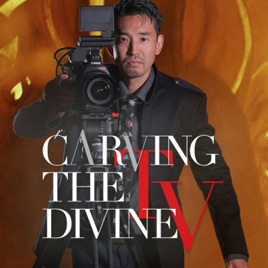
Come and join our weekly journey on Buddhism and Eastern Religion hosted by filmmaker Yujiro Seki. Carving the Divine TV Podcast is a series of Q&A sessions with Buddhist scholars and practitioners. These Q&A sessions explore the basic concepts and history of Buddhism. The show may not turn you into a self-actualized spiritual guru but it will open the door into this beautiful, profound spiritual tradition. We will start our journey from India and make our way to Japan, covering a wide range of topics in an easy-to-digest style! Each show is between 10 - 30 minutes long. On top of that, we will give you special episodes on Japanese Buddhist sculptures (known as Butsuzo) and Buddhist practioners' episodes. Yes! This series is made to be a supplemental material for the up-and-coming documentary film "Carving the Divine - Buddhist Sculptors of Japan" but you can take your new knowledge with you anywhere in the world to enhance the quality of your life!
Advertise on Carving the Divine TV Podcast
Advertise on Carving the Divine TV Podcast to promote your brand to thousands of podcast listeners
Unlock Carving the Divine TV Podcast podcast Email contact info, Listeners & Audience details
Email contact information
Direct podcast contact details
Listeners
Audience numbers & engagement insights
Audience details
Podcast Insights
Podcast episodes
Check latest episodes from Carving the Divine TV Podcast podcast
The History of Busshi (Japanese Buddhist sculptor) With Mark Schumacher
2021/09/22
Hosted by filmmaker Yujiro Seki, Carving the Divine TV is a series of Q&A sessions with Buddhist scholars and practitioners. These Q&A sessions explore the basic concepts of Buddhism, the history of Buddhism and of course Buddhist sculptures/sculptors (bustuzo/busshi) so that when viewers finally watch the documentary Carving the Divine - Buddhist sculptors of Japan, they will get the maximum value of the documentary.
Hosted by filmmaker Yujiro Seki, Carving the Divine TV is a series of Q&A sessions with Buddhist scholars and practitioners. These Q&A sessions explore the basic concepts of Buddhism, the history of Buddhism and of course Buddhist sculptures/sculptors (bustuzo/busshi) so that when viewers finally watch the documentary Carving the Divine - Buddhist sculptors of Japan, they will get the maximum value of the documentary.
Finally, we will have a special show about Busshi (Japanese Buddhist sculptors). This time we are going to talk about the history of Busshi! The art of Busshi, known as Butsuzo, has been one of the highest refined art forms in Japan for 1400 years, but it has been under the radar until now. Finally, we are ready to bring this art and tradition to the forefront through our documentary Carving the Divine. However, Carving the Divine does not recount the history of Busshi; rather, it is about the modern-day Busshi. So, we thought it would be a great idea to do a special show to specifically introduce the history and why the Busshi tradition matters. * To fully enjoy the visual presentation of the slides, please go to our YouTube video: https://youtu.be/tWld13bY1hc
As always, we will take you on a true wild rollercoaster ride. Get ready! In this show, you will travel through the span of 1400 years. How crazy is that? How cool is that? This is a truly special show because we invited our hero, Art Historian Mark Schumacher, to show and tell the history of Busshi through his visual presentation. We will not only talk about the history of Busshi but we will also be showing you visually the art of Busshi. We’ll be talking about Tori Busshi, Jocho, Unkei, Kaikei, Enku and so much more! So you can see the beautiful art of Busshi in your own eyes along with the history lesson!
And that’s not all! Mr. Schumacher is gracious enough to let us download the virtual presentation of this episode so that you can study it in your own time and at your own pace! Please go to https://www.carvingthedivine.com/study-guide and download! Wow, I’m speechless! This is the coolest gift ever! Enjoy!
So what are you waiting for?! Check out our newest Carving the Divine TV episode “The History of Busshi (Japanese Buddhist sculptors)” Let’s go on our incredible journey of 1400 years!
Mark Schumacher is an independent researcher who moved to Kamakura (Japan) in 1993 and still lives there today. His website, The A-to-Z Photo Dictionary of Japanese Religious Statuary, has been online since 1995. It is widely referenced by universities, museums, art historians, Buddhist practitioners, and lay people from around the world. The site's focus is medieval Japanese religious art, primarily Buddhist, but it also catalogs art from Shintō, Shugendō, Taoist, and other traditions. As of August 2018, it contained 400+ deities and thousands of annotated photos of statuary from Kamakura, Nara, Kyoto, and elsewhere in Japan. The site is searchable. LINK TO A-TO-Z PHOTO DICTIONARY = http://www.onmarkproductions.com/html/buddhism.shtml
Support the show (https://www.patreon.com/carvingthedivine)
Classifying Buddhist Deities 4. "What are Ten-Bu (Celestial Beings)?” With Mark Schumacher
2021/09/15
Hosted by filmmaker Yujiro Seki, Carving the Divine TV is a series of Q&A sessions with Buddhist scholars and practitioners. These Q&A sessions explore the basic concepts of Buddhism, the history of Buddhism and of course Buddhist sculptures/sculptors (bustuzo/busshi) so that when viewers finally watch the documentary Carving the Divine - Buddhist sculptors of Japan, they will get the maximum value of the documentary.
This is a special episode about categories of Butsuzo (Japanese Buddhist Statuary/Statues/sculptures). We will have an art historian/scholar Mark Schumacher to discuss the category "Ten-bu (Celestial Beings)." * To fully enjoy the visual presentation of the slides, please go to our YouTube video: https://youtu.be/vUH3msgBmZ8
Mark Schumacher is an independent researcher who moved to Kamakura (Japan) in 1993 and still lives there today. His website, The A-to-Z Photo Dictionary of Japanese Religious Statuary, has been online since 1995. It is widely referenced by universities, museums, art historians, Buddhist practitioners, and lay people from around the world. The site's focus is medieval Japanese religious art, primarily Buddhist, but it also catalogs art from Shintō, Shugendō, Taoist, and other traditions. As of August 2018, it contained 400+ deities and thousands of annotated photos of statuary from Kamakura, Nara, Kyoto, and elsewhere in Japan. The site is searchable. LINK TO A-TO-Z PHOTO DICTIONARY = http://www.onmarkproductions.com/html/buddhism.shtml
Support the show (https://www.patreon.com/carvingthedivine)
Classifying Buddhist Deities 3. “What are Myo-o (Wisdom Kings)?” With Mark Schumacher
2021/09/08
Hosted by filmmaker Yujiro Seki, Carving the Divine TV is a series of Q&A sessions with Buddhist scholars and practitioners. These Q&A sessions explore the basic concepts of Buddhism, the history of Buddhism and of course Buddhist sculptures/sculptors (bustuzo/busshi) so that when viewers finally watch the documentary Carving the Divine - Buddhist sculptors of Japan, they will get the maximum value of the documentary.
This is a special episode about categories of Butsuzo (Japanese Buddhist Statuary/Statues/sculptures). We will have an art historian/scholar Mark Schumacher to discuss the category "Myo-o (Wisdom Kings)." * To fully enjoy the visual presentation of the slides, please go to our YouTube video: https://youtu.be/rctbIuhA0f8
Mark Schumacher is an independent researcher who moved to Kamakura (Japan) in 1993 and still lives there today. His website, The A-to-Z Photo Dictionary of Japanese Religious Statuary, has been online since 1995. It is widely referenced by universities, museums, art historians, Buddhist practitioners, and lay people from around the world. The site's focus is medieval Japanese religious art, primarily Buddhist, but it also catalogs art from Shintō, Shugendō, Taoist, and other traditions. As of August 2018, it contained 400+ deities and thousands of annotated photos of statuary from Kamakura, Nara, Kyoto, and elsewhere in Japan. The site is searchable. LINK TO A-TO-Z PHOTO DICTIONARY = http://www.onmarkproductions.com/html/buddhism.shtml
Support the show (https://www.patreon.com/carvingthedivine)
Classifying Buddhist Deities 2. “What are Bosatsu (Bodhisattvas)?” With Mark Schumacher
2021/09/01
Hosted by filmmaker Yujiro Seki, Carving the Divine TV is a series of Q&A sessions with Buddhist scholars and practitioners. These Q&A sessions explore the basic concepts of Buddhism, the history of Buddhism and of course Buddhist sculptures/sculptors (bustuzo/busshi) so that when viewers finally watch the documentary Carving the Divine - Buddhist sculptors of Japan, they will get the maximum value of the documentary.
This is a special episode about categories of Butsuzo (Japanese Buddhist Statuary/Statues/sculptures). We will have an art historian/scholar Mark Schumacher to discuss the category "Bosatsu (Bodhisattvas)." * To fully enjoy the visual presentation of the slides, please go to our YouTube video: https://youtu.be/bQYd8LkZSxs
Mark Schumacher is an independent researcher who moved to Kamakura (Japan) in 1993 and still lives there today. His website, The A-to-Z Photo Dictionary of Japanese Religious Statuary, has been online since 1995. It is widely referenced by universities, museums, art historians, Buddhist practitioners, and lay people from around the world. The site's focus is medieval Japanese religious art, primarily Buddhist, but it also catalogs art from Shintō, Shugendō, Taoist, and other traditions. As of August 2018, it contained 400+ deities and thousands of annotated photos of statuary from Kamakura, Nara, Kyoto, and elsewhere in Japan. The site is searchable. LINK TO A-TO-Z PHOTO DICTIONARY = http://www.onmarkproductions.com/html/buddhism.shtml
Support the show (https://www.patreon.com/carvingthedivine)
Classifying Buddhist Deities 1. “What are Nyorai (Buddhas)?” With Mark Schumacher
2021/08/25
Hosted by filmmaker Yujiro Seki, Carving the Divine TV is a series of Q&A sessions with Buddhist scholars and practitioners. These Q&A sessions explore the basic concepts of Buddhism, the history of Buddhism and of course Buddhist sculptures/sculptors (bustuzo/busshi) so that when viewers finally watch the documentary Carving the Divine - Buddhist sculptors of Japan, they will get the maximum value of the documentary.
This is a special episode about categories of Butsuzo (Japanese Buddhist Statuary/Statues/sculptures). We will have an art historian/scholar Mark Schumacher to discuss the category "Nyorai (Buddhas)." * To fully enjoy the visual presentation of the slides, please go to our YouTube video: https://youtu.be/8b1q1zxLGxM
Mark Schumacher is an independent researcher who moved to Kamakura (Japan) in 1993 and still lives there today. His website, The A-to-Z Photo Dictionary of Japanese Religious Statuary, has been online since 1995. It is widely referenced by universities, museums, art historians, Buddhist practitioners, and lay people from around the world. The site's focus is medieval Japanese religious art, primarily Buddhist, but it also catalogs art from Shintō, Shugendō, Taoist, and other traditions. As of August 2018, it contained 400+ deities and thousands of annotated photos of statuary from Kamakura, Nara, Kyoto, and elsewhere in Japan. The site is searchable. LINK TO A-TO-Z PHOTO DICTIONARY = http://www.onmarkproductions.com/html/buddhism.shtml
Support the show (https://www.patreon.com/carvingthedivine)
Butsuzo Episode 3: Transmission of Buddhism to Japan and Common Characteristics of Deity Classes. With Mark Schumacher
2021/08/18
Hosted by filmmaker Yujiro Seki, Carving the Divine TV is a series of Q&A sessions with Buddhist scholars and practitioners. These Q&A sessions explore the basic concepts of Buddhism, the history of Buddhism and of course Buddhist sculptures/sculptors (bustuzo/busshi) so that when viewers finally watch the documentary Carving the Divine - Buddhist sculptors of Japan, they will get the maximum value of the documentary.
In this special episode, we will have an art historian/scholar) Mark Schumacher to discuss History/transmission of Buddhism to Japan and Common Characteristics of Deity Classes, including Nyorai (Buddhas) Bosatsu (Bodhisattvas) Nyorai (Wisdom Kings) and Ten (Celestial Beings). * To fully enjoy this content, please go to our YouTube video: https://youtu.be/M2LPT5yG8fY
Mark Schumacher is an independent researcher who moved to Kamakura (Japan) in 1993 and still lives there today. His website, The A-to-Z Photo Dictionary of Japanese Religious Statuary, has been online since 1995. It is widely referenced by universities, museums, art historians, Buddhist practitioners, and lay people from around the world. The site's focus is medieval Japanese religious art, primarily Buddhist, but it also catalogs art from Shintō, Shugendō, Taoist, and other traditions. As of August 2018, it contained 400+ deities and thousands of annotated photos of statuary from Kamakura, Nara, Kyoto, and elsewhere in Japan. The site is searchable. LINK TO A-TO-Z PHOTO DICTIONARY = http://www.onmarkproductions.com/html/buddhism.shtml
Support the show (https://www.patreon.com/carvingthedivine)
Religious multiplicity - How can we be Buddhist and Christian at the same time? With Dr. Duane Bidwell
2021/08/11
Hosted by filmmaker Yujiro Seki, Carving the Divine TV is a series of Q&A sessions with Buddhist scholars and practitioners. These Q&A sessions explore the basic concepts of Buddhism, the history of Buddhism and of course Buddhist sculptures/sculptors (bustuzo/busshi) so that when viewers finally watch the documentary Carving the Divine - Buddhist sculptors of Japan, they will get the maximum value of the documentary.
Years ago, when I first came to the US as an exchange student from Japan, I knew very little about the country. I read a book about living in America that stated, “In the US, you have to believe in one thing. You have to be affiliated with one religion. If you believe in multiple things or nothing at all, people will not respect you.” I have no idea if that statement was entirely true or not, but I did feel that the majority of Americans I met at that time saw religion very differently from the way Japanese people saw religion. It was difficult for me to understand that statement because believing in multiple things or nothing at all is a common practice in Japan. Well, I do not think there is a right or wrong way to think, but there is a question of whether a Western religion like Christianity and an Eastern religion like Buddhism can co-exist with each other in a single individual. Yes, today we are talking about religious multiplicity. In other words, we want to ask the daunting and controversial question, “Can we be a Christian and Buddhist at the same time?” Yes! We will be joined by an expert on this subject, Dr. Duane Bidwell, professor of Practical Theology, Spiritual Care, and Counseling at Claremont School of Theology at Willamette University. Well he also happens to be a Christian pastor and Theravada Buddhist practitioner at the same time!
We will be asking important questions such as
What is the concept of religious multiplicity? In the United States, if you do not believe in one religion, is there something wrong with you?
What is your Buddhist affiliation? Please tell us your story.
What is your Christian affiliation? Please tell us your story.
How can your Buddhist identity and Christian identity work together? Can you show us some examples?
Can we be a Buddhist and Christian at the same time?
Duane teaches practical theology, spiritual care, and counseling at Claremont School of Theology at Willamette University in Salem, Oregon, USA. He is an ordained minister of the Presbyterian Church (USA) and practitioner of vipassana (insight meditation) in the Theravada Buddhist tradition. His work has been featured on NPR, CNN, Interfaith Radio, and other media. Since 2014, students have given Duane three teaching and mentoring awards, and he has published several books, including When One Religion Isn't Enough: The Lives of Spiritually Fluid People (Beacon, 2018), which is a Christian Century bestseller and a Library Journal "Best Book 2018." Duane serves on the boards of the Taos Institute and the Society for Buddhist-Christian Studies. He is also an advisor to the International Buddhist Chaplains Foundation.
Support the show (https://www.patreon.com/carvingthedivine)
Buddhism and Racism - With Rev. Myokei Caine-Barrett
2021/08/04
Hosted by filmmaker Yujiro Seki, Carving the Divine TV is a series of Q&A sessions with Buddhist scholars and practitioners. These Q&A sessions explore the basic concepts of Buddhism, the history of Buddhism and of course Buddhist sculptures/sculptors (bustuzo/busshi) so that when viewers finally watch the documentary Carving the Divine - Buddhist sculptors of Japan, they will get the maximum value of the documentary.
We live in a complex world with countless causes and effects creating our reality. But we have a tendency to try to make things black and white. Personally, I think it is because our culture does not encourage critical thinking as much as it ought to. Racism is one of the issues that people think they have figured out; they say that they are not racists and racism must stop. But do they really understand racism to start with? Do I really understand racism? Just because we don’t believe we are racist, are we immune to racism? Are we free from it? Is it other people’s problems? What is unaware racism? Today, we will be dissecting racism from the ground up. We have an amazing and highly qualified guest, Rev. Myokei Caine-Barrett from Nichiren Order of North America who is not only a benevolent, compassionate priest but a strong advocate against racism for over 30 years! She will help us understand racism not only as a simplistic term but in a profound way. I’m ready for this discussion. I hope you are too!
We will be asking important questions such as:
In your own words, what is racism? And why should we care about it?
What is the brief history of racism in the USA?
What has been your own experience of racism?
Why did you choose Buddhism instead of other religious paths?
Is Buddhism diverse in this day and age?
Does racism exist in the Buddhist community? If so, in what form?
What is cultural appropriation and how does it affect our culture?
So, I often hear people saying that in Buddhism, everyone is equal and race is not the issue. What do you think of this statement?
Is it important to have diversity in the Buddhist community? If so why?
What can we do as individuals to promote equality in both the Buddhist world and society as a whole?
Myokei Caine-Barrett currently holds the position of iBishop of the Nichiren Shu Buddhist Order of North America. She is the first woman and the first American to hold this position. She is also the first American woman and first person of African American-Japanese descent to be fully ordained, having completed this process in 2007 with Archbishop Nissho Uchino in Yamanashi Prefecture, Japan. She is the guiding teacher and priest at Myoken-ji Temple in Houston, Texas. Myokei Shonin currently volunteers with the Texas Department of Criminal Justice as clergy to two prison Sanghas for the past 16 years in keeping with the Lotus Sutra teaching of full equality of all beings. Her writings have been published in a variety of Buddhist magazines and newspapers and is featured in “The Hidden Lamp: Stories from Twenty-Five Centuries of Awakened Women.” She is currently developing curriculum for (1) the Nichiren Shu tradition and the Lotus Sutra and (2) dealing with the trauma of incarceration and racism. She also supports weekend trainings for Healing Warrior Hearts, a Texas for Heroes project designed to truly welcome veterans home. She is also a licensed Religious Science practitioner.
Support the show (https://www.patreon.com/carvingthedivine)
"What is Theravada Buddhism?" - With Bhante Ananda Path
2021/07/28
Hosted by filmmaker Yujiro Seki, Carving the Divine TV is a series of Q&A sessions with Buddhist scholars and practitioners. These Q&A sessions explore the basic concepts of Buddhism and the history of Buddhism so that when viewers finally watch Carving the Divine they will get the maximum value of the documentary.
In this special episode, we will have a Theravada Buddhist monk, Bhante Ananda Path, to explain to us about the basic concept of Theravada Buddhism.
We will ask important questions such as:
1. What is Theravada Buddhism? What is the core teaching of it?
2. Do we have to give up our ordinary life to be a Theravada Buddhist?
3. How is Theravada different from Mahayana? Why is Theravada your choice?
4. Do you live in a monastery?
5. How can you utilize Buddhist teaching in real life?
6. What is the Theravada view of Buddha (Buddhist) statues?
Bhikkhu Ananda is a socially engaged Buddhist monk of Nepal who entered the Order of Theravada Buddhism in 1981. He mastered in Oriental and Buddhist Studies. Ananda helped coordinate the “Civic Solidarity for Peace” movement to end a decade of war (1995-2005) between the Maoist Insurgency and the State of Nepal. From 2007 to 2012, as a Member of Constituent Assembly and Legislature Parliament, he secured religious rights and reservations in the new constitution of the Federal Democratic Republic of Nepal. In 2007, the Universal Peace Federation (UPF) of Korea named him an “Ambassador for Peace.”
Support the show (https://www.patreon.com/carvingthedivine)
"What is Tibetan Buddhism?" - With Karma Lekshe Tsomo
2021/07/21
Hosted by filmmaker Yujiro Seki, Carving the Divine TV is a series of Q&A sessions with Buddhist scholars and practitioners. These Q&A sessions explore the basic concepts of Buddhism and the history of Buddhism so that when viewers finally watch Carving the Divine they will get the maximum value of the documentary. In this special episode, we will have a practitioner of Tibetan Buddhism and a professor of Buddist Studies, University of San Diego to discuss Tibetan Buddhism.
We will be asking important questions such as:
What is the Tibetan Buddhism? What’s so special about it?
What is Vajrayana? Is it the extension of Mahayana?
What is meant by “tantric tradition”? Does it require practitioners to have eccentric sex?
What is the brief history of Tibetan Buddhism?
What are some of the major schools of Tibetan Buddhism?
Who is The Dalai Lama?
What are mudras?
What are mandalas? How are they used in practice?
What is the role of Buddhist sculptures in Tibetan Buddhism?
Karma Lekshe Tsomo is a professor of Buddhist Studies at the University of San Diego, where she teaches Buddhist Thought and Culture, World Religions, Death and Dying, Images of Enlightenment, and other subjects. She is a founder and past president of Sakyadhita International Association of Buddhist Women and the founder/director of Jamyang Foundation, an educational initiative that supports study programs for Himalayan nuns in India and Marma girls in Bangladesh. Her publications include Into the Jaws of Yama: Buddhism, Bioethics, and Death; Sisters in Solitude: Two Traditions of Monastic Ethics for Women; and numerous edited works on women in Buddhism.
Please visit Karma Kekshe Tsomo's websites for the charitable cause:
www.jamyang.org
www.sakyadhita.org
www.sakyadhita.org/local/branches/hawaii.html
Support the show (https://www.patreon.com/carvingthedivine)
Our Buddhist sculpture appreciation blog Butsuzotion is on our way!
2021/07/14
Hosted by filmmaker Yujiro Seki, Carving the Divine TV is a series of Q&A sessions with Buddhist scholars and practitioners. These Q&A sessions explore the basic concepts of Buddhism and the history of Buddhism so that when viewers finally watch Carving the Divine they will get the maximum value of the documentary.
Carving the Divine is starting the one and only Butsuzo (Buddhist statuary) blog in America and beyond. We call the blog, Butsuzōtion!
I am delighted to introduce Sculptor David Bilbrey who is going to be the chief writer of the blog. He will tell us about what he is going to accomplish in our blog!
For more information: https://www.carvingthedivine.com/blog
Support the show (https://www.patreon.com/carvingthedivine)
"What is Busshi (Japanese Buddhist sculptor)?" - With Mark Schumacher
2021/07/07
Hosted by filmmaker Yujiro Seki, Carving the Divine TV is a series of Q&A sessions with Buddhist scholars and practitioners. These Q&A sessions explore the basic concepts of Buddhism and the history of Buddhism so that when viewers finally watch Carving the Divine they will get the maximum value of the documentary.
In this special episode, we will have a art historian/scholar) Mark Schumacher to discuss about Busshi (Japanese Buddhist sculptor). * To fully enjoy this content, please go to our YouTube video: https://youtu.be/Kn3ZD-R5_vs
Mark Schumacher is an independent researcher who moved to Kamakura (Japan) in 1993 and still lives there today. His website, The A-to-Z Photo Dictionary of Japanese Religious Statuary, has been online since 1995. It is widely referenced by universities, museums, art historians, Buddhist practitioners, and lay people from around the world. The site's focus is medieval Japanese religious art, primarily Buddhist, but it also catalogs art from Shintō, Shugendō, Taoist, and other traditions. As of August 2018, it contained 400+ deities and thousands of annotated photos of statuary from Kamakura, Nara, Kyoto, and elsewhere in Japan. The site is searchable. LINK TO A-TO-Z PHOTO DICTIONARY = http://www.onmarkproductions.com/html/buddhism.shtml
Support the show (https://www.patreon.com/carvingthedivine)
Podcast reviews
Read Carving the Divine TV Podcast podcast reviews
5 out of 5
3 reviews
★★★★★
Hoops on 2021/04/28
Great interviews on (mostly) Buddhism
Fascinating interviews about Buddhism, and religion more generally, in Japan— some fairly light, others quite in depth. This is a really great podcast...
★★★★★
Classical Ideas 2020/05/05
Fantastic
Yujiro is a consummate professional and distillate ideas and messages in a digestible way with great guests!