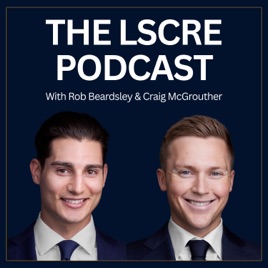
Advertise on podcast: The LSCRE Podcast
Rating
4.3from
This podcast has
373 episodes
Language
EnglishPublisher
Rob BeardsleyExplicit
No
Date created
2020/05/01
Latest episode
2026/04/20
Average duration
32 min.
Release period
7 days
Description
The LSCRE Podcast interviews institutional investors to learn more about their strategies, sponsor and investment criteria, due diligence process, and asset management practices.New episodes every Monday at 9am EST.
Unlock The LSCRE Podcast podcast Email contact info,
Listeners & Audience details
Email contact information
Direct podcast contact details

Listeners
Audience numbers & engagement insights

Audience details
Podcast Insights


Podcast episodes
Check latest episodes from The LSCRE Podcast podcast
Is Houston a Ticking Time Bomb? (Oil Crash Explained)
2026/04/20
Houston’s story is closely tied to oil and gas, but its economy today is much more diversified than it once was.
In this episode of the LSCRE Podcast, Rob Beardsley, Craig McGrouther, and Sam Morris revisit the 1980s, when oil went from about $30 a barrel to about $8 a barrel. When that happened, it dragged down everything with it, with real estate on fire sale, widespread job losses, and banks failing, creating a long period of economic distress.
Since then, Houston has become substantially more downside protected. Oil and gas is still a major part of the economy, but it is no longer as predominant as many people think, dropping to a much smaller share over time as other industries expanded.
Today, when oil goes up, it boosts profits and activity in Houston, but the city is far more resilient than it was in the past due to its diversified economic base.
Learn more about LSCRE at www.lscre.com
Most Multifamily Deals Look Safe… Until You See This
2026/04/17
In this episode of the LSCRE Podcast, Craig McGrouther sits down with Patrick Grimes to unpack why he moved away from speculative investing after losing everything in 2009 and how that experience reshaped his entire approach to risk.
Instead of “big flips and big gambles,” his focus is on being hyper-diversified and cross-collateralized, investing at just 10–30% of collateral value rather than the 60–80% commonly seen in real estate. The goal is simple: underwrite with a high degree of confidence and build downside protection into every deal.
Learn more about LSCRE at www.lscre.com
One Bad Investment! 90% Losses, Portfolio Collapse, Recovery Trap | LSCRE Podcast
2026/03/28
We have successfully closed on Preserve at Copper Springs, a 376-unit apartment community in Houston, TX!
If you’re a passive investor looking for stable, tax-efficient, cash-flowing opportunities: Reach out directly to Craig: [email protected]
Learn more: www.lscre.com
In this episode of the LSCRE Podcast, Rob Beardsley and Craig McGrouther break down a counterintuitive truth most investors ignore.
The deals with the highest projected returns are often the ones most likely to destroy capital. Using real data and insights from seasoned alternative investors, they explain why avoiding large losses -not chasing upside is what actually builds long-term wealth.
Topics covered:
• Why “high IRR” deals often carry hidden downside risk
• The real reason conservative deals outperform over time
• How one bad year can destroy your entire portfolio
• Why disciplined capital deployment beats timing the market
• The case for longer hold periods (5–10+ years)
• Why avoiding losses matters more than maximizing gains
• How yield + tax efficiency make real estate fundamentally different from stocks
• The truth about S&P 500 vs multifamily returns
Learn more about LSCRE at www.lscre.com
A $1B Multifamily Operator Answers The Toughest Investing Questions
2026/03/10
In this Q&A session, Rob Beardsley (Founder & CEO of LSCRE) answers some of the toughest questions investors are asking about the multifamily market right now.
Topics include whether the U.S. economy is actually in a recession, where we are in the real estate cycle, the biggest risks facing multifamily today, and how sponsors protect investor capital in volatile interest-rate environments.
Rob also shares lessons from a deal that was terminated due to rising rates, explains the underwriting assumptions that matter most in multifamily investing, and discusses why relationships and trust are the most valuable assets in commercial real estate.
If you're an investor trying to understand the current market cycle, risk management, and how professional sponsors approach deals, this video provides valuable insight.
Topics covered:
Are we actually in a recession?Where we are in the real estate and interest rate cyclesThe biggest risk in today’s multifamily marketHow sponsors protect investor capitalRed flags that disqualify a dealThe most important numbers in underwritingWhy relationships compound the fastest in real estateHow new sponsors raise capital without a track record
If you'd like to learn more about investing alongside LSCRE, connect with our team and join our investor community.
Investing vs Speculating: The $2.5M Lesson That Changed Everything | Paul Moore | LSCRE PODCAST
2026/03/06
In this episode of the LSCRE Podcast, Craig McGrouther sit down with Paul Moore to unpack one of the most misunderstood ideas in investing: the difference between investing and speculating.
After selling his company in his early 30s, Paul believed he had become a full-time investor.
Instead, he learned the hard way that he had become a full-time speculator—a realization that eventually cost him millions during the lead-up to the financial crisis.
In this conversation, Paul shares the painful lessons that followed, and how that experience reshaped his philosophy around risk, discipline, and capital preservation.
The discussion explores why the most successful investors—from figures like Warren Buffett and Charlie Munger to seasoned real estate operators—often succeed not by chasing exciting opportunities, but by staying focused on one strategy for decades.
Topics covered:
• The critical difference between investing and speculating
• Why confusing the two can destroy capital
• The lessons Paul learned losing millions before the 2008 crisis
• Why the best investors embrace “boring” strategies
• The danger of shiny object syndrome in real estate investing
• How disciplined operators evaluate deals and risk
• Why long-term focus often beats chasing the next opportunity
• How fund structures and preferred equity fit into today’s market
• Why today’s real estate cycle may present a unique opportunity
Chapters
00:00 Introduction to Paul Moore and His Journey
05:50 The Birth of Wellings Capital
11:49 Investment Philosophy: Avoiding Rescue Capital
22:31 Navigating Unique Investment Opportunities
27:41 Understanding Market Cycles and Investment Timing
36:56 Embracing Technological Changes in Real Estate
In a market filled with noise, projections, and constant deal flow, the investors who consistently win are often the ones doing something surprisingly simple: protecting principal, staying disciplined, and resisting the urge to chase the next big thing.
If you’re a passive investor, capital allocator, or real estate operator looking to sharpen your investment philosophy, this episode offers a candid look at the lessons that only experience and sometimes painful mistakes - can teach.
Best Ever Conference Recap | Value-Add Risks, Cap Rates & 2026 Multifamily Strategy | LSCRE PODCAST
2026/03/02
In this episode of the LSCRE Podcast, Rob Beardsley and Craig McGrouther unpack what’s really happening in today’s multifamily market - and why chasing “home run” deals may be the fastest way to lose investor trust.
After meeting with dozens of investors at the Best Ever Conference, a clear theme emerged: value-add fatigue, rising skepticism around aggressive projections, and a growing demand for certainty over hype. Chapters:
00:00 Intro
02:25 Why Value-Add Isn’t Working Like It Used To
09:08 LSCRE’s 2025–2026 Acquisition Strategy
12:07 What Makes LSCRE Different
15:19 Long-Term Strategy & 1031 Compounding
19:33 Why Fund Managers Should Avoid Big Swings
23:28 The Case for Longer Hold Periods
25:37 Preserve at Copper Springs Update
Topics covered:
• Why high IRR multifamily deals come with hidden downside
• The real risk behind “2X projections”
• Is the value-add strategy breaking down?
• How new supply and concessions are changing apartment investing
• The return of cap rate spreads between Class A, B, and C assets
• Why investing in A locations beats upgrading C properties
• The filtering-up effect happening across multifamily
• Why fund managers must prioritize capital preservation
• Certainty of execution vs swinging for outsized returns
In a market where rent growth has cooled and supply has surged, the operators who survive aren’t the ones chasing upside — they’re the ones protecting investor capital and positioning for long-term durability.
If you’re a passive investor, capital raiser, or multifamily operator navigating the 2026 cycle, this conversation will reshape how you think about risk, projections, and strategy.
Why This Houston Multifamily Deal Offers Strong Cash Flow & Lower Risk
2026/02/16
👉 Watch the full Preserve at Copper Springs webinar here: www.lscre.com/pcswebinarreplay
(This is a 506(c) offering open to accredited investors only.)
In this episode of the LSCRE Podcast, Rob Beardsley and Craig McGrothor walk through the acquisition of Preserve at Copper Springs, a 376-unit Class A multifamily property located in Houston’s highest-absorbing submarket.
This walkthrough breaks down how LSCRE evaluates risk, cash flow, and long-term durability when acquiring large multifamily assets – without relying on aggressive assumptions or hype.
Topics covered include:
Why Houston’s Copperfield submarket is seeing strong absorption with no new supply
How owning sister properties on the same street reduces operational risk
The benefits of 7-year fixed-rate, full-term interest-only debt
Why LSCRE prioritizes cash-flow coverage over maximum leverage
Organic rent growth vs forced value-add strategies
Expense reduction through in-house management and economies of scale
Why this deal prioritizes monthly cash flow, safety, and predictability
Cost segregation, bonus depreciation, and tax efficiency
How this investment is eligible for 1031 exchanges
This is a behind-the-scenes look at how experienced multifamily operators structure deals to protect capital while delivering consistent returns.
Learn more about LSCRE:
www.lscre.com
Why We’re Buying Less — And Why That’s a Good Thing (NMHC 2026 Outlook)
2026/02/13
In this episode of the LSCRE Podcast, Craig McGrouther sits down with Director of Acquisitions Brad Oliver to break down what really happened at NMHC, how 2025 unfolded, and where multifamily opportunities are forming in 2026.
They discuss:
Why Houston is leading the recovery
Why Dallas remains selective
Why markets like Austin, San Antonio, and Phoenix are still working through oversupply
Why foreclosure and distress don’t automatically equal opportunity
How risk-adjusted returns matter more than deal volume
Why LSCRE only closed two deals in 2025
What types of deals lenders are finally forcing to market
And why Preserve at Copper Springs stands out as a rare, high-conviction acquisition
This conversation pulls back the curtain on how institutional operators think about:
✔ Market cycles
✔ Supply & demand
✔ Deal liquidity
✔ Underwriting discipline
✔ Downside protection
If you’re a passive investor, 1031 exchanger, or multifamily operator, this episode explains why patience, discipline, and location selection matter more than ever heading into 2026.
Learn more about LSCRE:
www.lscre.com
1031 Exchanges Explained: How LSCRE Helps Investors Defer Taxes & Compound Wealth
2026/02/09
In this episode of the LSCRE Podcast, Rob Beardsley and Craig McGrouther sit down with 1031 exchange expert and author Dasha Beardsley to break down how investors can properly use 1031 exchanges to defer capital gains taxes, preserve equity, and compound wealth through multifamily real estate.
The team dives deep into:
How 1031 exchanges actually work (and common misconceptions)
Using 1031s to invest in multifamily syndications
Tenant-in-Common (TIC) structures vs traditional LP investments
Bundling multiple properties into a single 1031 exchange
Reverse 1031 exchanges and rare 1033 exchanges
How LSCRE has successfully completed $150M+ in 1031 exchanges with a 100% success rate
Why long-term sponsors matter when compounding wealth through multiple cycles
This episode is packed with real-world examples from recent LSCRE acquisitions, including Preserve at Copper Springs, and offers a clear roadmap for investors looking to transition from active ownership to passive multifamily investing.
Learn more about LSCRE:
www.lscre.com
Why Investors Choose LSCRE | Zero Capital Calls, Monthly Cash Flow & Texas Focus
2026/02/06
In this episode of the LSCRE Podcast, Craig McGrouther sits down with Sam Morris to answer one simple but critical question:
What’s in it for you as an investor?
Whether you’re new to passive multifamily investing or have invested across multiple sponsors, this episode breaks down exactly how LSCRE operates, why capital preservation comes first, and what separates disciplined operators from the rest of the market.
We cover:
Why zero losses and zero capital calls matter
How monthly distributions are paid from true free cash flow
What “vertically integrated” actually means (and why it protects investors)
How LSCRE underwrites deals using loaded ICR, not pro forma hype
Why Texas (Houston, Dallas, San Antonio, Phoenix) remains a top market
How appreciation, depreciation, and cash flow work together
1031 exchange options and long-term investor strategies
Why repeat investors are the ultimate performance metric
With over $800M under management, 5,600+ units, 200+ employees, and 400+ repeat investors, LSCRE focuses on one thing only:
delivering strong risk-adjusted returns while protecting investor capital through every cycle.
Learn more about LSCRE:
www.lscre.com
Why “Distress Deals” Are Mostly Garbage | NMHC Reality Check
2026/02/02
In this episode of the LSCRE Podcast, Craig McGrouther and Rob Beardsley break down the real takeaways from NMHC and explain why many so-called “distressed multifamily deals” are actually uninvestable.
With record supply in markets like Dallas, Austin, Phoenix, and San Antonio, realism is finally hitting the multifamily market. Lenders are taking back properties — but that doesn’t mean they’re good buys.
We cover:
Why lender-owned ≠ good deal
How “value-add” is often just disguised risk
Why AI underwriting misses the nuance that matters
The 4 pillars of every multifamily deal: location, price, debt, management
Why cash flow coverage matters more than leverage
How disciplined operators win cycles — and survive downturns
If you’re a passive investor, fund manager, or multifamily operator, this episode cuts through the noise and explains what actually matters in today’s market.
Smart capital isn’t chasing hype — it’s buying stability.
Learn more about LSCRE:
www.lscre.com
How LSCRE Executes Seamless Multifamily Takeovers in Houston Asset Management Deep Dive
2026/01/30
In this episode of the LSCRE Podcast, Craig McGrouther sits down with Joe Pistorius, Asset Manager at LSCRE, to break down how strong asset management and execution drive consistent returns in multifamily real estate.
This conversation offers a behind-the-scenes look at Preserve at Copper Springs, a new Houston acquisition located between two of LSCRE’s best-performing assets. Joe explains how experienced onsite teams, operational synergies, retention strategies, and disciplined expense control create a clear path to execution.
🎙️ Topics Covered in This Episode:
Joe Pistorius’ role as an LSCRE asset manager
Managing high-performing Houston multifamily assets
Why clustering properties improves operational efficiency
Lessons learned from Preserve at Copperleaf & Discovery at West Road
How LSCRE achieves 95–97% occupancy
Why retention is more valuable than unit turn strategy today
Renewal rent increases of 5–6% in a flat rent environment
Early-bird renewal incentives and tenant retention strategy
Amenity fee rollout: bulk Wi-Fi, valet trash, gym & pool access
How amenity fees increase NOI without harming occupancy
What a smooth multifamily takeover actually looks like
Knocking on every door: resident-first transition strategy
Expense reduction through in-house teams and scale
Why this Houston submarket leads the city in absorption
Limited new supply and strong demographic fundamentals
Why execution matters more than aggressive projections
Risk mitigation through purchase price, location, and management
What makes a “safe” multifamily deal in today’s market
🏢 Key Takeaway:
Great multifamily deals aren’t made in spreadsheets — they’re won through execution, people, and operational discipline.
Learn more about LSCRE:
www.lscre.com
Houston Multifamily Deal Breakdown: Seller Motivation, Expenses & Insurance
2026/01/27
Why is the seller selling — and how do you actually make a multifamily deal work in today’s market?
In this episode of the LSCRE Podcast, Craig McGrouther and Rob Beardsley answer real investor FAQs around LSCRE’s newest Houston acquisition, Preserve at Copper Springs, and break down the real mechanics behind underwriting, expenses, insurance, and exits.
This is not theory — it’s how institutional multifamily deals actually get done.
🎙️ Topics covered in this episode:
Why Preserve at Copper Springs’ seller is selling (loan maturity explained)
How to evaluate seller motivation without falling for “distress” hype
Loan assumptions vs refinancing (when they work — and when they don’t)
Why remaining loan term, amortization, and leverage matter
How expense reductions actually happen (and when they don’t)
Why LSCRE isn’t “cutting costs” — but realigning operations
Portfolio synergies from owning multiple assets on the same street
Ancillary income opportunities for future buyers
Stabilized exits vs value-add “hot potato” deals
Why newer, high-quality assets have more exit liquidity
Houston rent growth drivers in the Copperfield submarket
How insurance markets are finally improving
Why insurance savings don’t always hit cash flow immediately
Escrow mechanics, lender friction, and “Kafkaesque” processes explained
Why operational execution matters more than projections
🏙️ Why Houston & Copperfield
#1 Houston submarket for absorption
Zero new supply
Strong employment drivers
Proven performance from sister assets
Learn more about LSCRE:
www.lscre.com
1031 Exchanges Explained: How Investors & Fund Managers Work With LSCRE
2026/01/23
How do 1031 exchanges actually work — and how does LSCRE support investors and fund managers through the process?
In this episode of the LSCRE Podcast, Craig McGrouther sits down with Dasha Beardsley, Director of Investor Relations at LSCRE, to break down 1031 exchanges, investor experience, capital partners, and how LSCRE has facilitated over $150M in 1031 value.
This episode is a deep dive into how institutional-grade investor relations actually function behind the scenes.
Topics covered:
Dasha’s 4+ year evolution at LSCRE (from college to Director of IR)
How LSCRE delivers white-glove investor experience
Monthly reporting, transparency, and communication standards
Why response time and accessibility matter for investors
How LSCRE works with fund managers and capital allocators
The onboarding process for capital partners
Marketing, compliance, and brand alignment
Overview of LSCRE’s investor events and summits
💼 1031 EXCHANGES — IN DEPTH
What a 1031 exchange is (and what it’s not)
Why a Qualified Intermediary (QI) is critical
Common mistakes that disqualify exchanges
How much time investors really need to plan
TIC vs DST structures (and why LSCRE uses TICs)
Reverse 1031 exchanges explained
1033 exchanges (eminent domain scenarios)
How LSCRE structured four simultaneous 1031-related exchanges on one deal
Why Preserve at Copper Springs is 1031-eligible
When a 1031 makes sense — and when it doesn’t
LSCRE 1031 TRACK RECORD
~$150M total 1031 exchange value
~$70–80M in 1031 equity placed
Multiple repeat 1031 investors
Institutional lender coordination
Learn more about LSCRE:
www.lscre.com
Multifamily Outlook 2026: Deals, Debt, Operations & Where Capital Is Going
2026/01/20
What does smart multifamily investing actually look like in 2026?
In this episode of the LSCRE Podcast, Craig McGrouther and Rob Beardsley break down their 2026 multifamily outlook, including acquisitions, operations, capital strategy, and why walking away from bad deals is often the best deal you can do.
This episode covers how LSCRE is approaching growth after one of the most volatile real estate cycles in recent history.
Topics discussed:
LSCRE’s 2026 acquisition goals (~$200M, one deal per quarter)
Why doing a bad deal is extremely expensive for sponsors
Deal discipline vs “doing deals to do deals”
Texas market focus: Houston, Dallas, San Antonio
Why some markets (like Phoenix) are still early — and risky
Optimal debt & equity structures for the next cycle
Why LSCRE targets lower leverage (~65%)
Mid-teens IRR expectations and 5–8% cash flow targets
Workforce housing vs Class C risk
Operational priorities: occupancy, renewals, staffing
Why renewal rates matter more than new leases
Employee turnover targets and portfolio health
Bringing RUBS billing in-house to save ~$300K annually
K-1 delivery timelines and internal tax infrastructure
Capital markets commentary: private credit vs common equity
Why 2026 may reward offensive positioning, not defensive
We also discuss:
Why Houston may outperform other Sunbelt markets
Where forced sellers may emerge
Why stability matters more than forecasts
And why LSCRE is focused on long-term ownership, not flips
Learn more about LSCRE:
www.lscre.com
Podcast reviews
Read The LSCRE Podcast podcast reviews
Jeremy Porto 2022/04/16
Unique for real estate podcast
Not many podcasts are going beyond the cursory, high-level view of how to invest. Somehow Rob is providing well-reasoned, well-thought out, data-driv...
betterbooked 2020/05/12
Love capital spotlight!
I am currently studying some of these topics in school and I love everything I learn from the host Rob. My professor has been very impressed with the ...
Podcast sponsorship advertising
Start advertising on The LSCRE Podcast relevant audience podcasts
You may also like to advertise on these Podcasts

4.51313275
The Mona Charen Show
The Bulwark

4.8402476
Todd Durkin IMPACT Show
Todd Durkin
4.7149250
Rob Black Show
Rob Black

4.4185100
The Joe Piscopo Show
AM 970 The Answer

4.723219670
Your Mom & Dad
Audioboom Studios

4.872261
The Therapy Crouch
Tall or Nothing

4.360558
In The Loop
Audacy

4.9216785
TV Guidance Counselor
Ken Reid

4.91721225
Growth Think Tank
Gene Hammett is a Speaker, Executive Coach, Inc Columnist, and Host of "Gr

588497
Plumluvfoods
Chef Plum