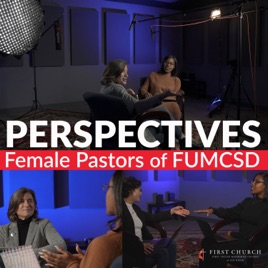
Advertise on podcast: Perspectives: First Church San Diego Pastors Podcast
Rating
4.7from
This podcast has
250 episodes
Language
EnglishPublisher
FUMC San DiegoExplicit
No
Date created
2021/01/06
Latest episode
2026/10/04
Average duration
-
Release period
7 days
Description
The women clergy of First United Methodist Church of San Diego tackle important questions about scripture, theology, and life – reinventing faith through a fresh new perspective. First Church of San Diego is a progressive Christian community where all are welcome to explore their spirituality and seek God's love. Find us online at https://www.fumcsd.org. Or follow us on: • YouTube (@FirstChurchSanDiego): https://www.youtube.com/channel/UCH03nH-ydfR7WVxv5-L9V5Q • Facebook (@fumcsd): https://www.facebook.com/fumcsd • Instagram (@firstchurchsd): https://www.instagram.com/firstchurchsd/ • Patreon (@fumcsd): https://www.patreon.com/fumcsd
Unlock Perspectives: First Church San Diego Pastors Podcast podcast Email contact info,
Listeners & Audience details
Email contact information
Direct podcast contact details

Listeners
Audience numbers & engagement insights

Audience details
Podcast Insights


Podcast episodes
Check latest episodes from Perspectives: First Church San Diego Pastors Podcast podcast
What Do We Do When God Is Silent? | Habakkuk, Injustice & Waiting for Answers | Perspectives FUMCSD Pastors Podcast S4E3 (Audio)
2026/10/04
What do we do when God is silent? When we pray, ask for help, and nothing seems to change? Can arguing with God actually be an act of faith?
In this episode of Perspectives FUMCSD Pastors Podcast, Revs. Trudy and Hannah explore the book of Habakkuk and what this ancient conversation with God might teach us about faith, doubt, injustice, and waiting for answers.
Habakkuk’s story is different than the other prophets. He doesn't quietly accept suffering. He asks God, “How long?” He questions what God is doing, challenges God's response, and brings his anger, anguish, and frustration directly into the relationship. And when God answers, the response doesn't immediately make things better.
Instead, Habakkuk invites us into the uncomfortable space between what is and what we hope will be—a place where faith may mean staying engaged with God even when we don't have answers.
In this conversation, the female pastors explore:
Why lament can be an expression of faith
How we can talk honestly with God during times of distress
Whether questioning or disagreeing with God can be part of faith
How Habakkuk challenges our certainty about what is “righteous”
Righteousness as faithfulness and relationship with God, instead of a code of morality
The danger of assuming we know exactly what God is doing
This is the third conversation in our four-week series, “God Is Still Speaking: Listening in a Noisy World,” exploring what the voice of God might sound and look like in our lives today. Next week, we'll turn to Jeremiah 33:1-3 and “A Word in the Darkness.”
Whether you're exploring progressive Christianity, deconstructing your faith, studying the Bible, pursuing justice, wrestling with theology, or simply asking honest questions about Scripture, we hope you'll join the conversation.
Reflection Questions
Can arguing with God be an act of faith? If so, have you ever?
What do we do with God’s silence?
Do you love God or do you love the blessings of God?
Continue the Conversation
Connect with our faith community in person or online as you reflect on the themes of this episode:
Convergence discussion group (Sundays at 12 PM): https://www.fumcsd.org/events
Join our Patreon community
Timestamps
00:00 What do we do when God is silent?
00:53 Habakkuk: a prophet wrestling with silence and suffering
01:18 “How long, O Lord?” — Habakkuk's lament
02:32 Who was Habakkuk?
05:19 When God's answer doesn't make things better
07:41 Can we question or disagree with God?
09:30 Challenging our certainty about what is “righteous”
13:20 Staying in relationship with God without having answers
16:42 Our narrow view of what is righteous
20:40 Finding faith in the middle of uncertainty
24:16 Reflection questions: God's silence, faith, and blessings
What Happens When God Interrupts Us? | Isaiah 6 & Encountering God’s Calling | Perspectives FUMCSD Pastors Podcast S4E2 (Audio)
2026/09/27
What happens when God interrupts us in the middle of uncertainty, fear, and doubt? In Isaiah 6, the prophet Isaiah encounters God in a dramatic and terrifying vision—and responds, “Here I am. Send me.”
In this episode of Perspectives FUMCSD Pastors Podcast, Rev. Hannah and Rev. Brittany explore what Isaiah’s calling might teach us about hearing God, encountering God, recognizing our shortcomings, receiving grace, and responding when we sense a call to act.
Isaiah’s encounter with God doesn't happen in a peaceful or predictable moment. His calling comes at a time of political uncertainty and fear, and his response begins with an honest acknowledgment of his own shortcomings. That honesty becomes pivotal in his encounter with God’s grace and his ability to respond to God’s call.
What might Isaiah’s story have to say to us today? What if we have become so accustomed to the routines of faith that we no longer expect to encounter God in unexpected ways? And what if the things we see as our shortcomings, mistakes, or “unclean lips” can become places where God meets us, transforms us, and calls us forward?
As the female pastors reflect on Isaiah’s calling, they consider what it means to listen for God in the midst of uncertainty, to bring our whole selves into sacred spaces, and to move beyond shame toward grace and action.
In this conversation, they explore:
Why Isaiah's encounter with God is so dramatic—and even terrifying
What Isaiah's “unclean lips” reveal about shame, humility, and human shortcomings
Why confession can open us to experiencing God's grace
Whether we really expect to encounter God when we enter a familiar worship space
How we can become so comfortable with religious routines that we stop listening for God
Why God's blessings are meant to extend beyond the walls of the church
How our mistakes and shortcomings can become part of the work God calls us to do
What it means to respond to God's call before we know exactly where it will lead
This is the second conversation in our four-week series, “God Is Still Speaking: Listening in a Noisy World,” exploring what the voice of God might sound and look like in our lives today. Next week, we'll turn to Habakkuk and explore “The Long Silence”
Whether you're exploring progressive Christianity, deconstructing your faith, studying the Bible, pursuing justice, wrestling with theology, or simply asking honest questions about Scripture, we hope you'll join the conversation.
Reflection Questions
What keeps us from listening with humility?
How can we acknowledge our own shortcomings while navigating disappointment in the actions of others?
What helps you stay grounded when the present reality doesn’t give you much hope?
Continue the Conversation
Connect with our faith community in person or online as you reflect on the themes of this episode:
Convergence discussion group (Sundays at 12 PM)
Join our Patreon community
Timestamps
00:00 When God Interrupts Us
00:20 Isaiah’s Dramatic Encounter With God
05:11 When Encountering God Is Beautiful—and Terrifying
07:23 What Isaiah’s Humility Teaches Us
10:23 Confession, Shame & Receiving God’s Grace
12:44 Do We Expect to Encounter God?
14:45 God Doesn’t Bless Us Just for Ourselves
16:49 Is God Bigger Than the Church?
18:54 “Whom Shall I Send?” → “Here I Am. Send Me.”
22:56 Can Our Shortcomings Become Gifts?
25:23 Reflection Questions
Are We Missing God’s Whispers? | Samuel & Hearing God | Perspectives FUMCSD Pastors Podcast S4E1 (Audio)
2026/09/20
In a noisy world, it can be hard to hear anything—let alone a whisper from God. So how do we know when God is speaking? And what gets in the way of our ability to listen?
Kicking off Season 4 of Perspectives FUMCSD Pastors Podcast and our four-week series “God Is Still Speaking: Listening in a Noisy World,” Revs. Trudy and Brittany explore the story of Samuel’s call in 1 Samuel 3:1-10—and what this ancient story might have to say to us today.
Samuel hears a voice calling his name but doesn’t recognize it as God. Eli, exhausted and caught between his responsibilities, his family and his faith, initially doesn’t recognize it either. Together, the female pastors of First UMC of San Diego explore what it means to listen for God when we’re overwhelmed, uncertain or simply too tired to hear.
In this conversation, they explore:
Why it can be so difficult to hear God
How exhaustion, anxiety and the competing voices around us can drown out God’s voice
What God’s voice might actually sound or feel like—and how we might recognize it
The tension between what God wants, what we want and what others want from us
What Samuel and Eli can teach us about healthy leadership, mentorship, and making space for something new
Why endings and periods of uncertainty can be part of making room for what comes next
The story of Samuel reminds us that God’s voice may not always come as a dramatic revelation. Sometimes it is more like a whisper—a persistent feeling, question, conviction or invitation that we can't quite let go of.
This is the first conversation in our four-week series, “God Is Still Speaking: Listening in a Noisy World,” exploring what the voice of God might sound and look like in our lives today. Next week, we'll turn to Isaiah 6:1-8 and “A Voice in the Temple.”
Whether you're exploring progressive Christianity, deconstructing your faith, studying the Bible, pursuing justice, wrestling with theology, or simply asking honest questions about Scripture, we hope you'll join the conversation.
Reflection Questions
How do you understand God’s silence and God’s voice?
What voices are competing for your attention right now, and which ones have you allowed to carry the most weight?
When have you experienced an unexpected interruption that, in hindsight, may have been an invitation to something new?
Continue the Conversation
Connect with our faith community in person or online as you reflect on the themes of this episode:
Convergence discussion group (Sundays at 12 PM)
Join our Patreon community
Timestamps
00:00 Are we missing God’s whispers?
01:29 Samuel hears a voice in the night
04:11 Why is God’s voice so hard to hear?
06:38 When the demands of life drown out God
09:50 Are we simply too exhausted to listen?
12:23 What healthy leadership looks like
16:54 What does it mean for God to speak to us?
17:38 What does God’s voice sound and feel like?
20:45 Hearing God amid anxiety, corruption and social turmoil
22:21 “The lamp is still burning”
25:51 Reflection questions
What We Really Mean When We Talk About Faith: What’s It Good For? | David & Goliath | Perspectives FUMCSD Pastors Podcast S3E51 (Audio)
2026/09/13
What does the story of David and Goliath really teach us about faith? Is faith simply believing that God will help us defeat our “Goliaths”—or is something deeper happening when we face fear, uncertainty, and circumstances beyond our control?
In this episode of Perspectives FUMCSD Pastors Podcast, Revs. Trudy and Hannah explore 1 Samuel 17 and the story of David and Goliath through the lens of faith, Scripture, progressive Christianity, and the challenges of our world today.
David and Goliath may be one of the most familiar stories in the Bible, but it is much more complicated than a simple underdog story. Beneath the familiar tale are questions about political change, power, technology, fear, biblical storytelling, and the evolving relationship between God and the people of Israel.
The female pastors of First United Methodist Church of San Diego ask what this ancient story can teach us about Christian faith in a changing world – especially when the “Goliaths” in front of us seem overwhelming.
In this conversation, they explore:
Why David and Goliath is more than a children’s Sunday School story
How storytelling shapes our faith and our understanding of Scripture
The political, social, historical, and technological changes reflected in 1 Samuel
How God works through imperfect, complicated people
The difference between faith and naïve optimism
What happens when our “armor”—technology, power, status, or certainty—fails us
How faith can help us face fear without becoming paralyzed by it
What it means to “see what you can’t see” and trust in God’s presence
Perhaps the biggest question is this: Would David’s faith still have mattered if he had lost?
This episode is the final conversation in our five-week series, “What We Really Mean When We Talk About…”, exploring complicated theological concepts and what they mean for our lives today. Previous episodes explored grace, forgiveness, love, and peace.
Whether you're exploring progressive Christianity, deconstructing your faith, studying the Bible, pursuing justice, wrestling with theology, or simply asking honest questions about Scripture, we hope you'll join the conversation.
Reflection Questions
What does this story tell you about God?
What are the ‘Goliaths’ in our world that convince us that they are the only reality that matters?
How do you weaken the power of God in the face of difficult circumstances?
Continue the Conversation
Connect with our faith community in person or online as you reflect on the themes of this episode:
Convergence discussion group (Sundays at 12 PM)
Join our Patreon community
Time Stamps
00:00 What does David and Goliath have to do with faith?
02:53 David and Goliath: More than a children’s story
04:27 The historical and political world of 1 Samuel
07:40 Why this story is much more complicated than it seems
11:07 Was the David and Goliath story added later?
16:04 David faces Goliath: The battle begins
18:30 Faith, fear, armor, and the power of God
21:33 Would David’s faith matter if he had lost?
25:26 What faith really means: Seeing what we can’t see
27:26 Reflection questions for your own faith
What We Really Mean When We Talk About Peace: Can We Find It in the Chaos? Perspectives FUMCSD Pastors Podcast S3E50 (Audio)
2026/09/06
What if peace isn’t avoiding conflict but instead facing it without losing ourselves in the process?
In this episode of Perspectives, Rev. Drs. Hannah and Brittany explore what we really mean when we talk about peace through the story of Daniel—who continues to pray even when doing so puts his life at risk. Daniel doesn’t find peace by escaping a chaotic world. He finds a way to remain grounded in his faith, his values, and his sense of self while living amid political pressure, injustice, and uncertainty. So, what does Daniel have to teach us about finding peace when the world around us feels anything but peaceful?
Together, the female pastors of First United Methodist Church of San Diego explore:
Why peace isn't the same thing as serenity, comfort, or the absence of conflict
How faith can help us stay grounded when circumstances are chaotic
The difference between peaceful resistance and passive compliance
What it means to hold onto your identity and integrity in an unjust world
How mindfulness and prayer can help us remain present rather than consumed by fear
Why “keeping the peace” can sometimes protect injustice
How we can cultivate inner quiet without withdrawing from the world
What it means to find moments of joy and peace in the midst of heartbreak and struggle
Reflection Questions
When does “keeping the peace” actually protect injustice?
What is the difference between peaceful resistance and passive compliance?
Can peace include conflict?
This episode is part of our five-week series, “What We Really Mean When We Talk About…”, exploring complicated theological concepts and what they mean for our lives today. Next week, we'll explore what we really mean when we talk about faith. Whether you're deconstructing your faith, exploring progressive Christianity, pursuing justice, or simply asking honest questions about Scripture, we hope you'll join the conversation.
Continue the conversation:
Convergence discussion group (Sundays at 12 PM)
Join our Patreon community
Time Stamps
00:00 What if Peace Isn't the Absence of Conflict?
01:36 Daniel Chooses Faith in the Face of Danger
04:45 What Jealousy Can Teach Us About Knowing Who We Are
06:26 Faith, Integrity, and Living Under Political Power
07:20 Peace Doesn't Require a Perfect Situation
08:14 From a Meditation Retreat to the “Concrete Jungle”
11:15 Finding Joy and Peace in the Midst of Heartbreak
12:36 Is Daniel Practicing Mindfulness?
13:27 Peace Doesn’t Mean Giving Up the Fight
20:25 Peace Isn't Comfort—It Can Exist in Conflict
What We Really Mean When We Talk About Love: What Does It Look Like? Perspectives FUMCSD Pastors Podcast S3E49 (Audio)
2026/08/30
What does love actually look like when it’s difficult, uncomfortable, or undeserved?
In this episode of Perspectives, Revs. Trudy and Brittany explore what we really mean when we talk about love through the story of Jesus washing his disciples’ feet in John 13:3–9. And there's a particularly difficult question at the heart of the story: Why would Jesus wash Judas’s feet—even knowing Judas would betray him?
Together, the female pastors of First United Methodist Church of San Diego discuss:
How Jesus turned an ordinary act of hospitality into something radical
Why love can feel uncomfortable and vulnerable
The challenge of both giving and receiving love
Why unconditional love is so difficult for us
What it means to love someone who may hurt or betray us
The difference between love, grace, and forgiveness
How vulnerability and community shape the way we experience love
What it means to follow Jesus on a journey to a more open and expansive heart
Reflection Questions
When has love called you to do something that seemed ridiculous or unreasonable to others?
What makes it difficult/uncomfortable for you to let others love and care for you?
Who has shown you a kind of love that changed the way you understand love?
Continue the conversation:
This episode is part of our five-week series exploring “What We Really Mean When We Talk About…” – giving us the opportunity to reflect upon and explore tricky theological concepts. Next week, we'll explore what we really mean when we talk about peace. Whether you're deconstructing your faith, exploring progressive Christianity, pursuing justice, or simply asking honest questions about Scripture, we hope you'll join the conversation.
Convergence discussion group (Sundays at 12 PM)
Join our Patreon community
Time Stamps
00:00 Love Is More Than What You Say
01:47 Why Would Jesus Wash His Disciples’ Feet?
04:00 Why Love Can Be Radical, Ridiculous & Uncomfortable
06:15 Why Receiving Love Can Be So Difficult
08:32 Love Requires Vulnerability
09:41 Why Did Jesus Wash Judas’s Feet?
12:25 Why Is Unconditional Love So Hard?
13:53 Love, Grace & Forgiveness: What’s the Difference?
20:44 Love Isn’t a One-Way Street
22:54 Are You Better at Giving or Receiving Love?
What We Really Mean When We Talk About Forgiveness: Do We Also Have to Forget? Perspectives FUMCSD Pastors Podcast (S3E48) (Audio)
2026/08/23
People might throw you away, but God will never throw you away—and God will never throw away the people who have hurt you. This is what makes forgiveness both complicated and possible.
So, what does forgiveness actually mean? Does it require us to forget? To reconcile? To restore a relationship? And what does God ask of us when someone has hurt us?
In this episode of Perspectives, Rev. Trudy and Rev. Dr. Brittany explore forgiveness through the story of Joseph and his brothers in Genesis 45. Joseph's brothers sold him into slavery, yet years later Joseph chooses to welcome them, provide for them, and seek reconciliation. But does Joseph's story mean that forgiveness is always simple—or that forgiveness always means restoring a relationship? Together, they explore:
What forgiveness means in Christianity—and why it is more complicated than we sometimes make it
Why forgiveness can be especially difficult when the people who hurt us are family
How trauma and memory shape the process of forgiveness
The difference between forgiveness, reconciliation, and forgetting
Whether forgiveness requires us to remain in relationship with someone who has hurt us
How God's grace and providence might help us imagine forgiveness in a complicated world
Reflection Questions
How does it feel for you to be forgiven? How does it feel when you forgive others?
What does it take to experience forgiveness?
How can we imagine God’s activity in a flawed world?
Continue the Conversation
This episode is part of our five-week series exploring “what we really mean when we talk about…” theological concepts. Next week, we'll explore what we really mean when we talk about love. Whether you're deconstructing your faith, exploring progressive Christianity, pursuing justice, or simply asking honest questions about Scripture, we hope you'll join the conversation:
Convergence discussion group (Sundays at 12 PM)
Join our Patreon community
Timestamps:
00:00 What makes forgiveness complicated—and possible
00:26 The story of Joseph and his brothers
02:14 Joseph reveals himself: Genesis 45
06:22 Why forgiveness is more complicated than we think
07:36 Family, trauma, and forgiveness
12:29 Does forgiveness require forgetting?
14:17 God's providence and finding meaning
20:27 Forgiveness — a one-time decision or a lifelong process?
23:48 Forgiveness doesn't always mean reconciliation
27:21 Why we shouldn't simplify forgiveness
28:48 Reflection questions
What We Really Mean When We Talk About Grace: What Gets in the Way? Perspectives FUMCSD Pastors Podcast (S3E47) (Audio)
2026/08/16
Grace isn’t just a name or a before-dinner prayer. So, what is grace? What does the Bible say about grace? And why can it be so difficult to offer grace to others?
In this episode of Perspectives, Rev. Trudy and Rev. Hannah explore grace through the story of Jonah, the reluctant prophet who resisted God’s call to extend grace to the people of Nineveh.
Whether you're exploring progressive Christianity, wrestling with questions about Scripture and faith, or studying the Book of Jonah, this conversation invites you to consider what grace means to you today.
Beginning with Jonah 1:1-3, this episode helps you discover:
What is grace, and what does it look like in everyday life?
Why does Jonah resist offering grace to Nineveh?
What does the historical context of Jonah tell us about grace?
Can God's grace reach people we would rather exclude?
Why do we sometimes want to decide who deserves God's grace?
What gets in the way of accepting and offering grace?
Reflection Questions
How have you experienced God’s persistent grace?
Who do you have a difficult time offering grace to?
Have you seen God offer grace to someone you couldn’t?
Continue the Conversation
This is the first episode in a 5-week conversation series exploring “what we really mean when we talk about…” theological concepts. Join us next week as we tackle the concept of forgiveness. In the meantime, we invite you to continue this conversation. Whether you're deconstructing your faith, exploring progressive Christianity, pursuing justice, or simply asking honest questions about Scripture, we hope you’ll join us:
Convergence discussion group (Sundays at 12 PM): https://www.fumcsd.org/events
Join our Patreon community
Timestamps
00:00 What We Really Mean When We Talk About Grace
01:54 Jonah, Nineveh & the Problem of Grace
03:39 The Historical Context of Jonah
05:23 Is the Story of Jonah Actually a Joke?
09:19 God's Grace Has a Universal Reach
13:04 Why We Struggle to Offer Grace to Our Enemies
15:31 Can We Accept a God Whose Grace Reaches Those We Exclude?
17:27 God Is the Subject of Grace
18:32 What Is Grace? An Ocean Metaphor
23:41 Questions for Reflection: Experiencing & Offering Grace
The Image of God & Immigration: A Woman of Faith Stands Up for Justice | Perspectives FUMCSD Pastors Podcast S3E46 (Audio)
2026/08/09
What does the Bible actually say about immigration?
In this episode of Perspectives, Rev. Dr. Hannah Ka and Nyla Marson explore how Leviticus 19:33–34 challenges Christians to see migrants through the lens of the Image of God (Imago Dei).
Together they discuss holiness, discipleship, biblical justice, welcoming the stranger, and how faith moves beyond belief into action. Nyla also shares what she has witnessed while standing outside San Diego's federal courthouse with United Women in Faith, supporting migrants and families navigating the immigration system.
Whether you're exploring progressive Christianity, wrestling with questions about immigration, or studying Leviticus, this conversation invites you to consider what it means to love your neighbor as yourself.
In this episode you'll discover:
What Leviticus 19 teaches about immigration
Why welcoming the stranger is central to biblical holiness
How Imago Dei changes the way Christians see migrants
Stories from Christians standing alongside migrant families
Practical ways to live out your faith through justice and compassion
Why immigrants contribute far more than many people realize
Reflection questions for personal discipleship
Reflection Questions
Where do you recognize the image of Godin your everyday life?
How might your spiritual practices lead you toward greater love and justice?
What have you come to understand differently about the migrants around us?
Continue the Conversation
Whether you're deconstructing your faith, exploring progressive Christianity, pursuing justice, or simply asking honest questions about Scripture, we'd love to continue the conversation:
Convergence discussion group (Sundays at 12 PM)
Join our Patreon community
Timestamps
00:00 Introduction – What Does Holiness Look Like?
01:14 The Bible's Command to Welcome the Stranger
02:19 Why Nyla Began Standing with Migrants
05:13 The Pink Shirt Ladies & Courthouse Ministry
08:18 Stories That Changed Everything
13:33 Seeing the Image of God Beyond Immigration Status
15:02 Holiness, Justice & Everyday Faith
18:10 Growing Up in a Multicultural Church
23:25 How Migrants Changed Our Church Community
27:02 Before Politics Comes Human Dignity
28:42 Practical Ways Christians Can Support Migrants
31:14 Final Reflections & Questions
The Image of God & Kids | Building a Safe Place for Young Neighborhood Dreamers | Perspectives FUMCSD Pastors Podcast S3E45 (Audio)
2026/08/02
What if children's ministry wasn't just about Sunday mornings? What if the church's calling is to show up for kids, youth, and families where they already are—with no strings attached?
In this episode of the Perspectives FUMCSD Pastors Podcast, Rev. Trudy Robinson talks with Kenton Reaves Hundley, Executive Director of Dream School of the Arts, about community outreach, mentoring young people, and how churches can serve children and families beyond the walls of the church.
This is Episode 3 of our four-part Imago Dei 2.0 series exploring the many ways God's image is reflected in the diverse people of our church community. Inspired by Joel 2:28 ("Your sons and daughters shall prophesy...your old shall dream dreams, and your young shall see visions"), this conversation explores what it means to help young people dream, grow, and flourish.
Inspired by the Bible passage Joel 2:28, this episode explores:
How churches can support children, youth, and families beyond Sunday mornings
Why after-school programs and community partnerships can become powerful expressions of Christian ministry—even without Scripture or religious language
How creating a safe, welcoming environment helps kids build confidence, creativity, leadership, and resilience
How intergenerational relationships help children, teens, college students, and older adults grow together
How faith is lived through compassion, service, and community … and not only through words
This conversation is for you if …
You're passionate about children's ministry or youth ministry
You're a parent, teacher, mentor, or volunteer working with kids
You're wondering how churches can serve their communities beyond Sunday worship
You're interested in progressive Christianity, faith in action, or community outreach
You're looking for hopeful conversations about helping children thrive
Reflection Questions
How might you see the dreams of children as revealing the movement of the Spirit?
How might a return to God be helpful when devastating events occur?
How might we all best honor children and their dreams?
Continue the Conversation
This episode accompanies our sermon series, Imago Dei 2.0, exploring the many ways God's image is reflected in the people of our church community. Whether you're a Christian, deconstructing your faith, looking for an affirming church, interested in progressive Christianity, or simply curious about how faith can make a difference in the community, we'd love to continue the conversation!
Convergence discussion group (Sundays at 12 PM)
Join our Patreon community
Timestamps
00:00 Why Church Should Show Up for Kids Beyond Sunday
01:08 Joel 2 verse 28 and the Call to Help Children Dream
03:20 Building a Safe Place Where Kids Can Thrive
08:08 From Sunday School to Community Ministry
12:05 Living the Gospel Without Preaching It
16:28 Supporting Families Through Life's Hardest Moments
24:24 Dream School as a Community of Care
26:26 Helping Kids Navigate Loss and Grief
29:42 How Dream School Began
31:22 Reflection Questions: Honoring Children's Dreams
The Image of God & Racial Justice: A Southern Christian's Journey of Learning | Perspectives FUMCSD Pastors Podcast S3E44 (Audio)
2026/07/26
What happens when God calls us to leave behind not only familiar places, but familiar assumptions?
In Episode 2 of our four-part Imago Dei 2.0 series, Rev. Dr. Brittany Juliette Hanlin sits down with Kay Gilbert, a longtime member of First UMC San Diego and participant in the church’s Sankofa racial justice pilgrimages. As a self-proclaimed recovering racist, Kay reflects on her childhood in segregated Alabama, the questions she carried for decades, and why she’s dedicated her adult life to confronting history, telling the truth, and growing in understanding.
Inspired by Genesis 12:1–3, where God calls Abram to leave everything familiar and journey into the unknown, this conversation reflects on what can happen when we step outside our comfort zones and allow God to reshape our hearts and understanding.
This episode explores:
Growing up in segregated Alabama during the Jim and Jane Crow era
The difference between recognizing race and recognizing racism
Why silence and euphemisms allow racism to persist
How the Sankofa racial justice pilgrimage invites Christians to remember forgotten history
What Genesis 12 teaches about leaving behind familiar assumptions
How racism continues to shape healthcare and maternal outcomes
How learning to be uncomfortable can become a spiritual practice
This conversation is for you if you're:
Wondering how Christians can engage conversations about race faithfully
Seeking to better understand systemic racism and White privilege
Interested in racial justice from a Christian perspective
Learning to sit with discomfort as part of spiritual growth
Looking for hopeful stories of personal transformation
Curious about the Sankofa racial justice pilgrimage experience
Reflection Questions
What is something familiar that you've had to leave behind? And how did that experience shape who you are today?
What beliefs, assumptions, or perspectives have you had to reconsider in order to grow in your understanding of race and racism?
What might God be inviting you to learn, unlearn, or discover in this season of your life?
Continue the Conversation
This episode accompanies our sermon series, Imago Dei 2.0, exploring the many ways God's image is reflected in the people of our church community. Whether you're deconstructing your faith, pursuing racial justice, seeking a more inclusive Christianity, or simply curious about these conversations, we'd love to continue the journey with you.
First United Methodist Church of San Diego is an LGBTQ-affirming, progressive Christian congregation committed to justice, inclusion, and spiritual growth.
Convergence discussion group (Sundays at 12 PM)
Join our Patreon community
Timestamps
00:00 God calls us beyond what is familiar
01:00 Genesis 12 & introducing Kay Gilbert
03:19 Growing up in segregated Alabama
10:14 "I could have been them" — recognizing race and privilege
18:40 Racism and disparities in healthcare
25:03 Why Kay joined the Sankofa Pilgrimage
28:20 "I'm a recovering racist"
29:27 Visiting Bryan Stevenson's Legacy Museum to confront America’s history
33:44 How the pilgrimage deepened Kay's faith
38:11 Using our social capital for justice
40:06 Reflection questions
The Image of God & LGBTQ+ Faith: A Transgender Christian's Story | Perspectives FUMCSD Pastors Podcast S3E43 (Audio)
2026/07/19
What does it mean to be made in the image of God as an LGBTQ+ Christian?
Rev. Dr. Hannah Ka is joined by Benicio Casillas, a transgender Christian and member of First United Methodist Church of San Diego, for a conversation about faith, identity, Ecclesiastes 3, and trusting God when life refuses to fit into neat categories.
This is Episode 1 of our four-part Imago Dei 2.0 series celebrating the many ways the image of God is reflected in the diverse people of our church family. In this episode, Benicio shares his experience growing up Catholic, coming out as transgender, finding an LGBTQ-affirming church at First United Methodist Church of San Diego, and discovering what it means to embrace that he was created in God's image.
Inspired by the Bible passage Ecclesiastes 3:1-8, the episode explores:
Exploring faith through the lived experience of LGBTQ+ Christians
What "made in the image of God" means for transgender and queer people
Ecclesiastes 3 and learning to trust God amid uncertainty
Why conformity is not the same as holiness
How every person's authentic story reflects the image of God
The spiritual and emotional impact of being told you don't belong
The biblical theme of the image of God (Imago Dei) and what it means for all people
This conversation is for you if you're:
Looking for an affirming Christian perspective on LGBTQ+ faith
Deconstructing or reconstructing your faith
Curious about progressive Christianity
Wrestling with questions about identity and belonging
Interested in the Bible, theology, and inclusive churches
Reflection Questions
Where in your life have you been thinking in "either/or" categories? What might become possible if you imagined a wider spectrum of possibilities?
Ecclesiastes names two extremes, like weeping and laughing, silence and speaking. Where do you find yourself somewhere in between those extremes today? Or perhaps a mixture of both?
How has someone's story helped you see God, or the image of God, in a way you hadn't seen before?
Continue the Conversation
This episode accompanies our sermon series, Imago Dei 2.0, exploring the many ways God's image is reflected in the people of our church community. Whether you're an LGBTQ+ Christian, an ally, deconstructing your faith, or simply curious about inclusive Christianity, we'd love to continue the conversation:
Convergence discussion group (Sundays at 12 PM)
Join our Patreon community
First United Methodist Church of San Diego is an LGBTQ-affirming, progressive Christian congregation committed to justice, inclusion, and spiritual growth.
Timestamps
00:00 Life is richer than our categories
00:00:45 Imago Dei 2.0: Celebrating God's image in everyone
00:04:00 Ecclesiastes, mystery, and trusting God
00:05:32 A transgender Christian's faith journey
00:10:57 How life's seasons transformed faith
00:14:38 Finding the courage to live authentically
00:18:47 What "made in the image of God" means today
00:22:31 LGBTQ+, mental health, and God's unconditional love
00:24:10 Finding an LGBTQ-affirming church community
00:26:07 Reflection questions: Seeing God's image in others
The Samaritan Woman, Shame, and Identity: Finding Worth and Belonging in John 4 | Perspectives FUMCSD Pastors Podcast S3E42 (Audio)
2026/07/12
What if the stories you've been told about yourself aren't the whole story?
In this episode of Perspectives Podcast, Rev. Hannah and licensed marriage and family therapist Sheilah Cameron, LMFT, explore the Samaritan woman at the well (John 4) and what it teaches us about shame, identity, worth, and belonging.
Drawing on both Scripture and therapeutic insight, this conversation explores how shame, exclusion, and internalized beliefs affect our mental, emotional, and spiritual well-being. And how Jesus’ encounter with the Samaritan woman offers a picture of being fully known without being shamed.
This is Episode 5 of our five-part series, Taking Care of Mind, Body, and Spirit, featuring the female pastors of First United Methodist Church of San Diego and Sheilah Cameron, Director of New Life Counseling Center. Inspired by John 4:7-19 and 27-29, the episode includes:
Why the Samaritan woman’s story continues to resonate today
How shame becomes a part of our internal narrative
The connection between trauma, belonging, and identity
Why compassion is more transformative than judgment
Healing through safe relationships and authentic connection
Releasing identities built around shame and survival
Practicing vulnerability with ourselves, others, and the Sacred
Finding a deeper sense of worth beyond labels and expectations
What the story in John 4 offers people seeking healing today
Reflection Questions:
What labels have you carried for so long that you've mistaken them for your identity?
Are you spending more energy protecting your reputation than nurturing your identity?
What would change if you truly believed you are fully known and fully loved?
Continue the Conversation
Whether you identify as Christian, progressive Christian, spiritual but not religious, are deconstructing faith, or are simply curious about spirituality and mental health, we'd love to continue the conversation.
Convergence discussion group (Sundays at 12 PM)
Join our online Patreon community
Please note: This conversation is intended for reflection and encouragement and is not a substitute for professional mental health care. If you're struggling with your mental health, consider reaching out to a licensed mental health professional or a trusted support person, such as the New Life Counseling Center, a mental health ministry of First United Methodist Church of San Diego.
Timestamps
00:00 What Happens When Someone Truly Sees You?
01:21 The Samaritan Woman at the Well (John 4)
04:01 Jesus Crosses Boundaries with Compassion
05:37 Identity, Belonging, and Mental Health
10:20 Trauma, Shame, and the Stories We Tell Ourselves
17:55 Healing Through Safe Relationships
19:17 Leaving the Water Jar: A New Story Emerges
20:36 What Healing and Integration Look Like
22:01 Personal Stories of Identity and Belonging
25:03 Questions for Reflection
Grief: Mary, Martha & Jesus on Loss, Lament & Love (John 11) | Perspectives FUMCSD Pastors Podcast S3E41 (Audio)
2026/07/05
Grief touches every life—but many of us don't know how to talk about it.
In this episode of Perspectives FUMCSD Pastors Podcast, Rev. Trudy and licensed marriage and family therapist Sheilah Cameron explore grief, loss, healing, and hope through the story of Jesus, Mary, Martha, and Lazarus in John 11. Together they discuss the stages of grief, why community matters, how to support someone who is grieving, and what Christian faith can offer in seasons of loss.
Episode 4 of our five-part series, Taking Care of Mind, Body & Spirit, explores modern wellness challenges through the wisdom of Scripture.
This conversation is for anyone grieving a loss, supporting someone who is grieving, wondering how to talk about death with loved ones, or seeking a more faithful and honest way to hold life’s joys and sorrows together. Inspired by John 11:1-3, 14, 17-24, 32-36 and Mary, Martha, and Jesus' experience of grief over the loss of Lazarus, the topics discussed include:
Understanding the grief process
Why community is essential during grief and bereavement
How to support someone who is grieving
Talking with children and family about death and loss
The five stages of grief – and their limitations
How Mary and Martha grieve differently, and what their responses can teach us
Finding hope in the story of Lazarus
Faith, lament, and resilience during difficult seasons
How Mary and Martha grieve differently, and what their responses can teach us
This series features conversations with the women pastors of First United Methodist Church of San Diego and Sheilah Cameron, Director of New Life Counseling Center. Join them over five weeks as they explore information overload, purpose fatigue, mental health, grief, and identity through the lens of biblical prophets and key figures in Jesus’ life.
Reflection Questions:
What gets in the way of your grieving?
What hope do you see in this story?
Is grief ever a good thing?
Join the Conversation:
Whether you're a lifelong Christian, exploring progressive Christianity, deconstructing faith, or simply searching for hope, we’d love to continue the conversation.
Convergence discussion group on Sundays at 12 PM
Online Patreon community to connect with other listeners
Timestamps
00:00 Welcome: Grief Is Part of Life
00:50 John 11: Jesus and the Raising of Lazarus
03:39 Why Community Matters in Grief
05:19 Learning to Talk About Death
10:02 The Five Stages of Grief Explained
12:20 Martha, Mary, and the Permission to Feel
15:14 How to Support Someone Who Is Grieving
17:29 Memorial Services, Rituals, and the Healing Process
22:36 Advice for Anyone Living Through Grief
26:10 Reflection Questions & Closing
Please note: This conversation is for reflection and encouragement and is not a substitute for professional mental health care. If you’re grieving or struggling with your mental health, consider reaching out to a licensed mental health professional, a trusted support person, or a crisis resource in your area, such as the New Life Counseling Center, a mental health ministry of First United Methodist Church of San Diego.
Topics: grief, Christian grief, grief support, loss, bereavement, mental health, Jesus, Lazarus, Mary and Martha, John 11, stages of grief, progressive Christianity, Christian podcast, spiritual growth, counseling, healing after loss.
Mental Health: Ezekiel on Resilience, Healing & Hope | Perspectives FUMCSD Pastors Podcast S3E40 (Audio)
2026/06/28
According to WHO, 1 in 8 adults globally face mental health challenges. And yet, it remains a taboo topic in many communities.
Join Rev. Dr. Brittany Juliette Hanlin and Sheilah Cameron, LMFT, as they unpack and challenge the stigmas associated with mental health – especially within faith communities – by looking at the experience of Ezekiel, one of the major prophets of the Old Testament.
This is Episode 3 of "Taking Care of Mind, Body & Spirit," a five-part series exploring modern wellness challenges through the wisdom of Scripture. This conversation is for anyone struggling with isolation, depletion, shame, generational trauma, negative self-talk, and mental health challenges—as well as those who want to better understand the burdens others carry.
Inspired by Ezekiel 4:1–8, this conversation explores Ezekiel’s experience of exile, embodied burden, and prophetic responsibility—and how those themes connect to mental health and emotional challenges today. Topics include:
The isolation leaders and caregivers can feel when carrying responsibility for others
Generational trauma and how inherited pain can shape stress responses
The connection between shame, guilt, self-talk, and mental health
Why suffering is not a badge of honor or shame
The need for rest, boundaries, assertiveness, and self-advocacy
Caring for yourself so you can continue caring for your community
This series features conversations with the women pastors of First United Methodist Church of San Diego and Sheilah Cameron, Director of New Life Counseling Center. Join them over five weeks as they explore information overload, purpose fatigue, mental health, grief, and identity through the lens of biblical prophets.
Reflection Questions
How do you recognize when your responsibilities have become too heavy, and what signs tell you that you need rest or support?
What healthy boundaries can you establish to care for yourself while still remaining compassionate toward others?
How might God be inviting you to acknowledge pain honestly rather than carrying it in silence?
Join the Conversation
Whether you're a lifelong Christian, exploring progressive Christianity, deconstructing faith, or simply seeking a deeper spiritual foundation, we invite you to reflect alongside us:
Convergence discussion group on Sundays at 12 PM
Online Patreon community to connect with other listeners
Timestamps
00:00 Introduction: Mental health, stigma, and the church
00:53 Ezekiel 4,1-8 Bible Reading
02:38 Ezekiel, pressure, and chronic stress
06:29 Caregiving, leadership, and burnout
08:26 Generational trauma and the ACEs study
12:37 Trauma and the nervous system
15:47 Shame vs. guilt
18:09 Self-talk and mental health
29:42 Boundaries and community care
32:38:15 Final thoughts, reflection, and closing encouragement
Please note: This conversation is for reflection and encouragement and is not a substitute for professional mental health care. If you are struggling, consider reaching out to a licensed counselor, trusted support person, or crisis resource in your area, such as the New Life Counseling Center, a mental health ministry of First United Methodist Church of San Diego.
Podcast reviews
Read Perspectives: First Church San Diego Pastors Podcast podcast reviews
Podcast sponsorship advertising
Start advertising on Perspectives: First Church San Diego Pastors Podcast relevant audience podcasts
You may also like to advertise on these Podcasts

4.816561992
Juicebox Podcast: Type 1 Diabetes
Scott Benner

4.682431282
The Daily Beast Podcast
The Daily Beast, Joanna Coles

4.8121021000
Mind Pump: Raw Fitness Truth
Sal Di Stefano, Adam Schafer, Justin Andrews, Doug Egge

4.92002919
The Wright Report
Bryan Dean Wright

4.6221652000
Mark Levin Podcast
Cumulus Podcast Network

4.818382000
The Cabral Concept
Dr. Stephen Cabral

4.917101547
DarrenDaily On-Demand
Darren Hardy LLC

4.813262012
The Jeff Cameron Show ~ Warchant.com
Jeff Cameron Show

4.922602003
First15 Devotional
First15

4.8104482000
Steve Deace Show
Blaze Podcast Network