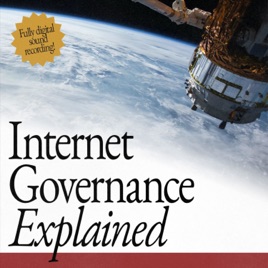
Advertise on podcast: Internet Governance Explained
This podcast has
27 episodes
Language
EnglishPublisher
Anna LitvinenkoExplicit
No
Date created
2021/01/25
Latest episode
2026/02/02
Average duration
26 min.
Release period
79 days
Description
In this podcast, we talk to experts about challenges and perspectives of Internet governance. "IGE" is produced by students of the Institute for Media and Communication Studies and of the JFK Institute for North American Studies, Freie Universitaet Berlin.
Unlock Internet Governance Explained podcast Email contact info,
Listeners & Audience details
Email contact information
Direct podcast contact details

Listeners
Audience numbers & engagement insights

Audience details
Podcast Insights

Podcast episodes
Check latest episodes from Internet Governance Explained podcast
Mykola Makhortykh and Victoria Vziatysheva about AI and Mis- and Disinformation
2026/02/02
As AI-generated text, images, and videos become increasingly difficult to distinguish from reality, how can we trust the information we encounter online? In this episode, researchers Mykola Makhortykh and Victoria Vziatysheva from the University of Bern explore how AI tools are reshaping the misinformation landscape. We discuss what makes digital-era mis- and disinformation distinct from earlier media environments, why chatbots can appear highly reliable while still spreading partial or misleading information,who should be held accountable when AI systems disseminate false or deceptiv content, and what global governance can look like in a world where risks and resources are unevenly distributed.
Reaz Khan on AI & Cybersecurity
2026/02/02
Is your coffee machine a security risk? Dr. Reaz Khan from Freie Universität Berlin breaks down how we understand the Internet of Things today, and how that understanding is being challenged by the rise of autonomous AI agents. We talk cybersecurity, post-quantum security, and why government regulation is struggling to keep up with these drastic technological shifts. Along the way, we explore why Blade Runner might be more relevant now than ever.
Matthias C. Kettemann on Platformisation of News Journalism
2026/01/19
In this podcast episode, we are joined by Prof. Dr. Matthias C. Kettemann (University of Innsbruck) to discuss the concept of platformisation and its impact on journalism and democracy. We explore how the growing role of digital platforms in curating content is shifting power away from journalists and traditional media. Against this backdrop, we discuss the changing role of journalists as gatekeepers of information and examine whether they can still fulfil this function as Big Tech companies increasingly determine visibility and information flows. In the final part of the discussion, we turn to existing regulatory frameworks and assess their effectiveness in addressing the expanding influence of platforms over public communication.
Hoàng Hà on United Nations Convention against Cybercrime
2026/01/19
In recent years, cybercrime, particularly large-scale online scams linked to human trafficking and money laundering, has become a pressing transnational challenge, especially in Southeast Asian countries such as Cambodia and Myanmar.
What are the main obstacles states face when attempting to regulate cybercrime effectively? To what extent can the UN Convention against Cybercrime (UNCAC), also known as the Hanoi Convention, contribute to combating organized cybercriminal networks? And does this new legal framework offer meaningful protection for citizens?
In this episode, VTV (Vietnam Television) Reporter Hoàng Hà, who covered the signing ceremony on site, shares her firsthand observations, key insights from the event, and her perspective on what still needs to be done to translate international commitments into effective action.
Sohyeon Hwang on Community Governance and Decentralized Social Media
2026/01/19
We all spend time in online communities, from private group chats and Reddit forums to newer platforms such as Mastodon. But who actually makes the rules there? And who decides what content gets promoted, removed, or shut down? In this episode, we talk to Sohyeon Hwang, a postdoctoral researcher at Princeton’s Center for Information Technology Policy, about how online communities can govern themselves. We take a closer look at what protocols are, what
community-led moderation can look like beyond banning, and why smaller communities can feel more human while still being challenging to run.
Jia Lianrui on China’s Digital Borders and Internet Governance
2026/01/19
How does China govern its digital space, and what is their defintion of internet sovereignty? In this episode, Dr. Jia Lianrui, Lecturer in Digital Media and Society at the University of Sheffield, discusses China’s platform ecosystem, as well as Eastern and Western perspectives on technology. The conversation unpacks the tensions between commercialisation, regulation, and freedom of expression, and asks what role China’s model may play in shaping the future of the global internet.
Martha Stolze on Regulating Disinformation on Social Media
2025/01/31
The regulation of digital platforms, particularly in combating disinformation, is a highly debated issue. Meta CEO Mark Zuckerberg recently caused a controversy when he announced plans to discontinue fact-checking program on Facebook and Instagram. This decision raises serious concerns that, without oversight, the platforms could be
flooded with disinformation and used for propaganda purposes.
Martha Stolze is focusing closely on these challenges. She is a research associate in the “Platform Algorithms and Digital Propaganda” research group at the Weizenbaum Institute.
Her dissertation is dedicated to the role of gender in Russian online information campaigns. In this episode, she shares insights into how certain gender narratives are strengthened, why the topic should be given greater attention by both research and society and what regulatory
solutions could look like.
Michael Wahl on Disability Accessibility in the Digital World
2025/01/28
The digital world holds the key to participation in nearly every aspect of modern life - but for people with disabilities, significant barriers remain. In this episode, we sit down with
Michael Wahl, head of the German Federal Agency for Accessibility of Information Technology (BFIT-Bund), to explore how digital accessibility can bridge this divide. Drawing from his professional expertise and personal experiences as a blind person, Michael Wahl shares his thoughts on the challenges, opportunities, and technologies
shaping current and future digital inclusion. From legal frameworks to AI innovations, discover how we can all contribute to creating a more equitable digital space.
David Hartmann on Content Moderation and AI
2025/01/24
In this episode, we explore a particularly controversial topic: content moderation.
What is content moderation? What role does AI play in
this context? How do platforms decide which content is allowed? We discuss the challenges and ethical dilemmas surrounding content moderation, as well as the impact these decisions could have on free speech and public discourse.
Sophie Butz and Cassandra Audibert are joined by David
Hartmann, researcher at the Weizenbaum Institute to discuss these questions. With his expertise in computer science and philosophy, David Hartmann talks about biases in algorithmic systems and the advantages and risks of using AI for
content moderation.
For further information about the topic and his work
feel free to look at the following links:
Hartmann, D., Oueslati, A., Munzert, S., Staufer, D., Pohlmann, L., & Heuer, H. (2025). Lost in moderation: How commercial content moderation APIs over- and under-moderate group-targeted hate speech and linguistic variations. Paper accepted for presentation at the CHI 2025 Conference, April
2025.
Hartmann, D., Oueslati, A., & Staufer, D. (2024). Watching the watchers: A comparative fairness audit of cloud-based content moderation services. Paper accepted for presentation at the EWAF 2024 Conference, February 2025.
Data workers worldwide report on their workplaces: https://data-workers.org/#Inquiries
Rita Gsenger on Digital Services Act and Other Aspects of Platform Regulation
2025/01/24
Platforms significantly impact societal fields such as politics, economics, and society at large, prompting growing efforts to regulate them. In 2024, the European Commission implemented the Digital Services Act to ensure data security, transparency, the prevention of hate speech, and the protection of human rights.
In this episode of Internet Governance Explained, we speak with Rita Gsenger, a researcher on platform regulation at the Weizenbaum Institute. She shares her insights, offering a deeper understanding of the legal frameworks for governing digital platforms.
Ruvimbo Musiyiwa on Influencer Regulation
2024/02/05
In today’s digital world, it is almost impossible for social media users to not stumble upon influencers and influencer marketing. However, the regulations and laws surrounding them are still undefined, which can cause ambiguity and confusion for users. What are influencers and influencer marketing, and how can they be regulated? Who is responsible for these regulations? In this episode, Caroline Ritchie and Claudia Paneque Marrero talk with Ruvimbo Musiyiwa M.A., communication scholar from Canada. Ruvimbo's work centers on influencer marketing, exploring potential approaches for its effective regulation.
Melanie Hölscher alias Mahou.Shoujo on AI in the Creative Industry
2024/02/01
With the rising popularity of AI tools such as Chat GPT and Midjourney, the first effects in the creative industry are noticeable. Declining amounts of commissions and people losing their jobs are just the tip of the iceberg. In this episode, Fabrice and Katrin talk with Melanie Hölscher, also known as Mahou.Shoujo or Meri on social media, about her experiences with AI as a fashion designer and freelance artist. Diving deeper into the topic, we discuss trends and shifts in the world of art due to AI, conversations happening between artists and how to better protect them from having their art stolen for AI generators such as Midjourney.
Lena-Maria Böswald on Challenges of Combating Hate Speech
2024/01/30
Freedom of speech is one of the fundamental human rights. However, it does not imply that one can express any opinions or ideas. Particularly on social media, the rise of hate speech is a growing concern. In this episode, Margarita Popova and Paul Schochow talk with Lena-Maria Böswald, advocacy manager at “Das NETTZ”, about the challenges of balancing the preservation of free speech with the need to regulate hate speech.
To learn more about “Das NETTZ” feel free to take a look at the following links: https://www.das-nettz.de/,
Website “Kompetenznetzwerk gegen Hass im Netz“: https://kompetenznetzwerk-hass-im-netz.de/, LinkedIn: Das NETTZ, Instagram: @das_nettz, X: @Das_NETTZ, YouTube: @dasnettz.
If you are experiencing hate speech, support can be found here: https://hateaid.org/
Felix Gaisbauer on Twitter's Development Post-Rebranding to X
2024/01/30
Since Twitter's transformation into X, as announced by Elon Musk in October 2022 with his tweet "the bird is freed," the platform has undergone significant changes. How do these developments affect users as well as research conducted on this social media platform? In this episode, Rita Gsenger and Jasper Hendrickx talk with Felix Gaisbauer, a postdoctoral researcher at the Weizenbaum Institute in Berlin. They discuss the new challenges faced by researchers and examine the implications of the platform’s transformation for democracy and public
discourse.
Rik Smit on Platformization of Memory
2023/01/28
What role do online platforms play in storing and forming our individual and collective memories? Lena Mackuth and Fleur Renkema talk with Dr. Rik Smit from the Universty of Groningen about his research on the platformization of memory to figure this out. We dive into what platforms are, the power they have, and the ethical questions behind the outsourcing of the storage of our memories to online platforms. Furthermore, we discuss the importance of regulating the
platformization of memory and the current lack of attention for this subject in the realm of public policy makers.
Podcast reviews
Read Internet Governance Explained podcast reviews
Podcast sponsorship advertising
Start advertising on Internet Governance Explained relevant audience podcasts
You may also like to advertise on these Podcasts

4.76754463
Criminology
Emash Digital & Mike Ferguson, Mike Morford
4.87505975
The Dr. John Delony Show
Ramsey Network

4.512595664
RedHanded
RedHanded

4.858201918
Sara Gonzales Unfiltered
Blaze Podcast Network
4.922682003
First15 Devotional
First15
4.861421104
The David Pakman Show
David Pakman

4.917101555
DarrenDaily On-Demand
Darren Hardy LLC

4.7106622000
FantasyPros - Fantasy Football Podcast
iHeartPodcasts

4.818392000
The Cabral Concept
Dr. Stephen Cabral

4.9247801444
Unashamed with the Robertson Family
Tread Lively