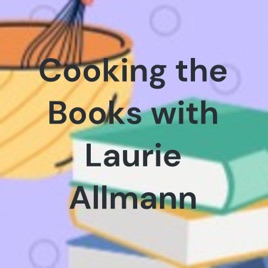
Advertise on podcast: Cooking the Books with Laurie Allmann
This podcast has
3 episodes
Language
EnglishPublisher
SPPL_CookingTheBooksExplicit
No
Date created
2021/06/06
Latest episode
2021/07/28
Average duration
9 min.
Release period
28 days
Description
A cookbook is an invitation; at it’s most basic, an invitation to try an unfamiliar ingredient, learn a new skill, or a new approach to an old favorite. In the ones I like best—like all books I like best—it is also an invitation to a story, with personal reflections and insights on history, landscape, culture, traditions. In other words, there is life in the pages. This series is about the experience of accepting that invitation: not as a chef or expert, but as a home cook.
Unlock Cooking the Books with Laurie Allmann podcast Email contact info,
Listeners & Audience details
Email contact information
Direct podcast contact details

Listeners
Audience numbers & engagement insights

Audience details
Podcast Insights

Podcast episodes
Check latest episodes from Cooking the Books with Laurie Allmann podcast
An Audio Taste of the St. Paul Farmers Market
2021/07/28
Here is an audio taste (is there such a thing?) featuring some of the sounds and voices of the St. Paul Farmers Market. Thank you to those who took a few minutes for a chat or a quick photo, during such a busy time.
Twin Cities-area Organic Farmer May Yia Lee
2021/07/06
Twin Cities-area organic farmer May Yia Lee, a member of the Hmong community, was kind to take time out of the fields to talk. It was a day off from her work as a farm operations specialist at Big River Farms in Washington County, but she was there to take care of her own garden plot on the site.
Lee was born in Laos and lived until the age of 22 in a village 50 km from Vientiane. Together with her husband and young children, she fled from Laos to Thailand, and—still under frightening circumstances—came to the U.S. in 2007. Among her few belongings, she brought a cooking herb she describes as a variety of “duck feet” that she has carefully propagated since then, nurturing it along in greenhouses and sunrooms through the winter until she was finally able to plant it in the ground at Big River Farms for the first time just a year ago. We sit in the shade at a picnic table, where she shares her personal story and her ideas about the connections between culture, health and food.
Hamdi Ahmed of Soo Fariista/Come Sit Down
2021/06/03
Great cookbooks always connect you to people on the page, but sometimes, if you’re lucky, they connect you to people in person. With this audio story, I invite you to listen in on excerpts from a conversation with Hamdi Ahmed.
I was in search of recipes for Sbaayad, a Somali flatbread, when I came across a cookbook she was a contributor to called Soo Fariista: Come Sit Down. The book was put together by Somali American youth who participated in a program called Wariyaa, developed by the Minnesota History Center during the 2016-2017 school year. The book was published in 2018. Hamdi is now 21, and a busy university student at St. Kate’s in St. Paul.
She was happy to meet up to talk about her memories of working on the book, and share ideas on foods and culture of her Somali community. Here’s Hamdi, on a sunny afternoon in May, outside of a Starbucks at a lively intersection in West St. Paul.
With thanks to Hamdi, and to Alison Aten the Minnesota Historical Society Press for passing along this recipe for malawax from Soo Fariista/Come Sit Down, which Hamdi talks about in our interview.
malawax
somali sweet flatbread; serves 4
3 cups milk
4 eggs
2 cups all-purpose flour
1/2 cup plus 2 tablespoons sugar
¼ teaspoon salt
1 tablespoon ground cardamom
vegetable oil for cooking
honey or syrup for serving
In a large bowl, stir together milk, eggs, flour, sugar, salt, and cardamom, mixing well. Heat 2 tablespoons oil on a griddle over medium heat.* Ladle ¼ cup batter onto griddle. To create the traditional shape, pour the batter into the center of the pan and then move the ladle in concentric circles outward. Cook for 2 minutes or until bubbles start to form. Flip and continue cooking until both sides are golden. Continue with remaining batter, adding more oil as needed. Serve hot with honey.
*The traditional Somali pan, bir canjeelo, is made of cast iron. Somali women often carried these heavy pans in the diaspora. A crêpe pan or griddle can be used instead.
Podcast reviews
Read Cooking the Books with Laurie Allmann podcast reviews
Podcast sponsorship advertising
Start advertising on Cooking the Books with Laurie Allmann relevant audience podcasts
You may also like to advertise on these Podcasts
4.83690
Mixed Up
Nicole Ocran and Emma Slade Edmondson

4.8106229
NBA History Conversations: Basketball Record
Adam Ryan

4.7128199
Stacks
Luke Martin

5160108
I Cry In Corners
Chari Orozco

4.8122113
minor details
Nicholas Baker & James Connors
520490
the Selfish Mom Podcast
Ali Kay

54269
Cinepals
Jaby Koay, Achara Kirk

4.810169
Betamax Babylon
11-29 Media

4.8175122
Chris Riback's Conversations
Chris Riback
4.754419
Nightingale
GZM Shows