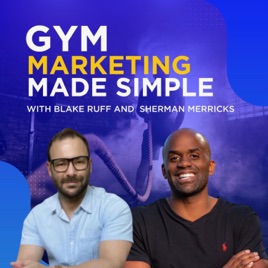
Advertise on podcast: Gym Marketing Made Simple
Rating
4from
This podcast has
115 episodes
Language
EnglishPublisher
Sherman MerricksExplicit
No
Date created
2023/11/27
Latest episode
2026/02/04
Average duration
20 min.
Release period
6 days
Description
Unlock success in gym marketing with practical insights and strategies to make you more money! Simplify your approach to attract clients and grow your business.
Unlock Gym Marketing Made Simple podcast Email contact info,
Listeners & Audience details
Email contact information
Direct podcast contact details

Listeners
Audience numbers & engagement insights

Audience details
Podcast Insights

Podcast episodes
Check latest episodes from Gym Marketing Made Simple podcast
Why Personalized Follow-Ups Convert More Gym Leads Wednesday | Episode 113.
2026/02/04
Most gyms don’t lose leads because of price.
They lose them because they sound like everyone else.
When every option feels the same, attention becomes the real battle.
Welcome to Gym Marketing Made Simple, a podcast built to remove confusion from gym growth. Each episode focuses on clear marketing, sales, and leadership systems for boutique gyms seeking steady momentum without relying on guesswork or constant hustle.
Episode Highlights
In this episode, the focus is on helping boutique gyms increase lead response rates in competitive markets by creating a clear competitive advantage through personalized engagement. Prospects often compare multiple gyms at once, which lowers response rates and stretches decision timelines. Automated messaging has made follow-ups easy to ignore, making human communication more effective when done well. Personalized voice and video messages, supported by educational content, help build trust before direct outreach. Engagement tracking enables prioritizing follow-ups based on real interaction, leading to stronger conversations and higher conversion rates.
Episode Chapters
00:00 Intro
00:05 Understanding Competitive Advantage in the Fitness Market
02:53 The Role of Automation in Consumer Decision-Making
03:08 Strategies for Building Human Connection
08:50 Leveraging Multiple Communication Channels
09:04 Implementing Effective Lead Nurture Processes
Episode Outline
Why similar gym offers lead to comparison shopping
How automation has trained consumers to ignore messages
The difference between noise and meaningful follow-up
Using voice and video messages to humanize outreach
Building trust before asking for a call
Tracking engagement scores to prioritize follow-ups
Accepting longer sales cycles in competitive markets
Action Taken
Schedule a strategy call using the Lasso Marketing intake process
Audit and align all lead messaging across text, email, calls, and DMs
Implement engagement score tracking in GoHighLevel
Create branded educational content tied to top client pain points
Conclusion
Standing out is no longer about sending more messages. It’s about sending the right ones, in a way that feels real. When communication feels human and follow-ups are guided by engagement, conversations happen more naturally—and conversions follow.
CTA
Listen to the full episode and follow the show for more gym marketing clarity.
👉 Book a free strategy call: https://www.lassoframework.com/
Thanks for listening. Hope this helped clarify how personalized engagement can improve lead response and conversions.
Lead Readiness vs Lead Quality: Why Most Gym Leads Don’t Convert | Episode 112.
2026/02/02
Most leads aren’t bad leads. They’re just not ready.
The real issue sits in the gap between awareness and commitment, and most gyms underestimate how wide that gap actually is.
Welcome to Gym Marketing Made Simple, a podcast built to remove confusion from gym growth. Each episode focuses on clear marketing, sales, and leadership systems for boutique gyms seeking steady momentum without relying on guesswork or constant hustle.
Episode Highlights
In this episode, Tommy from Lasso Framework explains the importance of lead quality and readiness in the marketing funnel for boutique fitness gyms. The know, like, and trust gap is key in determining whether leads are ready to buy. Facebook ads are effective for building awareness, but often attract leads that are not immediately prepared to commit. With a typical lead-to-close conversion rate around 10%, most non-converting leads are simply not ready, rather than unqualified. Accurate ad representation and strong lead nurture systems, including personalized follow-ups, are essential to build trust and increase readiness.
Episode Outline
What lead quality and lead readiness actually mean inside a gym marketing funnel.
How the know, like, and trust gap affects conversion rates.
Why Facebook and Meta ads create awareness, not instant buyers.
The reality behind the common 10% lead-to-close rate.
How inaccurate ad messaging creates friction and mismatched expectations.
The ethical side of selling high-ticket services.
Why organic content and follow-up systems matter more than more leads.
How consistent nurture builds familiarity and reduces hesitation.
Episode Chapters
00:00 Intro
01:45 Lead Quality vs. Lead Readiness
03:30 Paid Ads & the Awareness Stage
04:55 Lead-to-Close Benchmarks & What 10% Really Means
06:40 When Lead Quality Is a Problem
08:05 Pricing, Socio-Economic Fit, and Ethics in Selling
09:25 Systems That Close the Know–Like–Trust Gap
10:24 From Marketing Problem to Sales System Problem
11:10 Lead Nurture & the Dating Analogy
Action Taken
Post consistently on organic social channels to build familiarity and trust
Clarify website messaging with clear positioning, offers, and next steps
Publish testimonials and real member photos to reduce hesitation
Audit ad creative to ensure accurate representation of the gym
Strengthen lead nurture systems with multi-touch follow-ups
Conclusion
Lead volume is rarely the problem. Most gyms are speaking to people too early in the relationship. When trust, clarity, and consistency are built into the system, readiness improves, and conversions follow naturally.
CTA
Listen to the full episode and follow the show for more gym marketing clarity.
👉 Book a free strategy call: https://www.lassoframework.com/
Thanks for listening and spending time with the show.
Hope this episode gave clarity around why leads stall, and what actually moves them forward.
How Data Analytics Boosts Gym Marketing Performance | Episode 111.
2026/01/26
Everyone wants custom marketing until the numbers stop making sense. When preference beats performance, something always gives.
The real question isn’t creativity vs. control, it’s predictability vs. ego.
Welcome to Gym Marketing Made Simple, the podcast built to cut through the noise around gym growth. Each conversation breaks marketing, sales, and leadership into practical systems boutique gyms can apply without relying on luck, burnout, or outdated playbooks.
Episode Highlights
Predictable results don’t come from personal preference; they come from proof. This breakdown focuses on why tested systems outperform custom ideas, how data removes guesswork from marketing decisions, and where flexibility actually belongs. It also clarifies what strong partnerships look like when both sides care more about outcomes than opinions.
Episode Outline
Why generating a specific ROI matters more than creative preferences.
What gym owners actually want from a long-term marketing partner.
A real-world case study of a gym owner who outgrew short-term agencies.
How high-volume testing creates faster, clearer marketing insights.
The trade-offs between custom creative and proven marketing systems.
Why predictable outcomes require data-backed offers, copy, and assets.
How agencies balance flexibility without sacrificing performance.
The role of accountability in data-driven marketing decisions.
Episode Chapters
00:00 Intro
00:07 Strategic Marketing Partnership for Gym Owners
02:41 The Role of Lasso as a Marketing Agency
03:21 Challenges with Personalization and Customization
07:29 The Importance of Data-Driven Decisions
12:23 The Role of Lasso in Guiding Clients
Action Taken
Clearly communicate ROI expectations and the risks of testing unproven creative.
Confirm whether clients are willing to accept lower performance for preference-based decisions.
Implement offers, copy, and ad assets backed by large-scale testing.
Match marketing strategies to each gym’s business model.
Allow creative testing only when ad budgets support experimentation.
Keep proven campaigns running to protect performance while testing.
Conclusion
The real takeaway here is simple: marketing works best when decisions are earned, not assumed. Creativity still matters, but only when it’s supported by evidence. When gyms and agencies align on expectations, trust the data, and stay disciplined with what’s proven, clarity replaces confusion, and results become easier to repeat.
CTA
If this conversation resonated, follow Gym Marketing Made Simple and share the episode with a gym owner who’s questioning whether their marketing is actually working.
Supporting Information
👉 Book a free strategy call: https://www.lassoframework.com/
Thanks for listening and for staying curious about what truly drives sustainable gym growth. Every episode exists to help gym owners make clearer decisions with more confidence, and that only works because of listeners like you.
Outdated Gym Mentorship Is the Biggest Growth Mistake for Boutique Gyms | Episode 110.
2026/01/19
There’s a reason growth feels harder now than it did a few years ago. The market changed, but a lot of the advice didn’t.
Some guidance that once helped gyms survive is now quietly limiting how far they can go.
Welcome to Gym Marketing Made Simple — the podcast designed to cut through the noise around gym growth. Each conversation breaks marketing, sales, and leadership down into practical systems boutique gyms can actually apply, without relying on luck, burnout, or outdated playbooks.
Episode Highlights
In today’s episode, the conversation takes a hard look at why so many boutique gyms struggle to scale and how outdated mentorship advice plays a major role. The discussion challenges the long-standing belief that paid ads are unnecessary or risky, especially when the most successful fitness brands invest heavily in marketing. This episode reframes marketing as a requirement for modern gym growth, not an optional add-on.
Episode Outline
Why many mentorship companies discourage paid ads—and where that advice falls apart.
How major franchises like Orange Theory and F45 actually approach marketing spend.
The danger of staying loyal to advice that no longer matches the market.
When “fundamentals first” becomes a ceiling instead of a foundation.
Why bring-a-friend promos can’t replace consistent marketing systems.
How professionalism and perception influence buying decisions.
The importance of predictable marketing instead of reactive tactics.
Recognizing when it’s time to find more advanced guidance.
Episode Chapters
00:00 Intro
00:05 Marketing Strategies for Boutique Fitness Gyms
04:06 Challenges with Mentorship Companies' Advice
07:23 The Importance of Paid Ads and Marketing Investments
07:38 Strategic Planning for Gym Owners
23:31 The Role of Marketing in Gym Growth
23:44 The Impact of Marketing on Gym Success
Action Taken
Re-evaluate current marketing advice and where it’s coming from.
Look at what successful gyms are doing, not just what’s being recommended.
Clarify long-term goals: exit, expansion, or sustainability.
Start treating marketing as an investment, not an expense.
Track numbers and make decisions based on data, not opinion
Conclusion
What holds many gym owners back isn’t a lack of effort or commitment—it’s staying tied to advice that no longer matches the reality of today’s market. As competition increases and consumer expectations shift, the margin for outdated thinking gets smaller. This episode challenges gym owners to step back, question long-held assumptions, and make decisions based on where the industry is now, not where it used to be.
CTA
If this conversation hit close to home, take time to reassess the marketing systems currently in place and compare them to what thriving gyms are actually doing today.
Supporting Information
👉 Book a free strategy call: https://www.lassoframework.com/
Thanks for spending time with us and being part of the Gym Marketing Made Simple community. The fact that you’re listening means growth matters and that mindset is where real momentum starts.
Why Most Gyms Struggle to Grow With Low Lead Volume | Episode 109.
2026/01/12
Most gyms don’t fail because the owner isn’t working hard.
They stall because the math doesn’t work and no one ever explains why.
Welcome to Gym Marketing Made Simple, a podcast built to remove confusion from gym growth. Each episode breaks down marketing, sales, and leadership into clear, repeatable systems that help boutique gyms build steady momentum without relying on guesswork or constant hustle.
Episode Highlights
This conversation centers on the real numbers behind gym growth and why so many gyms plateau without realizing it. The focus stays on gym averages, churn, lead flow, and conversion rates, and how misunderstanding these metrics creates unrealistic expectations. Instead of relying on assumptions or feelings, the discussion brings everything back to data. Listeners walk away with a clearer picture of what sustainable growth actually requires and why paid marketing, when used correctly, plays a critical role in breaking growth ceilings.
Episode Outline
Why do many gym owners mistrust paid marketing after bad past experiences?
The difference between average, mean, and median gym signups—and why it matters.
Why four new members per month is common, but rarely enough to grow.
How a 5% monthly churn quietly limits progress.
The role of lead volume in creating predictable growth.
Realistic conversion benchmarks for No Sweat Intros and free trials.
Why organic-only strategies often cap growth.
The hidden challenges inside free trial and volume-based models.
How unclear messaging hurts lead quality and conversions.
Why data beats gut feelings when making marketing decisions.
How paid advertising fits into a long-term growth system.
Episode Chapters
00:00 Intro
00:05 Gym Marketing Challenges and Misconceptions
02:26 Understanding Gym Averages and Metrics
06:15 Lead Generation and Conversion Rates
08:43 Challenges of Free Trials and Volume-Based Models
09:39 The Role of Paid Advertising in Gym Growth
17:40 Effective Messaging and Client Engagement
18:23 Overcoming Common Marketing Misconceptions
18:41 The Importance of Data-Driven Decisions
18:56 The Role of Paid Marketing in Long-Term Growth
Action Taken
Review current monthly signups and churn rate
Compare actual lead volume against realistic growth targets
Audit conversion rates for intros, trials, and consultations
Evaluate whether current marketing efforts are volume-limited
Shift decision-making from emotion-based to data-driven
Conclusion
Growth becomes predictable when the numbers are understood. When signups, churn, lead volume, and conversions are clear, decisions stop being emotional and start being strategic. The difference between feeling stuck and moving forward often comes down to knowing the math, respecting the data, and building around reality, not assumptions.
CTA
If clarity is missing around the numbers or the marketing system itself, book a free call to walk through the data and identify what needs to change.
Supporting Information
👉 Book a free strategy call: https://www.lassoframework.com/
Thank you for listening and for being part of the Gym Marketing Made Simple community. The commitment to learning and improving is what creates long-term momentum, and it doesn’t go unnoticed.
How Gym Businesses Grow and Where Most Owners Stall | Episode 108;
2026/01/05
Most gyms don’t fail due to a lack of effort.
They stall because growth demands a different version of the owner, and most people don’t realize when it’s time to shift.
If the same problems keep resurfacing, no matter how hard the work gets, this episode provides insight into why.
Welcome to Gym Marketing Made Simple. A podcast focused on removing confusion from gym growth. Each episode breaks marketing, sales, and leadership into clear systems that help boutique gyms build steady momentum without relying on guesswork or constant hustle.
Episode Highlights
This episode walks through the real phases boutique gyms move through as revenue grows, and why many owners struggle to move past the early stage. The conversation centers on hiring, mindset shifts, and the leadership changes required as gyms scale from founder-led operations into sustainable teams. It also breaks down why paid marketing fails for many gym not because of ads, but because the foundation underneath isn’t ready yet.
Episode Outline
Why most gym owners get stuck in the foundation stage
The Startup Grind (0–15k) phase and why the owner does everything
Hiring the first coach to improve retention and free up time
The Tinker (15–30k) phase and the shift toward leadership and marketing
Why marketing becomes harder—not easier—after early growth
The Leadership Development (30–60k) phase and the need for stronger systems
Revenue benchmarks for the top 20% and top 10% of gyms
Common mistakes gym owners make when hiring and delegating sales
Why mindset, rejection tolerance, and staff training matter more than tactics
When paid marketing actually makes sense and when it doesn’t
The importance of honesty and client fit in growth partnerships
Episode Chapters
00:00 Intro
00:05 Challenges in Gym Ownership and Marketing
02:28 Phases of Gym Business Growth
06:34 Top 20% Gym Revenue and Challenges
10:05 Mindset and Business Growth
17:14 Transparency and Honesty in Business Relationships
Action Taken
Document the four gym growth stages and identify the main leverage point at each level
Use the stages as a qualification framework during prospect conversations
Maintain a clear client-fit checklist that includes reasons to say no
Direct qualified gym owners to book a free call through the Lasso Framework website
Ensure messaging clearly communicates who support is—and isn’t—for
Conclusion
Growth isn’t about doing more.
It’s about doing different things at the right time.
This episode reinforces a simple truth: the skills that get a gym to the first milestone won’t carry it to the next. Owners who recognize that early and adjust create space for real momentum instead of constant pressure.
CTA
Take a moment to reflect on which growth stage the gym is in right now—and whether the current problems match that phase. Clarity on this alone changes what needs attention next.
Supporting Information
👉 Book a free strategy call: https://www.lassoframework.com/
Thanks for listening to Gym Marketing Made Simple.
Every episode is created to bring clarity to a space that often feels overwhelming. The time spent here matters, and it doesn’t go unnoticed.
Paid Ads vs Organic Reach: What Gyms Must Do to Grow in 2026 | Episode 107.
2025/12/29
Organic reach isn’t dying — but relying on it alone might quietly cap growth.
As franchises double down on paid ads and polished systems, boutique gyms face a harsh reality: visibility now comes at a price.
Welcome to Gym Marketing Made Simple — a podcast designed to cut through the noise and focus on what actually builds steady momentum for boutique gyms. Each episode breaks marketing and sales systems into clear, repeatable steps, so growth feels intentional instead of reactive.
Episode Highlights
In today’s episode, the focus is on the widening gap between franchises and boutique gyms, why paid marketing is no longer optional, and how consistent growth in 2026 depends on understanding real numbers like lead conversion, lifetime value, and churn instead of relying on organic reach alone.
Episode Outline
Why organic reach continues to decline on platforms like Instagram and Facebook.
How franchises dominate attention by spending $7,000+ per month on ads.
The reality of churn rates and why organic growth alone hits a ceiling.
Paid marketing vs. organic marketing: trust-building versus visibility.
The “halo effect” and how consistent ads increase perceived credibility.
Why outdated advice from mentors can quietly stall gym growth.
The importance of systems, processes, and fast lead follow-up.
Understanding unit economics: lead-to-close rate, cost per lead, lifetime value.
Building a predictable growth engine instead of relying on short-term wins.
Real-world examples of gyms growing through long-term paid strategies.
December-only offer for gyms already generating $15k+ monthly revenue.
Episode Chapters
00:00 Intro
00:05 Marketing in 2026: The Role of Organic and Paid Strategies
02:18 The Halo Effect and Trust in Advertising
08:13 The Impact of Increased Competition and Churn Rates
15:49 The Importance of Metrics and Long-Term Marketing
22:04 Real-World Examples and Practical Advice
26:11 Special Offer and Final Thoughts
Action Taken
Publish December special details on the website with clear sign-up instructions.
Add a direct call-to-action to book a free assessment.
Prepare onboarding timelines with a 7–14 day setup window.
Set capacity limits and communicate the client cap clearly.
Create a reporting template to track lead-to-close rate, cost per lead, cost per acquisition, lifetime value, and churn.
Launch the December promotion offering $500 off for qualified gyms.
Close enrollment at year-end or once spots are filled.
Conclusion
Growth in 2026 won’t come from hoping posts reach the right people. It will come from clear systems, consistent visibility, and knowing the numbers behind every decision.
CTA
If the gym is already generating at least $15,000 per month and wants to create predictable growth going into 2026, book a free assessment and check if the December offer is still available.
Supporting Information
👉 Book a free strategy call: https://www.lassoframework.com/
Thanks for tuning in to Gym Marketing Made Simple. Every listen, share, and conversation helps push this industry toward smarter, more sustainable growth. Appreciate being part of it.
What Successful Gyms Do Differently During the Holiday Season | Episode 106.
2025/12/24
Most gyms slow down during the holidays. Phones go quiet. Leads go cold. But what if this season isn’t a setback at all? What if it’s where consistency is actually built?
Welcome to Gym Marketing Made Simple, the podcast that strips away the noise and focuses on what truly creates steady momentum for boutique gyms. Each episode breaks marketing and sales systems down into clear, repeatable steps, so growth feels structured, not reactive.
Episode Highlights
In this episode, Sherman Merricks shares how gyms can stay visible, relevant, and supportive during the holiday season, without feeling pushy. The conversation centers on maintaining real connections with leads and members, using intentional follow-ups, and relying on simple CRM systems to keep nothing from falling through the cracks. Rather than pulling back during the holidays, this episode shows how thoughtful outreach can strengthen trust and position the gym as a steady presence when routines are disrupted.
Episode Outline
Why the holiday season is a missed opportunity for many boutique gyms
How to respond when prospects say they’ll be unavailable for weeks
Using CRM systems to track lead timelines, notes, and next steps
Creating holiday-themed follow-ups that feel personal, not automated
The role of free resources in keeping prospects engaged without pressure
Inviting prospects into the gym through events and community touchpoints
Sharing real testimonials and practical holiday tips to build credibility
Measuring which outreach methods actually get replies and conversations
Episode Chapters
00:00 Intro
00:05 Holiday Marketing Strategies for Boutique Fitness Gyms
02:21 Maintaining Engagement During the Holidays
06:08 Creative Follow-Up Tactics
10:23 Leveraging Testimonials and Tips
Action Taken
Set manual follow-up tasks in the CRM for leads who are unavailable during the holidays, including return dates and context notes
Schedule a specific follow-up call or intro session immediately when a prospect provides a return date
Send themed holiday video follow-ups, such as short personalized videos, to keep communication human and memorable
Create a free holiday guide (e.g., a 30-day plan or strategies to stay consistent through the holidays) as a downloadable resource
Invite prospects and members to holiday events to reinforce the gym as a welcoming community
Review all leads from the past six weeks and run focused phone and text follow-ups
Track which outreach formats generate the strongest responses and share winning scripts with the team
Collect and publish real member testimonials along with simple holiday-specific tips
Conclusion
The holidays don’t require a different strategy, they require better follow-through. This episode reinforces that consistency, clarity, and personal connection matter even more when schedules are unpredictable. When gyms stay present instead of pulling back, they earn trust that lasts well beyond the season.
CTA
If this episode helped reframe how the holidays can work for a gym, subscribe to Gym Marketing Made Simple and share this episode with a gym owner who usually slows down this time of year.
Supporting Information
👉 Book a free strategy call: https://www.lassoframework.com/
Thanks for listening and for continuing to show up for the work that keeps gyms growing with intention.
Your Gym Doesn’t Need Better Leads — It Needs Better Follow-Up | Episode 105.
2025/12/22
Most gym leads don’t ghost. They just weren’t followed up with long enough — or like a real human. If sales have felt harder lately, it’s not because people stopped buying. It’s because the game quietly changed… and most gyms didn’t notice.
Welcome to Gym Marketing Made Simple — the show that cuts through the noise and explains what actually drives steady growth for boutique gyms. Each episode breaks down marketing and sales systems in a way that’s practical, realistic, and repeatable, so growth feels intentional instead of unpredictable.
Episode Highlights
In this episode, the conversation centers on one uncomfortable truth: leads need more attention than they used to and automation alone isn’t enough anymore. Matt G breaks down why gym owners now need 10–20 touchpoints to convert a single lead, how personal outreach consistently outperforms automated sequences, and why most sales systems fail simply because they stop too early. The discussion goes deep into phone calls, text follow-ups, voicemail strategy, and how relationship-based communication leads to more booked consultations and stronger trust from the very first interaction.
Episode Outline
Why the average lead now requires 10–20 touchpoints instead of 6–10
How alternating phone calls and texts over a 36-day window keeps leads warm
Why being first to respond matters more than saying the “perfect” thing
How 80–90% of consultations are booked through manual, personal outreach
The role of emotional timing in buying decisions
Why follow-up should feel relational, not transactional
How detailed CRM notes prevent repetitive messaging and lost opportunities
What to do when a lead joins a competitor — and why that’s not the end
The long-term value of persistence, especially during slower months
Episode Chapters
00:00 Intro
00:05 Scheduling and Lead Follow-Up
02:18 The Importance of Human Connection in Sales
06:01 Effective Voicemail and Text Messages
15:57 Building Relationships and Overcoming Objections
17:20 The Role of Emotional Responses in Sales
17:49 The Impact of Personal Outreach on Sales
18:01 The Importance of Follow-Up in Sales
18:27 The Role of CRM Systems in Sales
19:16 The Impact of Personalized Communication on Sales
19:29 The Importance of Emotional Responses in Sales
Action Taken
Make at least 10 manual contacts with every new lead over the first 36 days, alternating calls and texts, and track each interaction as a CRM task
Choose one system for organizing leads (CRM pipeline or manual task tracking) and apply it consistently for all new prospects
Leave a human-sounding voicemail that simply says you’re getting back to them — avoid sales language
Send follow-up texts that ask “Where do we go from here?” followed by an either/or scheduling option
Log all responses, context, and personal details inside CRM notes
Set manual follow-up tasks based on real-life details (vacations, timing, availability)
When a prospect joins another gym, schedule a 60–90 day check-in asking about results and consistency
Reference personal notes in follow-ups to build familiarity and trust
Conclusion
Sales haven’t become harder, they’ve become more human.
This episode is a reminder that consistency, patience, and genuine connection still win, especially in an industry built on relationships. When follow-up feels personal instead of automated, leads stop feeling like numbers and start turning into conversations that actually convert.
CTA
If this episode resonated, take one idea and apply it immediately — whether that’s updating voicemail scripts, tightening CRM notes, or committing to longer follow-up windows with new leads.
Supporting Information
👉 Book a free strategy call: https://www.lassoframework.com/
Thanks for listening to Gym Marketing Made Simple. Every episode is created to help gym owners simplify growth, stay consistent, and build systems that actually work in the real world. Appreciate you being part of the conversation.
The Halo Effect: How Paid Ads Grow Your Gym Beyond Direct Leads | Episode 104.
2025/12/15
Gyms aren’t failing because ads “don’t work.” They’re failing because they’re tracking the wrong things. You can have the perfect offer, the perfect ad, and still miss the real growth happening right in front of you.
Welcome to the Gym Marketing Made Simple Podcast — where clarity replaces confusion and growth stops being a guessing game. Each episode breaks down what actually helps boutique gyms grow in a real, predictable way.
Episode Highlights
In this episode, the focus is on the halo effect and how paid marketing drives growth in ways that aren’t always obvious. You’ll see why direct leads don’t tell the whole story, why signups can rise without a clear source, and how consistent, data-driven marketing creates steady momentum even during slow periods. It’s a clear look at which numbers actually matter when measuring real growth.
Episode Outline
Understanding how consumer behavior actually works in paid marketing.
Why most people don’t convert directly from an ad.
The halo effect: increased awareness, trust, and repeated exposure.
Why “How did you hear about us?” is unreliable data.
Real example showing a 100% increase in signups from paid ads.
How paid marketing boosts website visits, walk-ins, and old leads.
Why paid ads must run consistently, even in slow months.
Case studies of gyms that grew after implementing paid ads.
Why franchises outperform small gyms—and what to learn from them.
Why organic efforts alone can’t scale growth.
The most important metrics to track: signups, CPA, revenue, appointments.
The dangers of turning off ads and losing momentum.
Common misconceptions about paid marketing.
How paid ads influence brand perception and trust.
Why a real marketing plan is essential for long-term success and business valuation
Episode Chapters
00:00 Intro
00:05 Understanding the Halo Effect in Paid Marketing
04:21 Measuring the Halo Effect
06:26 The Role of Paid Marketing in Business Growth
10:46 Data-Driven Decision Making in Marketing
14:58 Metrics for Success in Paid Marketing
20:34 The Importance of Consistent Marketing Efforts
21:47 Addressing Common Misconceptions in Paid Marketing
22:02 The Impact of Paid Marketing on Business Perception
22:31 The Role of Paid Marketing in Long-Term Business Success
Action Taken
Review how your gym currently measures success and shift focus to actual signups and revenue.
Track numbers consistently without relying on “How did you hear about us?”
Allocate a monthly paid marketing budget of $2,500–$6,000 to test, optimize, and grow.
Strengthen branding and messaging across all platforms to compete with larger players.
Map out a long-term marketing plan instead of relying on short-term bursts.
Conclusion
Growth doesn’t come from one perfect ad or one high-converting offer. It comes from the steady lift created by consistent marketing that builds trust, awareness, and familiarity over time. Once you understand the halo effect and start tracking the numbers that matter, your gym’s growth becomes predictable, not accidental.
CTA
If this episode helped shift how you look at your marketing, share it with another gym owner who needs to hear it.
Supporting Information
👉 Book a free strategy call: https://www.lassoframework.com/
Thanks for spending a few minutes with us today. We appreciate you being part of this community and taking the steps to grow smarter.
Inside X4’s $60K Revenue Gym Model and the Strategy Behind Its Expansion | Episode 103.
2025/12/08
Some gyms talk about premium training. Others prove it in their numbers. When one location clears a $35,000 monthly profit and still raises the bar on hospitality, people start paying attention. And that’s exactly what’s happening with X4 as it heads into a new market: Salt Lake City.
Welcome to the Gym Marketing Made Simple Podcast — your go-to place for real strategies, real numbers, and real conversations that help gyms grow with clarity and consistency.
Episode Highlights
This episode breaks down X4’s expansion into Salt Lake City and the numbers that make their model stand out. Chris Wade shares why their Mountain Brook location consistently pulls in over $60,000 a month, how hospitality sets them apart, and why predictable marketing, not guesswork, is the key to scaling. It’s a clear look at what it takes to expand a premium fitness brand and what makes a strong franchise partner.
Episode Outline
Why Chris chose Salt Lake City and how personal interests played into the move.
The lifestyle shift, adventure focus, and the appeal of new territory.
Background on X4’s progress, momentum, and franchise development.
Mountain Brook unit economics: $25,000 monthly operating costs, $11,000 rent, $60,000+ monthly revenue, $35,000+ monthly profit.
What makes X4 competitive in high-end fitness markets.
Strength + sprint methodology and why consistency matters.
How hospitality separates X4 from competitors.
The importance of a predictable marketing playbook.
$30,000 pre-opening marketing budget and expected lead flow.
Cost per lead expectations and paid traffic performance.
Why brand awareness is mission-critical in new markets.
National expansion plans with a focus on the southeast.
The qualities Chris looks for in franchise partners.
X4’s long-term vision and why alignment matters.
Episode Chapters
00:00 Intro
00:05 Chris's Move to Salt Lake City and Personal Interests
03:38 Challenges and Excitement of Moving to Salt Lake City
06:48 Franchise Data and Revenue Insights
10:42 Unit Economics and Market Competition
18:37 Pre-Opening Marketing and Expansion Plans
24:31 Qualities of a Successful Franchisee
Action Taken
Reach out to Chris at [email protected] for franchise inquiries
Prepare for the new X4 website launch in early December.
Conclusion
Chris’ story makes something clear: growth isn’t just about finding a new market. It’s about proving the model, trusting the systems, and staying committed to the details that keep members coming back. When hospitality and consistency become non-negotiable, expansion becomes a lot more predictable.
CTA
If this episode sparked interest in franchising or brought clarity to your own growth strategy, connect with Chris and learn what becoming part of X4 could look like.
Supporting Information
👉 Book a free strategy call: https://www.lassoframework.com/
Thanks for tuning in and being part of this conversation. Your support means a lot, and we’re grateful to share these insights with you each week.
What Happens When a Gym Fixes Churn Before Running Ads? | Episode 102.
2025/12/03
Something isn’t adding up in most gyms because the real problem isn’t the lack of leads. It’s what happens after someone walks through the door. Revenue stalls. Growth flatlines. And owners think the answer is to “just run ads.”
But what if the biggest leak is coming from the inside?
Welcome to the Gym Marketing Made Simple Podcast, the place where real strategies replace guesswork. Blake Ruff and the team break down what actually moves the needle for boutique gyms trying to grow consistently and predictably.
Episode Highlights
This episode breaks down why so many gyms hit a revenue ceiling long before running paid marketing. Blake explains how churn, slow sales systems, and inconsistent follow-up stall growth—no matter how many leads come in. You’ll hear how dialing in these numbers can turn $18,000 months into $45,000 months and why paid marketing only works when the foundation is solid.
Episode Outline
Why most gyms get stuck at the “magic number” where churn cancels out client acquisition.
The realistic churn range boutique gyms should aim for.
Why a 70–80% close rate on organic leads signals strong systems.
What happens when gyms try paid marketing too early.
The difference between organic leads and paid leads—and why it matters.
Industry benchmarks vs. Lasso client averages (77 leads → 12–15 new members).
How optimizing onboarding and coaching shifts churn dramatically.
A simple framework to identify where the real gaps are in growth.
Examples of gyms scaling from $15k to $110k after fixing systems and then layering paid marketing.
Episode Chapters
00:00 Intro
00:38 Identifying the Stagnation Point
02:32 Understanding Churn and Sales Metrics
04:46 The Role of Organic and Paid Marketing
10:47 Addressing System and Process Improvements
11:22 The Impact of Paid Marketing on Revenue Growth
Action Taken
Analyze churn rate and identify monthly patterns
Review sales conversion rate to see where leads are dropping off
Audit the current sales process from first touchpoint to close
Strengthen onboarding and coaching to reduce early cancellations
Reach out to Lasso once churn and sales metrics are dialed in to explore paid marketing
Build a weekly process to track metrics and adjust quickly
Conclusion
Growth starts long before a paid ad runs. When churn drops, sales tighten up, and operations run smoothly, everything changes. Paid marketing becomes fuel—not a band-aid. This episode is a reminder that real scale comes from strong systems, clear expectations, and consistent follow-through.
CTA
If this episode helped clarify your next steps, take a moment to check your numbers and see where the biggest gap is right now. And if you’re ready to learn how the Lasso framework can help bring in more members each month, book a free call with the team.
Supporting Information
👉 Book a free strategy call: https://www.lassoframework.com/
Thanks for spending this time with us. Your commitment to building a stronger, healthier gym community means everything. We appreciate you tuning in and being part of this journey.
Inside X4: How a Hybrid Training Model Became a High-Revenue Gym Brand | Episode 101.
2025/12/01
Some brands take off because of luck. Others take off because the model is so dialed in that the market can’t ignore it. X4 is one of those models built, tested, and refined inside a competitive landscape where most gyms struggle to stand out.Welcome to Gym Marketing Made Simple, the show focused on helping boutique gyms grow with clear strategies that keep revenue moving in the right direction. Every episode breaks down what’s working so owners can make confident decisions without getting lost in complicated tactics.
Episode HighlightsThis episode takes a close look at how Chris Wade created X4, a training model that blends strength, conditioning, and high-intensity intervals into four stations that challenge members in new ways. Chris shares how the brand moved from a local experiment to a franchised concept with locations outperforming traditional gyms. The conversation covers performance, operations, branding, and the strategy behind taking X4 into new markets.
Episode Outline
Chris shares his background in football, CrossFit, and the early days of his first gym.The moment he realized there was space for a hybrid concept that wasn’t CrossFit and wasn’t Orange Theory.How X4’s four-station structure was developed and why it creates a more dynamic experience.The buildout process and what changed when he added 3,000 sq ft to test the model.What led CrossFit affiliates to adopt X4 and see higher revenue.Why the team shifted from an affiliate model to franchising.How the Homewood and Mountain Brook locations became top performers.The challenge of running CrossFit and X4 under the same roof—and the systems needed to keep experiences distinct.Why X4 leans heavily on programming science to keep workouts fresh.How features like front desk staff, cold towels, and premium amenities strengthen retention.Plans for Huntsville, Auburn, Chattanooga, Rome (GA), and other markets.How X4 evaluates a market before entering.The role of partners like Lasso and Push Press in brand direction.Rebranding X4 to reach broader demographics, including people preparing for hiking, skiing, and adventure travel.Action Taken
Develop a pre-opening playbook for new franchise locations.Coach franchise owners on customer experience and day-to-day operations.Open the X4 Hoover location.Launch X4 Mid City (Huntsville) in March 2026.Launch X4 Auburn in Fall 2026.Open X4 Chattanooga.Open X4 Rome, GA
Episode Chapters
00:00 Intro
05:16 Chris Wade's Background and X4's Origin
07:23 Expansion and Franchising of X4
09:40 Challenges and Successes of X4
12:14 Future Vision and Market Strategy
ConclusionChris’s story highlights what happens when a concept is built with intention and refined through real-world experience. X4 isn’t just expanding—it’s proving that thoughtful programming, strong operations, and a premium experience can reshape expectations inside the boutique training space. This conversation sets the stage for the second half, where even more of the model’s strategy comes to light.CTATo get support with marketing and sales systems for your gym, book a free call and see how Lasso helps fitness brands grow revenue with simpler, more effective strategies.
Supporting Information
Book a free strategy call:
👉 https://www.lassoframework.com/
Thanks for tuning in and supporting the show. Your attention keeps these conversations going, and it means a lot to have you here.
How Blue Messaging Became the Highest-Performing Outreach Method for Gyms | Episode 100.
2025/11/26
Funny how one small shift in your messaging can change the entire response rate, sometimes even more than the offer itself.
Welcome to Gym Marketing Made Simple, where the focus is on helping boutique gyms grow through clear, straightforward marketing that actually moves the numbers. Each episode breaks down what’s working right now so gym owners can stay competitive without juggling complicated tactics.
Episode Highlights
This episode breaks down why blue messaging is outperforming standard outreach and how gyms are seeing response rates jump to 70%. Blake walks through the order of tools that actually work, starting with blue messages, then AI agents, and lastly phone-based AI, while explaining why personalization still sets the tone for higher-quality conversations.
Episode Outline
Why blue messages outperform traditional outreach.
How gyms are achieving a 70% response rate.
When to use AI agents—and when they create more confusion.
Why AI phone calls fall short in the fitness space.
Recommended order of tools for best results.
Link Blue is an affordable messaging solution.
How personalization increases response quality.
Where gym owners tend to waste time and money on messaging.
Episode Chapters
00:00 Intro
00:35 Introduction of New Testing Tool
01:41 Impact of Blue Messages on Response Rates
02:05 Challenges and Limitations of AI Agents and AI Phone Calls
04:05 Endorsement of Link Blue and Final Recommendations
If this episode helped, follow the show and share it with someone who might benefit. And if questions come up, reach out to our team is always open to helping gym owners navigate clearer marketing.
Supporting Information
👉 Book a free strategy call: https://www.lassoframework.com/
Thanks for being here. Hope this conversation gives you a clearer path forward with messaging and lead follow-up. More useful breakdowns coming soon.
How Exclusive Gym Masterminds Drive Profit and Collaboration | Episode 99.
2025/11/24
Some gyms hit $30,000 a month and still feel stuck. What separates them from those who consistently grow?
Welcome to Gym Marketing Made Simple, the show that helps boutique gyms market smarter, attract the right members, and feel confident in growing their business without the overwhelm.
Episode Highlights
This episode explores the Pinnacle mastermind, a high-level group for gym owners generating $30,000 monthly or more. We break down the benefits of in-person meetups, collaborative problem-solving, and the “rocks” system that keeps teams accountable. Plus, we reveal how gyms that do $15,000 a month can start building a foundation for growth.
Episode Outline
The Pinnacle mastermind provides exclusive support for high-revenue gym owners ($30K–$100K/month).
In-person team meetups foster focus, collaboration, and big-picture problem-solving.
The “Five Brutal Facts” exercise helps teams identify and solve major business challenges.
Assigning “rocks” gives each team member ownership of critical goals, increasing motivation and accountability.
High-level mastermind conversations showcase advanced strategies that are practical and gym-specific.
Cultural fit and collaboration are key when inviting new members to high-level groups.
Gyms earning $15K/month and above can benefit from tailored marketing and sales strategies to grow sustainably.
Episode Chapters
00:00 Intro
00:05 Pinnacle Mastermind and Team Meetup
03:00 Josh's Expectations and Team Dynamics
07:39 Collaborative Problem-Solving and Team Rocks
14:08 Pinnacle Mastermind for High-Level Gym Owners
20:10 Inviting New Members to Pinnacle
23:46 Expanding Support to Gyms Doing $15,000 Per Month
Call to Action
If you’re running a gym and ready to grow smarter, tune in, and learn how the Pinnacle mastermind and Lasso strategies can help. Subscribe for weekly insights and updates for gym owners at every stage.
Supporting Information
👉 Book a free strategy call: https://www.lassoframework.com/
Thanks for listening! Stay tuned for more insights to help your gym grow with clarity and confidence.
Podcast reviews
Read Gym Marketing Made Simple podcast reviews
Vegacrene 2023/12/05
Actionable info!
Most marketing podcast give you generic advice. Gym Marketing Made Simple gives practical advice that you can take action on to increase your gym busi...
Bruff5 2023/12/04
Marketing and Sales
Marketing and Sales strategies that are simple and effective! Too many gurus over complicate these strategies! These guys get it as StoryBrand guides ...
Spydr723 2023/12/04
Love this podcast!
Blake and Sherman are the real deal if you want to get better at sales and marketing, or you are looking to grow your gym! I will def be sharing with ...
cristina merricks 2023/11/30
Love it!
This podcast really opens up the whole world of sales and marketing. I love hearing Sherman and Blake’s points of view. They’re super knowledgeable an...
Podcast sponsorship advertising
Start advertising on Gym Marketing Made Simple relevant audience podcasts
You may also like to advertise on these Podcasts

4.8800302
Fertility Friday | Fertility Awareness Mastery for Women's Health Professionals
Lisa Hendrickson-Jack, FAE, HRHP

510205
Some Laugh
Some Laugh Podcast

4.68293
Spektrum-Podcast
detektor.fm – Das Podcast-Radio

4.338463
پادکست راوکده
Ravkadeh Podcast
4.8189138
The Corner of Grey Street
The Corner of Grey Street - A Dave Matthews Band Podcast

4.7199132
I Thought I Knew How: A Podcast about Knitting and Life
Anne Frost

51167918
Somos Los Pichy Boys
Sonoro | Los Pichy Boys

4.72891340
Neurology® Podcast
American Academy of Neurology

4.54498
The Hand in the Window
ABC News

4.51326573
Money For the Rest of Us
J. David Stein