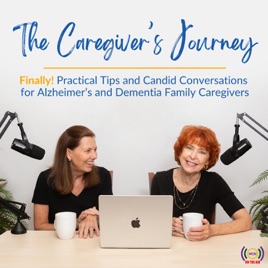
Advertise on podcast: The Caregiver's Journey
Rating
5from
This podcast has
74 episodes
Language
EnglishPublisher
Sue Ryan and Nancy TreasterExplicit
No
Date created
2024/07/11
Latest episode
2026/10/06
Average duration
25 min.
Release period
15 days
Description
The Caregiver’s Journey podcast is an innovative and refreshing way to learn how to tackle day-to-day Alzheimer's and dementia family caregiving challenges with strength, patience, and peace of mind. Using practical tips and candid conversations, Sue Ryan and Nancy Treaster help you navigate caregiving’s ups and downs, so you move from feeling frustrated, overwhelmed, and sometimes frightened - to confident, balanced, and supported.
Unlock The Caregiver's Journey podcast Email contact info,
Listeners & Audience details
Email contact information
Direct podcast contact details

Listeners
Audience numbers & engagement insights

Audience details
Podcast Insights

Podcast episodes
Check latest episodes from The Caregiver's Journey podcast
Getting the Most Out of Doctor’s Visits: Four Essential Tips / Alzheimer’s and Other Dementias
2026/10/06
Do you leave your loved one’s doctor’s appointments feeling intimidated or confused instead of empowered? Do you wish you had a clearer role in shaping their care? Many caregivers feel this way, and there is a better way to approach these visits.
We are Sue Ryan and Nancy Treaster. As caregivers for our loved ones with Alzheimer’s and other types of dementia, we know how much rides on every doctor’s visit and how easy it is to walk out feeling unheard. We’re sharing insights about how to rethink your role at medical appointments from Dr. Paul Nussbaum, a clinical neuropsychologist licensed in Florida and Pennsylvania and founder of the Brain Health Center. Dr. Nussbaum has spent decades caring for people living with dementia and their families. He has also been a family caregiver himself, so he understands both sides of the table.
Connect with us and share your tips:
Website: https://thecaregiversjourney.org/Donate: https://give.cornerstone.cc/thecaregiversjourneyInstagram: https://www.instagram.com/thecaregiversjourney/Facebook: https://www.facebook.com/thecaregiversjourneys/Linkedin: https://www.linkedin.com/in/suearmstrongryan/, https://www.linkedin.com/in/nancytreaster/Email: [email protected], [email protected]
Full Show Notes
https://thecaregiversjourney.org/72-getting-the-most-out-of-doctors-visits-four-essential-tips-alzheimers-and-other-dementias/
Additional Resources Mentioned
Paul D. Nussbaum, Ph.D, ABPP www.MDRyourbrainhealthmatters.org Support the nonprofit The Caregiver's Journey: https://give.cornerstone.cc/thecaregiversjourneyThe Caregiver’s Journey Navigating Dementia Caregiving Roadmap: https://roadmap.thecaregiversjourney.org/ Available as an interactive page on our website that walks you through the three stages of your dementia family caregiver journey. Includes the option to download the guide for free.
Takeaways
Tip 1: Check your state of mind
Tip 2: Get prepared
Tip 3: Communicate at the appointment
Tip 4: Follow-up
Read More in This Blog
https://thecaregiversjourney.org/72-getting-the-most-out-of-doctors-visits-four-essential-tips-alzheimers-and-other-dementias-2/
Navigating Dementia Caregiving Roadmap V4 Steps 7-10 / Alzheimer’s and Other Dementias
2026/09/22
Did your loved one recently receive a diagnosis of dementia? Have you already worked through the first six steps of the Navigating Dementia Caregiving Roadmap? If so, you’ve built a solid foundation, and it’s time to keep going.
We are Sue Ryan and Nancy Treaster. As caregivers for our loved ones with Alzheimer’s and other types of dementia, we created the Navigating Dementia Caregiving Roadmap to guide you through your caregiving journey. The roadmap has 20 steps, organized into three stages: in the beginning, the messy middle, and later on. (For more on all three stages, see Podcast and Blog 66.) You can find the full, interactive roadmap, along with a free downloadable digital guide, at thecaregiversjourney.org — just click the Caregiving Roadmap icon on the homepage. The roadmap also includes a self-assessment tool: five questions that will help you identify which stage of caregiving you’re in. Wherever you land, we recommend going back to look at the steps before that stage, so you don’t miss anything important.
In this episode, we’re covering steps seven through ten — still part of the “in the beginning” stage. If you haven’t worked through steps one through six yet, start there first (see Blog 68), since a lot of that early work is done side by side with your loved one.
Connect with us and share your tips:
Website: https://thecaregiversjourney.org/Donate: https://give.cornerstone.cc/thecaregiversjourneyInstagram: https://www.instagram.com/thecaregiversjourney/Facebook: https://www.facebook.com/thecaregiversjourneys/Linkedin: https://www.linkedin.com/in/suearmstrongryan/, https://www.linkedin.com/in/nancytreaster/Email: [email protected], [email protected]
Full Show Notes
https://thecaregiversjourney.org/71-navigating-dementia-caregiving-roadmap-v4-steps-7-10-alzheimers-and-other-dementias/
Additional Resources Mentioned
Support the nonprofit The Caregiver's Journey: https://give.cornerstone.cc/thecaregiversjourneyThe Caregiver’s Journey Navigating Dementia Caregiving Roadmap: https://roadmap.thecaregiversjourney.org/ Available as an interactive page on our website that walks you through the three stages of your dementia family caregiver journey. Includes the option to download the guide for free.
Takeaways
In this episode we covered steps 7-10 of the 20 step roadmap.
The last of the steps in the In The Beginning stage.
Step 7: Continue your education Step 8: Start planning for the next stage of careStep 9: Investigate your local government community supportStep 10: Evaluate driving risks
Read More in This Blog
https://thecaregiversjourney.org/71-navigating-dementia-caregiving-roadmap-v4-steps-7-10-alzheimers-and-other-dementias-2/
Choosing the Right Memory Care Community: Six Essential Tips / Alzheimer’s and Other Dementias
2026/09/08
“There’s no perfect option out there, and there’s no community that’s going to check every single box.” — Kelly Graffius
Are you facing the moment you hoped would never come, trying to choose the right memory care community for your loved one? If you are not sure where to start, you are not alone.
We are Sue Ryan and Nancy Treaster. As caregivers for our loved ones with Alzheimer’s and other types of dementia, we know how emotional and complicated this decision can feel. We’re sharing six practical tips from Kelly Graffius, certified senior advisor and president of OASIS Senior Advisors in Roswell, Georgia, who has guided countless families through this exact process.
If you are early in your dementia journey, you may start out evaluating independent or assisted living. No matter where you begin, this often leads to evaluating memory care as well, so this is our focus here.
Full Show Notes
https://thecaregiversjourney.org/70-choosing-the-right-memory-care-community-six-essential-tips-alzheimers-and-other-dementias/
Additional Resources Mentioned
Support the nonprofit The Caregiver's Journey: https://give.cornerstone.cc/thecaregiversjourneyhttps://www.oasissenioradvisors.com/locations/roswell-ga/community-guide/Kelly Graffius phone +1 678-753-8155.Checklist https://thecaregiversjourney.org/guides/#guidesThe Caregiver’s Journey Navigating Dementia Caregiving Roadmap: https://roadmap.thecaregiversjourney.org/ Available as an interactive page on our website that walks you through the three stages of your dementia family caregiver journey. Includes the option to download the guide for free.
Takeaways
Tip 1: Know your goals.
Tip 2: Decide on your preferred geographic location.
Tip 3: Decide on your all in budget.
Tip 4: Understand the care component.
Tip 5: Go on a tour.
Tip 6: Consider using an expert
Read More in This Blog
https://thecaregiversjourney.org/70-choosing-the-right-memory-care-community-six-essential-tips/
Five Changing Caregiving Roles / Alzheimer’s and Other Dementias
2026/08/25
"Two words have been the foundation of every decision I made across all of my caregiving roles — safe and happy. Before every choice, I would ask, does this help my loved one be safe? And does this support them being happy?" — Sue Ryan
There was a moment in a doctor's office when five neurologists agreed on one word: dementia. In that moment, Sue looked at her husband Jack, squeezed his hand, and said, "I love you. We're on this journey together." What she couldn't have known at that moment was how many roles she'd be asked to take on — and how, through every single one of them, their love wouldn't disappear. It would just change shape.
We are Sue Ryan and Nancy Treaster. As caregivers for our loved ones with Alzheimer's and other types of dementia, we understand how caregiving can feel all-consuming — so much so that love can get buried under the weight of daily responsibilities. In this post, we're drawing from Sue's chapter in the Caregivers Advocate Book, Volume Three: "When Caregiving Roles Change, Love Remains," to explore five distinct roles caregiving calls us into and how to show up in each one so love doesn't get lost.
Underneath all five roles, two practices held everything together for Sue: acceptance — honoring everything exactly the way it is, without having to like it or understand it — and presence, staying fully in the moment rather than wishing for the past or worrying about the future.
Let's explore the five roles and how to be intentional in each of them.
Connect with us and share your tips:
Website: https://thecaregiversjourney.org/Donate: https://give.cornerstone.cc/thecaregiversjourneyInstagram: https://www.instagram.com/thecaregiversjourney/Facebook: https://www.facebook.com/thecaregiversjourneys/Linkedin: https://www.linkedin.com/in/suearmstrongryan/, https://www.linkedin.com/in/nancytreaster/Email: [email protected], [email protected]
Full Show Notes
https://thecaregiversjourney.org/69-five-changing-caregiving-roles-alzheimers-and-other-dementias/
Additional Resources Mentioned
Support the nonprofit The Caregiver's Journey: https://give.cornerstone.cc/thecaregiversjourneyThe Caregiver’s Advocate Volume 3: https://amzn.to/4vS5Cy8The Caregiver’s Journey Navigating Dementia Caregiving Roadmap: https://roadmap.thecaregiversjourney.org/ Available as an interactive page on our website that walks you through the three stages of your dementia family caregiver journey. Includes the option to download the guide for free.
Takeaways
We discussed five roles:
Role 1: Protector — Recognizing it’s up to you to keep your loved one safeRole 2: Loved One — expressing your love intentionally, every timeRole 3: Primary Caregiver — meeting your care receiver in the moment, not where they used to be or where you wish they wereRole 4: Care Partner — supporting and expressing gratitude to the care team on your loved one's behalfRole 5: Friend — finding the friendship that's still possible
Read More in This Blog
https://thecaregiversjourney.org/69-five-roles-that-transform-caregiving-and-how-love-survives-each-one/
Navigating Dementia Caregiving Roadmap V4 Steps 1-6 / Alzheimer’s and Other Dementias
2026/08/11
Did your loved one recently receive a diagnosis of dementia? Are you at a loss for what to do next? Maybe you’re overwhelmed because you can’t find the information you need — or maybe it’s the opposite, and you’re drowning in so many conflicting resources that you don’t know where to start.
We are Sue Ryan and Nancy Treaster. As caregivers for our loved ones with Alzheimer’s and other types of dementia, we know how disorienting those first weeks after a diagnosis can be. That’s why we created the Navigating Dementia Caregiving Roadmap — 20 steps to guide you through your caregiving journey, organized into the three stages of dementia caregiving: in the beginning, the messy middle, and later on. (If you want to hear more about all three stages, check out Podcast and Blog 66.)
In this episode, we’re walking through the first six steps of the roadmap — the steps we recommend you take right after diagnosis, while you’re in the “in the beginning” stage. You can find the full, interactive roadmap, along with a free downloadable guide, at thecaregiversjourney.org.
Connect with us and share your tips:
Website: https://thecaregiversjourney.org/Donate: https://give.cornerstone.cc/thecaregiversjourneyInstagram: https://www.instagram.com/thecaregiversjourney/Facebook: https://www.facebook.com/thecaregiversjourneys/Linkedin: https://www.linkedin.com/in/suearmstrongryan/, https://www.linkedin.com/in/nancytreaster/Email: [email protected], [email protected]
Full Show Notes
https://thecaregiversjourney.org/68-dementia-caregiving-roadmap-v4-steps-1-6-alzheimers-and-other-dementias/
Additional Resources Mentioned
Support the nonprofit The Caregiver's Journey: https://give.cornerstone.cc/thecaregiversjourneyThe Caregiver’s Journey Navigating Dementia Caregiving Roadmap: https://roadmap.thecaregiversjourney.org/ Available as an interactive page on our website that walks you through the three stages of your dementia family caregiver journey. Includes the option to download the guide for free.
Takeaways
We discussed the first 6 steps:
Step 1: Reach out for guidance Step 2: Update legal documents, end of life planning and other long term care plansStep 3: Understand the financial situation Step 4: Find support groupsStep 5: Educate yourself on early caregiving journey topicsStep 6: Investigate the US Medicare GUIDE program
Read More in This Blog
https://thecaregiversjourney.org/68-the-first-six-steps-to-take-after-a-dementia-diagnosis/
Show Up, Stay Present, Keep Finding Ways to Connect: Four Essential Tips / Alzheimer’s and Other Dementias
2026/07/28
“When I look back on my caregiving experience, I found a purpose and a true sense of self that I didn’t know I had. Yes, there was a lot of drama and a lot of trauma, but I look back and think - this was a great experience and something I feel good about doing for the people I love.” - Nancy Treaster
There’s a moment in dementia caregiving where you realize your relationship has fundamentally changed. Your loved one may no longer recognize your name, your face, or the decades you’ve shared together. How do you keep loving someone through that? How do you stay present when the person in front of you is both familiar and a stranger?
We are Sue Ryan and Nancy Treaster. As caregivers for our loved ones with Alzheimer’s and other types of dementia, we’ve navigated these moments personally - and we’re sharing what we’ve learned about showing up, staying present, and working to keep finding ways to connect with your loved one as their memory fades. Nancy’s chapter, “Love Beyond Memory,” is featured in the Caregivers Advocate, Volume 3.
Let’s explore four tips for loving beyond memory - even when the person you love doesn’t remember who you are.
Connect with us and share your tips:
Website: https://thecaregiversjourney.org/Donate: https://give.cornerstone.cc/thecaregiversjourneyInstagram: https://www.instagram.com/thecaregiversjourney/Facebook: https://www.facebook.com/thecaregiversjourneys/Linkedin: https://www.linkedin.com/in/suearmstrongryan/, https://www.linkedin.com/in/nancytreaster/Email: [email protected], [email protected]
Full Show Notes
https://thecaregiversjourney.org/67-show-up-stay-present-keep-finding-ways-to-connect-four-tips-alzheimers-and-other-dementias/
Additional Resources Mentioned
Support the nonprofit The Caregiver's Journey: https://give.cornerstone.cc/thecaregiversjourneyThe Caregiver’s Advocate Volume 3: https://amzn.to/4vS5Cy8The Caregiver’s Journey Navigating Dementia Caregiving Roadmap: https://roadmap.thecaregiversjourney.org/ Available as an interactive page on our website that walks you through the three stages of your dementia family caregiver journey. Includes the option to download the guide for free.
Takeaways
We shared 4 tips:
Don't flip the switch Let go of who they were, and fall in love with who they are nowRedefine what connection meansGive yourself permission to get help — before you are drowning
Read More in This Blog
https://thecaregiversjourney.org/67-love-beyond-memory-four-tips-for-showing-up-staying-present-and-staying-connected/
What Stage of Dementia Caregiving Are You in? / Alzheimer’s and Other Dementias
2026/07/14
Have you ever felt overwhelmed searching for the right information at the right time, or found yourself drowning in conflicting resources that leave you more confused than when you started? You’re not alone. Dementia family caregiving is a long journey, and it looks very different depending on where you are in it.
We are Sue Ryan and Nancy Treaster. As caregivers for our loved ones with Alzheimer’s and other types of dementia, we built the Navigating Dementia Caregiving Roadmap to help you find the right resources at the right time. As with all our resources, it’s a free, 20-step roadmap available on our website thecaregiversjourney.org. The roadmap page also includes a self-assessment tool to help you identify which caregiving stage you’re in right now. Revisit this assessment tool throughout your caregiving journey to help you know the caregiving stage you’re currently in.
Let’s walk through the three distinct stages of dementia family caregiving so you know what to expect and where to focus your energy.
Connect with us and share your tips:
Website: https://thecaregiversjourney.org/Donate: https://give.cornerstone.cc/thecaregiversjourneyInstagram: https://www.instagram.com/thecaregiversjourney/Facebook: https://www.facebook.com/thecaregiversjourneys/Linkedin: https://www.linkedin.com/in/suearmstrongryan/, https://www.linkedin.com/in/nancytreaster/Email: [email protected], [email protected]
Full Show Notes
https://thecaregiversjourney.org/66-what-stage-of-dementia-caregiving-are-you-in-alzheimers-and-other-dementias/
Additional Resources Mentioned
Support the nonprofit The Caregiver's Journey: https://give.cornerstone.cc/thecaregiversjourneyThe Caregiver’s Journey Navigating Dementia Caregiving Roadmap: https://roadmap.thecaregiversjourney.org/ Available as an interactive page on our website that walks you through the three stages of your dementia family caregiver journey. Includes the option to download the guide for free.
Takeaways
The three stages of dementia family caregiving and the self-assessment tool on the caregiving roadmap page of our website, thecaregiversjourney.org.
The first stage is “In the Beginning.”The second stage is “The Messy Middle.”The third stage is “Later On.”
If our self-assessment tool shows you are further along in your journey, start there. Once you feel confident in where you are, we encourage you to go back and explore the earlier steps. You may find helpful tips that apply to where you are today, even if those steps were designed for an earlier part of the journey.
Read More in This Blog
https://thecaregiversjourney.org/66-what-stage-of-dementia-caregiving-are-you-in/
Help for Solo Caregivers: Four Resource Areas / Alzheimer’s and Other Dementias
2026/06/30
Do you feel completely alone in your caregiving journey? No family backup, friends have faded away, and you can’t afford professional help? You are not alone — and there is real help available, often at little or no cost.
We are Elizabeth Miller of Happy Healthy Caregiver and Sue Ryan and Nancy Treaster of The Caregiver's Journey. In this podcast we’ve joined forces with - together we’ve lived it, learned from it, and made it our mission to walk alongside family caregivers. We’re sharing four key resource areas that can provide real relief without breaking the bank.
Think about the analogy of a frog in water. If a frog jumps into boiling water, it immediately jumps out. But if the water starts lukewarm and slowly heats up, the frog doesn’t realize the danger until it’s too late. That’s how burnout works for caregivers — especially solo caregivers with fewer helping hands. The average caregiver is in this role for four and a half years. For dementia family caregivers, it can stretch to ten years or more. You can do it alone for a while, but not indefinitely. Here’s where to turn.
Full Show Notes
https://thecaregiversjourney.org/podcast/
Additional Resources Mentioned
Happy Healthy Caregiver website: https://happyhealthycaregiver.com/Area Agency on Aging Finder: https://eldercare.acl.gov/homeLifespan Respite Voucher Program: https://archrespite.org/ta-center-for-respite/respite-voucher-programs/apply-for-state-lifespan-respite-voucher-programs/Veterans Administration office locator: https://www.va.gov/find-locations/Elizabeth Dole Foundation Respite: https://hiddenheroes.org/resources-online-education/respite/Medicare Guide Program Eligible: https://www.cms.gov/priorities/innovation/guide/faqs#ben-cgsMedicare Guide Program locator: https://bit.ly/4n3uArvDementia Support Group finder: https://www.alz.org/event-search?category=Support+GroupsVirtual Support Group: daughterhood.orgAdult Day programs - ask your Area Agency on Aging to help find one: https://eldercare.acl.gov/homeNational Adult Day Services Finder: https://www.nadsa.org/locator/Dementia Adult Day Programs Finder - choose Community Service: https://www.communityresourcefinder.org/Dementia Friendly America's Memory Cafe Directory: https://dfamerica.org/memory-cafe-directory/The Caregiver’s Journey Podcast on Palliative Care: https://thecaregiversjourney.org/42-when-to-call-in-palliative-care-four-essential-tips-alzheimers-and-other-dementias/Seth Rogan and his wife Lauren HFC respite grants: https://wearehfc.org/care-grants/Home Instead grant application: https://www.homeinstead.com/home-care-services/alzheimers-dementia-care/HFCgrant/Memory Board - HHC10 saves 10% at checkout: https://memoryboard.com/?utm_source=happyhealthycaregiver&utm_medium=referral&utm_campaign=promo_pageCare Yah-Ya: https://www.careyaya.org/ Papa companion care: https://www.papa.comZinnia TV: https://www.zinniatv.com/Vivo Virtual Exercise: https://teamvivo.com/Singing at Home - Bridgetown: https://www.bridgetownmt.com/singingathome#section-1704859821310Dementia Minds support groups for people living with dementia: https://dementiaminds.org/ncdm-groups/Cognitive stimulation therapy: http://Newdays.AIDementia Care Service finder - choose are at home or housing options: https://www.communityresourcefinder.org/Alzheimer's Association emergency respite grants - call 800.272.3900: https://www.alz.org/help-support/caregiving/care-options/respite-careThe Caregiver’s Journey Podcast 26 Emergency Plan: https://thecaregiversjourney.org/are-you-ready-for-an-emergency-get-a-plan-four-essential-tips-alzheimers-other-dementias/The Caregiver’s Journey Podcast 33 Care Plan: https://thecaregiversjourney.org/33-how-to-create-a-care-plan-five-essential-tips-alzheimers-and-other-dementias/
Read More in This Blog
https://thecaregiversjourney.org/65-help-for-solo-caregivers-four-resource-areas/
Falling - Spot Risks, Stay Calm, Heal Afterwards: Five Tips / Alzheimer’s and Other Dementias
2026/06/16
“When families are prepared — physically, emotionally, logistically — they are able to handle these moments a lot differently. There’s less panic, less guilt, and a little bit more empowerment.” — Dr. Taylor Rush
One minute, everything’s fine. The next minute, your loved one is on the floor. If fall prevention isn’t on your radar yet — or if you’re waiting until after the first fall happens — you’re not alone. But there’s a lot you can do right now to be better prepared.
We are Sue Ryan and Nancy Treaster. As caregivers for our loved ones with Alzheimer’s and other types of dementia, we know firsthand how frightening falls can be — and how much the fear of a fall can affect both the person you’re caring for and yourself. We’re sharing five practical tips drawn from the expertise of Dr. Taylor Rush, clinical health psychologist and director of behavioral sciences and interdisciplinary programs at the Cleveland Clinic Center for Neurological Restoration. Taylor specializes in chronic neurological conditions including Parkinson’s and movement disorders, with a deep focus on supporting care partners through the challenges they face every day.
Let’s walk through five essential tips for preventing falls, handling them when they happen, and managing the emotional aftermath — for both you and your loved one.
Connect with us and share your tips:
Website: https://thecaregiversjourney.org/Donate: https://give.cornerstone.cc/thecaregiversjourneyInstagram: https://www.instagram.com/thecaregiversjourney/Facebook: https://www.facebook.com/thecaregiversjourneys/Linkedin: https://www.linkedin.com/in/suearmstrongryan/, https://www.linkedin.com/in/nancytreaster/Email: [email protected], [email protected]
Full Show Notes
https://thecaregiversjourney.org/64-falling-spot-risks-stay-calm-heal-afterwards-five-tips-alzheimers-and-other-dementias/
Additional Resources Mentioned
Support the nonprofit The Caregiver's Journey: https://give.cornerstone.cc/thecaregiversjourneyTaylor Rush: https://www.linkedin.com/in/taylor-rush-phd-488149352/Cleveland Clinic for Neurological Restoration: https://my.clevelandclinic.org/departments/neurological/depts/neurological-restorationThe Caregiver’s Journey Navigating Dementia Caregiving Roadmap: https://roadmap.thecaregiversjourney.org/ Available as an interactive page on our website that walks you through the three stages of your dementia family caregiver journey. Includes the option to download the guide for free.
Takeaways
We shared 5 tips:
Know your loved one's fall risk factorsReduce risk with practical prevention strategiesStart the conversation early — and have a planStay calm and assess — don't panic in the momentManage the emotional aftermath of a fall
Read More in This Blog
https://thecaregiversjourney.org/64-falling-spot-risks-stay-calm-heal-afterwards-five-essential-tips/
Meaningful Conversation: Five Essential Tips / Alzheimer’s and Other Dementias
2026/06/02
"Once caregivers get it, they're like, 'My gosh.' You just have to train yourself to walk around the brick wall to the moment, the now, and the imagination." — Anne Basting
Do you struggle to create meaningful connections with your loved one living with dementia? Almost all of us do. You're not alone — and there are concrete tools you can learn right now to change that.
We are Sue Ryan and Nancy Treaster. As caregivers for our loved ones with Alzheimer's and other types of dementia, we understand how isolating it can feel when conversations stall and connection seems just out of reach. We're sharing five tips for creating intentionally meaningful moments with your loved one, from Anne Basting, founder of the award-winning nonprofit TimeSlips, who has spent 30 years developing and researching creative storytelling approaches for people living with dementia.
Let's explore five essential tips for creating meaningful connections — from believing in your own creativity to turning shared moments into lasting gifts.
Connect with us and share your tips:
Website: https://thecaregiversjourney.org/Donate: https://give.cornerstone.cc/thecaregiversjourneyInstagram: https://www.instagram.com/thecaregiversjourney/Facebook: https://www.facebook.com/thecaregiversjourneys/Linkedin: https://www.linkedin.com/in/suearmstrongryan/, https://www.linkedin.com/in/nancytreaster/Email: [email protected], [email protected]
Full Show Notes
https://thecaregiversjourney.org/63-meaningful-conversation-five-essential-tips-alzheimers-and-other-dementias/
Additional Resources Mentioned
Support the nonprofit The Caregiver's Journey: https://give.cornerstone.cc/thecaregiversjourneyTimeSlips: https://www.timeslips.org/Dementia Friendly America: https://dfamerica.org/timeslips/The Caregiver’s Journey Navigating Dementia Caregiving Roadmap: https://roadmap.thecaregiversjourney.org/ Available as an interactive page on our website that walks you through the three stages of your dementia family caregiver journey. Includes the option to download the guide for free.
Takeaways
We shared 5 tips:
Believe in your own creativityForget memoryOpen with a beautiful questionUse beautiful listeningCreate gifts from the experience
Read More in This Blog
https://thecaregiversjourney.org/63-meaningful-conversation-five-essential-tips-alzheimers-and-other-dementias-2/
What Is a Virtual Dementia Tour?: Three Essential Tips / Alzheimer’s and Other Dementias
2026/05/19
“I don’t think any of us should be trying to assist a person with dementia without first walking in their shoes.” — PK Beville, Ph.D.
Have you ever wondered what it actually feels like to live with dementia? Do you find yourself struggling to understand why your loved one behaves the way they do, wishing you could see the world through their eyes- even for a moment? There’s a powerful tool that can help you do exactly this.
We are Sue Ryan and Nancy Treaster. As caregivers for our loved ones with Alzheimer’s and other types of dementia, we know how much empathy and understanding matter in day-to-day care. We’re sharing insights today from PK Beville, Ph.D., founder of the global nonprofit Second Wind Dreams® and inventor of the Virtual Dementia Tour, a simulation experience that has changed how nearly five million people worldwide understand and care for people living with dementia.
If you’re following along with the Navigating Dementia Caregiving Roadmap, this is part of Step Seven — educating yourself. You can find the full roadmap as an interactive page on our website at thecaregiversjourney.org. Steps one through six help you build your foundation right after a diagnosis. Steps seven through ten are about deepening your understanding, and the Virtual Dementia Tour is one of the essential resources we recommend in this phase.
Let’s explore three essential tips — from understanding what the Virtual Dementia Tour is, to applying what you learn at home, to finding one near you.
Connect with us and share your tips:
Website: https://thecaregiversjourney.org/Donate: https://give.cornerstone.cc/thecaregiversjourneyInstagram: https://www.instagram.com/thecaregiversjourney/Facebook: https://www.facebook.com/thecaregiversjourneys/Linkedin: https://www.linkedin.com/in/suearmstrongryan/, https://www.linkedin.com/in/nancytreaster/Email: [email protected], [email protected]
Full Show Notes
https://thecaregiversjourney.org/62-what-is-a-virtual-dementia-tour-three-essential-tips-alzheimers-and-other-dementias/
Additional Resources Mentioned
Support the nonprofit The Caregiver's Journey: https://give.cornerstone.cc/thecaregiversjourneySecond Wind Dreams: https://secondwind.org/The Caregiver’s Journey Navigating Dementia Caregiving Roadmap: https://roadmap.thecaregiversjourney.org/ Available as an interactive page on our website that walks you through the three stages of your dementia family caregiver journey. Includes the option to download the guide for free.
Takeaways
We shared 3 tips:
Learn what happens in a Virtual Dementia TourApply what you learn at homeFind a virtual dementia tour near you
Read More in This Blog
https://thecaregiversjourney.org/62-what-is-a-virtual-dementia-tour-three-essential-tips-alzheimers-and-other-dementias-2/
Turn Your Wishes Into Reality: Three Essential Tips / Alzheimer’s and Other Dementiastled Project
2026/05/05
WOOP is a very practical technique for anything from emotions to something on your to-do list — it can be used for many different kinds of wishes." — Donna Fedus
How many times have you been told that taking care of yourself is really important — and felt overwhelmed just thinking about it? You are not alone in this struggle, and there is a simple, evidence-based process that can help.
We are Sue Ryan and Nancy Treaster. As caregivers for our loved ones with Alzheimer's and other types of dementia, we understand how hard it can be to find time — and energy — for your own wellbeing. We are sharing insights from Donna Fedus, gerontologist and founder of Borrow My Glasses, about an evidence-based process called WOOP — yes, WOOP — and how it can help caregivers turn their wishes into reality.
Donna has been a gerontologist for 35 years and a dementia educator for nearly 20. She founded Borrow My Glasses in 2013 and has been instrumental in bringing WOOP to dementia family caregivers through a nationally funded study conducted with Yale University.
Let's explore three essential tips for putting WOOP to work in your caregiving life.
Connect with us and share your tips:
Website: https://thecaregiversjourney.org/Donate: https://give.cornerstone.cc/thecaregiversjourneyInstagram: https://www.instagram.com/thecaregiversjourney/Facebook: https://www.facebook.com/thecaregiversjourneys/Linkedin: https://www.linkedin.com/in/suearmstrongryan/, https://www.linkedin.com/in/nancytreaster/Email: [email protected], [email protected]
Full Show Notes
https://thecaregiversjourney.org/61-turn-your-wishes-into-reality-three-essential-tips-alzheimers-and-other-dementias-2/
Additional Resources Mentioned
Support the nonprofit The Caregiver's Journey: https://give.cornerstone.cc/thecaregiversjourneyDonna Fedus at BorrowMyGlasses https://borrowmyglasses.com/The Caregiver’s Journey Navigating Dementia Caregiving Roadmap: https://roadmap.thecaregiversjourney.org/ Available as an interactive page on our website that walks you through the three stages of your dementia family caregiver journey. Includes the option to download the guide for free.
Takeaways
We shared 3 tips:
Tip 1: WOOP it up
Tip 2: Hone in on your wish
Tip 3: Make it work!
Read More in This Blog
https://thecaregiversjourney.org/61-turn-your-wishes-into-reality-three-essential-tips-alzheimers-and-other-dementias/
Use Cognitive Simulation Therapy at Home: Three Essential Tips / Alzheimer’s and Other Dementias
2026/04/21
"While we can't reverse aging, regular mental activity — these exercises, regular cognitive engagement — helps keep cognitive skills stronger for longer. It's like exercising your body." — Dr. Daniel Fenton
What if you could make small changes and have more intentional conversations with your loved one that actively stimulate their brain? You're not doing one more thing — you're simply being more deliberate about conversations you're already having and sneaking in more benefits along the way.
We are Sue Ryan and Nancy Treaster. As caregivers for our loved ones with Alzheimer's and other types of dementia, we understand how meaningful it is to find ways to help our loved ones function at their best for longer. We're sharing insights about cognitive stimulation therapy (CST) from Dr. Daniel Fenton, head of neuropsychological services at New Days, a virtual clinic specializing in care for people with mild cognitive impairment and early-stage dementia.
Let's explore three essential tips for bringing cognitive stimulation therapy into your everyday conversations at home.
Connect with us and share your tips:
Website: https://thecaregiversjourney.org/Donate: https://give.cornerstone.cc/thecaregiversjourneyInstagram: https://www.instagram.com/thecaregiversjourney/Facebook: https://www.facebook.com/thecaregiversjourneys/Linkedin: https://www.linkedin.com/in/suearmstrongryan/, https://www.linkedin.com/in/nancytreaster/Email: [email protected], [email protected]
Full Show Notes
https://thecaregiversjourney.org/60-use-cognitive-simulation-therapy-at-home-three-essential-tips-alzheimers-and-other-dementias/
Additional Resources Mentioned
Support the nonprofit The Caregiver's Journey: https://give.cornerstone.cc/thecaregiversjourneyhttps://www.newdays.ai/The Caregiver’s Journey Navigating Dementia Caregiving Roadmap: https://roadmap.thecaregiversjourney.org/ Available as an interactive page on our website that walks you through the three stages of your dementia family caregiver journey. Includes the option to download the guide for free.
Takeaways
We shared 3 tips:
Tip 1: Create A Simple Structure
Tip 2: Leverage These Types Of Activities
Tip 3: Don’t Forget To Wrap Up And Reflect
Read More in This Blog
https://thecaregiversjourney.org/60-three-tips-for-using-cognitive-stimulation-therapy-at-home/
Protect Your Brain Health: Three Essential Tips / Alzheimer’s and Other Dementias
2026/04/07
As a family caregiver, you spend so much time worrying about your loved one's brain health. But what about your own? The good news is that there are real, evidence-backed steps you can take to improve your brain health and reduce your risk of cognitive decline — even in the midst of a demanding caregiving journey.
We are Sue Ryan and Nancy Treaster. As caregivers for our loved ones with Alzheimer's and other types of dementia, we know how easy it is to put yourself last. That's why we're sharing insights from Shelby Roberts, Senior Director of Public Health for the Alzheimer's Association, about protecting your brain health and reducing your risk of cognitive decline and dementia. We're sharing three tips.
Connect with us and share your tips:
Website: https://thecaregiversjourney.org/Donate: https://give.cornerstone.cc/thecaregiversjourneyInstagram: https://www.instagram.com/thecaregiversjourney/Facebook: https://www.facebook.com/thecaregiversjourneys/Linkedin: https://www.linkedin.com/in/suearmstrongryan/, https://www.linkedin.com/in/nancytreaster/Email: [email protected], [email protected]
Full Show Notes
https://thecaregiversjourney.org/59-protect-your-brain-health-three-essential-tips-alzheimers-and-other-dementias/
Additional Resources Mentioned
Support the nonprofit The Caregiver's Journey: https://give.cornerstone.cc/thecaregiversjourneyAlzheimer’s Association 24/7 Helpline: 800–272–3900. Masters-level counselors can help with crisis intervention, finding resources including support groups, and they offer interpretation in over 200 languages.Alzheimer’s Association Brian Health Habit Builder: https://www.alz.org/help-support/brain_health/brain-health-habit-builderAlzheimer's Association Brain Health Resources: https://www.alz.org/help-support/brain_healthThe Caregiver’s Journey Navigating Dementia Caregiving Roadmap: https://roadmap.thecaregiversjourney.org/ Available as an interactive page on our website that walks you through the three stages of your dementia family caregiver journey. Includes the option to download the guide for free.
Takeaways
We shared 3 tips:
Tip 1: Learn about the 10 health habits for your brain
Tip 2: Know yourself
Tip 3: Pick a place to start
Read More in This Blog
https://thecaregiversjourney.org/59-protecting-your-brain-health-three-essential-tips-for-dementia-caregivers/
What Is a Certified Senior Advisor: Three Essential Tips / Alzheimer’s and Other Dementias
2026/03/24
Have you ever heard of a certified senior advisor? Would you even know what you needed or how to find one? You're not alone if the answer is no — and there are clear steps you can take to get the right help at the right time.
We are Sue Ryan and Nancy Treaster. As caregivers for our loved ones with Alzheimer's and other types of dementia, we understand how overwhelming it can be to recognize when something has changed and know where to turn next. We're sharing insights from Cynthia Perthuis, principal owner of Senior Care Authority in Southwest Florida and a certified senior advisor, about finding, evaluating, and implementing solutions along the caregiving journey.
If you're following along with the Navigating Dementia Caregiving Roadmap, this aligns with Step Eight. You can find the roadmap as a downloadable digital guide on the guides page of our website, and we've also created it as an interactive page where you can click directly into each step.
Let's explore three essential tips for navigating this process — from recognizing when something is wrong, to finding the right help, to building a strategy that works for your whole family.
Connect with us and share your tips:
Website: https://thecaregiversjourney.org/Donate: https://give.cornerstone.cc/thecaregiversjourneyInstagram: https://www.instagram.com/thecaregiversjourney/Facebook: https://www.facebook.com/thecaregiversjourneys/Linkedin: https://www.linkedin.com/in/suearmstrongryan/, https://www.linkedin.com/in/nancytreaster/Email: [email protected], [email protected]
Full Show Notes
https://thecaregiversjourney.org/58-what-is-a-certified-senior-advisor-three-essential-tips-alzheimers-and-other-dementias/
Additional Resources Mentioned
Support the nonprofit The Caregiver's Journey: https://give.cornerstone.cc/thecaregiversjourneySociety of Senior Care Advisors: https://www.csa.us/Cynthia Perthuis: https://www.seniorcare-nyfl.com/eldercare-consultants-in-new-york-city-and-southwest-florida.html#aboutThe Caregiver’s Journey Navigating Dementia Caregiving Roadmap: https://roadmap.thecaregiversjourney.org/ Available as an interactive page on our website that walks you through the three stages of your dementia family caregiver journey. Includes the option to download the guide for free.
Takeaways
We shared 3 tips:
Tip 1: Evaluate your situation
Tip 2: Reach out for help
Tip 3: Create a strategy
Read More in This Blog
https://thecaregiversjourney.org/58-what-is-a-certified-senior-advisor-three-essential-tips-alzheimers-and-other-dementias-2/
Podcast reviews
Read The Caregiver's Journey podcast reviews
dftecas2000 2026/01/28
A life saver
I was absolutely blown away with the helpfulness of this podcast. I was shocked with my husband’s dementia diagnosis. The neurologist was not helpfu...
PalmettoGirl00 2024/12/21
Advice from living it!
I am forwarding this to all my friends with parents who are starting to lose their memory. This podcast is packed with practical tips delivered in a d...
Podcast sponsorship advertising
Start advertising on The Caregiver's Journey relevant audience podcasts
You may also like to advertise on these Podcasts

4.824761865
Deck The Hallmark
Bramble Jam Podcast Network

4.8104492000
Steve Deace Show
Blaze Podcast Network

4.75881745
Ruthless Podcast
Josh Holmes, Comfortably Smug, Michael Duncan and John Ashbrook

4.7368461279
Louder with Crowder
Louder with Crowder

4.723141951
Timeless Wisdom with Dennis Prager
Salem Podcast Network

4.662822000
The Dr. Laura Podcast
Dr. Laura Schlessinger & SiriusXM

4.815421000
The Todd Herman Show
Radio America

4.715161997
Thrivetime Show | Business School without the BS
Clay Clark

4.723612000
Everything Everywhere Daily
Gary Arndt

4.746761042
Tom Bilyeu's Impact Theory
Impact Theory