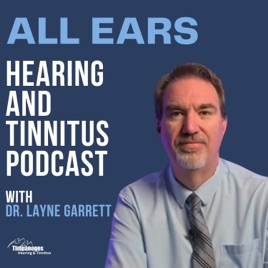
Advertise on podcast: All Ears Hearing and Tinnitus Podcast
Rating
5from
This podcast has
123 episodes
Language
EnglishPublisher
Layne GarrettExplicit
No
Date created
2025/05/01
Latest episode
2026/10/06
Average duration
10 min.
Release period
4 days
Description
Welcome to *All Ears*, the podcast where Dr. Layne Garrett — audiologist, tinnitus specialist, and founder of Timpanogos Hearing & Tinnitus — helps you take charge of your hearing health. Each episode dives into practical advice, cutting-edge treatments, and expert insights on hearing loss, tinnitus, hearing aids, and beyond. Whether you're struggling with that constant ringing, curious about the latest devices, or just want to hear life's moments more clearly, Dr. Garrett is here to guide you with compassion, science, and solutions. Tune in, turn up the volume, and discover how to reclaim the sounds that matter most.
Unlock All Ears Hearing and Tinnitus Podcast podcast Email contact info,
Listeners & Audience details
Email contact information
Direct podcast contact details

Listeners
Audience numbers & engagement insights

Audience details
Podcast Insights

Podcast episodes
Check latest episodes from All Ears Hearing and Tinnitus Podcast podcast
The Biggest Tinnitus Mistake I Still See Patients Make
2026/10/06
After two decades specializing in tinnitus, Dr. Layne Garrett shares the three lessons that changed how he evaluates every patient. A 2023 Mass Eye and Ear study found measurable auditory differences in people with completely normal hearing tests who still had chronic tinnitus — proof that a passed hearing screening doesn't mean nothing's driving the ringing. There's no single best tinnitus treatment: the national clinical guideline supports counseling, CBT, hearing aid evaluation when hearing loss is present, and sound therapy, while a 2025 single-clinic review found about nine in ten appropriately evaluated patients crossed the threshold for meaningful improvement with Lenire bimodal neuromodulation. Dr. Garrett, founder of Timpanogos Hearing & Tinnitus and holder of the CH-TM tinnitus-management credential, explains why the quality of the evaluation — not just which treatments exist — is what actually determines outcomes, and why only around a third of clinics verify hearing aid fittings with real-ear measurement.
Learning Center — https://utahhearingaids.com/learning-center
Costco Hearing Aids vs. an Audiologist: The Real Answer
2026/10/02
Costco's hearing centers run a legitimate audiometric battery and standardized Real Ear Measurement — but they're built for fitting hearing aids, not diagnosing why someone is struggling to hear. Dr. Layne Garrett, Au.D., founder of Timpanogos Hearing & Tinnitus, walks through what a full diagnostic evaluation adds that a fitting-oriented model doesn't: tympanometry, otoacoustic emissions, and extended high-frequency audiometry above 8,000 Hz. He explains why tinnitus programming is locked out of hearing aids sold through Costco's fitting software, why hearing aids alone don't undo years of auditory struggle without structured rehabilitation, and what the 2024 Lancet Commission and ACHIEVE trial found about hearing loss and dementia risk. The episode closes with three questions every patient should ask before buying hearing aids anywhere.
Click here to schedule an appointment in one of our Northern Utah Clinics.
Learn More in our online learning center.
What I've Learned Using Lenire for My Tinnitus Patients for Two Years
2026/09/29
After two years as Utah's only standalone full-time Lenire provider, Dr. Layne Garrett breaks down who responds to this FDA-approved tinnitus device — and who doesn't.
Two 2025 studies from real US clinical settings — published in Communications Medicine and the American Journal of Audiology — show that patients with moderate or worse tinnitus consistently see meaningful improvement after 12 weeks of Lenire. In one study of 220 qualifying patients, more than nine out of ten showed a clinically significant reduction in tinnitus burden, with an average improvement of nearly 28 points on a 100-point severity scale. Patients with mild tinnitus showed very little benefit. That distinction now drives candidacy decisions.
Lenire works by pairing precisely timed audio tones through Bluetooth headphones with gentle tongue stimulation — engaging the auditory brainstem from two simultaneous directions to drive neuroplastic change. The mechanism was validated in the 2024 pivotal trial published in Nature Communications. REM-verified hearing aid fittings and structured sound therapy remain foundational; Lenire belongs in the picture when prior appropriate care hasn't provided enough relief.
Candidacy turns on three factors: severity (THI 38 or above), prior treatment history, and daily adherence commitment — two 30-minute sessions for 12 weeks, every day.
Dr. Garrett holds the Au.D., CH-TM, and ABAC and practices at Timpanogos Hearing & Tinnitus.
Click here to schedule an appointment in one of our Utah Clinics.
To learn more visit our online learning center.
Oticon Reveal: An Audiologist's Honest First Take
2026/09/25
The 7 Types of Tinnitus: What Your Sound Means
2026/09/22
Not all tinnitus is the same. The type of sound you're hearing — ringing, hissing, buzzing, a low roar, pulsatile beating, clicking, or music — points toward different origins, different evaluation approaches, and in one case, urgent imaging that shouldn't be delayed.
Dr. Layne Garrett walks through the 7 most clinically distinct tinnitus sound types: the cochlear ringing that may co-occur with hearing loss even on a normal audiogram; hissing that warrants extended high-frequency testing; buzzing that prompts a medication history review; low-frequency roar that should trigger a Meniere's workup; pulsatile tinnitus that requires CT angiography before any other treatment; clicking that is objective tinnitus, measurable in clinic; and musical tinnitus, which is an auditory deprivation phenomenon — not psychiatric.
Teresa's case illustrates pulsatile tinnitus: 8 months unimaged, venous sinus stenosis found on CT angiography, resolved after neurovascular treatment. The lesson is not subtle.
Any tinnitus that started suddenly alongside sudden hearing loss — especially one-sided — is a same-day medical emergency. Do not wait.
Dr. Garrett holds the Au.D., CH-TM, and ABAC and practices at Timpanogos Hearing & Tinnitus, Utah's only full-time tinnitus specialty center.
Visit our Online Learning Center.
If you are in Utah and would like to schedule an appointment in one of our clinics click here.
5 Common Hearing Aid Problems and How to Fix Them
2026/09/18
If your hearing aids still feel noisy, uncomfortable, frustrating, or not helpful enough, it can be easy to wonder whether you bought the wrong devices — or whether hearing aids just do not work for you. But many common hearing aid problems are fixable once the real cause is identified.
In this episode, Dr. Layne Garrett of Timpanogos Hearing & Tinnitus explains five of the most common reasons hearing aids do not seem to work right: background noise, poor speech clarity, whistling or feedback, strange own-voice sound, and physical discomfort. He also explains the difference between adaptation problems, mechanical problems, and fitting or technology problems.
You'll learn why consistent wear matters, why real ear measurements, also called REM, are essential for verifying hearing aid fittings, and why speech-in-noise testing can reveal problems that a basic hearing test may miss. Dr. Garrett also explains why wax, dome size, receiver wire length, programming, and changes in hearing can all affect real-world performance.
Dr. Garrett uses a medical-model approach to hearing care, combining advanced diagnostics, REM verification, speech-in-noise testing, and practical patient counseling.
For more hearing loss and tinnitus resources, visit https://utahhearingaids.com/learning-center
To schedule with Timpanogos Hearing & Tinnitus in Northern Utah, visit https://utahhearingaids.com
Hearing Your Heartbeat in Your Ear? What It Means
2026/09/15
A rhythmic whooshing or thumping sound timed to your pulse is a different clinical presentation than standard ringing tinnitus — and it deserves a different evaluation. Dr. Layne Garrett, Au.D., founder of Timpanogos Hearing & Tinnitus, breaks down what pulsatile tinnitus actually is, why most cases trace back to manageable causes like elevated blood pressure, and why idiopathic intracranial hypertension deserves more attention than it usually gets. He walks through a real patient case where the cause turned out to be blood pressure, not something more serious, and outlines the specific signs — one-sided, new or worsening, paired with headaches or vision changes — that mean an evaluation shouldn't wait. This is medical-model audiology: recognizing the pattern accurately enough to make the right referral
In Northern Utah you can schedule an appointment here.
Visit our Online Learning Center.
Sound Preference Testing: What It Reveals
2026/09/11
More than one in three people who invest in hearing aids stop wearing them regularly. Dr. Garrett makes the case that this outcome is almost entirely predictable — and preventable — with two steps most clinics skip.
The first is a pre-fitting sound preference assessment: before any device is recommended, you listen. Research from 2026 in Trends in Hearing found that up to 40% of patients have a strong, stable preference for one manufacturer's sound processing approach over another. That preference holds across environments and over time. It's not a mood. Skipping the check means the device was selected without the most important input.
The second step is real ear measurement — objective verification that the device selected for preference is also delivering the amplification your prescription requires. A 2021 systematic review found a 52% difference in user preference between REM-verified and non-verified fittings. About 70% of clinics still don't do it routinely.
Margaret came in after three months with a "well-regarded" device she'd stopped wearing. Her fitting was technically correct. It just wasn't right for how she hears.
Visit our online learning center.
Click here to schedule an appointment in one of our Northern Utah Clinics.
---
PODCAST KEYWORDS:
hearing aid fitting process, real ear measurement, sound preference testing, why hearing aids don't work, hearing aid wear rate, REM verification, audiologist best practices, hearing aid selection, "why don't my hearing aids work", "hearing aids sound wrong", hearing aid fitting Utah, audiology evaluation
The Tinnitus-Antidepressant Connection: A Clinician's Take
2026/09/08
A 2026 study published in the Proceedings of the National Academy of Sciences identified a direct neural pathway from serotonin-producing brainstem neurons to a key auditory relay station. Activating this circuit produced tinnitus-like behavior in mice; silencing it reduced that behavior significantly. The finding explains a clinical pattern flagged in FDA adverse event data and case reports for years — but without a mechanism, too easily dismissed.
Dr. Layne Garrett breaks down what the OHSU research found, what the existing clinical record has been showing for years, and how patients who have noticed a tinnitus change after starting or adjusting an SSRI can make that conversation productive with their prescribing physician. This is a mouse model finding — not yet confirmed in humans — but it provides the biologically plausible explanation that's been missing from this discussion.
Key clinical takeaways: document a clear timeline (when medication changed, when tinnitus changed), bring it to your prescribing physician, ask about alternative medication classes that don't primarily work through serotonin elevation, and ensure your tinnitus assessment includes a complete medication history. The AAO-HNS guideline already recommends against antidepressants as routine tinnitus treatment.
Dr. Garrett holds the Au.D., CH-TM, and FAAA and practices at Timpanogos Hearing & Tinnitus.
0:00 When Patients Link Their Antidepressant to Tinnitus
1:00 Why Tinnitus, Depression, and Anxiety Drive Each Other
2:30 The OHSU Study: Three Findings That Change the Conversation
5:00 Marcus: When the Medication Timeline Finally Mattered
6:00 What to Do If Your Tinnitus Changed With Your SSRI
7:30 What the Evidence Means Right Now
Learn more in our online learning center.
Schedule an appointment in one of our Northern Utah Clinics.
PODCAST KEYWORDS:
antidepressants tinnitus, SSRIs tinnitus, serotonin tinnitus research, tinnitus medication side effect, tinnitus and depression, tinnitus treatment, medication and tinnitus, OHSU serotonin study, "can antidepressants m
Treating Hearing Loss Before 70: Why Timing Matters
2026/09/04
A major 7-year study just found that hearing aids significantly reduced dementia risk — but didn't improve memory test scores. This week, Dr. Garrett unpacks why those findings aren't in conflict, and what they mean for anyone living with untreated hearing loss.
The research, published in Neurology in February 2026 by Monash University, followed 2,777 older adults over seven years. Hearing aid users showed similar annual cognitive test scores — but meaningfully lower dementia rates. Dr. Garrett explains why: cognitive test scores capture current function while dementia risk accumulates slowly, invisibly, through mechanisms like effortful listening load and social withdrawal.
He also breaks down a Framingham Heart Study analysis that found the strongest protective effect in people under 70 — and what that means for the "I'll wait until it gets worse" approach most patients default to.
If you've been watching the dementia-hearing research closely — or you're trying to figure out what to tell a parent who keeps putting this off — this episode gives you the clinical framework to make that case.
Visit our online learning center.
If you are in Northern Utah and would like an appointment click here.
Why Tinnitus Gets Worse on Headache Days
2026/09/01
Most tinnitus patients who also have migraines have never been told the two are related — let alone that one may be driving the other. In this episode, Dr. Layne Garrett, Au.D., FAAA, CH-TM explains the central sensitization framework and why so many patients cycle through specialists without answers.
Published research places the co-occurrence of tinnitus and migraine at 26-47%. Vestibular migraine — which can present without headache — is among the strongest predictors of tinnitus distress. A 2026 literature review from UC Irvine proposed that this triad be formally recognized as otologic central sensitivity syndrome. These may not be three diagnoses. They may be three symptoms of one overreactive nervous system.
Dr. Garrett breaks down the trigeminal nerve's role in connecting migraine biology to inner ear excitability, walks through a patient case that illustrates how the right question changed the clinical picture entirely, and explains what a tinnitus evaluation that includes this framework actually looks like.
Visit our Online Learning Center here.
If you are in Northern Utah and want to schedule an appointment click here.
Why Two Hearing Aids Are Better Than One (The Neuroscience Explained)
2026/08/28
Being told you need two hearing aids instead of one can raise an honest question: is this actually necessary, or is it just an upsell? It's a fair thing to wonder, especially when hearing aids represent a real financial commitment. In this episode, Dr. Layne Garrett of Timpanogos Hearing & Tinnitus walks through why bilateral fittings are recommended so often — and it has nothing to do with moving more units.
The short version: your brain doesn't process sound from one ear the way it processes sound from two. When both ears receive input, the brain can compare signals, filter out background noise, and locate where sound is coming from — all of which lighten the mental effort of listening. Dr. Garrett unpacks how this plays out in real environments like restaurants, family dinners, and meetings, and what actually happens to the untreated ear over time when only one side gets treated.
Listeners will come away understanding the difference between "louder" and "clearer," why auditory deprivation is a real and measurable risk, and — just as important — the specific clinical situations where a single hearing aid, CROS, BiCROS, or another approach genuinely is the right call. Dr. Garrett draws on more than two decades of clinical experience in tinnitus and complex hearing loss, using REM-verified fittings and an evidence-based, whole-person approach rather than a one-size-fits-all recommendation.
Timpanogos Hearing & Tinnitus serves patients throughout Northern Utah, offering personalized hearing evaluations, diagnostics, and treatment planning in coordination with ENTs, neurologists, and mental health professionals.
For more resources, visit our online learning center.
To schedule care in Northern Utah, click here.
Tinnitus Explained: Why It Starts and What Helps
2026/08/25
Tinnitus can feel confusing, frustrating, and deeply isolating — especially when someone has been told to "just ignore it" or "learn to live with it." In this episode, Dr. Layne Garrett of Timpanogos Hearing & Tinnitus explains what tinnitus actually is: the perception of sound when there is no external sound source, often shaped by both the auditory system and the nervous system.
Dr. Garrett breaks down why tinnitus may begin with hearing loss, noise exposure, medication effects, ear conditions, or other disruptions in sound input, and why the brain may respond by amplifying internal sound activity. He also explains the difference between subjective, objective, and pulsatile tinnitus, including when symptoms deserve prompt medical evaluation.
Listeners will learn why tinnitus affects some people mildly while others experience major sleep, focus, and mood disruption. The episode also covers evidence-based treatment options including hearing aids, CBT, sound therapy, tinnitus retraining therapy, REM-verified hearing aid fittings, and individualized tinnitus care.
For more resources, visitour online learning center.
To schedule care in Northern Utah, click here.
Why This Hearing Aid Is My First Pick for Noise in 2026
2026/08/21
Eight months ago, Dr. Layne Garrett released a first-look on the Starkey Omega AI and ended it cautiously. In this episode, he delivers the real-world verdict — built on independent lab data, eight months of patient fittings, and one story that captures exactly what this device does when it's fit correctly.
HearAdvisor, an independent acoustic testing lab, gave the Omega AI an A grade and placed it among the top prescription hearing aids for speech-in-noise performance — the number one complaint Dr. Garrett hears in the clinic. Manufacturer claims for 28% better speech intelligibility and an 8 dB SNR improvement were confirmed by an outside source with nothing to gain. Battery life (up to 51 hours), durability, and post-launch connectivity improvements are covered honestly, including what the Auracast update is actually useful for today versus in the future.
The episode's sharpest insight: surveys consistently show only about a third of clinics verify hearing aid fittings with real ear measurement — which means most patients wearing premium devices like the Omega AI got programmed on a factory default that was never built for their ears. The fitting, not the brand, is what determines results.
Listeners dealing with speech-in-noise difficulty, hearing aid dissatisfaction, or anyone evaluating premium hearing aids will find actionable questions to bring to their next appointment.
Find more information in my online learning center.
Schedule your appointment with one of my team members in Utah here.
Five Tinnitus Myths That Keep People Stuck
2026/08/18
Tinnitus can feel overwhelming, especially when the advice you've received is dismissive or outdated. In this episode, Dr. Layne Garrett breaks down five common tinnitus myths that continue to keep people from getting the help they need — including the idea that tinnitus will simply go away, that nothing can be done, or that tinnitus is only a hearing problem.
You'll learn why acute tinnitus and chronic tinnitus need to be understood differently, why tinnitus distress is not just about volume, and why the brain's response plays such an important role in sleep, focus, mood, and quality of life. Dr. Garrett also explains why hearing aids, sound therapy, CBT-based care, tinnitus retraining therapy, REM-verified fittings, and specialty evaluation may all be part of a more complete tinnitus treatment plan.
Dr. Garrett has more than two decades specializing in tinnitus and complex hearing loss. Timpanogos Hearing & Tinnitus provides medical-model tinnitus care for patients throughout Northern Utah.
Learn more in our online learning center.
or schedule an appointment here.
Podcast reviews
Read All Ears Hearing and Tinnitus Podcast podcast reviews
Bob Huffman 2026/03/13
Finally, useable information!
I’ve learned more from Dr. Garret’s podcasts in the last two weeks than I’ve been told by providers for decades and it is helpful information. Thank y...
jdawngray 2025/05/08
Great Information
Refreshing to hear what works, what to look for and be educated!
Podcast sponsorship advertising
Start advertising on All Ears Hearing and Tinnitus Podcast relevant audience podcasts
You may also like to advertise on these Podcasts

4.858221911
Sara Gonzales Unfiltered
Blaze Podcast Network

4.721591376
Motivation Daily by Motiversity
Motiversity

4.810941750
Warchant Podcasts featuring Seminole Headlines
Warchant.com

4.824761865
Deck The Hallmark
Bramble Jam Podcast Network
4.7368461276
Louder with Crowder
Louder with Crowder
4.920641171
Toni and Ryan
Toni Lodge and Ryan Jon
4.847032000
Pat Gray Unleashed
Blaze Podcast Network

4.723131948
Timeless Wisdom with Dennis Prager
Salem Podcast Network

4.818101217
Ukraine: The Latest
The Telegraph

4.815421000
The Todd Herman Show
Radio America