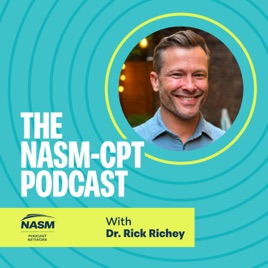
Advertise on podcast: The NASM-CPT Podcast With Rick Richey
Rating
4.7from
This podcast has
585 episodes
Language
EnglishPublisher
NASM Podcast NetworkExplicit
No
Date created
2019/08/01
Latest episode
2026/10/06
Average duration
30 min.
Release period
7 days
Description
Are you studying to become a personal trainer or just started your training career? NASM Master Instructor Rick Richey takes listeners on an informative and engaging journey to help establish a solid foundation in your fitness path.
Unlock The NASM-CPT Podcast With Rick Richey podcast Email contact info,
Listeners & Audience details
Email contact information
Direct podcast contact details

Listeners
Audience numbers & engagement insights

Audience details
Podcast Insights

Podcast episodes
Check latest episodes from The NASM-CPT Podcast With Rick Richey podcast
How personal trainers can create their own career opportunities
2026/10/06
The best way to handle professional opportunities in fitness is to stay open-minded, say yes to potential meetings, and view every opportunity as a chance to learn or connect. In this “NASM CPT Podcast,” listeners will learn practical strategies to recognize, create, and seize opportunities in their careers, whether those chances are offered by others or need to be sought out proactively.
Host Rick Richey shares insights drawn from his personal experience with unexpected outreach from a reputable fitness company and discusses universal lessons relevant to the entire NASM community. By the end of the episode, listeners will understand ten actionable ways to approach new opportunities, how to network within the fitness industry, and why it is important to see yourself as someone who great things can happen to.
Whether you are just starting in the industry or looking to grow into new roles, you will discover how to use tools like networking, continuous learning, and proactive outreach to advance your career and help more clients with NASM.
Chapters:
00:00 What is the main lesson about handling and creating professional opportunities?
01:00 How can saying yes to meetings lead to greater reach and impact?03:21 Why do people talk themselves out of new opportunities in fitness?06:27 Are opportunities always given, or can they be created—and how?08:14 What does it mean to "swing for the fences" with big opportunities?09:47 How can viewing interviews as practice improve your skills?
11:07 How can fitness professionals create their own opportunities?
12:53 What does it take to grow into your desired role or status?
15:01 Why is bringing others with you important for professional growth?16:04 How do successes and failures combine on the path to professional growth?
17:48 How do you handle overwhelming versus slow seasons in your career?19:06 Why does staying in touch with industry friends matter for future opportunities?
20:36 How and why should you reach out to people or causes that interest you?
22:13 Why is it important to see yourself as someone who can achieve great things?
23:05 What are the ten key takeaways on leveraging opportunities in fitness?
If you like what you just consumed, leave us a 5-star review, and share this episode with a friend to help grow our NASM health and wellness community!
The content shared in this podcast is solely for educational and entertainment purposes. It is not intended to be a substitute for professional advice, diagnosis, or treatment. Always seek out the guidance of your healthcare provider or other qualified professional. Any opinions expressed by guests and hosts are their own and do not necessarily reflect the views of NASM.
Introducing NASM One, the membership for trainers and coaches. For just $35/mo., get unlimited access to over 300 continuing education courses, 50% off additional certifications and specializations, EDGE Trainer Pro all-in-one coaching app to grow your business, unlimited exam attempts and select waived fees. Stay on top of your game and ahead of the curve as a fitness professional with NASM One. Click here to learn more. https://bit.ly/4ddsgrm
Evidence-based exercise strategies for losing visceral fat
2026/09/29
The most effective way to reduce visceral fat is a combination of high-intensity interval training (HIIT) and resistance training, though regular moderate-intensity cardio or aerobic exercise also helps, according to current research.In this episode of the “NASM CPT Podcast,” host Rick Richey unpacks the scientific evidence on exercise strategies for reducing visceral fat, addressing frequent confusion over whether HIIT or continuous moderate-intensity exercise is better.
Citing several systematic reviews and meta-analyses, Rick explains that while some studies show no clear advantage between HIIT and steady-state cardio, many find that interval training, especially when extended beyond 12 weeks, provides superior reductions in visceral fat, particularly for individuals with overweight or obesity. He also highlights that progressive, combined training—mixing vigorous-intensity cardio with moderate or low-intensity resistance training—can further support visceral fat loss, which is particularly beneficial for at-risk groups such as older adults and postmenopausal women.
Listeners will learn how to apply these research-backed exercise protocols for themselves or their clients, how to track progress, and why gradual progression is key, especially for those new to higher intensity workouts. This presentation also offers practical coaching insights on how to encourage clients to embrace challenging new routines.
Chapters:
00:00 What is the most effective way to reduce visceral fat?
01:10 What is visceral fat and why does it matter for health?
02:26 How did a client respond to advice about losing visceral fat?
03:20 What exercise strategies can help reduce visceral fat?
05:22 Does high-intensity interval training work better than continuous cardio for visceral fat?
06:52 What does the research say about HIIT versus moderate-intensity exercise?
08:29 Are long-duration HIIT sessions more effective for fat loss?
09:18 Does exercise help reduce visceral fat in teens and young adults?
10:26 How does exercise dose relate to visceral fat loss?
12:29 Does combining resistance and aerobic training give better results for visceral fat?
13:56 How can trainers help hesitant clients start higher intensity workouts?
15:54 What extra benefits come with high-intensity training compared to moderate exercise?
16:41 Should you choose HIIT, resistance training, or regular cardio to help most people reduce visceral fat?
Show References:Kramer, A. M., Martins, J. B., de Oliveira, P. C., Lehnen, A. M., & Waclawovsky, G. (2023). High-intensity interval training is not superior to continuous aerobic training in reducing body fat: A systematic review and meta-analysis of randomized clinical trials. Journal of exercise science and fitness, 21(4), 385–394. https://doi.org/10.1016/j.jesf.2023.09.002
Poon, E. T., Li, H. Y., Little, J. P., Wong, S. H., & Ho, R. S. (2024). Efficacy of Interval Training in Improving Body Composition and Adiposity in Apparently Healthy Adults: An Umbrella Review with Meta-Analysis. Sports medicine (Auckland, N.Z.), 54(11), 2817–2840. https://doi.org/10.1007/s40279-024-02070-9
Wang, R., Zhang, X., Ren, H., Zhou, H., Yuan, Y., Chai, Y., & Hou, X. (2022). Effects of different exercise types on visceral fat in young individuals with obesity aged 6-24 years old: A systematic review and meta-analysis. Frontiers in physiology, 13, 987804. https://doi.org/10.3389/fphys.2022.987804
Chang, Y., Wang, L., Wang, H., & Zhan, E. (2026). Unveiling the perfect workout: exercise modalities and dosages to combat visceral adipose tissue in individuals with overweight and obesity - a systematic review with pairwise, network, and dose-response meta-analyses. Nutrition & metabolism, 23(1), 75. https://doi.org/10.1186/s12986-026-01129-w
Lin, X., Li, G., Xie, J., & Wang, S. (2026). Effects of concurrent training on fat mass and its distribution in individuals with overweight or obesity: a systematic review, meta-analysis, and exploratory regression analysis. BMC public health, 26(1), 1403. https://doi.org/10.1186/s12889-026-26869-5
If you like what you just consumed, leave us a 5-star review, and share this episode with a friend to help grow our NASM health and wellness community!
The content shared in this podcast is solely for educational and entertainment purposes. It is not intended to be a substitute for professional advice, diagnosis, or treatment. Always seek out the guidance of your healthcare provider or other qualified professional. Any opinions expressed by guests and hosts are their own and do not necessarily reflect the views of NASM.
Introducing NASM One, the membership for trainers and coaches. For just $35/mo., get unlimited access to over 300 continuing education courses, 50% off additional certifications and specializations, EDGE Trainer Pro all-in-one coaching app to grow your business, unlimited exam attempts and select waived fees. Stay on top of your game and ahead of the curve as a fitness professional with NASM One. Click here to learn more. https://bit.ly/4ddsgrm
How much do personal training clients really spend in time and money
2026/09/22
Clients spend much more time and money on personal training than just the actual session fees, once you factor in taxes and the extra time around workouts. In this “NASM CPT Podcast,” host Rick Richey explores what it truly costs clients to train with a personal trainer, revealing that for every $100 spent on training, a client may need to earn far more due to taxes and related expenses.
He also explains how the time investment is greater than the scheduled session, since clients often dedicate up to twice as long factoring in travel and preparation. By breaking down these hidden costs, Rick challenges NASM trainers to consider whether their perceived value and quality of service are meeting the real investment clients are making.
After listening, you will better understand your clients’ perspective on both time and money and learn strategies to improve the value you provide in every session.
Chapters:
[00:00] What are clients really spending on personal training, besides session fees?
[01:02] Why does it cost clients more than expected to train with you?
[02:13] How do taxes and income impact a client’s training costs?
[04:31] How do local and state taxes affect what clients need to earn for training?
[06:39] How do post-tax expenses raise the real price of fitness and education?
[07:27] Am I delivering enough value to match clients’ total investment?
[08:22] Is the real time commitment for personal training sessions more than just the hour?
[10:11] How does getting to and from the gym increase clients’ time spent?
[11:46] Should I treat my clients’ time with more reverence based on their investment?
[13:39] How can trainers provide greater value for the higher true cost clients pay?
[14:10] Why is it important to recognize what clients give to get training?
If you like what you just consumed, leave us a 5-star review, and share this episode with a friend to help grow our NASM health and wellness community!
The content shared in this podcast is solely for educational and entertainment purposes. It is not intended to be a substitute for professional advice, diagnosis, or treatment. Always seek out the guidance of your healthcare provider or other qualified professional. Any opinions expressed by guests and hosts are their own and do not necessarily reflect the views of NASM.
Introducing NASM One, the membership for trainers and coaches. For just $35/mo., get unlimited access to over 300 continuing education courses, 50% off additional certifications and specializations, EDGE Trainer Pro all-in-one coaching app to grow your business, unlimited exam attempts and select waived fees. Stay on top of your game and ahead of the curve as a fitness professional with NASM One. Click here to learn more. https://bit.ly/4ddsgrm
How personal trainers protect themselves from burnout and financial risk
2026/09/15
Personal trainers can protect their careers and well-being by taking specific steps to avoid self-sabotage, such as managing their workload, prioritizing self-care, planning financially, investing in continuing education, and preparing for business growth. In this “NASM CPT Podcast,” host Rick Richey break down the ten most important ways trainers need to protect themselves from making common mistakes that limit success or lead to burnout. Dr. Richey shares practical advice drawn from real-world experience on topics like working the right amount, practicing what you preach, handling finances wisely, maintaining good boundaries, and putting supportive habits in place for both your current lifestyle and future ambitions.
Listeners will finish the episode with concrete strategies to avoid professional pitfalls, improve their work-life balance, and set themselves up for long-term stability in the fitness industry. Whether you are new to training or have years of experience, this episode delivers actionable insights on protecting your time, income, reputation, and health so you can thrive as a trainer.
Chapters:
00:00:21 What does it mean to protect yourself from yourself as a trainer?00:02:34 Why do some trainers need to work more to succeed?
00:06:44 Why do some trainers need to work less to avoid burnout?00:09:45 Why is it important for trainers to practice what they preach?00:13:24 How can trainers prepare for a long day's work?
00:15:20 Why should trainers put money aside for the future?
00:19:48 Why is it essential for trainers to take vacations and real time off?00:20:45 When should trainers charge more for their services?
00:22:38 How can investing in yourself help your training business?
00:23:53 Why do trainers need insurance and how does it protect them?00:25:14 How should trainers plan for their business to grow or "blow up"?00:26:46 What are the 10 steps every trainer should take to protect themselves?
If you like what you just consumed, leave us a 5-star review, and share this episode with a friend to help grow our NASM health and wellness community!
The content shared in this podcast is solely for educational and entertainment purposes. It is not intended to be a substitute for professional advice, diagnosis, or treatment. Always seek out the guidance of your healthcare provider or other qualified professional. Any opinions expressed by guests and hosts are their own and do not necessarily reflect the views of NASM.
Introducing NASM One, the membership for trainers and coaches. For just $35/mo., get unlimited access to over 300 continuing education courses, 50% off additional certifications and specializations, EDGE Trainer Pro all-in-one coaching app to grow your business, unlimited exam attempts and select waived fees. Stay on top of your game and ahead of the curve as a fitness professional with NASM One. Click here to learn more. https://bit.ly/4ddsgrm
How learning theories improve personal training results
2026/09/08
Personal trainers can improve client outcomes by understanding and applying different learning theories such as pedagogy, andragogy, and heutagogy. This “NASM CPT Podcast” explains how trainers are not just coaches but educators who need to tailor their approach based on whether a client learns best through directive instruction (pedagogy), adult facilitation (andragogy), or self-directed learning (heutagogy).
In this presentation, host Dr. Rick Richey discusses how recognizing client readiness, motivation, past experience, and individual learning preferences leads to better results and a more respectful trainer-client relationship. Listeners will learn how to identify whether a client needs a structured program, collaborative goal setting, or simply support in their self-chosen pursuits.
After the episode, trainers will be able to evaluate their own teaching style, adjust communication, and better align exercise programming with client goals, as supported by NASM best practices. Dr. Richey also highlights when it is important to refer clients to others if their own expertise does not meet client needs.
Chapters:
[00:00:00] What are the main learning theories trainers can use with clients?
[00:03:13] What is pedagogy and how does it apply to personal training?[00:06:48] What is andragogy and what are its six assumptions for adult learners?
[00:15:36] What is heutagogy and how does client self-direction impact the trainer’s role?
[00:20:23] How should trainers choose which teaching approach to use with each client?
[00:22:17] Why should trainers consider referring clients out or adjusting their style?
If you like what you just consumed, leave us a 5-star review, and share this episode with a friend to help grow our NASM health and wellness community!
The content shared in this podcast is solely for educational and entertainment purposes. It is not intended to be a substitute for professional advice, diagnosis, or treatment. Always seek out the guidance of your healthcare provider or other qualified professional. Any opinions expressed by guests and hosts are their own and do not necessarily reflect the views of NASM.
Introducing NASM One, the membership for trainers and coaches. For just $35/mo., get unlimited access to over 300 continuing education courses, 50% off additional certifications and specializations, EDGE Trainer Pro all-in-one coaching app to grow your business, unlimited exam attempts and select waived fees. Stay on top of your game and ahead of the curve as a fitness professional with NASM One. Click here to learn more. https://bit.ly/4ddsgrm
How to Train and Recover for High-Demand Combat Sports
2026/09/01
To succeed when training elite MMA fighters and athletes in high-demand, high-risk sports, coaches must balance sport-specific preparation with intelligent recovery and individualized strategies that prevent overtraining and support safe weight management. In this episode of the “NASM CPT Podcast,” host Rick Richey talks with guest Brandon Harris, a UFC performance coach and founder of Premier Fitness Systems, about how trainers working with NASM can apply these principles to help both elite and everyday clients thrive.
Listeners will learn why "addition by subtraction"—removing unnecessary or excessive training instead of adding more—is often key for athletic success, especially in fighters who already have demanding training schedules. The conversation explores practical approaches to energy system development, wheat cutting, recovery techniques (including breathwork and nervous system regulation), and the role of curiosity and education in a successful coaching career.
After listening, you will understand how to evaluate training volume, when to pull back or push intensity, how to address weight cut challenges, and how to foster resilience for long-term performance and health.
Chapters:
[00:00] What is addition by subtraction in elite athlete training, and why does it matter?
[06:18] Why did Brandon Harris move from commercial gyms to starting his own business?
[09:21] How did certifications like NASM and curiosity influence Brandon Harris’s career path?
[14:18] How do you prepare fighters’ bodies and minds for the demands and risks of MMA and combat sports?
[17:03] How do you train both explosive power and endurance for MMA athletes?
[18:11] What does addition by subtraction look like in real training sessions?
[20:21] Why do coaches sometimes reduce training rather than add more, and what are real-world examples?
[24:39] How does weight cutting work in fight sports, and what are the risks?
[33:08] How did networking and volunteering lead to Brandon Harris working with UFC fighter Sean O'Malley?
[36:53] What recovery methods matter most for fighters and high-performance athletes?
[40:43] How do you teach efficient breathing and energy management during high-stress sports scenarios?
[43:35] What is the bigger-picture impact that trainers and coaches can have on clients’ lives?
[45:41] How can listeners connect with Brandon Harris and learn more about his methods?
If you like what you just consumed, leave us a 5-star review, and share this episode with a friend to help grow our NASM health and wellness community!
The content shared in this podcast is solely for educational and entertainment purposes. It is not intended to be a substitute for professional advice, diagnosis, or treatment. Always seek out the guidance of your healthcare provider or other qualified professional. Any opinions expressed by guests and hosts are their own and do not necessarily reflect the views of NASM.
Introducing NASM One, the membership for trainers and coaches. For just $35/mo., get unlimited access to over 300 continuing education courses, 50% off additional certifications and specializations, EDGE Trainer Pro all-in-one coaching app to grow your business, unlimited exam attempts and select waived fees. Stay on top of your game and ahead of the curve as a fitness professional with NASM One. Click here to learn more. https://bit.ly/4ddsgrm
How professional trainers stand out from amateurs in fitness
2026/08/25
The main difference between professional and amateur personal trainers is that professionals consistently follow up with clients, maintain organized and effective communication, and focus on purposeful, client-centered training practices. In this “NASM CPT Podcast,” host Rick Richey breaks down ten key habits and strategies that separate dedicated career trainers from less experienced or casual counterparts.
Listeners will learn actionable scheduling and communication tips, the importance of tracking every assessment and personal record, and why referring clients out when necessary is a sign of professionalism, not weakness.
The presentation emphasizes being "brilliant at the basics," integrating fun and purpose into every session, maintaining clean and organized gym spaces, and delivering balanced, individualized programs that adjust as clients progress.
After listening, trainers will understand how to structure their client interactions and business practices to build trust, deliver results, and grow their training career within the structured guidance of NASM’s teachings.
Chapters:
00:00:30 What actually sets professional trainers apart from amateur trainers?
00:03:30 How important is following up with potential clients, and how should you manage it?
00:06:28 What are the keys to professional scheduling and communication in personal training?
00:08:17 Why do all scheduling changes need to be traceable and not just verbal?
00:10:17 How can trainers make sessions fun while still keeping them purposeful?
00:12:21 Why does cleaning up after yourself matter for trainers’ success and reputation?
00:16:21 When should personal trainers refer clients to other professionals or trainers?
00:19:45 Why is being brilliant at the basics better than advanced tricks or trends?
00:21:58 How do you provide a balanced and integrated training program for every client?
00:25:06 Why should trainers regularly reassess their clients and how should they track progress?
00:26:36 Why do you need to track everything, and how does this make your training more effective?
If you like what you just consumed, leave us a 5-star review, and share this episode with a friend to help grow our NASM health and wellness community!
The content shared in this podcast is solely for educational and entertainment purposes. It is not intended to be a substitute for professional advice, diagnosis, or treatment. Always seek out the guidance of your healthcare provider or other qualified professional. Any opinions expressed by guests and hosts are their own and do not necessarily reflect the views of NASM.
Introducing NASM One, the membership for trainers and coaches. For just $35/mo., get unlimited access to over 300 continuing education courses, 50% off additional certifications and specializations, EDGE Trainer Pro all-in-one coaching app to grow your business, unlimited exam attempts and select waived fees. Stay on top of your game and ahead of the curve as a fitness professional with NASM One. Click here to learn more. https://bit.ly/4ddsgrm
Realistic Exercise and Nutrition Advice for Lasting Weight Loss Results
2026/08/18
You cannot choose where your body loses fat, because spot reduction is a myth.
In this “NASM CPT Podcast” episode, host Rick Richey answers the real questions behind common client concerns about fitness and weight loss.
Drawing on trusted research and practical experience, Rick explains why you lose fat according to your unique body patterns, not by targeting certain areas with specific exercises. He also discusses the most effective ways to lose weight (hint: nutrition is key), how much and how often you should exercise for noticeable results, the expected timelines to see fitness and strength improvements, and whether weightlifting will really make you bulky.
After listening, you will clearly understand what drives fat loss, how to set realistic workout routines, why progress looks different for everyone, and how to answer frequent client questions with confidence.This episode is essential for trainers and fitness enthusiasts looking for honest answers based on science and experience, all with practical NASM guidance.
Chapters:
00:01 What is spot reduction, and can I lose fat from a specific area?
05:45 What is the best way to lose weight?
10:08 How long and how often should I exercise to see benefits?
15:25 How long does it take to see results from working out?19:11 Will weightlifting make me bulky?
If you like what you just consumed, leave us a 5-star review, and share this episode with a friend to help grow our NASM health and wellness community!
The content shared in this podcast is solely for educational and entertainment purposes. It is not intended to be a substitute for professional advice, diagnosis, or treatment. Always seek out the guidance of your healthcare provider or other qualified professional. Any opinions expressed by guests and hosts are their own and do not necessarily reflect the views of NASM.
Introducing NASM One, the membership for trainers and coaches. For just $35/mo., get unlimited access to over 300 continuing education courses, 50% off additional certifications and specializations, EDGE Trainer Pro all-in-one coaching app to grow your business, unlimited exam attempts and select waived fees. Stay on top of your game and ahead of the curve as a fitness professional with NASM One. Click here to learn more. https://bit.ly/4ddsgrm
Can resistance training lower blood pressure in older adults?
2026/08/11
Resistance training can significantly improve cardiovascular health in older adults by lowering both systolic and diastolic blood pressure, as well as offering unique benefits like increased muscle strength and quality.
In this “NASM CPT Podcast” episode, host Rick Richey reviews the latest meta-analyses and systematic reviews, sharing practical insights on how resistance training helps manage hypertension and supports healthy aging.
Listeners will learn why resistance training is valuable for older populations, how it compares to aerobic exercise for blood pressure control, and the importance of starting with progressive resistance to minimize soreness and build confidence.
Rick also addresses specific concerns such as training postmenopausal women and individuals with sarcopenia, providing evidence that regular, structured resistance training leads to greater health benefits, especially in those over 60.
After listening, fitness professionals will be equipped with research-backed strategies for designing effective, safe training programs for older adults and addressing their concerns about resistance exercises.
Chapters:
[00:00:00] What are the cardiovascular benefits of resistance training for older adults?
[00:05:43] How does resistance training affect blood pressure in people with hypertension?
[00:10:53] How does resistance training benefit postmenopausal women?
[00:14:14] What is sarcopenia and how can resistance training help elderly adults?
[00:15:01] How should trainers safely begin resistance training with older or inexperienced clients?
[00:18:48] How can trainers help older clients build strength and confidence progressively?
Show References:Wang, X., Wang, Q., Zhao, W., Wang, J., Chen, L., & Wang, L. (2025). The efficacy of resistance training for the management of hypertension: a systematic review and meta-analysis. Postepy w kardiologii interwencyjnej = Advances in interventional cardiology, 21(2), 163–170. https://doi.org/10.5114/aic.2025.151598
Henkin, J. S., Pinto, R. S., Machado, C. L. F., & Wilhelm, E. N. (2023). Chronic effect of resistance training on blood pressure in older adults with prehypertension and hypertension: A systematic review and meta-analysis. Experimental gerontology, 177, 112193. https://doi.org/10.1016/j.exger.2023.112193
Rivera-Mejía, S. L., Rúa-Alonso, M. A., Rial-Vázquez, J., Nine, I., Camacho-Villa, M. A., Enríquez-González, M. A. G., Varela-Sanz, A., Fariñas, J., Revuelta-Lera, B., Fraga-Germade, E., Giráldez-Garcí A, M. A., & Iglesias-Soler, E. (2026). Resistance Training Improves Cardiovascular Health in Postmenopausal Women: Systematic Review and Meta-Analysis. Journal of applied physiology (Bethesda, Md. : 1985), 10.1152/japplphysiol.01180.2025. Advance online publication. https://doi.org/10.1152/japplphysiol.01180.2025
Zhao, H., Cheng, R., Song, G., Teng, J., Shen, S., Fu, X., Yan, Y., & Liu, C. (2022). The Effect of Resistance Training on the Rehabilitation of Elderly Patients with Sarcopenia: A Meta-Analysis. International journal of environmental research and public health, 19(23), 15491. https://doi.org/10.3390/ijerph192315491
If you like what you just consumed, leave us a 5-star review, and share this episode with a friend to help grow our NASM health and wellness community!
The content shared in this podcast is solely for educational and entertainment purposes. It is not intended to be a substitute for professional advice, diagnosis, or treatment. Always seek out the guidance of your healthcare provider or other qualified professional. Any opinions expressed by guests and hosts are their own and do not necessarily reflect the views of NASM.
Introducing NASM One, the membership for trainers and coaches. For just $35/mo., get unlimited access to over 300 continuing education courses, 50% off additional certifications and specializations, EDGE Trainer Pro all-in-one coaching app to grow your business, unlimited exam attempts and select waived fees. Stay on top of your game and ahead of the curve as a fitness professional with NASM One. Click here to learn more. https://bit.ly/4ddsgrm
Wearable Fitness Trackers: Accuracy of Steps, Heart Rate, and Calories
2026/08/04
Are wearable devices like Fitbits, Apple Watches, and fitness trackers really worth it? In this episode of the “NASM CPT Podcast,” host Rick Richey dives deep into the science and practical truth behind modern wearable tech.
🎧 Listen as Rick covers:
· The REAL accuracy of step counts, heart rate, and calorie burn measurements
· Surprising research on whether wearables motivate you to move more
· Why calorie tracking with wearables might be misleading (study-backed!)
· The psychological impact of fitness trackers: does tracking help or harm motivation?
· Rick’s expert advice on when wearable tech is helpful—and when it can steal your joy
📝 Cited studies include:
· Systematic reviews on device accuracy· Evidence on activity increase in adults vs. youth
· Sleep quality tracking reliability
Whether you’re a fitness pro, personal trainer, or just getting into wellness gadgets, this episode will help you make smarter choices about wearable tech. Don’t let tech ruin your love for movement—get the full picture here!
Show References:
Fuller, D., Colwell, E., Low, J., Orychock, K., Tobin, M. A., Simango, B., Buote, R., Van Heerden, D., Luan, H., Cullen, K., Slade, L., & Taylor, N. G. A. (2020).
Reliability and Validity of Commercially Available Wearable Devices for Measuring Steps, Energy Expenditure, and Heart Rate: Systematic Review. JMIR mHealth and uHealth, 8(9), e18694.
https://doi.org/10.2196/18694 Germini, F., Noronha, N., Borg Debono, V., Abraham Philip, B., Pete, D., Navarro, T., Keepanasseril, A., Parpia, S., de Wit, K., & Iorio, A. (2022). Accuracy and Acceptability of Wrist-Wearable Activity-Tracking Devices: Systematic Review of the Literature. Journal of medical Internet research, 24(1), e30791.
https://doi.org/10.2196/30791 Srivali, N., & Cheungpasitporn, W. (2026). Concordance of wearable device sleep metrics with patient-reported sleep quality: A systematic review. Sleep medicine, 144, 108941.
https://doi.org/10.1016/j.sleep.2026.108941 Longhini, J., Marzaro, C., Bargeri, S., Palese, A., Dell'Isola, A., Turolla, A., Pillastrini, P., Battista, S., Castellini, G., Cook, C., Gianola, S., & Rossettini, G. (2024). Wearable Devices to Improve Physical Activity and Reduce Sedentary Behaviour: An Umbrella Review. Sports medicine - open, 10(1), 9.
https://doi.org/10.1186/s40798-024-00678-9 Chen, X., Wang, F., Zhang, H., Lin, Y., Zhu, S., & Yang, Y. (2025). Effectiveness of wearable activity trackers on physical activity among adolescents in school-based settings: a systematic review and meta-analysis. BMC public health, 25(1), 1050. https://doi.org/10.1186/s12889-025-22170-z
If you like what you just consumed, leave us a 5-star review, and share this episode with a friend to help grow our NASM health and wellness community!
The content shared in this podcast is solely for educational and entertainment purposes. It is not intended to be a substitute for professional advice, diagnosis, or treatment. Always seek out the guidance of your healthcare provider or other qualified professional. Any opinions expressed by guests and hosts are their own and do not necessarily reflect the views of NASM.
Introducing NASM One, the membership for trainers and coaches. For just $35/mo., get unlimited access to over 300 continuing education courses, 50% off additional certifications and specializations, EDGE Trainer Pro all-in-one coaching app to grow your business, unlimited exam attempts and select waived fees. Stay on top of your game and ahead of the curve as a fitness professional with NASM One. Click here to learn more. https://bit.ly/4ddsgrm
Lisa’s Ranch: Where Healing & Fitness Collide
2026/07/28
How can personal trainers truly support clients battling cancer and chronic conditions? In this powerful episode of the “NASM CPT Podcast,” host Rick Richey sits down with Lisa Dougherty, founder of the MedFit Education Foundation and Gratitude Ranch, to discover how medical fitness can make a life-changing impact.
Lisa shares her deeply personal journey through a rare cancer diagnosis, the emotional rollercoaster of treatment, and the creation of her unique wellness retreat for those with life-threatening illnesses. Learn how trainers can use empathy, heart rate variability, and adaptive approaches to guide clients through their toughest challenges — and why presence, purpose, and personalized care matter more than any workout.
Key Takeaways:
· How personal trainers can adapt for clients facing cancer and medical diagnoses
· The power of HRV (heart rate variability) in programming and recovery
· The importance of emotional support and purpose during illness
· What makes medical fitness training essential in today’s health landscape
· Behind-the-scenes of MedFit Education & Gratitude Ranch
Connect with Lisa Dougherty:
· Gratitude Ranch
· MedFit Classroom: Courses for Medical Fitness Professionals
If you like what you just consumed, leave us a 5-star review, and share this episode with a friend to help grow our NASM health and wellness community!
The content shared in this podcast is solely for educational and entertainment purposes. It is not intended to be a substitute for professional advice, diagnosis, or treatment. Always seek out the guidance of your healthcare provider or other qualified professional. Any opinions expressed by guests and hosts are their own and do not necessarily reflect the views of NASM.
Introducing NASM One, the membership for trainers and coaches. For just $35/mo., get unlimited access to over 300 continuing education courses, 50% off additional certifications and specializations, EDGE Trainer Pro all-in-one coaching app to grow your business, unlimited exam attempts and select waived fees. Stay on top of your game and ahead of the curve as a fitness professional with NASM One. Click here to learn more. https://bit.ly/4ddsgrm
MRI Says You're Fine—but You Still Hurt?
2026/07/21
Are you or your clients struggling with low back pain? 🤔 Whether you’re a fitness professional, physical therapist, or someone seeking relief, this episode is packed with expert insights you can’t afford to miss!
Join award-winning personal trainer and “NASM CPT Podcast” host Rick Richey as he sits down with renowned physical therapist, Pete Schultz, to break down everything you NEED to know about low back pain. Discover the real causes, get past the myths, and learn practical insights to help you move better and stay pain-free.
🔥 In This Episode:
· The different types of low back pain explained: disc herniation, muscle strains, spinal stenosis, facet joint issues, SI joint hypermobility, and nociplastic (neuroplastic) pain
· Signs, symptoms, and real-life examples that demystify each condition
· How imaging like MRIs and X-rays often miss the full picture—and what really matters
· The often-overlooked role of the nervous system, stress, and the biopsychosocial model in chronic pain
· Why personal trainers should avoid panicking—and what to do when a client says, "My back hurts!"
· Actionable strategies for safe exercise, movement screening, plus red flags and referral guidance🎯 Perfect for:
· Personal trainers and fitness coaches
· Physical therapists & healthcare professionals
· Anyone dealing with chronic or recurring low back pain
· Students and enthusiasts interested in sports science & injury prevention
If you like what you just consumed, leave us a 5-star review, and share this episode with a friend to help grow our NASM health and wellness community!
The content shared in this podcast is solely for educational and entertainment purposes. It is not intended to be a substitute for professional advice, diagnosis, or treatment. Always seek out the guidance of your healthcare provider or other qualified professional. Any opinions expressed by guests and hosts are their own and do not necessarily reflect the views of NASM.
Introducing NASM One, the membership for trainers and coaches. For just $35/mo., get unlimited access to over 300 continuing education courses, 50% off additional certifications and specializations, EDGE Trainer Pro all-in-one coaching app to grow your business, unlimited exam attempts and select waived fees. Stay on top of your game and ahead of the curve as a fitness professional with NASM One. Click here to learn more. https://bit.ly/4ddsgrm
Reduce Back Pain with Strength Training: Stefi Cohen’s Guide
2026/07/14
Are deadlifts bad for your back? Why do some people get injured lifting weights while others don't? Can resistance training actually reduce pain and injury risk?
Find out in this can’t-miss episode of the “NASM CPT Podcast” featuring Dr. Stefi Cohen — 27-time powerlifting world record holder, pro boxer, Doctor of Physical Therapy, and founder of the Institute of Strength Training.
Host Dr. Rick Richey and Stefi dive deep into:
· The biopsychosocial model of pain and why pain isn’t always about tissue damage
· The real difference between “injury” and “pain” and what that means for your workouts
· Stefi’s personal story overcoming chronic back pain — and what REALLY works for recovery
· Why your mindset can amplify or dampen pain signals (backed by neuroscience!)
· How to avoid the most common training mistakes that lead to injury
· Proven strategies for building resilience, managing training load, and keeping clients (and yourself) strong and healthy
· Why deadlifts and other barbell movements aren’t inherently dangerous — plus evidence-based tips to use them safely
· Actionable advice for trainers and everyday lifters on progressing after injury, breaking the pain-avoidance cycle, and becoming a “movement optimist
”Don’t miss Stefi’s expert insight on:
· Foam rolling, manual therapy, and pain relief hacks that work
· How to safely return to intense training after injury
· Using resistance training to reduce pain from osteoarthritis and other chronic conditions
· Busting the top fitness myths holding you back from your strength goals
If you like what you just consumed, leave us a 5-star review, and share this episode with a friend to help grow our NASM health and wellness community!
The content shared in this podcast is solely for educational and entertainment purposes. It is not intended to be a substitute for professional advice, diagnosis, or treatment. Always seek out the guidance of your healthcare provider or other qualified professional. Any opinions expressed by guests and hosts are their own and do not necessarily reflect the views of NASM.
Introducing NASM One, the membership for trainers and coaches. For just $35/mo., get unlimited access to over 300 continuing education courses, 50% off additional certifications and specializations, EDGE Trainer Pro all-in-one coaching app to grow your business, unlimited exam attempts and select waived fees. Stay on top of your game and ahead of the curve as a fitness professional with NASM One. Click here to learn more. https://bit.ly/4ddsgrm
Strength, Endurance…But Why Both at Once?
2026/07/12
In this episode, host Rick Richey answers a common question for fitness pros and enthusiasts: “Why do we train for strength endurance?”
He unpacks the science and strategy behind the OPT model’s three levels—stabilization, strength, and power—and explains exactly what makes the strength endurance phase unique.
You’ll discover:
· ✅ The key goals of strength endurance training
· ✅ How it’s different from standard strength or endurance phases
· ✅ Real-world exercise examples you can use with your clients TODAY
· ✅ Why supersets and volume matter for optimal results
· ✅ Tips for maximizing both strength and stability in your workouts
Whether you’re a personal trainer preparing for your NASM CPT exam, a fitness coach looking for program inspiration, or anyone serious about building muscle, endurance, and total-body stability, this episode is for you!
If you like what you just consumed, leave us a 5-star review, and share this episode with a friend to help grow our NASM health and wellness community!
The content shared in this podcast is solely for educational and entertainment purposes. It is not intended to be a substitute for professional advice, diagnosis, or treatment. Always seek out the guidance of your healthcare provider or other qualified professional. Any opinions expressed by guests and hosts are their own and do not necessarily reflect the views of NASM.
Introducing NASM One, the membership for trainers and coaches. For just $35/mo., get unlimited access to over 300 continuing education courses, 50% off additional certifications and specializations, EDGE Trainer Pro all-in-one coaching app to grow your business, unlimited exam attempts and select waived fees. Stay on top of your game and ahead of the curve as a fitness professional with NASM One. Click here to learn more. https://bit.ly/4ddsgrm
Pyramid or Reverse Pyramid: Which Lifts Your Gains?
2026/06/30
Are you wondering if pyramid or reverse pyramid training is best for your strength and hypertrophy goals?
In this episode of the “NASM CPT Podcast,” award-winning personal trainer and industry leader Dr. Rick Richey dives deep into the science—and practical application—of pyramid, reverse pyramid, and drop set training schemes.
🔍 What’s Inside:
· The differences between pyramid and reverse pyramid sets
· Five popular pyramid training variations explained
· Research findings comparing pyramid, reverse pyramid, drop set, and traditional strength training
· Real-world advice for trainers and fitness enthusiasts—what the science says and why personal preference matters
· Top tips for finding the best workout for your clients (even when research points another way!)
🧠 Whether you’re a fitness pro looking for evidence-based program design or someone just trying to maximize your workouts, you’ll get actionable answers to one of weightlifting’s most debated questions: Pyramid or reverse pyramid—what actually works best?
Show References:
Ribeiro, A. S., Schoenfeld, B. J., Fleck, S. J., Pina, F. L. C., Nascimento, M. A., & Cyrino, E. S. (2017). Effects of Traditional and Pyramidal Resistance Training Systems on Muscular Strength, Muscle Mass, and Hormonal Responses in Older Women: A Randomized Crossover Trial. Journal of strength and conditioning research, 31(7), 1888–1896. https://doi.org/10.1519/JSC.0000000000001653
Angleri, V., Ugrinowitsch, C., & Libardi, C. A. (2017). Crescent pyramid and drop-set systems do not promote greater strength gains, muscle hypertrophy, and changes on muscle architecture compared with traditional resistance training in well-trained men. European journal of applied physiology, 117(2), 359–369. https://doi.org/10.1007/s00421-016-3529-1
Enes, A., Oneda, G., Leonel, D. F., Ramos, R. A., Kvas-Cabral, V. C., Bernardo, M. F., Escalante, G., & Souza-Junior, T. P. (2023). Drop-Set Resistance Training versus Pyramidal and Traditional Sets Elicits Greater Psychophysiological Responses in Men. Perceptual and motor skills, 130(4), 1624–1643. https://doi.org/10.1177/00315125231176729
If you like what you just consumed, leave us a 5-star review, and share this episode with a friend to help grow our NASM health and wellness community!
The content shared in this podcast is solely for educational and entertainment purposes. It is not intended to be a substitute for professional advice, diagnosis, or treatment. Always seek out the guidance of your healthcare provider or other qualified professional. Any opinions expressed by guests and hosts are their own and do not necessarily reflect the views of NASM.
Introducing NASM One, the membership for trainers and coaches. For just $35/mo., get unlimited access to over 300 continuing education courses, 50% off additional certifications and specializations, EDGE Trainer Pro all-in-one coaching app to grow your business, unlimited exam attempts and select waived fees. Stay on top of your game and ahead of the curve as a fitness professional with NASM One. Click here to learn more. https://bit.ly/4ddsgrm
Podcast reviews
Read The NASM-CPT Podcast With Rick Richey podcast reviews
Julles happy 2026/04/21
Great Podcast
I LOVE this podcast! It is so informative and always gives me information that is so useful for my clients.
Kandyrocksfitness 2026/01/04
Great podcast for fitness professionals
This podcast has played a huge role in helping me grow as a fitness professional. The advice is practical, motivating, easy to apply, and every episod...
Hyuuiiiigggghfhjjk 2025/07/18
Great!
Love this podcast! As a trainer and former pole vaulter I appreciate his knowledge and sense of humor. I also appreciate the short and the to the poin...
HazyRigby 2025/03/18
Don't pass this up!
I don't know how anyone could dislike this podcast. Rick is smart, funny, engaging, and informative. I'm not a trainer, just your typical gym rat, but...
Katie- Above the Bar Fitness 2025/02/08
Not a Fan
I took my NASM certification a couple years ago and I have never used ANYTHING from their training programs, OPT model, assessments, etc. I am really...
anxi3tyfleshbag 2024/11/21
NASM
I just started the cpt 7 course and I stumbled upon this! Very helpful. I would like to know how to contact you through email if possible.
Royaltee143 2024/09/19
Golden nuggets
There are always some gems when listening to this podcast. I love the way he narrates and breaks things down.
tee_rocks1 2024/09/12
You have become my information companion.
Hey Rick, I absolutely love your podcast and listen to you every morning and evening on my commute to and from work. You have a way of explaining thi...
GI_Janie 2024/09/12
Funny and Informative
One of my favorite podcasts in health and fitness because most are dry, too long and monotone. But not Rick!!! I LOVE Rick’s humor and personality!!! ...
Shosh of Love Your Room 2024/08/06
Inspired me!
Your podcast is so wonderful.You give really good advice. Just finished listening to your ‘why not me’ episode, and I loved it. I just passed my test...
Podcast sponsorship advertising
Start advertising on The NASM-CPT Podcast With Rick Richey relevant audience podcasts
You may also like to advertise on these Podcasts

4.917101551
DarrenDaily On-Demand
Darren Hardy LLC
4.6137781983
The Rubin Report
Dave Rubin

4.6652312197
The Charlie Kirk Show
Charlie Kirk
4.736011303
The Bonfire with Big Jay Oakerson and Robert Kelly
SiriusXM

4.92471943
The 1000 Hours Outside Podcast
1000 Hours Outside

4.6253402000
The Glenn Beck Program
Mercury Radio Arts

4.922321830
The Ten Minute Bible Hour Podcast
Matt Whitman
4.916151617
The Kristian Harloff Show
Kristian Harloff

4.853512000
Men In Blazers
Men In Blazers
4.847052000
Pat Gray Unleashed
Blaze Podcast Network