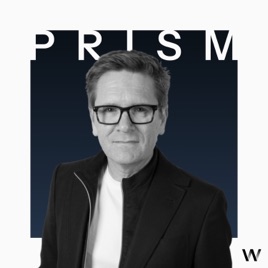
Advertise on podcast: PRISM
Rating
4.5from
This podcast has
18 episodes
Language
EnglishPublisher
PRISMExplicit
No
Date created
2021/05/17
Latest episode
2025/06/02
Average duration
53 min.
Release period
103 days
Description
Whipsaw Founder and Principal Designer Dan Harden has been a prominent figure in the field of design for over 25 years. He has brought more than 1000 products to market, won over 300 design awards and been granted over 500 patents. Harden will now funnel his experience and knowledge into our new Whipsaw podcast, PRISM. Just like a glass prism that reveals the colors hidden inside white light, this podcast will uncover the true vision, purpose and people behind the innovations that impact our world. Hosted on Acast. See acast.com/privacy for more information.
Unlock PRISM podcast Email contact info,
Listeners & Audience details
Email contact information
Direct podcast contact details

Listeners
Audience numbers & engagement insights

Audience details
Podcast Insights

Podcast episodes
Check latest episodes from PRISM podcast
Building a Culture, Breaking the Rules, and Believing in People with Hartmut Esslinger
2025/06/02
A conversation between Dan Harden and Hartmut Esslinger on how culture, emotion, and rebellion shape meaningful design. Hosted on Acast. See acast.com/privacy for more information.
Sustainable Practices in Product Design: A Conversation with Courtney Der and Mike Elam
2024/10/29
How do designers navigate the evolving landscape of sustainability and circularity in product design? Join Courtney Der and Mike Elam as they explore how legislation, material selection, and implementation challenges are shaping the future of the tech industry. Hosted on Acast. See acast.com/privacy for more information.
Reflecting on 25 Years of Whipsaw
2024/10/15
Join Dan Harden and Anne Van Itallie, as they reflect on 25 years of Whipsaw. Hosted on Acast. See acast.com/privacy for more information.
Elevate Your Portfolio: Strategies for Designers to Showcase Their Work with Anson Cheung and Cole Derby
2024/10/01
What are agencies looking for when hiring industrial designers, and how should you tailor your portfolio to stand out? In this episode, Anson Cheung and Cole Derby share practical tips on navigating the competitive design landscape, and how to use storytelling to highlight your skills. Hosted on Acast. See acast.com/privacy for more information.
Office Hours: How to Overcome Creative Block
2024/02/20
How do designers and artists overcome creative block? In the second episode of office hours, Dan discusses tips for finding inspiration when you’re in a creative rut, embracing failure as part of the process, and thinking abstractly to find unique solutions.
Hosted on Acast. See acast.com/privacy for more information.
From Robots to Wellness, Highlights from CES 2024 with Anne Van Itallie and Dan Harden
2024/01/29
Humanoid robots, transparent TVs, and the latest in VR technologies. Fresh from their return from CES, Anne Van Itallie and Dan Harden take listeners on a deep dive of the latest trends in tech.
Hosted on Acast. See acast.com/privacy for more information.
Emerging Trends in Residential Technology: A Conversation with Walker Harden and Cole Derby
2023/12/06
What is the future of residential and smart home technology, and what's emerging today? In this episode, Whipsaw's Director of Experience Design, Walker Harden, and Director of Industrial Design, Cole Derby, discuss the latest trends in smart home technology and related project experiences. Hosted on Acast. See acast.com/privacy for more information.
AI, Design, and the Meditative Mind with Branko Lukic
2023/06/15
A big question in the realm of design today is whether artificial intelligence is a friend or foe. Dan Harden and design visionary guest, Branko Lukic, explore the profound implications of AI for designers and the remarkable power of meditation in fostering a creative mindset. Hosted on Acast. See acast.com/privacy for more information.
Office Hours: What Will Be The Impact of Artificial Design Intelligence? Sustainability At The Ballot Box, and Favorite Design Projects
2022/11/14
Office Hours is a new segment on PRISM where Whipsaw CEO and Principal Designer, Dan Harden, answers questions submitted by our listeners about industrial design, business, technology, or current topics of discussion in the greater design community.
Partake in a future Office Hours episode by submitting a question at whipsaw.com/prismofficehours. Hosted on Acast. See acast.com/privacy for more information.
Sustainability by Design - A Materials Wake-Up Call with Jonsara Ruth and Rico Ruffino
2022/05/12
How does design relate to the current state of climate change? Dan Harden, Jonsara Ruth, and Rico Ruffino evaluate the environmental impacts of design and how designers can play a role in creating a more sustainable world. Hosted on Acast. See acast.com/privacy for more information.
Leave All Assumptions Behind: Designing for Diverse Cultures with Lorraine Justice
2022/03/10
Designers are often trapped in their own design thinking principles but Cross-Cultural Design provides a guideline that all designers can embody in their work. Dan Harden and guest Lorraine Justice, Design Researcher, Speaker, Author, and Educator, touch on the importance of considering diverse cultures in their work. Hosted on Acast. See acast.com/privacy for more information.
Generative Design Is about to Change Everything, with Joanna Peña-Bickley
2022/01/05
Generative Design has been a hot topic of conversation for several years now, but its full range of capabilities, and how designers will use it in their everyday lives, isn’t widely understood. In this episode of PRISM, Dan Harden sits down with the Head of HumanFX Research & Design for Alexa Devices at Amazon, Joanna Peña-Bickley, to get an inside look at this field of limitless possibilities.
Also known as “the mother of generative design,” Joanna foresees the role of the designer shifting from a creator of individual experiences to a conductor of systems of experiences. She also reveals how AI will generate truly novel ideas in a matter of minutes, solve global problems at a higher level, and change the way we consider the world around us. Designers interested in preparing for this remarkable future today should take note.
This episode also touches on:
Designing for a “one size fits many” modelDesigning with more resiliency for future generationsThe new organic aesthetics, form factors, and ergonomics on the horizonThe parameters we must establish today around this evolving technology
Hosted on Acast. See acast.com/privacy for more information.
Finding Design Nirvana
2021/10/04
The pandemic caused us all to readjust our values and focus on what truly matters. It also forced us to alter how we communicate and innovate.
In this special episode of Prism, Dan Harden moderates a discussion with founders Fred Bould and Caroline Flagiello on how we can use the lessons from this experience to create an exciting new era of Design. The panel reveals:
How to make the most of our newly realigned values, the work-life blur, and virtual creative collaborationsWays to implement the new design thinking that's emerged which values experiences, quality of life, and purposeThe ideal vision of Design and the roadmap needed to get thereListen in on their perspectives on how we can all find design nirvana.
Guests
Caroline Flagiello, founder of Akin, is an innovation expert with two decades of experience leading teams and designing for every kind of organization, from nascent startups to high profile Fortune 500 companies, in industries ranging from consumer electronics to fashion to food and beverage.
Fred Bould, founder of Bould Design, has collaborated with leading innovators such as Nest Labs, GoPro and Roku. Their work has met with both commercial and critical success. Recognition includes numerous IDEA, Core77, D&AD, and Red Dot Awards, as well as the Cooper Hewitt and SF MOMA Permanent Collection. Bould’s design solutions are noted for usability, simplicity, and elegance.
This episode of Prism was originally recorded as a live Whipsaw virtual event on July 28, 2021.
Episode Transcript
Dan Harden 0:07
Hello and welcome to Prism. Prism is a design oriented podcast hosted by me Dan harden, like a glass prism that reveals the color hidden inside white light. This podcast will reveal the inside story behind innovation, especially the people that make it happen. My aim is to uncover each guest unique point of view, their insights, their methods, or their own secret motivator, perhaps that fuels their creative genius.
Okay, hello, and welcome to finding design Nirvana. I'm Dan Harden. Whipsaw's Founder, CEO and Principal Designer and with me are Caroline Flagiello and Fred Bould. We're here to discuss how we can evolve from this somewhat dark time that we find ourselves in. We've experienced something truly extraordinary in the last Well, now what year and a half, and it's still going on. But how can we evolve from that time that we have all experienced into a better we'll call it designed to future. That's why we call this finding design Nirvana. We think we should be learning from these tough times in order to advance design to a higher Well, maybe even more ideal state, if that's possible. That's what we wanted to investigate with this discussion. Tonight, we'll talk about the lessons we have learned from the pandemic that can help us re examine how we think about design, especially in terms of what design should be focused on where the opportunities lie to innovate, and how design should or can be practiced. So without further ado, let's meet our panelists, Caroline, Fred. Fred is the Founder and Design Director of Bould design, Bould, has collaborated with great companies such as nest labs, GoPro, Roku, and many, many others. They've won lots of Design Awards. They've got worked at the Cooper Hewitt and SF MoMA. They're designed many of you know it. They're designed as noted for simplicity, elegance, and a focus on usability. They always do great work can always count on Fred and his company. I met Fred in the 80s when we both worked at Henry Dreyfus associates. And we've been great friends ever since. Good to see you, Fred.
Fred Bould 2:21
Great to see you. Carolyn. Good to see you. Yeah. My first got to know Dan, when I was an intern at Henry Dreyfus associates. And Dan was one of the young hotshot designers there that everybody looked up to. So it's, it's really, it's really gratifying to find myself here, you know, 100 years later. We're working in close proximity to Dan and, and his elk. So this is great.
Dan Harden 2:52
Thanks for joining Fred. My other guest is Carolyn Flagella. Carolyn is Founder and CEO of Akon a firm she founded in 2015. Caroline is an innovation expert with two decades of experience leading teams and designing for every kind of organization from Little startups to high profile Fortune 500 companies. She also worked at Pentagram and IDEO, and I've known Caroline for over 25 years. She helped me chair the National idsa conference in 2002. I still can't thank you enough for that, Carolyn. And you may have also seen Caroline on the CBS series, California by design. Welcome, Caroline. Thank you for joining.
Caroline Flagiello 3:33
Oh, thank you for having me. Yes. And good to see Fred. Um, yeah, Dan, when I first met you, it was at the MoMA. And it was during an idsa Awards event. And you were President of Frog at the time. And I was like, Oh, that's Dan. And so, you were you know, you were the god. Oh, well, I was still, you know, starting off in my career. So anyway, it was a long time ago, but you were still the god.
Dan Harden 4:05
Oh, my God. Okay, we did not practice Believe me this.Okay, so let's, let's get into our discussion, but thank you. So, let's start out kind of broad. Alright, so this crazy pandemic that we've been through, I mean, it has rocked us all to the core in so many ways. But let's talk briefly about its impact on work, especially, like, How were your practices impacted? And how did you adjust? Did you survive obviously, or how did you thrive?
Fred Bould 4:41
Carolyn, you want to take?
Caroline Flagiello 4:44
Sure, so, um, when I started Akon seven years ago, it was relational based consultancy. So basically, our goal is to have long term key clients and reduce that churn and spend And I also thought that there was a different way to be able to create a consultancy that didn't look like the consultancies that we've all you know, and love and work for, and thought that we could leverage global talent in different ways. So I leveraged a distributed teams, as well as our core team. And so like, our practices really haven't changed. But what we did is we really honed the ability to connect in hybrid ways and connect through video, you know, seven years ago, and that, you know, being able to access global talent is just really important. And I think, really, we've seen the the fruits of that, through hybrid work, quite honestly. And I think organizations are really realizing the power of accessing global talent and that way. But in terms of our practice, we're continuing to thrive in this hybridized environment. Now, others who see the power of that are really appreciating and understanding that, and our clients are getting even more comfortable with that now that it's become more of the norm. So we haven't changed so much in the way that we have practiced, but I everyone around us has. So that's been really nice, because now it's elevating all of us.
Fred Bould 6:30
Yeah. I guess I, my experience, I'll be really honest, I was, even though at the beginning of my, when I first started Bould design. I worked actually worked from my house for several years. And, and even despite that, I was kind of To be honest, I was a work from home skeptic, I really was I felt like, you know, it's, how are we going to review mockups, and, you know, share sketches and things like that. And, but then when I kind of saw it coming, but I have a brother who lives in Shenzhen, so I've been talking to him about, you know, he was on lockdown, months, months before we were and it was still in question whether it was going to sort of make its way here and you know, what the, what the depth would be and so on. But at some point, I turned to my partners, and I said, Hey, we need to get set up for this. And, you know, we got our we got our system set up so that people could take computers, we'd all be connected and be able to connect to the server and whatnot. And, and sure enough, about two weeks after we did that we you know, the word came down that everybody had to be work from home. And I wasn't, I didn't have a lot of anxiety, even though I was kind of a work from home skeptic, I kind of said, Well, you know, we don't really have a choice. So let's, let's, let's do this. And, you know, 24 hours later, we were set up, you know, 16 people working from 16 different places around the Bay Area. And it worked fine. It was I, you know, I can't say I was surprised because we're, we're very good communicators, and we're well organized. So I think that that that helped us. But it it went pretty well. I think some of our some of our clients saw things go quiet on on their side, you know, in terms of sales, because I think people were, you know, hesitant to go out and buy things when they didn't really know whether they would have jobs or not. I'm talking about the the general population, whether they would have jobs and whether they would be getting paychecks and things like that. But you know, I think when the government stepped in and said, Okay, we're going to, we're going to give people money and people felt reassured and they said, okay, you know, there, somebody, somebody has our backs. And so a lot of our clients have done extraordinarily well. You know, we have clients that are involved with, you know, streaming entertainment, well, guess what, when people can go out, guess what they do? networking equipment, sick, things like that all became very important. So it's actually it's been a pretty good year. And I think we've we've learned an awful lot about the boundaries of what works, you know, for work.
Dan Harden 9:29
Yeah, it sounds like you've adjusted. I know. Personally speaking, I would agree with you. I've always been a wfh work from home skeptic right when when I would get an email as an employer, you don't want to see wfh, I'm down I'm going to be working for like, Yeah, right. But you know what? My team blew me away. They're so effective. I mean, I never would have gu
How the Roots of California’s Bay Area Design Movement Still Shape Society with Barry Katz
2021/08/19
California’s Bay Area is one of the world’s epicenters of design, but this is a fairly recent phenomenon. Prior to the 1980s, you had to travel to Paris, London, Milan, and New York to find good design. Suddenly, this region entered a golden design era marked by innovative collaborations, technology booms, and the emergence of a vernacular around design thinking. Now, nearly 40 years later, we have more design professionals in the Bay Area than anywhere else in the world.
In this episode, Dan Harden examines the rise of design in the Bay Area with Author and Design Professor Barry Katz, including how design thinking changed the landscape of the Bay. Looking ahead, Dan and Barry speculate on how Bay Area design can continue to set the tone for the rest of the world.
Guest
Barry Katz, professor of Industrial and Interaction Design, California College of the Arts, and adjunct professor, Design Group, Department of Mechanical Engineering, Stanford University
Episode Transcript
Dan Harden 0:07
Hello, and welcome to Prism. Prism is a design-oriented podcast hosted by me Dan Harden. Like a glass, Prism that reveals the color hidden inside white light, t his podcast will reveal the inside story behind innovation, especially the people that make it happen. My aim is to uncover each guest’s unique point of view, their insights, their methods, or their own secret motivator, perhaps that fuels their creative genius. Today, I have the pleasure of being with a good friend of mine, Barry Katz . Barry is the professor of Industrial Design and Interaction Design at the California College of the Arts, an adjunct professor in the Department of Mechanical Engineering Design Group at Stanford University, Barry was also well, Barry has been working with the idea for the last 20 years as a fellow and general advisor, we’re going to hear a little bit about his experience there. He’s also the author of seven books, including most recently “Make It New, the History of Silicon Valley design” published in 2017, by MIT Press, and Barry’s also working on a great new book called “Structure and Symbol for the Age of Data” which is about architecture and the Silicon Valley. Barry, thanks so much for coming on Prism. Glad to be here. I always love talking to you. You are a gem of a human. Or the the you know, you pretty much blew me away when you were one of the keynote speakers at a conference that I chaired back in 2002, as you remember, well. So this is a really great experience. So you know, you wrote this book that I read, because, well, I’m living in Silicon Valley, I’ve been a designer in Silicon Valley since 1989, and had experience working here even prior to that. So I was really fascinated by your perspectives on the history of design in the Bay Area. Maybe we could start by you giving us a general context, because my first exposure to the Bay Area was when I was seeing this extraordinary work being done, I would say in the early 80s. And I actually interned at HP, which is my first exposure around that time. But what was happening before that, how did we get to that point of inflection where design started to become relevant to technology. If we can start unpacking a little bit of that, that kind of historical perspective, because it sets the framework so well for what actually happened and how design flourished.
Barry Katz 2:52
So let’s begin a little bit with what got me interested in taking a long historical look at how people like you ended up doing what people like you are now doing. In 2021, I was struck by a small gift sent to me by a mutual friend of ours I’m sure you know, Gerard Furbershaw are one of the cofounders of Lunar, one of the distinguished consultancies of the area. Gerard sent me a clipping from a 1979 Palo Alto telephone book, the Yellow Pages. And I apologize to readers, or viewers or listeners who have no idea what the yellow pages are business directory for these things that we used to call telephones. And this was a page from the business directory that listed every design consultancy in Northern California 1979. There were, if I remember correctly, nine of them and they were squeezed between detective agencies and diaper services. And of the nine, only one of them still exists, although not under the same name. In other words, design was absolutely not on the map as any significant part of what was important about this region. And the reason that that was interesting to me is today, I think I’d be prepared to argue that there are probably more design professionals working within 50 miles of where you and I are sitting right now than anywhere else in the world. So I got interested in the question, How did that happen? How did that happen in an extraordinarily, you know, basically in a generation. If you had asked almost anybody in that period, the late 70s, the early 80s. What are the important world centres of design? I think that there would have been a pretty easy consensus and you know, Dan, you could you could say a to Milan for furniture Paris for fashion. New York for graphics London probably for product design, you got to be Tokyo for electronics, LA for whatever they do down there, I have no idea. And if you would set the Bay Area, I think you would have been met with a blank stare, right? One of the older folks that I interviewed in my book who migrated out here for romantic reasons, I think he had to get away from a second wife or something like that, and tried to set up shop in San Francisco as an industrial designer in the late 60s, I think. And he said, anybody who would try to do that then should have his head examined. There was no client base, there were no colleagues, there was no system of suppliers and partners. It was an island, and now it’s it’s become the center. So I wanted to figure out how that happened. And I started scratching around the early 80s, when the big consultancies began to form, IDEO Lunar Frog where you, you and I first met, and I scratched a little bit further, and I found some activity in the decade prior to that, and I scratched a little bit further, and I found a few big companies that had an industrial designer on staff. And I kept scratching until I got back to I think it was August 7, 1951, when Hewlett Packard hired his first quote, unquote, industrial designer, and they gave him the assignment that I, I heard from any number of people that I spoke to, it was essentially “Can you stuff five pounds of shit into a 10 pound box,” that’s a phrase that kept coming up. Or maybe it was 10 pounds into forgotten. So there were, there was some early stirring of activity in the post World War Two period. This is the time when Silicon Valley was just beginning to emerge as an important Tech Center, in electronics, in aviation and in defense, and a few companies Hewlett Packard, Lockheed, interestingly enough. And a company that is now almost defunct Ampex, which was, at one time the pioneer in audio recording, they essentially invented magnetic tape recording. They had small design groups, and that was about it.
Their primary role of designers then was to package technology to put the work of engineers into a suitable enclosure that wouldn’t offend anybody. And that wouldn’t get into the in the way of having the things function. And then gradually, what I described is an expanding perimeter around the areas that designers could involve themselves in. And I think that I would say that the crucial moment in time, kind of metaphorically speaking, is when computing started to get small enough, cheap enough and fast enough, that it began to move from the back rooms of large organizations, onto the desktops of ordinary consumers. And that’s where design is really in a position to add major value.
Dan Harden 8:41
Because people were used to consuming well designed products and other parts of their life. And maybe they didn’t have an identity yet, right? I mean,
Barry Katz 8:52
No, I mean, the computer was this inscrutable refrigerator sized machine in the backroom of a bank or an airline or an insurance company or the Defense Department.
Dan Harden 9:04
There was one guy, you might remember Elliot Noise on the East Coast, as he designed those giant IBM computers. That was the first exposure that I saw to computers being designed. And then I was also seeing around that same timeframe, some amazing work done by Mario Bellini and Ettore Sottsass, as well as designing like, pre computers for all of it, you know, these were type machines and adding machines really cool stuff. I mean, they were giving true art and form to these devices that otherwise had no kind of functional bearing on anything we would understand unlike say, a mixer or a fan where there were required components, mechanical components, whereas these devices, even those early tech devices, they you know, they were early transistor based products, and you know, why should they look like what should they key look like? Given that you press a button on, you know, in a series of keys, should it look like a typewriter? Probably? Yeah, yeah. Those were an interesting transitional day.
Barry Katz 10:10
I’m really glad that you said that in that you put it in the way that you did, Dan, because everybody knows what a mixer does. Everybody knows what a hairdryer does. Everybody knows what a desk lamp does. Nobody in this period and again, you know, to the 1970s, nobody really knew what a computer was and what it was for. And as you look at the the proliferation of small companies that were exploring this terra incognita of personal computing, the big debate was, what is the machine? Is it a really, really fast typewriter? Is it a really, really powerful adding machine? Is it some kind of a communications device, and it was really uncertain. And, you know, now is familiar to practically everybody. And we use it for all of those things, and probably also has a haird
Bringing Design to the Masses with Mike Chapman
2021/06/24
This week on the PRISM podcast, Dan Harden and Mike Chapman reveal the process of creating the By Design TV series for a mainstream audience. Chapman also discusses expanding the popular California show into America by Design where Harden will judge the nation’s best innovations.
Episode Transcript
Dan Harden 0:04
Hello, and welcome to PRISM. PRISM is a design oriented podcast hosted by me Dan Harden. Like a glass prism that reveals the color hidden inside white light, this podcast will reveal the inside story behind innovation, especially the people that make it happen. My aim is to uncover each guest’s unique point of view, their insights, their methods, or their own secret motivator, perhaps, that fuels their creative genius.
Dan Harden 0:32
I am speaking with my friend Mike Chapman. Mike is the executive producer of the multi TV series by design, and director of MWC. Mike has over 30 years of experience in the TV industry as a director and producer. He has a long history of creating programming for a variety of markets, especially around Australia, New Zealand, and more recently now in the United States. Some of Mike’s credits include being a series producer and executive producer on Big Brother, series one through 10, Getaway, Holiday, Australia’s Most Amazing Homes and Passionate Players. He manages a production team from his home in Melbourne, and now is his pad in New York City.
Dan Harden 1:14
Mike, thanks so much for coming on. And where are you actually now in the world?
Mike Chapman 1:20
Oh, boy, what a first question. I’ll try and give the simple answer. I was coming back from Copenhagen, where we were doing some filming we have in our show, we’ll get into that, I guess that international spotlights so we were doing some design stories in Copenhagen and I had a connection in Paris, and then they wouldn’t let me on the plane. I was flying back to New York. And that’s where I learned that on an Australian passport because you might have noticed, I talk funny. I’m an Australian. And they won’t they won’t let me back into the US unless I go via, there’s like a workaround where you can go to Mexico for two weeks.
Dan Harden 2:10
So you’re in Cancun, I’m guessing.
Mike Chapman 2:13
Yeah, on a little island off the off the coast of Cancun. The translation is Lady Island. Probably some of your listeners might know of it. It’s a It’s a lovely little place. A population of 12,000. And it’s just a lot of Americans here, actually. And it’s really, if I if I’ve got to be quarantined somewhere, you’re right. It’s, it’s not so bad.
Dan Harden 2:39
It’s not bad. It’s like 10 o’clock in the morning, and I now see that you have a margarita in front of you. So yeah, thank you so much for doing this because I guess you’re on vacation.
Mike Chapman 2:51
Well, kinda.
Dan Harden 2:53
So Mike, so one is it’s it’s awesome. You’re doing these projects in the United States of America by design. We did California by Design, New York by Design. I was I was a part of this. And it’s been a real fun experience for me to working with you, I must say. But I think for our listeners, you know, I want to really just kind of figure out especially like, as a lifestyle documentarian in the work that you’re doing in Australia. What led you into this world of design and telling stories about design? I know this started in Australia for you. Because Yeah, Australia by design, which ran for three years, right?
Mike Chapman 3:33
Yeah, it’s still going. Is it five years actually, we started five years ago, in 2016, was series one, on on channel 10 in Australia, which is kind of like the CBS, if you will of Australia, owned by CBS, in fact. And, yes. It’s just the, the format has really surprised us actually. The idea of the show is that we’re talking about design, but it’s an accessible format. Which, if you if you want to be on Channel 10, or if you want to be on CBS, like we are in America, and you want to talk design, it’s got to be an accessible format. It’s got to have interest levels other than what you and I would like, I mean, I’d be quite happy to just do pure stories on design, and I’m sure you would watch them as one story. But a CBS audience or a channel 10 audience ain’t gonna do that because both the Australian market and the American market we’re quite immature with our design tastes, I have to say. I don’t mind talking like that. You’re an American, and I’m an Australian. I think we could talk about our own places. Compared to say, Italy, or where I just was in Denmark, where the guy digging up the road, kind of has a has a much greater understanding of design and where it fits into our world.
Dan Harden 5:15
Yeah. Alright, so, but when you were doing this on Australia, you started out on this trip, what led you in that? Like, why? Because you had other lifestyle projects. You were, I mean, the list of your credits that you were across so many different fields. But what led you into design? Were you invited by a team to talk about design and to elevate this to to television and the public?
Mike Chapman 5:37
Yeah, I was actually making one of those. HGTV style, ‘reno’ shows at the time, it was it was a show called Love Shack. I didn’t call you for that one Dan. But it was basically renovating holiday homes, that very HGTV style, it wasn’t on HGTV, but it’s the best way of describing it. Full of Jeopardy, had a couple of people that were famous for being just famous, basically, who were the front people and we renovated this place. So the architect on that show, is a bit of a character. He actually sat me down when on set one day, we were just sharing a drink in a break. He said, you know, you could do a show that’s kind of not highbrow design, like you might find on on Netflix. And the kind of show that Dan Harlan might seek out with a, you know, glass of expensive wine in hand, instead, and yet not make a show, like we’re on the set of at the moment on Love Shack, you know, mate. I think there’s something in between. And that got me thinking, you know, because design doesn’t have to be, you know, dished up to an Australian or American audience in such a moronic way, you know. Like, oh, wow, let’s, let’s love the cushions, and let’s distract them and send them off and, over a weekend, we’ll change their place. And they’ll come back and oh, well, there’ll be the big reveal. I mean, for goodness sake, I mean, that has its place, but it’s just not a design show, they kind of call them design shows, which is ridiculous.
Mike Chapman 7:36
I guess I like to think we’re making something that’s a proper Design Show, you know, a show that actually talks about what design is what its impact is on on the world around us. And yet not, you know, we’re, we have a spoonful of sugar, with the medicine that we deliver. It’s still light, it’s still still got some Jeopardy involved in it, there’s a judging process, you know, all those things are kind of 101 audience retention devices. And so we still have that in the show. But we want to bring across, we want to bring along with us, the design community, you know, to make this something special, and make a difference in people’s understanding of design.
Dan Harden 8:27
I do like how you bring in professionals to either present stories, and certainly to judge them. And that’s how we met. Because I think in your third season, you invited me down to be like a guest judge. But I think for the listeners, let’s describe your format. So what you do, you will select different stories from around, like when you were starting out in Australia, different manufacturers of products, like RODE microphones, for example. And there would be one or two products that you would then have a presenter go and interview them, like how did this come to be? And what what was the source of your innovation? What were your insights that led to even thinking about a new product like this? And then what did you go through, the trials and travails about getting something to market and then you reveal what the what the innovation is all about. So you’re interviewing the individual creators, and the presenter is pulling out this information. And then there are maybe per season, maybe 30 or 40 of these stories that are then presented in front of a team of professional designers that then talk about evaluate, analyze, and then finally rank to select a, like a winning product out of those 30 or 40.
Mike Chapman 9:53
Yeah, that’s right.
Dan Harden 9:56
Did you find it that format was working really well in Australia? And I remember distinctly having a discussion with you where I was talking to you about like, why don’t you do this in the United States. The market is so big here, there’s so many stories. That has to be 10 times larger than Australia. I didn’t say 10 times better, I said 10 times larger than Australia. So because what I saw that one year that I did, that was like three years ago, was an extraordinary level of design happening in Australia, all over Australia, all the way over to Perth. And around the country. There were really interesting innovations that in areas that I hadn’t really given a ton of thought. Uou know, there was like a shark wall that was placed, you know, 100 yards out from a beach to prevent shark attacks, which apparently are common in parts of Australia. And we’ve just never seen something like that. In the design, we’re getting here in the United States. We always have this, this, put another shrimp on that barbie thing. But sure enough, there were like two barbecues that were being reviewed in Australia, there was that little firestarter thing. And I was like, well, you guys don’t see this in United States. So what made you think that this format would work in the United States? And and why did you come here to do this?
Mike Chap
Podcast reviews
Read PRISM podcast reviews
Nic Nigel 2021/06/18
Up-and-coming Design and Innovation podcast that deserves more listeners
I was really excited to see that a long time leader in industrial design is now in the fold of podcasting. Great to hear Dan’s thoughts, opinions and ...
Podcast sponsorship advertising
Start advertising on PRISM relevant audience podcasts
You may also like to advertise on these Podcasts

4.928791
Inner Peace Meditations
Steven Webb

4.7176156
The Building Science Podcast
Positive Energy

4.9385459
Bribe, Swindle or Steal
Alexandra Wrage

4.6221500
Locked On Blackhawks - Daily Podcast On The Chicago Blackhawks
Jack Bushman, Locked On Podcast Network

4.6233145
Atlanta Braves Radio Network
Atlanta Braves Radio Network

4.7108259
Pitch Side
The Fellas Studios
4.938138
Sidetracked with Annie and Nick
BBC Sounds
4.9564199
On The Ledge
Jane Perrone

4.8179188
Cabot Cove Confidential
Cabot Cove Confidential

4.92282376
Off Menu with Ed Gamble and James Acaster
Plosive