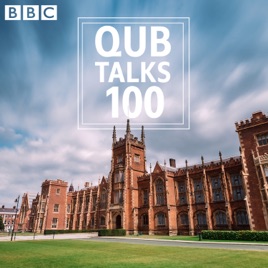
Advertise on podcast: QUB Talks 100 – The Partition of Ireland: Causes and Consequences
This podcast has
25 episodes
Language
EnglishPublisher
BBC Radio UlsterExplicit
No
Date created
2021/05/24
Latest episode
2021/10/04
Average duration
23 min.
Release period
7 days
Description
Leading academics explore the causes and consequences of the Partition of Ireland in a series of authored talks, developed by Queen’s University Belfast with support from the BBC.
Unlock QUB Talks 100 – The Partition of Ireland: Causes and Consequences podcast Email contact info,
Listeners & Audience details
Email contact information
Direct podcast contact details

Listeners
Audience numbers & engagement insights

Audience details
Podcast Insights

Podcast episodes
Check latest episodes from QUB Talks 100 – The Partition of Ireland: Causes and Consequences podcast
Dr Robert Lynch - Partition and the Anglo-Irish Treaty
2021/10/04
Contributor:
Dr Robert Lynch
Talk Title
Partition and the Anglo-Irish Treaty
Talk Synopsis:
This talk explores the background to the Anglo-Irish Treaty and its immediate (and lasting) effects. It suggests that ‘the most extreme paranoias of the Unionist psyche’ were reinforced by the events of the post-Treaty period, including as a result of growing unionist mistrust of the British government. And it explores how the Boundary Commission allowed ‘both sides to place radically different interpretations on the shape of any future settlement.’ It also looks at Sinn Féin’s attitude towards/understanding of unionist concerns and the extent to which these may have been predicated on a sense of unionism as ‘somehow inauthentic… and that conflict in Ireland was due fundamentally to the British presence’ rather than the ‘reality that there were almost one million people in Ulster who wanted nothing to do with their nationalist project.’ And it concludes by suggesting that ‘Ulster’s experience in 1922’ shaped the ‘rather draconian defensiveness’ of the Unionist government which emerged in its aftermath as well as creating disunity within the ‘northern Catholic minority’ and between northern and southern nationalists.
Short biography:
Dr Robert Lynch, University of Glasgow
Further Reading:
A State Under Siege. The Establishment of Northern Ireland 1920-1926 – Brian Follis
Partition and the Limits of Irish Nationalism – Clare O'Halloran
The Northern IRA and the early years of partition, 1920-22 – Robert Lynch
The Partition of Ireland, 1912-1925 (Cambridge, 2019) – Robert Lynch
Northern Nationalism. Nationalist Politics, Partition and the Catholic Minority in Northern Ireland 1890-1940 - Eamon Phoenix
Professor Robert Savage - Broadcasting and the Border: How partition influenced broadcasting on the island of Ireland
2021/09/27
Contributor:
Professor Robert Savage
Talk Title
Broadcasting and the Border: How partition influenced broadcasting on the island of Ireland
Talk Synopsis:
This talk explores the development of broadcasting in Ireland during the 1920s and how the new radio stations in Belfast and Dublin were affected (and constrained) by politics. It describes the growing popularity and influence of broadcast services and the impact of new technologies, competition and wider social changes on the work of programme-makers in the BBC and RTÉ. It reflects critically on aspects of editorial decision-making and output by both broadcasters, but suggests that despite ‘all of [their] inevitable failures and shortcomings, ‘independent public service media’ remain ‘an indispensable component of any truly democratic society.’
Short biography:
Professor Robert Savage is the Director of the Boston College Irish Studies Program and a member of the university’s History Department faculty.
Further Reading:
The BBC's Irish Troubles, Television, Conflict and Northern Ireland – Robert Savage
A Loss of Innocence? television and Irish Society 1960-1972 – Robert Savage
Broadcasting and Public Life, RTÉ News and Current Affairs 1926-1997 – John Horgan:
Luck and the Irish, A Brief History of Change from 1970 – Roy Foster
A Post-Nationalist History of Television in Ireland – Edward Brennan
2RN and the Origins of Irish Radio – Richard Pine
Professor Bill Kissane - The Partition of Ireland in a Global Context
2021/09/20
Contributor:
Professor Bill Kissane
Talk Title:
The Partition of Ireland in a Global Context
Talk Synopsis:
This talk explores partition in an international context and also the similarities and differences between what happened in Ireland and elsewhere, including Cyprus, India and Palestine. It suggests that most partitions are ‘provisional’ because they ‘fail to resolve conflicts’ and looks at ‘the identity shifts that occur when borders change’ and what these meant (and mean) in an Irish context. It looks at how majority rule ‘polarised rather than reconciled’ communities in Northern Ireland and the way in which Partition led to ‘consolidation and identity formation based on religion’ in the decades that followed. And it concludes by considering what the experience and effect of partition might mean for future attempts to resolve deep-seated territorial conflicts.
Short biography:
Bill Kissane is a Reader in Politics at the London School of Economics.
Further Reading:
Literature, Partition and the Nation State – Joe Cleary
'Ethnic Conflict and the Two State Solution: the Irish Experience of Partition'. Mapping Frontiers, Plotting Pathways, Ancilliary Paper, No.3, 2004. Institute of British Studies. Queens University Belfast – John Coakley
'Shackles Across the Heart: Comparing Ireland's Partition', A Treatise on Northern Ireland Vol 1, pp.370-397 – Brendan O'Leary
Partitions and the Sisyphean Making of Peoples – Dirk Moses.
Partition in Ireland, India, and Palestine: Theory and Practice – T. G. Fraser
Professor Richard Bourke - Unionisms and Partition
2021/09/13
Contributor:
Professor Richard Bourke
Talk Title:
Unionisms and Partition
Talk Synopsis:
This talk explores the background to the Government of Ireland Act (1920) and how it was ‘a departure from unionism in its original, “classic” sense’. It describes how the creation of a ‘parliamentary federation’ was ‘a setup which unionist statecraft had been determined to avoid’ and how it ‘envisaged the creation of yet another union: an Irish union’ which would be facilitated by the formation of a Council of Ireland. It suggests that UK government policy in the early 1920s ‘was neither unionist nor partitionist in complexion’ – something that was reflected in the terms of the Anglo-Irish Treaty which ‘prospectively incorporated’ Northern Ireland into the Irish Free State. It also looks at differing views of partition as either ‘undemocratic’ or ‘a matter of democratic right’ and the effect of subsequent political developments. And it looks to how Ulster unionism might think about its future and constitutional relations – ‘pursuing a lasting settlement instead of protesting as its future is shaped behind its back’.
Short biography:
Richard Bourke is Professor of the History of Political Thought, and a Fellow of King’s College, at the University of Cambridge.
Further Reading:
A Fool’s Paradise: Being a Constitutionalist’s Criticism of the Home Rule Bill of 1912 – A. V. Dicey
Ulster’s Stand for Union - Ronald McNeill,
Home Rule: An Irish History, 1800–2000 – Alvin Jackson
Peace in Ireland: The War of Ideas – Richard Bourke
“Genealogies of Partition: History, History-Writing and ‘the Troubles’ in Ireland,” Critical Review of International Social and Political Philosophy, 9: 4 (December 2006), pp. 619–34 – Margaret O’Callaghan
‘Democracy, Sovereignty and Unionist Political Thought during the Revolutionary Period’, Transactions of the Royal Historical Society, 27 (December 2017), pp. 211–32 – Colin Reid
Professor Brendan O'Leary - Partition in Comparative Perspective
2021/09/06
Contributor:
Professor Brendan O’Leary
Talk Title
Partition in Comparative Perspective
Talk Synopsis:
This talk places the Partition of Ireland in a comparative international context. It describes some of what was happening elsewhere in Europe at the same time and looks at the background and effects of the ‘two partitions in 1920: of Ireland and of Ulster.’ It notes that ‘few modern partitions have endured’ and explores the arguments that have been advanced for them and their application in different places, including Ireland. It suggests that conflict ‘in and over Northern Ireland over the last century may be correctly attributed both to partition itself and to the imperfection of the partition’. And it makes a case for how (in both general and specific terms) ‘partitions generate security dilemmas… pushing conflict downstream’, concluding that ‘prudence… mandates opposing partition in policymaking and placing the burden of proof on its advocates.’
Short biography:
Brendan O'Leary is the current Lauder Professor of Political Science at the University of Pennsylvania.
Further Reading:
A Treatise on Northern Ireland, (Vol 1, Chapter 7, and Vol 2, Chapters 1 and 2) – Brendan O’Leary,
The Partition of Ireland, 1911-1925 – Michael Laffan
The History of Partition, 1912-1925 – Denis Gwynn
Professor Fearghal McGarry - The Killing of Sir Henry Wilson: An Irish Tragedy
2021/08/30
Contributor:
Professor Fearghal McGarry
Talk Title:
The Killing of Sir Henry Wilson: An Irish Tragedy
Talk Synopsis:
This talk explores the circumstances and impact of Field Marshal Sir Henry Wilson’s murder on the doorstep of his Belgravia home in June, 1922. It describes his role in the politics of this period, including as chief security advisor to the new Northern Ireland government, and how his killers (two London-born republicans) had served in the British army during WW1. It suggests that the story of Sir Henry Wilson and his killers, including their views and sense of identity, illustrates the complex and interconnected nature of relationships ‘within and between’ Ireland and Britain – many of which are played out in people’s individual lives/family circumstances. And it concludes by suggesting that ‘an ethical remembering of this difficult history’ might usefully foreground ‘its complexities and contradictions and the cost of violence for those left behind… not least the narrowing of identities… which continues to challenge reconciliation in Ireland.’
Biography:
Fearghal McGarry is Professor of Modern Irish History at Queen’s University Belfast.
Further Reading:
Field Marshal Sir Henry Wilson: A Political Soldier – Keith Jeffery
‘Michael Collins and the assassination of Sir Henry Wilson’, Irish Historical Studies, 28/110, pp 150-170 – Peter Hart
Southern Irish Loyalism, 1912-49 – Brian Hughes and Conor Morrissey (eds)
The Partition of Ireland, 1918-1925 – Robert Lynch
The IRA in Britain, 1919-1923 – Gerard Noonan
Dr Tim Wilson - Violence: the Human Cost of Partition
2021/08/23
Contributor:
Dr Tim Wilson
Talk Title:
Violence: the Human Cost of Partition
Talk Synopsis:
This talk explores the context and nature of the violence that accompanied Partition and the establishment of Northern Ireland and also the lasting effects/significance of the events of that period. It describes the scale of sectarian violence and related disturbances in Belfast and elsewhere, including workplace expulsions, rioting and the forced movement of people from their homes. It suggests that events in Northern Ireland were part of ‘a wider, all-Ireland conflict’ but that they also had their own ’dynamic and… momentum’ and that all of this was ‘complex, shifting [and] layered’. And it details how violence began to adopt the tactics and technology of WW1, local efforts at conciliation and the ways in which this ‘extraordinarily intense period of turbulence’ allowed all sides to ‘glimpse a sort of abyss underneath the constitutional floorboards’ whilst also setting ‘the pattern for events to come’.
Short Biography:
Dr Tim Wilson is the current Director of the Centre for Study of Terrorism and Political Violence at University of St Andrews.
Further Reading:
From Pogrom to Civil War: Tom Glennon and the Belfast IRA – Kieran Glennon
The Northern IRA and the Early Years of Partition 1920-22 – Robert Lynch
Political Conflict in East Ulster, 1920-22 – Christopher Magill
Belfast's Unholy War: The Troubles of the 1920s– Alan F. Parkinson
‘The Most Terrible Assassination that has yet stained the name of Belfast’: The McMahon Murders in Context' (Irish Historical Studies, Vol. 37, 145) – Tim Wilson
Professor Marianne Elliott - Partition's Casualties: religious minorities in the new states
2021/08/16
Contributor:
Professor Marianne Elliott
Talk Title:
Partition's Casualties: religious minorities in the new states
Talk Synopsis:
This talk looks at the experience of minority communities in the decades that followed Partition and some of the social, religious and political factors involved. It suggests that Partition ‘created two states whose characters were informed by sectarianised religious cultures’ and explores how community relations have changed over time. It describes the impact of violence and discrimination and the role played by religion in public life and how this has been attenuated, to varying degrees, in both states. It also argues that ‘unionism and the Catholic church still behave like endangered species in Northern Ireland’ and speculates about the effect which Brexit might have on constitutional arrangements more generally.
Short Biography:
Professor Marianne Elliott is Professor emerita at the Institute of Irish Studies, University of Liverpool.
Further Reading:
Protestant and Irish: the minority's search for place in independent Ireland – Ian d’Alton and Ida Milne (eds.)
Descendancy: Irish Protestant Histories since 1795 – David Fitzpatrick
When God Took Sides: Religion and Identity in Ireland – Unfinished History – Marianne Elliott
The Catholics of Ulster: A History – Marianne Elliott
‘Rendering to God and Caesar’: The Irish Churches and the Two States in Ireland, 1949-73 – Daithi Ó Corráin
Smyllie's Ireland: Protestants, Independence, and the Man who ran the Irish Times – Caleb Wood Richardson
Professor Glenn Patterson - Writing and the Border
2021/08/09
Contributor:
Professor Glenn Patterson
Talk Title:
Writing and the Border
Talk Synopsis:
This talk looks at how ideas of borders and boundaries have been reflected in Irish literature. It ranges widely across time and genres and includes reflections on works by Spike Milligan, Anna Burns, Patrick Kavanagh and Seamus Heaney. It suggests that ‘fractal-like, the border recurs and recurs’ in much of the writing from/about Northern Ireland down the decades and that this divide is ‘repeated and magnified in the divisions between neighbourhoods, or .. internalised as a set of no-goes and sometimes no thinks’. It picks up on Seamus Heaney’s observation (from a 1998 documentary for the BBC) that ‘with so much division around, people are forever encountering boundaries that bring them up short’ but also the ways in which borders are sometimes bridged, or transgressed. None of this, Glenn Patterson says, is intended as ‘a survey’, rather it ‘is a thought taken for a walk… as wayward and eccentric as its subject.’
Short Biography:
Glenn Patterson is an author and the Director of the Seamus Heaney Centre at Queen’s University, Belfast.
Further Reading:
Ulster Cycle
Puckoon – Spike Milligan
Song of Erne – Robert Harbinson
Milkman – Anna Burns
Big Girl, Small Town – Michelle Gallen
Borderlands – Brian McGilloway
'A Border-Line Case', Don’t Look Now and Other Stories – Daphne du Maurier
Finnegans Wake – James Joyce
Dr Margaret O'Callaghan - Acts of partition: from the Government of Ireland Act 1920 to the Boundary Commission, 1925
2021/08/02
Contributor:
Dr Margaret O’Callaghan
Talk Title:
Acts of partition: from the Government of Ireland Act 1920 to the Boundary Commission, 1925.
Talk Synopsis:
This talk describes Partition as ‘an instrument of policy that marked the [UK] government’s failure in the wider problem of governing Ireland’. It suggests that the Government of Ireland Act was ‘a landmark in the genealogy of partitions’ and sets out its immediate background and effects. And it argues that the partition of Ireland ‘was not an act, but a process’ that ‘happened in stages’. It details the sectarian tensions and violence of this period, the Treaty negotiations of 1921 and James Craig’s role as Prime Minister, including his interactions with politicians in London and Dublin. It also identifies key questions about what happened and suggests that whilst the ‘Boundary Commission would end the partition process’ in 1925, James Craig spent much of his time until then ‘consumed’ with ‘security and the campaign to resist’ the effect which the Commission might have in placing ‘his whole entity in jeopardy’.
Short Biography:
Dr Margaret O’ Callaghan is an historian and political analyst at the School of History, Anthropology, Philosophy and Politics, Queen’s University, Belfast.
Further Reading:
Old Parchment and Water; the Boundary Commission of 1925 and the Copperfastening of the Irish Border. Bullan; an Irish Studies Journal , Volume IV, Number 2, 2000, pp 27-55 – Margaret O’ Callaghan
Genealogies of Partition; History, History‐Writing and ‘the Troubles’ in Ireland. Critical Review of International Social and Political Philosophy, 9:4, 619-634 – Margaret O'Callaghan
The Evolution and Entrenchment of the Irish Border, 1911-1926: A political geography – Kieran Rankin
Fatal Path: British Government and the Irish Revolution 1910-1922 – Ronan Fanning
The Unresolved Question: The Anglo-Irish Settlement and its Undoing 1912-72 – Nicholas Mansergh
Fatal Influence: the Impact of Ireland on British Politics – Kevin Matthews
Dr Peter Leary - Life on the line: Partition at the Border
2021/07/26
Contributor:
Dr Peter Leary
Talk Title:
Life on the line: Partition at the Border
Talk Synopsis:
This talk explores how Partition affected the everyday life of border communities. It describes the ‘piecemeal and… protracted’ process by which the new boundary was established and how ‘it ruptured old connections… but still needed to be crossed.’ It looks at the extent of smuggling and the development of a ‘frontier bureaucracy’ and also how the Irish border continued ‘to be stalked by the very violence of which it was itself a product.’ It suggests that ‘the pain and irritation and… fury of partition seemed to grow a little dimmer’ by the end of the twentieth century and that by ‘the start of this millennium the border was more permeable than at any point since 1922.’ And it concludes with an assessment of Brexit’s impact on the Irish border, noting that whilst it remains one of ‘the many divisive and contested legacies’ of Partition, it ‘continues to be characterised by interconnection and exchange.’
Short Biography:
Peter Leary is a Vice Chancellor’s Fellow in History at Oxford Brookes University.
Further Reading:
Partitioned lives: the Irish borderlands – Catherine Nash, Brian Graham and Bryonie Reid
Hard border: walking through a century of Irish partition – Darach MacDonald
Unapproved routes: histories of the Irish border, 1922-72 – Peter Leary
Border Roads to Memories and Reconciliation – www.borderroadmemories.com
Dr Cormac Moore - Sir Ernest Clark: 'Midwife to the New Province of Ulster'
2021/07/19
Contributor:
Dr Cormac Moore
Talk Title:
Sir Ernest Clark - 'Midwife to the New Province of Ulster'
Talk Synopsis:
This talk explores the role of Sir Ernest Clark in creating the administrative structures for the Northern Ireland government. It describes the background to his appointment as Assistant Under-Secretary to Ireland in September 1920, his relations with civil service colleagues in Dublin and unionist politicians and the challenges that he faced in establishing ‘government departments… at a time when the political environment in Ireland was extremely volatile’. It suggests that whilst Sir Ernest Clark is now a ‘largely forgotten figure’ he was ‘one of the main architects in giving the new Northern Ireland entity tangible form.’ It also looks at some of the security risks that Clark faced during his time in Belfast, his efforts to deal with community tensions and the affection that he came to feel for Northern Ireland – a place that he later described as having become ‘written across my heart and life’.
Short Biography:
Dr Cormac Moore is an historian with Dublin City Council’s Decade of Commemorations Programme.
Further Reading:
Birth of the Border: The Impact of Partition in Ireland – Cormac Moore
British Policy and the Irish Administration 1920-22 – John McColgan
A State Under Siege: The Establishment of Northern Ireland, 1920-25 – Bryan A. Follis.
The Civil Service and the Revolution in Ireland 1912-1938 – Martin Maguire
Podcast reviews
Read QUB Talks 100 – The Partition of Ireland: Causes and Consequences podcast reviews
Podcast sponsorship advertising
Start advertising on QUB Talks 100 – The Partition of Ireland: Causes and Consequences relevant audience podcasts
You may also like to advertise on these Podcasts
4.9187242
The Upper Hand: Chuck & Chris Talk Hand Surgery
Chuck and Chris
4.883115
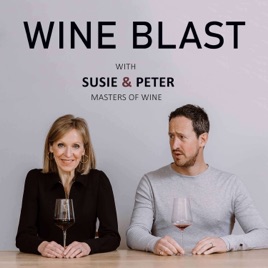
Wine Blast with Susie and Peter
Susie and Peter, Masters of Wine
4.6598231
The Unexplainable Disappearance of Mars Patel
GZM Shows
4.34837
The TED AI Show
TED
4.719867
Atlas Avenue Beat
7 Lamb Productions | Bloody FM

4.784771
The Newsmax Daily
Newsmax Podcasts
4.82780347
She Reads Truth Podcast
She Reads Truth
4.779101
The Organic Gardening Podcast
Garden Organic
4.7197676
The Stripe Show
The Stripe Show
4.84335502
The History of England
David Crowther