1671793206
PolitikWissen

Werben im Podcast: PolitikWissen

Dieser Podcast hat
47 Episoden
Sprache
German
Erstellt am
2023/02/14
Neueste Episode
2025/03/14
Durchschnittsdauer
35 min.
Veröffentlichungsintervall
52 Tage

Beschreibung

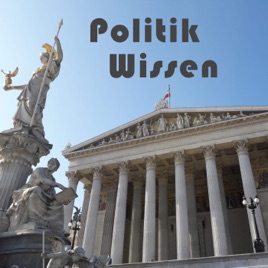
PolitikWissen ist ein Podcast des Instituts für Politikwissenschaft der Universität Innsbruck. Unsere Themen decken das gesamte Spektrum der Politikwissenschaft ab. Es geht um Politik, Macht, Krieg und Frieden. Unsere Gesprächspartnerinnen und -partner blicken hinter die Kulissen und geben Auskunft über spannende Fragen der aktuellen Politikforschung. Alltägliches politisches Geschehen wird zum Anlass genommen, um über grundlegende Fragen des Politischen und der Gesellschaft nachzudenken. ---- Music by Lost Harmonies. Logo by Parlamentsdirektion. This podcast gives the views of the author(s), and not the position of the Department of Political Science, University of Innsbruck. This work by the Department of Political Science, University of Innsbruck, is licensed under a Creative Commons Attribution-NonCommercial-NoDerivatives 4.0 International (CC BY-NC-ND 4.0).

Freischalten PolitikWissen Podcast E-Mail-Kontaktdaten,
Hoerer- und Zielgruppendetails

E-Mail-Kontaktinformationen

Direkte Podcast-Kontaktdaten

Hoerer

Zielgruppenzahlen und Engagement-Einblicke

Zielgruppendetails

Podcast-Einblicke

Podcast-Episoden

Neueste Episoden von PolitikWissen Podcast ansehen


Son­der­reihe USA #5: Die US-Außen­po­li­tik nach der Wahl: Was ist von der neuen Admi­nis­tra­tion zu erwar­ten?
2025/03/14
Aufnahme vom 14. Jänner 2025. Wie unterscheidet sich die Außenpolitik einer demokratischen von einer republikanischen Administration? Wie steht es um die Zukunft der transatlantischen Beziehungen? Welche Rolle spielen die USA im Nahen Osten und bei anderen Konflikten wie dem Ukraine-Krieg? Der Vortrag erläutert die Dynamiken hinter der US-Außenpolitik und analysiert, was von der neuen Administration zu erwarten ist. Dr. Cengiz Günay ist Direktor des Österreichischen Instituts für internationale Politik (oiip) und Lektor am Institut für Politikwissenschaft, dem Institut für internationale Entwicklung sowie dem Institut für Orientalistik an der Universität Wien. ---- Music by Lost Harmonies. Logo by Parlamentsdirektion. This podcast gives the views of the author(s), and not the position of the Department of Political Science. This work by the Department of Political Science at the University of Innsbruck is licensed under a Creative Commons Attribution-NonCommercial-NoDerivatives 4.0 International (CC BY-NC-ND 4.0).
Sonderreihe USA #4: US-Wahlkampf in Zeiten von KI: Deepfakes vs. Faktenchecks
2024/12/23
Der strategische Einsatz künstlicher Intelligenz (KI) kann den Ausgang von Wahlen beeinflussen — so die häufig geäußerte Sorge. In dieser Sitzung widmen wir uns der Frage, ob speziell Deepfake-Videos dies tun können. Hierbei handelt es sich um gefälschte Videos, die mithilfe von KI erstellt wurden und täuschend echt aussehen. Im US-Wahlkampf kursierten zahlreiche Deepfakes, z.B. jene die suggerieren sollen, Joe Biden sei zu alt für das Amt. ---- Music by Lost Harmonies. Logo by Parlamentsdirektion. This podcast gives the views of the author(s), and not the position of the Department of Political Science. This work by the Department of Political Science at the University of Innsbruck is licensed under a Creative Commons Attribution-NonCommercial-NoDerivatives 4.0 International (CC BY-NC-ND 4.0).
Sonderreihe USA #3: Wahlen im Schatten der Dysfunktionalen Demokratie
2024/12/16
Das politische System befindet sich spätestens seit der Erstürmung des Kongresses am 6. Januar 2021 in einer Dauerkrise. Das Land ist tief gespalten, Gewalt wird zunehmend als legitimes Mittel der politischen Auseinandersetzung angesehen und die alte minimalistische Verfassung bietet radikalen politischen Kräften vielfältige Angriffspunkte, um das System zu stürzen. Der Vortrag beleuchtet die Hintergründe dieser Wahlen sowie die unterschiedlichen politischen Logiken und Strategien, die sie prägen. ---- Music by Lost Harmonies. Logo by Parlamentsdirektion. This podcast gives the views of the author(s), and not the position of the Department of Political Science. This work by the Department of Political Science at the University of Innsbruck is licensed under a Creative Commons Attribution-NonCommercial-NoDerivatives 4.0 International (CC BY-NC-ND 4.0).
Sonderreihe USA #2: World Order(s) – Which Ones and How Many?
2024/12/12
Will we possibly wake up to a new world order in the morning of 06 November? Can the outcome of a presidential election, can a single politician ‘make’ or significantly influence world order? The answer is simply: “it depends”. And it particularly depends on what one understands under the term “world order”, and the understandings of history and relevant periodizations that come along with this. The presentation will argue that the complexity of contemporary ‘world order’ can only adequately be grasped if one accounts for a co-existing plurality of ordering principles and the different time horizons that come along with this plurality. ---- Music by Lost Harmonies. Logo by Parlamentsdirektion. This podcast gives the views of the author(s), and not the position of the Department of Political Science. This work by the Department of Political Science at the University of Innsbruck is licensed under a Creative Commons Attribution-NonCommercial-NoDerivatives 4.0 International (CC BY-NC-ND 4.0).
Sonderreihe USA #1: Trump vs. Democracy: From Reality Show to Imperial Presidency
2024/11/11
From “You’re fired” and “Lock her up” to “Stop the steal” and “the Supreme Court ruled . . . I’m immune” – Donald Trump in spite / because of his increasing authoritarian ambitions and violent rhetoric has had a firm grip on the Republican Party for almost ten years. This talk seeks to trace Trump’s path from reality show host to the White House and beyond and will lay bare why, during this election season, not only the next presidency but US democracy as a whole is at stake. ---- Music by Lost Harmonies. Logo by Parlamentsdirektion. This podcast gives the views of the author(s), and not the position of the Department of Political Science. This work by the Department of Political Science at the University of Innsbruck is licensed under a Creative Commons Attribution-NonCommercial-NoDerivatives 4.0 International (CC BY-NC-ND 4.0).
Powi Lecture #12: Russ­land, Ukraine und die Zukunft (mit Gerhard Mangott)
2024/03/15
Vortrag von Univ.-Prof. Dr. Gerhard Mangott zum Krieg in der Ukraine Es ist der schwerste militärische Konflikt in Europa seit Jahrzehnten, und seine Folgen sind kaum absehbar. Der Krieg Russlands in der Ukraine ist auch ein Konflikt, der die Welt spaltet: geopolitisch, etwa zwischen China und den USA, und ideologisch, was gerade die hitzigen Debatten über die Militärhilfe für die Ukraine in Europa zeigen. Doch Ideologie ist fehl am Platz, wenn man verstehen will, wie es zu diesem Krieg kam und wohin er führen wird. Der renommierte Russland-Experte Gerhard Mangott analysiert präzise und verständlich Hintergründe, Folgen und die Frage, ob in Russland ein Massenumsturz von unten oder eine Palastrevolte gegen Wladimir Putin denkbar ist – und was das für Russland, für Europa und für die Welt bedeuten würde. Gerhard Mangott ist seit 01. Oktober 2015 Universitätsprofessor für Politikwissenschaft mit den Schwerpunkten Internationale Beziehungen und Sicherheit im postsowjetischen Raum, 2003-2015 ao.Univ.Prof. für Politikwissenschaft an der Universität Innsbruck. 2001 Promotion zum Doktor der Philosophie im Fach Politikwissenschaft. 2002 Habilitation im Fach Politikwissenschaft. Venia für das gesamte Fach der Politikwissenschaft. 1991–2008 Rußland- und Osteuropareferent am Österreichischen Institut für Internationale Politik (OIIP) in Laxenburg bzw. Wien. 2009-2016 'Scientific Adviser on Post-Soviet Affairs' am Österreichischen Institut für Internationale Politik (OIIP) in Wien. Derzeitige Forschungsschwerpunkte sind: Innen- und Außenpolitik Russlands, Strategische Rüstungskontrolle und nukleare Proliferation (v.a. Iran und Nordkorea), Gewaltkonflikte, Energiesicherheit der EU im Gassektor. Regelmäßige Lehrtätigkeit an der Diplomatischen Akademie in Wien seit 1995 und an der Fachhochschule des BFI Wien seit 2004. Credits Bild: Gregor Handrich ---- Music by Lost Harmonies. Logo by Parlamentsdirektion. This podcast gives the views of the author(s), and not the position of the Department of Political Science. This work by the Department of Political Science at the University of Innsbruck is licensed under a Creative Commons Attribution-NonCommercial-NoDerivatives 4.0 International (CC BY-NC-ND 4.0).
Innsbruck wählt 2024 (3/3): Wer tritt an? Die Innsbrucker Parteien und ihre Kandidatinnen und Kandidaten
2024/02/05
Die Innsbrucker Parteienlandschaft ist so zersplittert wie noch nie. Lore Hayek erklärt, welche Parteien sowie Kandidatinnen und Kandidaten zur Wahl antreten. Lore Hayek erklärt in dieser Reihe die Innsbrucker Gemeinderats- und Bürgermeister:innenwahl 2024. Wer stellt sich zur Wahl? Welche Fallstricke können nach der Wahl auftreten? Ein Blick in die Geschichte kann dabei oft Auskunft geben. Aufgenommen im Jänner 2024, Universität Innsbruck. Bild: Pixabay.com ---- Music by Lost Harmonies. Logo by Parlamentsdirektion. This podcast gives the views of the author(s), and not the position of the Department of Political Science. This work by the Department of Political Science at the University of Innsbruck is licensed under a Creative Commons Attribution-NonCommercial-NoDerivatives 4.0 International (CC BY-NC-ND 4.0).
Innsbruck wählt 2024 (2/3): Wie wird gewählt? Eigenheiten der Innsbrucker Wahlordnung
2024/02/02
Wie wird man Mitglied des Innsbrucker Gemeinderats? Wie wird man Bürgermeisterin/Bürgermeister? Einige Neuerungen im Wahlgesetz machen diese Wahlen besonders spannend. Lore Hayek erklärt in dieser Reihe die Innsbrucker Gemeinderats- und Bürgermeister:innenwahl 2024. Wer stellt sich zur Wahl? Welche Fallstricke können nach der Wahl auftreten? Ein Blick in die Geschichte kann dabei oft Auskunft geben. Aufgenommen im Jänner 2024, Universität Innsbruck. Bild: Pixabay.com ---- Music by Lost Harmonies. This podcast gives the views of the author(s), and not the position of the Department of Political Science. This work by the Department of Political Science at the University of Innsbruck is licensed under a Creative Commons Attribution-NonCommercial-NoDerivatives 4.0 International (CC BY-NC-ND 4.0).
Innsbruck wählt 2024 (1/3): Wer mit wem, jeder gegen jeden? Ein geschichtlicher Überblick
2024/01/30
Die Innsbrucker Parteienlandschaft ist so zersplittert wie noch nie. Die Hintergründe reichen bis ins Jahr 1994 zurück. Lore Hayek erklärt in dieser Reihe die Innsbrucker Gemeinderats- und Bürgermeister:innenwahl 2024. Wer stellt sich zur Wahl? Welche Fallstricke können nach der Wahl auftreten? Ein Blick in die Geschichte kann dabei oft Auskunft geben. Aufgenommen im Jänner 2024, Universität Innsbruck. Bild: Pixabay.com ---- Music by Lost Harmonies. This podcast gives the views of the author(s), and not the position of the Department of Political Science. This work by the Department of Political Science at the University of Innsbruck is licensed under a Creative Commons Attribution-NonCommercial-NoDerivatives 4.0 International (CC BY-NC-ND 4.0).
Powi Lec­ture #11: Small Sta­tes and Grand Stra­t­egy
2023/12/11
11.12.2023: Anders Wivel from University of Copenhagen talks about opportunities and limitations of small state grand strategy. What are the similarities and differences between the grand strategies of small states and great powers? This lecture identifies the characteristics of small state grand strategy and discusses the similarities and differences between the grand strategies of small states and great powers. The lecture unpacks the nature of traditional defensive small state grand strategies hiding and shelter-seeking as well as more recent offensive, influence-seeking small state grand strategies under the heading of smart state strategy and discusses the conditions for small state success and influence in international relations. Anders Wivel, PhD, is Professor of International Relations in the Department of Political Science, University of Copenhagen. He has published widely on foreign policy, small states in international relations, and power politics. His most recent book is Polarity in International Relations: Past, Present, Future (Palgrave, 2022, co-edited with Nina Græger, Bertel Heurlin and Ole Wæver). Recorded on November 27th, 2023, University of Innsbruck. Image: Eivind Senneset, UiB ---- Music by Lost Harmonies. This podcast gives the views of the author(s), and not the position of the Department of Political Science. This work by the Department of Political Science at the University of Innsbruck is licensed under a Creative Commons Attribution-NonCommercial-NoDerivatives 4.0 International (CC BY-NC-ND 4.0).
Powi Lecture #10: Con­flicts, Sexual Vio­lence and Women Empow­er­ment? Insights from DR Con­go, Libe­ria, and Sri Lanka
2023/11/13
Armed conflicts and wars inflict human suffering, destroy institutions, and infrastructure. Despite all this, several recent studies have found that women’s political representation and agency thrives after armed conflicts. This paradox is attributed to the ability of wars to disrupt entrenched social hierarchies and thus provide opportunities for marginalized groups including women. In this talk, Prof. Koos provides a critical perspective of overly optimistic macro-level approaches, and argues that in order to understand the implications of wars and conflicts, the experiences, behaviors, and attitudes of individuals, families and communities need to be at the center of research. To that end, Prof. Koos will talk about his new ERC-funded project (www.wareffects.eu) that focuses on the micro-level dynamics of war and gender relations. Moreover, he will present a forthcoming article on the sociopolitical legacies of conflict-related sexual violence. The paper draws on original surveys from more than 10,000 respondents in DR Congo, Liberia, and Sri Lanka, showcases novel measurement strategies to provide respondents anonymity, and concludes that survivors of sexual violence engage in collective action and mobilize in their communities, however, with the drawback that this mobilization is largely driven by men. The article provides a new theoretical perspective by shifting the debate from a focus on victimhood towards survivor agency while acknowledging that gender norms appear to remain an obstacle to women’s empowerment. Carlo Koos is an Associate Professor in the Department of Government at the University of Bergen. He is also affiliated with the Development Learning Lab, the WomanStats Project, and the German Institute of Global and Area Studies. Previously he worked as humanitarian aid worker with Médecins Sans Frontières in South Sudan, Libya, Egypt, Swaziland and Uganda. Recorded on October 12th, 2023, University of Innsbruck. Image: Eivind Senneset, UiB ---- Music by Lost Harmonies. This podcast gives the views of the author(s), and not the position of the Department of Political Science. This work by the Department of Political Science at the University of Innsbruck is licensed under a Creative Commons Attribution-NonCommercial-NoDerivatives 4.0 International (CC BY-NC-ND 4.0).
Sonderreihe Außenpolitik 3: Widersprüchlich? Österreich und der Nahe und Mittlere Osten
2023/10/20
*** Achtung: Das Interview wurde am 11.09.2023 und damit vor dem Terrorangriff der Hamas auf Israel im Oktober 2023 aufgenommen. *** "Seit den späten 1980er-Jahren ist Österreichs Verhältnis zu Israel von unserer nationalsozialistischen Vergangenheit geprägt", sagt Gudrun Harrer. In Österreich nicht unumstritten war Bruno Kreisky rund zehn Jahre zuvor noch einen pro-palästinensischen Kurs gefahren. Nach Kreisky ging das Interesse am Nahostkonflikt in Österreich zurück. Die Aufarbeitung der Nazi-Vergangenheit, der EU-Beitritt und die Kriege in Ex-Jugoslawien traten ins Zentrum der Politik. In den 2000er-Jahren war Österreichs Nahost Politik widersprüchlich. Stimmte Österreich in den Vereinten Nationen noch häufig für Palästina, erklärte der damalige Bundeskanzler Sebastian Kurz 2018 Israels Sicherheit zur "österreichischen Staatsräson". Ein Gespräch über Österreichs Geschichte im Nahen und Mittleren Osten, die Beziehung zu Israel sowie die Rolle der Türkei. Aufnahme vom 11.09.2023 an der Universität Innsbruck. Interview: Julia Schwab. Bild: Friends123 via https://commons.wikimedia.org/wiki/File:2012.01.22.Gilbert.3.JPG ---- Music by Lost Harmonies. This podcast gives the views of the author(s), and not the position of the Department of Political Science. This work by the Department of Political Science at the University of Innsbruck is licensed under a Creative Commons Attribution-NonCommercial-NoDerivatives 4.0 International (CC BY-NC-ND 4.0).
Son­der­reihe Außen­po­li­tik 2: Uner­setz­lich? Öster­reichs Aus­wär­ti­ger Dienst
2023/10/04
"Vor allem die letzten 30 Jahre haben den Beruf der Diplomat:innen besonders geprägt", meint Sandra Sonnleitner. Gleichzeitig ist sie überzeugt, dass der Auswärtige Dienst wichtige Funktionen erfüllt, besonders in Zeiten des Krieges. "Diplomatie kann als ein Set von Normen, Regeln und Werten gesehen werden, das die Komplexität im internationalen Austausch reduziert. Und der Auswärtige Dienst wäre dann die Organisationsform, in der das passiert", sagt Sandra Sonnleitner. Sie hat sich intensiv mit österreichischer Diplomatie bzw. dem Auswärtigen Dienst Österreichs beschäftigt. Laut ihr war es vor allem Bruno Kreisky, der wesentliche Weichen für Österreichs Außenpolitik und den Auswärtigen Dienst gestellt hat, nicht zuletzt in der Ausbildung einer neuen Generation von Diplomat:innen oder der Herstellung eines positiveren Österreich-Bilds im Ausland. Sandra Sonnleitner ist Geschäftsführerin der Gemeinnützigen Privatstiftung Kaiserschild, Wien, Österreich, und beschäftigt sich wissenschaftlich mit Diplomatie und dem Auswärtigen Dienst Österreichs. Aufnahme vom 18.07.2023 an der Universität Innsbruck. Interview: Julia Schwab. Bild: Marion S. Trikosko via https://www.loc.gov/item/2021638515/ ---- Music by Lost Harmonies. This podcast gives the views of the author(s), and not the position of the Department of Political Science. This work by the Department of Political Science at the University of Innsbruck is licensed under a Creative Commons Attribution-NonCommercial-NoDerivatives 4.0 International (CC BY-NC-ND 4.0).
Sonderreihe Außenpolitik 1: Unveränderlich? Österreichs Neutralität
2023/09/12
"Es wurde nie intensiv darüber disktuiert, was der Mehrwert der Neutralität ist und wie wir sie entwickeln wollen", sagt Martin Senn. Was bedeutet es für Österreich neutral zu sein? Wie können wir die Neutralität im 21. Jahrhundert definieren? Ist es überhaupt noch moralisch vertretbar, neutral zu sein? Martin Senn (Institut für Politikwissenschaft, Universität Innsbruck) hat sich intensiv mit Österreichs Neutrallität beschäftigt und erkennt einen Mangel an öffentlicher Debatte zum Thema. "Die Neutralität Österreichs geht auf 1955 zurück. Die internationale Lage hat sich für Österreich fundamental geändert. Das muss diskutiert werden", so Martin Senn. Martin Senn ist Universitätsprofessor für für Politikwissenschaft (Die Politik der Internationalen Ordnung) am Institut für Politikwissenschaft der Universität Innsbruck sowie Gastlektor an der Diplomatischen Akademie Wien. Er forscht und lehrt u.a. zu Ordnung(en) in der Weltpolitik, internationale Ordnung zur Kontrolle der Kernenergie, internationale politische Kommunikation und Österreichische Außen- und Sicherheitspolitik. Aufnahme vom 25.04.2023 an der Universität Innsbruck. Bild: Michael Gruber via https://www.flickr.com/photos/minoritenplatz8/51818440885/in/album-72177720295926418/ ---- Music by Lost Harmonies. This podcast gives the views of the author(s), and not the position of the Department of Political Science. This work by the Department of Political Science at the University of Innsbruck is licensed under a Creative Commons Attribution-NonCommercial-NoDerivatives 4.0 International (CC BY-NC-ND 4.0).
ECPR Roundtable #4 - Climate crisis in the Alpine regions
2023/03/22
This is an interdisciplinary roundtable from the University of Innsbruck The economic well-being of the Alpine region depends on the use of the region's natural resources, which are increasingly vulnerable to the climate crisis. Experts from the University of Innsbruck discuss how the rapidly developing climate crisis threatens the current way of life. The interdisciplinary round table presents multidisciplinary perspectives on the influence, reception and response of the social and political institutions of the Alpine countries to the crisis: public finance issues, future changes in tourism in Tyrol, local education for future generations Project and the geographical features of the region The climate crisis in the Alps. Chair: Lore Hayek, University of Innsbruck Panel Discussants: Elisabeth Gsottbauer, University of Innsbruck; Karin Oberauer, University of Innsbruck; Mike Peters, University of Innsbruck ---- Music by Lost Harmonies. This podcast gives the views of the author(s), and not the position of the Department of Political Science. This work by the Department of Political Science at the University of Innsbruck is licensed under a Creative Commons Attribution-NonCommercial-NoDerivatives 4.0 International (CC BY-NC-ND 4.0).

Podcast-Bewertungen

Lesen Sie PolitikWissen Podcast-Bewertungen


0 von 5
0 Bewertungen

Podcast-Sponsoring-Werbung

Starten Sie Werbung auf PolitikWissen relevanten Zielgruppen-Podcasts


Was moechten Sie bewerben?